You want to learn a new language, but your busy schedule is holding you back. You think you don’t have the time, but what if you could make language learning a part of your daily routine? With the right approach, you can fit language learning into your tight schedule and make progress towards your goal. Your lifestyle and language learning goals are unique, and with a few strategies, you can overcome the challenges and achieve your objectives.
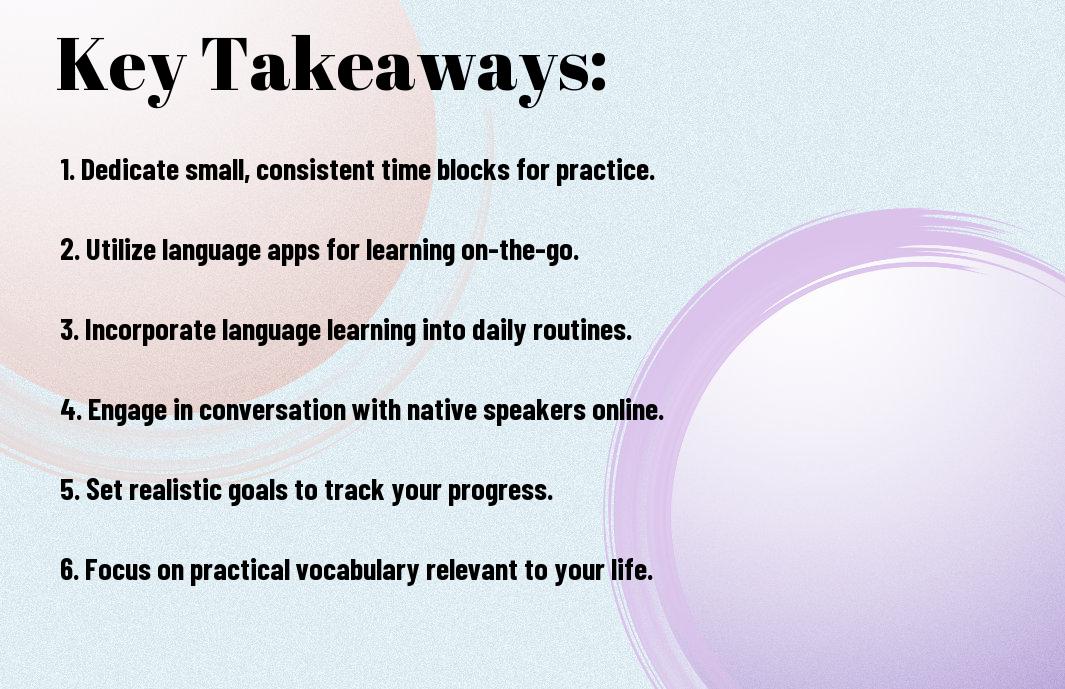
Key Takeaways:
To effectively learn a language while managing a busy schedule, consider the following points:
- Set realistic goals and prioritize your language learning by allocating a specific time slot each day, even if it’s just 10-15 minutes, to dedicate to language learning activities such as reading, writing, or speaking.
- Utilize mobile apps and online resources that offer flexible and accessible language learning tools, allowing you to learn at your own pace and fit language learning into your busy schedule.
- Immerse yourself in the language by listening to podcasts, watching videos, or engaging in conversations with native speakers, which can help you stay motivated and make language learning a more enjoyable experience.
Setting Goals
While learning a language with a busy schedule can be challenging, setting clear goals is vital to your success. You need to determine what you want to achieve and by when, allowing you to focus your efforts and track progress.
Defining Language Learning Objectives
On the path to language learning, outlining specific objectives is vital. You should identify what aspects of the language you want to improve, such as reading, writing, or speaking, and set measurable targets to help you stay motivated.
Creating a Realistic Study Schedule
Setting a study schedule that fits your lifestyle is key. You should allocate specific times for learning, ensuring it aligns with your daily routine and other commitments, allowing for consistent progress without feeling overwhelmed.
It is also important to consider your learning style and pace when creating your schedule. You should be realistic about how much time you can dedicate to learning each day and week, and make sure to include time for review and practice, enabling you to reinforce new language skills and build confidence in your abilities.
Language Learning Strategies
One of the most significant factors in learning a language is developing strategies that work for you. You can try various methods to find what suits your schedule and learning style, ensuring you make progress in your language learning journey.
Immersive Learning Techniques
Similarly, one effective way to learn a language is through immersive learning techniques, where you surround yourself with the language as much as possible, such as watching TV shows or listening to music in the target language, helping you get used to its sounds and rhythms.
Effective Time Management
For instance, you can allocate specific times of the day to language learning, making it a non-negotiable part of your daily routine, allowing you to stay consistent and make steady progress despite your busy schedule.
Learning to manage your time effectively is important to balancing language learning with your other responsibilities. You can start by setting realistic goals and breaking them down into smaller, achievable tasks that fit into your daily or weekly schedule, ensuring you can stay on track and celebrate your progress along the way, which will help you stay motivated to continue learning.

Overcoming Obstacles
Your ability to learn a language while balancing a busy schedule depends on your capacity to overcome obstacles. You will face challenges, but with the right strategies, you can succeed.
Managing Procrastination and Burnout
Although it’s easy to put off language learning, you must prioritize it. Set realistic goals and take regular breaks to avoid exhaustion.
Building a Support Network
Around you, there are people who can help you stay motivated. You can join a language learning community or find a language exchange partner.
A supportive network will help you stay accountable and motivated. You can share your progress, ask for advice, and learn from others who are facing similar challenges. By surrounding yourself with people who understand your goals, you will be more likely to stay on track and achieve your language learning objectives.
Utilizing Resources
Unlike traditional language learning methods, modern resources offer flexibility and convenience, allowing you to learn at your own pace and on your own schedule, making it easier to balance with your busy life.
Language Learning Apps and Software
Alongside many tools, you can find apps and software that cater to your learning style, helping you to stay organized and motivated, and making the most of your limited time.
Online Communities and Forums
Linguistically, you can connect with native speakers and fellow learners through online communities and forums, where you can practice your language skills and get feedback on your progress, which will help you to improve faster.
Learning a language with the help of online communities and forums can be very beneficial, as you will get exposure to different accents, expressions, and ways of communication, which will help you to develop your listening, speaking, reading, and writing skills, and you will be able to get help and support from others when you need it, keeping you motivated and engaged in your learning journey.
Staying Motivated
Not giving up is key to learning a language while balancing a busy schedule. You can find inspiration in articles like There’s no such thing as being “too busy” to learn a language, which offer valuable tips and advice on how to stay motivated.
Tracking Progress and Celebrating Milestones
Besides consistent practice, tracking your progress helps you stay motivated and engaged in the learning process, allowing you to celebrate your achievements along the way, which in turn boosts your confidence and encourages you to continue.
Finding Authentic Materials and Interests
To make language learning more enjoyable, you should explore authentic materials like TV shows, movies, and podcasts that align with your interests, making it easier for you to stay engaged and motivated in your language learning journey.
Celebrating your progress and finding authentic materials that resonate with your interests can significantly enhance your language learning experience. You can discover new TV shows or podcasts that you enjoy, and as you improve your language skills, you’ll be able to understand and appreciate them more, which will motivate you to continue learning and exploring your new language.
Balancing Act
Now that you’re determined to learn a language, you need to balance your schedule. You’ll have to juggle your daily routine, work, and language learning. With careful planning, you can allocate time for language learning and achieve your goals.
Integrating Language Learning into Daily Routine
The key to successful language learning is incorporating it into your daily routine. You can start by dedicating a specific time slot each day to language learning, such as during your daily commute or right before bed.
Prioritizing Self-Care and Balance
Balance is important to maintaining your physical and mental well-being while learning a language. You should prioritize self-care activities, such as exercise and meditation, to ensure you stay focused and motivated.
It is important to note that taking breaks and practicing self-care will help you avoid burnout and maintain your enthusiasm for language learning. You can schedule self-care activities alongside your language learning sessions, allowing you to recharge and come back to your lessons with renewed energy and focus. This will enable you to make consistent progress and achieve your language learning goals.
Conclusion
On the whole, you can effectively learn a language while balancing a busy schedule by prioritizing your goals and utilizing spare moments to practice. You will find that incorporating language learning into your daily routine, even in small doses, can lead to significant progress over time. By staying committed to your goals, you can achieve proficiency in your target language and enhance your personal and professional opportunities, making the most of your time and effort.
FAQ
Q: What is the most effective way to learn a language when I have a busy schedule and limited time?
A: To learn a language effectively with a busy schedule, focus on setting achievable goals and breaking your study sessions into shorter, manageable chunks. Utilize language learning apps, podcasts, and audiobooks that can be accessed during commuting or breaks. Consistency is key, so dedicate a specific time each day, even if it’s just 10-15 minutes, to language learning. This could be during your lunch break, before bed, or first thing in the morning. Additionally, try to immerse yourself in the language by listening to music, watching TV shows or movies in the target language, and speaking with native speakers whenever possible.
Q: How can I maintain motivation and avoid burnout while trying to balance language learning with a busy schedule?
A: Maintaining motivation is fundamental when learning a language with a busy schedule. Start by tracking your progress, no matter how small, and celebrate your achievements. Find a language learning buddy or join a language exchange group for support and to practice speaking skills. Vary your study materials and activities to keep things interesting and prevent boredom. It’s also important to set realistic goals and not overexert yourself. Allow for rest days and don’t be too hard on yourself if you miss a day or two. Keep in mind that the goal is long-term progress, not short-term perfection.
Q: Are there any specific language learning tools or resources that are particularly well-suited for busy individuals looking to learn a language?
A: Yes, there are numerous language learning tools and resources designed with busy schedules in mind. Language learning apps such as Duolingo, Babbel, and Rosetta Stone offer bite-sized lessons and exercises that can be completed on-the-go. Podcasts like “Coffee Break” and “News in Slow” provide engaging content in the target language, suitable for listening during commutes or workouts. Online platforms and forums can connect you with native speakers for language exchange and practice. Furthermore, many libraries offer free access to language learning resources, including DVDs, CDs, and digital platforms like Mango Languages. Utilizing these resources can make language learning efficient and enjoyable, even with a busy schedule.


