You’re determined to learn a new language, but your schedule is tighter than a drum. You’ve got limited time, and you’re not sure where to start. You’ve likely asked yourself, check out the discussion on How to learn a language when you don’t have a time? In this post, you’ll discover practical tips to help you make the most of your time and start learning a new language, even with a busy schedule.
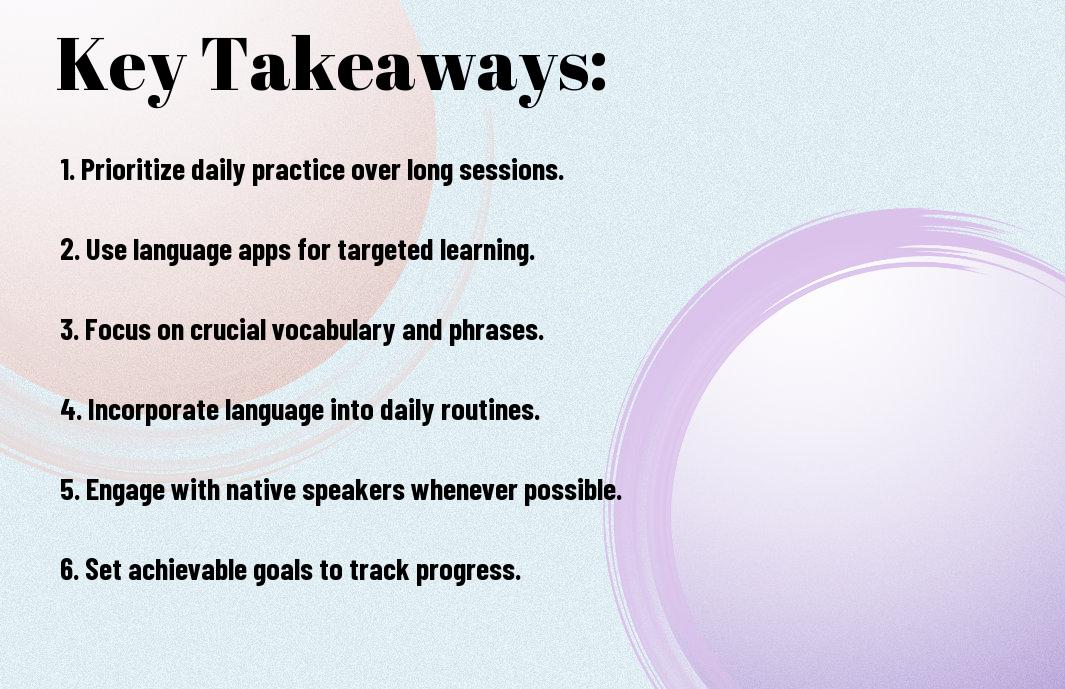
Key Takeaways:
To learn a language with limited time, consider the following points:
- Set realistic goals and prioritize your language learning objectives to maximize your progress within the given time frame.
- Focus on consistent practice, even if it’s just 15-20 minutes a day, to maintain momentum and make steady progress.
- Utilize language learning apps and online resources that offer flexible and efficient learning tools to fit your busy schedule.
- Immerse yourself in the target language by listening to music, watching TV shows or movies, and speaking with native speakers to improve your comprehension and speaking skills.
- Develop a study routine that incorporates a variety of learning activities, such as reading, writing, and speaking, to stay engaged and motivated throughout the learning process.
Setting Goals
A key part of learning a language with limited time is setting achievable goals. You need to define what you want to accomplish and create a schedule to help you get there.
Defining Language Learning Objectives
Objectively, you should consider what you want to achieve with your language skills. You will focus on specific areas, such as reading, writing, or conversation, and set realistic targets for improvement.
Creating a Realistic Study Schedule
Around your daily routine, you will plan out dedicated time for language study. You will allocate specific timeslots for practice, ensuring consistency and progress.
At this stage, you are laying the foundation for your language learning journey. You will need to assess your availability, taking into account your work, family, and other commitments, to determine how much time you can dedicate to language study each day or week. This will help you create a schedule that is tailored to your lifestyle, allowing you to make steady progress towards your goals.
Language Learning Fundamentals
You start by setting realistic goals and understanding your motivation for learning a language, as this will help you stay focused and driven throughout the process, even with limited time.
Choosing the Right Language Learning Method
Following your initial decision, you’ll need to select a method that suits your learning style, whether it’s through classes, online courses, or self-study materials, to ensure you make the most of your limited time.
Essential Language Learning Tools
Upon beginning your language learning journey, you’ll find that having the right tools can make a significant difference, such as language learning apps, dictionaries, and flashcards, which can help you stay organized and efficient.
Language learning tools are your key to unlocking the doors of communication in your target language, and with the right ones, you can practice anytime, anywhere, making the most of the time you have, and helping you to track your progress and identify areas where you need to improve, allowing you to adjust your strategy and stay on track.
Time Management Techniques
Many language learners struggle to find time to study, but with effective time management, you can make the most of your limited time. You’ll need to assess your schedule and identify pockets of time that can be dedicated to language learning.
Prioritizing Study Time
Unlike other activities, prioritizing your language study time is key to making progress. You’ll need to weigh your commitments and allocate your time wisely, ensuring that your language learning goals are at the forefront of your daily routine.
Avoiding Distractions and Staying Focused
Diversions will inevitably arise, but you must learn to manage them. You’ll need to eliminate or minimize distractions, such as turning off your phone or finding a quiet study space, to stay focused on your language learning goals.
To stay on track, you’ll need to develop strategies to overcome procrastination and maintain motivation. You can do this by setting specific, achievable goals and rewarding yourself when you reach them, helping you to stay engaged and motivated throughout the learning process. By doing so, you’ll be able to make the most of your limited time and achieve your language learning objectives.
Immersion and Practice
Unlike other methods, immersion and practice will get you speaking your target language in no time, even with limited time on your hands. You’ll be surrounded by the language, picking it up through osmosis, and your skills will improve dramatically.
Surrounding Yourself with the Language
For maximum exposure, fill your daily routine with the language you’re trying to learn, whether it’s through music, TV shows, or social media, and your brain will start to absorb it naturally, making it easier for you to learn.
Engaging in Conversations and Activities
Before you know it, you’ll be longing to engage in conversations and activities that challenge your language skills, and you’ll be surprised at how quickly you pick up new vocabulary and grammar rules, and your confidence will grow with each passing day.
Further, as you engage in conversations and activities, you’ll find yourself thinking in your target language, and your ability to express yourself will become more fluid, allowing you to communicate effectively and connect with native speakers on a deeper level, making the learning process more enjoyable and rewarding for you.

Overcoming Obstacles
Despite the challenges you’ll face, learning a language with limited time is achievable. You’ll encounter setbacks, but with persistence and the right strategies, you can overcome them and stay on track.
Dealing with Motivation and Burnout
Around the time you feel like giving up, take a step back and reassess your goals. You need to find ways to recharge and refocus your energy to maintain your motivation.
Finding Language Learning Communities
With the help of online forums and social media, you can connect with fellow language learners who share your interests and goals. You’ll find support, guidance, and motivation in these communities.
It is likely that you’ll discover new language learning resources and techniques by engaging with these communities. You can participate in conversations, ask questions, and learn from others who are also navigating the language learning process, which will help you stay motivated and inspired to continue your language learning journey.
Staying Motivated
Not having enough time is a common excuse, but you can learn more about why you never have time for language learning (and how to make time) on Why You Never Have Time For Language Learning (and How to Make Time). This will help you stay focused on your goals.
Tracking Progress and Celebrating Milestones
Around every corner, you’ll find opportunities to track your progress and celebrate your milestones, keeping your motivation levels high as you learn a new language.
Rewarding Yourself for Achievements
Yours is the power to reward yourself for achieving your language learning goals, giving you the motivation to keep pushing forward, even when the going gets tough.
Another way to keep yourself motivated is to set tangible rewards for specific achievements, like reaching a certain level of fluency or finishing a difficult lesson. This will give you something to look forward to, and make the learning process more enjoyable and satisfying, as you see your hard work paying off. You can treat yourself to something you love, like a favorite meal or a fun activity, reinforcing the positive feelings associated with language learning. This will help you stay motivated and encouraged to continue learning, even with limited time.
Summing up
Considering all points, you’ve got the tools to learn a language even with a tight schedule. You’ll need to prioritize your time, set achievable goals, and immerse yourself in the language. Your progress will depend on your dedication and consistency. With persistence and the right approach, you can make significant strides in a short amount of time, and your new language skills will start to take shape, opening doors to new possibilities in your personal and professional life. You got this, now go make it happen.
FAQ
Q: What is the most effective way to learn a language when I have very limited time?
A: When you have limited time, it’s necessary to focus on the most common words and phrases used in everyday conversations. Start by learning basic greetings, introductions, and expressions of gratitude. Utilize language learning apps that offer bite-sized lessons, such as Duolingo or Babbel, which can be completed in just a few minutes a day. Additionally, listen to podcasts or language lessons during your daily commute or while doing chores to maximize your time.
Q: How can I stay motivated to learn a language when I can only dedicate a short amount of time each day?
A: Staying motivated is key to consistent progress, even with limited time. Set achievable goals for yourself, such as holding a 5-minute conversation with a native speaker by the end of the month. Celebrate small victories along the way, like mastering a new grammar rule or vocabulary set. Find a language exchange partner or join an online community to practice with others, which can make the learning process more enjoyable and interactive. Regularly track your progress to see how far you’ve come, which can be a potent motivator.
Q: Are there any specific language learning strategies that are particularly suited for individuals with limited time?
A: Yes, several strategies are particularly effective for those with limited time. The Pomodoro Technique, which involves studying in focused 25-minute increments followed by a 5-minute break, can help you stay focused and avoid burnout. Additionally, prioritize learning phrases and expressions that are relevant to your specific needs or interests, making your learning more efficient and engaging. Use flashcards to quickly memorize vocabulary, and try to learn in contexts where you can apply what you’ve learned immediately, such as speaking with a tutor or using language in real-life situations.