As you initiate on learning a new language, you may encounter a common obstacle: fear of speaking. You worry about making mistakes, being judged, or not being understood. However, with practice and dedication, you can overcome this fear. To start, The simplest way to get over your fear of speaking a foreign language is to focus on building your confidence. You can begin by speaking with native speakers, practicing regularly, and taking small steps outside your comfort zone, which will help you make progress and become a more confident language speaker.
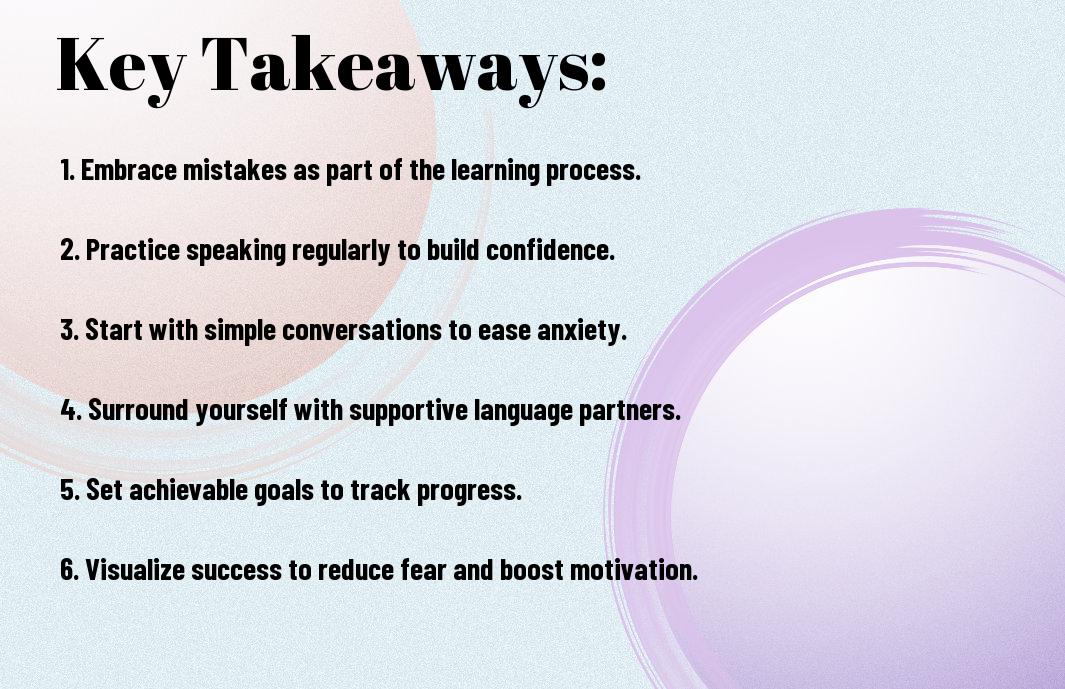
Key Takeaways:
To overcome the fear of speaking a new language, consider the following points:
- Practice consistently to build confidence in your language skills, focusing on pronunciation and vocabulary to improve your overall communication abilities.
- Immerse yourself in the language by listening to music, watching movies, and engaging in conversations with native speakers to become more familiar with the language.
- Focus on your progress, not perfection, and don’t be too hard on yourself when making mistakes, as they are an necessary part of the learning process.
- Find a language exchange partner or join a language learning community to get support and motivation from others who are going through the same experience.
- Set achievable goals and reward yourself for reaching them, which will help you stay motivated and encouraged to continue improving your language skills.
Embracing the Challenge
A major step in overcoming your fear of speaking a new language is to view it as an opportunity for growth and development, rather than an insurmountable obstacle, and you will start to feel more confident in your abilities.
Recognizing the Source of Fear
Around the time you begin to learn a new language, you may start to feel anxious about speaking, and understanding the root of your fear is necessary to overcoming it, as you can then address it directly and work to build your confidence.
Setting Language Learning Goals
The key to making progress and staying motivated is to set achievable goals for your language learning, and you should start by identifying what you want to accomplish, whether it’s holding basic conversations or reading complex texts, and create a plan to get there.
Consequently, as you work towards your goals, you will begin to notice significant improvements in your language skills, and your fear of speaking will start to dissipate, replaced by a growing sense of confidence and ability, allowing you to engage more effectively with native speakers and immerse yourself in the language, which will further accelerate your progress and help you to reach your full potential as a language learner.
Building Confidence
Now that you’ve decided to overcome your fear of speaking a new language, it’s time to focus on building your confidence. You can achieve this by setting achievable goals and celebrating your progress along the way. Your confidence will grow as you become more comfortable with the language.
Starting Small with Basic Phrases
Before venturing into complex conversations, you start with basic phrases and vocabulary. You begin with simple greetings and introductions, and gradually move on to more complex phrases. Your goal is to build a strong foundation in the language, and you do this by mastering the basics.
Practicing with Native Speakers
Starting with small conversations with native speakers, you can improve your pronunciation and get used to the rhythm of the language. You find native speakers through language exchange programs or online platforms, and you practice speaking with them regularly.
Phrases that you’ve learned become more natural as you practice with native speakers. You learn to express yourself in different situations, and you receive feedback on your pronunciation and grammar. As you continue to practice, you become more confident in your ability to communicate in the new language, and your fear of speaking starts to fade away.
Overcoming Self-Doubt
Unlike many other challenges, overcoming self-doubt when speaking a new language requires a gentle and supportive approach. You need to acknowledge your fears and doubts, and then work on building your confidence.
Reframing Negative Thoughts
Self-doubting tendencies can hold you back, but by reframing negative thoughts, you can start to build confidence in your language skills. You can replace negative self-talk with positive affirmations, focusing on your strengths and accomplishments.
Focusing on Progress, Not Perfection
Self-consciousness about making mistakes can be overwhelming, but by focusing on progress, not perfection, you can start to see improvements in your language skills. You will begin to notice your growth and development, which will help you stay motivated and engaged.
Considering your goals and motivations, you can create a plan to track your progress, celebrating small victories along the way. You can use a language learning journal or app to monitor your development, and adjust your approach as needed. By focusing on progress, not perfection, you will be able to overcome self-doubt and become a more confident language speaker, able to express yourself effectively and engage with others in your new language.
Developing a Growth Mindset
To overcome your fear of speaking a new language, you need to develop a growth mindset. This means believing that your language skills can be improved with practice and dedication. You will be more confident in your ability to learn and improve, and you will be more likely to take risks and try new things.
Embracing Mistakes as Learning Opportunities
For instance, when you make a mistake, you can learn from it and use it as an opportunity to improve your language skills. You will become more comfortable with the idea of making mistakes and will be more willing to speak and practice your new language.
Celebrating Small Victories
Gaining confidence in your language skills is a process, and you should celebrate your small victories along the way. You can start by acknowledging and celebrating your achievements, no matter how small they may seem. This will help you stay motivated and encouraged to continue practicing and improving your language skills.
In fact, celebrating small victories is an necessary part of the learning process, as it helps you to see progress and stay positive. You can celebrate your small victories by treating yourself to something special, sharing your achievements with a friend or family member, or simply taking a moment to reflect on how far you have come. By acknowledging and celebrating your progress, you will be more likely to stay motivated and encouraged to continue practicing and improving your language skills, which will help you to overcome your fear of speaking a new language.
Creating a Supportive Environment
Despite the initial anxiety you may feel, creating a supportive environment is vital to overcoming your fear of speaking a new language. You can start by surrounding yourself with language-learning materials, such as books, podcasts, and videos, to immerse yourself in the language.
Finding a Language Learning Community
Against all odds, finding a community of fellow language learners can be a game-changer. You can join online forums, social media groups, or language exchange websites to connect with others who share your goals and interests.
Using Language Learning Apps and Resources
Before you begin your language learning journey, consider the numerous apps and resources available to support you. You can explore language learning platforms, such as Duolingo, Babbel, or Rosetta Stone, to find the one that suits your learning style.
Language learning apps and resources can help you track your progress, practice speaking and listening skills, and access a wealth of educational content. You can use these tools to supplement your language learning, stay motivated, and build confidence in your ability to speak a new language. By leveraging these resources, you can create a personalized learning plan that fits your needs and helps you achieve your goals.

Staying Motivated
After establishing a routine, you’ll need to maintain your enthusiasm for speaking a new language. This is where motivation plays a significant role in your progress, helping you to stay on track and achieve your goals.
Setting Achievable Milestones
Normally, you will find that breaking down your goals into smaller, manageable tasks helps you stay focused and motivated, allowing you to celebrate your successes along the way.
Rewarding Progress and Persistence
Similarly, you will find that acknowledging and rewarding your efforts, no matter how small, will help to reinforce positive learning habits and motivate you to continue improving your language skills.
Indeed, as you progress and see the results of your efforts, you will begin to feel a sense of accomplishment and pride in your ability to communicate in a new language, which will, in turn, motivate you to continue pushing beyond your comfort zone and striving for further improvement, helping you to overcome your fear of speaking a new language.
Conclusion
On the whole, you have the power to overcome your fear of speaking a new language. By practicing consistently, focusing on your strengths, and being kind to yourself, you can build confidence in your language skills. As you progress, your comfort level will increase, and you will become a more fluent speaker, able to express yourself effectively in your new language, and unlock your full potential.
FAQ
Q: What is the first step to overcome the fear of speaking a new language?
A: The first step to overcome the fear of speaking a new language is to set achievable goals for yourself. Start by identifying your motivation for learning the language, whether it’s for travel, work, or personal enrichment. Break down your goal into smaller, manageable tasks, such as having a 10-minute conversation with a native speaker or speaking in front of a small group. As you accomplish these tasks, you’ll build confidence and become more comfortable speaking the language.
Q: How can I practice speaking a new language without feeling embarrassed or intimidated?
A: Practicing speaking a new language can be daunting, but there are several ways to do so without feeling embarrassed or intimidated. Consider finding a language exchange partner, either in person or online, who is fluent in the language you’re trying to learn. You can also practice speaking with a tutor or language instructor who can provide feedback and guidance. Additionally, try speaking in low-stakes situations, such as ordering food at a restaurant or asking for directions, to build your confidence and get used to the sounds and rhythm of the language.
Q: What are some strategies to help manage anxiety and self-doubt when speaking a new language?
A: Managing anxiety and self-doubt is a common challenge when speaking a new language. One strategy is to focus on communication rather than perfection. Instead of worrying about making mistakes, try to concentrate on conveying your message and understanding the other person. Another strategy is to use positive self-talk and encourage yourself to take risks. You can also try relaxation techniques, such as deep breathing or visualization, to help calm your nerves before speaking. Finally, try to learn from your mistakes and view them as opportunities for growth and improvement, rather than as failures.
