You’re diving headfirst into language learning, but your motivation is already starting to wane. Your goals seem daunting, and procrastination is lurking in every corner. You know what you want to achieve, but staying on track is a different story. You’ll face setbacks and distractions, but with the right strategies, you can silence your inner critic and make steady progress towards your language learning objectives.
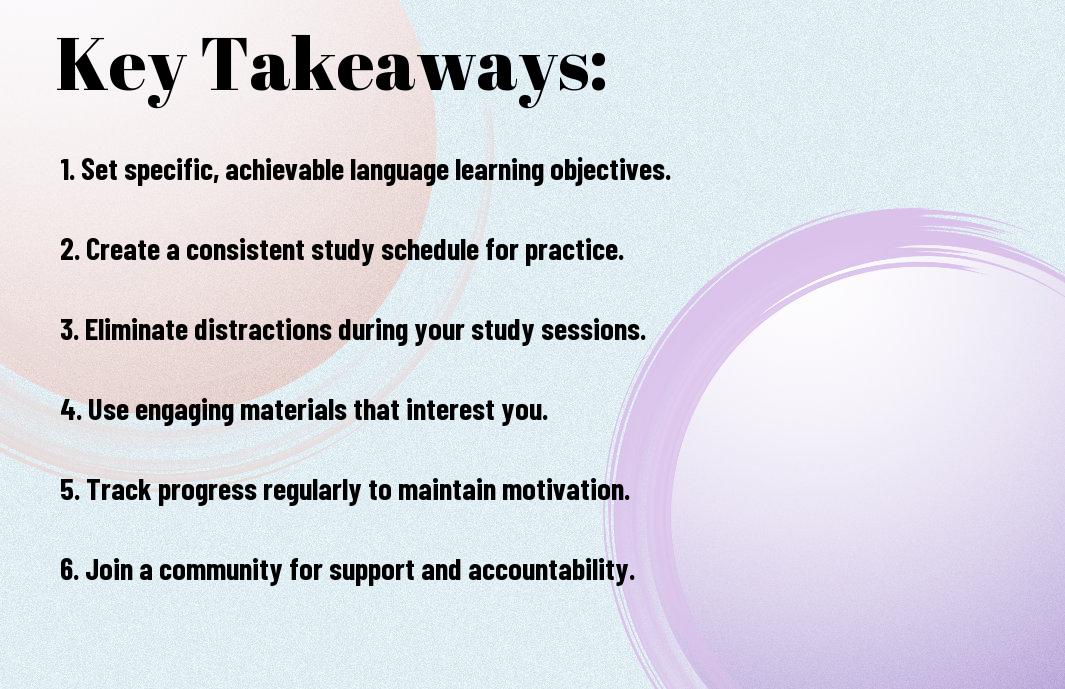
Key Takeaways:
To maintain momentum and achieve success in language learning, consider the following points:
- Set Specific and Measurable goals, allowing you to track progress and stay motivated towards achieving language proficiency.
- Establish a Consistent learning routine, dedicating a specific time and day to language practice, and stick to it to make learning a habit.
- Use Variety in your learning materials and activities, incorporating different resources such as textbooks, language learning apps, and conversation practice to keep your learning experience engaging.
- Practice Active learning techniques, such as speaking and writing, rather than just passive listening or reading, to improve retention and fluency in the target language.
- Seek Accountability through a language exchange partner, tutor, or community, providing support, feedback, and motivation to help you stay on track with your language learning goals.

Setting Language Learning Objectives
A clear plan is imperative to achieving your language learning goals. You need to define what you want to accomplish and set specific targets to stay motivated and track your progress.
Identifying Personal Motivations
Across the spectrum of language learners, motivations vary greatly. You must understand what drives you to learn a new language, whether it’s for personal or professional reasons, to create a plan that aligns with your interests and needs.
Breaking Down Long-Term Goals
Between short-term and long-term objectives, you must find a balance that works for you. You should break down your long-term goals into smaller, manageable tasks to maintain a steady pace and experience a sense of accomplishment.
Indeed, breaking down long-term goals into smaller tasks helps you stay focused and motivated. You can create a schedule with realistic deadlines and milestones, allowing you to track your progress and make adjustments as needed, which will help you stay on track and achieve your language learning goals.
Creating a Study Schedule
While creating a study schedule, you’ll find it’s easier to stay on track with your language learning goals. Check out Language Learning Tips When You Can’t Focus? for some helpful advice.
Prioritizing Tasks and Time Management
Timing is everything when it comes to your schedule. You’ll need to prioritize your tasks and manage your time effectively to make the most of your study sessions.
Avoiding Procrastination Techniques
Above all, you must avoid procrastination to stay focused. You can’t let distractions get in the way of your goals.
Understanding what triggers your procrastination is key to overcoming it. You need to identify the things that distract you and find ways to eliminate them while you study, such as turning off your phone or finding a quiet space. By doing so, you’ll be able to stay focused and make progress towards your language learning goals.
Overcoming Learning Plateaus
Keep pushing forward, even when progress seems slow. You’ll encounter obstacles, but don’t let them derail your language learning journey.
Mixing Up Study Materials and Formats
Learning from different sources and formats will help you stay engaged. You can switch between textbooks, videos, and podcasts to keep your study sessions fresh and exciting.
Joining a Language Learning Community
With like-minded individuals, you’ll find motivation and support. You can share your goals and progress with others, and learn from their experiences.
Study groups and online forums can be a goldmine of information and encouragement. You’ll get to practice your language skills with fellow learners, and gain valuable feedback to help you improve. As you engage with your community, you’ll start to see your language skills flourish, and your confidence will soar.
Staying Motivated and Engaged
Once again, you’ll find that your motivation to learn a language waxes and wanes – it’s normal. To combat this, shake things up: try a new learning method, watch a foreign film, or listen to music in your target language.
Rewarding Progress and Milestones
With each small victory, you’ll build momentum. Celebrate your achievements, no matter how minor they seem, to keep your enthusiasm high and your eyes on the prize.
Finding a Language Learning Buddy
Like-minded individuals will push you to reach your goals. Finding someone who shares your passion for language learning can be a game-changer, providing an added layer of accountability and support.
Plus, having a language learning buddy allows you to practice your speaking skills, get feedback, and learn from each other’s strengths and weaknesses, making your learning process more dynamic and enjoyable, and helping you to stay focused on your goals, as you navigate the ups and downs of language learning together.
Managing Distractions and Minimizing Procrastination
Despite your best intentions, distractions and procrastination can derail your language learning progress, so it’s imperative to develop strategies to overcome them and stay focused on your goals.
Identifying Common Distractions and Obstacles
Comparable to many learners, you likely face similar distractions, such as social media, email, or phone notifications, that hinder your language learning progress, and acknowledging these obstacles is the first step to overcoming them.
Developing Strategies for Staying Focused
Developing a schedule and setting specific goals can help you stay on track and avoid procrastination, allowing you to make steady progress towards your language learning objectives.
Procrastination can be a significant hindrance to your language learning journey, but by creating a conducive learning environment, breaking tasks into smaller chunks, and rewarding yourself for achievements, you can develop the self-discipline needed to stay focused and motivated, ultimately helping you to achieve your language learning goals and unlock your full potential.
Tracking Progress and Adjusting Goals
Many language learners struggle to stay focused, as you can see in this discussion: I can never focus on learning one language because I want to learn many, but tracking your progress helps you stay on track.
Keeping a Language Learning Journal
On a daily basis, writing down your language learning activities helps you identify patterns and stay motivated, allowing you to make adjustments as needed to achieve your goals.
Regularly Evaluating Progress and Goals
Any progress, no matter how small, is a step in the right direction, and evaluating it regularly helps you refine your strategy and make informed decisions about your language learning journey.
The process of regularly evaluating your progress and goals involves taking a step back to assess what’s working and what’s not, and making adjustments to optimize your language learning experience, which will help you stay focused and motivated, and ultimately achieve your goals, so you can enjoy the satisfaction of becoming proficient in your target language, and you will be able to use it to enhance your life and career.
Conclusion
Taking this into account, you now have the tools to stay focused on your language learning goals. You’ve learned how to set achievable targets and track your progress. Your journey won’t be easy, but with persistence and dedication, you’ll overcome obstacles and reach your destination. Stay committed, and you’ll unlock the doors to a new world of communication and understanding, making your language learning endeavor a rewarding experience.
FAQ
Q: What strategies can I use to maintain motivation and stay focused on my language learning goals?
A: To stay motivated and focused, set specific, achievable objectives, such as dedicating a certain amount of time each day to language study. Break down larger goals into smaller, manageable tasks to track progress and celebrate small victories. Additionally, finding a language learning partner or joining a study group can provide support and encouragement, helping you stay on track. Regular self-assessment and adjustment of your study plan can also help maintain focus and motivation.
Q: How can I create an effective study schedule to achieve my language learning goals?
A: Creating an effective study schedule involves planning out dedicated time for language learning each day or week. Start by identifying your most productive hours and allocate those for the most challenging tasks, such as practicing speaking or writing in the target language. Mix up your study activities to avoid boredom, incorporating a variety of methods like reading, listening, and speaking exercises. It’s also important to schedule regular breaks to avoid burnout and maintain productivity. Using a planner, calendar, or app can help you stay organized and committed to your schedule.
Q: What tools and resources can I utilize to enhance my focus and efficiency in language learning?
A: There are numerous tools and resources available to enhance focus and efficiency in language learning. Language learning apps, such as Duolingo, Babbel, and Rosetta Stone, offer structured lessons and tracking features to help you stay on course. Online resources like language exchange websites, podcasts, and YouTube channels can provide diverse learning materials and opportunities for practice. Furthermore, using flashcards for vocabulary building, watching TV shows or movies in the target language, and listening to music or podcasts can make learning more engaging and fun, helping you stay focused on your goals.
