simon weiner

How to Learn a Language While Balancing a Busy Schedule

You want to learn a new language, but your busy schedule is holding you back. You think you don’t have the time, but what if you could make language learning a part of your daily routine? With the right approach, you can fit language learning into your tight schedule and make progress towards your goal. Your lifestyle and language learning goals are unique, and with a few strategies, you can overcome the challenges and achieve your objectives.

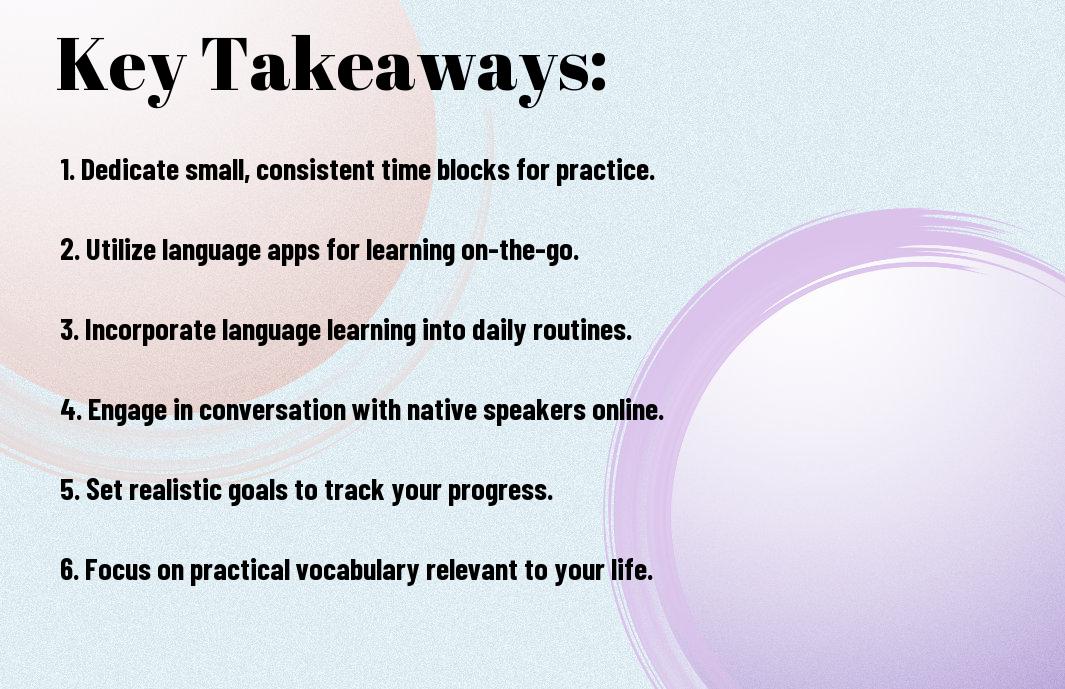
Key Takeaways:

To effectively learn a language while managing a busy schedule, consider the following points:

  • Set realistic goals and prioritize your language learning by allocating a specific time slot each day, even if it’s just 10-15 minutes, to dedicate to language learning activities such as reading, writing, or speaking.
  • Utilize mobile apps and online resources that offer flexible and accessible language learning tools, allowing you to learn at your own pace and fit language learning into your busy schedule.
  • Immerse yourself in the language by listening to podcasts, watching videos, or engaging in conversations with native speakers, which can help you stay motivated and make language learning a more enjoyable experience.

Setting Goals

While learning a language with a busy schedule can be challenging, setting clear goals is vital to your success. You need to determine what you want to achieve and by when, allowing you to focus your efforts and track progress.

Defining Language Learning Objectives

On the path to language learning, outlining specific objectives is vital. You should identify what aspects of the language you want to improve, such as reading, writing, or speaking, and set measurable targets to help you stay motivated.

Creating a Realistic Study Schedule

Setting a study schedule that fits your lifestyle is key. You should allocate specific times for learning, ensuring it aligns with your daily routine and other commitments, allowing for consistent progress without feeling overwhelmed.

It is also important to consider your learning style and pace when creating your schedule. You should be realistic about how much time you can dedicate to learning each day and week, and make sure to include time for review and practice, enabling you to reinforce new language skills and build confidence in your abilities.
Language Learning Strategies

One of the most significant factors in learning a language is developing strategies that work for you. You can try various methods to find what suits your schedule and learning style, ensuring you make progress in your language learning journey.

Immersive Learning Techniques

Similarly, one effective way to learn a language is through immersive learning techniques, where you surround yourself with the language as much as possible, such as watching TV shows or listening to music in the target language, helping you get used to its sounds and rhythms.

Effective Time Management

For instance, you can allocate specific times of the day to language learning, making it a non-negotiable part of your daily routine, allowing you to stay consistent and make steady progress despite your busy schedule.

Learning to manage your time effectively is important to balancing language learning with your other responsibilities. You can start by setting realistic goals and breaking them down into smaller, achievable tasks that fit into your daily or weekly schedule, ensuring you can stay on track and celebrate your progress along the way, which will help you stay motivated to continue learning.

Overcoming Obstacles

Your ability to learn a language while balancing a busy schedule depends on your capacity to overcome obstacles. You will face challenges, but with the right strategies, you can succeed.

Managing Procrastination and Burnout

Although it’s easy to put off language learning, you must prioritize it. Set realistic goals and take regular breaks to avoid exhaustion.

Building a Support Network

Around you, there are people who can help you stay motivated. You can join a language learning community or find a language exchange partner.

A supportive network will help you stay accountable and motivated. You can share your progress, ask for advice, and learn from others who are facing similar challenges. By surrounding yourself with people who understand your goals, you will be more likely to stay on track and achieve your language learning objectives.

Utilizing Resources

Unlike traditional language learning methods, modern resources offer flexibility and convenience, allowing you to learn at your own pace and on your own schedule, making it easier to balance with your busy life.

Language Learning Apps and Software

Alongside many tools, you can find apps and software that cater to your learning style, helping you to stay organized and motivated, and making the most of your limited time.

Online Communities and Forums

Linguistically, you can connect with native speakers and fellow learners through online communities and forums, where you can practice your language skills and get feedback on your progress, which will help you to improve faster.

Learning a language with the help of online communities and forums can be very beneficial, as you will get exposure to different accents, expressions, and ways of communication, which will help you to develop your listening, speaking, reading, and writing skills, and you will be able to get help and support from others when you need it, keeping you motivated and engaged in your learning journey.

Staying Motivated

Not giving up is key to learning a language while balancing a busy schedule. You can find inspiration in articles like There’s no such thing as being “too busy” to learn a language, which offer valuable tips and advice on how to stay motivated.

Tracking Progress and Celebrating Milestones

Besides consistent practice, tracking your progress helps you stay motivated and engaged in the learning process, allowing you to celebrate your achievements along the way, which in turn boosts your confidence and encourages you to continue.

Finding Authentic Materials and Interests

To make language learning more enjoyable, you should explore authentic materials like TV shows, movies, and podcasts that align with your interests, making it easier for you to stay engaged and motivated in your language learning journey.

Celebrating your progress and finding authentic materials that resonate with your interests can significantly enhance your language learning experience. You can discover new TV shows or podcasts that you enjoy, and as you improve your language skills, you’ll be able to understand and appreciate them more, which will motivate you to continue learning and exploring your new language.

Balancing Act

Now that you’re determined to learn a language, you need to balance your schedule. You’ll have to juggle your daily routine, work, and language learning. With careful planning, you can allocate time for language learning and achieve your goals.

Integrating Language Learning into Daily Routine

The key to successful language learning is incorporating it into your daily routine. You can start by dedicating a specific time slot each day to language learning, such as during your daily commute or right before bed.

Prioritizing Self-Care and Balance

Balance is important to maintaining your physical and mental well-being while learning a language. You should prioritize self-care activities, such as exercise and meditation, to ensure you stay focused and motivated.

It is important to note that taking breaks and practicing self-care will help you avoid burnout and maintain your enthusiasm for language learning. You can schedule self-care activities alongside your language learning sessions, allowing you to recharge and come back to your lessons with renewed energy and focus. This will enable you to make consistent progress and achieve your language learning goals.

Conclusion

On the whole, you can effectively learn a language while balancing a busy schedule by prioritizing your goals and utilizing spare moments to practice. You will find that incorporating language learning into your daily routine, even in small doses, can lead to significant progress over time. By staying committed to your goals, you can achieve proficiency in your target language and enhance your personal and professional opportunities, making the most of your time and effort.

FAQ

Q: What is the most effective way to learn a language when I have a busy schedule and limited time?

A: To learn a language effectively with a busy schedule, focus on setting achievable goals and breaking your study sessions into shorter, manageable chunks. Utilize language learning apps, podcasts, and audiobooks that can be accessed during commuting or breaks. Consistency is key, so dedicate a specific time each day, even if it’s just 10-15 minutes, to language learning. This could be during your lunch break, before bed, or first thing in the morning. Additionally, try to immerse yourself in the language by listening to music, watching TV shows or movies in the target language, and speaking with native speakers whenever possible.

Q: How can I maintain motivation and avoid burnout while trying to balance language learning with a busy schedule?

A: Maintaining motivation is fundamental when learning a language with a busy schedule. Start by tracking your progress, no matter how small, and celebrate your achievements. Find a language learning buddy or join a language exchange group for support and to practice speaking skills. Vary your study materials and activities to keep things interesting and prevent boredom. It’s also important to set realistic goals and not overexert yourself. Allow for rest days and don’t be too hard on yourself if you miss a day or two. Keep in mind that the goal is long-term progress, not short-term perfection.

Q: Are there any specific language learning tools or resources that are particularly well-suited for busy individuals looking to learn a language?

A: Yes, there are numerous language learning tools and resources designed with busy schedules in mind. Language learning apps such as Duolingo, Babbel, and Rosetta Stone offer bite-sized lessons and exercises that can be completed on-the-go. Podcasts like “Coffee Break” and “News in Slow” provide engaging content in the target language, suitable for listening during commutes or workouts. Online platforms and forums can connect you with native speakers for language exchange and practice. Furthermore, many libraries offer free access to language learning resources, including DVDs, CDs, and digital platforms like Mango Languages. Utilizing these resources can make language learning efficient and enjoyable, even with a busy schedule.

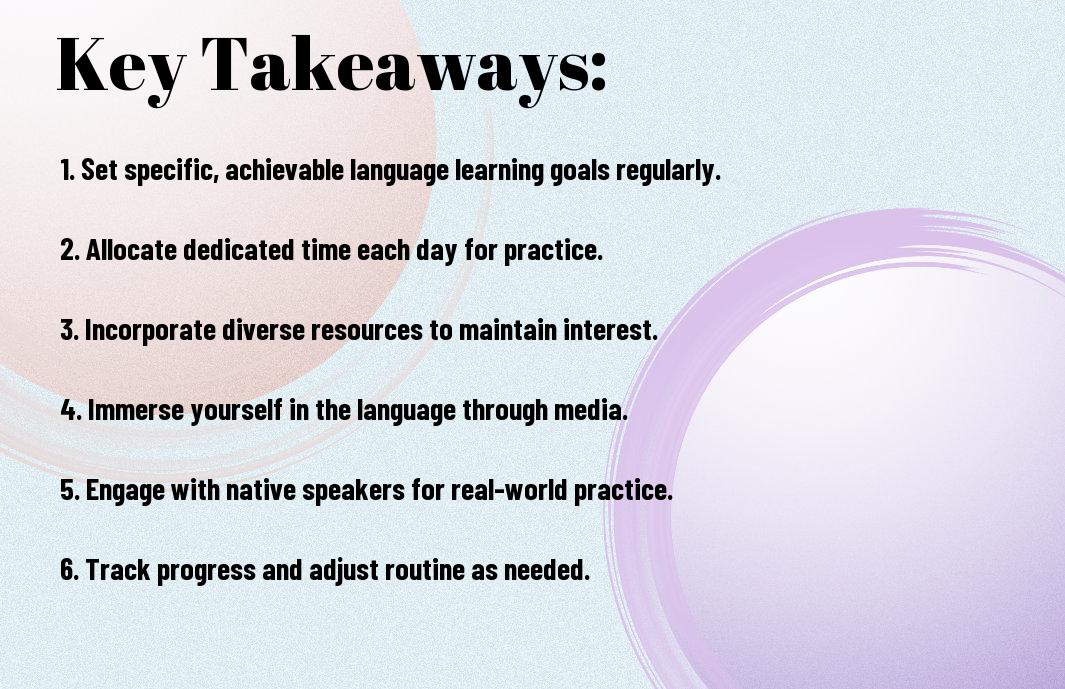
How to Build an Effective Language Learning Routine

You’re taking the first step towards becoming proficient in a new language, and creating a routine is important to your success. Your language learning journey will be more efficient with a well-planned schedule. By establishing a consistent routine, you’ll make steady progress and stay motivated. Your dedication will pay off as you develop the skills and confidence to communicate effectively in your target language, and this post will guide you through the process of building a routine that suits your needs and goals.

Key Takeaways:

  • To establish an effective language learning routine, it’s imperative to set realistic goals and track progress, allowing for adjustments as needed to stay motivated and focused on the learning journey.
  • Implementing a consistent schedule is vital, dedicating a specific time each day to language learning, whether it’s reading, listening, speaking, or writing in the target language.
  • Incorporating variety in the learning routine, such as using different resources and activities, can help keep the learning process engaging and prevent boredom, ultimately leading to a more productive language learning experience.

    Setting Goals

    A well-structured language learning routine starts with setting achievable goals, which you can learn more about in My Successful Language Learning Routine: Tips & Resources, to help you stay motivated and focused.

    Defining Language Learning Objectives

    Along with identifying your motivation, you need to define your language learning objectives, which will serve as a guiding force behind your efforts, helping you to stay on track and make consistent progress.

    Creating a Realistic Study Schedule

    Studying consistently is key to language learning, so you should allocate a specific time slot each day or week to practice, ensuring that it fits seamlessly into your lifestyle and other commitments.

    Understanding your availability and schedule is vital when creating a realistic study schedule, as you need to be honest about how much time you can dedicate to language learning each day or week, taking into account factors such as work, family, and other responsibilities, to avoid setting yourself up for failure and maintain a consistent learning routine.

    Choosing Learning Materials

    Clearly, selecting the right learning materials is necessary for your language learning journey. You need to find resources that fit your learning style, goals, and schedule.

    Textbooks and Language Learning Software

    Similarly, software programs and textbooks can provide structured learning experiences, offering comprehensive lessons and exercises to help you build a strong foundation in the language.

    Online Resources and Mobile Apps

    Any language learner can access a vast array of online resources and mobile apps, which offer flexible and convenient learning opportunities, allowing you to learn at your own pace.

    Choosing the right online resources and mobile apps can be overwhelming, but you can start by exploring popular options, reading reviews, and trying out demos to find the ones that best suit your needs and preferences, enabling you to stay motivated and engaged in your language learning routine.

    Building a Study Routine

    Once again, the key to language learning success lies in establishing a regular study routine. You need to prioritize your goals and allocate sufficient time for learning, ensuring consistency and progress. Your routine should be tailored to your needs, interests, and schedule, allowing you to make steady progress and stay motivated.

    Setting Aside Dedicated Study Time

    Along with setting goals, you should allocate a specific time slot for studying, free from distractions and interruptions. You will be able to focus on your language learning, making the most of your time and energy, and tracking your progress more effectively.

    Creating a Consistent Study Environment

    Behind every successful language learner is a well-organized study space, conducive to focus and productivity. You should optimize your environment to facilitate learning, eliminating distractions and minimizing stress, which will help you stay on track and achieve your goals.

    Considering your individual preferences and needs, you can create a study environment that fosters comfort, motivation, and engagement. You can choose a quiet corner, invest in a comfortable chair, or use a specific app to block social media, allowing you to concentrate on your language learning materials and make steady progress towards your goals. By doing so, you will be able to establish a consistent routine and stay committed to your language learning journey.

    Practicing Language Skills

    Despite the challenges you may face, consistent practice is key to improving your language skills. You will need to allocate time for various activities to enhance your language proficiency.

    Reading and Writing Exercises

    Beneath the surface of language learning lies the foundation of reading and writing exercises, which you can use to improve your grammar, vocabulary, and comprehension by completing exercises, writing journal entries, or reading books and articles in the target language.

    Speaking and Listening Drills

    Across the spectrum of language learning, speaking and listening drills are necessary for your progress, as they help you develop pronunciation, intonation, and conversation skills through speaking with native speakers, listening to podcasts, or watching TV shows and movies in the target language.

    Skills such as conversation, pronunciation, and comprehension are honed through speaking and listening drills, allowing you to engage in real-life conversations with more confidence, and you will find that your language skills improve significantly as you consistently practice speaking and listening in the target language.

    Overcoming Obstacles

    Now that you’ve established your language learning routine, you’ll inevitably encounter obstacles that can hinder your progress, but with the right strategies, you can overcome them and stay on track to achieving your goals.

    Managing Motivation and Burnout

    Among the most significant challenges you’ll face is maintaining motivation, as it’s easy to get discouraged when you’re not seeing progress, but by setting achievable milestones and rewarding yourself, you can stay motivated and engaged in your learning journey.

    Dealing with Grammar and Vocabulary Challenges

    Beside the frustration of not understanding certain grammar rules or struggling to learn new vocabulary, you can break down complex concepts into manageable parts and practice consistently to build your confidence and proficiency.

    Indeed, dealing with grammar and vocabulary challenges requires patience and persistence, and as you continue to practice and expose yourself to the language, you’ll develop a deeper understanding of the nuances and complexities of the language, and your skills will improve significantly, allowing you to communicate more effectively and achieve your language learning goals.

    Tracking Progress

    For effective language learning, monitoring your progress is necessary. You need to evaluate your performance to identify areas of improvement and adjust your routine accordingly.

    Keeping a Language Learning Journal

    The key to successful tracking is documenting your journey. You can write down your daily achievements, note new vocabulary, and reflect on your challenges, helping you to stay motivated and focused on your goals.

    Using Progress Tracking Tools

    Beside traditional journaling, you can utilize various digital tools to track your progress. You can find numerous apps and software designed to help you monitor your language learning, providing you with detailed statistics and insights.

    Considering the plethora of options available, you can choose the tool that best suits your needs, whether it’s a simple habit tracker or a comprehensive language learning platform. You can use these tools to set milestones, track your vocabulary growth, and analyze your pronunciation, giving you a clear picture of your progress and helping you refine your strategy to achieve your language learning goals.

    Summing up

    The key to language learning is consistency and you can achieve this by creating a routine that works for you. By setting realistic goals and prioritizing your time, you will be able to make steady progress in your language learning journey. Your routine should include a mix of different activities, such as reading, writing, and speaking, to keep you engaged and motivated, and with persistence and dedication, you will see significant improvement in your language skills over time.

    FAQ

    Q: What are the key elements to include in a language learning routine?

    A: To build an effective language learning routine, it’s important to incorporate a combination of activities that focus on different aspects of language acquisition, such as reading, writing, listening, and speaking. Start by setting specific goals, like dedicating a certain amount of time each day or week to language learning. Allocate time for vocabulary building, grammar practice, and conversational exercises. Additionally, utilize a variety of resources like textbooks, language learning apps, podcasts, and language exchange programs to maintain diversity and engagement in your routine.

    Q: How can I stay motivated and track progress in my language learning routine?

    A: Staying motivated and tracking progress are vital components of a successful language learning routine. Begin by establishing achievable milestones and celebrating each accomplishment, no matter how small. Use a planner, calendar, or mobile app to schedule and track your daily or weekly language learning activities. Regularly assess your progress through self-evaluation, quizzes, or conversations with a language partner. Sharing your goals and progress with a friend or joining a language learning community can also provide an added motivation boost and support system.

    Q: Can I adapt my language learning routine to fit my busy schedule and learning style?

    A: Adapting your language learning routine to fit your lifestyle and learning preferences is not only possible but also highly advisable for long-term success. Identify your most productive times of the day and dedicate those to language learning. If you’re a visual learner, incorporate more videos and images into your routine. For auditory learners, podcasts and audio books might be more effective. Even short, consistent sessions each day can be more beneficial than lengthy, sporadic study sessions. Be flexible and willing to adjust your routine as your schedule changes or as you discover new learning materials and techniques that suit you better.

The Best Languages to Learn for Competitive Exams

As you prepare for competitive exams, you may be wondering which languages will give you an edge. Your language skills can set you apart from others, and learning the right ones can boost your chances of success. You will discover that certain languages are in high demand and can open doors to new opportunities. By choosing the right languages, you can enhance your career prospects and stay ahead of the competition, making your language learning journey a valuable investment in your future.

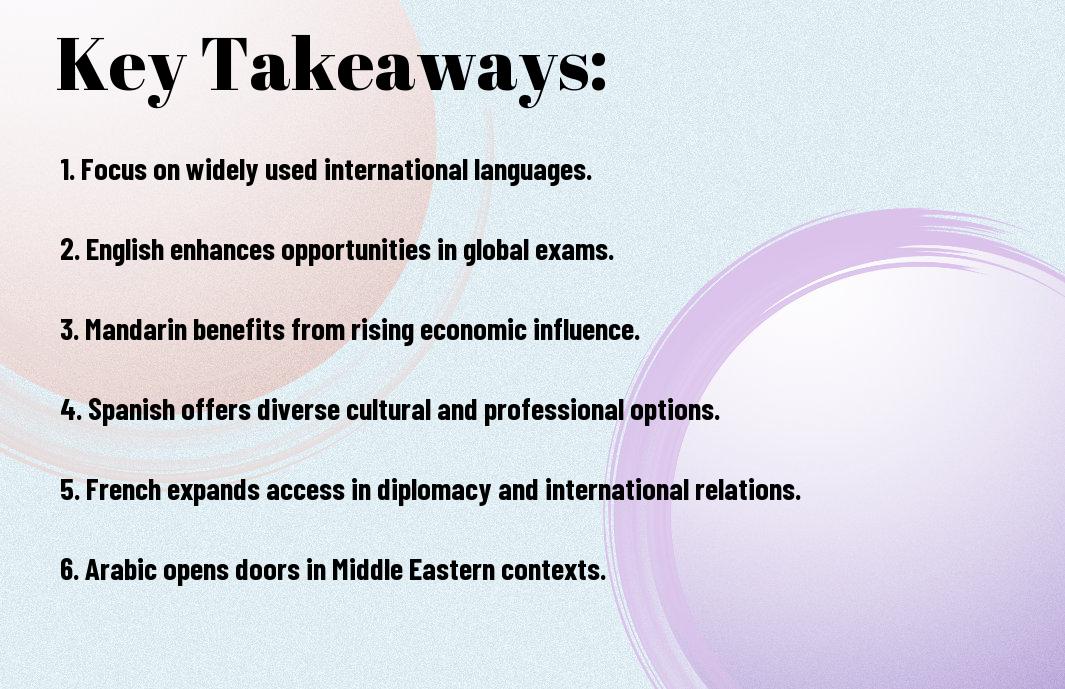
Key Takeaways:

To succeed in competitive exams, choosing the right languages to learn is important. Here are the key points to consider:

  • Focus on popular languages such as English, Spanish, and Mandarin, as they are widely used and can open up more job opportunities.
  • Learning languages like French, German, or Italian can also be beneficial, as they are highly valued in international business and diplomacy.
  • Developing programming skills in languages like Python, Java, or C++ can be advantageous, as they are in high demand in the tech industry and can give you a competitive edge.

Benefits of Learning Languages for Competitive Exams

While preparing for competitive exams, learning languages can give you an edge over others. It not only enhances your understanding of different cultures but also improves your overall performance.

Enhanced Career Opportunities

By acquiring language skills, you open yourself up to a world of job opportunities, increasing your chances of getting hired by multinational companies and organizations that value language proficiency.

Improved Cognitive Skills

Skills such as memory, attention, and problem-solving are improved when you learn a new language, which can help you perform better in your exams and other areas of life.

And as you continue to learn and practice a new language, you will notice significant improvements in your cognitive abilities, allowing you to approach problems from different angles and think more critically, which will benefit you in all aspects of your competitive exams and beyond.

Most In-Demand Languages for Competitive Exams

There’s a growing need to learn new languages to stay competitive in exams, and you can boost your chances by choosing the right ones, as it will help you to achieve your goals, you can prepare yourself for a wide range of opportunities.

English

Examinations often require proficiency in English, and you will find that it is a common language used in many competitive exams, so it’s important to focus on improving your English skills to perform well in your exams, and you will increase your chances of getting selected.

Spanish

Above all, Spanish is a highly valued language, and you will benefit from learning it, as it is becoming increasingly popular, and you can take advantage of this trend to enhance your language skills, which can give you an edge over others in competitive exams.

Languages like Spanish can open doors to new opportunities for you, and you can explore various career options, as Spanish is widely spoken in many countries, and you will find that knowing Spanish can help you to communicate effectively with people from diverse backgrounds, and you can make the most of your language skills to achieve success in competitive exams.

Language Skills Required for Competitive Exams

To excel in competitive exams, you need to possess strong language skills, which are imperative for scoring well in various sections of the exams, including verbal ability and comprehension.

Reading Comprehension

Contrary to popular belief, reading comprehension is not just about reading a passage, but also about understanding the context, tone, and vocabulary used, which you will need to master to answer questions correctly.

Writing Abilities

Regarding your writing skills, you should be able to express your thoughts clearly and concisely, using proper grammar, syntax, and vocabulary, which will help you to score well in the writing section of the exams.

It is also important to note that your writing abilities will be tested in various formats, such as essays, letters, and summaries, so you need to be well-versed in different writing styles and formats to perform well in the exams.

Tips for Learning Languages for Competitive Exams

For effective language learning, you’ll need a solid strategy. Consider the following:

  • Set achievable goals
  • Use language learning apps
  • Thou shalt see improvement in your language skills with dedication and persistence.

    Immersive Learning

    Similarly, one of the best ways to learn a language is through immersion, surrounding yourself with the language you want to learn, which will help you to pick up the language quickly.

    Consistent Practice

    Likewise, languages require regular practice to master, and you should make it a part of your daily routine to see significant improvement in your language skills.

    Practice is key to language learning, and you should aim to practice consistently, even if it’s just for a few minutes each day, to develop a strong foundation in the language and improve your chances of success in competitive exams, and you will be able to use your language skills effectively in your exam.

    Popular Language Learning Resources

    After deciding on a language to learn, you’ll need to find the right resources to help you prepare for competitive exams. You can choose from a variety of options, including online courses, language learning apps, and study materials.

    Online Courses

    One of the most effective ways to learn a language is through online courses, which provide you with structured lessons and expert instructors to guide you through your learning journey. You can find online courses on platforms like Coursera, Udemy, and edX.

    Language Learning Apps

    Onwards with technology, you can access language learning apps that offer interactive lessons and exercises to help you improve your language skills. You can download apps like Duolingo, Babbel, and Rosetta Stone to get started.

    Further, language learning apps provide you with the flexibility to learn at your own pace, anytime and anywhere, making it easier to fit language learning into your busy schedule. You can track your progress, set goals, and practice speaking, writing, and listening skills with these apps, helping you to stay motivated and focused on your language learning goals.

    Common Challenges in Learning Languages for Competitive Exams

    Not all students find it easy to learn a new language, especially when preparing for competitive exams. You can find more information on The 12 Most Important Languages To Learn For Success to help you get started.

    Limited Time

    Competitively, you will face challenges with limited time to learn a language, making it important to prioritize your study schedule and focus on the most important aspects of the language.

    Difficulty in Pronunciation

    With the complexity of languages, you may struggle with pronunciation, which can hinder your progress and make it difficult to communicate effectively.

    Further, difficulty in pronunciation can be attributed to the differences in sound, intonation, and rhythm between your native language and the target language, making it important to practice regularly and seek feedback from native speakers or language instructors to improve your pronunciation skills.

    To wrap up

    Hence, you can maximize your chances of success in competitive exams by choosing the right languages to learn. You can select from a variety of languages, considering your interests and career goals. For more information, you can visit The 7 Best Languages To Learn (and Why They’re Useful) to make an informed decision about your language learning journey, enhancing your skills and boosting your prospects.

    FAQ

    Q: What are the most beneficial languages to learn for competitive exams in terms of career opportunities?

    A: Learning languages such as English, Spanish, Mandarin, Arabic, and French can significantly enhance your career opportunities in fields like international business, diplomacy, and education. English is widely used in global communication, while Spanish and Mandarin offer access to large and growing economies. Arabic is important for careers in international relations and diplomacy in the Middle East, and French is valuable for those interested in working with French-speaking countries or international organizations like the United Nations.

    Q: How can learning a foreign language impact one’s performance in competitive exams, especially in fields like international relations and global business?

    A: Mastering a foreign language can greatly improve your performance in competitive exams by opening up more job opportunities, enhancing cultural understanding, and demonstrating your ability to adapt to new environments. In fields like international relations and global business, proficiency in a foreign language can be a key differentiator, allowing you to communicate effectively with clients, colleagues, and stakeholders from diverse linguistic backgrounds. Furthermore, many competitive exams, such as those for the Foreign Service or international corporations, include language proficiency tests, where fluency in a foreign language can be a significant advantage.

    Q: What resources and study strategies are available for individuals looking to learn a new language specifically for competitive exams, and how can one balance language learning with other exam preparations?

    A: Individuals can utilize various resources such as language learning apps (like Duolingo), online courses (through platforms like Coursera or edX), and language exchange programs to learn a new language. Effective study strategies include setting realistic goals, practicing consistently, and immersing oneself in the language through media and interaction with native speakers. To balance language learning with other exam preparations, it’s advisable to create a schedule that allocates specific times for language study, exam preparation, and practice tests. Additionally, incorporating language learning into daily routines, such as listening to podcasts or watching TV shows in the target language, can help manage time efficiently and reinforce learning.

The Role of Peer Learning in Language Mastery

As you initiate on your language learning journey, you will discover that your progress is not solely dependent on your individual efforts. Your ability to grasp and retain new language skills is influenced by the company you keep, and the interactions you have with your peers. You will find that learning alongside others who share your goals can significantly enhance your understanding and application of the language, allowing you to navigate its complexities with greater ease and confidence, and ultimately, achieve language mastery.

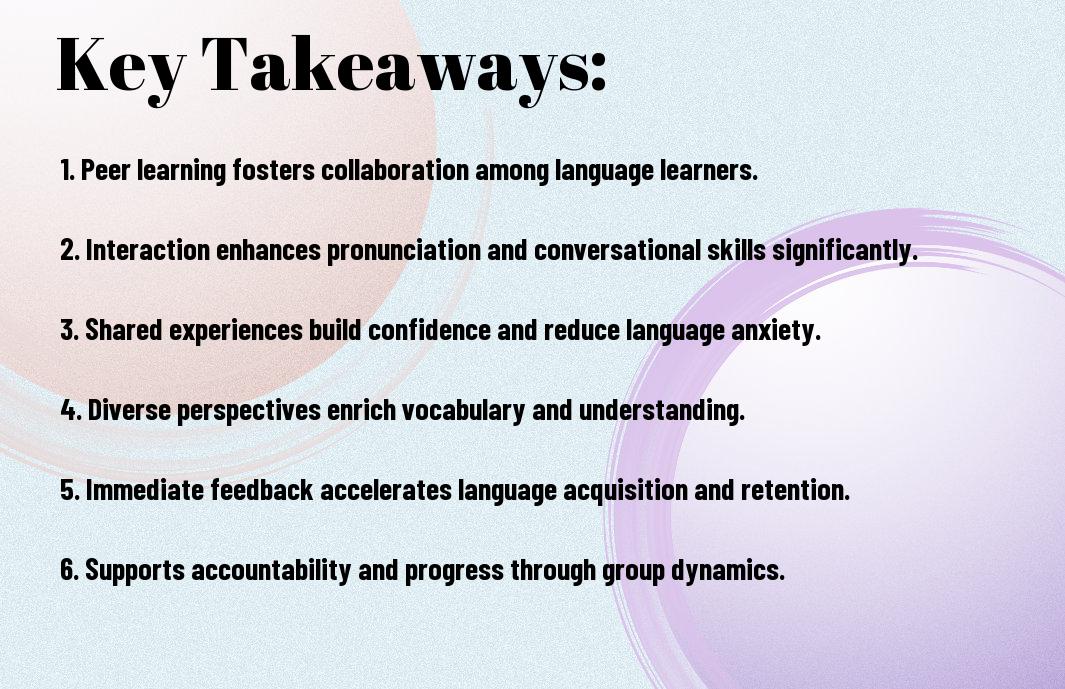
Key Takeaways:

  • The effectiveness of peer learning in language mastery lies in its ability to provide authentic interactions, allowing learners to engage in meaningful conversations and receive immediate feedback from their peers.
  • Peer learning facilitates collaborative learning, where learners can work together to complete language-related tasks, share resources, and learn from each other’s strengths and weaknesses.
  • The flexibility of peer learning enables learners to take ownership of their language learning process, set personalized goals, and develop strategies that cater to their individual learning styles and needs.

    Introduction to Peer Learning

    Before delving into the world of language mastery, you should consider the significance of peer learning in your educational journey. You will find that learning from your peers can be a highly effective way to improve your language skills, as it allows you to engage in interactive and collaborative activities.

    The Importance of Peer Interaction

    Beyond the traditional classroom setting, you will discover that peer interaction plays a vital role in language development. Between engaging in conversations and participating in group discussions, you will be able to practice your language skills in a more authentic and immersive environment.

    Language Mastery through Social Learning

    Peer learning enables you to learn from others, as you observe and imitate their language use. Like a mirror, your peers reflect your own language abilities, helping you to identify areas for improvement and develop a more nuanced understanding of the language.

    It is through this process of social learning that you will begin to notice significant improvements in your language mastery. As you engage with your peers, you will be exposed to new vocabulary, grammatical structures, and pronunciation, all of which will help you to refine your language skills and become a more confident communicator.

    Introduction to Peer Learning

    Assuming you are engaged in learning a new language, you will likely encounter various methods to achieve mastery. One effective approach is peer learning, which involves collaborating with fellow learners to enhance your language skills.

    Cognitive Benefits of Peer Learning

    Any serious language learner will appreciate the cognitive benefits of peer learning, as it exposes you to diverse perspectives, promotes active listening, and fosters critical thinking, all of which contribute to improved comprehension and retention.

    Developing Communication Skills

    Among the most significant advantages of peer learning is the opportunity to develop your communication skills, as you engage in conversations, discussions, and debates with your peers, allowing you to practice your spoken language and receive feedback on your pronunciation and syntax.

    Indeed, as you participate in peer learning activities, you will find that your ability to express yourself effectively in the target language improves dramatically, enabling you to convey complex ideas, negotiate meaning, and build relationships with native speakers, all of which are necessary for language mastery and your personal growth as a learner.

    Effective Language Learning

    Now, as you research into the world of language mastery, you will discover the significance of peer learning in achieving fluency. Your progress will be influenced by the interactions you have with your peers, and the lessons you learn from them.

    The Role of Feedback in Language Acquisition

    The feedback you receive from your peers plays a substantial role in your language development, as it helps you identify areas that need improvement, allowing you to refine your skills and develop a more nuanced understanding of the language.

    Peer Review and Correction

    For instance, when you engage in peer review, you can gain valuable insights into your language usage, and your peers can point out errors you may have overlooked, enabling you to learn from your mistakes and develop your language skills further.

    Plus, as you participate in peer review and correction, you will develop your critical thinking skills, learning to analyze and evaluate your own language production, as well as that of your peers, and this will help you to become a more effective and confident language user.

    Peer Learning in Language Acquisition

    Keep in mind that peer learning plays a significant role in language mastery, as it allows you to engage with others who share your interests and goals, fostering a supportive community that facilitates language development.

    Language Learning Strategies and Peer Influence

    One of the key benefits of peer learning is the exchange of strategies and ideas, enabling you to learn from others and adapt your approach to language learning, ultimately enhancing your progress and understanding of the language.

    Cultural Exchange and Language Immersion

    Beneath the surface of language learning lies the opportunity for cultural exchange, allowing you to immerse yourself in the language and gain a deeper understanding of the cultural context in which it is spoken, which in turn enhances your language skills.

    Further, as you engage in cultural exchange and language immersion, you will find that your language skills improve significantly, as you are exposed to authentic language usage and cultural nuances, enabling you to develop a more nuanced understanding of the language and its applications in real-life situations, which will help you to become a more effective communicator in your target language.

    Peer Learning in Language Acquisition

    Your ability to learn a language is significantly influenced by the company you keep, and peer learning plays a vital role in this process, as it allows you to engage with others who share your goals and interests.

    Overcoming Language Barriers through Peer Support

    Akin to any other challenging task, overcoming language barriers requires dedication and support, and you can find this support in a community of peers who are also learning a language, as they can offer valuable feedback and encouragement.

    Building Confidence in Language Use

    For you to become proficient in a language, it is important to practice speaking and writing, and peer learning provides you with opportunities to do so in a supportive environment, where you can test your skills without fear of judgment.

    Through consistent practice and feedback from your peers, you will become more confident in your ability to use the language, and your skills will improve dramatically, allowing you to express yourself more effectively and engage in meaningful conversations with native speakers, which is a key aspect of language mastery.

    Introduction to Peer Learning

    Once again, you find yourself pondering the most effective methods for language mastery. You consider the various approaches, weighing the pros and cons of each. As you examine deeper, you begin to appreciate the significance of peer learning in language acquisition.

    Technology-Enhanced Peer Learning Platforms

    Platforms such as online forums and social media groups facilitate peer learning, enabling you to connect with fellow language learners. You can engage in discussions, share resources, and receive feedback on your language skills, all from the comfort of your own space.

    Online Communities and Language Exchange

    Beside traditional classroom settings, online communities offer a unique opportunity for language exchange and practice. You can interact with native speakers, practice your speaking and writing skills, and learn from others who share your interests.

    With online communities and language exchange, you can tailor your learning experience to suit your needs and preferences. You can choose from a variety of platforms, join discussions that interest you, and connect with language learners from diverse backgrounds, all of which can enhance your language mastery and broaden your cultural understanding.

    Conclusion

    Conclusively, you will find that peer learning plays a significant role in achieving language mastery. As you examine into the world of language acquisition, you will discover that your progress is greatly influenced by your interactions with fellow learners. For a more in-depth understanding, you can visit An Overview of Peer Learning in Adult Classrooms to explore the benefits of collaborative learning, ultimately enhancing your language skills.

    FAQ

    Q: What is the significance of peer learning in language mastery, and how does it facilitate the learning process?

    A: Peer learning plays a significant role in language mastery as it provides learners with the opportunity to engage in interactive and collaborative learning experiences. Through peer learning, individuals can practice their language skills, such as speaking, listening, reading, and writing, in a supportive and immersive environment. This approach helps to build confidence, improve pronunciation, and develop a deeper understanding of the language. Moreover, peer learning enables learners to learn from one another, share knowledge, and gain new insights, ultimately enhancing their overall language proficiency.

    Q: How does peer learning promote effective language practice and what are the benefits of this approach?

    A: Peer learning promotes effective language practice by providing a platform for learners to engage in spontaneous and authentic conversations, role-plays, and other interactive activities. This approach helps to simulate real-life communication scenarios, allowing learners to develop their language skills in a practical and meaningful way. The benefits of peer learning include improved fluency, enhanced vocabulary, and better grammar usage. Additionally, peer learning fosters a sense of community and motivation, as learners encourage and support one another in their language learning journey.

    Q: Can peer learning be adapted to different language learning contexts, and what role can technology play in facilitating peer learning experiences?

    A: Yes, peer learning can be adapted to various language learning contexts, including classrooms, online courses, and language exchange programs. Technology can play a vital role in facilitating peer learning experiences by providing a range of digital tools and platforms that enable learners to connect, interact, and collaborate with one another. For example, online discussion forums, social media groups, and video conferencing tools can be used to facilitate peer-to-peer interactions, while language learning apps and online resources can provide access to a wide range of learning materials and activities. By leveraging technology, peer learning can be made more accessible, flexible, and effective, ultimately supporting language learners in achieving their goals.

How to Embrace Mistakes in Language Learning

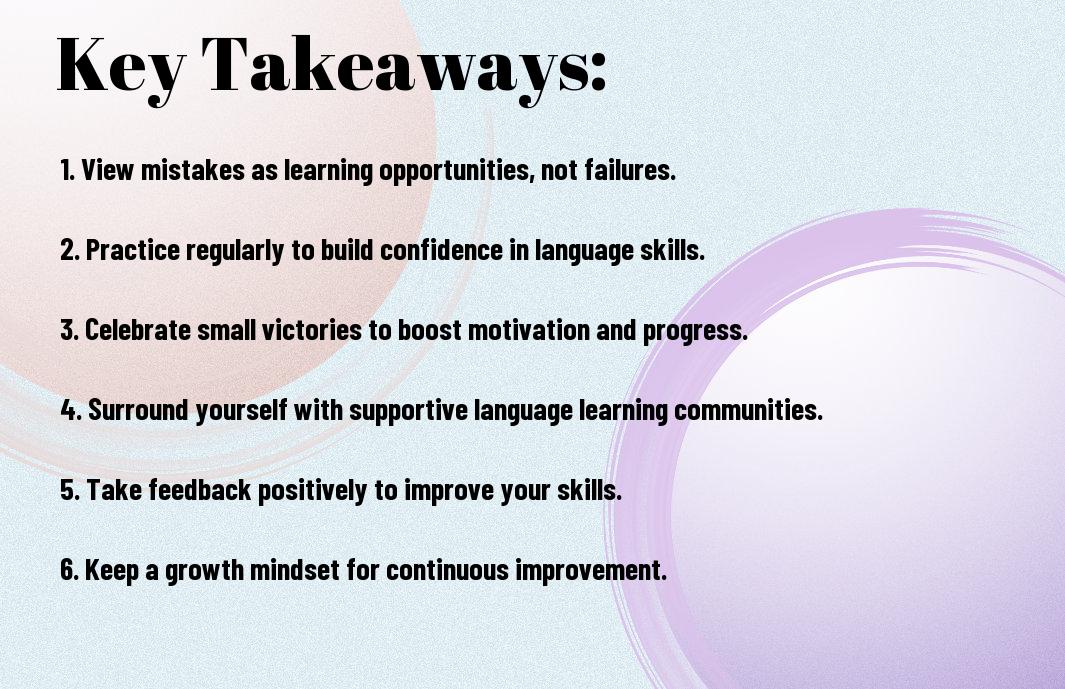
Key Takeaways:

  • Embracing mistakes is a natural part of the language learning process, and it’s necessary to view them as opportunities for growth and improvement.
  • Practice and perseverance are key to overcoming the fear of making mistakes, and to developing a growth mindset that allows learners to take risks and try new things.
  • By reframing mistakes as a normal and necessary part of the learning process, language learners can build confidence and develop a more positive attitude towards their language learning journey.

    Embracing Mistakes as a Learning Opportunity

    A key aspect of language learning is accepting that mistakes are an inevitable part of the journey. As you navigate the complexities of a new language, you will encounter numerous obstacles, but it is how you respond to these challenges that will ultimately determine your success.

    Viewing Mistakes as a Natural Part of the Learning Process

    Proceeding with the understanding that mistakes are a natural part of the learning process, you begin to see that errors are not failures, but rather stepping stones to improvement. You start to view your mistakes as opportunities to learn and grow, rather than as setbacks to be lamented.

    Developing a Growth Mindset in Language Learning

    Progressing through the language learning process, you come to realize that your abilities can be developed through dedication and hard work. You understand that your intelligence and language proficiency are not fixed traits, but rather skills that can be honed and improved over time.

    Plus, as you adopt a growth mindset, you begin to approach challenges with confidence and enthusiasm, rather than fear and trepidation. You start to see that each mistake is a chance to learn and improve, and that your language skills are constantly evolving. This mindset allows you to stay motivated and engaged, even in the face of difficulties, and to make steady progress towards your language learning goals.

    Overcoming Fear and Anxiety

    Any language learner knows that fear and anxiety can be significant obstacles to progress. You can learn more about the benefits of embracing mistakes in language learning by reading The Magic of Mistakes in Language Learning | by Ashia Jade, which offers valuable insights into the process.

    Recognizing the Sources of Fear and Anxiety in Language Learning

    By acknowledging the sources of your fear and anxiety, you can begin to address them effectively, taking the first step towards a more confident and proficient language learning experience.

    Building Confidence through Gradual Exposure to Challenges

    About the most effective way to build confidence is through gradual exposure to challenges, allowing you to become comfortable with taking risks and making mistakes in a supportive environment.

    Fear of making mistakes can hold you back from achieving your language learning goals, but by gradually exposing yourself to challenging situations, you will become more confident in your abilities, and your fear will slowly dissipate, making you a more proficient and self-assured language learner, capable of navigating complex conversations and interactions with ease, and you will find that your progress accelerates as you become more comfortable with the process of learning from your mistakes.

    Learning from Errors

    Now, as you navigate the complexities of language learning, you will inevitably encounter mistakes. These errors are an integral part of the learning process, and they provide valuable opportunities for growth and improvement.

    Identifying Common Mistakes and Their Causes

    Errors, in fact, are gateways to understanding your weaknesses and areas for development. By examining your mistakes, you can pinpoint the root causes and start working on correcting them, thus refining your language skills.

    Using Mistakes as a Chance to Improve Language Skills

    Skills, such as speaking, writing, and listening, can be honed by analyzing your mistakes and using them as a stepping stone for progress. You can learn to rephrase sentences, correct grammar, and expand your vocabulary by understanding where you went wrong.

    Hence, as you use mistakes as a chance to improve your language skills, you will find that your progress accelerates. You will become more adept at recognizing patterns of error and developing strategies to overcome them, leading to a more proficient and confident use of the language. Your ability to articulate thoughts, engage in conversations, and comprehend complex texts will significantly improve, allowing you to communicate effectively and achieve your goals.

    Practicing Self-Compassion

    All language learners make mistakes, and it’s necessary to treat yourself with kindness when you do. You’ll learn to accept your errors and move forward, rather than dwelling on them.

    Treating Yourself with Kindness and Patience

    Upon encountering a setback, you should take a step back and assess your emotions. You will find that patience and understanding help you navigate the challenges of language learning, allowing you to grow and improve.

    Focusing on Progress Rather than Perfection

    Gently, you shift your attention from flawless language skills to the progress you’ve made so far. You acknowledge the small victories, and this helps you stay motivated and encouraged throughout your learning journey.

    This approach enables you to track your development over time, celebrating the milestones you’ve achieved and identifying areas where you need more practice. You will find that focusing on progress rather than perfection helps you develop a more positive and resilient mindset, allowing you to overcome obstacles and continue making progress in your language learning endeavors, and you will be able to see how far you’ve come, which will boost your confidence and drive to keep learning.

    Creating a Supportive Environment

    For effective language learning, you need to establish an atmosphere that fosters growth and minimizes anxiety about making mistakes. This involves creating a space where you feel comfortable practicing your new language skills without fear of judgment.

    Surrounding Yourself with Positive Influences

    Prior to making significant progress, you should seek out supportive people who encourage your language learning efforts and provide helpful feedback. This will help you stay motivated and focused on your goals.

    Finding a Language Learning Community

    About the time you start looking for opportunities to practice your language skills, you will find that joining a community of fellow learners can be incredibly beneficial. You will be able to engage in conversations, share tips, and learn from one another.

    Community support is vital as you navigate the challenges of language learning. You will find that being part of a group of like-minded individuals helps you stay accountable, gain confidence, and develop a more nuanced understanding of the language. As you interact with your peers, you will begin to see improvements in your speaking, writing, and listening skills, which will, in turn, enhance your overall learning experience.

    Developing Resilience

    After encountering mistakes, you begin to develop resilience, a vital skill in language learning. As you can see in the article Mistakes help you learn – freedom to fail in games and language learning, learning from mistakes is key to progress.

    Dealing with Setbacks and Failures

    Across various aspects of language learning, you will face setbacks, but it’s how you respond that matters, and by acknowledging these setbacks, you can adjust your approach.

    Staying Motivated and Focused on Long-Term Goals

    By maintaining a growth mindset, you stay motivated and focused on your long-term goals, even when faced with difficulties, and this mindset allows you to keep moving forward.

    This approach helps you to concentrate on the larger picture, keeping in mind that language learning is a long-term process, and your ability to stay motivated will be your most valuable asset in overcoming obstacles and achieving your goals, as you continue to make progress and improve your language skills over time, with persistence and dedication.

    Conclusion

    Hence, as you continue on your language learning journey, you will encounter mistakes, but it is how you respond to them that matters. You must view your mistakes as opportunities for growth, and use them to inform your practice, refining your skills and deepening your understanding of the language, allowing you to improve with each passing day, and ultimately, becoming a proficient language learner.

    FAQ

    Q: What is the most effective way to view mistakes in language learning?

    A: When learning a new language, it’s important to see mistakes as an inevitable and valuable part of the learning process. Instead of fearing or being discouraged by errors, learners should embrace them as opportunities for growth and improvement. By doing so, learners can develop a more positive mindset and become more resilient in the face of challenges. This perspective allows learners to approach mistakes with curiosity, analyze what went wrong, and make adjustments to improve their language skills.

    Q: How can language learners overcome the fear of making mistakes in speaking and writing?

    A: To overcome the fear of making mistakes, language learners can start by practicing in low-stakes situations, such as speaking with a language exchange partner or writing journal entries. As they become more comfortable, they can gradually move on to more challenging situations, like engaging in conversations with native speakers or writing for an audience. Additionally, learners can focus on developing a growth mindset, celebrating their efforts and progress rather than fixating on perfection. By taking small steps and being kind to themselves, learners can build confidence and become more willing to take risks in their language learning journey.

    Q: What strategies can language learners use to learn from their mistakes and improve their language skills?

    A: Language learners can use several strategies to learn from their mistakes and improve their language skills. One approach is to keep a language learning journal to track errors, identify patterns, and reflect on what they’ve learned. Another strategy is to seek feedback from teachers, tutors, or language exchange partners, using their corrections and guidance to refine their skills. Learners can also practice self-correction by listening to or reading their own work, identifying areas for improvement, and making revisions. By being proactive and intentional in their learning, language learners can turn mistakes into valuable learning opportunities and make steady progress towards their language learning goals.

Skip to content