As you commence on learning a new language, you’re likely exploring various methods to improve your skills. You can leverage creative writing as a powerful tool to enhance your language proficiency. By expressing yourself through writing, you’ll be able to practice your vocabulary, grammar, and syntax in a more engaging way. For inspiration, visit Write on! – Creative writing as language practice to discover how your creative writing can become a valuable language learning practice, helping you to develop your skills and confidence in your new language.
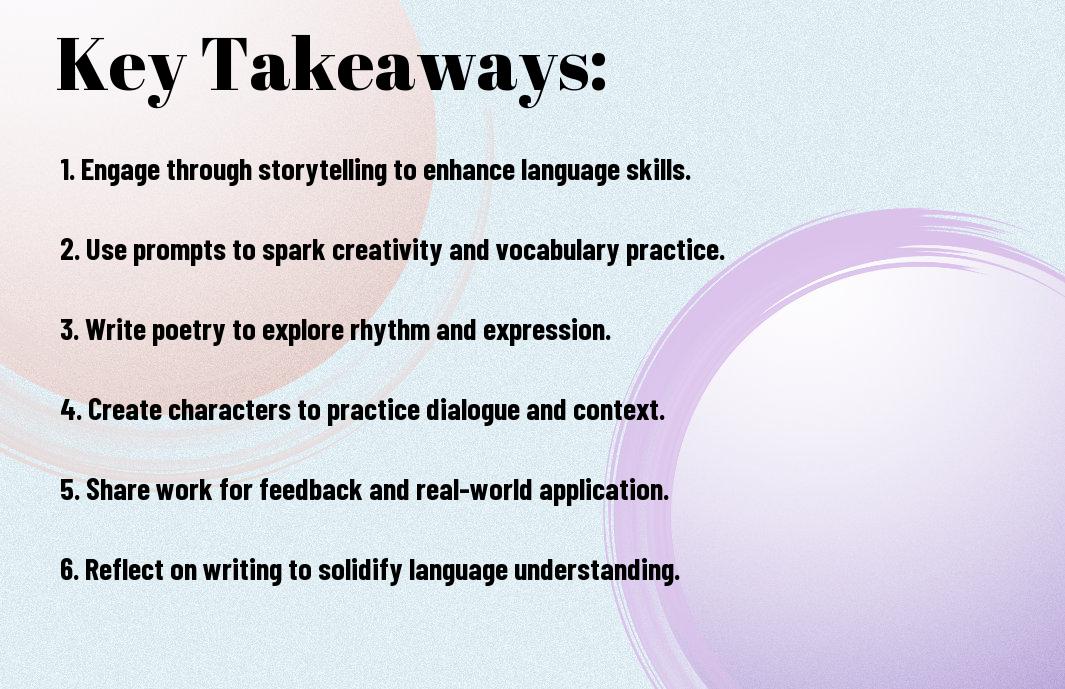
Key Takeaways:
To learn a language through creative writing, consider the following points:
- Start by setting goals and defining your motivation for learning the language, as this will help you stay focused and driven throughout the process.
- Use language learning apps and online resources to support your writing practice, providing you with grammar guides, vocabulary lists, and interactive exercises.
- Practice writing regularly, even if it’s just for a few minutes a day, to develop your writing skills and build confidence in using the language.
- Experiment with different genres and styles of writing, such as short stories, poetry, or journalism, to keep your practice interesting and prevent boredom.
- Seek feedback from native speakers or language exchange partners to improve your writing skills, identify areas for improvement, and gain a deeper understanding of the language and its cultural context.
Setting the Stage
For those interested in learning a language, exploring the connection between language and creativity can be a great starting point. You can learn more about how creative writing can aid in language learning by visiting this post on How Creative Writing Can Help You Learn a Language, which provides valuable insights into this approach.
Finding Inspiration in Language Learning
Among the various methods of language learning, creative writing stands out as a unique and engaging approach. You will find that writing in a foreign language helps you to express yourself in new and exciting ways, making the learning process more enjoyable and effective.
The Power of Creative Expression
Between the lines of language rules and grammar, lies a world of creative expression waiting to be explored. You will discover that writing creatively in a foreign language allows you to tap into your imagination, fostering a deeper connection with the language and its cultural context.
Power of creative expression is undeniable, as it allows you to convey your thoughts, emotions, and ideas in a unique and personal way. You will find that as you continue to write and express yourself creatively, your language skills will improve, and your confidence in using the language will grow, enabling you to communicate more effectively and efficiently in your target language.
Crafting Your Story
The process of crafting your story is where your language learning journey gets exciting. You can express yourself, experiment with grammar and vocabulary, and bring your ideas to life. As you write, you’ll develop your unique voice and style, making your story truly yours.
Developing Characters and Plot
Around the time you start building your story, you’ll find that your characters and plot begin to take shape. You’ll think about their motivations, desires, and conflicts, and how these elements drive your narrative forward, helping you to learn and practice your language skills in context.
Using Language to Paint Vivid Pictures
Placing yourself in the world of your story, you’ll use descriptive language to create vivid images in your reader’s mind. You’ll choose words that evoke emotions, sensory details that bring your setting to life, and dialogue that reveals character, all while improving your language proficiency.
Pictures of your story’s world will form in your mind as you write, and you’ll use language to convey these images to your reader. You’ll practice using adjectives, adverbs, and metaphors to add depth and richness to your descriptions, and your language skills will improve with each passing sentence, as you experiment with different styles and techniques to find what works best for your story.
Writing as Practice
Not only does writing help you practice your language skills, but it also allows you to express yourself creatively. You can write short stories, poetry, or even maintain a journal in the target language to improve your writing skills.
Journaling and Freewriting in the Target Language
Beneath the surface of language learning, journaling and freewriting can be powerful tools. You can start by writing a few sentences about your day, your thoughts, or your feelings, and gradually increase the complexity of your writing as you become more comfortable with the language.
Overcoming Self-Doubt and Embracing Mistakes
Linguistically, you may struggle with grammar, vocabulary, and syntax, but don’t let that hold you back. You can start by writing short paragraphs and then gradually increase the length and complexity of your writing, focusing on your progress rather than perfection.
Embracing your mistakes as a natural part of the learning process, you will find that your writing improves over time. You will become more confident in your ability to express yourself in the target language, and your writing will become more nuanced and sophisticated, allowing you to effectively communicate your thoughts and ideas.

Exploring Language through Genre
Now that you’re writing in a new language, you can explore different genres to enhance your skills. You can try your hand at various styles, from science fiction to romance, and discover what works best for you. This will help you develop your vocabulary, grammar, and tone, making you a more proficient writer.
Science Fiction and Fantasy: Creating New Worlds
Fantasizing about imaginary worlds, you can create unique stories that showcase your language skills. You can build new universes, characters, and plotlines, all while improving your writing abilities in your target language.
Romance and Poetry: Playing with Emotions
Following your heart, you can express your emotions through romantic stories and poetry. You can experiment with language, using metaphors, similes, and other literary devices to convey feelings and sentiments.
Consequently, as you examine into romance and poetry, you’ll find that your writing becomes more nuanced and expressive. You’ll be able to tap into your creative side, using your target language to evoke emotions and paint vivid pictures with words. This will not only improve your language skills but also help you connect with your audience on a deeper level, making your writing more engaging and relatable.
Revising and Editing
Keep in mind that revising and editing are vital steps in the writing process. You can find helpful tips on Elevating Your Writing through Language to improve your skills. By refining your craft, you will become a better language learner.
Refining Your Craft and Language Skills
Although your writing may not be perfect, you can still learn from it. As you practice, your language skills will improve, and you will develop your unique writing style.
Getting Feedback from Others
Against all odds, you may be hesitant to share your writing, but it’s a great way to get feedback. You can join a writing group or find a language exchange partner to help you improve.
Even when you receive feedback, you may not agree with it, but it’s an opportunity to learn and grow as a writer. You will be able to identify areas that need improvement and work on them, which will help you to become a more confident language learner and writer.
Sharing Your Work
To take your language learning to the next level, you need to share your creative writing with others. This will help you get feedback, improve your writing skills, and boost your confidence in using the language.
Joining a Community of Language Learners and Writers
Among the many benefits of sharing your work is the opportunity to connect with like-minded individuals who are also learning a language through creative writing. You can join online forums, writing groups, or social media communities to share your work and get feedback from others.
Publishing and Performing Your Creative Writing
At this stage, you may want to consider publishing or performing your creative writing. You can submit your work to literary magazines, blogs, or anthologies, or perform at open mic events or poetry readings.
In fact, publishing and performing your creative writing can be a great way to showcase your language skills and connect with native speakers. You can share your work on platforms like Medium or WordPress, or perform at local events to get feedback and support from others. This will help you to refine your language skills, build your confidence, and take your creative writing to the next level.
To wrap up
Now that you have explored the world of language learning through creative writing, you can see the benefits it offers. You will improve your writing skills, vocabulary, and grammar by writing short stories, journals, or poetry. As you continue to practice, your language skills will become more refined, allowing you to express yourself with greater ease and confidence in your new language, taking your language learning journey to the next level with your own creative voice.
FAQ
Q: What are the benefits of learning a language through creative writing?
A: Learning a language through creative writing offers several benefits, including improved writing skills, enhanced vocabulary, and a deeper understanding of the language’s grammatical structures. By writing creatively, you can express yourself in a more personalized and engaging way, which can help to build confidence and motivation in your language learning journey. Additionally, creative writing allows you to practice using language in context, making it more likely that you will retain new vocabulary and grammar rules.
Q: How can I get started with learning a language through creative writing?
A: To get started with learning a language through creative writing, begin by setting achievable goals, such as writing a short story or poem in the target language each week. You can start by writing in a journal, using prompts or exercises from language learning textbooks, or even writing short stories or scenes based on your favorite books or movies. It’s also helpful to find a language exchange partner or tutor who can provide feedback on your writing and help you improve your language skills. You can also utilize online resources, such as language learning blogs and writing communities, to find inspiration and support.
Q: What types of creative writing activities are most effective for language learning?
A: There are several types of creative writing activities that can be effective for language learning, including journaling, short story writing, poetry, and even scriptwriting. Journaling can help you practice writing in the target language on a daily basis, while short story writing can help you develop your narrative skills and use language in context. Poetry can be a great way to practice using language in a more creative and expressive way, while scriptwriting can help you develop your dialogue and conversation skills. You can also try activities like writing dialogues, creating character profiles, or even writing a language learning blog to practice your writing skills and reflect on your progress.