You live in a globalized world where language skills can significantly impact your career and personal growth. As you navigate different cultures and communities, your ability to communicate in multiple languages can open doors to new opportunities. Your language skills can enhance your travel experiences, expand your social network, and increase your job prospects, making you a more competitive candidate in the job market. You can gain a deeper understanding of diverse perspectives and cultures.

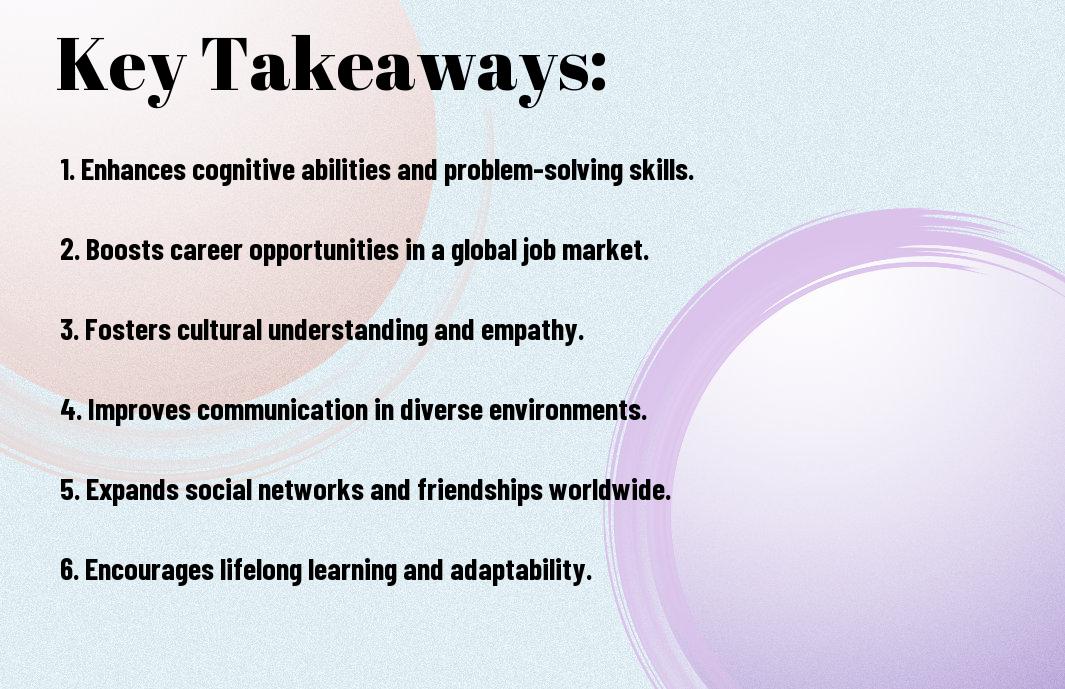
Key Takeaways:
- Being multilingual in today’s world offers numerous career opportunities and financial benefits, as it allows individuals to communicate effectively with people from diverse cultural backgrounds.
- Language skills can significantly enhance travel experiences, enabling individuals to navigate foreign countries with ease, appreciate local customs, and forge meaningful connections with native speakers.
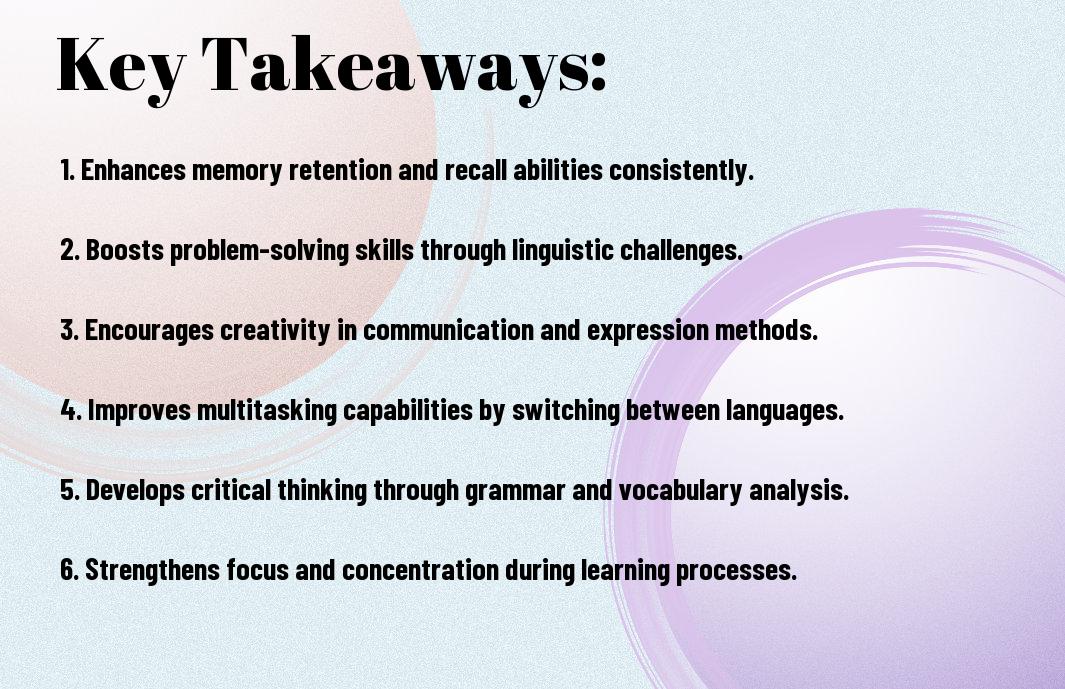
- Cognitive abilities, such as memory and problem-solving, can be improved through the process of learning and maintaining multiple languages.
- In an increasingly globalized economy, being multilingual can provide a competitive edge in the job market, particularly in fields like international business, diplomacy, and translation.
- Personal growth and cultural enrichment are also significant benefits of being multilingual, as it broadens one’s perspective and fosters a deeper understanding of the world’s diverse cultures and communities.
Benefits of Multilingualism in Career Advancement
The ability to speak multiple languages can significantly enhance your career prospects, as you can access a broader range of job opportunities and connect with a more diverse client base. According to a study on The Benefits of Multilingualism to the Personal and Professional Development of Individuals, being multilingual can open doors to new career paths and industries.
Enhanced Job Opportunities
Today, you can leverage your language skills to apply for jobs that require multilingual candidates, increasing your chances of getting hired by a global company or organization that operates in multiple countries.
Increased Earning Potential
Before you start applying for multilingual jobs, you should consider the potential salary increase that comes with being able to communicate in multiple languages, as companies are often willing to pay a premium for employees who can interact with clients and customers in their native language.
But as you progress in your career, you will find that your multilingual skills will become a valuable asset, allowing you to take on more responsibilities, such as leading international projects or negotiating with foreign clients, which can lead to significant increases in your earning potential and career advancement opportunities.
Cognitive Advantages of Multilingualism
There’s a significant benefit to being multilingual, as it enhances your cognitive abilities, allowing you to process information more efficiently and effectively. As you navigate through different languages, your brain becomes more adept at adapting to new situations, making you more mentally agile.
Improved Memory and Concentration
Following extensive research, it’s clear that speaking multiple languages improves your memory and concentration, enabling you to stay focused and retain information better. As you switch between languages, you train your brain to prioritize and filter out irrelevant information, sharpening your mental clarity.
Delayed Onset of Age-Related Cognitive Decline
Contrary to what you might expect, being multilingual can actually protect you against age-related cognitive decline, as the constant mental exercise helps build cognitive reserve. This reserve acts as a buffer, shielding your brain from the effects of aging, and allowing you to stay sharper for longer.
Cognitive decline is a natural part of aging, but as a multilingual individual, you have the power to delay its onset. By continually challenging your brain with multiple languages, you build a strong foundation for cognitive health, enabling you to maintain your mental acuity and stay engaged in activities you love, well into old age. This, in turn, can lead to a more fulfilling and independent life, as you continue to learn, grow, and thrive.
Cultural Enrichment through Multilingualism
Your ability to speak multiple languages can significantly enhance your cultural experiences, allowing you to engage with diverse communities and explore new perspectives.
Deeper Appreciation of Diverse Cultures
Through the lens of multilingualism, you gain a more nuanced understanding of cultural norms, values, and traditions, fostering a deeper appreciation for the diversity that surrounds you.
Broader Perspectives and Empathy
Multilingually, you develop the capacity to see the world from different viewpoints, cultivating empathy and broadening your understanding of the complexities that shape human experiences.
Consequently, as you navigate the complexities of multilingual communication, you become more adept at finding common ground with people from diverse backgrounds, allowing you to build more meaningful relationships and connect with others on a deeper level, ultimately enriching your personal and professional life.
Social Benefits of Multilingualism
After acquiring multiple languages, you can experience a significant improvement in your social interactions. Check out the Benefits of Multilingualism Infographic – NCELA to learn more.
Improved Communication with People from Diverse Backgrounds
Along with language skills, you gain a deeper understanding of different cultures, enabling you to connect with people from diverse backgrounds more effectively.
Increased Travel and Exploration Opportunities
The ability to speak multiple languages opens doors to new travel experiences, allowing you to engage with locals and appreciate their customs.
Social benefits of multilingualism extend to your travel experiences, as you can navigate foreign countries with ease, making your journeys more enjoyable and immersive, and you can fully appreciate the local culture, food, and history, making your travels a more enriching experience for you.
Language Learning and Brain Development
Unlike other skills, language learning has a profound impact on your brain development, enhancing your cognitive abilities and improving your overall mental agility. As you learn a new language, your brain undergoes significant changes, adapting to the new information and forming new connections.
Neuroplasticity and Language Acquisition
Acquiring a new language stimulates your brain’s neuroplasticity, allowing it to reorganize and refine its connections. As you learn, your brain creates new pathways, enabling you to process and understand the new language more efficiently.
The Role of Multilingualism in Shaping the Brain
Above all, being multilingual has a profound impact on your brain’s structure and function. As you switch between languages, your brain develops greater flexibility and adaptability, enabling you to think more creatively and solve problems more effectively.
In fact, studies have shown that multilingual individuals have a greater density of grey matter in areas of the brain responsible for language processing, executive control, and attention. This means that, as a multilingual person, you will have a cognitive advantage, being able to switch between languages and tasks with greater ease and accuracy, making you a more effective communicator and problem solver in today’s globalized world.
Challenges and Opportunities in a Multilingual World
Not surprisingly, navigating a multilingual world can be complex.
Overcoming Language Barriers and Stereotypes
You face several challenges, including:
- Language barriers
- Cultural differences
. Any multilingual individual can attest to the value of overcoming these obstacles.
| Benefits | Opportunities |
|---|---|
| Cultural understanding | Global connections |
| Language skills | New experiences |
| Personal growth | Networking |
| Social awareness | Career advancement |
Fostering Global Communication and Cooperation
Similarly, stereotypes can hinder effective communication. As you engage with people from diverse backgrounds, you will encounter various perspectives.
Further, fostering global communication and cooperation requires you to be open-minded and adaptable, allowing you to navigate complex cultural and linguistic landscapes, and to leverage your language skills to build bridges between different communities, ultimately enriching your personal and professional life.
Conclusion
So, as you consider your language skills, you’ll find that being multilingual opens doors to new opportunities. You can explore the benefits of speaking multiple languages by visiting what are the advantages of being multilingual to learn more. Your ability to communicate in multiple languages will enhance your personal and professional life, making you a more competitive and adaptable individual in today’s globalized world.
FAQ
Q: What are the career benefits of being multilingual in today’s globalized world?
A: Being multilingual can significantly enhance one’s career prospects in today’s globalized world. With the ability to communicate in multiple languages, individuals can access a broader range of job opportunities, both domestically and internationally. Multilingual employees are highly valued by companies that operate globally, as they can facilitate communication with clients, customers, and colleagues from diverse linguistic backgrounds. This can lead to increased job security, higher salaries, and greater career advancement opportunities.
Q: How does being multilingual impact travel and cultural experiences?
A: Being multilingual can greatly enrich one’s travel and cultural experiences. When individuals can communicate in the local language, they can engage more deeply with the culture, people, and customs of the places they visit. Multilingual travelers can navigate unfamiliar environments with greater ease, read signs and menus, and interact with locals in a more meaningful way. This can lead to a more authentic and immersive travel experience, as well as a deeper understanding and appreciation of different cultures.
Q: What are the cognitive and social benefits of being multilingual?
A: Being multilingual has been shown to have numerous cognitive and social benefits. Multilingual individuals have been found to possess improved memory, problem-solving, and multitasking skills, as well as enhanced cognitive flexibility and creativity. Additionally, being multilingual can foster greater empathy, tolerance, and understanding of diverse perspectives, leading to stronger social connections and a more open-minded worldview. Multilingual individuals can also delay the onset of age-related cognitive decline and even develop a greater sense of identity and belonging to multiple cultural communities.