As you begin on your language learning journey, you’ll need to define your objectives. Your goals will serve as a roadmap, guiding your progress and motivating you to stay on track. You’ll want to set targets that are achievable, yet challenging enough to prompt improvement. By doing so, you’ll be able to monitor your advancement and make adjustments as needed, ultimately leading to successful language acquisition. In this article, you’ll learn how to establish effective goals, tailored to your needs and abilities.
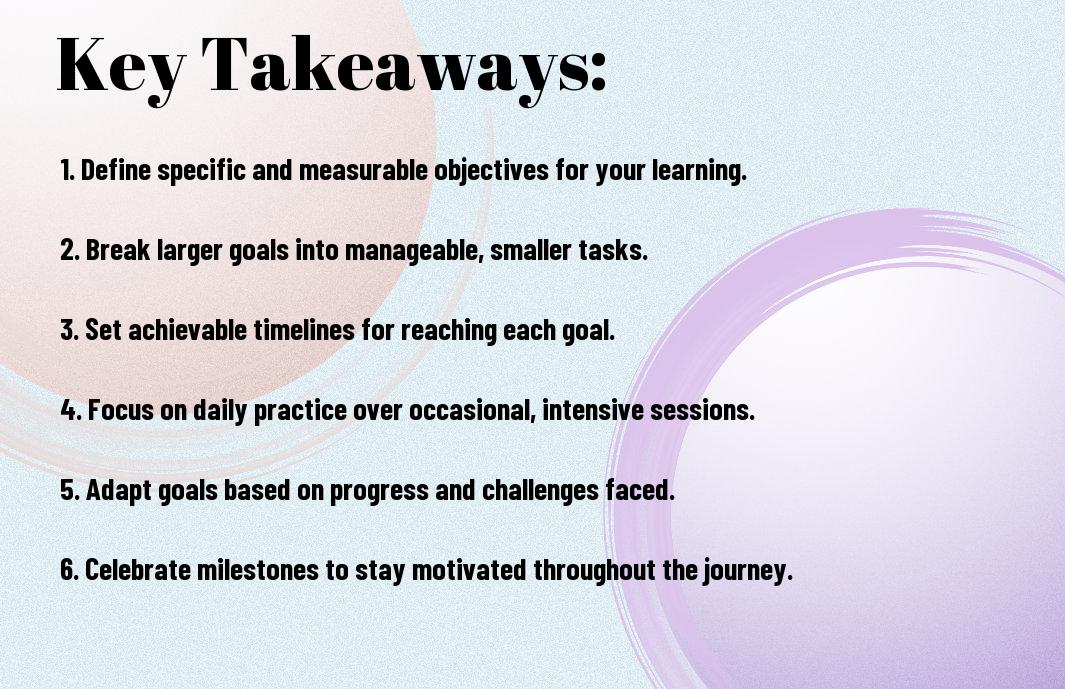
Key Takeaways:
To achieve success in language learning, it’s imperative to establish a clear plan. Here are the main points to consider:
- Setting Specific objectives is vital for language learners, as it helps to maintain focus and direction throughout the learning process.
- Establishing Measurable milestones enables learners to track their progress and make adjustments to their strategy as needed, ensuring they stay on track.
- Creating a Flexible schedule allows learners to accommodate unexpected setbacks and make adjustments to their goals, promoting a more effective and sustainable learning experience.
Setting the Foundation
A well-structured approach to language learning begins with understanding your objectives, as outlined in What Are Your Language Learning Goals? – SmarterLanguage, to guide your progress.
Defining Realistic Goals
For instance, you should consider what you want to achieve and by when, to set a clear direction for your learning journey, ensuring your goals are specific and attainable.
Assessing Current Language Level
On the path to setting realistic goals, you need to evaluate your current language proficiency to determine where to start and how to proceed effectively.
Even as you assess your language level, you will find that understanding your strengths and weaknesses helps you to create a more tailored approach to learning, allowing you to focus on areas that need improvement and build upon your existing knowledge.

Identifying Motivation
Any language learner’s journey begins with understanding what drives them to learn a new language. Your motivation will serve as the foundation for your goals, helping you stay focused and motivated throughout the process.
Determining Why You Want to Learn a Language
Identifying your reasons for learning a language is important to setting realistic goals. You need to consider what sparked your interest in the language and what you hope to achieve by learning it.
Finding Your Inner Drive
Inner motivations such as personal satisfaction or cultural interest can be powerful drivers of your language learning journey. You should explore what internally motivates you to learn a language, as this will help you stay committed to your goals.
In fact, understanding your inner drive can help you overcome obstacles and stay motivated even when faced with challenging language learning tasks, allowing you to make steady progress towards your goals and ultimately achieve success in your language learning endeavor, as you will be driven by a genuine desire to learn and improve your language skills.
Breaking Down Goals
To achieve your language learning objectives, you need to break them down into manageable parts. This involves dividing your goals into short-term and long-term targets, allowing you to focus on specific tasks and track your progress.
Short-Term Objectives
At this stage, you identify what you want to accomplish in a short period, such as learning basic phrases or vocabulary within a few weeks. You can set daily or weekly targets, like practicing a language for 30 minutes each day.
Long-Term Aspirations
With a clear understanding of your short-term objectives, you can now set your long-term goals, such as becoming fluent in a language or passing a proficiency test. You should consider your motivation and available time when setting these goals.
Consequently, your long-term aspirations will serve as a guiding force, helping you stay motivated and committed to your language learning journey. As you progress, you can adjust your goals to reflect your improving skills and knowledge, ensuring you continue to challenge yourself and make steady progress towards becoming proficient in your target language.
Creating a Learning Plan
Now that you have set your language learning goals, it’s time to create a plan to achieve them. You will need to break down your long-term goals into smaller, manageable tasks to make steady progress.
Setting Achievable Milestones
About the time you start learning a language, you should identify key milestones that mark your progress. You will be able to track your advancement and stay motivated by setting these milestones.
Developing a Study Schedule
One of the most effective ways to learn a language is to establish a regular study routine. You should allocate a specific time each day or week to focus on language learning, ensuring consistent progress.
In addition to setting a study schedule, you will need to consider your learning style, availability, and goals when planning your routine. You should prioritize tasks such as vocabulary building, grammar practice, and speaking, and allocate sufficient time for each activity to optimize your learning experience.
Overcoming Obstacles
Many language learners encounter setbacks that hinder their progress, but with the right mindset, you can overcome these obstacles and stay on track with your language learning goals.
Anticipating Challenges
Along with setting realistic goals, you should also consider the potential challenges you may face, such as lack of motivation or limited practice time, and think about how you will address them.
Finding Solutions
Anticipating potential problems will help you develop strategies to overcome them, and you can start by identifying the resources you need to stay motivated and engaged in your language learning journey.
A key part of finding solutions is to break down larger challenges into smaller, manageable tasks, and you can do this by creating a schedule that allows you to practice consistently, even if it’s just for a few minutes each day, and by seeking out language exchange partners or online communities to support your learning.
Tracking Progress
Once again, setting realistic goals is not enough; you must also track your progress. You can find inspiration for tracking methods on forums like What are some good language learning goals you’ve set?, where language learners share their experiences.
Monitoring Your Improvement
One way to monitor your improvement is to keep a language learning journal, where you note your progress, setbacks, and lessons learned.
Adjusting Your Approach
Below the surface of tracking progress lies the need to adjust your approach as you learn and grow, making changes to optimize your language learning strategy.
Even as you make progress, you may find that certain methods or materials are not working for you, and it’s imperative to be willing to adjust your approach to stay on track and achieve your goals, considering what works best for your learning style and schedule.
Conclusion
Drawing together the pieces of language learning, you now have a clear roadmap to set realistic goals. You will be able to create a schedule and track your progress, helping you stay motivated. By setting achievable targets, you will make steady progress and improve your language skills. Your efforts will pay off, and you will become a proficient language learner, capable of communicating effectively in your desired language.
FAQ
Q: What are the key considerations when setting realistic language learning goals?
A: When setting realistic language learning goals, it’s important to consider your current language proficiency level, the amount of time you can dedicate to learning each day or week, and your motivation for learning the language. Be honest about your schedule and capabilities to avoid setting yourself up for disappointment. Break down your long-term goals into smaller, achievable milestones, and prioritize consistency over speed. This will help you stay motivated and track your progress effectively.
Q: How can I create a personalized language learning plan that suits my needs and goals?
A: To create a personalized language learning plan, start by identifying your strengths, weaknesses, and learning style. If you’re a visual learner, incorporate more videos and images into your study routine. If you prefer auditory learning, focus on podcasts and audio materials. Set specific, measurable objectives, such as improving your reading comprehension or enhancing your vocabulary within a certain timeframe. Use a planner, app, or spreadsheet to schedule your study sessions and track your progress. Regularly assess and adjust your plan as needed to ensure you’re on track to meet your goals.
Q: What strategies can I use to stay motivated and track progress towards my language learning goals?
A: Staying motivated and tracking progress is vital to achieving your language learning goals. One effective strategy is to find a language learning buddy or join a community of learners for support and accountability. Celebrate your achievements, no matter how small, to maintain a positive mindset. Use language learning apps or journals to monitor your progress, and adjust your goals as needed. Immerse yourself in the language by watching TV shows or movies, listening to music, or reading books in the target language. This will help you stay engaged and motivated, making the learning process more enjoyable and increasing your chances of success.