As you launch on learning a new language, you’ll discover that writing poetry can be a powerful tool to enhance your skills. You’ll find that expressing yourself creatively helps you grasp grammar and vocabulary more effectively. To understand the benefits of poetry in language learning, you can explore How Does Poetry Help In Language Learning? and uncover the advantages of this approach, allowing you to improve your language skills in a unique and engaging way, tailored to your needs.
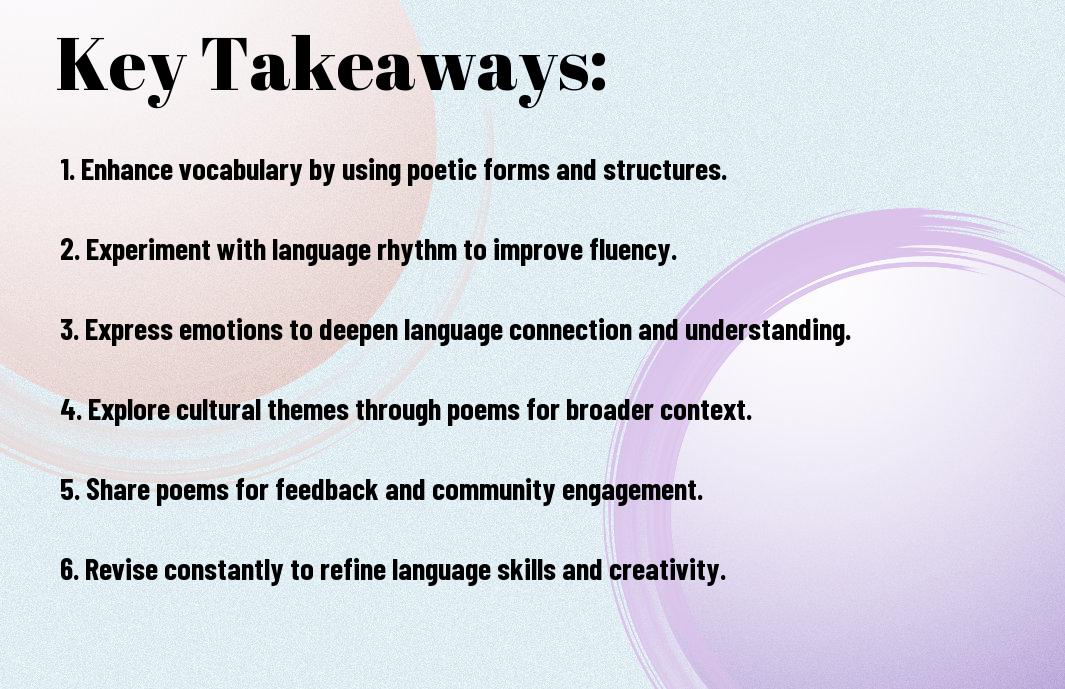
Key Takeaways:
- Practice Active Learning by using poetry as a tool to engage with the language, allowing you to develop a deeper understanding of its Grammar and Vocabulary.
- Focus on Creative Expression and use poetry to convey emotions, thoughts, and experiences, which can help you connect with the language on a more personal level and improve your Communication Skills.
- Use Authentic Materials such as poems written by native speakers to learn about the language’s Cultural Context and gain insight into its Linguistic Nuances.
- Experiment with Language Play and use poetry to explore the sound, rhythm, and Phonetics of the language, which can help you develop your pronunciation and Intonation.
- Make Mistakes and view them as an opportunity to learn and improve, using poetry as a Reflection Tool to identify areas where you need to focus your language learning efforts and track your progress over time.

Finding Inspiration
For learning a language through writing poetry, you can draw inspiration from various sources, including online resources like Poetry, My Secret Weapon for Language Learning, which can spark your creativity and motivation.
Discovering Personal Themes
On your journey to finding inspiration, you will uncover personal themes that resonate with your emotions and experiences, allowing you to connect with your writing on a deeper level and express yourself authentically in the target language.
Exploring Cultural Heritage
Between the lines of poetry, you can explore the cultural heritage of the language you’re learning, gaining a deeper understanding of the history, customs, and values that shape the language and its speakers.
For instance, you can explore into the works of famous poets from the target culture, analyzing their use of language, imagery, and themes to gain insight into the cultural context and nuances of the language, which will, in turn, enrich your own writing and language skills.
Building Vocabulary
Any language learner can benefit from writing poetry to enhance their vocabulary. You will encounter new words and phrases that you may not have seen before, which will help you to improve your language skills.
Learning New Words through Poetry
Vocabularly expansion is key when learning a language through poetry. You will discover new words and their meanings, and you can use them in your own poetic compositions, helping you to memorize them more effectively.
Using Metaphors and Similes
By utilizing metaphors and similes, you can create vivid imagery in your poetry, which will help you to better understand and retain new vocabulary. You will learn to express complex ideas and emotions in a more nuanced way.
Using metaphors and similes in your poetry will also allow you to think creatively about language and its possibilities. You will develop your ability to make connections between words and ideas, and to convey your thoughts and feelings in a unique and expressive way, which will help you to improve your overall language skills.
Crafting Poetic Lines
Despite the challenges, you can develop your writing skills by experimenting with poetry. You will learn to convey emotions and ideas in a concise and expressive way, which is vital for language learning.
Mastering Rhythm and Meter
Thereby, you will discover that rhythm and meter are vital components of poetry. You can practice reading aloud to develop your ear for rhythm and meter, which will help you to create more engaging lines.
Playing with Language and Imagery
Interestingly, imagery plays a significant role in poetry, allowing you to paint vivid pictures with your words. You can experiment with metaphors, similes, and other literary devices to add depth and complexity to your poems.
Indeed, as you explore language and imagery, you will find that your writing becomes more nuanced and expressive. You can use sensory details to bring your poems to life, and experiment with different tones and voices to convey your unique perspective. By doing so, you will not only improve your language skills but also develop your own distinctive style, making your poetry a true reflection of your thoughts and feelings.
Practicing Language Skills
Now that you have started learning a language through writing poetry, it’s time to practice your skills. You will improve your language proficiency by writing and revising poetry in the target language.
Writing Poetry in the Target Language
Against the backdrop of language learning, writing poetry can be a fun and creative way to practice your skills. You will learn to express yourself in the target language, and your writing will improve with time and practice.
Revising and Editing
Skills such as grammar, vocabulary, and syntax are honed when you revise and edit your poetry. You will become more accurate and fluent in the target language as you refine your writing.
Plus, as you revisit and refine your poetry, you will develop a keen eye for detail and a deeper understanding of the language. You will be able to identify areas that need improvement and make adjustments to produce high-quality writing that showcases your language skills.
Overcoming Challenges
All language learners face challenges when writing poetry in a new language, but you can find helpful resources, such as the discussion on using stories and poems to learn a language, to aid your learning process.
Dealing with Writer’s Block
With patience and persistence, you can overcome writer’s block by taking breaks, practicing regularly, and seeking inspiration from your favorite poets and writers.
Embracing Mistakes and Feedback
Feedback is crucial to your growth as a poet, and you should be open to constructive criticism to improve your writing skills and language proficiency.
Writers who embrace mistakes and feedback can refine their craft and develop a unique voice, so you should view mistakes as opportunities to learn and improve your poetry, ultimately enhancing your language skills and artistic expression.
Sharing Your Work
Unlike other language learning methods, writing poetry allows you to express yourself creatively and share your work with others. You can share your poetry with language exchange partners, tutors, or online communities to get feedback and improve your language skills.
Joining a Poetry Community
AFTER you have written some poetry, you can join online communities or local poetry groups to share your work and connect with other poetry enthusiasts. You will be able to learn from others, get feedback on your poetry, and improve your language skills in a supportive environment.
Performing Your Poetry
WORKing up the courage to perform your poetry in front of an audience can be a great way to practice your language skills. You will be able to improve your pronunciation, intonation, and fluency while sharing your creative work with others.
The experience of performing your poetry can be incredibly rewarding, as you will be able to connect with your audience and share your message with them. You will be able to see the impact of your words on others and learn from their reactions, which can help you to improve your language skills and become a more confident poet.
Conclusion
Conclusively, you will find that learning a language through writing poetry enhances your linguistic skills and fosters creativity. As you engage with this method, your vocabulary expands and your grammar improves. You become more proficient in expressing yourself, and your writing becomes more nuanced, allowing you to convey complex ideas with precision and flair, making you a more effective communicator in your target language.
FAQ
Q: What are the benefits of learning a language through writing poetry?
A: Learning a language through writing poetry offers a unique set of benefits. It allows learners to express themselves creatively while practicing vocabulary, grammar, and syntax in a more engaging and personalized way. By writing poetry, learners can develop a deeper understanding of the language’s nuances, such as rhythm, meter, and tone, which can help improve their overall language skills. Additionally, writing poetry can be a therapeutic and enjoyable experience, making language learning a more pleasant and rewarding process.
Q: How can I get started with learning a language through writing poetry if I am a beginner?
A: To get started with learning a language through writing poetry as a beginner, begin by reading and analyzing poems in your target language. Look for poems that are written in simple language and have a clear structure. Try to identify and learn new vocabulary, phrases, and grammatical patterns used in the poems. You can also start writing short poems using prompts or exercises found online or in language learning textbooks. Don’t worry too much about grammar or spelling mistakes at this stage; focus on expressing yourself and having fun with the language. As you progress, you can gradually move on to more complex poems and exercises.
Q: What tools and resources are available to help me learn a language through writing poetry?
A: There are numerous tools and resources available to help you learn a language through writing poetry. Online platforms and language learning apps often offer poetry writing exercises and prompts in various languages. You can also find language exchange websites where you can share your poems with native speakers and get feedback on your writing. Additionally, many libraries and bookstores have sections dedicated to poetry in different languages, and you can borrow or purchase books to read and study. Joining online poetry communities or language learning groups can also provide you with motivation, support, and opportunities to share your work and learn from others.