As you consider expanding your linguistic horizons, your financial situation may seem like an insurmountable obstacle. However, with careful planning and resourcefulness, you can still achieve your goals. If you’re struggling to find affordable language learning opportunities, you’re not alone – many have asked How can I learn a foreign language if I do not have money? In this article, you will discover practical tips and strategies to learn a language without breaking the bank, tailored to your needs and budget.
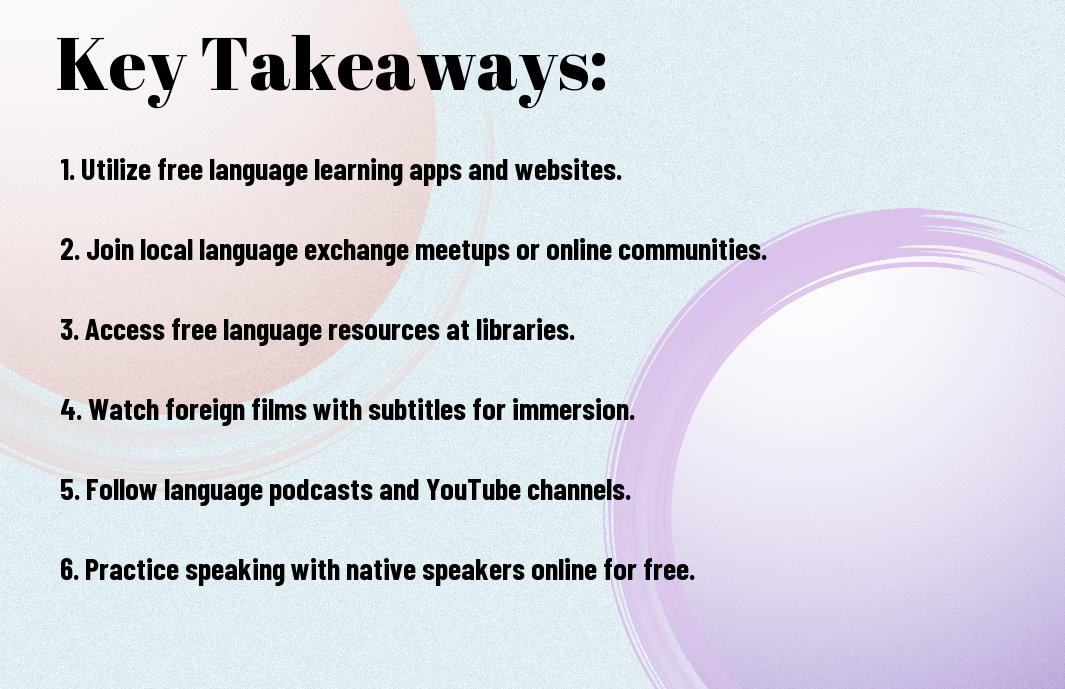
Key Takeaways:
To learn a language on a tight budget, consider the following points:
- Use free online resources such as language learning apps, YouTube channels, and podcasts that offer a wide range of lessons and exercises.
- Practice language exchange with native speakers through online platforms or social media to improve speaking and listening skills.
- Utilize public libraries that often provide free access to language learning materials, including books, audiobooks, and language learning software.
- Take advantage of language learning communities where you can connect with fellow learners, get feedback, and stay motivated.
- Focus on self-study techniques such as flashcards, vocabulary lists, and grammar exercises to make the most of your limited budget.
Setting Goals
A well-defined plan is vital when learning a language on a tight budget. You need to establish what you want to achieve and set realistic targets. This will help you stay focused and motivated throughout the learning process.
Defining Your Motivation
On the path to language learning, understanding your motivation is vital. You should identify why you want to learn a language, whether it’s for travel, work, or personal enrichment. This will help you staying committed to your goals.
Choosing the Right Language
With so many languages to choose from, you should consider which one aligns with your interests and goals. You may want to learn a language spoken by a large number of people or one that is closely related to your native language.
Another key factor to consider when choosing a language is the availability of resources. You should look for languages with plenty of free or low-cost learning materials, such as online courses, language exchange websites, and mobile apps. This will help you stay within your budget and make the most of your language learning journey.
Language Learning Resources
If you’re looking to learn a language on a tight budget, you’ll be pleased to know that there are numerous resources available to help you achieve your goal. You can access various online platforms, language learning apps, and exchange programs that fit your budget.
Free Online Courses
For instance, you can enroll in free online courses that offer comprehensive language lessons, complete with audio and video materials, to help you get started. You can find these courses on websites such as Coursera, edX, and Duolingo, which cater to different learning styles and levels.
Language Exchange Programs
Between language learners, online communities and social media groups have become popular platforms for language exchange. You can connect with native speakers, practice your language skills, and get feedback on your progress, all while helping others learn your native language in return.
Due to the rise of online language learning, you now have access to a wide range of language exchange programs that can be tailored to your schedule and learning needs. You can engage in text, voice, or video conversations with your language partner, which will help you improve your speaking, listening, and writing skills, and gain a deeper understanding of the language and its cultural context.
Budget-Friendly Study Materials
For learners on a tight budget, there are many affordable study materials available, allowing you to access quality resources without breaking the bank. You can explore various options, including language learning apps, second-hand textbooks, and online resources, to find what suits your needs and budget.
Language Learning Apps
Applications like Duolingo and Babbel offer comprehensive language courses, enabling you to learn at your own pace, and they are often free or low-cost, making them an excellent choice for you to get started with your language learning journey.
Second-Hand Textbooks
Alternatives such as second-hand bookstores and online marketplaces provide an opportunity for you to purchase used language textbooks at a fraction of the original cost, making it possible for you to acquire the materials you need without overspending.
For instance, you can visit local second-hand bookstores or browse online platforms like Amazon or eBay to find used textbooks, which can be just as effective as new ones, and will allow you to save money to allocate to other aspects of your language learning, such as practice with a native speaker or enrollment in a language exchange program.
Immerging in the Language
Once again, you will find that surrounding yourself with the language is an effective way to learn it, and this can be done without breaking the bank. You can find numerous free resources online to immerse yourself in the language, from language exchange websites to social media groups.
Listening to Music and Podcasts
By utilizing online platforms, you can access a vast array of music and podcasts in the target language, helping you to get used to its rhythm and sound. You can listen to them during your daily commute or while doing chores, making language learning a part of your routine.
Watching TV Shows and Movies
Above all, watching TV shows and movies in the target language can be a great way to improve your listening and comprehension skills. You can find many free resources online, such as YouTube channels or public domain videos, to get started.
Movies and TV shows can provide you with a glimpse into the culture and everyday life of the language you are learning, making the learning process more engaging and enjoyable. You can start with subtitles in your native language and gradually move to subtitles in the target language, or even watch without subtitles at all, to challenge yourself and improve your skills.

Practicing with Native Speakers
All language learners strive to immerse themselves in the language they want to learn. You can achieve this by practicing with native speakers, which will help you improve your speaking skills and gain confidence in using the language.
Language Exchange Websites
Natively speaking with someone in the target language can be challenging, but language exchange websites can connect you with native speakers who want to learn your language in return, making it a mutually beneficial exchange.
Local Language Meetups
Contrary to what you might think, attending local language meetups can be an effective way to practice your language skills, as you will be surrounded by people who share your interest in languages.
Practicing with others in a local language meetup setting allows you to engage in conversations, learn new phrases, and get feedback on your pronunciation, which will help you to refine your language skills and make progress in your language learning journey, and you will find that your language skills improve significantly as you continue to attend these meetups and practice with native speakers.
Staying Motivated
Keep your language learning journey on track by exploring cost-effective resources, such as the article on How to learn a foreign language on a budget, which offers valuable tips and advice. This will help you stay motivated and focused on your goals.
Setting Achievable Milestones
On your path to language proficiency, break down your goals into smaller, manageable tasks to track your progress and celebrate small victories, helping you to stay engaged and motivated in your learning journey.
Rewarding Progress
Staying positive and encouraged is important, so be sure to acknowledge and celebrate your achievements, no matter how minor they may seem, as this will help to reinforce your motivation and commitment to learning a new language.
Consequently, as you acknowledge your progress, you will begin to notice significant improvements in your language skills, and this, in turn, will boost your confidence, enabling you to tackle more challenging tasks and continue making progress towards your goal of becoming proficient in your chosen language, and you will find that your hard work and dedication are paying off, allowing you to enjoy the many benefits that come with speaking a new language.
To wrap up
Presently, you have a clear understanding of how to learn a language without overspending. You can utilize free online resources, language exchange programs, and self-study materials to achieve your goal. By being mindful of your expenses and making the most of your time, you can effectively learn a language on a tight budget, and your efforts will be rewarded with the ability to communicate in a new language.
FAQ
Q: What are the best free resources to learn a language on a tight budget?
A: There are numerous free resources available to learn a language without spending a fortune. Some of the most effective ones include language learning apps like Duolingo, Memrise, and Anki, which offer comprehensive lessons and interactive exercises. Additionally, YouTube channels such as EnglishClass101, SpanishDict, and French with Lucy provide engaging video lessons and explanations. You can also utilize online language exchange websites like italki and Conversation Exchange to practice speaking with native speakers. Furthermore, podcasts like “Coffee Break” and “News in Slow” offer entertaining and informative content to improve your listening skills.
Q: How can I practice speaking and listening skills without paying for expensive language classes?
A: Practicing speaking and listening skills is imperative to become proficient in a language. One way to do this without breaking the bank is to find a language exchange partner, either in person or online, who is a native speaker of the language you want to learn. You can also listen to music, watch TV shows and movies, and try to summarize the plot or sing along to improve your listening and pronunciation skills. Another option is to use online resources like speech-to-text software, which allows you to practice speaking and get instant feedback on your pronunciation. You can also try to speak with yourself, describe your daily routine, or talk about your interests to improve your speaking skills.
Q: Are there any affordable language learning courses or certifications that can help me achieve fluency?
A: Yes, there are several affordable language learning courses and certifications that can help you achieve fluency. Online courses like Coursera, edX, and Udemy offer a wide range of language courses at affordable prices. You can also consider language learning platforms like Babbel and Rosetta Stone, which provide comprehensive lessons and interactive exercises at a lower cost than traditional language classes. Additionally, certifications like the DELE (Spanish), DALF (French), and JLPT (Japanese) can help you assess your language proficiency and demonstrate your skills to potential employers. Many community colleges and libraries also offer affordable language classes, which can be a great option for those on a tight budget.
