As you navigate the diverse landscape of your country, you may find yourself surrounded by languages beyond the dominant one. Your curiosity about these regional languages is natural, and learning them can be a rewarding experience. You can start by exploring the languages spoken in your vicinity, and then look for resources to learn them, such as language classes or online tutorials. By doing so, you will not only broaden your understanding of your country’s cultural heritage, but also enhance your communication with people from diverse backgrounds.
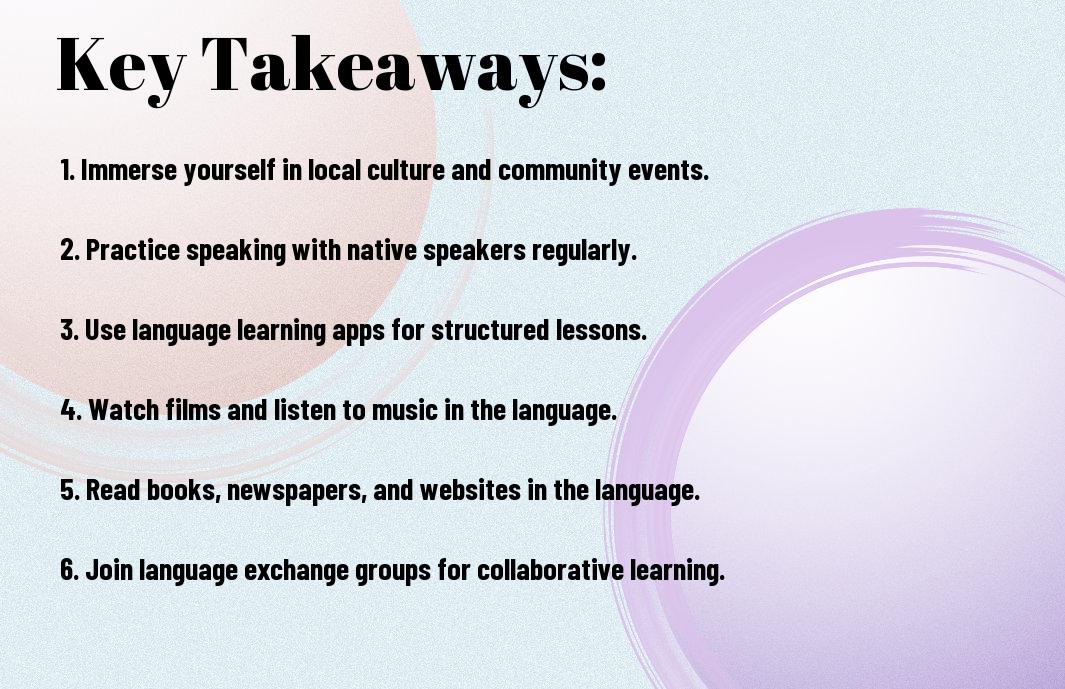
Key Takeaways:
- Start by identifying the regional languages spoken in your country and understand their cultural significance to appreciate the diversity and richness they bring to the community.
- Enroll in a language course or find a language exchange partner who is a native speaker of the regional language you want to learn, as this will help you improve pronunciation and get feedback on your progress.
- Immerse yourself in the language environment by listening to music, watching movies, and reading books in the regional language to enhance comprehension and vocabulary.
Benefits of Learning Regional Languages
Before venturing into the process of learning regional languages, it’s crucial to consider the advantages it brings. Learning regional languages can broaden your understanding of your country’s diverse culture and history, allowing you to connect with people from different backgrounds.
Enhancing Cultural Experience
For instance, when you learn a regional language, you gain a deeper appreciation for the local customs, traditions, and way of life, enabling you to immerse yourself in the culture more fully.
Improving Communication Skills
At the heart of learning a regional language lies the ability to communicate effectively with people who speak it, allowing you to build stronger relationships and navigate everyday situations with ease.
Communication is a vital aspect of learning a regional language, as it enables you to express yourself and understand others in a more nuanced way, which can be particularly helpful in both personal and professional settings, and you will find that your interactions become more meaningful and productive as you become more proficient in the language.

Choosing the Right Language
Some countries have numerous regional languages, making it difficult to decide which one to learn. You can explore programs like the Eurasian Regional Language Program to discover the language that suits your interests. This will help you narrow down your options and choose a language that aligns with your goals.
Identifying Local Dialects
On the path to learning a regional language, you’ll encounter various dialects. You’ll need to identify the local dialects spoken in your desired region to focus your learning efforts. This will enable you to communicate effectively with native speakers and immerse yourself in the local culture.
Selecting Language Learning Resources
Along with choosing the right language, you’ll need to select suitable learning resources. You’ll find a plethora of language learning materials, including textbooks, language learning apps, and online courses. These resources will aid you in developing your language skills and staying motivated throughout your learning journey.
With a wealth of language learning resources at your disposal, you can create a personalized learning plan. You’ll be able to practice speaking, reading, and writing in your chosen language, and track your progress over time. As you continue to learn, you’ll become more confident in your ability to communicate in the regional language, and you’ll be able to connect with the local community on a deeper level. You’ll find that learning a regional language is a rewarding experience that broadens your understanding of the culture and its people.
Language Learning Methods
After deciding to learn a regional language, you will encounter various methods to achieve your goal. You can choose from immersive techniques, traditional classroom instruction, or self-study materials. Your approach will depend on your learning style, preferences, and available resources.
Immersive Learning Techniques
Methods such as language exchange programs, watching regional movies, and listening to local music can help you learn a language quickly. You will be surrounded by the language, allowing you to pick up its nuances and rhythms naturally.
Traditional Classroom Instruction
Immersing yourself in a classroom setting can provide structure and guidance as you learn a regional language. You will have the opportunity to interact with a teacher and fellow students, practicing your speaking and listening skills.
A traditional classroom setting offers a supportive environment where you can ask questions, clarify doubts, and track your progress. You will have access to textbooks, worksheets, and other learning materials, helping you build a strong foundation in the language. As you attend classes regularly, you will become more confident in your ability to communicate in the regional language.
Overcoming Language Barriers
Despite the challenges you may face, learning a regional language can be a rewarding experience. You will be able to connect with people from different backgrounds and understand their culture better. As you progress, you will become more confident in your ability to communicate effectively.
Managing Accent and Pronunciation
With consistent practice, you will be able to improve your accent and pronunciation. You can listen to native speakers, repeat phrases, and record yourself to track your progress. This will help you to develop a more authentic tone and intonation.
Building Vocabulary and Grammar
Parallel to learning new words, you will also need to understand the grammar rules of the language. You can start by learning basic phrases and sentences, and then gradually move on to more complex structures. This will help you to express yourself more accurately and effectively.
Another key aspect of building vocabulary and grammar is to immerse yourself in the language as much as possible. You can read books, watch movies, and engage in conversations with native speakers to improve your comprehension and retention. As you continue to learn, you will find that your vocabulary and grammar skills will improve significantly, enabling you to communicate with greater ease and confidence in your newly acquired language.
Practicing Language Skills
Once again, consistent practice is key to improving your language skills. You can start by speaking with native speakers, either in person or online, to get a feel for the language’s nuances and rhythm.
Conversing with Native Speakers
Skilfully, you can develop your speaking skills by engaging in conversations with native speakers, which will help you to pick up their accent, intonation, and vocabulary.
Engaging in Local Activities
Linguistically, you can improve your language skills by participating in local events, such as festivals, markets, or community gatherings, where you can interact with native speakers and practice your language skills in a real-life setting.
Even more effective is to take it a step further by joining local clubs or groups that align with your interests, allowing you to practice your language skills while doing something you enjoy, making the learning process more enjoyable and increasing your chances of retaining the language.
Staying Motivated
All learners face challenges when acquiring a new language, and your motivation may wane at times, but persistence is key to overcoming these obstacles and achieving your goals.
Setting Achievable Goals
Attainable objectives help you stay focused and driven, allowing you to track your progress and celebrate your successes, which in turn boosts your motivation to continue learning your regional language.
Joining Language Learning Communities
Accessible online forums and language exchange websites provide you with opportunities to practice your language skills and connect with fellow learners, helping you stay motivated and engaged in the learning process.
With these communities, you can find language exchange partners, participate in discussions, and learn from others who are also learning your target language, making the experience more enjoyable and helping you to stay committed to your goal of becoming proficient in your country’s regional language.
Summing up
Upon reflecting on the methods outlined, you will find that learning regional languages of your country is a straightforward process. You can start by immersing yourself in your target language, using online resources and speaking with native speakers. As you progress, you will become more comfortable with your new language, and your interactions with people from other regions will become more meaningful. By taking these steps, you will be able to appreciate your country’s linguistic diversity and connect with your fellow citizens on a deeper level.
FAQ
Q: What are the benefits of learning regional languages of my country?
A: Learning regional languages of your country can have numerous benefits, including enhanced communication with people from diverse backgrounds, improved job opportunities, and a deeper understanding of local cultures. It can also foster a sense of national unity and pride, as you develop a greater appreciation for the diversity and richness of your country’s linguistic heritage. Additionally, being proficient in regional languages can be a valuable skill in both personal and professional settings, allowing you to connect with people and access resources that may not be available otherwise.
Q: How can I start learning a regional language, and what resources are available to support my learning journey?
A: To start learning a regional language, you can begin by exploring online resources such as language learning apps, YouTube channels, and podcasts that offer lessons and tutorials. You can also look for language exchange programs, where you can practice speaking with native speakers and get feedback on your pronunciation and grammar. Furthermore, many regional languages have dedicated language schools, community centers, and cultural organizations that offer classes and workshops. You can also try to immerse yourself in the language by watching regional movies, listening to local music, and reading books and newspapers in the target language. With persistence and dedication, you can make steady progress and become proficient in the regional language of your choice.
Q: Are there any specific tips or strategies for learning regional languages, especially for those who are not familiar with the script or grammar?
A: Yes, there are several tips and strategies that can help you learn a regional language, even if you’re not familiar with the script or grammar. One approach is to start with the basics, such as learning the alphabet, common phrases, and vocabulary related to everyday life. You can also focus on developing your listening and speaking skills by practicing with native speakers, listening to podcasts or audio recordings, and speaking as much as possible. Additionally, you can use flashcards, language learning apps, and other tools to help you memorize new words and phrases. It’s also crucial to be patient and persistent, as learning a new language takes time and effort. You can also try to find a language partner or tutor who can guide you and provide feedback on your progress, helping you to stay motivated and overcome any challenges you may encounter.

