
You want to learn a new language, but your schedule is tight. You need to make the most of your study time. To do this, you must prioritize your goals and focus on what works best for you. Check out tips on Making Time for Language Study | How I Find Time to Learn and create your own effective study routine, maximizing your progress in minimal time.
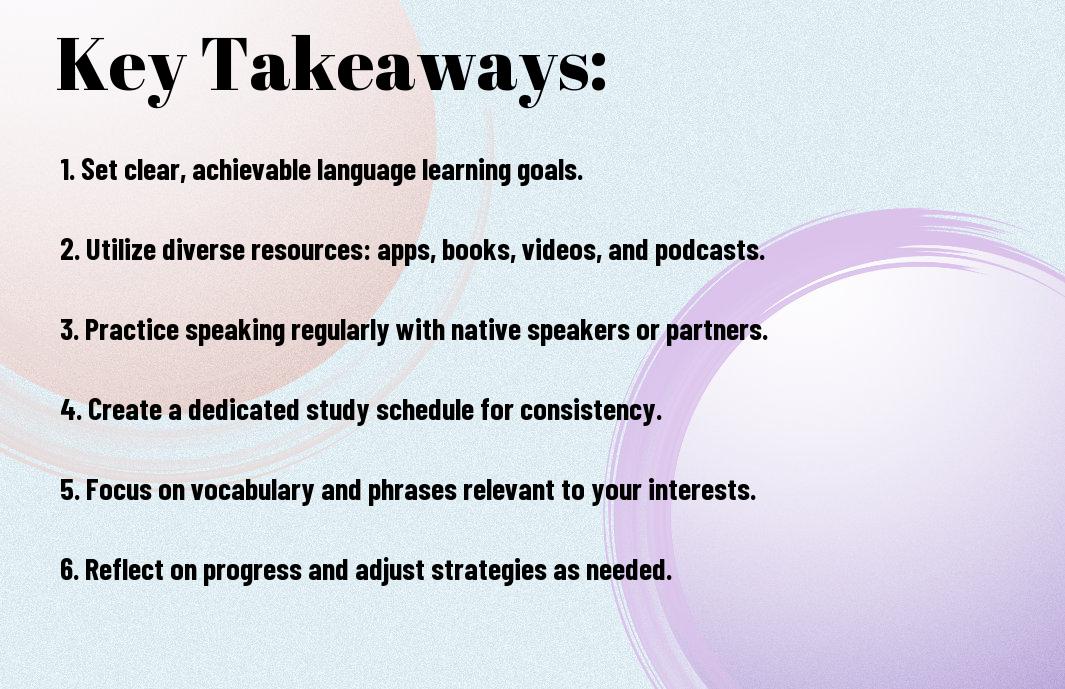
Key Takeaways:
To maximize your language learning efficiency, consider the following points:
- Set specific goals for your study sessions to help you stay focused and motivated, ensuring you make the most of your time.
- Use active learning techniques, such as speaking and writing, to engage with the language and reinforce your understanding of new concepts.
- Practice consistent review to solidify your knowledge and prevent forgetting, helping you to build a strong foundation in the language over time.
Setting Goals
Your language study time is limited, so you need to make the most of it. Setting clear goals helps you focus on what you want to achieve.
Defining Objectives
Besides identifying your motivation, you need to define what you want to accomplish. You set specific objectives, like improving grammar or vocabulary.
Creating a Schedule
At the outset, you plan out your study time. You allocate specific times for learning and practicing your language skills.
In fact, creating a schedule helps you prioritize your tasks and manage your time effectively. You can break down your study time into smaller chunks, focusing on different skills like reading, writing, or speaking, and make adjustments as needed to stay on track and achieve your goals.

Choosing Materials
The key to making the most of your language study time is selecting the right materials. You can find many resources online, such as learning a new language efficiently, to help you get started.
Textbooks and Workbooks
For beginners, textbooks and workbooks are a good place to start, providing a structured approach to learning a new language.
Online Resources and Apps
Above all, online resources and apps offer a wide range of learning tools, from language learning platforms to podcasts and videos.
This abundance of online resources allows you to personalize your learning experience, focusing on your weaknesses and interests, and catering to your learning style, making your language study time more effective and enjoyable, as you progress at your own pace, with your preferred tools, and you can track your progress, adjusting your strategy as needed.
Practicing Consistency
All language learners aim to make progress, and you are no exception. You need to stay on track, setting achievable goals and sticking to your schedule. This will help you build habits and make the most of your study time.
Daily Routine
Once you’ve set your goals, you can start creating a daily routine that works for you. You’ll need to allocate a specific time for language study, and try to minimize distractions during that time. Your daily routine should be realistic and flexible, allowing you to make adjustments as needed.
Review and Revision
Around the time you’ve completed a study session, you should take a few minutes to review what you’ve learned. You’ll find that going over the material helps solidify it in your mind, making it easier to recall later. Your review sessions should be regular, and focused on reinforcing your understanding of the language.
Further, as you continue with your review and revision, you’ll start to notice areas where you need more practice. You can use this information to adjust your study plan, focusing on the topics that are giving you trouble. By doing so, you’ll be able to make the most of your study time, and see steady progress in your language skills. You’ll find that your hard work pays off, and you become more confident in your ability to communicate in the language.
Enhancing Comprehension
Keep your study time focused on understanding the language. You’ll gain more from your efforts by concentrating on comprehension than by just memorizing rules.
Active Listening
Often,you find yourself trying to make sense of what you hear. Tune in to podcasts, audiobooks, or conversations to improve your listening skills.
Engaging in Conversation
Between conversations with native speakers and language exchange partners, you’ll find opportunities to practice speaking and improve your comprehension.
Listening to others speak, you start to pick up on nuances of the language, such as idioms and expressions. You can then use these in your own conversations, helping you to sound more natural and fluent in the language you’re studying.
Overcoming Obstacles
To make the most of your language study time, you need to be prepared to face challenges. You’ll encounter setbacks, but with the right mindset, you can overcome them and stay on track.
Managing Motivation
After setting your goals, you’ll need to find ways to stay motivated. You can do this by rewarding yourself for milestones achieved and tracking your progress to see how far you’ve come.
Dealing with Difficulties
For every language learner, difficulties are inevitable. You’ll struggle with grammar, vocabulary, and pronunciation, but don’t let that discourage you. Break down the challenges into smaller, manageable parts, and focus on one thing at a time.
Also, when dealing with difficulties, you’ll need to develop a growth mindset. You’ll need to be patient with yourself and acknowledge that making mistakes is a natural part of the learning process. By doing so, you’ll be able to learn from your mistakes and move forward, improving your language skills with each passing day.
Tracking Progress
After dedicating time to language study, you need to monitor your progress. You track your advancements, identify areas for improvement, and adjust your strategy accordingly.
Keeping a Journal
By documenting your daily language study, you reflect on your journey and pinpoint what works best for you. Your journal becomes a valuable tool to evaluate your progress.
Setting Milestones
Among the most effective ways to track progress is setting specific goals. You define achievable milestones, focusing on what you want to accomplish in your language study.
This approach helps you stay motivated and directed. You break down your long-term goals into manageable tasks, celebrating each milestone achieved, and use this momentum to propel your language study forward, making steady progress towards fluency.
Conclusion
Drawing together the strategies outlined, you can maximize your language study time. You prioritize your goals, focus on consistent practice, and utilize effective resources. By doing so, you make the most of your time and accelerate your progress. Your dedication and persistence will yield tangible results, and you will become proficient in the language. You will be able to communicate effectively and achieve your objectives.
FAQ
Q: What is the best way to prioritize tasks when studying a language to make the most of my study time?
A: To maximize your language study time, it’s necessary to set clear goals and prioritize tasks based on your learning objectives. Start by identifying your weaknesses and areas that need improvement, then allocate your time accordingly. For instance, if you struggle with grammar, devote more time to grammar exercises and practice. Utilize a planner or app to schedule your study sessions, ensuring a balanced approach that includes reading, writing, listening, and speaking practice. This structured approach will help you stay focused and make the most out of your study time.
Q: How can I effectively use language learning apps and online resources to supplement my study routine?
A: Integrating language learning apps and online resources into your study routine can significantly enhance your learning experience. Begin by selecting apps that align with your learning goals, such as those focusing on vocabulary building, grammar practice, or conversational skills. Utilize these tools to fill gaps in your schedule, such as during commutes or breaks, to practice consistently. Many apps offer interactive exercises, quizzes, and games that make learning engaging and fun. Additionally, online resources like language exchange websites, podcasts, and YouTube channels can provide diverse learning materials and opportunities to engage with native speakers, further enriching your study time.
Q: What strategies can I employ to stay motivated and maintain consistency in my language study routine?
A: Staying motivated and consistent is key to making the most of your language study time. One effective strategy is to find a language learning buddy or join a study group, where you can practice speaking, share tips, and learn from each other’s experiences. Setting achievable milestones and rewarding yourself upon reaching them can also boost motivation. Immersing yourself in the language by watching TV shows or movies, listening to music, and trying to think in the language can make the learning process enjoyable and engaging. Furthermore, tracking your progress through journals or language learning logs can help you visualize your improvements, reinforcing your commitment to regular study and encouraging you to push forward.

