How to Improve Communication in Foreign Languages

You strive to express yourself effectively in a foreign language, but often find yourself struggling to convey your thoughts. Your attempts at communication are hindered by language barriers, leading to frustration and misunderstandings. As you navigate unfamiliar linguistic terrain, you face challenges in making yourself understood. This article will guide you through the process of improving your communication skills in foreign languages, helping you to overcome these obstacles and convey your message with clarity and confidence.

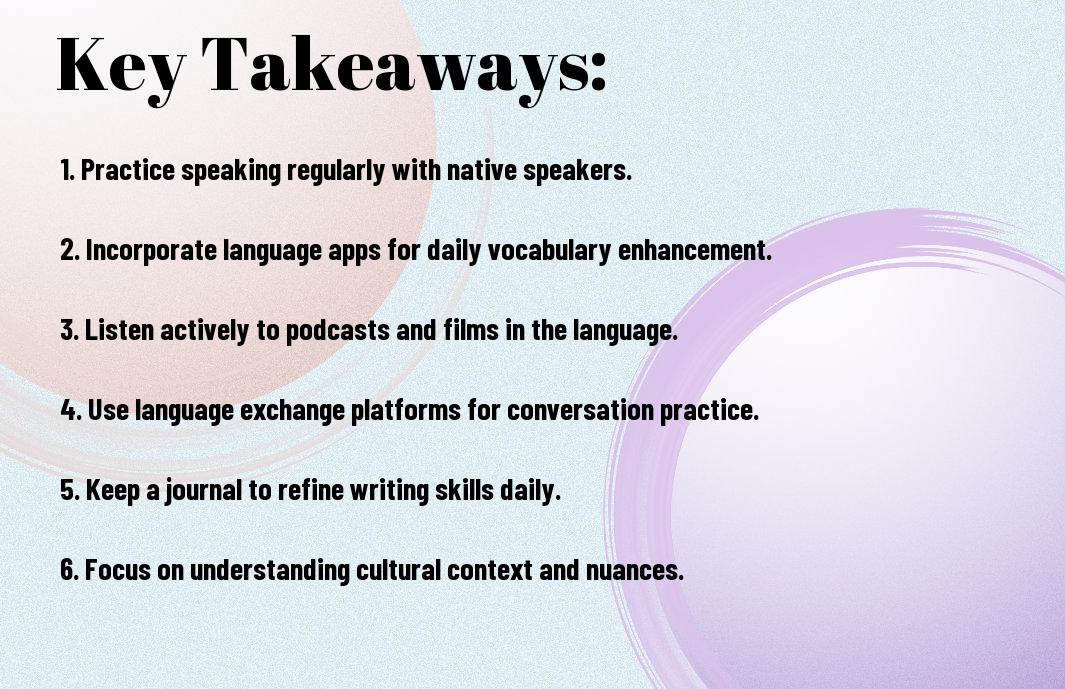
Key Takeaways:

To enhance your ability to communicate effectively in foreign languages, consider the following points:

  • Improve your listening skills by regularly listening to native speakers, podcasts, and audio materials in the target language to get accustomed to its rhythm and pronunciation.
  • Enhance your vocabulary by reading books, articles, and news in the foreign language, which will help you learn new words and phrases in context, making them easier to memorize.
  • Practice speaking and writing in the foreign language as often as possible, whether through language exchange programs, writing journals, or engaging in conversations with native speakers, to develop your fluency and confidence.

Language Learning Fundamentals

While learning a foreign language, you will encounter various challenges that can hinder your progress, but understanding the basics is imperative to improve your communication skills.

Setting Realistic Goals

Achieving a decent level of proficiency in a foreign language requires you to set attainable objectives, allowing you to track your progress and stay motivated throughout the learning process.

Immersing Yourself in the Language

Authentic exposure to the language is vital, and surrounding yourself with native speakers, watching TV shows, and listening to music in the target language will significantly enhance your comprehension and pronunciation.

But as you examine deeper into immersing yourself in the language, you will find that consistency is key; making language learning a part of your daily routine, even if it’s just for a few minutes, will help you develop a natural flow and eventually, you will be able to express yourself effortlessly in the foreign language, enabling you to communicate effectively with native speakers.

Effective Communication Techniques

Now that you are aware of the importance of communication in foreign languages, it is time to explore some effective techniques to improve your skills. You will learn how to convey your message clearly and understand others in a more efficient manner.

Active Listening

To become a better communicator, you must start by paying attention to the person speaking, focusing on their words, tone, and body language, and responding thoughtfully to show you are engaged in the conversation.

Clear and Concise Speaking

On the other hand, when speaking, you should try to express your thoughts in a straightforward and simple way, avoiding unnecessary complexity and using visual aids to support your message when possible.

Effective communication is heavily reliant on your ability to speak clearly and concisely, allowing your audience to easily understand your point of view, so you should practice articulating your thoughts in a logical and well-structured manner, using everyday language that is easy to comprehend.

Overcoming Language Barriers

Many language learners face difficulties when communicating in a foreign language, but with practice and patience, you can improve your skills and overcome these barriers, enabling you to express your thoughts and ideas effectively.

Dealing with Accent and Pronunciation Issues

Accentuating the importance of correct pronunciation, you should focus on listening to native speakers and mimicking their intonation, which will help you to improve your accent and speak more confidently in your target language.

Managing Idiomatic Expressions

For instance, mastering idiomatic expressions is imperative to sound natural in a foreign language, and you can achieve this by learning common phrases and practicing their usage in different contexts, which will help you to convey your message more effectively.

Considering the complexities of idiomatic expressions, you will need to explore deeper into the language and explore its nuances, which will enable you to use them accurately and appropriately, making your communication more engaging and fluent, and allowing you to express your thoughts and ideas with greater precision and clarity.

Building Vocabulary and Grammar

Keep in mind that expanding your vocabulary and understanding grammar rules are necessary steps in improving your communication in foreign languages. You will need to dedicate time to learning new words, phrases, and grammar structures to enhance your language skills.

Learning Common Phrases and Expressions

Verbalizing your thoughts in a foreign language starts with learning common phrases and expressions. You should focus on phrases used in everyday conversations, such as greetings, introductions, and basic questions, to help you communicate effectively.

Practicing Grammar Rules

Besides learning vocabulary, practicing grammar rules is vital to your language development. You must apply grammar rules in context to improve your comprehension and expression, which will help you to convey your thoughts and ideas accurately.

Considering your progress in practicing grammar rules, you will find that your language skills are improving significantly. As you continue to practice, you will become more comfortable using grammar rules in your conversations, allowing you to express yourself more clearly and confidently in the foreign language. Your ability to apply grammar rules correctly will also enhance your writing skills, enabling you to write coherent and well-structured texts.

Improving Pronunciation and Intonation

After dedicating time to learning a foreign language, you will need to focus on improving your pronunciation and intonation to communicate effectively. This involves practicing the sounds, rhythm, and stress patterns of the language, which can be achieved through listening to native speakers and mimicking their speech.

Recording Yourself

Alike a mirror reflection, recording yourself speaking can help you identify areas that need improvement, allowing you to adjust your pronunciation and intonation accordingly, and track your progress over time.

Seeking Feedback from Native Speakers

Beneath the surface of language learning lies the importance of seeking feedback from native speakers, who can pinpoint your mistakes and provide valuable corrections, enabling you to refine your pronunciation and intonation.

In fact, seeking feedback from native speakers can be done in various ways, such as language exchange programs, online forums, or social media groups, where you can engage in conversations, share your recordings, and ask for constructive criticism to help you improve your spoken language skills, and you will find that your communication skills in the foreign language will greatly benefit from this practice.

Engaging in Conversations

Despite the challenges you may face, engaging in conversations is a key aspect of improving your communication skills in a foreign language. You will learn to express your thoughts and ideas, and to understand different perspectives and opinions.

Finding Language Exchange Partners

Alongside other methods, finding a language exchange partner can be an effective way to practice your speaking skills, as you will have the opportunity to engage in regular conversations with a native speaker, helping you to improve your pronunciation and grammar.

Participating in Group Conversations

Conversely, participating in group conversations can be a great way to improve your communication skills, as you will be exposed to different speaking styles and vocabulary, allowing you to learn from others and adapt to various situations.

Hence, as you participate in group conversations, you will find that your ability to understand and contribute to discussions will improve, enabling you to express your thoughts and opinions with greater confidence and clarity, which in turn will help you to become a more effective communicator in your target language.

To wrap up

With these considerations, you will be well on your way to improving your communication in foreign languages. You can put your skills to the test by exploring 11 Unique Ways to Practice Speaking a Foreign Language and find what works best for you, enhancing your ability to effectively express yourself in a new language.

FAQ

Q: What are the most effective ways to improve communication in foreign languages?

A: To improve communication in foreign languages, it is necessary to practice consistently. This can be achieved by engaging in conversations with native speakers, either in person or through online platforms. Additionally, listening to and watching media in the target language, such as TV shows, movies, podcasts, and music, can help improve comprehension and pronunciation. Furthermore, using language learning apps and enrolling in language courses can provide structured learning and feedback.

Q: How can I overcome the barrier of pronunciation and accent when communicating in a foreign language?

A: Overcoming the barrier of pronunciation and accent requires patience and dedication. One effective way is to mimic native speakers by listening to and repeating their intonation, rhythm, and individual sounds. Recording yourself speaking and comparing it to native speakers can help identify areas for improvement. Moreover, practicing with a language exchange partner or tutor who can correct your pronunciation and provide feedback is highly beneficial. Regular practice of speaking and listening will also help your brain and mouth get used to the new sounds and rhythms of the language.

Q: What role does cultural understanding play in improving communication in foreign languages, and how can I develop it?

A: Cultural understanding plays a significant role in effective communication in foreign languages. It involves being aware of the customs, traditions, and nuances of the culture associated with the language. Developing cultural understanding can be achieved by learning about the history, social norms, and values of the culture. Engaging with authentic materials such as news, literature, and social media from the target culture can provide insights into the daily life and perspectives of native speakers. Moreover, participating in cultural events and interacting with people from the culture can offer firsthand experiences and opportunities to observe and practice appropriate communication behaviors.


How to Improve Communication in Foreign Languages

You strive to express yourself effectively in a foreign language, but often find yourself struggling to convey your thoughts. Your attempts at communication are hindered by language barriers, leading to frustration and misunderstandings. As you navigate unfamiliar linguistic terrain, you face challenges in making yourself understood. This article will guide you through the process of improving your communication skills in foreign languages, helping you to overcome these obstacles and convey your message with clarity and confidence.

Key Takeaways:

To enhance your ability to communicate effectively in foreign languages, consider the following points:

  • Improve your listening skills by regularly listening to native speakers, podcasts, and audio materials in the target language to get accustomed to its rhythm and pronunciation.
  • Enhance your vocabulary by reading books, articles, and news in the foreign language, which will help you learn new words and phrases in context, making them easier to memorize.
  • Practice speaking and writing in the foreign language as often as possible, whether through language exchange programs, writing journals, or engaging in conversations with native speakers, to develop your fluency and confidence.

Language Learning Fundamentals

While learning a foreign language, you will encounter various challenges that can hinder your progress, but understanding the basics is imperative to improve your communication skills.

Setting Realistic Goals

Achieving a decent level of proficiency in a foreign language requires you to set attainable objectives, allowing you to track your progress and stay motivated throughout the learning process.

Immersing Yourself in the Language

Authentic exposure to the language is vital, and surrounding yourself with native speakers, watching TV shows, and listening to music in the target language will significantly enhance your comprehension and pronunciation.

But as you examine deeper into immersing yourself in the language, you will find that consistency is key; making language learning a part of your daily routine, even if it’s just for a few minutes, will help you develop a natural flow and eventually, you will be able to express yourself effortlessly in the foreign language, enabling you to communicate effectively with native speakers.

Effective Communication Techniques

Now that you are aware of the importance of communication in foreign languages, it is time to explore some effective techniques to improve your skills. You will learn how to convey your message clearly and understand others in a more efficient manner.

Active Listening

To become a better communicator, you must start by paying attention to the person speaking, focusing on their words, tone, and body language, and responding thoughtfully to show you are engaged in the conversation.

Clear and Concise Speaking

On the other hand, when speaking, you should try to express your thoughts in a straightforward and simple way, avoiding unnecessary complexity and using visual aids to support your message when possible.

Effective communication is heavily reliant on your ability to speak clearly and concisely, allowing your audience to easily understand your point of view, so you should practice articulating your thoughts in a logical and well-structured manner, using everyday language that is easy to comprehend.

Overcoming Language Barriers

Many language learners face difficulties when communicating in a foreign language, but with practice and patience, you can improve your skills and overcome these barriers, enabling you to express your thoughts and ideas effectively.

Dealing with Accent and Pronunciation Issues

Accentuating the importance of correct pronunciation, you should focus on listening to native speakers and mimicking their intonation, which will help you to improve your accent and speak more confidently in your target language.

Managing Idiomatic Expressions

For instance, mastering idiomatic expressions is imperative to sound natural in a foreign language, and you can achieve this by learning common phrases and practicing their usage in different contexts, which will help you to convey your message more effectively.

Considering the complexities of idiomatic expressions, you will need to explore deeper into the language and explore its nuances, which will enable you to use them accurately and appropriately, making your communication more engaging and fluent, and allowing you to express your thoughts and ideas with greater precision and clarity.

Building Vocabulary and Grammar

Keep in mind that expanding your vocabulary and understanding grammar rules are necessary steps in improving your communication in foreign languages. You will need to dedicate time to learning new words, phrases, and grammar structures to enhance your language skills.

Learning Common Phrases and Expressions

Verbalizing your thoughts in a foreign language starts with learning common phrases and expressions. You should focus on phrases used in everyday conversations, such as greetings, introductions, and basic questions, to help you communicate effectively.

Practicing Grammar Rules

Besides learning vocabulary, practicing grammar rules is vital to your language development. You must apply grammar rules in context to improve your comprehension and expression, which will help you to convey your thoughts and ideas accurately.

Considering your progress in practicing grammar rules, you will find that your language skills are improving significantly. As you continue to practice, you will become more comfortable using grammar rules in your conversations, allowing you to express yourself more clearly and confidently in the foreign language. Your ability to apply grammar rules correctly will also enhance your writing skills, enabling you to write coherent and well-structured texts.

Improving Pronunciation and Intonation

After dedicating time to learning a foreign language, you will need to focus on improving your pronunciation and intonation to communicate effectively. This involves practicing the sounds, rhythm, and stress patterns of the language, which can be achieved through listening to native speakers and mimicking their speech.

Recording Yourself

Alike a mirror reflection, recording yourself speaking can help you identify areas that need improvement, allowing you to adjust your pronunciation and intonation accordingly, and track your progress over time.

Seeking Feedback from Native Speakers

Beneath the surface of language learning lies the importance of seeking feedback from native speakers, who can pinpoint your mistakes and provide valuable corrections, enabling you to refine your pronunciation and intonation.

In fact, seeking feedback from native speakers can be done in various ways, such as language exchange programs, online forums, or social media groups, where you can engage in conversations, share your recordings, and ask for constructive criticism to help you improve your spoken language skills, and you will find that your communication skills in the foreign language will greatly benefit from this practice.

Engaging in Conversations

Despite the challenges you may face, engaging in conversations is a key aspect of improving your communication skills in a foreign language. You will learn to express your thoughts and ideas, and to understand different perspectives and opinions.

Finding Language Exchange Partners

Alongside other methods, finding a language exchange partner can be an effective way to practice your speaking skills, as you will have the opportunity to engage in regular conversations with a native speaker, helping you to improve your pronunciation and grammar.

Participating in Group Conversations

Conversely, participating in group conversations can be a great way to improve your communication skills, as you will be exposed to different speaking styles and vocabulary, allowing you to learn from others and adapt to various situations.

Hence, as you participate in group conversations, you will find that your ability to understand and contribute to discussions will improve, enabling you to express your thoughts and opinions with greater confidence and clarity, which in turn will help you to become a more effective communicator in your target language.

To wrap up

With these considerations, you will be well on your way to improving your communication in foreign languages. You can put your skills to the test by exploring 11 Unique Ways to Practice Speaking a Foreign Language and find what works best for you, enhancing your ability to effectively express yourself in a new language.

FAQ

Q: What are the most effective ways to improve communication in foreign languages?

A: To improve communication in foreign languages, it is necessary to practice consistently. This can be achieved by engaging in conversations with native speakers, either in person or through online platforms. Additionally, listening to and watching media in the target language, such as TV shows, movies, podcasts, and music, can help improve comprehension and pronunciation. Furthermore, using language learning apps and enrolling in language courses can provide structured learning and feedback.

Q: How can I overcome the barrier of pronunciation and accent when communicating in a foreign language?

A: Overcoming the barrier of pronunciation and accent requires patience and dedication. One effective way is to mimic native speakers by listening to and repeating their intonation, rhythm, and individual sounds. Recording yourself speaking and comparing it to native speakers can help identify areas for improvement. Moreover, practicing with a language exchange partner or tutor who can correct your pronunciation and provide feedback is highly beneficial. Regular practice of speaking and listening will also help your brain and mouth get used to the new sounds and rhythms of the language.

Q: What role does cultural understanding play in improving communication in foreign languages, and how can I develop it?

A: Cultural understanding plays a significant role in effective communication in foreign languages. It involves being aware of the customs, traditions, and nuances of the culture associated with the language. Developing cultural understanding can be achieved by learning about the history, social norms, and values of the culture. Engaging with authentic materials such as news, literature, and social media from the target culture can provide insights into the daily life and perspectives of native speakers. Moreover, participating in cultural events and interacting with people from the culture can offer firsthand experiences and opportunities to observe and practice appropriate communication behaviors.
How to Prepare for Multilingual Events

You’re organizing an event that will bring people together from around the world, and you want to make sure your message is conveyed clearly to all attendees. Your goal is to create an inclusive environment where everyone feels welcome and understood. As you plan your multilingual event, you’ll need to consider the languages your attendees speak and prepare accordingly. You’ll need to think about interpretation, translation, and cultural differences to ensure your event is a success.

Key Takeaways:

To ensure a successful multilingual event, consider the following points:

  • Language support is crucial, so invest in high-quality interpretation equipment and hire experienced interpreters who are familiar with the event’s subject matter.
  • Communication is key, so establish a clear channel for attendees to request language assistance and provide multilingual staff to support them throughout the event.
  • Preparation is vital, so develop a comprehensive plan that includes logistical arrangements, such as catering and accommodations, to ensure a seamless experience for all attendees, regardless of their language background.

Planning

For a successful multilingual event, you need to plan carefully. Check out 10 Helpful Tips for Successful Multilingual Meetings to get started. This will help you understand the basics of planning a multilingual event.

Setting Event Objectives

Around this time, you are defining your event’s purpose and goals, which will guide your decisions throughout the planning process.

Identifying Target Audience

To identify your target audience, you need to consider who will be attending your event and what languages they speak. This will help you determine the languages you need to support.

In fact, understanding your audience’s language needs is key to providing effective language support, so you should conduct surveys or gather feedback to determine the most commonly spoken languages among your attendees, and plan accordingly to ensure your event is accessible to everyone.

Language Support

You can ensure your event is accessible to all attendees by providing language support, learn more about 11 necessary principles for multilingual event planning to make your event a success.

Hiring Interpreters

Hiring professional interpreters will help facilitate communication among attendees who speak different languages, allowing your event to run smoothly.

Providing Translation Services

For multilingual events, providing translation services is vital to ensure all attendees can understand and engage with your content.

But to take your translation services to the next level, you should consider offering real-time translation, such as simultaneous interpretation, and provide translated materials, like brochures and presentations, to cater to the diverse language needs of your attendees, making your event more inclusive and effective.

Event Materials

Despite the complexity of hosting a multilingual event, preparing your materials in advance can make a significant difference. You will need to consider the languages spoken by your attendees and plan accordingly, taking into account the various types of materials that will be required, such as documents, signs, and audio equipment.

Translating Documents

Between the various tasks involved in preparing for a multilingual event, translating your documents is one of the most important. You should start by identifying the documents that need to be translated, such as programs, agendas, and presentation slides, and then find a reputable translation service to assist you.

Creating Multilingual Signage

Against the backdrop of a multilingual event, clear signage is crucial for ensuring that all attendees can navigate the venue and participate fully. You should create signs that include the names of sessions, speaker information, and other important details in multiple languages.

Plus, when creating multilingual signage, you should also consider the typography and font sizes used, making sure that the text is easy to read and understand, even for those who may not be fluent in the language. You can use visual aids like images and logos to support the text and make the signs more engaging and accessible to your audience.

Technical Requirements

Keep your event running smoothly by considering the technical aspects of multilingual events. You’ll need to think about the equipment and systems required to facilitate communication across languages.

Audio and Visual Equipment

Prior to the event, ensure you have the necessary audio and visual equipment, such as microphones, speakers, and screens, to support your multilingual audience. You should test all equipment in advance to avoid any technical issues.

Simultaneous Interpretation Systems

Equipment for simultaneous interpretation, such as interpreter booths and headsets, will be necessary for large-scale events. You should research and invest in a reliable system to ensure seamless communication.

Further, when it comes to simultaneous interpretation systems, you’ll want to consider the specific needs of your event, such as the number of languages being spoken and the size of your audience. You should work with a reputable provider to ensure your system is set up and functioning properly, allowing your attendees to fully engage with your event.

Logistics

To ensure a smooth and successful multilingual event, you need to plan carefully. Your logistical arrangements should include all aspects of the event, from venue selection to accommodating diverse needs.

Venue Selection

Any location you choose should be easily accessible and equipped with necessary facilities, such as translation booths and audiovisual equipment, to support your multilingual event.

Accommodating Diverse Needs

About the specific needs of your attendees, you should consider factors like language support, dietary restrictions, and accessibility requirements to ensure all participants feel included.

Even when you have considered the language and cultural aspects, you also need to think about the physical and sensory needs of your attendees, such as providing wheelchair accessibility, sign language interpretation, or braille materials, to create a truly inclusive environment for your multilingual event.

Rehearsals and Testing

After finalizing your event preparations, it’s time to rehearse and test your setup to ensure a smooth experience for your multilingual audience.

Sound Checks

Besides verifying the audio equipment, you should also check the sound quality in different areas of the venue to ensure optimal listening conditions for your attendees.

Technical Rehearsals

The technical team will work with you to test all the equipment, including microphones, headphones, and interpretation systems, to identify any potential issues before the event.

At this stage, you will have the opportunity to test your presentation, videos, and other visual materials to ensure they are compatible with the event’s technical setup, and you can make any necessary adjustments to guarantee a flawless execution of your multilingual event, allowing you to focus on your content and engage with your audience effectively.

Final Words

So, you’ve made it through the planning process, and your multilingual event is shaping up to be a success. You’ve prepared your materials, hired interpreters, and tested your equipment. Now, take a step back and feel confident in your ability to connect with your diverse audience. Your attention to detail will pay off, and your event will be a valuable experience for all attendees, regardless of their language background. You’re ready to facilitate meaningful conversations and build lasting connections with people from around the world.

FAQ

Q: What are the initial steps to take when preparing for a multilingual event?

A: When preparing for a multilingual event, the initial steps involve defining the scope of the event, identifying the languages that will be spoken, and determining the type of content that will be presented. This includes planning for simultaneous interpretation, translating event materials such as agendas, brochures, and presentation slides, and ensuring that all audiovisual equipment is compatible with the interpretation equipment. It is also important to establish a team that includes event coordinators, interpreters, and technicians who are experienced in managing multilingual events.

Q: How can event organizers ensure effective communication among attendees who speak different languages?

A: To ensure effective communication among attendees who speak different languages, event organizers can provide simultaneous interpretation services, either on-site or remotely, depending on the event format. This can include providing attendees with headsets or other devices to listen to the interpretation in their preferred language. Additionally, organizers can offer multilingual event staff and volunteers who can assist attendees with language-related needs. Providing translated materials, such as event programs, signs, and presentations, can also help facilitate communication and ensure that all attendees feel included.

Q: What technological tools and equipment are necessary for a successful multilingual event?

A: For a successful multilingual event, several technological tools and equipment are necessary. These include high-quality audio equipment, such as microphones and sound systems, to ensure that attendees can clearly hear the interpretation. Interpretation equipment, such as interpreter booths, headsets, and transmitters, are also important. Furthermore, event organizers may need to invest in video conferencing tools, multilingual presentation software, and mobile apps that provide interpreting services or translate event content in real-time. It is also important to have a reliable internet connection and a team of experienced technicians on hand to manage the equipment and troubleshoot any technical issues that may arise during the event.

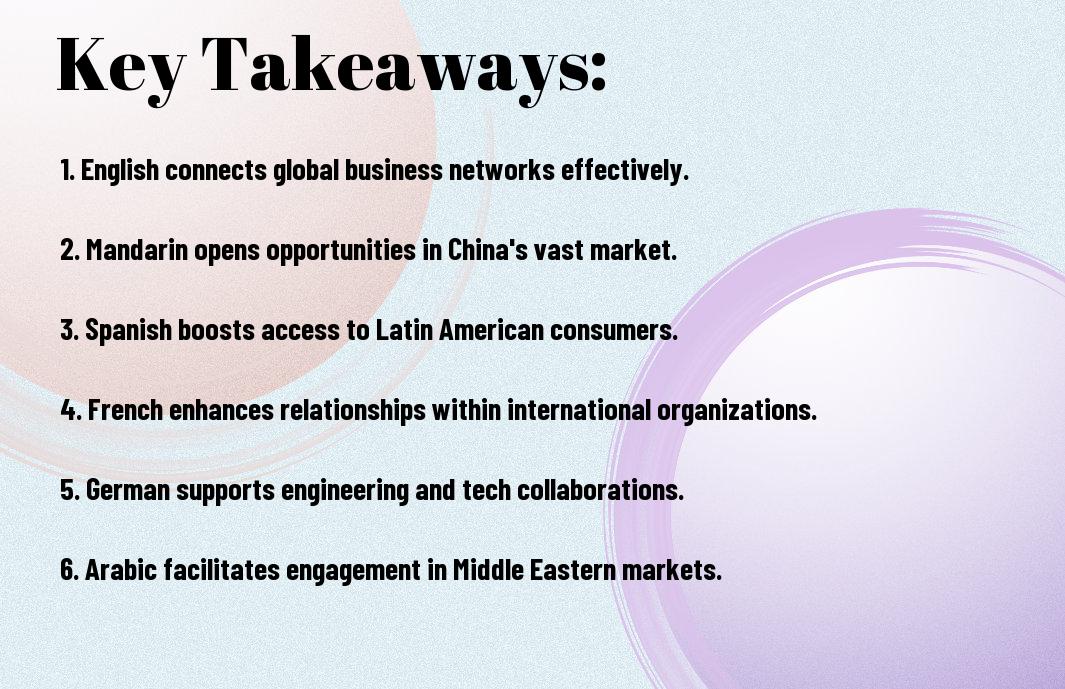
The Best Languages to Learn for Entrepreneurs

As you expand your business globally, you’ll encounter diverse markets and clients. To effectively communicate with your target audience, you need to speak their language. You can gain a competitive edge by learning languages that open doors to new markets and customers. Your language skills will enhance your ability to navigate international business environments and foster strong relationships with your clients and partners, ultimately driving your business forward.

Key Takeaways:

To succeed as an entrepreneur in today’s global market, learning a new language can be highly beneficial. Here are the key points to consider:

  • Learning Mandarin Chinese can give entrepreneurs a competitive edge, especially when doing business in Asia, due to China’s large and growing economy.
  • Spanish is another valuable language for entrepreneurs, as it can open up opportunities in Latin America and the United States, allowing for expansion into new markets.
  • Arabic is also a strategic language to learn, given the Middle East’s significant economic growth and the increasing importance of international trade in the region.

Choosing the Right Language

For entrepreneurs, selecting a language to learn can be a daunting task, but it’s important to consider your business goals and target market when making your decision. You’ll want to choose a language that aligns with your company’s objectives and helps you connect with your desired audience.

Language for Global Market

Linguistically, you’ll need to consider the languages spoken by your global customers, partners, and competitors, and choose one that will give you a competitive edge in the international market, allowing you to effectively communicate and expand your business worldwide.

Language for Specific Regions

About the regional languages, you should think about the areas where you want to establish or expand your business, and learn the dominant language of that region to better understand the local culture, customs, and consumer behavior.

Also, as you probe deeper into the specifics of regional languages, you’ll find that learning the local language can help you build stronger relationships with your customers, suppliers, and partners, ultimately leading to increased trust, loyalty, and business success in your target region, and you will be able to tailor your products or services to meet the unique needs of that market.

Top Languages for Entrepreneurs

Clearly, as an entrepreneur, speaking multiple languages can give you a competitive edge in the global market, allowing you to communicate with clients and customers from diverse backgrounds, and understand their needs more effectively, thus expanding your business opportunities.

English as a Global Language

Prior to exploring other languages, you should consider that English is widely spoken and widely used in international business, making it an vital language for you to learn if you want to succeed in the global market, facilitating your communication with people from different countries.

Mandarin for Asian Markets

Approximately, as you consider expanding your business to Asia, you will find that Mandarin is the most spoken language in the region, making it an attractive language for you to learn, enabling you to tap into the vast and growing Asian market, and connect with potential clients and partners.

But as you investigate deeper into the benefits of learning Mandarin, you will discover that it can open doors to new business opportunities, allowing you to navigate the complex Asian market with ease, understand the local culture, and build strong relationships with your Chinese counterparts, ultimately giving you a competitive advantage in the region and helping you to grow your business successfully.

Language of Business

Keep in mind that speaking the language of your target market can greatly benefit your business. As an entrepreneur, you need to understand your customers and communicate effectively with them. Your language skills can make or break your business deals, and being proficient in the right language can give you a competitive edge.

Spanish for Latin America

Similarly, Spanish is a vital language for entrepreneurs looking to expand into Latin America. You will be able to connect with over 400 million native speakers, opening up new markets and opportunities for your business. Your ability to speak Spanish will allow you to navigate the cultural and linguistic nuances of the region.

Arabic for Middle Eastern Markets

Behind the success of many international businesses lies the ability to communicate in Arabic. You can tap into the rapidly growing markets of the Middle East by learning Arabic, which will give you access to a vast and lucrative region. Your Arabic language skills will enable you to build strong relationships with your clients and partners.

Plus, as you research deeper into the Arabic language, you will discover a rich cultural heritage and history. You will be able to understand the nuances of the Middle Eastern market, including the importance of building trust and relationships. Your ability to speak Arabic will demonstrate your commitment to your clients and partners, setting you apart from your competitors and giving you a unique advantage in the region.

Emerging Markets

To succeed in the global market, you need to consider emerging markets. You can expand your business by learning languages spoken in these regions, increasing your chances of success.

Portuguese for Brazil

For entrepreneurs like you, learning Portuguese can open doors to the vast Brazilian market, allowing you to connect with over 212 million people and grow your business.

Russian for Eastern Europe

With Russian, you can tap into the massive Eastern European market, gaining a competitive edge and unlocking new opportunities for your business.

Also, as you explore the Russian language, you’ll discover a wealth of cultural and economic insights, enabling you to tailor your business strategy to the unique needs of the Eastern European market, and helping you build strong relationships with your Russian-speaking clients and partners.

Language Learning Strategies

Your approach to learning a language can significantly impact your progress, and as an entrepreneur, you need to be strategic about how you allocate your time and resources to achieve your goals.

Immersion Techniques

Linguistic exposure is key to rapid language acquisition, and you can achieve this by surrounding yourself with the language you want to learn, whether through TV shows, podcasts, or speaking with native speakers.

Online Courses

Only a few online courses are designed with the entrepreneur in mind, offering flexible scheduling and focused lessons on business-related topics, allowing you to quickly gain the language skills you need to succeed.

Also, when choosing an online course, consider your learning style and goals, and look for courses that offer interactive lessons, real-life scenarios, and opportunities to practice speaking and listening, as these will help you develop a more well-rounded set of language skills that you can apply in your business endeavors, enabling you to effectively communicate with clients, partners, and colleagues from diverse linguistic backgrounds.

Industry Specific Languages

All entrepreneurs should consider learning a language that caters to their specific industry, as it can give you a competitive edge. You can explore languages that are valuable for international business by visiting Excluding English, what are the most valuable languages to learn for international business to make informed decisions.

French for International Relations

Languages like French are highly valued in international relations, as you will encounter numerous French-speaking countries and organizations, making it beneficial for your business interactions.

German for Engineering

Along with other languages, German is a popular choice for engineering and technology, as many multinational companies are based in Germany, and speaking the language can enhance your career prospects.

It is worth noting that German is an official language in several countries, and your knowledge of the language will open doors to new business opportunities and collaborations in the engineering sector, allowing you to communicate effectively with your German-speaking clients and partners.

Final Words

So, as you consider expanding your business globally, you’ll find that learning languages like Mandarin, Spanish, or Arabic can greatly enhance your entrepreneurial pursuits. You’ll be able to connect with your target audience more effectively and gain a competitive edge in the market. By investing time in learning these languages, you’ll unlock new opportunities and take your business to the next level, allowing you to achieve your goals and increase your revenue. Your language skills will be a valuable asset to your business.

FAQ

Q: What are the most beneficial languages for entrepreneurs to learn in terms of business expansion and global market reach?

A: For entrepreneurs looking to expand their business globally, learning languages such as Mandarin Chinese, Spanish, Arabic, and Portuguese can be highly beneficial. Mandarin Chinese, spoken by over a billion people, offers access to a vast and growing market. Spanish, with its widespread use in the Americas and Europe, provides a significant edge in trade and commerce. Arabic, being the official language of many Middle Eastern countries, is vital for entrepreneurs aiming to tap into the region’s booming economies. Lastly, Portuguese, spoken in both Portugal and Brazil, opens doors to lucrative markets in Europe and South America, especially considering Brazil’s large and growing economy. Mastering any of these languages can significantly enhance an entrepreneur’s ability to navigate international markets and foster global business relationships.

Q: How does learning a foreign language impact an entrepreneur’s ability to innovate and stay competitive in the global market?

A: Learning a foreign language can profoundly impact an entrepreneur’s ability to innovate and stay competitive. It allows them to access a broader range of resources, including research, technologies, and innovations that may not be available in their native language. This can lead to novel business ideas and solutions that cater to the specific needs and preferences of foreign markets. Additionally, language proficiency enables entrepreneurs to engage directly with international clients and partners, fostering deeper understanding and more effective collaboration. This can lead to better-tailored products and services that meet the demands of a global customer base, thereby enhancing competitiveness. Moreover, being able to navigate foreign markets firsthand provides entrepreneurs with valuable insights into consumer behavior, market trends, and regulatory environments, further fueling innovation and strategic decision-making.

Q: What are the most effective ways for busy entrepreneurs to learn a foreign language, given their tight schedules and demanding work commitments?

A: For busy entrepreneurs, learning a foreign language requires a strategic and efficient approach. One effective method is to utilize online language learning platforms that offer flexible, self-paced courses, allowing entrepreneurs to study at their convenience. Mobile apps, such as Duolingo, Babbel, and Rosetta Stone, are particularly popular due to their accessibility and interactive learning experiences. Another strategy is to hire a private tutor who can tailor lessons to the entrepreneur’s schedule and specific needs, potentially focusing on business-related vocabulary and scenarios. Immersive experiences, such as short trips abroad or participation in language exchange programs, can also be highly effective, though they may require more time commitment. Lastly, incorporating language learning into daily routines, such as listening to podcasts or watching foreign-language content during commutes, can provide consistent exposure and practice without significantly impacting a busy schedule.

How to Overcome Challenges in Language Pronunciation

You begin on learning a new language, but your progress is hindered by difficulties in pronunciation. Your accent and intonation may not match native speakers, hindering effective communication. As you strive to improve, you face obstacles that seem insurmountable. Your journey to master the language is not alone, many have walked this path and succeeded. This article will guide you through practical steps to tackle your pronunciation challenges and enhance your language skills.

Key Takeaways:

To improve your language pronunciation, consider the following points:

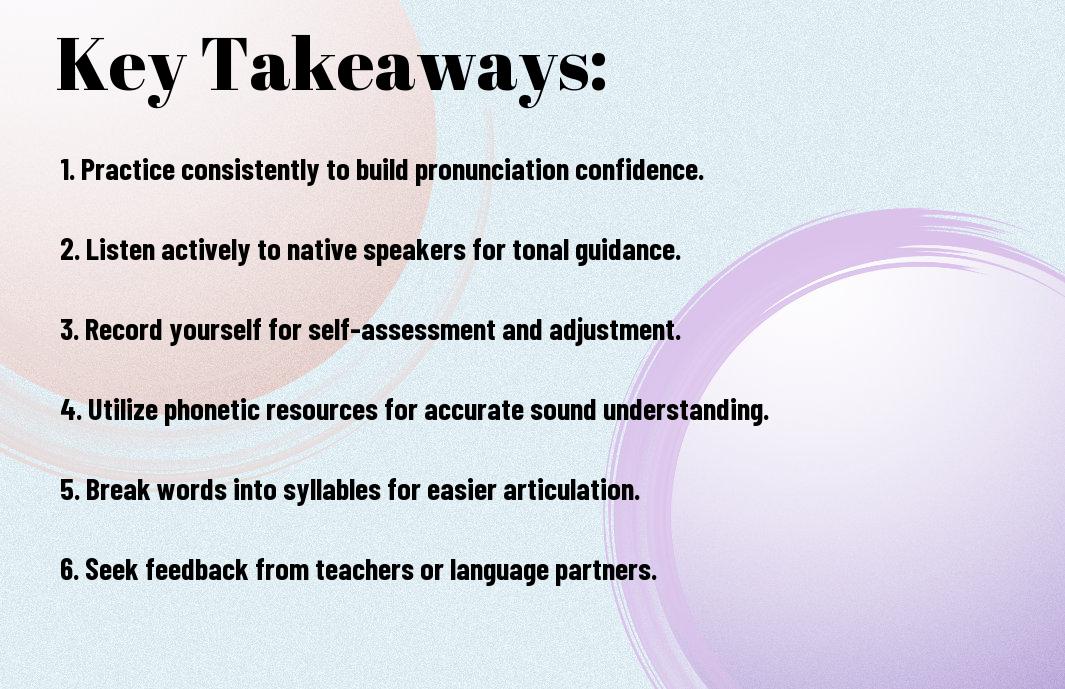
  • Focus on Individual Sounds: Understanding and practicing the phonetics of the language is the first step to improving your pronunciation. Pay attention to how each sound is formed and try to mimic the native speakers.
  • Develop a Consistent Practice routine: Regular practice helps to build muscle memory, making it easier to produce the correct sounds and intonation patterns. Set aside time each day to practice speaking and listening to the language.
  • Immerse Yourself in the Target Language: Surrounding yourself with the language as much as possible can help you get used to its rhythm and melody. Listen to music, watch movies, and engage in conversations with native speakers to improve your pronunciation and get a feel for how the language is used in context.

    Identifying Challenges

    Before you can overcome challenges in language pronunciation, you need to identify what they are. This involves recognizing the sounds, intonations, and rhythms that are difficult for you to produce. You will need to listen to native speakers and compare your own pronunciation to theirs.

    Common pronunciation difficulties

    Against the backdrop of various accents and dialects, you will find that certain sounds are consistently troublesome for non-native speakers. You may struggle with the “th” sound, vowel lengths, or diphthongs, which are common challenges that many learners face.

    Personalizing your challenges

    Across the range of language learning materials and resources, you will find that your own challenges are unique to your native language and pronunciation background. You should assess your own strengths and weaknesses to determine which areas of pronunciation need the most attention.

    Hence, as you work on personalizing your challenges, you will begin to notice patterns and areas where you consistently struggle. You can then focus your practice on these specific sounds, intonations, and rhythms, using targeted exercises and activities to improve your pronunciation. This tailored approach will help you make steady progress and eventually overcome the challenges that hold you back.

    Setting Goals

    Some of the most effective language learners are those who set clear goals for themselves. You will need to define what you want to achieve in terms of pronunciation and create a plan to get there. This will help you stay focused and motivated as you work to improve your language skills.

    Defining your objectives

    Achieving clarity on what you want to accomplish is imperative. You should identify specific areas of pronunciation that you want to improve, such as accent or intonation, and set realistic targets for yourself.

    Creating a practice schedule

    Objectives guide your practice, and you should establish a regular routine to work on your pronunciation. You will find it helps to allocate a specific time each day to practice speaking and listening to the language.

    With a schedule in place, you can begin to make steady progress towards your goals. You will find that consistent practice helps you develop good habits and increases your confidence in using the language. As you stick to your routine, you will start to notice improvements in your pronunciation, and this will motivate you to continue working towards your objectives.

    Practicing Techniques

    Despite the difficulties you may face, consistent practice is key to improving your language pronunciation. You will need to develop a routine that works for you, incorporating various techniques to help you overcome your challenges.

    Listening and imitation

    The most effective way to improve your pronunciation is by listening to native speakers and imitating their intonation, rhythm, and accent. You can find numerous resources online, including videos, podcasts, and audio recordings, to help you practice.

    Recording and self-assessment

    Recording yourself speaking is an excellent method to identify areas that need improvement. You can then listen to the recordings, assess your performance, and work on correcting your mistakes.

    Indeed, by regularly recording yourself, you will become more aware of your pronunciation and be able to track your progress over time, making adjustments as needed to achieve your goals. You will be able to pinpoint specific sounds or words that are difficult for you to pronounce and focus your practice on those areas, leading to steady improvement in your language pronunciation skills.

    Overcoming Obstacles

    For language learners, overcoming obstacles is a significant part of the pronunciation journey. You can find more information about common challenges and how to tackle them at Barriers and Solutions to Overcome in English Pronunciation, which will help you identify your weaknesses and work on them.

    Managing anxiety and fear

    One of the main obstacles you will face is managing your anxiety and fear of speaking in a foreign language, which can hinder your progress and prevent you from practicing regularly.

    Building confidence and perseverance

    Any improvement in your pronunciation requires your consistent effort and practice, and as you progress, you will start to notice changes in your accent and fluency.

    The key to building confidence and perseverance is to set achievable goals and celebrate your small victories, which will help you stay motivated and committed to your pronunciation journey, and you will find that your hard work and dedication will pay off in the long run, enabling you to communicate effectively and confidently in your target language.

    Seeking Resources

    Unlike traditional classroom settings, seeking resources for language pronunciation improvement can be done independently. You can find various materials online, such as language learning podcasts, videos, and mobile apps, to help you enhance your pronunciation skills.

    Language exchange programs

    Above all, language exchange programs offer you the opportunity to practice speaking with native speakers, which can significantly improve your pronunciation. You will be able to engage in conversations and get feedback on your pronunciation from language exchange partners.

    Online tools and tutorials

    At your fingertips, you have numerous online tools and tutorials that provide pronunciation lessons, interactive exercises, and speech analysis. You can access these resources anytime and practice at your own pace, focusing on specific areas of difficulty.

    To make the most of online tools and tutorials, you should start by assessing your current pronunciation level and identifying areas that need improvement. You can then select the most suitable resources and create a personalized practice schedule, ensuring consistent progress and refinement of your language skills.

    Monitoring Progress

    Once again, you find yourself at a stage where evaluating your advancement is necessary. Monitoring your progress in language pronunciation is vital to identify areas that require improvement and to adjust your strategy accordingly.

    Tracking improvements

    Against the backdrop of your overall progress, you will notice certain aspects of your pronunciation that have improved significantly. By keeping a record of your progress, you can pinpoint the specific sounds, intonations, or rhythms that have become more natural to you.

    Adjusting your approach

    Prior to making any significant changes, you should assess what has been working for you and what hasn’t. Your approach to pronunciation practice may need tweaking, and recognizing the methods that yield the best results is necessary to continued improvement.

    This process of adjustment is ongoing, and you will likely need to make changes to your practice routine as you progress. By being aware of what works best for you, you can refine your approach and focus on the areas where you need the most improvement, ultimately leading to more efficient and effective language learning.

    To wrap up

    Upon reflecting on your journey to improve language pronunciation, you will find that your dedication and persistence have been key to your progress. You have learned to identify your weaknesses and tackle them head-on, and your hard work has paid off. As you continue to practice, you will notice significant improvements in your ability to communicate effectively, and your confidence will grow. With time, you will become a proficient speaker, capable of expressing your thoughts and ideas with clarity and precision, and your language skills will flourish.

    FAQ

    Q: What are the most common challenges in language pronunciation and how can I identify them?

    A: The most common challenges in language pronunciation include mastering correct intonation, vowel and consonant sounds, and syllable stress. To identify your specific challenges, try recording yourself speaking and listening to the recording to pinpoint areas that need improvement. You can also practice speaking with native speakers or language exchange partners who can provide feedback on your pronunciation. Additionally, you can take online pronunciation tests or assessments to identify your strengths and weaknesses.

    Q: How can I improve my language pronunciation skills, especially if I have a strong accent or limited exposure to native speakers?

    A: Improving language pronunciation skills takes consistent practice and dedication. Start by listening to and mimicking native speakers through videos, podcasts, or audiobooks. Practice speaking regularly, even if it’s just for a few minutes a day, and focus on specific sounds or intonation patterns that are challenging for you. You can also use online resources such as pronunciation videos, language learning apps, or speech therapy exercises to help you improve. Furthermore, try to surround yourself with the language as much as possible by watching TV shows or movies, reading books or articles, and engaging in conversations with others in the target language.

    Q: What role does self-practice and self-correction play in overcoming challenges in language pronunciation, and how can I make the most of these strategies?

    A: Self-practice and self-correction are important components of overcoming challenges in language pronunciation. By regularly practicing pronunciation on your own, you can develop muscle memory and improve your ability to produce sounds and intonation patterns correctly. To make the most of self-practice, set aside dedicated time each day to practice speaking, listening, and recording yourself. Use a mirror to observe your mouth and lip movements, and pay close attention to your own pronunciation, making adjustments as needed. You can also create a self-correction checklist to track your progress and identify areas that need extra attention, allowing you to target your practice more effectively and achieve greater improvement over time.

Skip to content