
As you begin on the journey to master the art of language storytelling, you’ll discover the power to weave words into mesmerizing tales that transport your audience to new worlds. Your unique voice and perspective will shine through, captivating listeners and drawing them into the narrative. With each step, you’ll uncover the secrets to crafting stories that resonate, and your imagination will flourish as you learn to breathe life into your words, creating a lasting impact on all who listen.
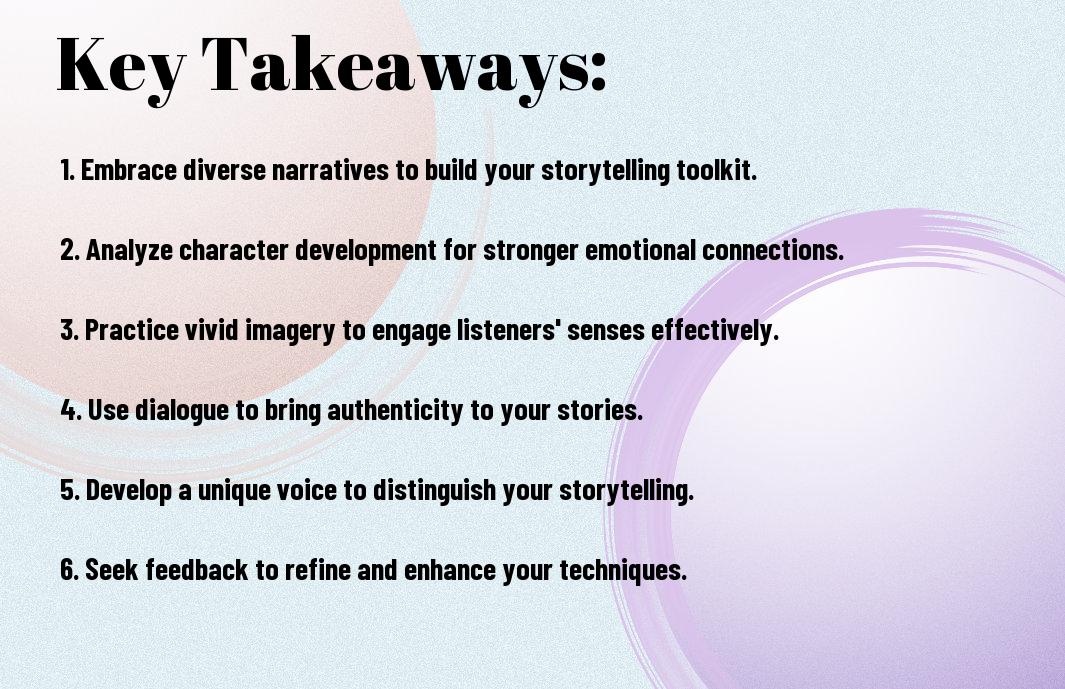
Key Takeaways:
To master the art of language storytelling, consider the following points:
- Develop your vocabulary by reading widely and often, as this will help you to create more engaging and immersive stories.
- Practice active listening to improve your ability to absorb and retell stories in a way that is both authentic and compelling.
- Use descriptive language and vivid imagery to bring your stories to life, making them more memorable and impactful for your audience.
Finding Inspiration
For any aspiring storyteller, finding inspiration is the first step in mastering the art of language storytelling. You’ll need to tap into your creativity and seek out sparks that will ignite your imagination, setting your stories ablaze with wonder and curiosity.
Discovering Personal Stories
Stories are all around you, waiting to be uncovered and shared with the world. You can find them in your own experiences, memories, and emotions, and use them as a foundation for your storytelling, making your tales more authentic and relatable.
Exploring Cultural Folklore
Against the backdrop of your everyday life, myths and legends from diverse cultures can add richness and depth to your storytelling. You can draw upon these tales, using them as a starting point for your own creative explorations, and weaving them into your narrative.
Exploring cultural folklore can be a powerful way to add complexity and nuance to your stories, allowing you to tap into the collective imagination of humanity and create something entirely new and unique. As you explore into the myths and legends of different cultures, you’ll discover a wealth of characters, motifs, and themes that you can use to inspire and inform your own storytelling, helping you to craft tales that are both personal and universal.
Crafting Compelling Characters
Clearly, well-crafted characters are the heart of any great story, and as you begin on your language storytelling journey, you’ll want to focus on creating characters that leap off the page and linger in your readers’ minds.
Developing Unique Voices
Beyond the basics of character development, you’ll find that giving your characters distinct voices is key, and as you work to refine their tones and languages, you’ll begin to hear their unique perspectives shining through in your writing.
Creating Relatable Motivations
Beneath the surface of every compelling character lies a complex web of motivations, and as you probe into what drives your characters, you’ll start to uncover the hidden forces that shape their actions and decisions, making them more believable and relatable to your readers.
Considering the motivations that drive your characters, you’ll want to explore their deepest desires, fears, and passions, and as you do, you’ll begin to see how these underlying forces influence their every move, allowing you to craft a rich, nuanced narrative that draws your readers in and keeps them invested in your characters’ journeys, as you master the art of language storytelling, you’ll find that your characters’ motivations become the engine that drives your story forward, giving it depth, tension, and emotional resonance.
Building Engaging Plots
All great stories have one thing in common: a well-structured narrative that draws you in and keeps you invested. As you develop your language storytelling skills, you’ll learn to craft plots that captivate your audience and leave a lasting impression.
Structuring Narratives
Constructing a compelling narrative is key to engaging your listeners. You’ll need to balance action, dialogue, and description to create a story that flows smoothly and holds your audience’s attention.
Adding Unexpected Twists
Around the midpoint of your story, you’ll want to introduce surprising turns of events that keep your listeners on their toes. You can achieve this by subverting expectations or introducing new characters to shake things up.
Hence, as you master the art of adding unexpected twists, you’ll find that your stories become more dynamic and engaging. You’ll be able to craft surprises that feel both surprising and inevitable, leaving your audience eager to hear what happens next. As you practice, you’ll develop a sense of how to pace your story and build tension, creating a narrative that’s both suspenseful and satisfying.
Mastering Language and Style
Now that you’ve begun to craft your story, it’s time to refine your language and style. You’ll want to develop a unique voice that draws your audience in and keeps them engaged. This involves choosing the right words, pacing your narrative, and using descriptions that bring your story to life.
Using Vivid Descriptions
For instance, you can create powerful descriptions by appealing to your readers’ senses. You’ll find that using sensory details helps your audience immerse themselves in your story, making it more relatable and enjoyable.
Playing with Tone and Pacing
Using the right tone and pacing is imperative to keeping your readers invested in your story. You can control the emotional resonance of your narrative by adjusting the tone and pace, creating a sense of tension or resolution.
With tone and pacing, you can guide your readers through the emotional highs and lows of your story. You’ll discover that by varying your tone and pacing, you can create a sense of anticipation, surprise, or wonder, drawing your audience deeper into your narrative and making your story more memorable and impactful.
Practicing the Art of Storytelling
Not until you dedicate time to practicing will your storytelling skills truly flourish. As you hone your craft, you’ll find your unique voice and style emerging, drawing your audience into the world you’ve created.
Writing Regularly
Recurring writing sessions will help you develop a consistent tone and narrative flow, allowing your stories to unfold naturally, as you experiment with different techniques and genres to find what suits you best.
Sharing Stories with Others
Often, the most effective way to refine your storytelling is by sharing it with others, receiving feedback, and observing how your audience responds to your words, adjusting your approach to captivate and engage them even more.
But as you share your stories, you’ll discover that the true magic happens in the connection you make with your listeners, as they become invested in the worlds and characters you’ve created, and you’ll find yourself inspired by their reactions and insights, fueling your passion for storytelling even further, and urging you to continue exploring the boundaries of your imagination.

Overcoming Creative Blocks
Your journey as a language storyteller will inevitably hit roadblocks, but don’t worry, you can overcome them with the right mindset and techniques.
Finding New Sources of Inspiration
Discovering fresh ideas and perspectives is key to sparking your creativity, and you can do this by reading widely, exploring different cultures, and engaging with people from diverse backgrounds.
Embracing Failure and Revision
With every failure, you have the opportunity to learn and grow, so don’t be afraid to take risks and try new things, even if they don’t work out as planned.
Creative freedom comes from embracing the iterative process of writing and revising, and you’ll find that your stories will improve with each draft, as you refine your ideas and develop your unique voice, so keep writing, and you’ll see your language storytelling skills flourish.
Conclusion
With these considerations, you’ll initiate on a journey to master the art of language storytelling. As you practice and experiment, your unique voice will emerge, weaving tales that transport and captivate your audience. You’ll discover the rhythm and melody of words, and your stories will become a reflection of your imagination and creativity, leaving a lasting impression on all who listen. Your storytelling skills will flourish, and the worlds you create will be yours to share.
FAQ
Q: What is the best way to start learning the art of language storytelling, and how can I develop my skills in this area?
A: To start learning the art of language storytelling, begin by reading a wide range of stories across different genres to understand various narrative structures and techniques. Practice telling your own stories, either in writing or verbally, and experiment with different styles and voices. You can also join a writing group or take courses to get feedback and guidance from others. Developing your skills in active listening and observation will also help you to create more engaging and relatable stories.
Q: How can I use my personal experiences and emotions to create compelling stories, and what role does authenticity play in language storytelling?
A: Drawing from personal experiences and emotions is a powerful way to create authentic and compelling stories. Reflecting on your own life events and emotions can help you to craft stories that are unique and relatable. Authenticity is key in language storytelling, as it allows your audience to connect with your narrative on a deeper level. Be honest and vulnerable in your storytelling, and don’t be afraid to express your true emotions and thoughts. This will help to create a sense of trust and rapport with your audience, making your stories more engaging and memorable.
Q: What are some effective techniques for using language to paint vivid pictures in the listener’s or reader’s mind, and how can I use descriptive language to enhance my storytelling?
A: To paint vivid pictures with your words, use descriptive language that appeals to the senses, such as sensory details and figurative language like metaphors and similes. Practice using specific and evocative language to describe people, places, and events, and experiment with different narrative techniques like dialogue and flashbacks. You can also use rhetorical devices like repetition and allusion to add depth and complexity to your stories. Additionally, pay attention to the rhythm and cadence of your language, as this can help to create a sense of tension, suspense, or excitement, drawing your audience into the world of your story.