Bilingual

What are the benefits of learning a second language at an early age

You step into a world of endless possibilities when you initiate on the journey of learning a second language at an early age. Research, such as The Impact of Early Language Learning, shows that young minds soak up language like sponges, enhancing cognitive development, cultural awareness, and future career opportunities. Embrace the transformative benefits of bilingualism for a brighter future!

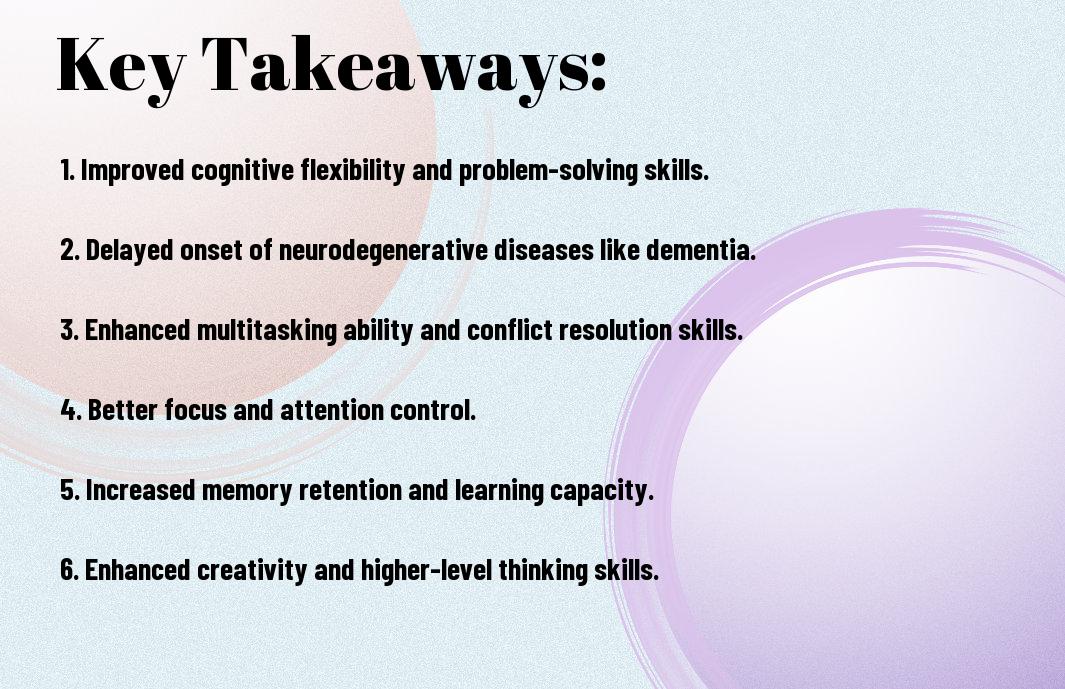
Key Takeaways:

  • Cognitive Development: Learning a second language at an early age can improve cognitive skills such as problem-solving, critical thinking, and multitasking.
  • Improved Academic Performance: Children who are bilingual tend to have better academic performance in subjects like math, reading, and vocabulary.
  • Cultural Awareness: Early exposure to a second language helps children appreciate different cultures, fostering open-mindedness and tolerance.

Cognitive Advantages

Improved Memory and Concentration

For cognitive development, learning a second language at an early age can significantly improve your memory and concentration. Studies have shown that bilingual individuals have better working memory than monolinguals, which allows you to retain and process information more effectively. This enhanced cognitive function not only helps you in language learning but also in various other academic and professional tasks that require focus and retention of information.

Enhanced Problem-Solving Skills

Any young child exposed to a second language from an early age can develop enhanced problem-solving skills. This is because learning a new language involves deciphering new rules and structures, which can stimulate your brain to think more critically and creatively. By navigating the complexities of two languages, you are crucially exercising your brain and honing your ability to think outside the box when faced with challenges.

It is like giving your brain a gymnastics workout, where it becomes more flexible and agile in tackling problems from different angles. So, by learning a second language early on, you are not just expanding your linguistic repertoire but also sharpening your cognitive abilities for a lifetime of academic and professional success.

Academic Benefits

You may be surprised to learn that learning a second language at an early age can have a significant impact on your academic performance. Here are some key academic benefits:

Better Performance in Other Subjects

An early start in learning a second language can actually improve your performance in other subjects like math and reading. Studies have shown that students who are bilingual tend to outperform their monolingual peers in these areas. This is because learning a second language enhances cognitive abilities such as problem-solving skills, critical thinking, and memory.

Increased Access to Higher Education

Performance in second language acquisition can open doors to higher education opportunities that may not have been available otherwise. Many universities value applicants who have studied a second language, as it demonstrates a commitment to learning, adaptability, and cultural awareness. This can give you a competitive edge in the admissions process.

For instance, some colleges have language proficiency requirements for certain programs or may offer scholarships specifically for bilingual students. By learning a second language early on, you are setting yourself up for success in the future when pursuing higher education.

Career Opportunities

Broader Job Prospects and Career Advancement

Prospects for career advancement are significantly enhanced when you are fluent in a second language. In today’s global economy, companies are seeking individuals with multilingual abilities to communicate effectively with international partners and clients. By learning a second language at an early age, you are equipping yourself with a valuable skill that sets you apart from others in the job market. Employers often view bilingual candidates as assets due to their ability to bridge language barriers and facilitate smooth communication in diverse settings.

Improved Communication with International Clients and Colleagues

International business relationships are strengthened when you can communicate with clients and colleagues in their native language. Your proficiency in a second language opens doors to new networking opportunities, collaborations, and projects that may not have been accessible otherwise. By understanding cultural nuances and being able to converse fluently in another language, you showcase your adaptability and cultural intelligence, key traits sought after in today’s professional landscape.

With the global marketplace becoming increasingly interconnected, the ability to communicate effectively with international clients and colleagues can significantly impact your career trajectory. Your language skills can make you a valuable asset in negotiations, presentations, and overall relationship-building with stakeholders from around the world.

Cultural Enrichment

Unlike those who only speak one language, you, as a young learner of a second language, have the opportunity to develop a deeper appreciation for diverse cultures.

Deeper Appreciation for Diverse Cultures

Cultures around the world are deeply tied to language, and by learning a second language at an early age, you open yourself up to understanding and respecting different customs, traditions, and ways of life. This exposure can broaden your perspective, foster empathy, and help you navigate a multicultural world with ease.

Enhanced Travel Experiences and Social Connections

Enrichment

With your growing language skills, you’ll find that traveling to different countries becomes a more enriching experience. You can communicate with locals in their native language, immerse yourself in the culture more authentically, and discover hidden gems that tourists often miss. Additionally, speaking a second language can open doors to forming deeper connections with people from diverse backgrounds, forging friendships that transcend linguistic and cultural barriers.

Brain Development

Delayed Onset of Age-Related Cognitive Decline

Age-related cognitive decline is a natural part of aging, but did you know that learning a second language at an early age can help delay its onset? Research has shown that bilingual individuals tend to develop dementia, Alzheimer’s, and other cognitive diseases about 4-5 years later than monolingual individuals. By constantly engaging both languages, you are giving your brain a regular workout, which can contribute to maintaining cognitive function as you age.

Increased Gray Matter in the Brain

When you learn a second language at an early age, you are not only expanding your linguistic abilities but also increasing the gray matter in your brain. This boost in gray matter, which is associated with processing information, problem-solving, and executive function, can result in enhanced cognitive skills and better academic performance overall. So, the next time you are practicing your second language, remember that you are also strengthening your brain!

To maximize the benefits of the increased gray matter in your brain from learning a second language, it is necessary to continue practicing and engaging with both languages regularly. This ongoing cognitive stimulation can lead to improved cognitive flexibility, better multitasking abilities, and even increased creativity. Embrace the journey of learning a second language – your brain will thank you for it!

Social Benefits

Once again, learning a second language at an early age brings about various social benefits. These advantages not only enrich your personal experiences but also positively impact your relationships with others.

Improved Relationships with Native Speakers

On your journey to mastering a second language, you’ll find that your interactions with native speakers become more meaningful and authentic. By speaking their language, you are showing a genuine interest in their culture and background, creating a stronger bond based on mutual understanding. This deeper connection can lead to friendships that bridge cultural gaps and foster a sense of unity and camaraderie.

Increased Empathy and Tolerance

With the ability to communicate in a second language, you develop a heightened sense of empathy and tolerance towards different perspectives and ways of life. You gain a deeper appreciation for diversity and multiculturalism, recognizing the beauty in linguistic and cultural differences. This broader worldview not only enriches your own life but also fosters a more inclusive and accepting society.

Speakers of multiple languages have been shown to have a greater capacity for empathy, as they can better understand and relate to individuals from various backgrounds. This empathy plays a key role in building harmonious relationships and promoting a more interconnected global community.

Conclusion

Summing up, learning a second language at an early age provides a multitude of benefits that can have a lasting impact on your cognitive abilities, academic performance, and opportunities later in life. By exposing yourself to a new language during the critical period of language development, you are not only improving your linguistic skills but also enhancing your overall brain function and problem-solving abilities.

Furthermore, being bilingual opens up a world of cultural experiences, career possibilities, and cross-cultural connections that can enrich your life in countless ways. So, consider starting your language learning journey early and reap the rewards of becoming a global, well-rounded individual with a unique set of skills and perspectives.

Q: What are the benefits of learning a second language at an early age?

A: Learning a second language at an early age has numerous benefits, including enhanced cognitive abilities, improved problem-solving skills, and increased cultural awareness.

Q: How does learning a second language at an early age enhance cognitive abilities?

A: Studies have shown that learning a second language at a young age can improve brain development, memory retention, and multitasking abilities. It can also help children become better at focusing and switching between tasks.

Q: In what ways does learning a second language at an early age improve cultural awareness?

A: Learning a second language exposes children to different cultures, traditions, and perspectives. This exposure can help them develop empathy, tolerance, and a greater appreciation for diversity, ultimately fostering a more inclusive and global mindset.

What are the cognitive benefits of being bilingual or multilingual

Most of the time, when you think about being bilingual or multilingual, you probably focus on the practical benefits like being able to communicate with more people or having better job opportunities. However, did you know that being bilingual or multilingual also offers significant cognitive advantages? In this article, you will discover the fascinating ways in which speaking more than one language can positively impact your brain and cognitive abilities.

Key Takeaways:

  • Enhanced cognitive abilities: Bilingual or multilingual individuals often show improved abilities in areas such as problem-solving, critical thinking, and multitasking due to constantly switching between languages.
  • Delay in cognitive decline: Research suggests that speaking multiple languages can help delay the onset of diseases like Alzheimer’s and dementia, and can also improve overall brain health and function as one ages.
  • Increased mental flexibility: Bilingual or multilingual individuals typically have greater mental flexibility, better memory, and an increased ability to adapt to new situations and environments, which may contribute to overall cognitive benefits.

Enhanced Cognitive Abilities

A The benefits of being bilingual, with Viorica Marian, PhD study conducted by the American Psychological Association suggests that being bilingual or multilingual can provide numerous cognitive benefits that can enhance your mental abilities.

Improved Memory and Attention

One of the key cognitive benefits of being bilingual or multilingual is improved memory and attention. Research has shown that individuals who speak more than one language have better working memory, allowing them to store and process information more efficiently. Additionally, being bilingual requires a constant management of two language systems, which strengthens your brain’s executive function and attention control.

Enhanced Problem-Solving Skills

Cognitive flexibility is another cognitive benefit that comes with being bilingual or multilingual. When you speak multiple languages, your brain is constantly switching between languages and inhibiting one language while using another. This mental agility can enhance your problem-solving skills and make you more adept at handling complex tasks that require creative thinking.

Another aspect of enhanced problem-solving skills linked to bilingualism is the ability to think outside the box. When you are fluent in multiple languages, you have exposure to different cultural perspectives and communication styles, which can enable you to approach problems from various angles and come up with innovative solutions.

Delayed Onset of Age-Related Cognitive Decline

Slowing Down Cognitive Aging

Some research suggests that being bilingual or multilingual can significantly delay the onset of age-related cognitive decline. An individual who speaks multiple languages may experience a slower decline in cognitive functions such as memory, attention, and problem-solving as they age. This delay is believed to be due to the constant mental workout that the brain receives when switching between languages and inhibiting one language while using another.

Reduced Risk of Dementia and Alzheimer’s

Dementia refers to a decline in cognitive function that interferes with daily life, while Alzheimer’s disease is a specific type of dementia characterized by memory loss and cognitive decline. Studies have shown that individuals who are bilingual or multilingual have a reduced risk of developing dementia and Alzheimer’s compared to monolingual individuals. The cognitive reserve built from speaking multiple languages appears to provide a buffer against the brain changes associated with these conditions, allowing for better preservation of cognitive abilities even in the face of neurodegenerative diseases.

Alzheimer’s disease is a progressive neurological condition that primarily affects memory and other cognitive functions. Being bilingual or multilingual has been linked to a lower risk of developing Alzheimer’s disease. The cognitive benefits of language learning and maintenance may help build a reserve that can provide protection against the brain changes associated with Alzheimer’s, delaying its onset or reducing its severity. By challenging your brain with multiple languages, you may be able to fortify its cognitive resources and resilience, potentially decreasing your susceptibility to this debilitating disease.

Increased Gray Matter

Keep exploring the Cognitive benefits of being bilingual by delving into the fascinating world of brain plasticity and how being bilingual or multilingual can impact the structure of your brain. Research has shown that bilingual individuals tend to have increased gray matter in areas of the brain related to language control and executive function. This growth in gray matter may be attributed to the constant cognitive effort required to switch between languages and inhibit one language while using another.

Brain Plasticity and Neurogenesis

Neurogenesis, the process of generating new neurons in the brain, is heightened in bilingual individuals. This phenomenon suggests that the act of speaking multiple languages may serve as a cognitive workout for your brain, promoting the growth of new neural pathways and enhancing overall brain health.

Enhanced Language Processing

Plasticity refers to the brain’s ability to reorganize itself by forming new neural connections throughout life. Being bilingual or multilingual enhances this plasticity, enabling you to adapt more easily to new language structures and rules.

This heightened plasticity not only improves your language learning abilities but also has broader implications on cognitive functions such as problem-solving and multitasking. Your brain becomes more adept at processing and interpreting information, making you a more efficient and effective communicator in all aspects of your life.

Better Academic Performance

Many studies have shown that being bilingual or multilingual can lead to better academic performance across various subjects. This cognitive advantage stems from the brain’s ability to switch between different languages, improving cognitive flexibility and problem-solving skills. As a result, bilingual individuals often exhibit higher levels of academic achievement compared to their monolingual peers.

Improved Reading Comprehension

Reading comprehension is a vital skill in academic success, and being bilingual can significantly enhance this ability. When you are fluent in multiple languages, you develop a deeper understanding of how languages work, such as grammar, syntax, and vocabulary. This heightened language awareness translates into improved reading comprehension skills, allowing you to comprehend complex texts more effectively and extract key information with ease.

Enhanced Math and Science Skills

Better cognitive skills acquired through bilingualism also extend to math and science subjects. Research has shown that bilingual individuals often outperform monolinguals in mathematical reasoning and problem-solving tasks. The cognitive benefits of being bilingual, such as enhanced executive functions and improved working memory, play a significant role in boosting your performance in math and science-related tasks. So, the next time you tackle a challenging math problem or a complex scientific concept, your bilingualism might give you a cognitive edge!

Skills in areas like math and science require strong analytical and problem-solving abilities, which are honed through the cognitive advantages that come with being bilingual or multilingual. These enhanced cognitive functions not only help you excel in academic settings but also equip you with valuable skills that can be applied in various aspects of your life, both academically and professionally.

Career Advantages

Increased Job Opportunities

Unlike monolingual individuals, being bilingual or multilingual opens up a world of increased job opportunities for you. Many companies today operate on a global scale, dealing with clients, partners, and customers from diverse linguistic backgrounds. Your ability to communicate in more than one language makes you a valuable asset in such environments. You can easily work in international markets, negotiate deals with foreign partners, and navigate cross-cultural communication with ease.

Enhanced Communication and Collaboration

One of the key cognitive benefits of being bilingual or multilingual is enhanced communication and collaboration skills. Your proficiency in multiple languages enables you to engage with a wider range of colleagues, clients, and stakeholders. You can effectively bridge language barriers, foster understanding between team members from different backgrounds, and facilitate smooth collaboration on projects that involve multicultural teams. Your adaptability in switching between languages also showcases your flexibility and resourcefulness in the workplace.

Opportunities for career advancement often arise from your ability to communicate effectively and collaborate efficiently with a diverse range of individuals. As a bilingual or multilingual professional, you are well-equipped to take on leadership roles that require strong interpersonal skills and the capacity to connect with people from varying linguistic and cultural contexts. Your linguistic abilities can set you apart in job interviews, networking events, and professional interactions, demonstrating your competence and cultural awareness to potential employers and colleagues.

Cultural Enrichment and Empathy

Your ability to speak multiple languages not only enhances your cognitive skills but also enriches your cultural perspective and empathy towards others.

Broader Cultural Perspective

Empathy is a crucial skill in today’s interconnected world, allowing you to understand and appreciate different cultures. Being bilingual or multilingual exposes you to diverse ways of thinking, communicating, and living. This exposure helps you develop a broader cultural perspective, enabling you to empathize with people from different backgrounds and understand their viewpoints.

Deeper Understanding of Different Cultures

To deepen your understanding of different cultures, you must immerse yourself in their languages. Language is intertwined with culture, and by speaking multiple languages, you gain insight into the values, beliefs, and customs of various societies. This deeper understanding fosters empathy and allows you to navigate cross-cultural interactions with sensitivity and respect.

Another benefit of speaking multiple languages is the ability to break down cultural barriers and foster meaningful connections with individuals from diverse backgrounds. By engaging with others in their native language, you show a willingness to bridge linguistic and cultural gaps, creating a sense of understanding and empathy that transcends borders.

Summing up

Conclusively, being bilingual or multilingual offers a multitude of cognitive benefits. Your brain becomes more efficient in problem-solving, multitasking, and decision-making as it continuously exercises its cognitive functions by switching between languages. Additionally, your ability to empathize and understand others improves as you develop a deeper appreciation for different cultures and perspectives through language.

Q: What are the cognitive benefits of being bilingual or multilingual?

A: Being bilingual or multilingual can improve cognitive abilities such as problem-solving skills, multitasking, and decision-making. It can also enhance creativity, memory, and overall brain function.

Q: How does being bilingual or multilingual affect the brain?

A: Studies have shown that bilingual or multilingual individuals have increased brain connectivity, which can lead to better cognitive function and a reduced risk of cognitive decline as they age. This constant switching between languages exercises the brain, making it more efficient and flexible.

What are some other cognitive benefits of being bilingual or multilingual?

A: In addition to improved cognitive abilities, being bilingual or multilingual has been linked to better academic performance, greater empathy, and a heightened ability to understand and appreciate different perspectives and cultures. It can also delay the onset of diseases like Alzheimer’s and dementia.

Skip to content