Communication

The Benefits of Being Multilingual in Today's World

You live in a globalized world where language skills can significantly impact your career and personal growth. As you navigate different cultures and communities, your ability to communicate in multiple languages can open doors to new opportunities. Your language skills can enhance your travel experiences, expand your social network, and increase your job prospects, making you a more competitive candidate in the job market. You can gain a deeper understanding of diverse perspectives and cultures.

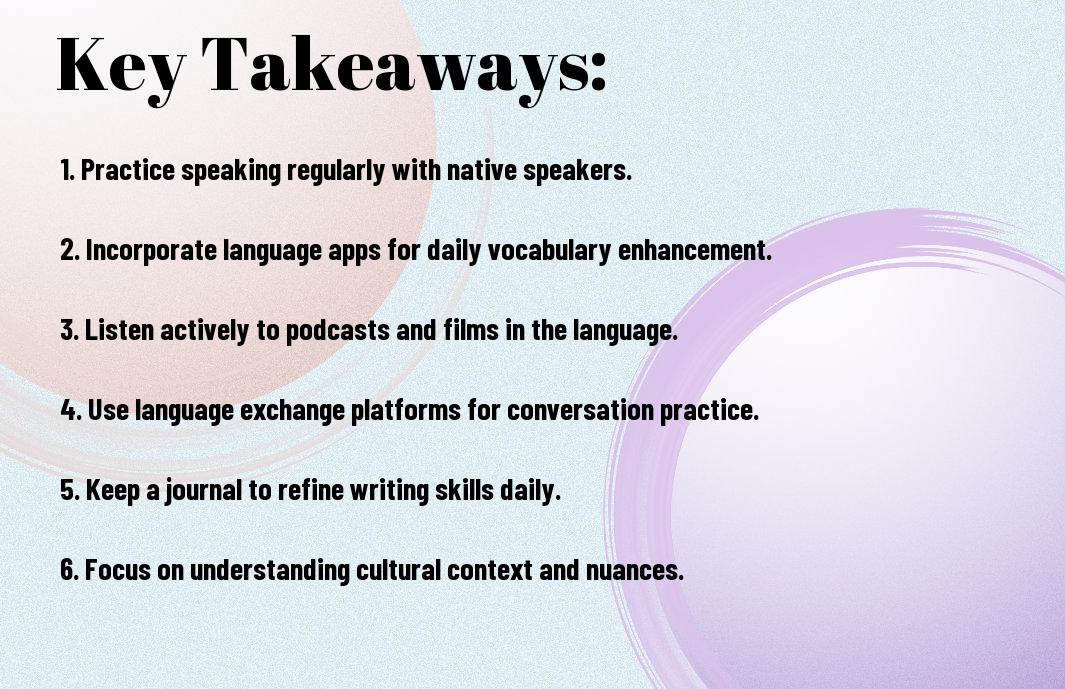
Key Takeaways:

  • Being multilingual in today’s world offers numerous career opportunities and financial benefits, as it allows individuals to communicate effectively with people from diverse cultural backgrounds.
  • Language skills can significantly enhance travel experiences, enabling individuals to navigate foreign countries with ease, appreciate local customs, and forge meaningful connections with native speakers.
  • Cognitive abilities, such as memory and problem-solving, can be improved through the process of learning and maintaining multiple languages.
  • In an increasingly globalized economy, being multilingual can provide a competitive edge in the job market, particularly in fields like international business, diplomacy, and translation.
  • Personal growth and cultural enrichment are also significant benefits of being multilingual, as it broadens one’s perspective and fosters a deeper understanding of the world’s diverse cultures and communities.

Benefits of Multilingualism in Career Advancement

The ability to speak multiple languages can significantly enhance your career prospects, as you can access a broader range of job opportunities and connect with a more diverse client base. According to a study on The Benefits of Multilingualism to the Personal and Professional Development of Individuals, being multilingual can open doors to new career paths and industries.

Enhanced Job Opportunities

Today, you can leverage your language skills to apply for jobs that require multilingual candidates, increasing your chances of getting hired by a global company or organization that operates in multiple countries.

Increased Earning Potential

Before you start applying for multilingual jobs, you should consider the potential salary increase that comes with being able to communicate in multiple languages, as companies are often willing to pay a premium for employees who can interact with clients and customers in their native language.

But as you progress in your career, you will find that your multilingual skills will become a valuable asset, allowing you to take on more responsibilities, such as leading international projects or negotiating with foreign clients, which can lead to significant increases in your earning potential and career advancement opportunities.
Cognitive Advantages of Multilingualism

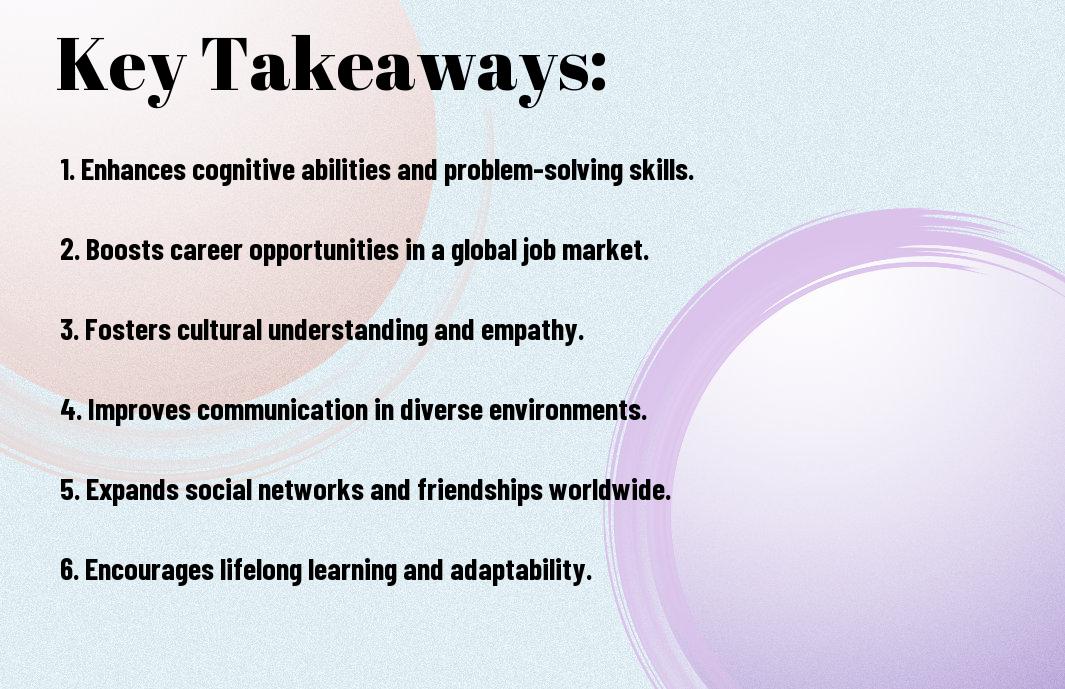
There’s a significant benefit to being multilingual, as it enhances your cognitive abilities, allowing you to process information more efficiently and effectively. As you navigate through different languages, your brain becomes more adept at adapting to new situations, making you more mentally agile.

Improved Memory and Concentration

Following extensive research, it’s clear that speaking multiple languages improves your memory and concentration, enabling you to stay focused and retain information better. As you switch between languages, you train your brain to prioritize and filter out irrelevant information, sharpening your mental clarity.

Delayed Onset of Age-Related Cognitive Decline

Contrary to what you might expect, being multilingual can actually protect you against age-related cognitive decline, as the constant mental exercise helps build cognitive reserve. This reserve acts as a buffer, shielding your brain from the effects of aging, and allowing you to stay sharper for longer.

Cognitive decline is a natural part of aging, but as a multilingual individual, you have the power to delay its onset. By continually challenging your brain with multiple languages, you build a strong foundation for cognitive health, enabling you to maintain your mental acuity and stay engaged in activities you love, well into old age. This, in turn, can lead to a more fulfilling and independent life, as you continue to learn, grow, and thrive.

Cultural Enrichment through Multilingualism

Your ability to speak multiple languages can significantly enhance your cultural experiences, allowing you to engage with diverse communities and explore new perspectives.

Deeper Appreciation of Diverse Cultures

Through the lens of multilingualism, you gain a more nuanced understanding of cultural norms, values, and traditions, fostering a deeper appreciation for the diversity that surrounds you.

Broader Perspectives and Empathy

Multilingually, you develop the capacity to see the world from different viewpoints, cultivating empathy and broadening your understanding of the complexities that shape human experiences.

Consequently, as you navigate the complexities of multilingual communication, you become more adept at finding common ground with people from diverse backgrounds, allowing you to build more meaningful relationships and connect with others on a deeper level, ultimately enriching your personal and professional life.

Social Benefits of Multilingualism

After acquiring multiple languages, you can experience a significant improvement in your social interactions. Check out the Benefits of Multilingualism Infographic – NCELA to learn more.

Improved Communication with People from Diverse Backgrounds

Along with language skills, you gain a deeper understanding of different cultures, enabling you to connect with people from diverse backgrounds more effectively.

Increased Travel and Exploration Opportunities

The ability to speak multiple languages opens doors to new travel experiences, allowing you to engage with locals and appreciate their customs.

Social benefits of multilingualism extend to your travel experiences, as you can navigate foreign countries with ease, making your journeys more enjoyable and immersive, and you can fully appreciate the local culture, food, and history, making your travels a more enriching experience for you.

Language Learning and Brain Development

Unlike other skills, language learning has a profound impact on your brain development, enhancing your cognitive abilities and improving your overall mental agility. As you learn a new language, your brain undergoes significant changes, adapting to the new information and forming new connections.

Neuroplasticity and Language Acquisition

Acquiring a new language stimulates your brain’s neuroplasticity, allowing it to reorganize and refine its connections. As you learn, your brain creates new pathways, enabling you to process and understand the new language more efficiently.

The Role of Multilingualism in Shaping the Brain

Above all, being multilingual has a profound impact on your brain’s structure and function. As you switch between languages, your brain develops greater flexibility and adaptability, enabling you to think more creatively and solve problems more effectively.

In fact, studies have shown that multilingual individuals have a greater density of grey matter in areas of the brain responsible for language processing, executive control, and attention. This means that, as a multilingual person, you will have a cognitive advantage, being able to switch between languages and tasks with greater ease and accuracy, making you a more effective communicator and problem solver in today’s globalized world.

Challenges and Opportunities in a Multilingual World

Not surprisingly, navigating a multilingual world can be complex.

Overcoming Language Barriers and Stereotypes

You face several challenges, including:

  • Language barriers
  • Cultural differences

. Any multilingual individual can attest to the value of overcoming these obstacles.

Benefits Opportunities
Cultural understanding Global connections
Language skills New experiences
Personal growth Networking
Social awareness Career advancement

Fostering Global Communication and Cooperation

Similarly, stereotypes can hinder effective communication. As you engage with people from diverse backgrounds, you will encounter various perspectives.

Further, fostering global communication and cooperation requires you to be open-minded and adaptable, allowing you to navigate complex cultural and linguistic landscapes, and to leverage your language skills to build bridges between different communities, ultimately enriching your personal and professional life.

Conclusion

So, as you consider your language skills, you’ll find that being multilingual opens doors to new opportunities. You can explore the benefits of speaking multiple languages by visiting what are the advantages of being multilingual to learn more. Your ability to communicate in multiple languages will enhance your personal and professional life, making you a more competitive and adaptable individual in today’s globalized world.

FAQ

Q: What are the career benefits of being multilingual in today’s globalized world?

A: Being multilingual can significantly enhance one’s career prospects in today’s globalized world. With the ability to communicate in multiple languages, individuals can access a broader range of job opportunities, both domestically and internationally. Multilingual employees are highly valued by companies that operate globally, as they can facilitate communication with clients, customers, and colleagues from diverse linguistic backgrounds. This can lead to increased job security, higher salaries, and greater career advancement opportunities.

Q: How does being multilingual impact travel and cultural experiences?

A: Being multilingual can greatly enrich one’s travel and cultural experiences. When individuals can communicate in the local language, they can engage more deeply with the culture, people, and customs of the places they visit. Multilingual travelers can navigate unfamiliar environments with greater ease, read signs and menus, and interact with locals in a more meaningful way. This can lead to a more authentic and immersive travel experience, as well as a deeper understanding and appreciation of different cultures.

Q: What are the cognitive and social benefits of being multilingual?

A: Being multilingual has been shown to have numerous cognitive and social benefits. Multilingual individuals have been found to possess improved memory, problem-solving, and multitasking skills, as well as enhanced cognitive flexibility and creativity. Additionally, being multilingual can foster greater empathy, tolerance, and understanding of diverse perspectives, leading to stronger social connections and a more open-minded worldview. Multilingual individuals can also delay the onset of age-related cognitive decline and even develop a greater sense of identity and belonging to multiple cultural communities.
The Most Influential Languages in Global Communication

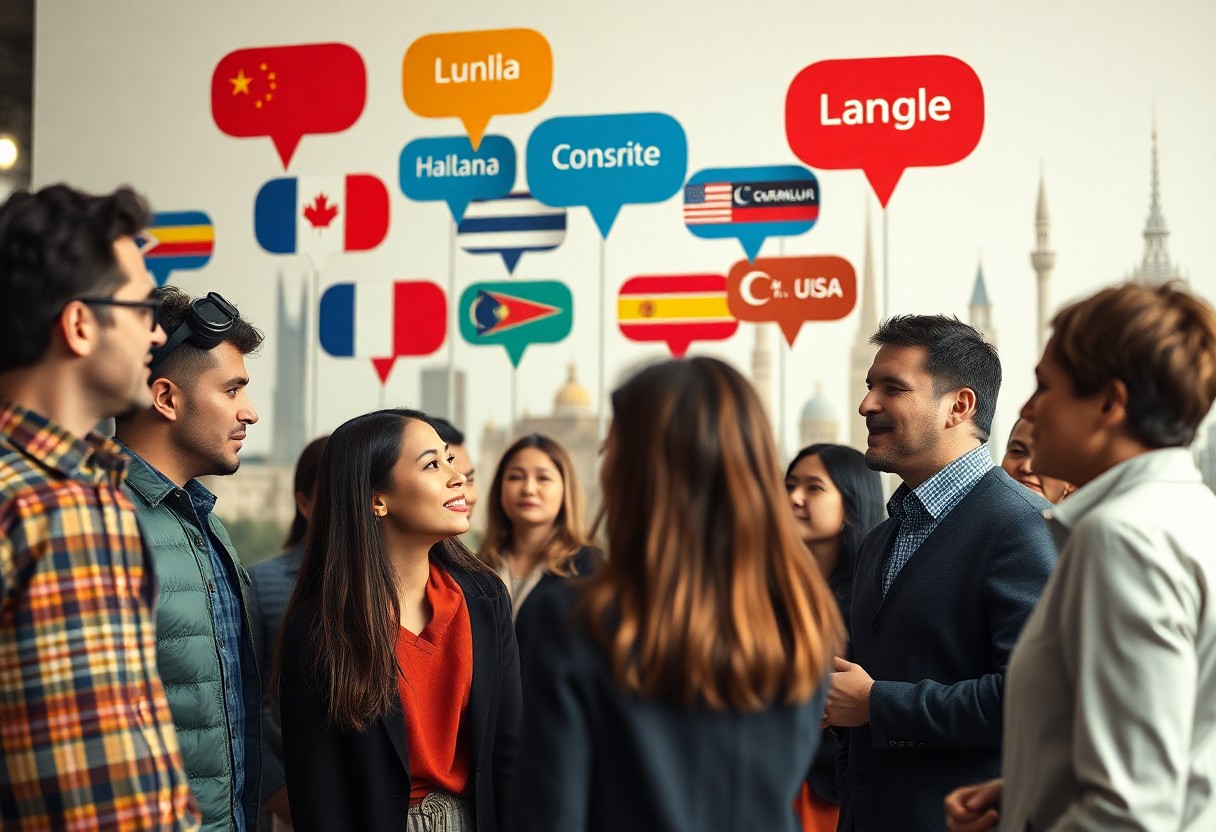
As you navigate the complexities of global interaction, you’ll notice that certain languages dominate your conversations, media, and online content. Your ability to communicate effectively relies on understanding these languages, which have become the cornerstone of international exchange. You may wonder which languages hold the most sway, and how they impact your daily life, from business to social media. This essay will explore the most influential languages, shedding light on their significance and your role in the global conversation.

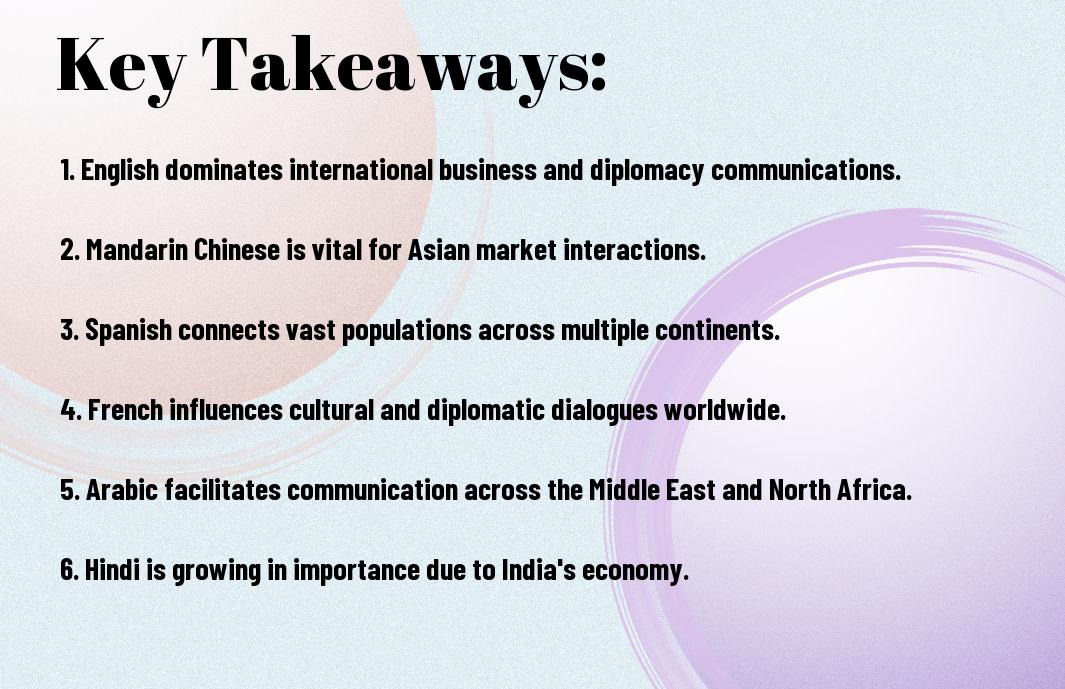
Key Takeaways:

To understand the dynamics of global communication, it’s imperative to identify the languages that have the most significant impact. Here are the key points:

  • The English language plays a dominant role in global communication, serving as the primary language for international business, science, and technology.
  • The use of Mandarin Chinese is increasingly significant due to China’s growing economic influence, making it a key language for trade and cultural exchange.
  • The spread of Arabic and Spanish is also notable, given the large number of native speakers and the geographic reach of these languages, which contributes to their importance in global communication networks.

    Language Dominance

    Your understanding of language dominance is shaped by the most widely spoken languages in the world, which have a significant impact on global communication.

    English as a Global Language

    Around the globe, English is the language of international business, science, and entertainment, making it the most dominant language in the world, and you likely use it to communicate with people from different countries.

    Mandarin Chinese as a Rising Power

    Language skills in Mandarin Chinese are becoming increasingly valuable, as China’s economic influence expands, and you may find yourself needing to learn this language to stay competitive in the global market.

    Global economic trends indicate that Mandarin Chinese will continue to grow in importance, and as you consider the languages that will shape the future of international communication, you should take into account the rising status of Mandarin Chinese, which is already spoken by over a billion people, and its potential to rival English as a global language.

    Historical Influence

    Even as you explore the history of languages, you’ll notice that some have had a lasting impact on global communication. The influence of ancient languages can still be seen in modern languages today, shaping the way you express yourself and understand others.

    Latin and its Legacy

    Around the time of the Roman Empire, Latin emerged as a dominant language, and its legacy can be seen in many modern languages, including your own, as you use words derived from Latin roots in your daily conversations.

    Arabic and its Impact on Science and Culture

    Always a significant force, Arabic has contributed greatly to your understanding of science, mathematics, and culture, as you find Arabic terms and concepts woven into your knowledge of these fields.

    And as you probe deeper into the history of Arabic’s influence, you’ll discover that it has had a profound impact on the development of various sciences, including mathematics, astronomy, and medicine, with many Arabic terms and concepts becoming an integral part of your vocabulary and understanding of these subjects.

    Economic Factors

    To understand the influence of languages in global communication, you should consider the economic factors at play. Some key points to note include:

    • Global trade
    • Commerce

    As you explore the role of languages in the economy, you can find more information in My Guide to the Most Influential Languages in the World as a language learner. Any language you choose to learn will impact your career prospects.

    Trade and Commerce

    Alongside economic growth, a number of languages have emerged as key players in international trade. You will find that languages such as English, Mandarin, and Arabic are dominant in global commerce, facilitating communication between nations and driving economic development.

    Global Business and Language

    Business leaders recognize the importance of language skills in today’s global market. You need to be able to communicate effectively with clients, partners, and colleagues from diverse linguistic backgrounds to succeed in international business.

    For instance, as you navigate the complexities of global business, you will encounter various languages that hold significant economic value. You may find that speaking multiple languages, such as Spanish, French, or German, can give you a competitive edge in your career, allowing you to connect with customers, negotiate deals, and expand your business into new markets. You will discover that language skills are imperative for building strong relationships with international partners and staying ahead in the global economy.

    Cultural Exchange

    Keep in mind that languages play a significant role in shaping your understanding of the world. As you engage with different cultures, you’ll find that language is a key factor in facilitating exchange and cooperation.

    Language and Identity

    Culturally, your language helps define your sense of self and community, influencing your perceptions and interactions with others. You’ll notice that language is often closely tied to identity, shaping your values and beliefs.

    Language and Media

    Beneath the surface of global communication, your access to information is often determined by the languages you speak. You’ll find that language can limit or expand your access to media, shaping your worldview and cultural knowledge.

    In fact, as you explore the role of language in media, you’ll discover that it has a profound impact on your ability to engage with global events, ideas, and cultures. You’ll see that languages like English, Spanish, and Mandarin dominate international media, while others may be largely absent, limiting your exposure to diverse perspectives and ideas.

    Technological Advancements

    Unlike traditional methods, technological advancements have revolutionized the way you communicate globally. You can explore The 10 Most Spoken Languages In The World to understand the impact of technology on language learning.

    Internet and Social Media

    Above all, the internet and social media have made it easier for you to connect with people from diverse linguistic backgrounds, fostering global communication and cultural exchange.

    Language Learning and Translation Tools

    Adeptly, language learning and translation tools have become crucial for effective global communication, enabling you to overcome language barriers and engage with people from different parts of the world.

    Learning a new language has become more accessible than ever, thanks to the array of language learning and translation tools available to you. You can now use online resources to learn languages at your own pace, and translation tools to communicate with people who speak different languages, making global communication more efficient and effective for you.

    Regional Languages

    After exploring global languages, you’ll find that regional languages play a significant role in shaping your communication. You’ll notice that certain languages dominate specific regions, influencing culture and trade.

    Spanish and Portuguese in the Americas

    Linguistically, you’ll observe that Spanish and Portuguese are prevalent in the Americas, with your interactions often involving these languages in business and tourism.

    French and German in Europe

    Similarly, you’ll discover that French and German are prominent in Europe, with your travels often requiring knowledge of these languages to navigate effectively.

    A closer look at French and German in Europe reveals that you’ll encounter these languages in various aspects of your life, from education to entertainment, making them crucial for your understanding of European culture and communication.

    To wrap up

    Conclusively, you now have a sense of the most influential languages in global communication. You see that your ability to speak languages like English, Mandarin, or Spanish can significantly impact your interactions worldwide. As you navigate the complexities of global communication, your understanding of these languages will serve as a foundation for forging connections across cultures, and you will be better equipped to engage with diverse perspectives and ideas.

    FAQ

    Q: What are the most influential languages in global communication and why are they significant?

    A: The most influential languages in global communication include English, Mandarin, Spanish, Arabic, and French. These languages are significant because they are widely spoken and are often used as official languages in international organizations, business, and diplomacy. English, for instance, is the primary language of international business, science, and technology, while Mandarin is the most spoken language in the world, with a large number of native speakers. Spanish and Arabic are also widely spoken and are official languages in many countries, while French is an official language in several international organizations, including the United Nations.

    Q: How do these languages impact global communication and international relations?

    A: The most influential languages in global communication have a profound impact on international relations, trade, and cultural exchange. They facilitate communication between people from different countries and cultures, enabling the exchange of ideas, goods, and services. For example, English is often used as a lingua franca in international business meetings, while Arabic is an important language for communication in the Middle East and North Africa. Additionally, the spread of these languages has also led to the exchange of cultural practices, values, and beliefs, promoting cross-cultural understanding and cooperation. The dominance of these languages can also influence the way information is disseminated and consumed globally, shaping public opinion and international policy.

    Q: What is the future of language in global communication, and will the dominance of these languages continue?

    A: The future of language in global communication is likely to be shaped by technological advancements, demographic changes, and shifting global power dynamics. While English is likely to remain a dominant language in global communication, the rise of emerging economies such as China and India may lead to an increased use of Mandarin and other languages. Additionally, the growing importance of social media and online communication may lead to the emergence of new languages or dialects, such as pidgins or simplified languages. Furthermore, language learning and translation technologies are becoming increasingly sophisticated, making it easier for people to communicate across language barriers, which may reduce the dominance of a few select languages and promote greater linguistic diversity in global communication.

How to Improve Communication in Foreign Languages

You strive to express yourself effectively in a foreign language, but often find yourself struggling to convey your thoughts. Your attempts at communication are hindered by language barriers, leading to frustration and misunderstandings. As you navigate unfamiliar linguistic terrain, you face challenges in making yourself understood. This article will guide you through the process of improving your communication skills in foreign languages, helping you to overcome these obstacles and convey your message with clarity and confidence.

Key Takeaways:

To enhance your ability to communicate effectively in foreign languages, consider the following points:

  • Improve your listening skills by regularly listening to native speakers, podcasts, and audio materials in the target language to get accustomed to its rhythm and pronunciation.
  • Enhance your vocabulary by reading books, articles, and news in the foreign language, which will help you learn new words and phrases in context, making them easier to memorize.
  • Practice speaking and writing in the foreign language as often as possible, whether through language exchange programs, writing journals, or engaging in conversations with native speakers, to develop your fluency and confidence.

Language Learning Fundamentals

While learning a foreign language, you will encounter various challenges that can hinder your progress, but understanding the basics is imperative to improve your communication skills.

Setting Realistic Goals

Achieving a decent level of proficiency in a foreign language requires you to set attainable objectives, allowing you to track your progress and stay motivated throughout the learning process.

Immersing Yourself in the Language

Authentic exposure to the language is vital, and surrounding yourself with native speakers, watching TV shows, and listening to music in the target language will significantly enhance your comprehension and pronunciation.

But as you examine deeper into immersing yourself in the language, you will find that consistency is key; making language learning a part of your daily routine, even if it’s just for a few minutes, will help you develop a natural flow and eventually, you will be able to express yourself effortlessly in the foreign language, enabling you to communicate effectively with native speakers.

Effective Communication Techniques

Now that you are aware of the importance of communication in foreign languages, it is time to explore some effective techniques to improve your skills. You will learn how to convey your message clearly and understand others in a more efficient manner.

Active Listening

To become a better communicator, you must start by paying attention to the person speaking, focusing on their words, tone, and body language, and responding thoughtfully to show you are engaged in the conversation.

Clear and Concise Speaking

On the other hand, when speaking, you should try to express your thoughts in a straightforward and simple way, avoiding unnecessary complexity and using visual aids to support your message when possible.

Effective communication is heavily reliant on your ability to speak clearly and concisely, allowing your audience to easily understand your point of view, so you should practice articulating your thoughts in a logical and well-structured manner, using everyday language that is easy to comprehend.

Overcoming Language Barriers

Many language learners face difficulties when communicating in a foreign language, but with practice and patience, you can improve your skills and overcome these barriers, enabling you to express your thoughts and ideas effectively.

Dealing with Accent and Pronunciation Issues

Accentuating the importance of correct pronunciation, you should focus on listening to native speakers and mimicking their intonation, which will help you to improve your accent and speak more confidently in your target language.

Managing Idiomatic Expressions

For instance, mastering idiomatic expressions is imperative to sound natural in a foreign language, and you can achieve this by learning common phrases and practicing their usage in different contexts, which will help you to convey your message more effectively.

Considering the complexities of idiomatic expressions, you will need to explore deeper into the language and explore its nuances, which will enable you to use them accurately and appropriately, making your communication more engaging and fluent, and allowing you to express your thoughts and ideas with greater precision and clarity.

Building Vocabulary and Grammar

Keep in mind that expanding your vocabulary and understanding grammar rules are necessary steps in improving your communication in foreign languages. You will need to dedicate time to learning new words, phrases, and grammar structures to enhance your language skills.

Learning Common Phrases and Expressions

Verbalizing your thoughts in a foreign language starts with learning common phrases and expressions. You should focus on phrases used in everyday conversations, such as greetings, introductions, and basic questions, to help you communicate effectively.

Practicing Grammar Rules

Besides learning vocabulary, practicing grammar rules is vital to your language development. You must apply grammar rules in context to improve your comprehension and expression, which will help you to convey your thoughts and ideas accurately.

Considering your progress in practicing grammar rules, you will find that your language skills are improving significantly. As you continue to practice, you will become more comfortable using grammar rules in your conversations, allowing you to express yourself more clearly and confidently in the foreign language. Your ability to apply grammar rules correctly will also enhance your writing skills, enabling you to write coherent and well-structured texts.

Improving Pronunciation and Intonation

After dedicating time to learning a foreign language, you will need to focus on improving your pronunciation and intonation to communicate effectively. This involves practicing the sounds, rhythm, and stress patterns of the language, which can be achieved through listening to native speakers and mimicking their speech.

Recording Yourself

Alike a mirror reflection, recording yourself speaking can help you identify areas that need improvement, allowing you to adjust your pronunciation and intonation accordingly, and track your progress over time.

Seeking Feedback from Native Speakers

Beneath the surface of language learning lies the importance of seeking feedback from native speakers, who can pinpoint your mistakes and provide valuable corrections, enabling you to refine your pronunciation and intonation.

In fact, seeking feedback from native speakers can be done in various ways, such as language exchange programs, online forums, or social media groups, where you can engage in conversations, share your recordings, and ask for constructive criticism to help you improve your spoken language skills, and you will find that your communication skills in the foreign language will greatly benefit from this practice.

Engaging in Conversations

Despite the challenges you may face, engaging in conversations is a key aspect of improving your communication skills in a foreign language. You will learn to express your thoughts and ideas, and to understand different perspectives and opinions.

Finding Language Exchange Partners

Alongside other methods, finding a language exchange partner can be an effective way to practice your speaking skills, as you will have the opportunity to engage in regular conversations with a native speaker, helping you to improve your pronunciation and grammar.

Participating in Group Conversations

Conversely, participating in group conversations can be a great way to improve your communication skills, as you will be exposed to different speaking styles and vocabulary, allowing you to learn from others and adapt to various situations.

Hence, as you participate in group conversations, you will find that your ability to understand and contribute to discussions will improve, enabling you to express your thoughts and opinions with greater confidence and clarity, which in turn will help you to become a more effective communicator in your target language.

To wrap up

With these considerations, you will be well on your way to improving your communication in foreign languages. You can put your skills to the test by exploring 11 Unique Ways to Practice Speaking a Foreign Language and find what works best for you, enhancing your ability to effectively express yourself in a new language.

FAQ

Q: What are the most effective ways to improve communication in foreign languages?

A: To improve communication in foreign languages, it is necessary to practice consistently. This can be achieved by engaging in conversations with native speakers, either in person or through online platforms. Additionally, listening to and watching media in the target language, such as TV shows, movies, podcasts, and music, can help improve comprehension and pronunciation. Furthermore, using language learning apps and enrolling in language courses can provide structured learning and feedback.

Q: How can I overcome the barrier of pronunciation and accent when communicating in a foreign language?

A: Overcoming the barrier of pronunciation and accent requires patience and dedication. One effective way is to mimic native speakers by listening to and repeating their intonation, rhythm, and individual sounds. Recording yourself speaking and comparing it to native speakers can help identify areas for improvement. Moreover, practicing with a language exchange partner or tutor who can correct your pronunciation and provide feedback is highly beneficial. Regular practice of speaking and listening will also help your brain and mouth get used to the new sounds and rhythms of the language.

Q: What role does cultural understanding play in improving communication in foreign languages, and how can I develop it?

A: Cultural understanding plays a significant role in effective communication in foreign languages. It involves being aware of the customs, traditions, and nuances of the culture associated with the language. Developing cultural understanding can be achieved by learning about the history, social norms, and values of the culture. Engaging with authentic materials such as news, literature, and social media from the target culture can provide insights into the daily life and perspectives of native speakers. Moreover, participating in cultural events and interacting with people from the culture can offer firsthand experiences and opportunities to observe and practice appropriate communication behaviors.

How to Improve Communication in Foreign Languages

You strive to express yourself effectively in a foreign language, but often find yourself struggling to convey your thoughts. Your attempts at communication are hindered by language barriers, leading to frustration and misunderstandings. As you navigate unfamiliar linguistic terrain, you face challenges in making yourself understood. This article will guide you through the process of improving your communication skills in foreign languages, helping you to overcome these obstacles and convey your message with clarity and confidence.

Key Takeaways:

To enhance your ability to communicate effectively in foreign languages, consider the following points:

  • Improve your listening skills by regularly listening to native speakers, podcasts, and audio materials in the target language to get accustomed to its rhythm and pronunciation.
  • Enhance your vocabulary by reading books, articles, and news in the foreign language, which will help you learn new words and phrases in context, making them easier to memorize.
  • Practice speaking and writing in the foreign language as often as possible, whether through language exchange programs, writing journals, or engaging in conversations with native speakers, to develop your fluency and confidence.

Language Learning Fundamentals

While learning a foreign language, you will encounter various challenges that can hinder your progress, but understanding the basics is imperative to improve your communication skills.

Setting Realistic Goals

Achieving a decent level of proficiency in a foreign language requires you to set attainable objectives, allowing you to track your progress and stay motivated throughout the learning process.

Immersing Yourself in the Language

Authentic exposure to the language is vital, and surrounding yourself with native speakers, watching TV shows, and listening to music in the target language will significantly enhance your comprehension and pronunciation.

But as you examine deeper into immersing yourself in the language, you will find that consistency is key; making language learning a part of your daily routine, even if it’s just for a few minutes, will help you develop a natural flow and eventually, you will be able to express yourself effortlessly in the foreign language, enabling you to communicate effectively with native speakers.

Effective Communication Techniques

Now that you are aware of the importance of communication in foreign languages, it is time to explore some effective techniques to improve your skills. You will learn how to convey your message clearly and understand others in a more efficient manner.

Active Listening

To become a better communicator, you must start by paying attention to the person speaking, focusing on their words, tone, and body language, and responding thoughtfully to show you are engaged in the conversation.

Clear and Concise Speaking

On the other hand, when speaking, you should try to express your thoughts in a straightforward and simple way, avoiding unnecessary complexity and using visual aids to support your message when possible.

Effective communication is heavily reliant on your ability to speak clearly and concisely, allowing your audience to easily understand your point of view, so you should practice articulating your thoughts in a logical and well-structured manner, using everyday language that is easy to comprehend.

Overcoming Language Barriers

Many language learners face difficulties when communicating in a foreign language, but with practice and patience, you can improve your skills and overcome these barriers, enabling you to express your thoughts and ideas effectively.

Dealing with Accent and Pronunciation Issues

Accentuating the importance of correct pronunciation, you should focus on listening to native speakers and mimicking their intonation, which will help you to improve your accent and speak more confidently in your target language.

Managing Idiomatic Expressions

For instance, mastering idiomatic expressions is imperative to sound natural in a foreign language, and you can achieve this by learning common phrases and practicing their usage in different contexts, which will help you to convey your message more effectively.

Considering the complexities of idiomatic expressions, you will need to explore deeper into the language and explore its nuances, which will enable you to use them accurately and appropriately, making your communication more engaging and fluent, and allowing you to express your thoughts and ideas with greater precision and clarity.

Building Vocabulary and Grammar

Keep in mind that expanding your vocabulary and understanding grammar rules are necessary steps in improving your communication in foreign languages. You will need to dedicate time to learning new words, phrases, and grammar structures to enhance your language skills.

Learning Common Phrases and Expressions

Verbalizing your thoughts in a foreign language starts with learning common phrases and expressions. You should focus on phrases used in everyday conversations, such as greetings, introductions, and basic questions, to help you communicate effectively.

Practicing Grammar Rules

Besides learning vocabulary, practicing grammar rules is vital to your language development. You must apply grammar rules in context to improve your comprehension and expression, which will help you to convey your thoughts and ideas accurately.

Considering your progress in practicing grammar rules, you will find that your language skills are improving significantly. As you continue to practice, you will become more comfortable using grammar rules in your conversations, allowing you to express yourself more clearly and confidently in the foreign language. Your ability to apply grammar rules correctly will also enhance your writing skills, enabling you to write coherent and well-structured texts.

Improving Pronunciation and Intonation

After dedicating time to learning a foreign language, you will need to focus on improving your pronunciation and intonation to communicate effectively. This involves practicing the sounds, rhythm, and stress patterns of the language, which can be achieved through listening to native speakers and mimicking their speech.

Recording Yourself

Alike a mirror reflection, recording yourself speaking can help you identify areas that need improvement, allowing you to adjust your pronunciation and intonation accordingly, and track your progress over time.

Seeking Feedback from Native Speakers

Beneath the surface of language learning lies the importance of seeking feedback from native speakers, who can pinpoint your mistakes and provide valuable corrections, enabling you to refine your pronunciation and intonation.

In fact, seeking feedback from native speakers can be done in various ways, such as language exchange programs, online forums, or social media groups, where you can engage in conversations, share your recordings, and ask for constructive criticism to help you improve your spoken language skills, and you will find that your communication skills in the foreign language will greatly benefit from this practice.

Engaging in Conversations

Despite the challenges you may face, engaging in conversations is a key aspect of improving your communication skills in a foreign language. You will learn to express your thoughts and ideas, and to understand different perspectives and opinions.

Finding Language Exchange Partners

Alongside other methods, finding a language exchange partner can be an effective way to practice your speaking skills, as you will have the opportunity to engage in regular conversations with a native speaker, helping you to improve your pronunciation and grammar.

Participating in Group Conversations

Conversely, participating in group conversations can be a great way to improve your communication skills, as you will be exposed to different speaking styles and vocabulary, allowing you to learn from others and adapt to various situations.

Hence, as you participate in group conversations, you will find that your ability to understand and contribute to discussions will improve, enabling you to express your thoughts and opinions with greater confidence and clarity, which in turn will help you to become a more effective communicator in your target language.

To wrap up

With these considerations, you will be well on your way to improving your communication in foreign languages. You can put your skills to the test by exploring 11 Unique Ways to Practice Speaking a Foreign Language and find what works best for you, enhancing your ability to effectively express yourself in a new language.

FAQ

Q: What are the most effective ways to improve communication in foreign languages?

A: To improve communication in foreign languages, it is necessary to practice consistently. This can be achieved by engaging in conversations with native speakers, either in person or through online platforms. Additionally, listening to and watching media in the target language, such as TV shows, movies, podcasts, and music, can help improve comprehension and pronunciation. Furthermore, using language learning apps and enrolling in language courses can provide structured learning and feedback.

Q: How can I overcome the barrier of pronunciation and accent when communicating in a foreign language?

A: Overcoming the barrier of pronunciation and accent requires patience and dedication. One effective way is to mimic native speakers by listening to and repeating their intonation, rhythm, and individual sounds. Recording yourself speaking and comparing it to native speakers can help identify areas for improvement. Moreover, practicing with a language exchange partner or tutor who can correct your pronunciation and provide feedback is highly beneficial. Regular practice of speaking and listening will also help your brain and mouth get used to the new sounds and rhythms of the language.

Q: What role does cultural understanding play in improving communication in foreign languages, and how can I develop it?

A: Cultural understanding plays a significant role in effective communication in foreign languages. It involves being aware of the customs, traditions, and nuances of the culture associated with the language. Developing cultural understanding can be achieved by learning about the history, social norms, and values of the culture. Engaging with authentic materials such as news, literature, and social media from the target culture can provide insights into the daily life and perspectives of native speakers. Moreover, participating in cultural events and interacting with people from the culture can offer firsthand experiences and opportunities to observe and practice appropriate communication behaviors.

What is the role of language exchange programs in language learning

Communication is the key to mastering a new language, and language exchange programs offer a unique opportunity for you to immerse yourself in a different culture while practicing your language skills. By connecting with native speakers, you can improve your fluency, cultural competency, and gain valuable insights that textbooks alone can’t provide. In this blog post, we will explore the significance of language exchange programs in your language learning journey.

Key Takeaways:

  • Opportunity for practice: Language exchange programs provide learners with a structured platform to practice speaking and listening skills with native speakers.
  • Cultural immersion: Engaging in language exchange programs can offer insights into the culture and customs of the target language, enhancing overall language learning experience.
  • Mutual benefit: Both participants in a language exchange program can benefit from learning each other’s language, creating a symbiotic relationship that fosters learning and understanding.

The Concept of Language Exchange Programs

Definition and History

History: Language exchange programs have a rich history dating back decades. These programs were initially created to provide individuals with the opportunity to practice and improve their language skills through real-life conversations with native speakers. The concept of language exchange is based on the principle of reciprocal learning, where two individuals teach each other their native languages in a mutually beneficial exchange.

Types of Language Exchange Programs

This table breaks down the different types of language exchange programs:

Language Exchange Program Type Description
Tandem Language Learning Participants pair up based on their native languages and take turns practicing each other’s language.
Language Exchange Meetups Organized gatherings where individuals meet in person to practice speaking different languages.
Online Language Exchange Platforms Websites and apps that connect language learners worldwide for virtual language exchange sessions.
Language Exchange Pen Pals Participants communicate through written letters or emails to improve their language skills.
Language Exchange Programs Abroad Immersive programs where individuals travel to a foreign country to learn the language and culture firsthand.

Through these diverse types of language exchange programs, you can choose the one that best suits your learning style and preferences. Though each program may have a slightly different approach, the common goal is to provide you with the opportunity to practice and improve your language skills in a practical and engaging way.

Benefits of Language Exchange Programs

Improved Pronunciation and Fluency

Even for advanced language learners, perfecting pronunciation and fluency can be a challenging task. Language exchange programs offer a unique opportunity to practice with native speakers in a natural, conversational setting. By engaging in regular conversations, you can pick up on the nuances of the language, improve your accent, and enhance your fluency.

Enhanced Vocabulary and Grammar

Language exchange programs provide an excellent platform to expand your vocabulary and refine your grammar skills. Through interactions with native speakers, you can learn colloquial expressions, idiomatic phrases, and grammatical structures that may not be found in textbooks. This hands-on approach to learning allows you to contextualize new words and grammar rules, making them easier to remember and apply in real-life situations.

Language exchange programs encourage you to step out of your comfort zone and practice using the language in authentic scenarios. As you engage in conversations on various topics, you will naturally encounter new words and phrases, expanding your vocabulary organically.

Cultural Immersion and Awareness

Another key benefit of language exchange programs is the opportunity for cultural immersion and awareness. Language is deeply intertwined with culture, and by interacting with native speakers, you not only learn the language but also gain insights into their traditions, customs, and way of life. This holistic approach to language learning helps you develop a deeper understanding and appreciation for different cultures.

To truly immerse yourself in a language and its culture, you can participate in cultural activities, attend events, or even travel to countries where the language is spoken. This firsthand experience enriches your language learning journey and broadens your perspective on the world.

How Language Exchange Programs Facilitate Language Learning

Interactive and Engaging Learning Experience

Unlike traditional classroom settings, language exchange programs provide you with a unique opportunity to engage in real-life conversations with native speakers or proficient learners of the language you are trying to acquire. This interactive experience allows you to practice your speaking and listening skills in a more natural and dynamic way, making the learning process more enjoyable and effective.

Personalized Feedback and Correction

Correction:

Language exchange partners can give you instant feedback on your pronunciation, grammar, and vocabulary usage during your conversations. This immediate correction helps you to identify and correct mistakes as you make them, reinforcing proper language patterns and structures in your mind.

Additionally, your language exchange partner can tailor their feedback to address your specific areas of weakness, providing you with personalized guidance for improvement.

Building Confidence and Reducing Anxiety

Engaging:

Feedback from your language exchange partner can boost your confidence by acknowledging your progress and pointing out areas where you excel. This positive reinforcement can help to alleviate the anxiety often associated with making mistakes in a new language, creating a supportive environment for your language learning journey.

This combination of constructive feedback and encouragement can empower you to take risks in your language practice and become more comfortable expressing yourself in real-world situations.

The Role of Technology in Language Exchange Programs

For language learners, technology has revolutionized the way we engage in language exchange programs. Online platforms and apps have made connecting with native speakers around the world easier than ever before.

Online Platforms and Apps

Programs like Tandem, HelloTalk, and iTalki have provided language learners with a virtual space to practice speaking, writing, and even video chatting with native speakers. These platforms offer a more informal and relaxed environment for language practice, allowing you to exchange language tips, cultural insights, and build friendships with speakers of your target language.

Virtual Reality and Gamification

Reality can take your language learning experience to the next level by immersing you in a virtual environment where you can practice real-life scenarios. Gamification elements make learning fun and engaging, whether through interactive quizzes, role-playing games, or language challenges.

With the integration of AI technology, virtual reality platforms can provide personalized feedback, track your progress, and tailor lessons to your specific learning needs. This interactive and immersive approach can make language learning feel more like an adventure rather than a task.

Accessibility and Convenience

One of the key advantages of technology in language exchange programs is the accessibility and convenience it offers. With just a few clicks, you can connect with language partners from around the globe, schedule video calls at your convenience, and practice languages anytime, anywhere.

One additional benefit is the flexibility to choose partners based on your interests, proficiency level, and preferred language exchange format. Whether you prefer texting, voice messages, or video calls, online platforms provide a range of options to suit your learning style.

Overall, technology has transformed language exchange programs, making them more engaging, interactive, and accessible than ever before. Online platforms, virtual reality, and gamification elements have enhanced the language learning experience, allowing you to connect with native speakers, practice real-life scenarios, and improve your proficiency in a fun and convenient way.

Challenges and Limitations of Language Exchange Programs

Finding a Suitable Language Partner

To find a suitable Language Partner for your language exchange program, visit this link to get started. It can be a challenge to find someone who is willing to commit the same amount of time and effort to the language exchange as you are. Additionally, you may encounter difficulties in finding a partner whose language goals align with your own. Keep in mind that patience and flexibility are key when searching for the right Language Partner.

Time Zone and Scheduling Conflicts

Any language exchange program can face challenges due to time zone differences and scheduling conflicts. Coordinating a time that works for both you and your Language Partner can be tricky, especially if you are in different parts of the world. It’s necessary to set clear expectations from the beginning and communicate effectively to find a schedule that suits both of your availabilities.

Language exchange programs can be immensely rewarding but may also come with challenges. Time zone differences and scheduling conflicts are common hurdles that participants encounter. Finding a suitable time to connect with your Language Partner can be a significant barrier. However, with open communication and mutual understanding, you can navigate through these challenges and make the most out of your language exchange experience. Recall, the journey to language proficiency is a process that requires effort and dedication.

Language Barriers and Miscommunication

On your language exchange journey, you may come across language barriers and miscommunication with your Language Partner. Differences in fluency levels can lead to misunderstandings, and cultural nuances may not always be easily understood. It’s important to approach these challenges with patience and a willingness to learn from your mistakes. Remember that communication is a two-way street, and both you and your partner can benefit from clarifying doubts and improving language skills together.

Best Practices for Effective Language Exchange

Setting Realistic Goals and Expectations

Now, when engaging in a language exchange program, it is crucial to set realistic goals and expectations for yourself. Language learning is a gradual process that requires time and dedication, so be honest with yourself about what you hope to achieve. Setting achievable goals can help keep you motivated and on track during your language exchange sessions.

Creating a Language Learning Plan

An effective way to make the most out of your language exchange experience is by creating a structured language learning plan. This plan can include specific areas you want to focus on, such as vocabulary, grammar, or conversational skills. Allocate time for each aspect and set milestones to track your progress.

With a well-thought-out language learning plan, you can ensure that you cover all necessary areas for improvement and make the most of your language exchange sessions. Tailoring the plan to your learning style and goals can significantly enhance the effectiveness of the language exchange program.

Being Open-Minded and Flexible

Best practices for a successful language exchange include being open-minded and flexible during the sessions. Language learning is a two-way street, and being receptive to feedback and corrections from your language partner is crucial for growth. Embrace the opportunity to learn from each other’s language and cultural differences.

Being open-minded and flexible allows you to adapt to different learning styles and teaching methods, making the language exchange experience more dynamic and enriching. It also fosters a collaborative and supportive environment where both participants can benefit mutually from the language exchange.

Conclusion

So, language exchange programs play a significant role in language learning by providing a practical and interactive way to practice a new language. Through these programs, you can immerse yourself in the language, culture, and customs of native speakers, allowing you to improve your language skills rapidly and effectively. By engaging in conversations, sharing experiences, and receiving constructive feedback from native speakers, you can gain confidence and fluency in the language you are learning.

Furthermore, language exchange programs offer a unique opportunity for cultural exchange and building international connections. By connecting with people from different backgrounds and learning about their perspectives, you not only improve your language skills but also gain a deeper understanding of different cultures and ways of thinking. So, whether you are a beginner or an advanced learner, participating in language exchange programs can greatly enhance your language learning experience and broaden your horizons.

Q: What are language exchange programs?

A: Language exchange programs are platforms where individuals can connect with native speakers of a foreign language to practice speaking, listening, and learning the language informally.

Q: How do language exchange programs help in language learning?

A: Language exchange programs provide an opportunity for language learners to practice their speaking skills with native speakers, improve their pronunciation, learn colloquial expressions, and gain cultural insights that are not typically taught in traditional classroom settings.

Q: What are the benefits of participating in language exchange programs?

A: Participating in language exchange programs can help language learners improve their fluency, confidence in speaking, cultural understanding, and build connections with people from different parts of the world. It also offers a more personalized and interactive approach to language learning compared to traditional methods.

Jhere Skip to content