Culture

The Role of Culture in Learning a Language

As you begin on learning a new language, you will discover that your journey is not just about mastering grammar and vocabulary, but also about understanding the culture behind it. You will find that cultural nuances play a significant role in shaping your language skills, and learning about them can enhance your overall learning experience. To learn more about How Culture Impacts Language Learning, you can explore resources that highlight the importance of cultural awareness in language acquisition, helping you to become a more effective and engaged learner.

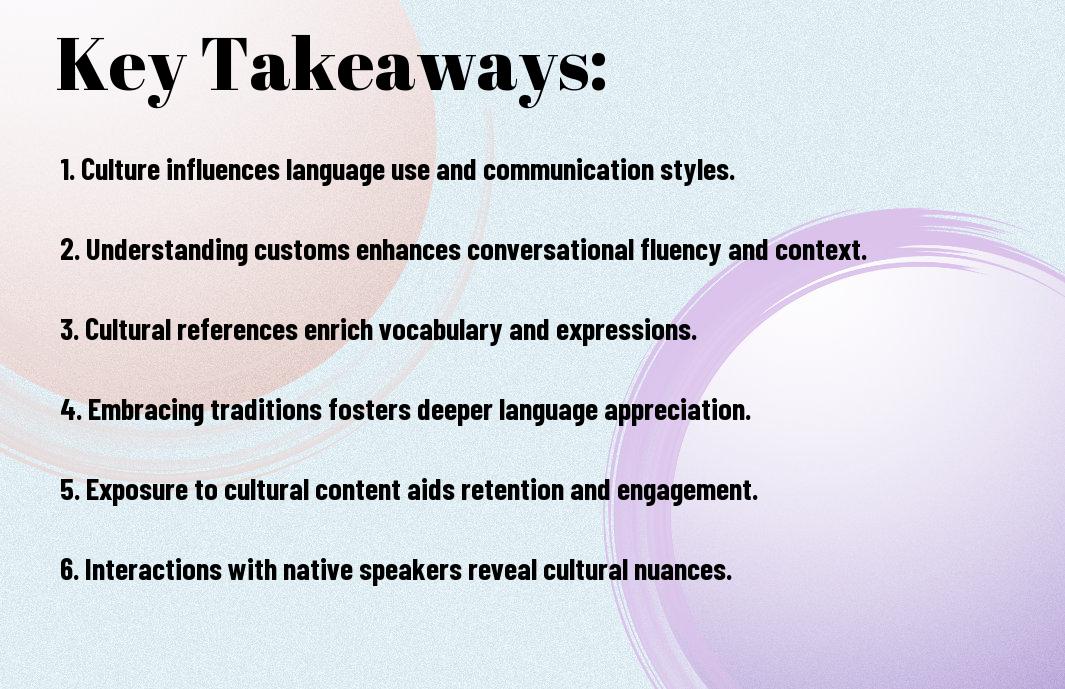
Key Takeaways:

  • The language learning process is deeply influenced by the cultural context in which it takes place, as social interactions and environmental factors play a significant role in shaping the learning experience.
  • Cultural awareness and understanding are important for effective communication in a foreign language, as they enable learners to navigate social norms and customs associated with the target language.
  • The integration of cultural elements into language instruction can enhance learner motivation and engagement, as it provides a more authentic and meaningful learning experience.
  • Language learners who are exposed to diverse cultural practices and traditions tend to develop a more nuanced understanding of the target language and its linguistic variations.
  • Effective language teaching should incorporate cultural components that foster intercultural competence, enabling learners to navigate complex cultural situations and interact with native speakers in a confident and respectful manner.

Language Acquisition

The process of language acquisition is closely tied to culture, as you can learn more about Language: The Essence of Culture and how it shapes your understanding of the world.

The Impact of Cultural Background

Sociolinguistic Factors

  • Language norms and values
  • Cultural identity and belonging

    , After analyzing these factors, you can better navigate language acquisition in different cultural contexts.

  • Power dynamics and social status
  • Communication styles and pragmatics

    , After exploring these aspects, you will be better equipped to adapt to new linguistic and cultural environments.
    Cultural Influences

    Some cultural factors significantly impact your language learning experience, influencing the way you perceive and understand the language, and ultimately, the way you communicate with native speakers.

    Nonverbal Communication

    Culturally-based differences in nonverbal cues can affect your interactions, as you may unintentionally convey a different message than intended, highlighting the importance of understanding cultural context in communication.

    Idiomatic Expressions

    On a deeper level, idiomatic expressions can be particularly challenging, as their meanings often rely on cultural references and nuances that you may not be familiar with, requiring you to develop a deeper understanding of the culture behind the language.

    To master idiomatic expressions, you need to be aware of the cultural context in which they are used, and be able to apply this knowledge to your everyday conversations, allowing you to communicate more effectively and naturally with native speakers, and enhancing your overall language skills.

    Learning Strategies

    For effective language learning, you need to adopt strategies that work best for your learning style. Your approach to learning a language can greatly impact your progress and success.

    Immersion Techniques

    Beyond the classroom, you can use immersion techniques to surround yourself with the language you’re learning, such as watching TV shows or listening to music in the target language, which can help you pick up phrases and nuances more naturally.

    Cultural Adaptation

    Likewise, learning about cultural differences and adapting to them is important for successful language learning, as you will be able to understand the context and nuances of the language, and communicate more effectively with native speakers.

    In addition, as you probe deeper into cultural adaptation, you will find that your understanding of the language improves significantly, and you will be able to navigate different social situations with ease, making your language learning journey more enjoyable and rewarding, allowing you to connect with your target culture on a deeper level.

    Teaching Methods

    Keep in mind that effective teaching methods play a significant role in language learning. You can choose from various approaches, such as immersive, task-based, or communicative language teaching, to create an engaging learning environment.

    Cultural Sensitivity in the Classroom

    Above all, you should consider the cultural backgrounds of your students to create a comfortable and inclusive learning space. You will be able to foster a positive atmosphere by being aware of cultural differences and adapt your teaching methods accordingly.

    Incorporating Cultural Elements

    At the heart of language learning is the incorporation of cultural elements that enable you to connect with the language on a deeper level. You can use authentic materials, such as videos, images, and texts, to introduce cultural aspects and make learning more engaging.

    Incorporating cultural elements into your language learning process allows you to gain a more comprehensive understanding of the language and its usage in different contexts. You can explore various cultural practices, traditions, and customs associated with the language, which will enable you to communicate more effectively and avoid unintended offense or misunderstandings.

    Challenges and Opportunities

    Your ability to learn a language is influenced by cultural factors, which can either hinder or help your progress, presenting you with challenges and opportunities for growth.

    Overcoming Cultural Barriers

    Against the backdrop of cultural differences, you will encounter obstacles that test your language skills, but with persistence and the right approach, you can overcome these barriers and improve your understanding of the language.

    Leveraging Cultural Diversity

    Between the lines of cultural nuances, you will discover a wealth of knowledge that can enhance your language learning experience, allowing you to tap into the diversity of cultures and broaden your perspective.

    Cultural diversity offers a unique chance for you to engage with different customs, traditions, and ways of life, enabling you to develop a deeper understanding of the language and its context, which in turn will help you to become a more effective and fluent communicator.

    Effective Communication

    After acquiring basic language skills, you will begin to understand the importance of cultural nuances in effective communication, enabling you to convey your message accurately and avoid misunderstandings.

    Developing Cultural Awareness

    By immersing yourself in the culture, you become more sensitive to the values and customs of the community, allowing you to interact more effectively with native speakers and navigate complex social situations.

    Improving Language Skills

    Across various language learning contexts, you will discover that cultural knowledge enhances your ability to understand and use language appropriately, facilitating more natural and fluent communication.

    The improvement in your language skills will become evident as you apply cultural insights to your interactions, enabling you to better comprehend subtle cues, idiomatic expressions, and context-dependent language, ultimately leading to more effective and engaging communication with native speakers, and a deeper understanding of the language as a whole, which will aid you in your journey to mastering the language.

    To wrap up

    The role of culture in learning a language is a significant aspect you should consider as you commence on your language learning journey. You will find that understanding the cultural context enhances your learning experience. For more insights, visit The delicious role of culture in language learning to discover how your cultural awareness can boost your language skills and broaden your perspective, making you a more effective communicator in your new language.

    FAQ

    Q: What is the significance of culture in language learning, and how does it impact the learning process?

    A: The culture of a language plays a vital role in language learning as it provides context and depth to the learning experience. Understanding the cultural nuances, customs, and values associated with a language helps learners to better comprehend the language’s idiomatic expressions, colloquialisms, and non-verbal communication. This, in turn, enables them to communicate more effectively and avoid unintended offense or misunderstandings. By integrating cultural knowledge into language instruction, learners can develop a more holistic understanding of the language and its native speakers.

    Q: How can language learners effectively incorporate cultural learning into their study routine, and what resources are available to support this process?

    A: Language learners can incorporate cultural learning into their study routine by exploring authentic materials such as movies, TV shows, music, and literature from the target culture. They can also engage with native speakers, either in person or through online platforms, to gain insights into cultural practices and traditions. Additionally, learners can utilize online resources, such as cultural blogs, podcasts, and language learning apps, that provide cultural lessons and explanations. Many language courses and textbooks also include cultural components, and learners can supplement their studies with these resources to deepen their cultural understanding.

    Q: Can cultural differences hinder the language learning process, and if so, how can learners overcome these challenges to achieve their language goals?

    A: Cultural differences can indeed pose challenges for language learners, as they may encounter unfamiliar customs, norms, and expectations that can lead to confusion or miscommunication. To overcome these challenges, learners can develop an awareness of potential cultural differences and approach them with an open mind and a willingness to learn. They can also seek guidance from language instructors, tutors, or mentors who are familiar with the target culture and can provide valuable insights and advice. Furthermore, learners can focus on building their cultural competence by developing skills such as empathy, flexibility, and critical thinking, which can help them navigate cultural differences and achieve their language learning objectives.
  • The Impact of Culture on Language Expression

    As you navigate the complexities of human communication, you begin to notice that your words and expressions are shaped by the cultural context in which you live. Your language is not just a means of conveying thoughts, but also a reflection of your cultural identity. You will find that the way you express yourself is influenced by the values, norms, and beliefs of your community, shaping your perceptions and interactions with the world around you. This intersection of culture and language is a fascinating topic that warrants exploration.

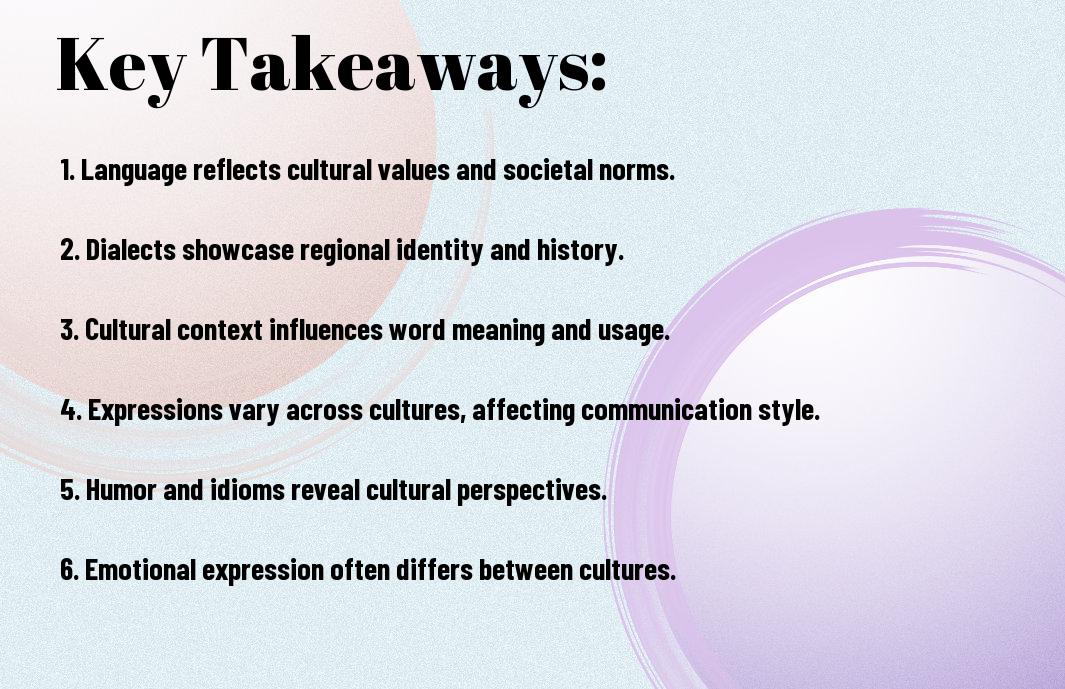
    Key Takeaways:

    • The cultural background of a speaker can significantly influence their language expression, shaping the way they convey meaning and negotiate social relationships through communication.
    • Idiomatic expressions and colloquialisms often have cultural references that may not be immediately understood by non-native speakers, highlighting the importance of cultural competence in effective communication.
    • Linguistic nuances such as tone, pitch, and body language can vary greatly across cultures, and being aware of these differences is imperative for successful communication in multicultural settings.

      Language and Cultural Identity

      A person’s language is often a fundamental aspect of their cultural identity, influencing how you perceive yourself and your place within a community, and shaping your interactions with others in profound ways, as you navigate the complexities of cultural expression.

      The Role of Culture in Shaping Language

      Prior to examining the intricacies of language and culture, you must consider how culture shapes the very language you speak, affecting the words you choose, the tone you convey, and the nuances you express, all of which are influenced by your cultural background and the values you hold dear.

      Language as a Reflection of Cultural Values

      Inherent in your language is a reflection of your cultural values, as the phrases you use, the idioms you express, and the stories you tell all convey the beliefs and traditions that are unique to your cultural heritage, and as you communicate, you are, in essence, sharing a part of yourself and your cultural identity with others.

      Values such as respect, hierarchy, and community are often embedded in the language you speak, and as you use language to communicate, you are reinforcing these values, perpetuating the cultural norms that have been passed down to you, and shaping your sense of self and your connection to your cultural community, and you begin to see that language is not just a means of communication, but a vital part of your cultural identity, influencing how you think, feel, and interact with the world around you.

      Expressions and Nuances

      It is imperative to consider the role of culture in shaping your language expression, as it influences the way you convey meaning and negotiate social relationships. Your cultural background determines your linguistic habits, from the words you choose to the tone you use, and this, in turn, affects how others perceive you.

      Idioms and Colloquialisms in Different Cultures

      Prior to delving into the complexities of language, you should note that idioms and colloquialisms vary significantly across cultures, and their meanings are often specific to a particular region or community. Your understanding of these expressions depends on your familiarity with the cultural context in which they are used.

      Nonverbal Communication Across Cultures

      Conversely, communication is not limited to verbal expressions, and your nonverbal cues, such as body language and facial expressions, can convey just as much information as spoken words. You should be aware that these cues can have different meanings in different cultures, and your ability to interpret them correctly is vital to effective communication.

      It is worth noting that nonverbal communication can be particularly problematic when interacting with people from other cultures, as your unconscious behaviors and gestures may be misinterpreted. You may unintentionally offend someone or convey a message that is different from your intended meaning, highlighting the need for you to be mindful of your nonverbal cues and to educate yourself about the cultural norms of the communities you interact with.

      Cultural Influences on Language Development

      To understand the impact of culture on language, you should consider the role of cultural background in shaping your language expression. As you explore the relationship between culture and language, you may find it helpful to consult resources such as exploring the impact of culture on language learning to deepen your understanding.

      Language Acquisition and Cultural Background

      On the path to language acquisition, your cultural background plays a significant role in determining your language expression, as it influences the way you perceive and interpret the world around you, shaping your linguistic preferences and abilities.

      Language Contact and Cultural Exchange

      Exchange of cultural practices and values occurs when languages come into contact, and as you engage with speakers of other languages, you will notice the exchange of linguistic features, leading to the creation of new language varieties and expressions.

      For instance, when you observe the language contact phenomenon, you will see that it results in code-switching, borrowing, and convergence, which are all indicative of the dynamic interplay between languages and cultures, and as you probe deeper into this phenomenon, you will gain a deeper understanding of the complex relationship between language and culture, and how it affects your expression and communication.

      Language and Cultural Diversity

      Unlike other aspects of human society, language is deeply intertwined with cultural diversity, influencing your perception of the world and shaping your identity. As you explore the complexities of language, you will discover that cultural diversity is reflected in the vast array of languages spoken globally.

      Multilingualism and Cultural Identity

      Around the time you begin to appreciate the significance of language, you will notice that multilingualism plays a significant role in shaping cultural identity, allowing you to connect with diverse communities and broaden your cultural understanding.

      Language Endangerment and Cultural Preservation

      Alongside the issue of language diversity, you will find that language endangerment poses a significant threat to cultural preservation, as you witness languages disappearing at an alarming rate, taking with them unique cultural practices and traditions.

      Aiding your understanding of language endangerment and cultural preservation, you will see that as languages disappear, the cultural heritage and history of communities are also lost, highlighting the need for concerted efforts to document and preserve endangered languages, thereby safeguarding the cultural diversity that makes your world a richer and more fascinating place to live in.

      Communication Across Cultures

      Many languages are spoken across cultures, and you will encounter various forms of expression as you navigate these diverse cultural landscapes. Your interactions will be shaped by the nuances of each culture, influencing how you perceive and convey meaning. As you communicate, you will need to consider the subtleties of language that vary greatly between cultures.

      Barriers to Effective Cross-Cultural Communication

      Besides the obvious linguistic differences, you will also face nonverbal barriers, such as distinct customs and norms, which can hinder effective communication. Your ability to understand and adapt to these differences will significantly impact the success of your interactions across cultures, and you must be aware of potential miscommunications that can arise from these barriers.

      Strategies for Successful Intercultural Interaction

      Culturally sensitive approaches will enable you to navigate complex cultural contexts with greater ease, and you will find that being open to learning about different cultures is imperative in developing effective communication strategies. Your willingness to engage with diverse perspectives will facilitate more meaningful interactions, allowing you to build stronger relationships across cultural boundaries.

      This approach to intercultural interaction requires you to be aware of your own cultural biases and to be willing to question your assumptions. As you engage with people from diverse cultural backgrounds, you will need to be patient and observant, taking the time to understand the nuances of each culture and to adapt your communication style accordingly. By doing so, you will be able to foster greater understanding and cooperation, leading to more successful interactions across cultures.

      Implications and Applications

      Keep in mind that understanding the impact of culture on language expression has significant implications for your interactions with people from diverse backgrounds. You will be able to navigate complex social situations more effectively and communicate your ideas with greater precision.

      Language Teaching and Cultural Sensitivity

      Across various disciplines, you will find that cultural awareness is vital in language teaching, as it enables you to tailor your instruction to the needs of your students and foster a more inclusive learning environment. You will be able to create lessons that are sensitive to the cultural backgrounds of your students.

      Translation and Interpretation in Multicultural Contexts

      On the surface, translation and interpretation may seem like straightforward processes, but you will soon discover that they involve a deep understanding of the cultural nuances of the languages involved. You will need to consider the subtleties of language and culture to convey the intended meaning accurately.

      At the heart of effective translation and interpretation lies a profound appreciation for the cultural context in which communication takes place. You will need to consider the values, beliefs, and practices that underlie the language and adjust your approach accordingly, taking into account the potential for miscommunication and striving to facilitate understanding between people from different cultural backgrounds. As you research deeper into the complexities of translation and interpretation, you will develop a greater appreciation for the intricate dance between language and culture.

      Final Words

      On the whole, you have witnessed how culture intricately weaves into the fabric of language expression, influencing your perceptions and understanding of the world. As you reflect on this phenomenon, you begin to appreciate the profound impact culture has on shaping your thoughts and opinions, ultimately affecting the way you communicate with others and navigate your surroundings, forcing you to consider the complex dynamics at play in your daily interactions.

      FAQ

      Q: How does culture influence language expression and what are the implications for communication across different cultural backgrounds?

      A: Culture significantly influences language expression by shaping the way individuals perceive and convey meaning. Different cultures have unique norms, values, and customs that are embedded in their language, affecting not only the words and phrases used but also the tone, context, and non-verbal cues. For instance, in some cultures, directness is valued, while in others, indirectness is preferred. Understanding these cultural nuances is imperative for effective communication across different cultural backgrounds, as it helps avoid misunderstandings and fosters more respectful and empathetic interactions. By acknowledging and adapting to these differences, individuals can enhance their ability to communicate effectively in multicultural settings.

      Q: In what ways do cultural differences in language expression impact business and international relations, and how can these challenges be addressed?

      A: Cultural differences in language expression can substantially impact business and international relations by creating barriers to effective communication. For example, idioms, humor, and figurative language that are common in one culture may be confusing or offensive in another. In a business context, this can lead to misunderstandings, missed opportunities, or damaged relationships. To address these challenges, it’s beneficial for individuals involved in international business or relations to undergo cross-cultural training. This training can help them understand the cultural context of the languages they interact with, learn to navigate differences in communication styles, and develop strategies for clear and respectful communication. Furthermore, using simple and straightforward language, avoiding cultural references that may not translate well, and seeking clarification when necessary can also mitigate potential issues.

      Q: How does the impact of culture on language expression affect the process of language learning, and what strategies can language learners use to better understand and adapt to these cultural nuances?

      A: The impact of culture on language expression significantly affects the process of language learning, as learners must not only acquire linguistic knowledge but also understand the cultural context in which the language is used. Cultural nuances can influence everything from the appropriateness of certain vocabulary in different situations to the importance of non-verbal communication. To better understand and adapt to these cultural nuances, language learners can immerse themselves in the culture by engaging with native speakers, watching local media, and participating in cultural events. Additionally, seeking out language learning materials that incorporate cultural insights and practicing active listening and observation can help learners become more aware of cultural differences in language use. It’s also important for learners to be patient and open-minded, acknowledging that cultural and linguistic mistakes are a natural part of the learning process.

    The Role of Cultural Festivals in Language Learning

    As you explore into a new language, you’ll discover that cultural festivals play a significant role in your learning journey. You’ll find that these festivals offer a unique opportunity to immerse yourself in the language and culture, allowing you to gain a deeper understanding of the customs and traditions associated with your target language. By participating in these festivals, you can enhance your language skills and develop a more nuanced appreciation for the culture, making your language learning experience more engaging and effective.

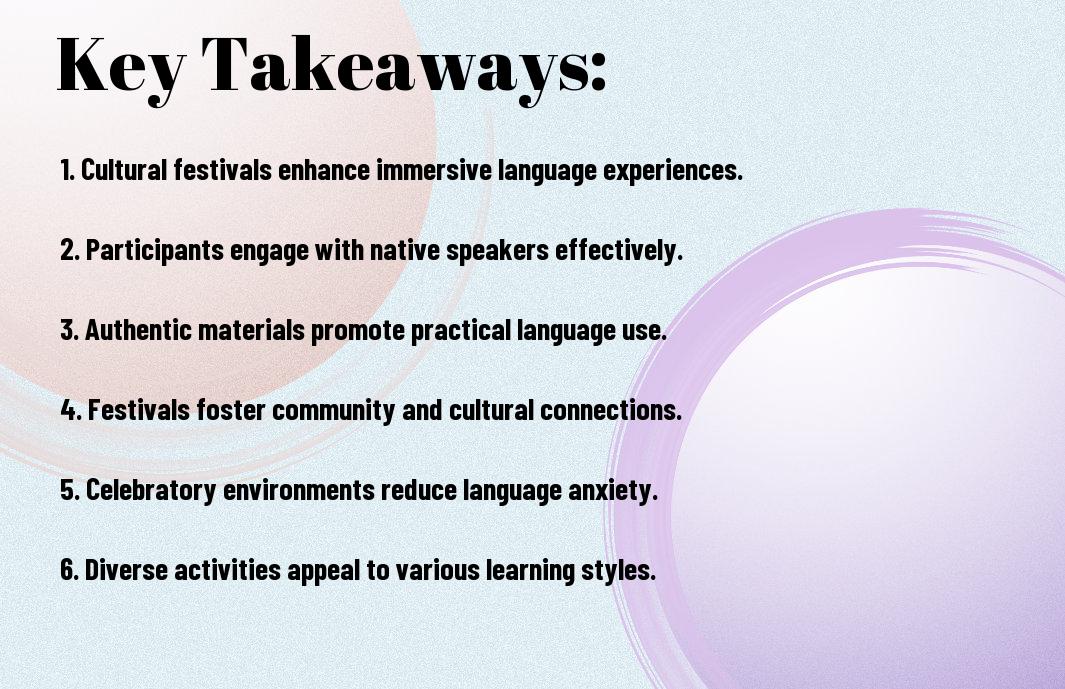
    Key Takeaways:

    • The participation in cultural festivals can greatly enhance language learning by providing an immersive experience, allowing learners to engage with native speakers and practice their language skills in a real-life setting.
    • Cultural festivals offer a unique opportunity for language learners to gain insight into the target culture, fostering a deeper understanding of the language and its nuances, which can help learners to better comprehend and communicate effectively.
    • The authentic environment of cultural festivals enables language learners to develop their pragmatic competence, including social skills and cultural awareness, which are necessary for effective communication in the target language.

      The Significance of Cultural Festivals

      The cultural festivals play a vital role in your language learning journey, as they provide a unique opportunity to experience the customs and traditions of a particular culture.

      Language Immersion

      Linguistically, you will be exposed to various dialects and accents, helping you develop your listening and speaking skills in a more immersive environment.

      Cultural Exchange

      With cultural festivals, you can engage in interactions with native speakers, which enables you to learn about their way of life and share your own cultural experiences.

      And as you participate in these cultural exchange events, you will gain a deeper understanding of the cultural nuances and context that are important to effective communication in your target language, allowing you to become a more proficient and confident language user.

      Language Acquisition through Festivals

      You can gain valuable language skills by participating in cultural festivals, which provide an immersive environment for language learning. Festivals offer opportunities to engage with native speakers, try traditional foods, and experience cultural customs.

      Authentic Language Use

      Like linguistic immersion, festivals allow you to practice your language skills in real-life situations, helping you to develop your pronunciation, vocabulary, and grammar.

      Interactive Learning

      One of the key benefits of festivals is the interactive nature of language learning, where you can engage in conversations, sing songs, and participate in traditional dances, making the learning process enjoyable and engaging.

      Acquisition of language skills is facilitated through interactive learning, as you are able to practice your language skills in a supportive and stimulating environment, receiving immediate feedback and correction from native speakers, which helps to build your confidence and fluency in the language.

      Festival Themes and Language Learning

      All cultural festivals offer a unique opportunity for language learning, and you can explore various themes, such as The Role of British Festivals in Expanding Cultural Vocabulary, to enhance your skills.

      Traditional Music and Dance

      Across different festivals, you’ll find a variety of traditional music and dance that can help you connect with the culture and learn new language aspects, such as rhythm and expression.

      Food and Cuisine

      Cuisine plays a significant role in cultural festivals, and you’ll discover various traditional dishes that can help you learn new vocabulary related to food and culinary practices.

      With the diversity of food and cuisine at festivals, you can explore the language associated with different ingredients, cooking methods, and dining customs, which can enrich your language learning experience and help you engage more deeply with the culture, allowing you to better understand and participate in conversations about food and cuisine.

      The Role of Technology in Festival-Based Learning

      Now, with the rise of digital platforms, you can explore and participate in cultural festivals from around the world, enhancing your language learning experience. Technology has made it possible to engage with diverse cultures and languages, making festival-based learning more accessible and enjoyable for you.

      Virtual Festivals

      On the digital stage, you can attend virtual festivals, which offer a unique opportunity to experience different cultures and languages. You can watch live streams, interact with attendees, and even participate in workshops, all from the comfort of your own space.

      Language Learning Apps

      Above all, language learning apps have revolutionized the way you learn languages, and festival-based learning is no exception. You can use apps to learn about festivals, practice relevant vocabulary, and even connect with native speakers, making your learning experience more engaging and effective.

      In addition, as you explore language learning apps, you will find a wide range of tools and resources that cater to your learning style and goals. You can access interactive lessons, quizzes, and games that focus on festival-related topics, helping you to develop your language skills in a fun and immersive way, and enabling you to make the most of your festival-based learning experience.

      Challenges and Limitations

      Keep in mind that incorporating cultural festivals into your language learning process can be complex. You can explore Strategies for Teaching EFL/ESL Through Cultural Festivals to address potential issues.

      Accessibility and Inclusivity

      Toward creating an inclusive environment, you should consider the diversity of your students and ensure that all can participate in cultural festivals, fostering a sense of belonging.

      Cultural Sensitivity

      At the heart of using cultural festivals in language learning is the need to approach each culture with respect and understanding, allowing you to navigate potential sensitivities effectively.

      Indeed, as you examine into the cultural sensitivity aspect, you will find that being mindful of the nuances of each culture is vital. You must be aware of the customs, traditions, and values associated with each festival to avoid misinterpretation or offense, ensuring that your approach to cultural festivals in language learning is both enriching and respectful for all your students.

      Best Practices for Festival-Based Language Learning

      Despite the many benefits of festival-based language learning, it requires careful planning and execution to maximize its effectiveness. You can enhance your language skills by participating in cultural festivals, but it’s crucial to approach them with a clear understanding of your goals and objectives.

      Pre-Festival Preparation

      To get the most out of festival-based language learning, you should prepare thoroughly before attending the event. You will need to research the festival, its customs, and the language used during the celebrations to feel confident and comfortable interacting with native speakers.

      Post-Festival Reflection

      Around the time after the festival, you will have the opportunity to reflect on your experiences and assess your progress. You can think about what you learned, what you enjoyed, and what you would do differently next time to improve your language skills.

      In fact, post-festival reflection is an crucial step in the learning process, as it allows you to solidify new language skills and identify areas for further improvement. You can use this time to review the vocabulary and phrases you learned, practice speaking and writing in the target language, and set new goals for your continued language development, helping you to stay motivated and engaged in your language learning journey.

      Final Words

      Conclusively, you will find that cultural festivals play a significant role in your language learning journey. As you participate in these events, you gain exposure to authentic language usage, enabling you to improve your communication skills. Your understanding of the culture and language deepens, allowing you to connect with native speakers on a more personal level, and enhancing your overall learning experience.

      FAQ

      Q: What is the significance of cultural festivals in language learning, and how can they enhance the learning experience?

      A: Cultural festivals play a significant role in language learning as they provide an immersive and engaging environment for learners to practice their language skills. By participating in festivals, learners can experience the authentic use of language in context, interact with native speakers, and gain insights into the cultural nuances associated with the language. This can help learners develop a deeper understanding of the language and its cultural relevance, making the learning process more enjoyable and effective.

      Q: How can cultural festivals help language learners develop their listening and speaking skills?

      A: Cultural festivals offer numerous opportunities for language learners to develop their listening and speaking skills. For instance, learners can engage in conversations with native speakers, listen to traditional music and stories, and participate in language-based activities such as dialect workshops or poetry recitals. Additionally, festivals often feature a variety of linguistic styles, dialects, and accents, which can help learners become more accustomed to different spoken forms of the language and improve their overall comprehension and communication skills.

      Q: What role can cultural festivals play in promoting language preservation and cultural exchange among communities?

      A: Cultural festivals can serve as a vital platform for language preservation and cultural exchange by showcasing the unique linguistic and cultural heritage of different communities. By sharing their traditions, customs, and language, communities can promote cross-cultural understanding, foster greater appreciation for linguistic diversity, and encourage language learners to explore and learn about different cultures. Furthermore, festivals can provide a space for language communities to come together, share their experiences, and collaborate on language preservation efforts, ultimately contributing to the promotion of linguistic and cultural diversity.

    The Role of Dialects in Cultural Understanding

    As you examine into the intricacies of language, you’ll find that dialects play a significant role in shaping your perception of cultural nuances. Your understanding of dialects can bridge the gap between communities, allowing you to grasp the subtleties of communication that might otherwise be lost. By examining dialects, you’ll gain insight into the complexities of cultural identity and how language influences your worldview, enabling you to navigate diverse social contexts with greater ease and sensitivity.

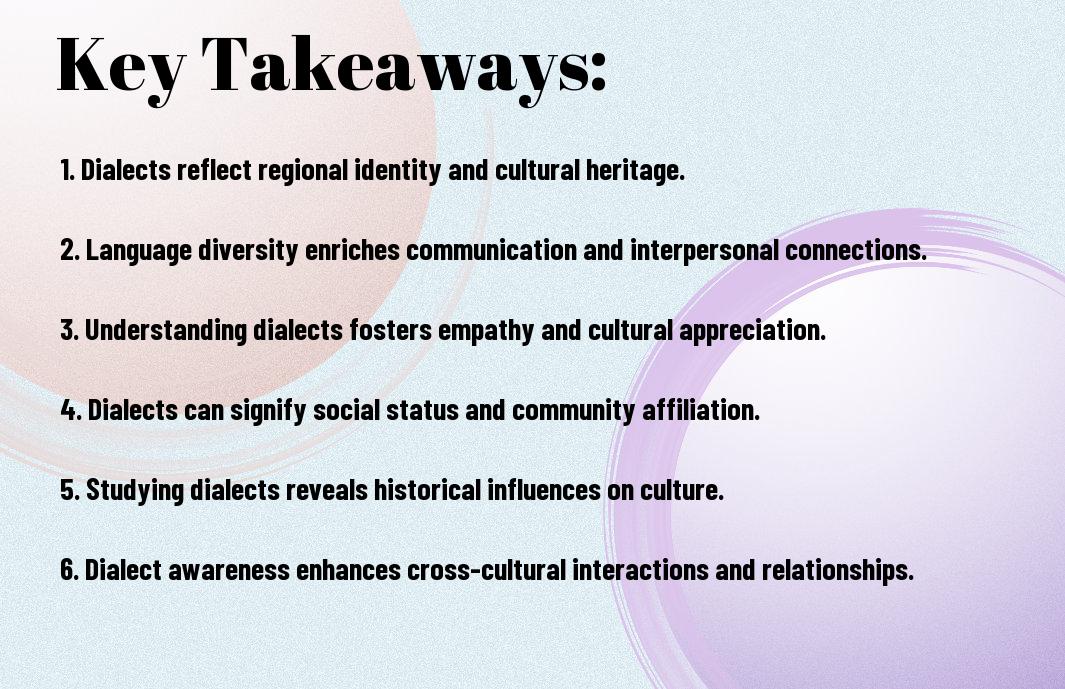
    Key Takeaways:

    • The diversity of dialects plays a significant role in shaping cultural identity and influencing how individuals perceive and interact with their environment, highlighting the importance of linguistic variation in understanding cultural differences.
    • Dialects serve as a means of communication that is closely tied to regional and social contexts, and their study can provide valuable insights into the history and traditions of a particular community.
    • By examining the complexities of dialects and their relationship to cultural practices, we can gain a deeper understanding of the nuances of human expression and the ways in which language shapes our perceptions of the world around us.

    Dialects and Cultural Identity

    For your exploration of dialects, consider how they shape your sense of belonging and inform your understanding of cultural heritage. As you research into the nuances of dialects, you will find that they are closely tied to cultural identity, influencing how you perceive and interact with your surroundings.

    Linguistic Variations

    Culturally, you will discover that linguistic variations within dialects reflect the unique characteristics of a community, shaping your communication and expression. You will notice that these variations can indicate social status, geographic location, and historical context, all of which contribute to your cultural identity.

    Regional Accents

    Following your examination of linguistic variations, you will observe that regional accents play a significant role in distinguishing one cultural group from another. You will find that these accents are often a source of pride, serving as a badge of identity and a means of connecting with your cultural roots.

    Linguistic diversity is a hallmark of regional accents, and as you explore this aspect further, you will see that it is a key factor in shaping your cultural landscape. You will notice that regional accents can affect how you interpret and respond to different situations, and they can also influence your relationships with people from other cultural backgrounds, allowing you to better understand and appreciate the complexities of your own cultural identity and that of others.

    Language and Social Class

    Any discussion of language and social class must consider the ways in which dialects reflect and reinforce socioeconomic divisions.

    Socioeconomic Factors

    You will notice that socioeconomic factors, such as income and education level, influence the dialect you speak, as seen in the following points:

    • Access to resources
    • Geographic location

    The nuances of dialect can affect your perception of social class and cultural identity.

    Educational Implications

    Along with the complexities of language and social class, you should consider how dialects impact your educational experiences. As you navigate different linguistic environments, you may encounter various dialects that can either facilitate or hinder your learning.

    Socioeconomic factors, such as those influencing the dialect you speak, can have a profound impact on your educational implications, and as you examine deeper into the role of dialects in cultural understanding, you will see that your ability to navigate multiple dialects can significantly affect your academic and professional opportunities, and you will begin to appreciate the value of dialectal diversity in your own life.

    The Power of Dialects in Storytelling

    After delving into the world of dialects, you will discover their significance in shaping your understanding of cultures. You can learn more about dialects by visiting What Are Dialects and Why They Matter in Language Services to broaden your knowledge.

    Narrative Techniques

    Narratively, dialects play a significant role in storytelling, as they add depth and authenticity to your characters and setting, allowing you to better connect with your audience.

    Character Development

    Behind the scenes of character development, dialects help you create unique and believable characters, enabling you to craft compelling stories that resonate with your readers.

    For instance, when you use dialects in your writing, you can convey a character’s background, social status, and education level, making them more relatable and realistic, and allowing you to explore the complexities of human experience in a more nuanced way.

    Dialects in Global Communication

    Once again, you find yourself navigating the complexities of language as you engage with people from diverse backgrounds, and dialects play a significant role in shaping your interactions. As you communicate across cultures, you begin to appreciate the nuances of dialects and their impact on your understanding of others.

    International Relations

    Following your exploration of dialects, you notice that international relations are influenced by the various dialects spoken by world leaders and diplomats, which can either facilitate or hinder effective communication, and you start to consider how dialects affect your own interactions with people from other countries.

    Cultural Exchange

    Towards a deeper understanding of dialects, you start to see the value of cultural exchange programs, which allow you to immerse yourself in different dialects and gain a more nuanced understanding of the cultures they represent, enabling you to better navigate your interactions with people from diverse backgrounds.

    This exchange of cultural practices and dialects enables you to broaden your perspective, as you learn to appreciate the unique characteristics of each dialect and how they reflect the history, values, and beliefs of the people who speak them, ultimately enriching your understanding of the complex tapestry of human culture and allowing you to engage more effectively with others in your global interactions.

    Cultural Preservation through Dialects

    To understand the significance of dialects, you can explore how they contribute to cultural preservation, as seen when you visit what role does language play in cultural diversity? and its impact on your community.

    Language Revitalization

    Above all, you’ll find that dialects play a significant role in language revitalization, allowing you to connect with your heritage and preserve your cultural identity.

    Community Efforts

    Culturally, you are likely to see that community efforts are vital in promoting dialects, enabling you to engage with your local traditions and customs.

    Through your participation in community initiatives, you can help safeguard dialects and ensure their continuation, ultimately enriching your cultural landscape and allowing you to appreciate the unique characteristics of your dialect and its significance in your life.

    Challenges and Opportunities

    Unlike other aspects of culture, dialects can be particularly difficult to navigate, as you attempt to understand the nuances of a particular region or community. You will encounter various challenges, but also opportunities to gain a deeper understanding of the culture.

    Language Barriers

    Beneath the surface of dialects, you will find language barriers that can hinder your ability to communicate effectively. You may struggle to comprehend certain words or phrases, which can lead to misunderstandings and miscommunications.

    Technological Advancements

    Any attempt to understand dialects can be aided by technological advancements, which provide you with a wealth of resources to learn and explore different dialects. You can access language learning tools, podcasts, and videos that help you improve your understanding of various dialects.

    Barriers to understanding dialects can be overcome with the help of technology, as you can now access a vast array of resources to aid in your learning. You can listen to native speakers, practice your pronunciation, and learn about the cultural context in which the dialect is spoken, allowing you to gain a more nuanced understanding of the culture and its people.

    To wrap up

    Taking this into account, you can see that dialects play a significant role in shaping your understanding of diverse cultures. As you explore the nuances of dialects, you gain insight into the history, values, and beliefs of a community. Your ability to appreciate these variations enriches your cultural awareness, allowing you to engage more deeply with the people and their traditions, and broadening your perspective on the world.

    FAQ

    Q: What is the significance of dialects in understanding cultural diversity?

    A: Dialects play a vital role in understanding cultural diversity as they provide a unique window into the history, traditions, and values of a community. Each dialect has its own distinct characteristics, such as vocabulary, pronunciation, and grammar, which are shaped by the social, economic, and geographic context of the speakers. By studying dialects, we can gain insights into the cultural practices, customs, and beliefs of different communities, fostering greater empathy and understanding among people from diverse backgrounds.

    Q: How do dialects influence cultural identity and belonging?

    A: Dialects have a profound impact on cultural identity and belonging, as they often serve as a marker of group membership and affiliation. The dialect spoken by an individual can convey information about their geographic origin, social status, and cultural affiliations, influencing how they perceive themselves and are perceived by others. Moreover, dialects can evoke strong emotions and sentiments, such as nostalgia, pride, or solidarity, which are crucial components of cultural identity. By embracing and appreciating dialectal diversity, we can promote a sense of inclusivity and belonging among individuals from diverse cultural backgrounds.

    Q: Can dialects be a barrier to communication, and if so, how can we overcome these barriers?

    A: While dialects can enrich our cultural understanding, they can also create barriers to communication, particularly in situations where speakers of different dialects interact. These barriers can arise due to differences in vocabulary, pronunciation, or grammar, leading to misunderstandings or miscommunications. To overcome these barriers, it is crucial to promote dialectal awareness and tolerance, encouraging speakers to be patient, flexible, and open-minded when interacting with individuals who speak differently. Additionally, using standardized language varieties, providing linguistic support, and fostering a culture of respect and empathy can help bridge the gaps between dialects and facilitate effective communication across cultural boundaries.

    How Learning Languages Enhances Cultural Appreciation

    As you begin on learning a new language, you’ll discover that it’s not just about mastering grammar and vocabulary, but also about gaining a deeper understanding of the culture behind it. You’ll find that your language skills will allow you to connect with people from diverse backgrounds, appreciate their customs, and explore their history. By immersing yourself in a language, you’ll broaden your perspective and develop a more nuanced understanding of the world, enabling you to engage with different cultures in a more meaningful way, and enriching your life in the process.

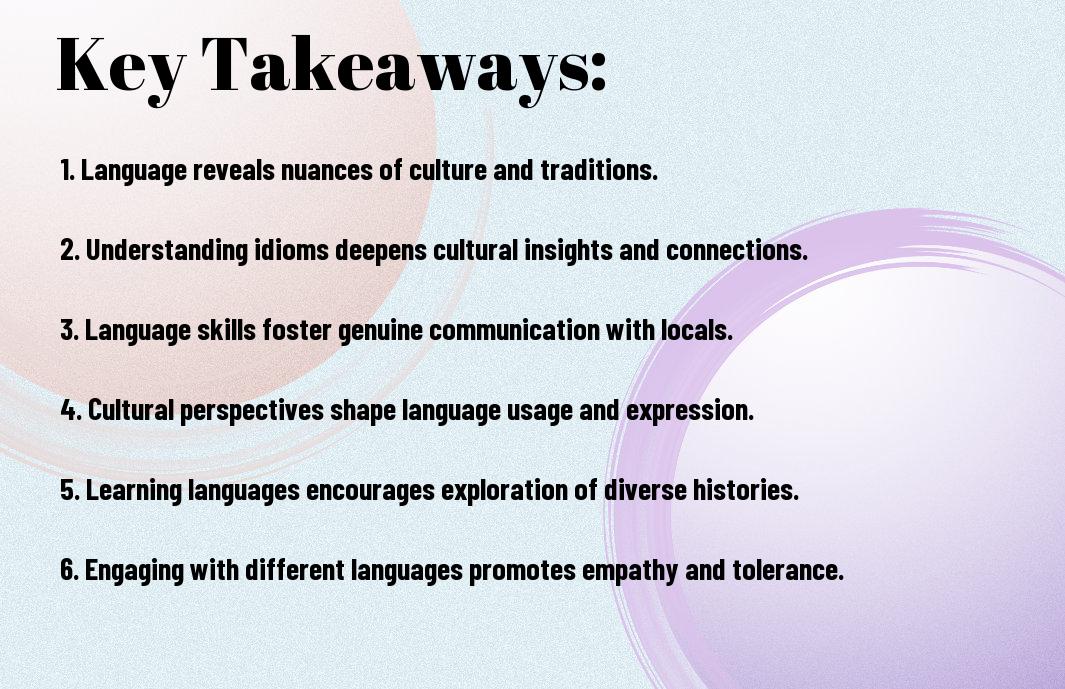
    Key Takeaways:

    To understand the significance of language learning in cultural appreciation, consider the following points:

    • Learning a language allows individuals to gain a deeper understanding of a culture’s history, traditions, and values, enabling them to better appreciate the cultural heritage and diversity.
    • Language skills can also facilitate communication and connection with people from diverse cultural backgrounds, fostering empathy and understanding through direct engagement with native speakers.
    • Moreover, acquiring a new language can broaden one’s perspective and enhance cultural awareness, allowing individuals to navigate different cultural norms and practices with greater ease and confidence.

    Language as a Cultural Key

    Before venturing into the world of languages, you’ll find that learning a new language can unlock numerous cultural doors. As you explore the benefits of language learning, you can discover How Learning a Second Language Helps Children Develop Deeper Cultural Understanding, which can enrich your life in many ways.

    Unlocking Cultural Nuances

    Any attempt to understand a culture without its language will be limited, as you will miss out on the subtle nuances that language conveys. You will find that language learning helps you grasp cultural references and context.

    Language Learning as a Tool for Cultural Immersion

    Any language learner knows that immersion is key to language acquisition, and you will find that it also applies to cultural appreciation. You can engage with native speakers, watch local media, and participate in cultural events, which will enhance your cultural understanding.

    And as you investigate deeper into language learning, you will discover that it becomes a powerful tool for cultural immersion, allowing you to connect with people from diverse backgrounds and fostering a deeper appreciation for the cultural practices and traditions that shape their daily lives, enabling you to navigate your interactions with more sensitivity and awareness, which will, in turn, enrich your life in many ways.

    The Benefits of Multilingualism

    You will discover a new world of opportunities when you become multilingual, as it opens doors to new cultures, communities, and perspectives, ultimately enriching your life and broadening your understanding of the world.

    Broadening Perspectives

    Besides gaining a deeper understanding of different cultures, learning a new language allows you to see the world from a unique point of view, challenging your assumptions and fostering empathy and tolerance, which are vital in today’s globalized society.

    Enhancing Travel Experiences

    One of the most significant advantages of being multilingual is the ability to fully immerse yourself in foreign cultures when traveling, as you can communicate with locals, read signs and menus, and appreciate the local way of life, making your travel experiences more authentic and enjoyable.

    But as you explore deeper into the culture of the place you are visiting, you will find that your language skills will allow you to connect with people on a more profound level, sharing stories, traditions, and customs, and creating lasting memories of your travels, making your experiences even more rewarding and enriching, and allowing you to develop a deeper appreciation for the diversity of human experience.

    Cultural Insights through Language

    Not only does learning a language provide you with a new skill, but it also offers you a unique perspective on the culture associated with it, allowing you to gain a deeper understanding of the traditions, customs, and values of the people who speak it.

    Idioms and Expressions

    Prior to submerging into the nuances of a language, you’ll discover that idioms and expressions are an integral part of communication, giving you insight into the daily life and interactions of native speakers, and enabling you to better navigate your interactions with them.

    Cultural References and Allusions

    For your understanding of a culture to be truly comprehensive, you need to familiarize yourself with the cultural references and allusions that are embedded in the language, as they often hold significant meanings and connotations that may not be immediately apparent to non-native speakers like you.

    And as you examine deeper into the cultural references and allusions, you’ll find that they can significantly enhance your appreciation of the culture, allowing you to decipher subtle hints and underlying messages in conversations, literature, and media, and to engage more meaningfully with the people and the culture you’re interested in.

    Language Learning and Empathy

    All language learners develop a deeper understanding of different cultures, which fosters empathy and tolerance. You become more aware of the nuances of communication and can better navigate interactions with people from diverse backgrounds.

    Building Bridges between Cultures

    Across cultures, language learning helps you connect with others and appreciate their perspectives. You can engage in meaningful conversations, share experiences, and build lasting relationships.

    Breaking Down Stereotypes

    As you learn a new language, you:

    • Discover the complexity of a culture
    • Gain insight into historical contexts
    • Develop a more nuanced understanding
    • Thou shalt find that your perceptions of other cultures will shift, and you will become a more open-minded and empathetic person.

      Language Culture
      Spanish Latin American
      Mandarin Chinese
      Arabic Middle Eastern
      French European
      Japanese East Asian

      At the heart of language learning is the ability to break down stereotypes and develop a deeper understanding of different cultures. You can:

      • Explore cultural traditions
        • Analyze historical events
          • Engage with native speakers
          • Thou shalt find that your language learning journey is not only about acquiring a new skill, but also about broadening your perspective and becoming a more empathetic and culturally aware individual.

            Language Culture
            German European
            Italian European
            Portuguese Latin American
            Russian Eastern European
            Korean East Asian

            The Role of Language in Cultural Heritage

            After exploring the significance of language in culture, you will discover that it plays a vital role in shaping your identity and connecting you to your heritage. Language is the key to understanding and appreciating the customs, traditions, and values of a culture.

            Preserving Traditional Practices

            Protecting cultural heritage through language helps you understand and respect traditional practices, allowing you to appreciate the unique characteristics of a culture and connect with your roots.

            Promoting Cultural Exchange

            The ability to communicate in multiple languages enables you to engage with people from diverse backgrounds, fostering global understanding and cooperation, and broadening your perspective on the world.

            For instance, when you learn a new language, you gain access to a wealth of literature, music, and art that might have been inaccessible to you otherwise, allowing you to experience the richness and diversity of a culture firsthand and develop a deeper appreciation for the traditions and customs that shape it.

            Practical Applications of Language Learning

            Despite the numerous benefits of language learning, its practical applications are often overlooked. You can apply your language skills in various aspects of your life, from career advancement to personal growth, allowing you to connect with people from diverse backgrounds and fostering a deeper understanding of different cultures.

            Career Opportunities

            Practically, learning a new language can significantly enhance your career prospects, as you become a more competitive candidate in the job market, capable of communicating with clients, colleagues, and customers from diverse linguistic backgrounds, thereby expanding your professional network and opportunities.

            Personal Enrichment

            Professionally, acquiring a new language can also lead to personal enrichment, as you gain a new perspective on the world, allowing you to appreciate cultural nuances and subtleties that would be lost in translation, and enabling you to engage more deeply with the culture, whether through reading literature, watching films, or engaging in conversations with native speakers.

            To further explore the benefits of personal enrichment through language learning, you can research into the world of literature, music, and art from the culture you’re interested in, and discover new authors, artists, and musicians that resonate with you, allowing you to develop a more nuanced understanding of the culture and its people, and fostering a deeper connection with the language and its speakers.

            Summing up

            From above, you can see that learning languages enhances your cultural appreciation, allowing you to engage with diverse communities and understand their perspectives. As you explore new languages, you gain insight into the history, customs, and values of different societies, broadening your understanding of the world and fostering empathy. Your ability to communicate in multiple languages enables you to navigate cultural nuances, making you a more informed and open-minded individual.

            FAQ

            Q: How does learning a new language contribute to a deeper understanding of a culture?

            A: Learning a new language allows individuals to access and appreciate the unique cultural nuances, customs, and traditions associated with that language. By acquiring a new language, one can gain insight into the history, literature, music, and art of the culture, ultimately broadening their perspective and fostering a more profound appreciation for the cultural heritage. This, in turn, enables learners to engage more effectively with native speakers, participate in cultural events, and develop a more authentic connection with the culture.

            Q: Can learning a language enhance one’s ability to appreciate cultural differences and avoid stereotypes?

            A: Yes, learning a language can significantly enhance one’s ability to appreciate cultural differences and avoid stereotypes. As learners become more familiar with the language, they begin to understand the cultural context in which it is spoken, including the values, beliefs, and attitudes that shape the culture. This newfound understanding helps to break down cultural barriers and challenges preconceived notions, allowing learners to develop a more nuanced and informed perspective on the culture. By immersing themselves in the language and culture, individuals can develop empathy and tolerance, ultimately becoming more open-minded and culturally sensitive.

            Q: How can language learning facilitate a more authentic cultural experience when traveling or interacting with people from diverse backgrounds?

            A: Language learning can greatly facilitate a more authentic cultural experience when traveling or interacting with people from diverse backgrounds. By speaking the local language, individuals can engage more meaningfully with native speakers, ask questions, and seek recommendations, allowing them to discover hidden gems and experience the culture in a more immersive way. Moreover, language skills can help learners to navigate everyday situations, such as ordering food, shopping, or using public transportation, with greater ease and confidence. As a result, language learning can transform a trip into a rich and unforgettable cultural experience, filled with meaningful interactions and lasting connections.

    Jhere Skip to content