As you consider expanding your linguistic skills, you’ll find that some languages are more accessible to English speakers than others. Your native language provides a solid foundation for learning, and certain languages share similarities with English, making them easier to pick up. You’ll be surprised at how quickly you can become proficient in languages like Spanish, French, or Italian, which have many cognates and grammatical structures similar to English, allowing you to learn and communicate effectively in a short amount of time.
Key Takeaways:
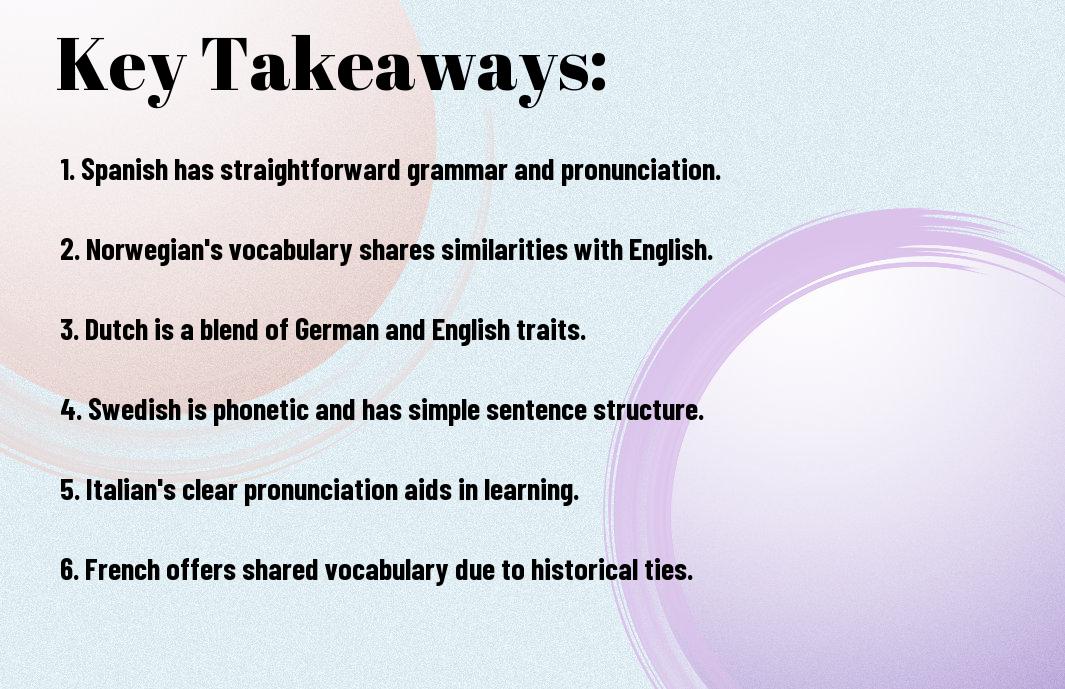
To learn a new language efficiently, it’s helpful to understand which languages are more accessible to English speakers. Here are some key points to consider:
- Spanish and French are often considered the easiest languages for English speakers to learn due to their similarities in grammar and vocabulary.
- Italian is another popular choice because of its phonetic nature, meaning words are pronounced as they are written, making it easier for English speakers to learn and pronounce words correctly.
- Portuguese shares many cognates with English, especially in fields like law, government, and technology, which can facilitate the learning process for English speakers.
- Swedish and other Scandinavian languages have a relatively simple grammar system and a significant number of cognates, making them more accessible to English speakers.
- Language learning apps and immersion programs can significantly aid in the learning process by providing interactive lessons and practical experience with the language.
Criteria for Ease of Learning
The ease of learning a language depends on various factors, including grammar, vocabulary, and pronunciation. You will find that some languages are more similar to English, making them easier to pick up. As you consider which language to learn, think about what will make the process simplest for you.
Grammar and Syntax
For instance, languages with similar grammatical structures to English will be easier for you to learn. You will find that your understanding of English grammar will help you navigate these languages more quickly.
Vocabulary and Pronunciation
Any language with vocabulary and pronunciation similar to English will be easier for you to learn. You will pick up words and sounds more quickly if they are familiar to your ear.
Another aspect of vocabulary and pronunciation to consider is the use of cognates, or words that are similar in both languages. You will find that many languages have borrowed words from English, making it easier for you to understand and communicate in your new language.
Romance Languages
Some of the easiest languages for you to learn are Romance languages, as they share similarities with English. You can learn more about language learning at The 5 Easiest Languages for English Speakers to Learn guide.
Spanish
Around 460 million native speakers worldwide speak Spanish, making it a valuable language for you to learn, as it can open doors to new cultures and opportunities.
French
About 274 million people speak French, and as an English speaker, you’ll find that French and English share many cognates, making it easier for you to pick up.
And as you probe deeper into French, you’ll discover that its grammar and pronunciation rules, although challenging, are consistent, allowing you to improve your language skills quickly, and enhancing your travel and career prospects, making it an excellent choice for you to learn.
Germanic Languages
Once again, you can find many similarities between Germanic languages and English, making them easier to learn. You can check out what are the easiest languages to learn and discover the benefits of learning Germanic languages.
Swedish
Like many other Germanic languages, Swedish is relatively easy for you to pick up, with simple grammar and pronunciation. You will find that Swedish and English share many cognates, making it easier for you to learn and understand.
Norwegian
Before submerging into Norwegian, you should know that it’s closely related to English, with many similar words and phrases. You will find that Norwegian is a phonetic language, meaning words are pronounced as they are written.
Norwegian is a great language for you to learn, with its simple grammar and pronunciation making it accessible to English speakers. You will find that Norwegian and English share many similarities, and you can quickly pick up the language with the right resources and practice.
Language Learning Tips
Not all language learning methods are created equal. You can try:
- setting achievable goals
or check out The 10 Easiest Languages to Learn, as Rated by Unbabel. The most effective approach will depend on your learning style.
Immersion and Practice
Immersing yourself in the language is key to learning. You can practice by listening to music, watching TV shows, and speaking with native speakers to improve your skills.
Language Learning Resources
On top of traditional classroom learning, you have access to numerous online resources to aid in your language learning journey.
It is worth exploring different language learning platforms, such as language exchange websites and mobile apps, to find the one that best fits your needs and helps you stay motivated to continue learning.
Most Similar to English
To learn a new language quickly, you can start with languages that are similar to English. You will notice that many words are cognates, making it easier for you to pick up the language.
Dutch
Around 80% of Dutch words are similar to English words, making it easier for you to learn. You can start with basic phrases and build your vocabulary quickly.
Frisian
Only one language is closer to English than Dutch, and that is Frisian. You will find many similarities in grammar and vocabulary, making it an ideal language for you to learn.
The Frisian language has several dialects, and you can choose the one that interests you the most. You will notice that Frisian is spoken by a small group of people, but it is still an officially recognized language in the Netherlands. You can learn Frisian to connect with the culture and people who speak it, and you will find that it is a rewarding experience.
Final Words
Upon reflecting on your language learning journey, you will find that certain languages are more accessible to you as an English speaker. You can leverage your existing knowledge to learn languages like Spanish, French, or Italian, which share similarities with English. Your ability to pick up these languages will depend on your dedication and the resources you utilize, but with the right approach, you can quickly become proficient in your chosen language.
FAQ
Q: What are the easiest languages for English speakers to learn?
A: The easiest languages for English speakers to learn are typically those that are closely related to English, such as Spanish, French, Italian, and Portuguese. These languages are all part of the Romance language family and share many cognates with English, meaning that they have similar vocabulary and grammar structures. For example, Spanish and English share around 30% of their vocabulary, making it easier for English speakers to pick up Spanish words and phrases. Additionally, the grammar and sentence structure of these languages are also relatively similar to English, making them more accessible to English speakers.
Q: How long does it take to become proficient in one of these easy-to-learn languages?
A: The amount of time it takes to become proficient in a language depends on various factors, including the individual’s language learning ability, the amount of time devoted to studying, and the quality of instruction. However, with consistent practice and dedication, English speakers can typically reach a basic level of proficiency in one of these languages within a few months. For example, the US Foreign Service Institute estimates that it takes around 24-30 weeks (600-750 class hours) to reach a basic level of proficiency in Spanish, while French and Italian may take around 30-36 weeks (750-900 class hours). With more intense study and practice, English speakers can become proficient in these languages within a year or less.
Q: What are some tips for English speakers to learn one of these easy-to-learn languages quickly and effectively?
A: To learn one of these easy-to-learn languages quickly and effectively, English speakers can start by focusing on common vocabulary and phrases, and practicing pronunciation regularly. Listening to native speakers, watching TV shows and movies in the target language, and speaking with language exchange partners can also help improve listening and speaking skills. Additionally, using language learning apps, such as Duolingo, Babbel, or Rosetta Stone, can provide a structured and interactive learning experience. It’s also helpful to immerse oneself in the language by reading books, articles, and newspapers in the target language, and trying to think and speak in the language as much as possible. By following these tips and staying motivated, English speakers can quickly and effectively learn one of these easy-to-learn languages.