You’re learning a new language and need to memorize a mountain of words. Your goal is to make them stick. You’ve heard of flashcards, but aren’t sure how to use them effectively. You’ll learn how to create and use flashcards to boost your language skills, making the process straightforward and efficient. With this simple tool, you’ll be able to memorize new vocabulary and take your language learning to the next level.
Key Takeaways:
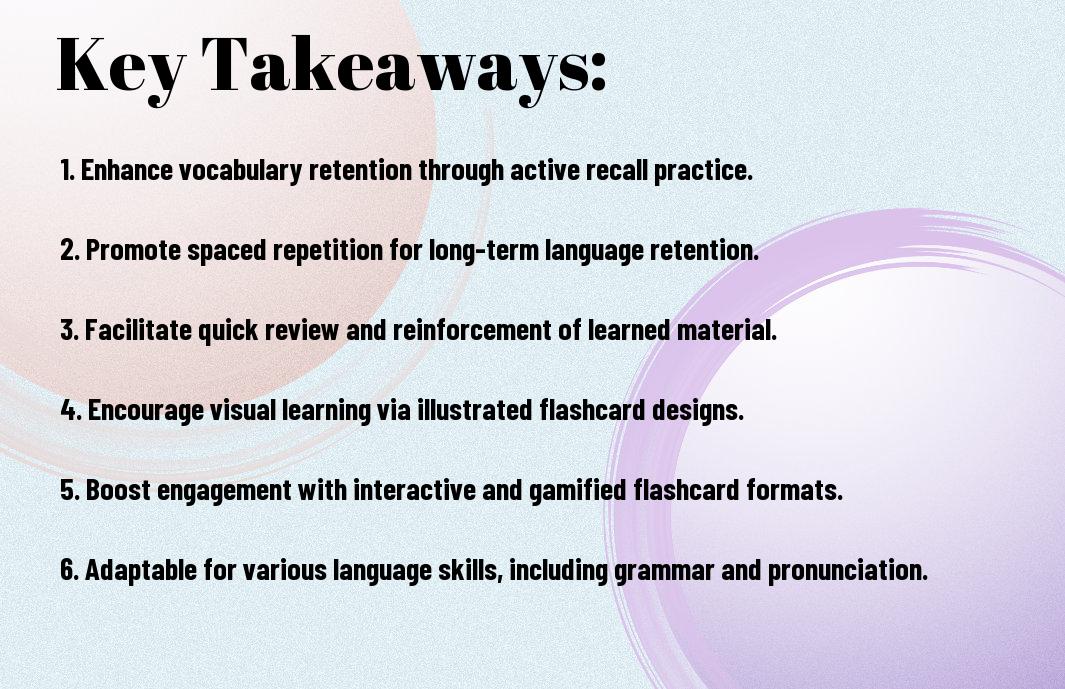
- Using flashcards can be an effective way to enhance language memorization by providing a visual and interactive approach to learning new vocabulary and phrases.
- Active recall is a key component of flashcard-based learning, as it requires learners to actively try to recall the correct answer rather than simply re-reading the information.
- Creating physical flashcards or using a digital app can be a great way to make flashcard-based learning convenient and accessible, allowing learners to study anywhere and at any time.
- Flashcards can be used to learn a wide range of language skills, including vocabulary, grammar, and pronunciation, making them a versatile tool for language learners.
- Regular review and practice with flashcards is crucial to reinforce new language skills and prevent forgetting, helping learners to make steady progress in their language learning journey.
Creating Effective Flashcards
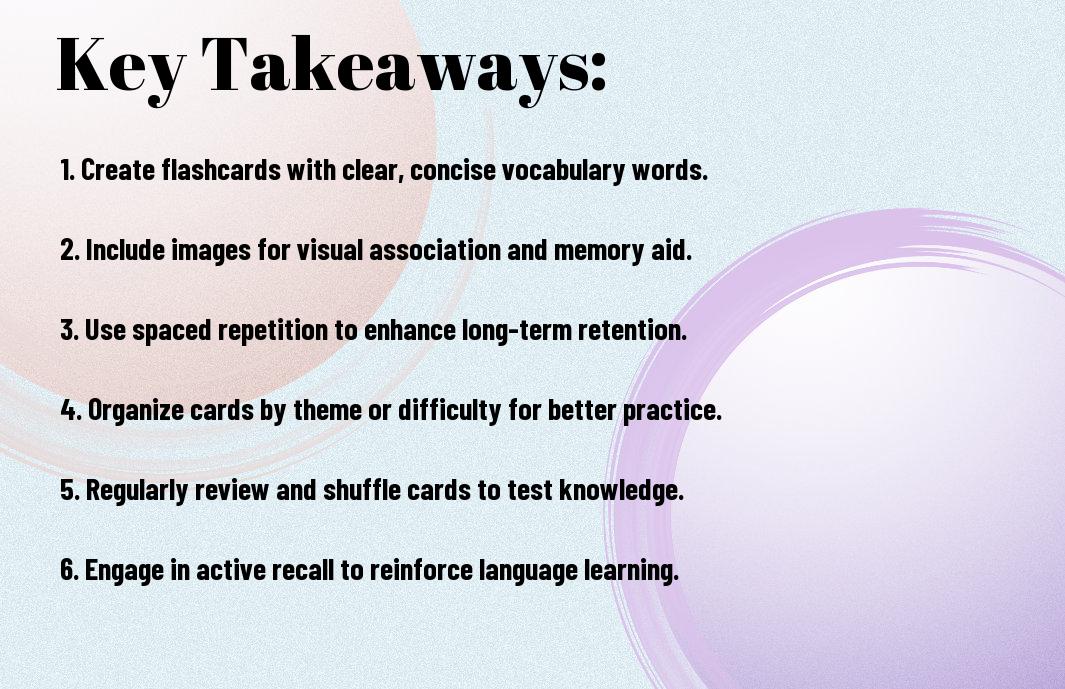
A well-designed flashcard is key to language memorization. You’ll want to keep your flashcards simple, with a clear question on one side and the answer on the other.
Writing Questions and Answers
Besides the actual words, consider including grammar rules or example sentences to provide context. You’ll find that this helps you understand how to use the language in different situations.
Using Visual Aids and Mnemonics
Constructing a visual association with a word or phrase can be a powerful learning tool. You can use images, diagrams, or even simple doodles to help you connect with the information on your flashcards.
Consequently, as you start to use visual aids and mnemonics, you’ll notice that your ability to recall words and phrases improves. You’ll be able to associate the image or mnemonic with the word, making it easier to commit to memory, and you’ll find that your language skills will start to improve dramatically.
Organizing Your Flashcards
Even with a solid understanding of how flashcards work, you’ll need to organize them effectively. You can learn more about the effectiveness of flashcards by visiting Do Flashcards Really Work? Yes – Here’s How! to get the most out of your language learning journey.
Categorizing by Topic or Theme
Any given topic can have numerous subtopics, and you should categorize your flashcards accordingly. You’ll find that this approach helps you focus on specific areas of the language, making your learning more efficient.
Prioritizing Difficult Vocabulary
Above all, you need to identify the words that give you the most trouble. You’ll want to prioritize these, reviewing them more frequently to ensure they stick in your long-term memory.
Due to the sheer volume of vocabulary you’ll encounter, prioritizing difficult words is crucial. You’ll find that consistently practicing these challenging terms will significantly improve your comprehension and communication skills over time, allowing you to tackle more complex texts and conversations with ease, and your progress will be noticeable as you continue to learn and review.
Active Recall and Repetition
Keep your language skills sharp by incorporating active recall and repetition into your flashcard routine. You’ll reinforce new vocabulary and grammar rules, solidifying them in your long-term memory.
Reviewing Flashcards Regularly
Once you’ve created your flashcards, you’ll need to review them regularly. You’ll find that consistent practice helps to strengthen your language foundation, making it easier to learn and retain new information.
Testing Yourself with Quizzes
Like a quiz, testing your knowledge with flashcards can be an effective way to identify areas where you need improvement. You’ll be able to track your progress and adjust your study routine accordingly.
Understanding how to test yourself with quizzes is key to making the most of your flashcard practice. You’ll want to try recalling the information on your flashcards without looking at the answers, and then check your responses to see how you did. This process helps to identify gaps in your knowledge and reinforces what you’ve learned, allowing you to focus your studies on the areas where you need the most practice.
Using Flashcards in Context
Unlike traditional memorization methods, using flashcards in context helps you learn phrases and sentences. You can find more information on How To Use Flashcards For Language Learning to improve your skills.
Creating Sentences and Dialogues
Flashcard-like approach involves creating your own sentences and dialogues to practice vocabulary in context, helping you to use your new language skills.
Practicing Conversation and Role-Play
On the path to language mastery, you’ll need to practice conversation and role-play to become fluent, and flashcards can be a useful tool in this process.
This method allows you to simulate real-life conversations, making your language learning more engaging and effective, and you can use your flashcards to prompt conversations and practice your responses in different scenarios, helping you to develop your speaking skills and build confidence in your ability to communicate in your new language.
Overcoming Common Challenges
For many language learners, using flashcards can be a game-changer, but it’s not without its challenges. You’ll encounter obstacles, and it’s how you overcome them that matters.
Dealing with Burnout and Motivation
Among the most significant hurdles you’ll face is staying motivated. You’ll need to find ways to keep your study sessions engaging and prevent burnout, so your progress doesn’t stall.
Adjusting to New Vocabulary and Grammar
Adapting to new vocabulary and grammar rules can be tough. You’ll need to be patient with yourself as you navigate unfamiliar words and phrases, and find ways to make them stick in your long-term memory.
Understanding how to apply new vocabulary and grammar in context is key to making progress. You’ll need to practice using your new language skills in conversation, writing, or other forms of expression to solidify your understanding and build confidence in your abilities.
Tracking Progress and Staying Motivated
Now that you’ve started using flashcards, it’s time to monitor your progress and stay motivated. You’ll need to track your successes and setbacks to adjust your study routine accordingly.
Setting Goals and Deadlines
At this stage, you should set specific goals and deadlines for your language learning journey. You’ll need to define what you want to achieve and by when, making sure your objectives are realistic and achievable.
Rewarding Yourself and Celebrating Milestones
After reaching certain milestones, you should reward yourself for your hard work. You’ve earned it, and it will help you stay motivated to continue learning.
Due to the importance of motivation in language learning, rewarding yourself is a key part of the process. You can treat yourself to something you enjoy, like a favorite meal or activity, to celebrate your progress and reinforce positive study habits, helping you to stay on track and achieve your goals.
Final Words
As a reminder, you’ve now got the tools to use flashcards for language memorization. You’ve learned to create, practice, and review your deck. Your flashcards will become a trusted companion on your language learning journey. You’ll be able to recall new words and phrases with ease, and your skills will improve with each passing day. Use them consistently and you’ll see progress, becoming more confident in your ability to communicate in your new language.
FAQ
Q: What is the most effective way to create flashcards for language memorization?
A: To create effective flashcards, start by selecting the vocabulary or phrases you want to learn and write the word or phrase in the target language on one side of the card. On the other side, provide the translation, definition, or a sentence using the word in context. You can also include pronunciation guides, images, or example sentences to make the flashcards more engaging and helpful. It’s also a good idea to organize your flashcards by category or theme to make it easier to focus on specific areas of language learning.
Q: How often should I review my flashcards to achieve optimal language memorization?
A: Consistency is key when it comes to reviewing flashcards for language memorization. Aim to review your flashcards at least once a day, but ideally 2-3 times a day, with spaced repetition. This means reviewing the cards at increasingly longer intervals to help solidify the information in your long-term memory. You can use flashcard apps or software that implement spaced repetition algorithms to make the process easier and more efficient. Additionally, try to mix up the order of the cards and vary the types of cards you review each day to keep your study sessions engaging and prevent boredom.
Q: Can I use flashcards in conjunction with other language learning methods for better results?
A: Absolutely, using flashcards in combination with other language learning methods can lead to even more effective language memorization. For example, you can use flashcards to supplement language classes or online courses, or to support your progress while reading books or watching TV shows in the target language. Flashcards can also be a helpful tool in conjunction with language exchange programs or speaking practice with a tutor or language partner. By incorporating flashcards into a well-rounded language learning routine, you can accelerate your progress, build vocabulary, and improve your overall language skills.