global

The Best Languages to Learn for Global Travelers

As you plan your next international trip, you may wonder which languages will help you navigate foreign countries with ease. Your language skills can greatly impact your travel experience, enabling you to connect with locals and appreciate cultural nuances. You will find that learning the right languages can unlock new destinations and experiences, making your travels more enjoyable and immersive.

Key Takeaways:

To thrive as a global traveler, it’s important to understand the most effective languages to learn. Here are three key points to consider:

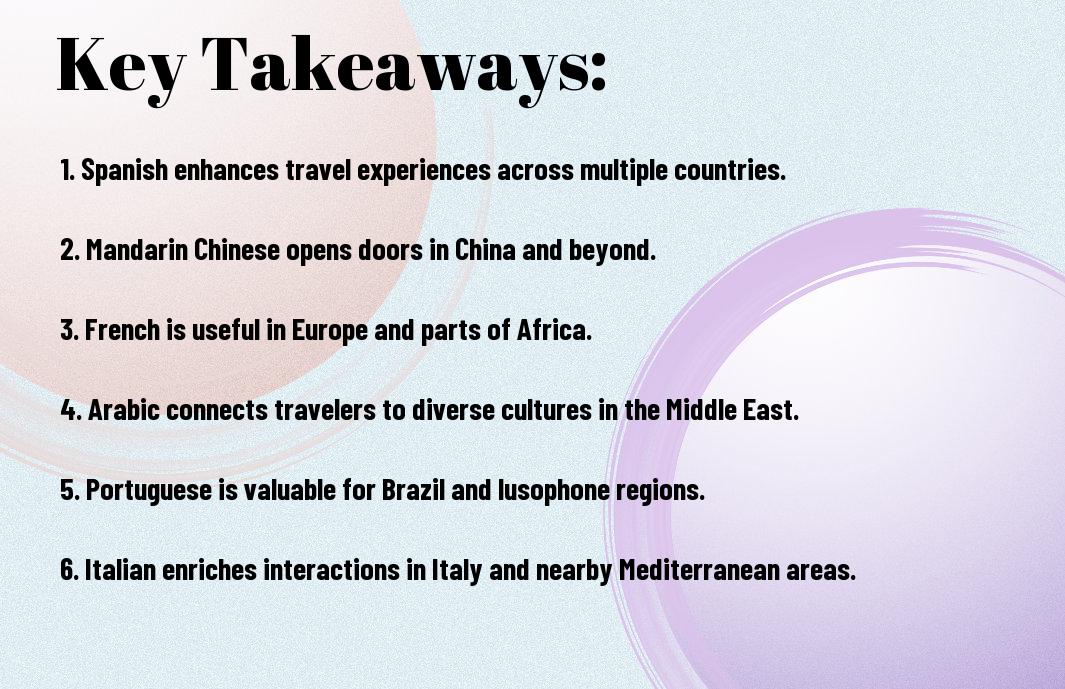
  • Learning Spanish can significantly enhance travel experiences in Central and South America, as well as Europe, due to its widespread use and cultural significance.
  • Understanding Mandarin Chinese can provide global travelers with a competitive edge, particularly in Asia, where it is the most widely spoken language and a key component of international business.
  • Becoming proficient in Arabic can open doors to Middle Eastern and North African cultures, offering travelers unparalleled opportunities to engage with local communities and appreciate the region’s rich heritage.

    Essential Languages for Globetrotters

    Your travel experiences can be greatly enhanced by learning the local languages of the countries you visit, allowing you to connect with the culture and people on a deeper level.

    Spanish for South America and Europe

    Around 460 million people speak Spanish, making it a valuable language to learn for travel to South America and Europe, enabling you to communicate effectively and navigate your way through these regions with ease.

    Arabic for the Middle East and North Africa

    African and Asian countries have a significant number of Arabic speakers, and learning this language will open doors to rich cultural experiences and history in the Middle East and North Africa, allowing you to engage with the local population.

    Languages like Arabic can be challenging to learn, but the benefits of speaking it will make your travels to the Middle East and North Africa much more enjoyable, as you’ll be able to appreciate the local customs, read signs and menus, and interact with the friendly locals who will appreciate your effort to communicate in their language.
    Languages for the Asian Trail

    Clearly, Asia offers a diverse array of languages to learn, each with its own unique benefits for travelers. You can navigate multiple countries with knowledge of a single language, making your journey more enjoyable and immersive.

    Mandarin Chinese for China and Taiwan

    Between the lines of cultural and linguistic heritage, you’ll find Mandarin Chinese to be an invaluable asset for your travels in China and Taiwan, enabling you to connect with locals and explore hidden gems.

    Japanese for Japan and East Asia

    Comparable to Chinese in terms of its complexity and beauty, Japanese is a highly sought-after language for travelers visiting Japan and other parts of East Asia, where you can discover vibrant cities and traditional landscapes.

    Asian cultures are notoriously polite and respectful, and as you examine into the world of Japanese language, you’ll find that learning key phrases and vocabulary will enhance your travel experience, allowing you to engage with your surroundings and the people you meet, making your journey even more unforgettable and personally fulfilling for you.

    European Languages for the mains

    Unlike other continents, Europe offers a diverse array of languages, making it crucial to choose the right one for your travels. You’ll find that speaking the local language can enhance your experience and allow you to connect with the culture on a deeper level.

    French for Western Europe

    Beneath the surface of Western Europe lies a rich cultural heritage, and learning French will give you access to this world. You’ll be able to navigate France, Belgium, and Switzerland with ease, and your language skills will be appreciated by the locals.

    German for Central and Eastern Europe

    Among the languages spoken in Central and Eastern Europe, German stands out as a valuable asset for travelers. You’ll find that speaking German will open doors to Austria, Germany, and parts of Switzerland, allowing you to explore these regions with confidence.

    Considering your travel plans, learning German will also give you a deeper understanding of the history and culture of Central and Eastern Europe. You’ll be able to engage with the locals, try authentic cuisine, and visit popular attractions without language barriers, making your travel experience even more enjoyable and rewarding.
    Language Learning Tips for Travelers

    Many travelers find language learning to be a challenging task. Here are some tips:

    • Set achievable goals
    • Practice consistently

    . Knowing your learning style will help you choose the most effective method.

    Immersion and Language Schools

    Towards improving your language skills, consider enrolling in a language school or immersing yourself in the local culture, which will help you learn faster and more effectively.

    Online Resources and Language Apps

    Between language learning apps and online courses, you have a wide range of options to choose from, allowing you to learn at your own pace and convenience.

    Even with the numerous online resources available, you can still find the most suitable one for your needs by trying out a few and selecting the one that best fits your learning style and goals, helping you to stay motivated and engaged throughout your language learning journey.

    Cultural Insights and Language Nuances

    After immersing yourself in a new language, you’ll discover the nuances that shape your interactions with locals, revealing a richer travel experience as you navigate unfamiliar territories.

    Non-Verbal Communication and Customs

    Around every corner, you’ll encounter unique non-verbal cues and customs that can significantly impact your interactions, and being aware of these differences will help you communicate more effectively and avoid unintentionally offending locals.

    Local Dialects and Slang

    Similarly to customs, local dialects and slang can vary greatly, and understanding these variations will enhance your travel experience, allowing you to connect with locals on a deeper level and appreciate the diversity of the language you’re learning.

    But as you research deeper into local dialects and slang, you’ll find that they often convey subtle shades of meaning and context that can completely change the tone of a conversation, and being able to pick up on these nuances will make you a more confident and engaging traveler, capable of navigating even the most unfamiliar situations with ease and poise, and you’ll be better equipped to express yourself and understand the culture in a more authentic way.

    Language Challenges and Rewards

    Despite the difficulties, learning a new language can be rewarding. You can discover the 14 Best Languages to Learn for Travel and enhance your travel experiences.

    Overcoming Language Barriers

    Besides the initial struggles, you will find that learning a language helps you navigate foreign countries with ease, allowing you to engage with locals and immerse yourself in their culture.

    Enhancing Travel Experiences through Language

    Linguistically, you will be able to appreciate the nuances of foreign cultures, from reading signs and menus to understanding the history and customs of the places you visit.

    Barriers to communication will fade away as you learn to speak and understand the local language, enabling you to have a more authentic and enjoyable travel experience, and you will be able to make the most of your time abroad, exploring new destinations and forming meaningful connections with the people you meet along the way.

    Final Words

    Hence, as you initiate on your global travels, you’ll find that learning the best languages will enhance your experience. You can discover the Most Useful Languages for World Travel to better navigate foreign lands. Your language skills will bridge cultural gaps, allowing you to fully immerse yourself in your destinations and create lasting connections with the people you meet.

    FAQ

    Q: What are the most widely spoken languages that I should consider learning for global travel?

    A: As a global traveler, learning languages such as English, Mandarin Chinese, Spanish, Arabic, and French can significantly enhance your travel experiences. English is widely spoken in many countries and is often the language of international communication. Mandarin Chinese is the most spoken language in the world, with a large number of native speakers, while Spanish and Arabic are official languages in many countries across the globe. French is also widely spoken, particularly in Europe and parts of Africa. Learning any of these languages will facilitate communication and deepen your cultural connections during your travels.

    Q: How can learning a foreign language impact my travel experiences and interactions with local cultures?

    A: Learning a foreign language can profoundly impact your travel experiences by allowing you to engage more deeply with local cultures. When you speak the local language, you can navigate more easily, read signs and menus, and communicate with locals, which can lead to more authentic interactions and a richer cultural understanding. It also shows respect for the culture and people you are visiting, often leading to warmer welcomes and more meaningful connections. Furthermore, language skills can open up opportunities for unique experiences, such as homestays, local volunteer work, or participation in cultural events, which might not be accessible otherwise.

    Q: Are there any language learning resources or tips that can help me learn a language quickly and effectively for my travels?

    A: Yes, there are numerous resources and tips that can help you learn a language quickly and effectively for travel. Utilizing language learning apps like Duolingo, Rosetta Stone, or Babbel can provide structured lessons and interactive exercises. Immersion is also a powerful tool; watch local movies, listen to music, and try to find a language exchange partner. Focus on learning key phrases and vocabulary related to travel, such as directions, food, and basic greetings. Additionally, consider enrolling in a language course or hiring a tutor for personalized feedback. Lastly, practice consistently, even if it’s just for a few minutes each day, to build your language skills and confidence before your trip.

How Learning a Language Makes You a Global Citizen

As you navigate the complexities of our increasingly interconnected world, you begin to appreciate the value of communication that transcends borders. Your ability to learn a new language opens doors to fresh perspectives, allowing you to engage with diverse cultures on a deeper level. By acquiring a new language, you will broaden your understanding of the world and its many nuances, ultimately becoming a more empathetic and informed global citizen, capable of forging meaningful connections with people from all walks of life.

Key Takeaways:

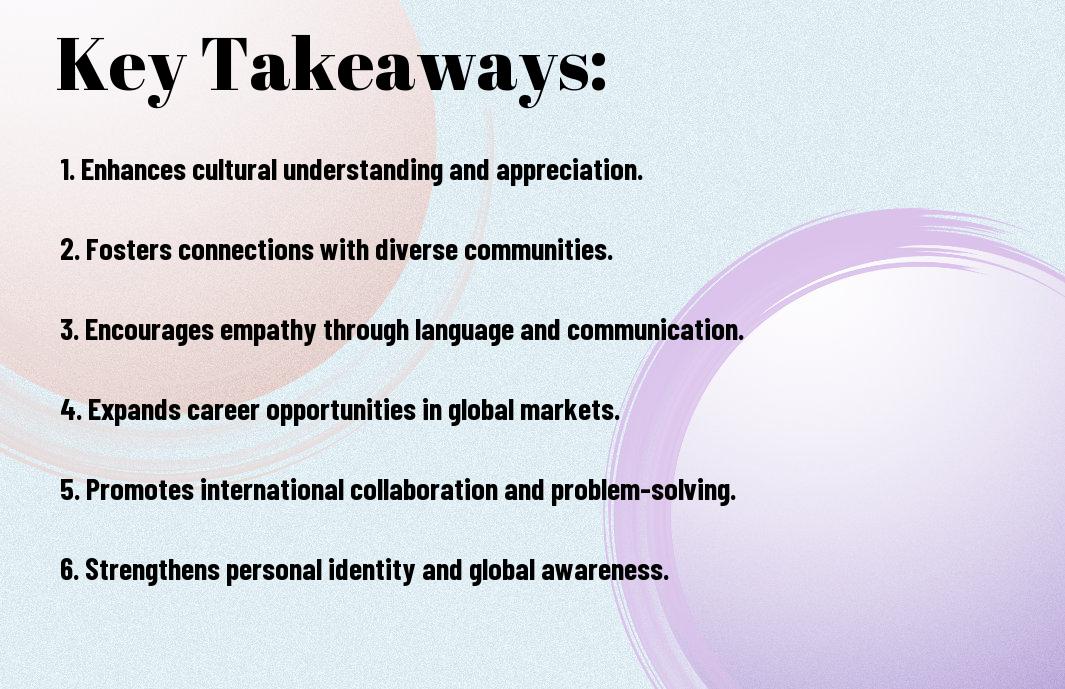
  • Learning a language helps you become a global citizen by broadening your cultural understanding and enriching your interactions with people from diverse backgrounds, allowing you to connect with others on a deeper level.
  • As a multilingual individual, you’ll have access to a wider range of career opportunities and be able to engage with global communities, fostering mutual respect and understanding.
  • By acquiring a new language, you’ll enhance your cognitive abilities, such as memory and problem-solving, and develop a more nuanced perspective on the world, enabling you to navigate complex global issues with confidence.

The Benefits of Language Learning

Your ability to learn a new language can greatly impact your life, and as outlined in 7 Benefits of Learning A New Language, it can bring numerous advantages.

Enhanced Career Opportunities

Against the backdrop of a competitive job market, acquiring a new language skill can significantly enhance your career prospects, opening doors to new opportunities and giving you a competitive edge.

Cultural Appreciation and Awareness

Among the many benefits of language learning, cultural appreciation and awareness stand out, allowing you to engage with diverse communities and foster a deeper understanding of their customs and traditions.

The cultural appreciation and awareness you gain through language learning will enable you to navigate different social situations with confidence, making you a more empathetic and open-minded global citizen, capable of forming meaningful connections with people from diverse backgrounds, and ultimately broadening your perspective on the world.

Global Connections

Any language learner can become a global citizen by expanding their cultural understanding, as you can see in the article How to Build Global Citizens through World Language Learning. This helps you connect with people from diverse backgrounds.

Networking and Building Relationships

Building relationships with people from other countries is made easier by learning their language, allowing you to communicate effectively and form lasting bonds with your international peers.

Travel and Exploration

About the benefits of language learning, exploring new places becomes more enjoyable when you can speak the local language, enabling you to engage with the culture more deeply.

Travel to foreign countries becomes more authentic when you can converse with locals, read signs, and understand the history behind the landmarks, making your experiences more meaningful and immersive, as you navigate your way through unfamiliar territories with ease, using your new language skills to enhance your journey.

Language and Identity

Many languages are closely tied to the culture and identity of their speakers, and learning a language can give you a deeper understanding of the people who speak it. As you learn a language, you’ll gain insight into the history, customs, and values of the community that speaks it.

Self-Expression and Confidence

With each new language you learn, you’ll find that your ability to express yourself grows, and your confidence in communicating with others increases. You’ll be able to convey your thoughts and ideas more effectively, and connect with people from diverse backgrounds.

Community and Belonging

Above all, learning a language can help you feel a sense of community and belonging with the people who speak it. You’ll be able to participate in conversations, share in cultural traditions, and build meaningful relationships with native speakers.

For instance, when you learn a language, you’ll have access to a wealth of cultural resources, including literature, music, and film, that will help you understand the community and its values. You’ll be able to engage with native speakers in a more meaningful way, and develop a sense of belonging to the community, which will enrich your life and broaden your perspectives.

Bridging Cultural Gaps

Not only does learning a language help you understand a new culture, but it also allows you to connect with people from diverse backgrounds.

Breaking Stereotypes and Misconceptions

You can break down cultural barriers by:

  • Engaging with native speakers

Assume that learning a language is key to understanding a culture.

Cultural Aspect Language Learning
Traditions Understanding nuances
Values Appreciating context
Customs Grasping idioms
History Comprehending references

Fostering Empathy and Tolerance

Empathizing with others becomes easier when you learn their language. You begin to see things from their perspective, broadening your understanding of the world.

A notable aspect of language learning is its ability to foster deeper connections with people from other cultures, allowing you to navigate complex social situations with ease and sensitivity, as you develop a more nuanced appreciation for the diversity of human experience, and you will find that your newfound understanding of languages opens doors to fresh perspectives, enabling you to engage with others on a more meaningful level.

The Role of Technology

Keep in mind that technology plays a significant part in language learning, providing you with numerous resources to aid in your journey to becoming a global citizen. You can access various language learning platforms, apps, and software, making it easier for you to learn and practice a new language.

Language Learning Resources and Tools

With the abundance of digital resources available, you can find the tools that best suit your learning style and needs. You will discover podcasts, language exchange websites, and online courses that will help you improve your language skills and broaden your cultural understanding.

Online Communities and Forums

About the online communities, you will find that they offer a platform for you to engage with native speakers, practice your language skills, and get feedback on your progress. You will be able to connect with like-minded individuals who share your interest in language learning and cultural exchange.

This online community will become an invaluable resource for you, as you will be able to ask questions, share your experiences, and learn from others who are also on a similar journey. You will gain insights into different cultures, traditions, and ways of life, allowing you to develop a deeper understanding of the world and your place in it as a global citizen.

Challenges and Rewards

Once again, you find yourself at a crossroads, weighing the benefits of language learning against the difficulties it presents. As you navigate this journey, you will encounter numerous obstacles, but the rewards will be well worth your effort.

Overcoming Language Barriers and Challenges

Along the way, you will face various hurdles, from grammatical complexities to cultural nuances, but with persistence and dedication, you can overcome these challenges and develop a deeper understanding of the language.

Personal Growth and Achievement

Among the many benefits of language learning, personal growth and achievement are significant, as you develop new skills, expand your perspectives, and enhance your career opportunities, ultimately leading to a more fulfilling life.

Further, as you achieve proficiency in a new language, you will experience a sense of pride and accomplishment, which will boost your confidence and motivation, enabling you to tackle even more challenging pursuits and explore new horizons, broadening your understanding of the world and your place in it.

Final Words

Ultimately, as you initiate on learning a language, you expand your perspective and broaden your understanding of the world. Your newfound ability to communicate with people from diverse backgrounds makes you a more empathetic and open-minded individual. You become a global citizen, capable of navigating different cultures and fostering meaningful connections with people from all walks of life. Your language skills will enrich your life and empower you to engage with the world in a more profound way.

FAQ

Q: How does learning a language contribute to becoming a global citizen?

A: Learning a language is a key factor in becoming a global citizen because it opens doors to understanding different cultures, perspectives, and ways of life. When you learn a language, you gain the ability to communicate with people from diverse backgrounds, which fosters global understanding, tolerance, and cooperation. This, in turn, enables you to engage with the global community more effectively, making you a more informed and empathetic global citizen.

Q: What are the benefits of language learning in terms of career opportunities and personal growth?

A: The benefits of language learning are numerous and far-reaching. In terms of career opportunities, speaking multiple languages can significantly enhance your job prospects, especially in fields like international business, diplomacy, and education. Additionally, language learning can lead to personal growth by broadening your perspectives, challenging your assumptions, and helping you develop a more nuanced understanding of the world. It can also increase your travel opportunities, allowing you to explore new countries and immerse yourself in different cultures.

Q: How can language learning help bridge cultural divides and promote global understanding?

A: Language learning plays a vital role in bridging cultural divides and promoting global understanding by facilitating communication and fostering empathy between people from different cultural backgrounds. When you learn a language, you gain insight into the customs, traditions, and values of the corresponding culture, which helps to break down stereotypes and misconceptions. Moreover, language learning enables you to engage in meaningful interactions with people from diverse cultures, promoting cross-cultural understanding, mutual respect, and cooperation, ultimately contributing to a more harmonious and interconnected world.

Jhere Skip to content