
Persistence is key when it comes to overcoming language learning plateaus. As you navigate the ups and downs of mastering a new language, it’s common to reach a point where your progress slows down. In this blog post, we’ll explore effective strategies that can help you push through these plateaus and continue on your journey to language fluency. By incorporating these proven techniques into your language learning routine, you’ll be able to overcome obstacles and reach new heights in your linguistic skills.
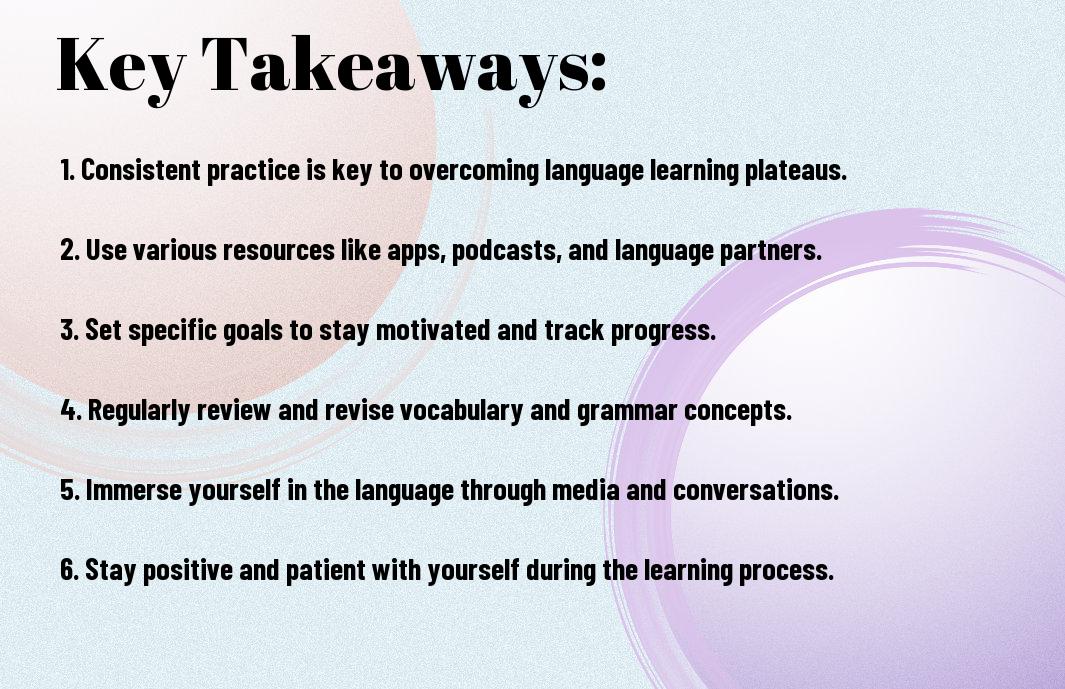
Key Takeaways:
- Consistent Practice: Regular and consistent practice is key to overcoming language learning plateaus. Dedicate time daily to practice listening, speaking, reading, and writing in the target language.
- Immersion: Immerse yourself in the language by watching movies, listening to music, reading books, and engaging with native speakers. This helps reinforce your learning and improve your fluency.
- Seek Feedback: Get feedback from language tutors, teachers, or native speakers to identify areas for improvement and correct mistakes. This personalized feedback can help you break through plateaus and continue progressing in your language learning journey.

Identifying the Plateau
Recognizing the signs of stagnation
Signs that you may have hit a language learning plateau include feeling like you’re not progressing, struggling to remember new words or grammar rules, and finding it difficult to stay motivated to continue learning. Plateaus are common in the language learning journey, but they don’t have to be permanent.
Assessing your current language level
The first step in overcoming a plateau is to assess your current language level. This involves taking a step back and evaluating where you are in your learning journey. You can do this by taking a practice test, having a conversation with a native speaker, or even teaching someone else the language.
This assessment will give you a clearer picture of your strengths and weaknesses, helping you identify areas where you may be struggling and need to focus your efforts. Knowing your current level is crucial for setting realistic goals and creating a plan to overcome the plateau.
Re-evaluating Goals and Motivation
Even when you feel stuck in your language learning journey, there are effective strategies you can implement to push through plateaus. One crucial aspect to consider is re-evaluating your goals and motivation. By taking the time to reassess what you want to achieve and why you are pursuing language learning, you can reignite your passion and drive to continue making progress.
Setting realistic and achievable goals
Goals serve as a roadmap for your language learning journey. If you find yourself hitting a plateau, it might be time to revisit your goals. Are they specific, measurable, achievable, relevant, and time-bound (SMART)? Setting realistic and achievable goals can help you track your progress and stay motivated. Break down larger goals into smaller milestones, making it easier to stay focused and celebrate your achievements along the way.
Finding new sources of motivation
Reevaluating your motivation for learning a new language can provide the renewed energy needed to overcome plateaus. Perhaps you could seek out new language exchange partners, immerse yourself in foreign films and music, or set aside time for cultural experiences related to the language you are learning. Bear in mind, motivation can come from various sources, so explore different avenues to keep your enthusiasm high.
This shift in perspective can help revitalize your language learning journey and keep you motivated to push through plateaus. By exploring new ways to stay engaged and passionate about the language you are learning, you can reignite your excitement and drive to continue making progress.
Creating a language learning vision board
Goals alone may not always be enough to keep you motivated during challenging times in your language learning journey. Creating a language learning vision board can provide a visual representation of your goals, aspirations, and the reasons behind your language learning journey. Include images, quotes, and milestones on your vision board to remind you of the bigger picture and keep you inspired to overcome any obstacles that come your way.
By incorporating a language learning vision board into your routine, you can reinforce your goals visually and stay connected to your deepest motivations for learning a new language. This visual tool can serve as a powerful reminder of why you started your language learning journey and help you stay focused on your objectives.
Shaking Up Your Routine
To overcome language learning plateaus, you must shake up your routine from time to time. Sticking to the same study habits can lead to stagnation in your progress. Here are some effective strategies to help you break through the plateau:
Changing your study environment
Routine is comfortable, but it can also be limiting. By changing your study environment, you can stimulate your brain in new ways and enhance your learning experience. Try studying in a different room, a new cafe, or even outdoors. The change of scenery can reignite your motivation and help you see things from a fresh perspective.
Trying new language learning apps and tools
A great way to shake up your routine is by exploring a variety of language learning apps and tools. Different apps offer unique features and teaching methods, so experimenting with a new one can introduce fresh ways to engage with the language. Whether it’s through gamified learning, speech recognition technology, or interactive lessons, trying out different tools can make your study sessions more dynamic and effective.
Apps like Duolingo, Babbel, and Rosetta Stone are popular choices, but don’t be afraid to venture into lesser-known apps that might better suit your learning style and preferences.
Incorporating different learning styles
To maximize your language learning potential, it’s imperative to adjust your approach based on your learning style. Everyone has a unique way of absorbing information, whether it’s through visual aids, audio cues, hands-on activities, or group discussions. By incorporating a mix of learning styles into your study routine, you can cater to your strengths and make the learning process more enjoyable and effective.
Consider incorporating visual aids like flashcards, watching foreign films or TV shows for listening practice, joining conversation groups for verbal practice, or even teaching the language to someone else to reinforce your understanding. By diversifying your learning methods, you can keep your brain engaged and overcome plateaus more easily.
Focusing on Weaknesses
Identifying areas for improvement
Despite your dedication to learning a new language, you may find yourself hitting a plateau in your progress. The first step in overcoming this is to identify the specific areas where you struggle the most. Whether it’s grammar, vocabulary, pronunciation, or listening comprehension, pinpointing your weaknesses will allow you to tailor your practice sessions more effectively.
Creating a customized practice schedule
The key to breaking through language learning plateaus is focusing on your weaknesses. Once you’ve identified the specific areas that need improvement, it’s important to create a customized practice schedule that prioritizes these aspects. By dedicating more time and effort to the skills you find challenging, you can make significant strides in your language proficiency.
Focusing on your weaknesses doesn’t mean neglecting your strengths; it means being strategic about where you allocate your learning resources. By incorporating targeted exercises and activities that address your specific areas for improvement, you can accelerate your progress and overcome any plateau you may encounter.
Practicing active listening and speaking
A crucial aspect of language learning is actively engaging with the spoken language. By immersing yourself in listening exercises, such as podcasts, audiobooks, or conversations with native speakers, you can improve your comprehension skills and become more accustomed to the natural flow of the language. Additionally, practicing speaking regularly, whether through language exchange with a partner or recording yourself, can help you refine your pronunciation and gain confidence in expressing yourself.
To enhance your listening and speaking abilities, incorporate activities that challenge you to interact with the language in real-time. Engaging in discussions, participating in language meetups, or even practicing with language learning apps that offer speaking exercises can help you break through plateaus and make continuous progress in your language acquisition journey.
Seeking Out New Resources
For Strategies for Overcoming Language Learning Plateaus, when you hit a language learning plateau, seeking out new resources can reignite your motivation and help you break through barriers. Here are some effective strategies to expand your language learning toolbox.
Exploring podcasts and audio materials
On your language learning journey, podcasts and audio materials can be invaluable resources. They allow you to immerse yourself in the language through listening, helping you improve your listening comprehension and pronunciation. Listening regularly to podcasts in the language you’re learning can also expose you to different accents, vocabulary, and speech patterns, enhancing your overall language skills.
Reading in the target language
audioOn top of podcasts, incorporating reading into your language learning routine is crucial. Reading in your target language not only exposes you to new vocabulary and sentence structures but also improves your writing skills and overall language proficiency. By reading various materials such as books, articles, and blogs, you can enhance your comprehension and cultural understanding of the language.
In the context of reading in the target language, make it a habit to read something every day, even if it’s just for a few minutes. You can start with children’s books or short articles and gradually progress to more complex texts as you become more comfortable with the language.
Watching TV shows and movies with subtitles
ReadingBy incorporating TV shows and movies with subtitles in the language you’re learning into your language study routine, you can improve your listening skills, expand your vocabulary, and familiarize yourself with colloquial expressions. Watching visual content can also make language learning more engaging and enjoyable, helping you stay motivated and committed to your language learning goals.
Subtitles can be a helpful tool to aid your comprehension while watching foreign language shows and movies, especially when you’re still at an intermediate level. Initially, you can start with subtitles in your native language and then switch to subtitles in the target language as you become more proficient.

Building a Support Network
Your language learning journey can sometimes feel like a rollercoaster with its ups and downs. Building a support network of like-minded language learners can be instrumental in helping you overcome plateaus and stay motivated on your path to fluency.
Joining a language exchange community
Exchange ideas, tips, and encouragement with others who are also learning a new language by joining a language exchange community. These platforms provide a space where you can practice speaking with native speakers, get feedback on your progress, and even make new friends who share your passion for language learning.
Finding a language learning buddy
For a more personalized approach, finding a language learning buddy can be incredibly beneficial. This individual can be someone at a similar level of proficiency or a native speaker of the language you are learning. Regular conversations and study sessions with your buddy can help keep you accountable, provide mutual support, and make learning a language more enjoyable.
Support from a language learning buddy can significantly boost your motivation and confidence. They can help you navigate challenging aspects of the language, share learning resources, and celebrate milestones with you along the way. Having a buddy by your side can make the language learning journey feel less daunting and more achievable.
Attending language meetups and events
Meetups and events specifically designed for language learners are excellent opportunities to practice your speaking skills in a supportive and social environment. These gatherings often include language exchange sessions, cultural activities, and workshops led by language experts. By participating in these events, you can immerse yourself in the language, network with other learners, and gain valuable insights to propel your language skills forward.
Attending language meetups and events not only provides you with the chance to practice speaking in a real-life setting but also exposes you to different accents, dialects, and cultural nuances. Interacting with a diverse group of people who share your interest in language learning can broaden your perspective and enhance your overall learning experience. So, grab your language learning buddy and head to the next meetup to boost your language skills together!
Final Words
Ultimately, by implementing a combination of effective strategies, you can break through language learning plateaus and continue progressing in your language fluency journey. Consistent practice, using a variety of resources, setting specific and achievable goals, seeking help from native speakers or language tutors, and maintaining a positive attitude are key components in overcoming these obstacles.
Recall, language learning is a marathon, not a sprint, and plateaus are a natural part of the process. Embrace the challenges, stay motivated, and adjust your approach as needed. With dedication and perseverance, you will push through these plateaus and reach new heights in your language proficiency.
Q: What are some common signs of a language learning plateau?
A: Some common signs of a language learning plateau include feeling like you are not making progress, struggling to retain new vocabulary, finding it difficult to understand native speakers, and feeling unmotivated to continue learning.
Q: How can I overcome a language learning plateau?
A: To overcome a language learning plateau, try switching up your study routine, setting specific and achievable goals, practicing regularly with native speakers, immersing yourself in the language through media and cultural activities, and seeking feedback from teachers or language exchange partners.
Q: Are there any specific strategies that are particularly effective for breaking through a language learning plateau?
A: Some effective strategies for overcoming language learning plateaus include focusing on specific areas of weakness, such as grammar or pronunciation, using spaced repetition techniques to review vocabulary, challenging yourself with more difficult material, taking breaks when needed, and reminding yourself of your long-term language learning goals.


