
Your language acquisition can significantly benefit from immersing yourself in a language environment. Surrounding yourself with native speakers, authentic conversations, and cultural nuances allows you to absorb language effortlessly. Research shows that immersion enhances fluency, comprehension, and pronunciation, as your brain adapts to thinking and processing information in the new language. By fully immersing yourself, you can accelerate your language learning journey and reach proficiency faster than traditional methods. Embrace the language environment, and watch your language skills flourish!

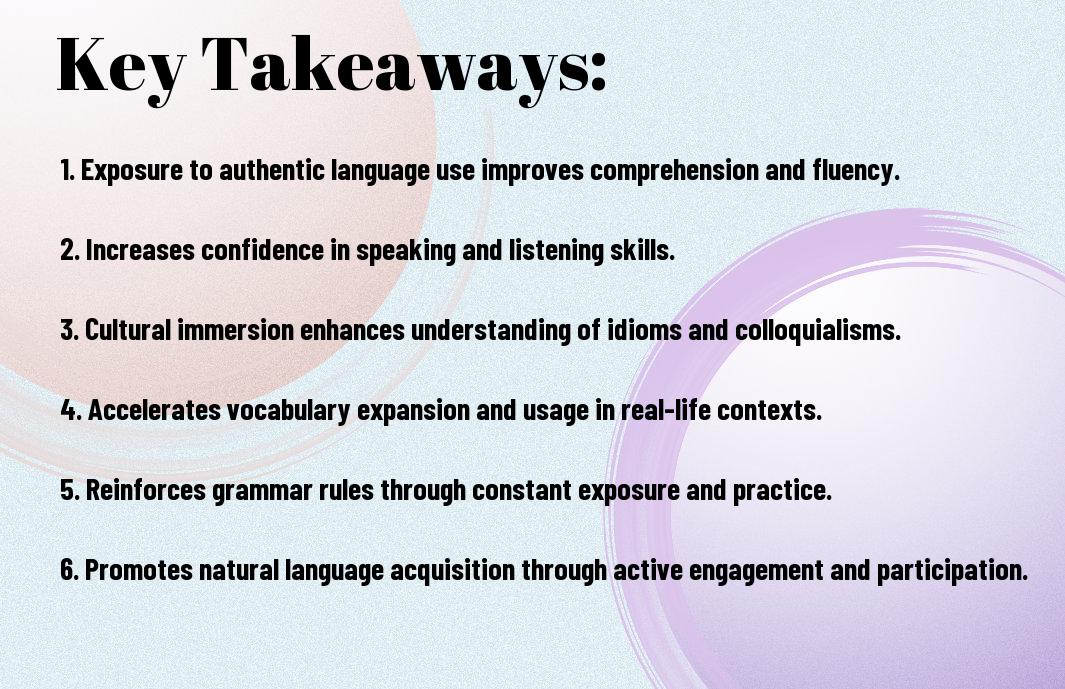
Key Takeaways:
- Increased Exposure: Immersion in a language environment provides increased exposure to the language through daily interactions, which aids in language acquisition.
- Contextual Learning: Being surrounded by native speakers helps learners understand the language in its cultural and contextual context, leading to a deeper understanding and quicker acquisition.
- Forced Practice: In an immersive environment, individuals are forced to practice the language in order to communicate effectively, leading to faster improvement and fluency.
The Power of Immersion
Surrounding Yourself with the Language
Before delving into the benefits of immersion in a language environment, it’s crucial to understand the impact of surrounding yourself with the language. When you immerse yourself in an environment where the target language is spoken daily, you are constantly exposed to its sounds, rhythms, and nuances. This exposure helps your brain acclimate to the language more naturally.
Creating an Environment for Language Acquisition
The key to effective language acquisition lies in creating an environment that fosters continuous learning. One way to do this is by incorporating the language into your daily activities. By listening to music, watching movies, or reading books in the target language, you are reinforcing your learning in a practical and engaging way. Surrounding yourself with native speakers and practicing conversations can also significantly enhance your proficiency.
Understanding that creating an environment conducive to language acquisition involves not only passive exposure but also active engagement is crucial. To truly internalize a language, you must actively participate in conversations, practice writing and reading, and immerse yourself in cultural experiences that require you to use the language in real-life scenarios. This dynamic approach ensures that you not only grasp the language’s technical aspects but also its cultural subtleties and nuances.
Language Exposure and Brain Development
Neuroplasticity and Language Learning
Now, let’s explore into the fascinating world of neuroplasticity and how it impacts your language learning journey. Your brain has an incredible ability to adapt and change in response to new experiences, a phenomenon known as neuroplasticity. When you immerse yourself in a language environment, exposing your brain to a constant stream of new sounds, words, and grammatical structures, you are vitally rewiring your brain to accommodate this new language.
With each conversation you have, each sentence you read, and each word you hear, your brain forms new connections and strengthens existing ones related to the language you are learning. This process of neural networking is crucial for language acquisition, as it helps solidify your understanding and fluency in the new language over time.
The Role of Context in Language Processing
Processing language in context is key to truly grasping its nuances and meaning. When you hear a word or phrase in isolation, it can be challenging to fully comprehend its significance. However, when that same word or phrase is used in a sentence or conversation, you are provided with valuable context that aids in your understanding.
It is through exposure to language in various contexts – whether through conversations, books, movies, or everyday interactions – that you begin to develop a deeper grasp of the language. Context helps you make connections between words, decipher idiomatic expressions, and infer meaning from subtle cues like tone of voice and body language.
Interactive Opportunities for Language Practice
Conversational Partners and Language Exchange
To truly immerse yourself in a language environment and advance your language skills, finding conversational partners and participating in language exchanges can be incredibly beneficial. By engaging in conversations with native speakers or fellow learners, you have the opportunity to practice your speaking and listening skills in a real-life context. These interactions can help you improve your fluency, vocabulary, and cultural understanding, allowing you to become more confident in using the language.
Engaging with Native Speakers and Cultural Events
The immersion experience becomes even richer when you actively engage with native speakers and participate in cultural events. By attending local gatherings, festivals, or performances, you get to experience the language in its natural setting and gain insights into the cultural nuances that influence communication. These experiences provide a unique opportunity to not only practice the language but also deepen your understanding of the customs, traditions, and values associated with it.
Partnerships with native speakers can offer a more personalized and in-depth exploration of the language and culture. By forming connections with individuals who can provide guidance, support, and authentic language practice, you can accelerate your learning journey and develop a profound appreciation for the linguistic and cultural diversity that surrounds you.
Authentic Materials and Real-Life Contexts
Using Authentic Texts, Videos, and Audio Materials
For language learners, exposure to authentic texts, videos, and audio materials is invaluable. When you engage with real-life content in the language you are learning, you not only improve your vocabulary and grammar but also gain a deeper understanding of cultural nuances and context. Authentic materials help you connect the words and phrases you learn in a textbook to how they are actually used in everyday conversations, films, music, news broadcasts, and more.
By incorporating authentic materials into your language learning routine, you can enhance your listening comprehension, improve your speaking skills, and develop a more natural and fluent communication style. Whether you are reading a newspaper article, watching a movie without subtitles, or listening to a podcast in the target language, these real-world resources provide you with exposure to the language as it is truly spoken and written, ultimately accelerating your language acquisition process.
Immersing Yourself in Real-Life Situations and Scenarios
On the other hand, immersing yourself in real-life situations and scenarios allows you to put your language skills to the test in a practical and immersive way. Whether you are traveling to a country where the language is spoken, participating in language exchange meetups, or simply practicing conversations with native speakers, immersing yourself in authentic contexts provides you with the opportunity to apply what you have learned in a meaningful and interactive manner.
With each new real-life interaction, you gain confidence in your language abilities, improve your pronunciation, and increase your cultural understanding. From ordering food at a local restaurant to navigating public transportation or engaging in social interactions, these real-world experiences not only reinforce your language skills but also expose you to the nuances of communication that textbooks alone cannot capture. Embrace these opportunities for immersion, and you will see significant progress in your language acquisition journey.
The Importance of Consistency and Repetition
Regular Exposure to the Language Environment
After immersing yourself in a language environment, the key to language acquisition lies in consistent and repeated exposure to the language. Just like learning any new skill, the more you are exposed to the language, the more familiar and comfortable you become with it. Regular exposure helps you pick up on nuances, tones, and structures that are necessary for fluency.
Building Habits and Routines for Language Acquisition
Regular exposure alone is not enough to fully grasp a new language. You need to actively build habits and routines that incorporate the language into your daily life. By incorporating language learning into your daily routines, such as listening to podcasts during your commute, reading in the language before bed, or practicing conversations with native speakers regularly, you strengthen your language skills consistently over time.
Plus, building habits and routines for language acquisition helps reinforce what you have learned and solidifies your language skills. By making language learning a part of your daily life, you are more likely to stay motivated and dedicated to the process, ultimately leading to faster and more effective language acquisition.
Overcoming Barriers and Challenges
Dealing with Language Anxiety and Fear
Fear can be a major barrier when immersing yourself in a new language environment. You might worry about making mistakes, not being understood, or feeling embarrassed. However, it’s important to remember that making mistakes is a natural part of the learning process. Embrace these mistakes as learning opportunities and stepping stones toward fluency. Instead of letting fear hold you back, use it as a motivator to push yourself out of your comfort zone and grow.
Strategies for Staying Motivated and Focused
Fear of failure or feeling overwhelmed can sometimes dampen your motivation to continue learning a new language. To combat this, try breaking down your language learning goals into smaller, manageable tasks. Celebrate small victories along the way to keep your motivation levels high. Additionally, surrounding yourself with supportive peers or language partners can provide encouragement and help you stay focused on your language acquisition journey.
Strategies such as setting realistic goals, tracking your progress, and rewarding yourself for milestones achieved can help maintain your motivation over the long term. Remember that language acquisition is a gradual process, and staying committed to your learning journey will ultimately lead to success.
To wrap up
Upon reflecting on how immersion in a language environment aids in language acquisition, you can see the undeniable benefits of being surrounded by the language you are trying to learn. By constantly hearing it spoken, engaging with native speakers, and navigating real-life situations where that language is required, you are forcing your brain to adapt and learn in a way that cannot be replicated in a classroom setting. This active participation in the language not only helps you grasp the grammar and vocabulary but also fosters a deeper understanding of the cultural nuances and idiomatic expressions that are crucial to truly mastering a language.
So, if you are looking to enhance your language skills and achieve fluency, consider immersing yourself in an environment where that language is spoken daily. By living, working, or studying in a place where you are forced to communicate in the target language, you are setting yourself up for accelerated learning and a more profound connection to the language and culture. Recall, language acquisition is not just about memorizing words and rules; it’s about truly experiencing and engaging with the language in a meaningful way, and immersion provides the ideal opportunity for that.
Q: How does immersion in a language environment aid in language acquisition?
A: Immersion in a language environment provides exposure to the language in real-life contexts, allowing learners to practice listening, speaking, reading, and writing skills in a natural setting. This constant exposure and practice help improve language fluency and proficiency.
Q: What are the benefits of immersion in a language environment for language acquisition?
A: Immersion in a language environment helps learners develop cultural understanding, improve pronunciation, and enhance vocabulary retention. It also boosts confidence in using the language and fosters a deeper appreciation for the culture associated with the language.
Q: How can one create an immersion experience in a language environment?
A: Creating an immersion experience involves surrounding oneself with the target language as much as possible. This can be achieved by listening to music, watching movies or TV shows, reading books, interacting with native speakers, and participating in language exchange programs. The key is to consistently engage with the language in various contexts.


