To improve your language skills, focus on the following points:
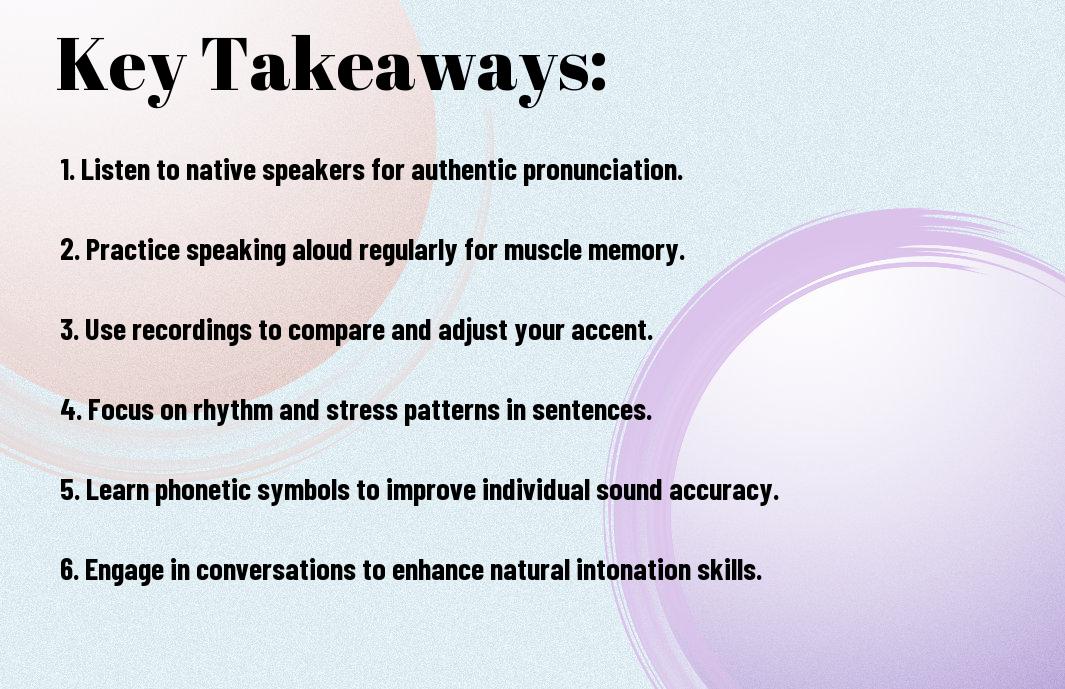
- Develop your listening skills by exposing yourself to native speakers, podcasts, and audio materials to get accustomed to the natural intonation and accent of the language.
- Practice pronunciation regularly by recording yourself and comparing your speech with native speakers to identify areas that need improvement, focusing on stress and pitch patterns.
- Immerse yourself in the language by watching TV shows and movies, engaging in conversations with native speakers, and using language learning apps to develop a more natural flow and fluency in your speech.
Developing Accent
The key to mastering a language lies in its accent, and you’ll need to dedicate time to perfecting yours. Your goal is to sound as natural as possible, and this requires a lot of practice and patience. You’ll need to focus on intonation, rhythm, and individual sounds to develop an authentic accent.
Identifying Key Sounds
Anyway, you should start by identifying the key sounds that are unique to the language you’re learning. You’ll need to pay close attention to how native speakers pronounce certain words and phrases, and try to mimic them as closely as possible. Your listening skills will be imperative in this process.
Practicing Pronunciation
Anyway, you can practice your pronunciation by listening to native speakers and trying to repeat what they say. You’ll find that the more you practice, the more comfortable you’ll become with the sounds and rhythm of the language. Your pronunciation will improve significantly with consistent practice.
Developing your pronunciation skills takes time and effort, but it’s worth it in the end. You’ll be able to express yourself more clearly and confidently, and you’ll sound more like a native speaker. As you continue to practice, you’ll notice significant improvements in your ability to communicate effectively in the language, and you’ll be able to hold conversations with native speakers without struggling to make yourself understood.
Mastering Intonation
If you want to sound like a native speaker, you need to work on your intonation. This involves understanding the rise and fall of your voice when speaking, which can completely change the meaning of a sentence. You’ll need to practice consistently to develop an ear for intonation.
Recognizing Patterns
For instance, you’ll notice that different languages have distinct intonation patterns. You’ll start to pick up on these patterns as you listen to native speakers and practice speaking yourself. Your ability to recognize these patterns will help you improve your overall intonation.
Improving Inflection
Similarly, patterns of inflection will become clearer as you practice speaking. You’ll start to notice how your voice rises and falls when asking questions or making statements. This awareness will help you improve your inflection and sound more natural.
Hence, as you work on improving your inflection, you’ll find that your speech becomes more engaging and expressive. You’ll be able to convey subtle shades of meaning and emotion, drawing your listeners in and keeping them interested. This, in turn, will help you communicate more effectively and build stronger connections with others.
Language Immersion
For effective language learning, surround yourself with the language you want to master, and you’ll find that your accent and intonation will improve dramatically as you absorb the sounds and rhythms of the language.
Surrounding Yourself with the Language
With constant exposure to your target language, you’ll start to pick up on nuances that might have otherwise gone unnoticed, and your brain will begin to mimic the patterns and intonations you hear.
Engaging with Native Speakers
Native to the language, speakers will help you refine your accent and intonation, offering you a unique opportunity to learn from those who have spoken the language their entire lives, and you’ll find that your language skills will improve rapidly.
It is through these interactions that you’ll be able to practice your language skills in a real-world setting, and you’ll gain valuable feedback from native speakers, allowing you to tweak your accent and intonation to sound more natural and fluent, drawing you closer to your goal of perfecting your language skills.

Effective Listening
Unlike other language skills, listening requires patience and dedication to master, and you’ll find that your accent and intonation improve dramatically as you tune in to the sounds and rhythms of the language you’re learning.
Paying Attention to Rhythm
After you’ve started listening regularly, you’ll begin to pick up on the rhythm of the language, and you’ll notice that your own pronunciation is becoming more natural and fluid, allowing you to express yourself with greater confidence and precision.
Imitating Native Speakers
The key to perfecting your accent and intonation is to immerse yourself in the sounds and rhythms of native speakers, and you’ll find that mimicking their pronunciation helps you develop a more authentic tone and style.
Rhythm is what sets native speakers apart from non-native ones, and as you work on imitating the rhythm of native speakers, you’ll notice that your accent and intonation become more nuanced and expressive, allowing you to convey subtle shades of meaning and emotion in your speech, and you’ll be amazed at how much more effectively you can communicate in the language you’re learning.
Recording and Feedback
Keep in mind that perfecting your accent and intonation requires practice and self-assessment, as discussed in If you already speak a foreign language with a good accent, how do you develop a perfect accent. This will help you identify areas that need improvement.
Recording Yourself
By taking the time to record yourself speaking, you’ll be able to pinpoint the nuances of your accent and intonation that need work, allowing you to make adjustments and track your progress over time.
Analyzing Your Progress
Your ability to analyze your own recordings will help you develop a more discerning ear for the sounds and rhythms of the language, enabling you to make targeted improvements.
This process of analysis is where the real growth happens, as you’ll be able to identify patterns and habits that are holding you back, and make conscious efforts to break them, ultimately leading to a more natural and authentic accent and intonation.
Overcoming Challenges
Now that you’ve started working on your accent and intonation, you’ll encounter obstacles that test your dedication. You’ll face setbacks, but don’t let them discourage you. Your progress may be slow, but with persistence, you’ll overcome these challenges and improve your language skills.
Managing Accent Interference
Around the time you start to develop your new accent, your native accent may interfere. About this issue, it’s vital to practice consistently, focusing on reproducing the correct sounds and intonation of the target language. You’ll need to develop an awareness of your own speech patterns to minimize interference.
Building Confidence
Ironically, as you progress, self-doubt may creep in. Interfering thoughts can hinder your ability to speak confidently. You must push past these doubts and focus on your strengths, using them to build your confidence in speaking the language.
At this stage, you’ll need to challenge yourself to speak in front of others, whether it’s with a language exchange partner or in a classroom setting. As you continue to practice and receive feedback, you’ll become more comfortable with your accent and intonation, and your confidence will grow, allowing you to express yourself more effectively in the language.
Conclusion
Drawing together the threads of accent and intonation, you’ll find that your journey to mastering a language is almost complete. As you practice, your ear will become attuned to the subtleties of native speech, and your own voice will begin to echo with authenticity. With dedication and persistence, you’ll unlock the doors to fluent communication, and your words will flow with the rhythm and music of your chosen language, allowing you to express yourself with confidence and precision.
FAQ
Q: What are the best ways to improve my accent in a foreign language?
A: To perfect your accent in a foreign language, it’s crucial to immerse yourself in the language as much as possible. Listen to native speakers, watch TV shows and movies in the target language, and try to mimic the sounds and intonation patterns you hear. You can also practice speaking with native speakers, either in person or through online language exchange platforms. Additionally, consider working with a language teacher or tutor who can provide personalized feedback on your pronunciation and help you identify areas for improvement. Regular practice and consistent exposure to the language will help you develop a more authentic accent over time.
Q: How can I work on intonation patterns in a foreign language?
A: Intonation patterns can be challenging to master, but there are several strategies that can help. Start by listening to native speakers and paying close attention to the rise and fall of their pitch when they speak. Try to identify the stressed and unstressed syllables in words and the overall rhythm of the language. You can also practice speaking in front of a mirror, recording yourself, or working with a language exchange partner to get feedback on your intonation. Another helpful technique is to practice repeating phrases and sentences after native speakers, focusing on mimicking their intonation patterns as closely as possible. With consistent practice, you can develop a more natural-sounding intonation in the target language.
Q: Are there any specific exercises or techniques that can help me improve my accent and intonation in a short amount of time?
A: Yes, there are several exercises and techniques that can help you improve your accent and intonation quickly. One effective method is to practice tongue twisters, which can help you develop the muscle memory needed to pronounce words and sounds correctly. You can also try Shadowing, a technique where you repeat what a native speaker is saying, trying to mimic their pronunciation, intonation, and rhythm exactly. Another helpful exercise is to practice speaking in different emotions and contexts, such as acting out a scene or role-playing a conversation. This can help you develop a more nuanced understanding of the language and improve your accent and intonation in a variety of situations. With consistent practice and dedication, you can see significant improvement in your accent and intonation in a relatively short period of time.