Language

How to Learn the Art of Language Storytelling

As you begin on the journey to master the art of language storytelling, you’ll discover the power to weave words into mesmerizing tales that transport your audience to new worlds. Your unique voice and perspective will shine through, captivating listeners and drawing them into the narrative. With each step, you’ll uncover the secrets to crafting stories that resonate, and your imagination will flourish as you learn to breathe life into your words, creating a lasting impact on all who listen.

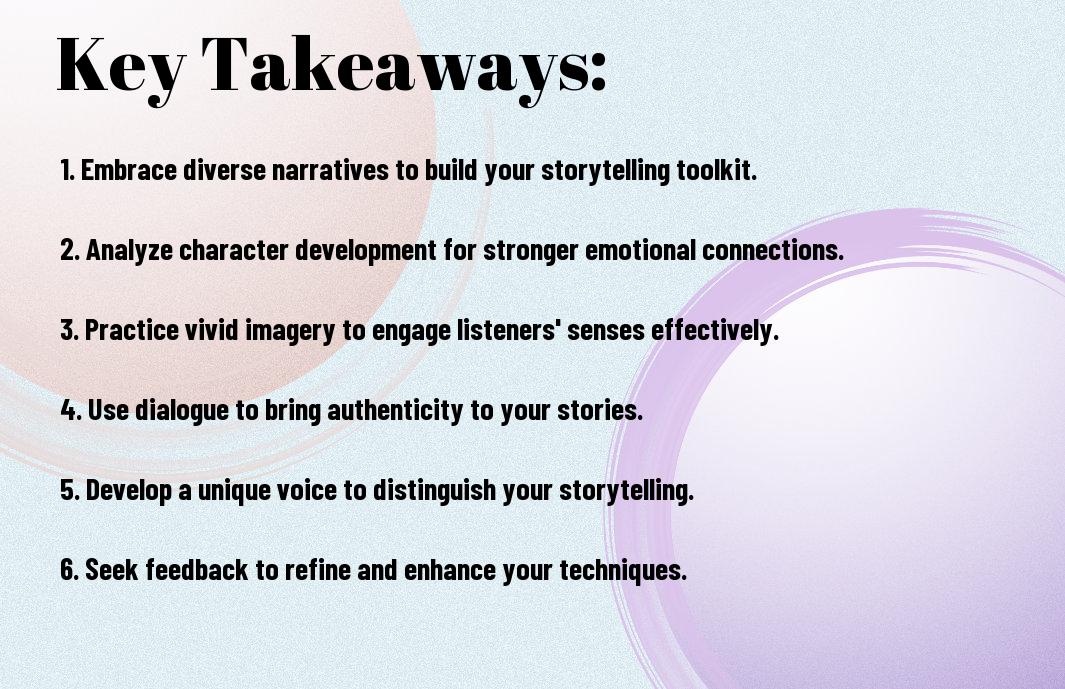
Key Takeaways:

To master the art of language storytelling, consider the following points:

  • Develop your vocabulary by reading widely and often, as this will help you to create more engaging and immersive stories.
  • Practice active listening to improve your ability to absorb and retell stories in a way that is both authentic and compelling.
  • Use descriptive language and vivid imagery to bring your stories to life, making them more memorable and impactful for your audience.

Finding Inspiration

For any aspiring storyteller, finding inspiration is the first step in mastering the art of language storytelling. You’ll need to tap into your creativity and seek out sparks that will ignite your imagination, setting your stories ablaze with wonder and curiosity.

Discovering Personal Stories

Stories are all around you, waiting to be uncovered and shared with the world. You can find them in your own experiences, memories, and emotions, and use them as a foundation for your storytelling, making your tales more authentic and relatable.

Exploring Cultural Folklore

Against the backdrop of your everyday life, myths and legends from diverse cultures can add richness and depth to your storytelling. You can draw upon these tales, using them as a starting point for your own creative explorations, and weaving them into your narrative.

Exploring cultural folklore can be a powerful way to add complexity and nuance to your stories, allowing you to tap into the collective imagination of humanity and create something entirely new and unique. As you explore into the myths and legends of different cultures, you’ll discover a wealth of characters, motifs, and themes that you can use to inspire and inform your own storytelling, helping you to craft tales that are both personal and universal.
Crafting Compelling Characters

Clearly, well-crafted characters are the heart of any great story, and as you begin on your language storytelling journey, you’ll want to focus on creating characters that leap off the page and linger in your readers’ minds.

Developing Unique Voices

Beyond the basics of character development, you’ll find that giving your characters distinct voices is key, and as you work to refine their tones and languages, you’ll begin to hear their unique perspectives shining through in your writing.

Creating Relatable Motivations

Beneath the surface of every compelling character lies a complex web of motivations, and as you probe into what drives your characters, you’ll start to uncover the hidden forces that shape their actions and decisions, making them more believable and relatable to your readers.

Considering the motivations that drive your characters, you’ll want to explore their deepest desires, fears, and passions, and as you do, you’ll begin to see how these underlying forces influence their every move, allowing you to craft a rich, nuanced narrative that draws your readers in and keeps them invested in your characters’ journeys, as you master the art of language storytelling, you’ll find that your characters’ motivations become the engine that drives your story forward, giving it depth, tension, and emotional resonance.

Building Engaging Plots

All great stories have one thing in common: a well-structured narrative that draws you in and keeps you invested. As you develop your language storytelling skills, you’ll learn to craft plots that captivate your audience and leave a lasting impression.

Structuring Narratives

Constructing a compelling narrative is key to engaging your listeners. You’ll need to balance action, dialogue, and description to create a story that flows smoothly and holds your audience’s attention.

Adding Unexpected Twists

Around the midpoint of your story, you’ll want to introduce surprising turns of events that keep your listeners on their toes. You can achieve this by subverting expectations or introducing new characters to shake things up.

Hence, as you master the art of adding unexpected twists, you’ll find that your stories become more dynamic and engaging. You’ll be able to craft surprises that feel both surprising and inevitable, leaving your audience eager to hear what happens next. As you practice, you’ll develop a sense of how to pace your story and build tension, creating a narrative that’s both suspenseful and satisfying.

Mastering Language and Style

Now that you’ve begun to craft your story, it’s time to refine your language and style. You’ll want to develop a unique voice that draws your audience in and keeps them engaged. This involves choosing the right words, pacing your narrative, and using descriptions that bring your story to life.

Using Vivid Descriptions

For instance, you can create powerful descriptions by appealing to your readers’ senses. You’ll find that using sensory details helps your audience immerse themselves in your story, making it more relatable and enjoyable.

Playing with Tone and Pacing

Using the right tone and pacing is imperative to keeping your readers invested in your story. You can control the emotional resonance of your narrative by adjusting the tone and pace, creating a sense of tension or resolution.

With tone and pacing, you can guide your readers through the emotional highs and lows of your story. You’ll discover that by varying your tone and pacing, you can create a sense of anticipation, surprise, or wonder, drawing your audience deeper into your narrative and making your story more memorable and impactful.

Practicing the Art of Storytelling

Not until you dedicate time to practicing will your storytelling skills truly flourish. As you hone your craft, you’ll find your unique voice and style emerging, drawing your audience into the world you’ve created.

Writing Regularly

Recurring writing sessions will help you develop a consistent tone and narrative flow, allowing your stories to unfold naturally, as you experiment with different techniques and genres to find what suits you best.

Sharing Stories with Others

Often, the most effective way to refine your storytelling is by sharing it with others, receiving feedback, and observing how your audience responds to your words, adjusting your approach to captivate and engage them even more.

But as you share your stories, you’ll discover that the true magic happens in the connection you make with your listeners, as they become invested in the worlds and characters you’ve created, and you’ll find yourself inspired by their reactions and insights, fueling your passion for storytelling even further, and urging you to continue exploring the boundaries of your imagination.

Overcoming Creative Blocks

Your journey as a language storyteller will inevitably hit roadblocks, but don’t worry, you can overcome them with the right mindset and techniques.

Finding New Sources of Inspiration

Discovering fresh ideas and perspectives is key to sparking your creativity, and you can do this by reading widely, exploring different cultures, and engaging with people from diverse backgrounds.

Embracing Failure and Revision

With every failure, you have the opportunity to learn and grow, so don’t be afraid to take risks and try new things, even if they don’t work out as planned.

Creative freedom comes from embracing the iterative process of writing and revising, and you’ll find that your stories will improve with each draft, as you refine your ideas and develop your unique voice, so keep writing, and you’ll see your language storytelling skills flourish.

Conclusion

With these considerations, you’ll initiate on a journey to master the art of language storytelling. As you practice and experiment, your unique voice will emerge, weaving tales that transport and captivate your audience. You’ll discover the rhythm and melody of words, and your stories will become a reflection of your imagination and creativity, leaving a lasting impression on all who listen. Your storytelling skills will flourish, and the worlds you create will be yours to share.

FAQ

Q: What is the best way to start learning the art of language storytelling, and how can I develop my skills in this area?

A: To start learning the art of language storytelling, begin by reading a wide range of stories across different genres to understand various narrative structures and techniques. Practice telling your own stories, either in writing or verbally, and experiment with different styles and voices. You can also join a writing group or take courses to get feedback and guidance from others. Developing your skills in active listening and observation will also help you to create more engaging and relatable stories.

Q: How can I use my personal experiences and emotions to create compelling stories, and what role does authenticity play in language storytelling?

A: Drawing from personal experiences and emotions is a powerful way to create authentic and compelling stories. Reflecting on your own life events and emotions can help you to craft stories that are unique and relatable. Authenticity is key in language storytelling, as it allows your audience to connect with your narrative on a deeper level. Be honest and vulnerable in your storytelling, and don’t be afraid to express your true emotions and thoughts. This will help to create a sense of trust and rapport with your audience, making your stories more engaging and memorable.

Q: What are some effective techniques for using language to paint vivid pictures in the listener’s or reader’s mind, and how can I use descriptive language to enhance my storytelling?

A: To paint vivid pictures with your words, use descriptive language that appeals to the senses, such as sensory details and figurative language like metaphors and similes. Practice using specific and evocative language to describe people, places, and events, and experiment with different narrative techniques like dialogue and flashbacks. You can also use rhetorical devices like repetition and allusion to add depth and complexity to your stories. Additionally, pay attention to the rhythm and cadence of your language, as this can help to create a sense of tension, suspense, or excitement, drawing your audience into the world of your story.

How Language Learning Builds Emotional Intelligence

As you launch on learning a new language, you’ll discover that it’s not just about mastering grammar and vocabulary. You’ll find that language learning has a profound impact on your emotional intelligence, enabling you to better understand yourself and others. Your ability to navigate complex social situations and empathize with people from diverse backgrounds will improve, allowing you to form deeper connections and build stronger relationships. By developing your language skills, you’ll become more aware of your own emotions and those of others.

Key Takeaways:

To understand the impact of language learning on emotional intelligence, consider the following points:

  • Developing Empathy is a significant benefit of language learning, as it allows individuals to understand different perspectives and connect with people from diverse cultural backgrounds, fostering a deeper sense of global understanding.
  • Language learning enhances Social Awareness by exposing individuals to various communication styles, helping them navigate complex social situations and build stronger, more meaningful relationships.
  • Mastering a new language requires Self-Awareness, as learners must be mindful of their own thought processes and emotional responses to effectively communicate in a new language, leading to increased personal growth and a better understanding of one’s own emotional landscape.

The Foundations of Emotional Intelligence

For instance, you can develop emotional intelligence through language learning, as discussed in Unlocking the Power of Emotional Intelligence in Language Learning. This concept highlights the significance of language in shaping your emotional intelligence.

Self-Awareness through Language

Fortuitously, you discover your self-awareness through language learning, as it helps you understand your thoughts and emotions, allowing you to express yourself more effectively.

Recognizing Emotions in Communication

At the forefront of emotional intelligence is recognizing emotions in communication, which enables you to navigate social situations with ease and understand the emotions of others.

Language plays a significant role in recognizing emotions in communication, as you learn to identify emotional cues, such as tone, pitch, and body language, helping you to develop a deeper understanding of the emotions conveyed through language, and allowing you to respond empathetically and build stronger relationships.

Language Learning as a Tool

Any language learning journey begins with a willingness to understand and connect with others, making it an effective tool for building emotional intelligence, as you develop a deeper understanding of diverse perspectives and cultures.

Building Empathy through Cultural Immersion

Alike any other learning experience, language learning allows you to step into the shoes of native speakers, fostering empathy and broadening your worldview as you navigate their customs, traditions, and ways of life.

Developing Active Listening Skills

Through the process of learning a new language, you enhance your ability to focus on and comprehend the nuances of communication, enabling you to better understand others and respond appropriately, which is vital for effective relationships.

Active engagement with the language, including listening to native speakers and participating in conversations, helps you develop a keen sense of awareness, allowing you to pick up on subtle cues, tone, and context, and respond in a way that is empathetic and understanding, thereby strengthening your relationships and social interactions.

The Impact of Language on Relationships

Once again, language learning plays a significant role in shaping your relationships, as it enables you to connect with others on a deeper level, fostering empathy and understanding in your interactions.

Effective Communication in Personal and Professional Settings

Professionally, your ability to communicate effectively in multiple languages can greatly enhance your personal and professional relationships, allowing you to express your thoughts and ideas with clarity and precision, which in turn helps you build stronger bonds with others.

Navigating Conflict Resolution with Emotional Intelligence

The ability to navigate conflicts in a foreign language requires a high degree of emotional intelligence, as you need to be aware of the nuances of the language and the cultural context in which you are communicating, allowing you to address conflicts in a sensitive and effective manner.

Considering the complexities of conflict resolution, you will find that your language skills can help you approach difficult conversations with confidence and empathy, taking into account the perspectives and emotions of all parties involved, and facilitating a more constructive and respectful dialogue, which can lead to more positive outcomes in your personal and professional relationships.

Cognitive Development and Language

Not surprisingly, language learning has a profound impact on your cognitive development, as it enhances your ability to process and understand complex information, leading to improved overall cognitive function.

Enhancing Problem-Solving Skills through Language Learning

Through the process of learning a new language, you develop your analytical skills, allowing you to approach problems from different perspectives and find innovative solutions, ultimately improving your problem-solving abilities.

Improving Memory and Concentration

One of the key benefits of language learning is the improvement of your memory and concentration, as you train your brain to absorb and retain new information, leading to better cognitive performance.

A significant advantage of language learning is that it challenges your brain, strengthening your ability to focus and retain information, which in turn enhances your overall memory and concentration, enabling you to stay focused and mentally sharp, allowing you to tackle complex tasks with ease and accuracy, which is beneficial in all areas of your life.

Emotional Regulation and Well-being

To improve your emotional intelligence, you can benefit from language learning, which has a positive impact on your mental health. As you learn a new language, you can explore the Impacts of Emotional Intelligence on Second Language Acquisition and Use, leading to better well-being.

Managing Stress through Language and Culture

Regularly, you will find that language learning helps you manage stress by immersing yourself in a new culture, allowing you to broaden your perspective and develop empathy.

Fostering a Growth Mindset

Similarly, stress can be mitigated when you approach language learning with a growth mindset, focusing on progress, not perfection, and embracing challenges as opportunities for growth.

Indeed, as you foster a growth mindset, you will become more resilient, adapting to new situations and developing a stronger sense of self-awareness, which will, in turn, enhance your emotional intelligence and overall well-being, allowing you to navigate life’s challenges with greater ease and confidence.

Real-World Applications

Now that you understand the connection between language learning and emotional intelligence, you can apply this knowledge in various aspects of your life, from personal relationships to professional settings, and see the positive impact it has on your interactions and connections with others.

Language in the Workplace and Education

To further illustrate this, you can observe how language skills play a significant role in your workplace and educational settings, enhancing your ability to communicate effectively and build strong relationships with colleagues, peers, and mentors, which in turn boosts your emotional intelligence and overall performance.

Community Building through Language Exchange

Through engaging in language exchange programs, you will find opportunities to practice your language skills while learning about different cultures, allowing you to develop a deeper understanding of the people you interact with and fostering a sense of community and belonging.

Even as you continue to develop your language skills, you will notice that your emotional intelligence grows, enabling you to navigate complex social situations with ease, empathize with others, and build meaningful connections that transcend language barriers, ultimately enriching your personal and professional life in profound ways.

Final Words

With these considerations, you can see how language learning enhances your emotional intelligence. As you explore into a new language, you develop a deeper understanding of different cultures and perspectives. Your ability to empathize with others improves, allowing you to navigate complex social situations with ease. By embracing language learning, you broaden your emotional intelligence, enabling you to communicate more effectively and foster meaningful connections with people from diverse backgrounds, ultimately enriching your personal and professional life.

FAQ

Q: How does language learning help in developing self-awareness, a key component of emotional intelligence?

A: Language learning helps in developing self-awareness by forcing individuals to navigate unfamiliar cultural norms, customs, and communication styles. As learners interact with native speakers, they become more attuned to their own emotions, values, and biases, gaining a deeper understanding of themselves and their place in the world. This increased self-awareness enables language learners to better recognize and manage their emotions, a fundamental aspect of emotional intelligence.

Q: In what ways does language learning enhance empathy, another important aspect of emotional intelligence?

A: Language learning fosters empathy by providing a unique window into the thoughts, feelings, and experiences of people from diverse linguistic and cultural backgrounds. As language learners engage with authentic materials, such as literature, music, and conversations, they develop a more nuanced understanding of the complexities and challenges faced by others. This empathetic understanding allows language learners to connect with people on a deeper level, appreciate different perspectives, and build stronger, more meaningful relationships.

Q: Can language learning help individuals develop better relationships and social skills, which are vital for emotional intelligence?

A: Yes, language learning plays a significant role in developing better relationships and social skills. As individuals become more proficient in a new language, they gain confidence in their ability to communicate effectively with others. This confidence enables them to navigate social situations more successfully, build stronger connections with native speakers, and develop a more extensive social network. Moreover, language learning encourages active listening, clear expression of thoughts and feelings, and effective conflict resolution, all of which are important skills for maintaining healthy, emotionally intelligent relationships.

The Role of Literature in Language Fluency

As you strive to improve your language skills, you will find that literature plays a significant role in enhancing your fluency. Your ability to understand and engage with literary works in your target language will help you develop a deeper understanding of its nuances and complexities. By exploring various literary genres, you will expose yourself to diverse writing styles, vocabulary, and grammatical structures, ultimately refining your language proficiency and broadening your cultural awareness.

Key Takeaways:

  • The authenticity of literature provides learners with a unique opportunity to engage with the natural language, enabling them to develop a deeper understanding of its nuances and complexities, and ultimately enhancing their language fluency.
  • Exposure to diverse literary genres and authors can broaden learners’ vocabulary and introduce them to various linguistic styles, fostering a more sophisticated and expressive use of language.
  • Engaging with literature can also promote cultural awareness and empathy, as learners are able to explore different perspectives and worldviews, further enriching their language learning experience and contributing to their overall fluency development.

The Impact of Reading

The impact of reading on language fluency cannot be overstated, as it exposes you to various writing styles, genres, and authors, helping you develop your language skills.

Expanding Vocabulary

By engaging with literary texts, you broaden your vocabulary, as you encounter new words, phrases, and expressions that you can incorporate into your own language.

Improving Grammar

Similar to vocabulary, grammar is also enhanced through reading, as you see how sentences are structured and how language is used in context, allowing you to improve your own grammar skills.

It is through reading that you become familiar with the nuances of language, such as verb tenses, clause formation, and punctuation, which helps you to express yourself more effectively and confidently in your writing and speaking, enabling you to communicate your ideas and thoughts with precision and clarity.

Literary Devices and Techniques

Clearly, literary devices and techniques play a significant role in enhancing your language fluency. You will encounter various devices, such as metaphors, similes, allusions, and symbolism, which will help you better understand and appreciate the language.

Metaphor and Simile

Unlike other literary devices, metaphors and similes help you develop your vocabulary and comprehension skills by creating vivid comparisons between two unlike things, allowing you to think creatively and make connections between different concepts.

Allusion and Symbolism

The effective use of allusions and symbolism in literature enables you to understand the underlying themes and messages, as these devices often convey complex ideas and emotions, making your reading experience more engaging and thought-provoking.

Consequently, as you probe deeper into the world of allusions and symbolism, you will discover that these devices not only add depth and complexity to the text but also require you to think critically and make connections between the literary work and your prior knowledge, ultimately enhancing your language fluency and comprehension skills.

Cultural Significance

Keep in mind that literature plays a significant role in shaping your understanding of a culture. You can learn more about How Literature Can Enrich Language Skills and its impact on your language fluency.

Reflecting Society

By examining the literature of a particular region, you can gain insight into the society and its values, which in turn can enhance your language skills and cultural understanding.

Shaping Identity

Against the backdrop of cultural diversity, literature helps shape your identity and influences your perception of the world, enabling you to communicate more effectively in a foreign language.

With the ability to analyze and understand literary works, you can develop a deeper appreciation for the culture and language, allowing you to express yourself more confidently and accurately, which is vital for achieving language fluency.

Language Acquisition

For language learners, literature plays a significant role in developing language fluency. You can gain exposure to various linguistic structures, vocabulary, and cultural contexts through reading literary works. This helps you improve your comprehension, vocabulary, and communication skills.

Language Learning Strategies

With the help of literature, you can develop effective language learning strategies, such as contextual learning and inference skills. You learn to analyze texts, understand nuances, and make connections between ideas, enhancing your overall language proficiency.

Authentic Materials

Like language itself, authentic materials, such as literary texts, provide you with real-life language examples, enabling you to learn language in context. You can engage with authentic materials to improve your language skills, including reading, writing, and speaking.

Language learners like you can benefit from authentic materials, as they offer a unique opportunity to engage with language in a more natural way. You can use literary texts to learn idiomatic expressions, colloquialisms, and cultural references, allowing you to sound more natural and fluent in your language use. By reading and analyzing literary works, you can also develop your critical thinking and analytical skills, which are important for effective communication in any language.

The Role of Literature in Education

After exploring the significance of literature in language fluency, you will discover its impact on education. Literature plays a vital role in shaping your understanding of the world and broadening your perspectives.

Teaching Methods

Prior to developing effective teaching methods, you should consider the importance of literature in engaging students. You will find that literary works can be used to illustrate complex concepts and promote critical thinking.

Curriculum Design

Behind every well-structured curriculum is a thoughtful consideration of literary works. You will notice that literature is often used to support learning objectives and outcomes, making it an vital component of your educational journey.

With a well-designed curriculum that incorporates literature, you will have the opportunity to explore diverse themes, genres, and authors. You can analyze literary texts, develop your critical thinking skills, and cultivate a deeper appreciation for the language, ultimately enhancing your overall educational experience.

The Benefits of Literary Analysis

Despite the challenges of literary analysis, you will find that it enhances your language skills. By exploring literary works, you can improve your understanding of language structures and vocabulary, as discussed in The Role of Literature in Instructed Foreign Language Learning and Teaching: An Evidence-Based Survey.

Critical Thinking

Prior to delving into literary analysis, you need to develop your critical thinking skills, which will enable you to evaluate and interpret literary works effectively.

Effective Communication

The act of analyzing literary works helps you to express your thoughts and ideas more effectively, allowing you to communicate with others in a more nuanced and sophisticated manner.

To achieve effective communication through literary analysis, you will need to practice articulating your thoughts and opinions about the literary works you study, which will help you to develop a more persuasive and expressive writing and speaking style, enabling you to convey your ideas with clarity and precision, and engage your audience more effectively, as you progress in your language learning journey, you will find that your ability to communicate complex ideas and thoughts improves significantly.

Conclusion

Following this discussion, you can see how literature enhances your language fluency by exposing you to various linguistic structures and vocabulary. As you engage with different texts, your comprehension and expression abilities improve, allowing you to communicate more effectively. By embracing literature, you can refine your language skills, broaden your perspectives, and develop a deeper understanding of the language, ultimately enriching your overall fluency.

FAQ

Q: What is the significance of literature in achieving language fluency?

A: Literature plays a vital role in language fluency as it exposes learners to a wide range of vocabulary, grammatical structures, and linguistic styles. Through reading and analyzing literary works, individuals can improve their comprehension, develop their vocabulary, and enhance their ability to express themselves effectively in the target language. Moreover, literature provides a unique window into the culture and history of a language, allowing learners to gain a deeper understanding of the language’s nuances and context.

Q: How does reading literature contribute to improved language fluency?

A: Reading literature is an effective way to improve language fluency because it helps learners develop their reading comprehension skills, broaden their vocabulary, and become familiar with various writing styles and genres. As learners engage with literary texts, they are exposed to new words, phrases, and grammatical structures, which helps to reinforce their language skills. Furthermore, reading literature encourages active learning, as learners are required to interpret, analyze, and think critically about the texts, thereby enhancing their overall language proficiency.

Q: Can literature be used as a tool for language learning, and if so, what are some effective ways to incorporate it into a language learning program?

A: Yes, literature can be a valuable tool for language learning, offering a rich and engaging way to improve language fluency. Effective ways to incorporate literature into a language learning program include: selecting texts that align with the learner’s level and interests, providing guided reading and discussion activities, and encouraging learners to keep a reading journal or write book reviews. Additionally, using literary works as a basis for language instruction can help learners develop their speaking, writing, and listening skills, as well as foster a deeper appreciation for the language and its cultural context.

How Learning a Language Makes You a Global Citizen

As you navigate the complexities of our increasingly interconnected world, you begin to appreciate the value of communication that transcends borders. Your ability to learn a new language opens doors to fresh perspectives, allowing you to engage with diverse cultures on a deeper level. By acquiring a new language, you will broaden your understanding of the world and its many nuances, ultimately becoming a more empathetic and informed global citizen, capable of forging meaningful connections with people from all walks of life.

Key Takeaways:

  • Learning a language helps you become a global citizen by broadening your cultural understanding and enriching your interactions with people from diverse backgrounds, allowing you to connect with others on a deeper level.
  • As a multilingual individual, you’ll have access to a wider range of career opportunities and be able to engage with global communities, fostering mutual respect and understanding.
  • By acquiring a new language, you’ll enhance your cognitive abilities, such as memory and problem-solving, and develop a more nuanced perspective on the world, enabling you to navigate complex global issues with confidence.

The Benefits of Language Learning

Your ability to learn a new language can greatly impact your life, and as outlined in 7 Benefits of Learning A New Language, it can bring numerous advantages.

Enhanced Career Opportunities

Against the backdrop of a competitive job market, acquiring a new language skill can significantly enhance your career prospects, opening doors to new opportunities and giving you a competitive edge.

Cultural Appreciation and Awareness

Among the many benefits of language learning, cultural appreciation and awareness stand out, allowing you to engage with diverse communities and foster a deeper understanding of their customs and traditions.

The cultural appreciation and awareness you gain through language learning will enable you to navigate different social situations with confidence, making you a more empathetic and open-minded global citizen, capable of forming meaningful connections with people from diverse backgrounds, and ultimately broadening your perspective on the world.

Global Connections

Any language learner can become a global citizen by expanding their cultural understanding, as you can see in the article How to Build Global Citizens through World Language Learning. This helps you connect with people from diverse backgrounds.

Networking and Building Relationships

Building relationships with people from other countries is made easier by learning their language, allowing you to communicate effectively and form lasting bonds with your international peers.

Travel and Exploration

About the benefits of language learning, exploring new places becomes more enjoyable when you can speak the local language, enabling you to engage with the culture more deeply.

Travel to foreign countries becomes more authentic when you can converse with locals, read signs, and understand the history behind the landmarks, making your experiences more meaningful and immersive, as you navigate your way through unfamiliar territories with ease, using your new language skills to enhance your journey.

Language and Identity

Many languages are closely tied to the culture and identity of their speakers, and learning a language can give you a deeper understanding of the people who speak it. As you learn a language, you’ll gain insight into the history, customs, and values of the community that speaks it.

Self-Expression and Confidence

With each new language you learn, you’ll find that your ability to express yourself grows, and your confidence in communicating with others increases. You’ll be able to convey your thoughts and ideas more effectively, and connect with people from diverse backgrounds.

Community and Belonging

Above all, learning a language can help you feel a sense of community and belonging with the people who speak it. You’ll be able to participate in conversations, share in cultural traditions, and build meaningful relationships with native speakers.

For instance, when you learn a language, you’ll have access to a wealth of cultural resources, including literature, music, and film, that will help you understand the community and its values. You’ll be able to engage with native speakers in a more meaningful way, and develop a sense of belonging to the community, which will enrich your life and broaden your perspectives.

Bridging Cultural Gaps

Not only does learning a language help you understand a new culture, but it also allows you to connect with people from diverse backgrounds.

Breaking Stereotypes and Misconceptions

You can break down cultural barriers by:

  • Engaging with native speakers

Assume that learning a language is key to understanding a culture.

Cultural Aspect Language Learning
Traditions Understanding nuances
Values Appreciating context
Customs Grasping idioms
History Comprehending references

Fostering Empathy and Tolerance

Empathizing with others becomes easier when you learn their language. You begin to see things from their perspective, broadening your understanding of the world.

A notable aspect of language learning is its ability to foster deeper connections with people from other cultures, allowing you to navigate complex social situations with ease and sensitivity, as you develop a more nuanced appreciation for the diversity of human experience, and you will find that your newfound understanding of languages opens doors to fresh perspectives, enabling you to engage with others on a more meaningful level.

The Role of Technology

Keep in mind that technology plays a significant part in language learning, providing you with numerous resources to aid in your journey to becoming a global citizen. You can access various language learning platforms, apps, and software, making it easier for you to learn and practice a new language.

Language Learning Resources and Tools

With the abundance of digital resources available, you can find the tools that best suit your learning style and needs. You will discover podcasts, language exchange websites, and online courses that will help you improve your language skills and broaden your cultural understanding.

Online Communities and Forums

About the online communities, you will find that they offer a platform for you to engage with native speakers, practice your language skills, and get feedback on your progress. You will be able to connect with like-minded individuals who share your interest in language learning and cultural exchange.

This online community will become an invaluable resource for you, as you will be able to ask questions, share your experiences, and learn from others who are also on a similar journey. You will gain insights into different cultures, traditions, and ways of life, allowing you to develop a deeper understanding of the world and your place in it as a global citizen.

Challenges and Rewards

Once again, you find yourself at a crossroads, weighing the benefits of language learning against the difficulties it presents. As you navigate this journey, you will encounter numerous obstacles, but the rewards will be well worth your effort.

Overcoming Language Barriers and Challenges

Along the way, you will face various hurdles, from grammatical complexities to cultural nuances, but with persistence and dedication, you can overcome these challenges and develop a deeper understanding of the language.

Personal Growth and Achievement

Among the many benefits of language learning, personal growth and achievement are significant, as you develop new skills, expand your perspectives, and enhance your career opportunities, ultimately leading to a more fulfilling life.

Further, as you achieve proficiency in a new language, you will experience a sense of pride and accomplishment, which will boost your confidence and motivation, enabling you to tackle even more challenging pursuits and explore new horizons, broadening your understanding of the world and your place in it.

Final Words

Ultimately, as you initiate on learning a language, you expand your perspective and broaden your understanding of the world. Your newfound ability to communicate with people from diverse backgrounds makes you a more empathetic and open-minded individual. You become a global citizen, capable of navigating different cultures and fostering meaningful connections with people from all walks of life. Your language skills will enrich your life and empower you to engage with the world in a more profound way.

FAQ

Q: How does learning a language contribute to becoming a global citizen?

A: Learning a language is a key factor in becoming a global citizen because it opens doors to understanding different cultures, perspectives, and ways of life. When you learn a language, you gain the ability to communicate with people from diverse backgrounds, which fosters global understanding, tolerance, and cooperation. This, in turn, enables you to engage with the global community more effectively, making you a more informed and empathetic global citizen.

Q: What are the benefits of language learning in terms of career opportunities and personal growth?

A: The benefits of language learning are numerous and far-reaching. In terms of career opportunities, speaking multiple languages can significantly enhance your job prospects, especially in fields like international business, diplomacy, and education. Additionally, language learning can lead to personal growth by broadening your perspectives, challenging your assumptions, and helping you develop a more nuanced understanding of the world. It can also increase your travel opportunities, allowing you to explore new countries and immerse yourself in different cultures.

Q: How can language learning help bridge cultural divides and promote global understanding?

A: Language learning plays a vital role in bridging cultural divides and promoting global understanding by facilitating communication and fostering empathy between people from different cultural backgrounds. When you learn a language, you gain insight into the customs, traditions, and values of the corresponding culture, which helps to break down stereotypes and misconceptions. Moreover, language learning enables you to engage in meaningful interactions with people from diverse cultures, promoting cross-cultural understanding, mutual respect, and cooperation, ultimately contributing to a more harmonious and interconnected world.

How to Make the Most of Language Study Time

You want to learn a new language, but your schedule is tight. You need to make the most of your study time. To do this, you must prioritize your goals and focus on what works best for you. Check out tips on Making Time for Language Study | How I Find Time to Learn and create your own effective study routine, maximizing your progress in minimal time.

Key Takeaways:

To maximize your language learning efficiency, consider the following points:

  • Set specific goals for your study sessions to help you stay focused and motivated, ensuring you make the most of your time.
  • Use active learning techniques, such as speaking and writing, to engage with the language and reinforce your understanding of new concepts.
  • Practice consistent review to solidify your knowledge and prevent forgetting, helping you to build a strong foundation in the language over time.

Setting Goals

Your language study time is limited, so you need to make the most of it. Setting clear goals helps you focus on what you want to achieve.

Defining Objectives

Besides identifying your motivation, you need to define what you want to accomplish. You set specific objectives, like improving grammar or vocabulary.

Creating a Schedule

At the outset, you plan out your study time. You allocate specific times for learning and practicing your language skills.

In fact, creating a schedule helps you prioritize your tasks and manage your time effectively. You can break down your study time into smaller chunks, focusing on different skills like reading, writing, or speaking, and make adjustments as needed to stay on track and achieve your goals.

Choosing Materials

The key to making the most of your language study time is selecting the right materials. You can find many resources online, such as learning a new language efficiently, to help you get started.

Textbooks and Workbooks

For beginners, textbooks and workbooks are a good place to start, providing a structured approach to learning a new language.

Online Resources and Apps

Above all, online resources and apps offer a wide range of learning tools, from language learning platforms to podcasts and videos.

This abundance of online resources allows you to personalize your learning experience, focusing on your weaknesses and interests, and catering to your learning style, making your language study time more effective and enjoyable, as you progress at your own pace, with your preferred tools, and you can track your progress, adjusting your strategy as needed.

Practicing Consistency

All language learners aim to make progress, and you are no exception. You need to stay on track, setting achievable goals and sticking to your schedule. This will help you build habits and make the most of your study time.

Daily Routine

Once you’ve set your goals, you can start creating a daily routine that works for you. You’ll need to allocate a specific time for language study, and try to minimize distractions during that time. Your daily routine should be realistic and flexible, allowing you to make adjustments as needed.

Review and Revision

Around the time you’ve completed a study session, you should take a few minutes to review what you’ve learned. You’ll find that going over the material helps solidify it in your mind, making it easier to recall later. Your review sessions should be regular, and focused on reinforcing your understanding of the language.

Further, as you continue with your review and revision, you’ll start to notice areas where you need more practice. You can use this information to adjust your study plan, focusing on the topics that are giving you trouble. By doing so, you’ll be able to make the most of your study time, and see steady progress in your language skills. You’ll find that your hard work pays off, and you become more confident in your ability to communicate in the language.

Enhancing Comprehension

Keep your study time focused on understanding the language. You’ll gain more from your efforts by concentrating on comprehension than by just memorizing rules.

Active Listening

Often,you find yourself trying to make sense of what you hear. Tune in to podcasts, audiobooks, or conversations to improve your listening skills.

Engaging in Conversation

Between conversations with native speakers and language exchange partners, you’ll find opportunities to practice speaking and improve your comprehension.

Listening to others speak, you start to pick up on nuances of the language, such as idioms and expressions. You can then use these in your own conversations, helping you to sound more natural and fluent in the language you’re studying.

Overcoming Obstacles

To make the most of your language study time, you need to be prepared to face challenges. You’ll encounter setbacks, but with the right mindset, you can overcome them and stay on track.

Managing Motivation

After setting your goals, you’ll need to find ways to stay motivated. You can do this by rewarding yourself for milestones achieved and tracking your progress to see how far you’ve come.

Dealing with Difficulties

For every language learner, difficulties are inevitable. You’ll struggle with grammar, vocabulary, and pronunciation, but don’t let that discourage you. Break down the challenges into smaller, manageable parts, and focus on one thing at a time.

Also, when dealing with difficulties, you’ll need to develop a growth mindset. You’ll need to be patient with yourself and acknowledge that making mistakes is a natural part of the learning process. By doing so, you’ll be able to learn from your mistakes and move forward, improving your language skills with each passing day.

Tracking Progress

After dedicating time to language study, you need to monitor your progress. You track your advancements, identify areas for improvement, and adjust your strategy accordingly.

Keeping a Journal

By documenting your daily language study, you reflect on your journey and pinpoint what works best for you. Your journal becomes a valuable tool to evaluate your progress.

Setting Milestones

Among the most effective ways to track progress is setting specific goals. You define achievable milestones, focusing on what you want to accomplish in your language study.

This approach helps you stay motivated and directed. You break down your long-term goals into manageable tasks, celebrating each milestone achieved, and use this momentum to propel your language study forward, making steady progress towards fluency.

Conclusion

Drawing together the strategies outlined, you can maximize your language study time. You prioritize your goals, focus on consistent practice, and utilize effective resources. By doing so, you make the most of your time and accelerate your progress. Your dedication and persistence will yield tangible results, and you will become proficient in the language. You will be able to communicate effectively and achieve your objectives.

FAQ

Q: What is the best way to prioritize tasks when studying a language to make the most of my study time?

A: To maximize your language study time, it’s necessary to set clear goals and prioritize tasks based on your learning objectives. Start by identifying your weaknesses and areas that need improvement, then allocate your time accordingly. For instance, if you struggle with grammar, devote more time to grammar exercises and practice. Utilize a planner or app to schedule your study sessions, ensuring a balanced approach that includes reading, writing, listening, and speaking practice. This structured approach will help you stay focused and make the most out of your study time.

Q: How can I effectively use language learning apps and online resources to supplement my study routine?

A: Integrating language learning apps and online resources into your study routine can significantly enhance your learning experience. Begin by selecting apps that align with your learning goals, such as those focusing on vocabulary building, grammar practice, or conversational skills. Utilize these tools to fill gaps in your schedule, such as during commutes or breaks, to practice consistently. Many apps offer interactive exercises, quizzes, and games that make learning engaging and fun. Additionally, online resources like language exchange websites, podcasts, and YouTube channels can provide diverse learning materials and opportunities to engage with native speakers, further enriching your study time.

Q: What strategies can I employ to stay motivated and maintain consistency in my language study routine?

A: Staying motivated and consistent is key to making the most of your language study time. One effective strategy is to find a language learning buddy or join a study group, where you can practice speaking, share tips, and learn from each other’s experiences. Setting achievable milestones and rewarding yourself upon reaching them can also boost motivation. Immersing yourself in the language by watching TV shows or movies, listening to music, and trying to think in the language can make the learning process enjoyable and engaging. Furthermore, tracking your progress through journals or language learning logs can help you visualize your improvements, reinforcing your commitment to regular study and encouraging you to push forward.

Skip to content