Language

How to Break Language Learning Plateaus

You’ve hit a wall in your language learning journey. Your progress has stalled, and you’re struggling to make sense of unfamiliar grammar rules or vocabulary. You feel like you’re not getting any better, no matter how hard you try. Your motivation is dwindling, and frustration is setting in. It’s time to change your approach and find a way to overcome this hurdle. You need anew strategy to break through the plateau and continue improving your language skills.

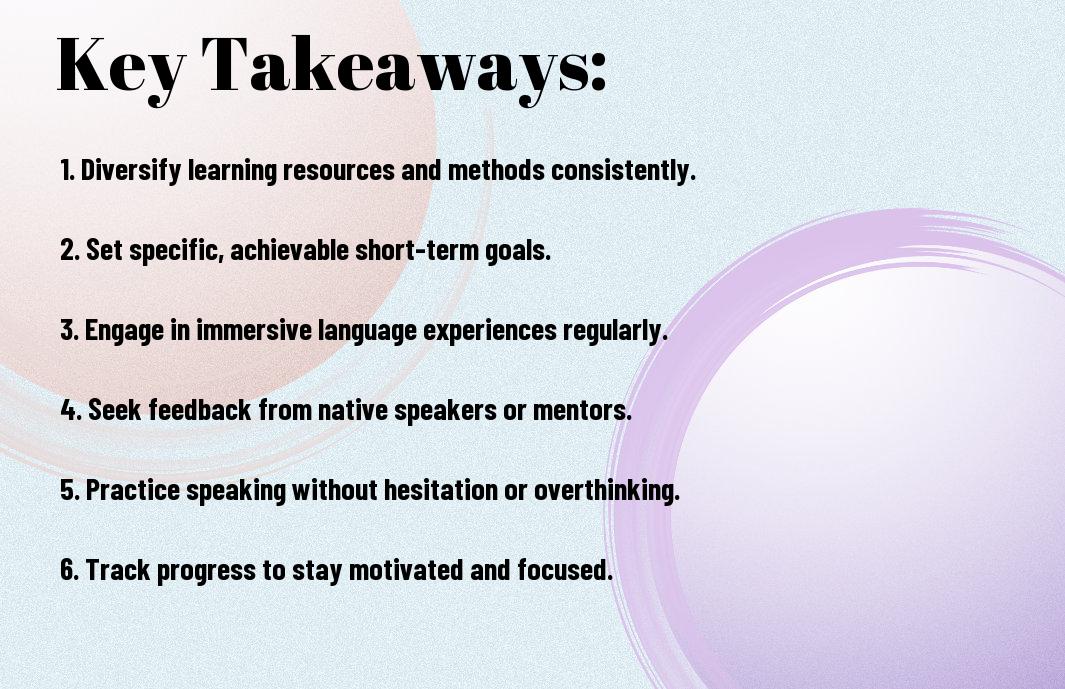
Key Takeaways:

To overcome language learning plateaus, consider the following strategies:

  • Set specific goals and track progress to maintain motivation and direction, helping you stay focused on what you want to achieve in your language learning journey.
  • Practice active learning by engaging in conversations, writing, and speaking, rather than just passive listening or reading, to improve your language skills.
  • Immerse yourself in the language by listening to authentic materials, such as podcasts, TV shows, or movies, to get used to the natural flow and rhythm of the language.
  • Focus on consistent practice, even if it’s just a few minutes a day, to develop a habit and make progress over time, rather than trying to cram all your practice into one or two long sessions.
  • Seek out diverse language learning resources and activities, such as language exchange partners, online courses, or language learning apps, to keep your learning fresh and engaging.

Identifying Plateaus

To break through a language learning plateau, you need to acknowledge its presence. You’ve been studying for a while, but your progress has slowed down. Your routine has become stale, and you’re not seeing improvements. It’s time to assess your situation and make a change.

Recognizing the Signs

Around you, signs of a plateau are evident. Your motivation is waning, and your practice sessions have become stagnant. You’re not challenging yourself, and your language skills are suffering as a result. You need to take a step back and evaluate your approach.

Assessing Progress

Any honest evaluation of your progress will reveal areas for improvement. You can start by tracking your efforts, setting achievable goals, and seeking feedback from others. This will help you pinpoint where you’re struggling and what you need to work on.

Indeed, assessing your progress is an ongoing process. You’ll need to regularly evaluate your language skills, identifying strengths and weaknesses. By doing so, you’ll be able to adjust your strategy, stay motivated, and continue making progress towards your language learning goals. You’ll be able to refine your approach, addressing areas where you’re struggling and building on your successes.
Setting Goals

While breaking a language learning plateau, you need to set clear goals. Your objectives will guide your efforts, helping you stay focused on what you want to achieve.

Defining Objectives

Beneath every successful language learner lies a clear definition of their goals. You identify what you want to accomplish, whether it’s improving conversation skills or reading comprehension, and make your objectives specific and measurable.

Creating a Plan

Amidst the process of breaking your plateau, you start creating a plan. Your plan outlines the steps you’ll take to reach your goals, including the resources you’ll use and the time you’ll dedicate to practice.

Setting a realistic timeline is key to creating a plan that works for you. You break down your goals into smaller, manageable tasks, and schedule them in your daily or weekly routine, ensuring steady progress and tracking your advancement along the way.

Refreshing Your Approach

Trying New Methods

Approximately the same techniques that have been holding you back can be modified or replaced. You can try new language learning methods, such as speaking with native speakers or using flashcards, to revive your progress.

Exploring Different Resources

Above all, your resources may be limiting your growth. You can explore different textbooks, podcasts, or online courses to find what works best for you.

Building Consistency

Despite the challenges you face, developing a consistent language learning routine is key to breaking through plateaus. You need to make language learning a habit, something you do daily, to see progress and improvement over time.

Establishing a Routine

Beneath the surface of language learning lies the foundation of a well-structured routine. You will find that setting aside a specific time each day to study and practice your target language helps you stay focused and motivated.

Tracking Progress

Alongside your daily routine, monitoring your progress is vital. You should keep a journal or use an app to track your achievements and identify areas that need improvement.

At this stage, you’ll start to notice patterns and trends in your learning. You can use this information to adjust your routine, making adjustments to maximize your progress and stay on track. Your progress may be slow, but with persistence and the right approach, you’ll break through the plateau and continue to improve your language skills.

Overcoming Obstacles

For every language learner, obstacles are inevitable. You’ll encounter setbacks, but finding Solutions for language learning challenges can help you move forward. You must identify the issues hindering your progress and tackle them head-on.

Managing Frustration

Any language learner knows frustration is a common emotion. You feel stuck, and progress seems slow. Identifying the sources of your frustration is key to overcoming it, and you must take a step back to reassess your approach.

Finding Motivation

For you to stay motivated, setting achievable goals is important. You need to celebrate your successes, no matter how small, to keep yourself driven. This mindset will help you push through the tough times.

Due to the fact that motivation can wane, you must find ways to keep yourself engaged. You can try changing your study routine, finding a language partner, or rewarding yourself for reaching milestones. By doing so, you’ll stay motivated and focused on your language learning journey, and you’ll be able to overcome the plateau that’s holding you back.

Seeking Help

Keep pushing forward, even when progress seems slow. You need outside help to break the plateau. Look for language exchange partners or professional tutors who can guide you.

Language Exchange Partners

Approximately the same time you start feeling stuck, find a language partner to practice with. You can find them online or in language meetups, and they’ll help you improve your speaking skills.

Professional Guidance

Prior to giving up, consider hiring a professional tutor who can identify your weaknesses and create a personalized plan to help you improve.

And as you work with a tutor, you’ll get feedback on your pronunciation, grammar, and vocabulary, allowing you to focus on the areas where you need the most improvement, and your progress will become noticeable again.

Final Words

With these considerations, you’ll overcome your stagnation. You’ve got the tools to break through your language learning plateaus. For more unorthodox methods, check out Language Learning Plateaus: My Weirdest Ways to Break Them. Now, you can shatter your barriers and keep moving forward, improving your language skills with your newfound strategies.

FAQ

Q: What is a language learning plateau and how do I know I’ve reached one?

A: A language learning plateau is a period where you feel like you’re not making progress in your language learning journey, despite consistent effort. You might feel like you’re stuck at the same level, unable to improve your skills or understand more complex materials. To identify if you’ve reached a plateau, look for signs such as feeling bored or unchallenged, struggling to understand or express yourself in conversations, or scoring similarly on language proficiency tests over time. If you’ve experienced any of these symptoms, it’s time to reassess your learning strategy and make adjustments to overcome the plateau.

Q: How can I break a language learning plateau by adjusting my study routine?

A: To break a language learning plateau, try shaking up your study routine by incorporating new materials, activities, and resources. This can include switching to a different textbook or language learning app, practicing with a language exchange partner, or focusing on a specific skill such as writing, listening, or speaking. You can also try setting new, achievable goals and tracking your progress to stay motivated. Additionally, consider immersing yourself in the language by watching TV shows or movies, listening to podcasts or music, or speaking with native speakers to expose yourself to authentic language use and boost your comprehension and production skills.

Q: What role does self-reflection and goal-setting play in overcoming a language learning plateau?

A: Self-reflection and goal-setting are crucial in overcoming a language learning plateau. Take time to evaluate your strengths, weaknesses, and learning style to identify areas where you need improvement. Set specific, measurable, and attainable goals, both short-term and long-term, to help you stay focused and motivated. Break down larger goals into smaller, manageable tasks to maintain a sense of accomplishment and progress. Regularly assessing your progress and adjusting your goals as needed will help you stay on track, overcome obstacles, and ultimately break through the plateau to continued language learning success.

The Best YouTube Channels for Language Learners

As you begin on your language learning journey, you’ll find a plethora of resources at your disposal. Your search for the most effective tools will inevitably lead you to YouTube, where numerous channels cater specifically to language learners like you. You can leverage these channels to improve your language skills, from beginner to advanced levels, and discover new methods to enhance your learning experience.

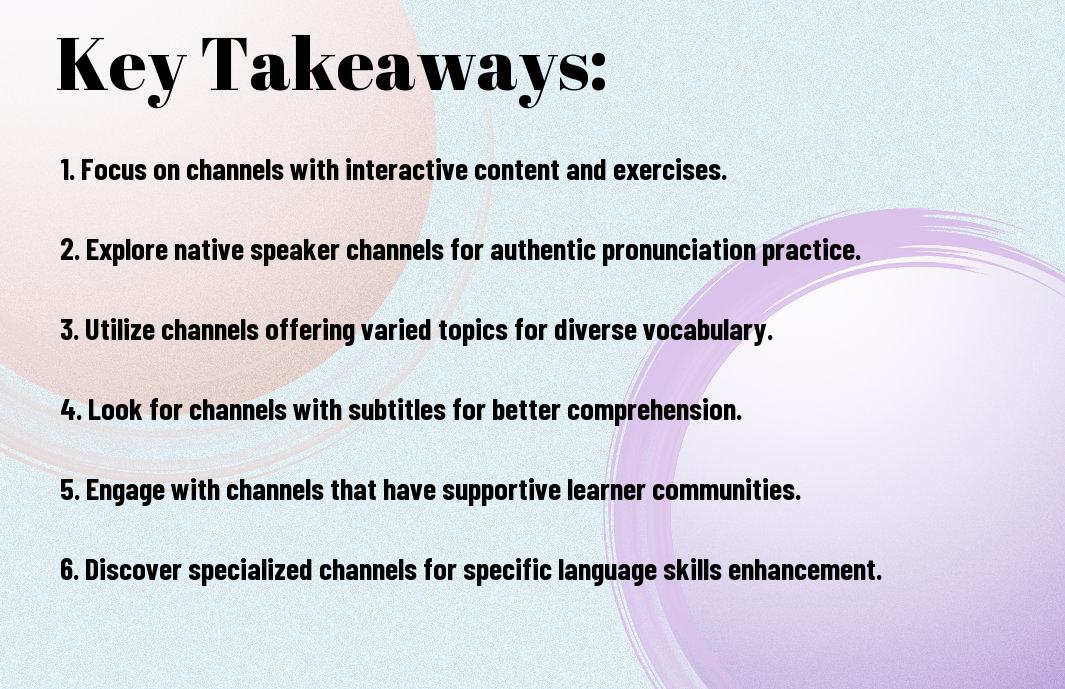
Key Takeaways:

To improve your language skills, here are some key points to consider when exploring YouTube channels:

  • Look for channels that offer authentic content, such as conversations with native speakers, to help you get used to the natural flow of the language.
  • Choose channels with engaging hosts who can keep you motivated and interested in the learning process, making it more enjoyable and effective.
  • Consider channels that provide structured lessons, including grammar explanations, vocabulary building, and practice exercises to help you track your progress.
  • Explore channels that focus on cultural aspects of the language, such as traditions, customs, and everyday life, to give you a deeper understanding of the language and its context.
  • Utilize channels that offer interactive content, including quizzes, challenges, and Q&A sessions, to help you stay active and involved in the learning process.

Language Channels for Beginners

Your journey to learning a new language can be facilitated by numerous YouTube channels designed specifically for beginners, offering a wealth of introductory content to get you started.

Channels for Basic Language Skills

Skills such as reading, writing, and speaking are foundational, and you can find channels that focus on building these skills through engaging videos and lessons tailored to your learning style.

Channels for Language Fundamentals

Against the backdrop of complex grammar rules and vocabulary, you’ll find channels that break down language fundamentals into manageable chunks, making it easier for you to understand and apply them in your learning journey.

Fundamentals of a language are the building blocks upon which your proficiency is constructed, and exploring channels dedicated to these basics will help you develop a strong foundation, allowing you to progress more effectively in your language learning endeavors, and you will be able to apply this knowledge in various contexts as you continue to learn and improve your language skills.

Specialized Language Channels

Now, you can explore specialized channels that cater to your specific language learning needs, as seen in the list of 100 Language Learning YouTubers You Must Follow in 2024, which provides a comprehensive guide to the best language learning channels.

Channels for Language Pronunciation

With a focus on pronunciation, you can improve your speaking skills and sound more like a native speaker, as you discover channels dedicated to helping you master the sounds and intonations of your target language.

Channels for Language Grammar

Before exploring into complex grammar rules, you can find channels that break down the basics and provide engaging explanations to help you understand and apply them in context.

Also, you can explore channels that offer in-depth lessons on specific grammar topics, such as verb conjugation, tense, and sentence structure, which will help you build a strong foundation and improve your overall language proficiency.

Cultural Language Channels

Despite the abundance of language learning resources, finding the right YouTube channels can be overwhelming. You can check out Top 10 YouTube Channels for Learning English in 2024 to get started.

Channels for Cultural Immersion

One of the best ways to learn a language is through cultural immersion, and YouTube channels like EnglishClass101 offer valuable insights into daily life and traditions.

Channels for Language in Context

Across various channels, you’ll find language lessons that focus on real-life situations, making it easier for you to understand and practice your skills.

Indeed, channels like BBC Learning English provide you with language lessons in context, helping you to improve your listening, speaking, and comprehension skills, and enabling you to communicate more effectively in your target language.

Language Learning Strategies

Many language learners struggle to find effective strategies for improving their skills.

Channels for Language Learning Tips

You can find helpful tips on YouTube channels, such as:

  • EnglishClass101
  • SpanishDict
  • Knowing your learning style will help you choose the best channels for your needs.

    Channels for Language Practice

    Beneath the surface of language learning lies the need for consistent practice. You can find various channels that offer language practice exercises, such as conversation practice and writing prompts.

    Tips for improving your language skills include consistent practice and exposure to native speakers. You can apply these tips by watching your preferred YouTube channels and interacting with the language community, which will help you improve your skills and achieve your goals.

    Popular Language Channels

    Unlike other online resources, YouTube offers a wide range of language channels to help you learn and improve your language skills. You can find channels dedicated to various languages, levels, and learning styles, making it easier for you to find the perfect fit for your needs.

    Channels for English Language Learners

    Contrary to what you might think, finding a good English language channel can be challenging, but you can start with popular channels like EnglishClass101 or BBC Learning English, which offer a variety of lessons and activities to help you improve your English skills.

    Channels for Other Languages

    Opposed to focusing solely on English, you can also find channels for other languages, such as Spanish, French, or Mandarin, which provide lessons, conversations, and cultural insights to help you learn and improve your language skills.

    Popular channels like SpanishDict or French with Lucy offer a range of lessons and activities to help you learn and practice your target language. You can explore these channels and find the ones that suit your learning style and goals, helping you to stay motivated and engaged throughout your language learning journey.

    Niche Language Channels

    All language learners have unique needs, and niche channels cater to specific interests. You can find channels focused on language learning for travel, business, or everyday conversations, helping you improve your skills in context.

    Channels for Language Specifics

    Specifically, you may be looking for channels that probe into grammar, vocabulary, or pronunciation. You’ll find channels that offer in-depth explanations and practice exercises, allowing you to target your weaknesses and improve your language skills.

    Channels for Specialty Languages

    Specializing in less common languages, some channels offer valuable resources for learners. You can discover channels dedicated to languages like Portuguese, Swedish, or Arabic, helping you learn these languages with ease.

    Further exploration of channels for specialty languages will uncover a wealth of resources, including language lessons, cultural insights, and authentic materials. You’ll be able to immerse yourself in your target language and gain a deeper understanding of the culture, enabling you to communicate more effectively and confidently.

    Conclusion

    Summing up, you now have a list of the best YouTube channels for language learners. You can explore your options and find the channels that suit your learning style. With your new resources, you can improve your language skills and achieve your goals. Your language learning journey will become more engaging and effective with the help of these channels. You will be able to practice and enhance your language abilities in a fun and interactive way.

    FAQ

    Q: What are some of the best YouTube channels for learning English as a second language?

    A: For learning English, some highly recommended channels include EnglishClass101, which offers comprehensive lessons for all skill levels, and BBC Learning English, which provides a wide range of videos on various topics to improve listening, reading, and speaking skills. Another popular channel is English With Lucy, where Lucy enjoys sharing her knowledge of English and covers topics from grammar to everyday conversations, making learning fun and engaging.

    Q: Are there any YouTube channels that cater specifically to Spanish language learners?

    A: Yes, there are several excellent YouTube channels for learning Spanish. SpanishDict is a standout, offering grammar lessons, vocabulary explanations, and pronunciation guides. Another popular channel is Professor Jason, where Jason provides detailed explanations of Spanish grammar and vocabulary, often comparing Spanish to English to help learners understand the nuances. Butterfly Spanish is also a favorite among beginners, as it covers basic phrases, conversations, and cultural insights in an easy-to-follow format.

    Q: How can I use YouTube channels effectively to improve my language learning experience?

    A: To use YouTube channels effectively for language learning, start by identifying your goals, such as improving listening, speaking, reading, or writing skills. Then, choose channels that align with your objectives and current level of proficiency. Consistency is key; set aside a specific time each day or week to watch videos and take notes on new vocabulary or grammar rules. Additionally, engage with the content by repeating phrases out loud, answering questions posed in the videos, and using the comments section to ask questions or practice writing in your target language. Lastly, combine YouTube with other learning tools, such as language learning apps or textbooks, for a well-rounded learning experience.

The Importance of Consistency in Language Mastery

As you begin on your journey to master a language, you will encounter numerous challenges that test your resolve and dedication. Your progress will be influenced by various factors, but one aspect stands out as a significant determinant of your success: consistency. By maintaining a consistent approach to language learning, you will be able to track your progress, identify areas for improvement, and develop a deeper understanding of the language, ultimately paving the way for effective communication and lasting proficiency.

Key Takeaways:

  • Establishing Habits is key to language mastery, as it allows learners to make progress and develop a sense of routine in their learning process.
  • Consistency in practice helps to build momentum, enabling learners to stay motivated and engaged in the learning process.
  • Developing a regular study schedule can help learners to reinforce new language skills and prevent forgetting.
  • Continuous exposure to the target language is crucial for improving fluency and accuracy.
  • Maintaining discipline and commitment to a consistent learning routine can lead to significant improvements in language proficiency over time.

Fundamentals

While establishing a strong foundation in language is vital, consistency plays a significant role in reinforcing your learning. You will find that consistent practice helps solidify your understanding of language structures, making it easier to communicate effectively.

Language Patterns

Obviously, one of the key aspects of language mastery is recognizing patterns in language usage, and you will notice that consistent exposure to these patterns enhances your ability to use language accurately.

Grammar Rules

Above all, understanding grammar rules is crucial for effective communication, and you will see that applying these rules consistently helps you convey your message with clarity and precision.

In fact, as you examine deeper into grammar rules, you will discover that consistency in applying these rules enables you to express yourself with greater confidence and fluency, allowing your message to resonate with your audience more effectively, and you will find that your language skills improve significantly over time with dedicated practice.

Effects

It is evident that consistency plays a significant role in language mastery, affecting various aspects of your learning process. You will notice improvements in your language skills, leading to a stronger foundation for further development.

Cognitive Development

Among the benefits of consistent language practice, you will find enhanced cognitive abilities, such as improved memory and problem-solving skills, which will aid your overall learning experience.

Communication Skills

An important aspect of language mastery is the ability to communicate effectively, and consistency will help you achieve this goal, enabling you to express your thoughts and ideas more clearly.

Considering your communication skills, you will find that consistent practice helps you to develop a more nuanced understanding of the language, allowing you to convey your intended message with greater precision and confidence, which is important for effective communication in various contexts, including academic, professional, and social settings, and you will be able to engage in conversations more effortlessly, adapting to different situations and audiences.

Strategies

Once again, developing a consistent approach to language learning is vital, and you can find more information on this topic in The Importance of Consistency in Language Learning guide, which provides valuable insights to help you achieve your goals.

Practice and Repetition

Around this time, you will notice that consistent practice and repetition are important for language mastery, as they help solidify new skills and build confidence in your abilities.

Immersion and Exposure

After establishing a routine, you will find that immersion and exposure to the language are key to improving your comprehension and speaking skills, allowing you to engage with native speakers and authentic materials.

Another significant aspect of immersion and exposure is the opportunity to learn colloquial expressions, idioms, and cultural nuances that may not be taught in traditional classroom settings, enabling you to communicate more effectively and sound more natural in your target language, which in turn, will help you to better understand the language and its complexities, as you progress in your language learning journey, you will become more aware of the importance of consistency in language mastery.

Benefits

All language learners can benefit from consistency in their practice, as it enables you to develop a strong foundation in your target language. You can learn more about Language and Consistency and its role in language mastery.

Improved Comprehension

Improving your language skills through consistent practice helps you better understand the language, enabling you to grasp complex concepts and nuances with ease, as you progress in your language learning journey, you will find that your comprehension skills improve significantly.

Enhanced Expression

About the benefits of consistency in language learning, it’s clear that it enhances your ability to express yourself effectively, as you become more proficient in using the language, you will be able to convey your thoughts and ideas with clarity and precision.

Even as you examine deeper into the language, you will notice that your expressions become more natural and fluent, allowing you to communicate with native speakers with confidence, and your writing skills will also improve, enabling you to produce well-structured and coherent texts that effectively convey your message to your audience.

Challenges

Unlike other skills, mastering a language requires dedication and perseverance, as you will inevitably face obstacles that hinder your progress, and consistency is key to overcoming these challenges.

Language Barriers

Around the world, you will encounter various language barriers that can impede your learning, such as limited resources, confusing grammar rules, and unfamiliar vocabulary, which can make it difficult for you to achieve consistency in your language practice.

Cultural Differences

One of the significant challenges you will face is navigating cultural differences that affect language usage, and you must be aware of these differences to communicate effectively and maintain consistency in your language skills.

For instance, as you probe deeper into the nuances of a language, you will discover that cultural references, idioms, and expressions can vary greatly, and being sensitive to these differences is important to developing your language mastery, as it allows you to adapt your communication style to different contexts and audiences, thereby ensuring consistency in your language use.

Implementation

Now that you understand the importance of consistency in language mastery, it’s time to put it into practice. You must develop a routine that incorporates consistent language practice, setting aside time each day to study and review.

Educational Systems

Accordingly, you’ll find that educational institutions often prioritize consistency in their language curriculum, providing a structured environment for your language learning journey. You can take advantage of these systems to support your goals.

Personal Development

Prior to achieving fluency, you need to establish a consistent personal practice, using language learning tools and resources to supplement your education. You’ll see progress as you stick to your routine.

Systems of personal development are necessary for your growth as a language learner. You’ll need to track your progress, identifying areas where you struggle and focusing your efforts on improvement, ultimately leading to a higher level of proficiency in your target language.

Conclusion

From above discussions, you see that consistency is vital to your language mastery. You will improve your language skills by practicing consistently. Your progress will be steady, and you will be able to communicate effectively. As you continue to practice, you will develop a strong command of the language, allowing you to express your thoughts with clarity and precision, making your message understood by your audience.

FAQ

Q: What role does consistency play in language mastery, and how does it impact the learning process?

A: Consistency is a vital component of language mastery as it enables learners to develop a routine and make steady progress. By setting aside a specific time each day or week to practice, individuals can reinforce new language skills, build momentum, and solidify their understanding of complex concepts. Regular practice helps to prevent the forgetting of newly acquired knowledge, allowing learners to focus on more advanced topics and refine their language proficiency.

Q: How can consistency in language learning help to improve pronunciation and fluency?

A: Consistency in language learning is vital for improving pronunciation and fluency. Regular practice allows learners to develop muscle memory, enabling them to produce sounds, intonations, and rhythms more accurately and naturally. As learners consistently engage with the language, they become more comfortable with its rhythm and flow, which in turn enhances their ability to express themselves fluently and effectively. Moreover, consistent practice helps to identify and correct errors, ultimately leading to more polished and native-like pronunciation.

Q: What strategies can language learners use to maintain consistency in their practice and make lasting progress towards language mastery?

A: To maintain consistency in language practice, learners can employ several strategies. Setting achievable goals and tracking progress can help learners stay motivated and focused. Creating a schedule and sticking to it is also vital, as it allows learners to make language practice a habitual part of their daily or weekly routine. Additionally, learners can vary their practice activities to avoid boredom and prevent plateaus, incorporating a mix of speaking, listening, reading, and writing exercises to keep their practice engaging and challenging. By combining these strategies, language learners can maintain consistency and make steady, lasting progress towards achieving language mastery.

How to Learn a Language Through Creative Writing

As you commence on learning a new language, you’re likely exploring various methods to improve your skills. You can leverage creative writing as a powerful tool to enhance your language proficiency. By expressing yourself through writing, you’ll be able to practice your vocabulary, grammar, and syntax in a more engaging way. For inspiration, visit Write on! – Creative writing as language practice to discover how your creative writing can become a valuable language learning practice, helping you to develop your skills and confidence in your new language.

Key Takeaways:

To learn a language through creative writing, consider the following points:

  • Start by setting goals and defining your motivation for learning the language, as this will help you stay focused and driven throughout the process.
  • Use language learning apps and online resources to support your writing practice, providing you with grammar guides, vocabulary lists, and interactive exercises.
  • Practice writing regularly, even if it’s just for a few minutes a day, to develop your writing skills and build confidence in using the language.
  • Experiment with different genres and styles of writing, such as short stories, poetry, or journalism, to keep your practice interesting and prevent boredom.
  • Seek feedback from native speakers or language exchange partners to improve your writing skills, identify areas for improvement, and gain a deeper understanding of the language and its cultural context.

Setting the Stage

For those interested in learning a language, exploring the connection between language and creativity can be a great starting point. You can learn more about how creative writing can aid in language learning by visiting this post on How Creative Writing Can Help You Learn a Language, which provides valuable insights into this approach.

Finding Inspiration in Language Learning

Among the various methods of language learning, creative writing stands out as a unique and engaging approach. You will find that writing in a foreign language helps you to express yourself in new and exciting ways, making the learning process more enjoyable and effective.

The Power of Creative Expression

Between the lines of language rules and grammar, lies a world of creative expression waiting to be explored. You will discover that writing creatively in a foreign language allows you to tap into your imagination, fostering a deeper connection with the language and its cultural context.

Power of creative expression is undeniable, as it allows you to convey your thoughts, emotions, and ideas in a unique and personal way. You will find that as you continue to write and express yourself creatively, your language skills will improve, and your confidence in using the language will grow, enabling you to communicate more effectively and efficiently in your target language.

Crafting Your Story

The process of crafting your story is where your language learning journey gets exciting. You can express yourself, experiment with grammar and vocabulary, and bring your ideas to life. As you write, you’ll develop your unique voice and style, making your story truly yours.

Developing Characters and Plot

Around the time you start building your story, you’ll find that your characters and plot begin to take shape. You’ll think about their motivations, desires, and conflicts, and how these elements drive your narrative forward, helping you to learn and practice your language skills in context.

Using Language to Paint Vivid Pictures

Placing yourself in the world of your story, you’ll use descriptive language to create vivid images in your reader’s mind. You’ll choose words that evoke emotions, sensory details that bring your setting to life, and dialogue that reveals character, all while improving your language proficiency.

Pictures of your story’s world will form in your mind as you write, and you’ll use language to convey these images to your reader. You’ll practice using adjectives, adverbs, and metaphors to add depth and richness to your descriptions, and your language skills will improve with each passing sentence, as you experiment with different styles and techniques to find what works best for your story.

Writing as Practice

Not only does writing help you practice your language skills, but it also allows you to express yourself creatively. You can write short stories, poetry, or even maintain a journal in the target language to improve your writing skills.

Journaling and Freewriting in the Target Language

Beneath the surface of language learning, journaling and freewriting can be powerful tools. You can start by writing a few sentences about your day, your thoughts, or your feelings, and gradually increase the complexity of your writing as you become more comfortable with the language.

Overcoming Self-Doubt and Embracing Mistakes

Linguistically, you may struggle with grammar, vocabulary, and syntax, but don’t let that hold you back. You can start by writing short paragraphs and then gradually increase the length and complexity of your writing, focusing on your progress rather than perfection.

Embracing your mistakes as a natural part of the learning process, you will find that your writing improves over time. You will become more confident in your ability to express yourself in the target language, and your writing will become more nuanced and sophisticated, allowing you to effectively communicate your thoughts and ideas.

Exploring Language through Genre

Now that you’re writing in a new language, you can explore different genres to enhance your skills. You can try your hand at various styles, from science fiction to romance, and discover what works best for you. This will help you develop your vocabulary, grammar, and tone, making you a more proficient writer.

Science Fiction and Fantasy: Creating New Worlds

Fantasizing about imaginary worlds, you can create unique stories that showcase your language skills. You can build new universes, characters, and plotlines, all while improving your writing abilities in your target language.

Romance and Poetry: Playing with Emotions

Following your heart, you can express your emotions through romantic stories and poetry. You can experiment with language, using metaphors, similes, and other literary devices to convey feelings and sentiments.

Consequently, as you examine into romance and poetry, you’ll find that your writing becomes more nuanced and expressive. You’ll be able to tap into your creative side, using your target language to evoke emotions and paint vivid pictures with words. This will not only improve your language skills but also help you connect with your audience on a deeper level, making your writing more engaging and relatable.

Revising and Editing

Keep in mind that revising and editing are vital steps in the writing process. You can find helpful tips on Elevating Your Writing through Language to improve your skills. By refining your craft, you will become a better language learner.

Refining Your Craft and Language Skills

Although your writing may not be perfect, you can still learn from it. As you practice, your language skills will improve, and you will develop your unique writing style.

Getting Feedback from Others

Against all odds, you may be hesitant to share your writing, but it’s a great way to get feedback. You can join a writing group or find a language exchange partner to help you improve.

Even when you receive feedback, you may not agree with it, but it’s an opportunity to learn and grow as a writer. You will be able to identify areas that need improvement and work on them, which will help you to become a more confident language learner and writer.

Sharing Your Work

To take your language learning to the next level, you need to share your creative writing with others. This will help you get feedback, improve your writing skills, and boost your confidence in using the language.

Joining a Community of Language Learners and Writers

Among the many benefits of sharing your work is the opportunity to connect with like-minded individuals who are also learning a language through creative writing. You can join online forums, writing groups, or social media communities to share your work and get feedback from others.

Publishing and Performing Your Creative Writing

At this stage, you may want to consider publishing or performing your creative writing. You can submit your work to literary magazines, blogs, or anthologies, or perform at open mic events or poetry readings.

In fact, publishing and performing your creative writing can be a great way to showcase your language skills and connect with native speakers. You can share your work on platforms like Medium or WordPress, or perform at local events to get feedback and support from others. This will help you to refine your language skills, build your confidence, and take your creative writing to the next level.

To wrap up

Now that you have explored the world of language learning through creative writing, you can see the benefits it offers. You will improve your writing skills, vocabulary, and grammar by writing short stories, journals, or poetry. As you continue to practice, your language skills will become more refined, allowing you to express yourself with greater ease and confidence in your new language, taking your language learning journey to the next level with your own creative voice.

FAQ

Q: What are the benefits of learning a language through creative writing?

A: Learning a language through creative writing offers several benefits, including improved writing skills, enhanced vocabulary, and a deeper understanding of the language’s grammatical structures. By writing creatively, you can express yourself in a more personalized and engaging way, which can help to build confidence and motivation in your language learning journey. Additionally, creative writing allows you to practice using language in context, making it more likely that you will retain new vocabulary and grammar rules.

Q: How can I get started with learning a language through creative writing?

A: To get started with learning a language through creative writing, begin by setting achievable goals, such as writing a short story or poem in the target language each week. You can start by writing in a journal, using prompts or exercises from language learning textbooks, or even writing short stories or scenes based on your favorite books or movies. It’s also helpful to find a language exchange partner or tutor who can provide feedback on your writing and help you improve your language skills. You can also utilize online resources, such as language learning blogs and writing communities, to find inspiration and support.

Q: What types of creative writing activities are most effective for language learning?

A: There are several types of creative writing activities that can be effective for language learning, including journaling, short story writing, poetry, and even scriptwriting. Journaling can help you practice writing in the target language on a daily basis, while short story writing can help you develop your narrative skills and use language in context. Poetry can be a great way to practice using language in a more creative and expressive way, while scriptwriting can help you develop your dialogue and conversation skills. You can also try activities like writing dialogues, creating character profiles, or even writing a language learning blog to practice your writing skills and reflect on your progress.

How to Use Flashcards for Language Memorization

You’re learning a new language and need to memorize a mountain of words. Your goal is to make them stick. You’ve heard of flashcards, but aren’t sure how to use them effectively. You’ll learn how to create and use flashcards to boost your language skills, making the process straightforward and efficient. With this simple tool, you’ll be able to memorize new vocabulary and take your language learning to the next level.

Key Takeaways:

  • Using flashcards can be an effective way to enhance language memorization by providing a visual and interactive approach to learning new vocabulary and phrases.
  • Active recall is a key component of flashcard-based learning, as it requires learners to actively try to recall the correct answer rather than simply re-reading the information.
  • Creating physical flashcards or using a digital app can be a great way to make flashcard-based learning convenient and accessible, allowing learners to study anywhere and at any time.
  • Flashcards can be used to learn a wide range of language skills, including vocabulary, grammar, and pronunciation, making them a versatile tool for language learners.
  • Regular review and practice with flashcards is crucial to reinforce new language skills and prevent forgetting, helping learners to make steady progress in their language learning journey.

Creating Effective Flashcards

A well-designed flashcard is key to language memorization. You’ll want to keep your flashcards simple, with a clear question on one side and the answer on the other.

Writing Questions and Answers

Besides the actual words, consider including grammar rules or example sentences to provide context. You’ll find that this helps you understand how to use the language in different situations.

Using Visual Aids and Mnemonics

Constructing a visual association with a word or phrase can be a powerful learning tool. You can use images, diagrams, or even simple doodles to help you connect with the information on your flashcards.

Consequently, as you start to use visual aids and mnemonics, you’ll notice that your ability to recall words and phrases improves. You’ll be able to associate the image or mnemonic with the word, making it easier to commit to memory, and you’ll find that your language skills will start to improve dramatically.

Organizing Your Flashcards

Even with a solid understanding of how flashcards work, you’ll need to organize them effectively. You can learn more about the effectiveness of flashcards by visiting Do Flashcards Really Work? Yes – Here’s How! to get the most out of your language learning journey.

Categorizing by Topic or Theme

Any given topic can have numerous subtopics, and you should categorize your flashcards accordingly. You’ll find that this approach helps you focus on specific areas of the language, making your learning more efficient.

Prioritizing Difficult Vocabulary

Above all, you need to identify the words that give you the most trouble. You’ll want to prioritize these, reviewing them more frequently to ensure they stick in your long-term memory.

Due to the sheer volume of vocabulary you’ll encounter, prioritizing difficult words is crucial. You’ll find that consistently practicing these challenging terms will significantly improve your comprehension and communication skills over time, allowing you to tackle more complex texts and conversations with ease, and your progress will be noticeable as you continue to learn and review.

Active Recall and Repetition

Keep your language skills sharp by incorporating active recall and repetition into your flashcard routine. You’ll reinforce new vocabulary and grammar rules, solidifying them in your long-term memory.

Reviewing Flashcards Regularly

Once you’ve created your flashcards, you’ll need to review them regularly. You’ll find that consistent practice helps to strengthen your language foundation, making it easier to learn and retain new information.

Testing Yourself with Quizzes

Like a quiz, testing your knowledge with flashcards can be an effective way to identify areas where you need improvement. You’ll be able to track your progress and adjust your study routine accordingly.

Understanding how to test yourself with quizzes is key to making the most of your flashcard practice. You’ll want to try recalling the information on your flashcards without looking at the answers, and then check your responses to see how you did. This process helps to identify gaps in your knowledge and reinforces what you’ve learned, allowing you to focus your studies on the areas where you need the most practice.

Using Flashcards in Context

Unlike traditional memorization methods, using flashcards in context helps you learn phrases and sentences. You can find more information on How To Use Flashcards For Language Learning to improve your skills.

Creating Sentences and Dialogues

Flashcard-like approach involves creating your own sentences and dialogues to practice vocabulary in context, helping you to use your new language skills.

Practicing Conversation and Role-Play

On the path to language mastery, you’ll need to practice conversation and role-play to become fluent, and flashcards can be a useful tool in this process.

This method allows you to simulate real-life conversations, making your language learning more engaging and effective, and you can use your flashcards to prompt conversations and practice your responses in different scenarios, helping you to develop your speaking skills and build confidence in your ability to communicate in your new language.

Overcoming Common Challenges

For many language learners, using flashcards can be a game-changer, but it’s not without its challenges. You’ll encounter obstacles, and it’s how you overcome them that matters.

Dealing with Burnout and Motivation

Among the most significant hurdles you’ll face is staying motivated. You’ll need to find ways to keep your study sessions engaging and prevent burnout, so your progress doesn’t stall.

Adjusting to New Vocabulary and Grammar

Adapting to new vocabulary and grammar rules can be tough. You’ll need to be patient with yourself as you navigate unfamiliar words and phrases, and find ways to make them stick in your long-term memory.

Understanding how to apply new vocabulary and grammar in context is key to making progress. You’ll need to practice using your new language skills in conversation, writing, or other forms of expression to solidify your understanding and build confidence in your abilities.

Tracking Progress and Staying Motivated

Now that you’ve started using flashcards, it’s time to monitor your progress and stay motivated. You’ll need to track your successes and setbacks to adjust your study routine accordingly.

Setting Goals and Deadlines

At this stage, you should set specific goals and deadlines for your language learning journey. You’ll need to define what you want to achieve and by when, making sure your objectives are realistic and achievable.

Rewarding Yourself and Celebrating Milestones

After reaching certain milestones, you should reward yourself for your hard work. You’ve earned it, and it will help you stay motivated to continue learning.

Due to the importance of motivation in language learning, rewarding yourself is a key part of the process. You can treat yourself to something you enjoy, like a favorite meal or activity, to celebrate your progress and reinforce positive study habits, helping you to stay on track and achieve your goals.

Final Words

As a reminder, you’ve now got the tools to use flashcards for language memorization. You’ve learned to create, practice, and review your deck. Your flashcards will become a trusted companion on your language learning journey. You’ll be able to recall new words and phrases with ease, and your skills will improve with each passing day. Use them consistently and you’ll see progress, becoming more confident in your ability to communicate in your new language.

FAQ

Q: What is the most effective way to create flashcards for language memorization?

A: To create effective flashcards, start by selecting the vocabulary or phrases you want to learn and write the word or phrase in the target language on one side of the card. On the other side, provide the translation, definition, or a sentence using the word in context. You can also include pronunciation guides, images, or example sentences to make the flashcards more engaging and helpful. It’s also a good idea to organize your flashcards by category or theme to make it easier to focus on specific areas of language learning.

Q: How often should I review my flashcards to achieve optimal language memorization?

A: Consistency is key when it comes to reviewing flashcards for language memorization. Aim to review your flashcards at least once a day, but ideally 2-3 times a day, with spaced repetition. This means reviewing the cards at increasingly longer intervals to help solidify the information in your long-term memory. You can use flashcard apps or software that implement spaced repetition algorithms to make the process easier and more efficient. Additionally, try to mix up the order of the cards and vary the types of cards you review each day to keep your study sessions engaging and prevent boredom.

Q: Can I use flashcards in conjunction with other language learning methods for better results?

A: Absolutely, using flashcards in combination with other language learning methods can lead to even more effective language memorization. For example, you can use flashcards to supplement language classes or online courses, or to support your progress while reading books or watching TV shows in the target language. Flashcards can also be a helpful tool in conjunction with language exchange programs or speaking practice with a tutor or language partner. By incorporating flashcards into a well-rounded language learning routine, you can accelerate your progress, build vocabulary, and improve your overall language skills.

Jhere Skip to content