Language

The Role of Storytelling in Language Acquisition

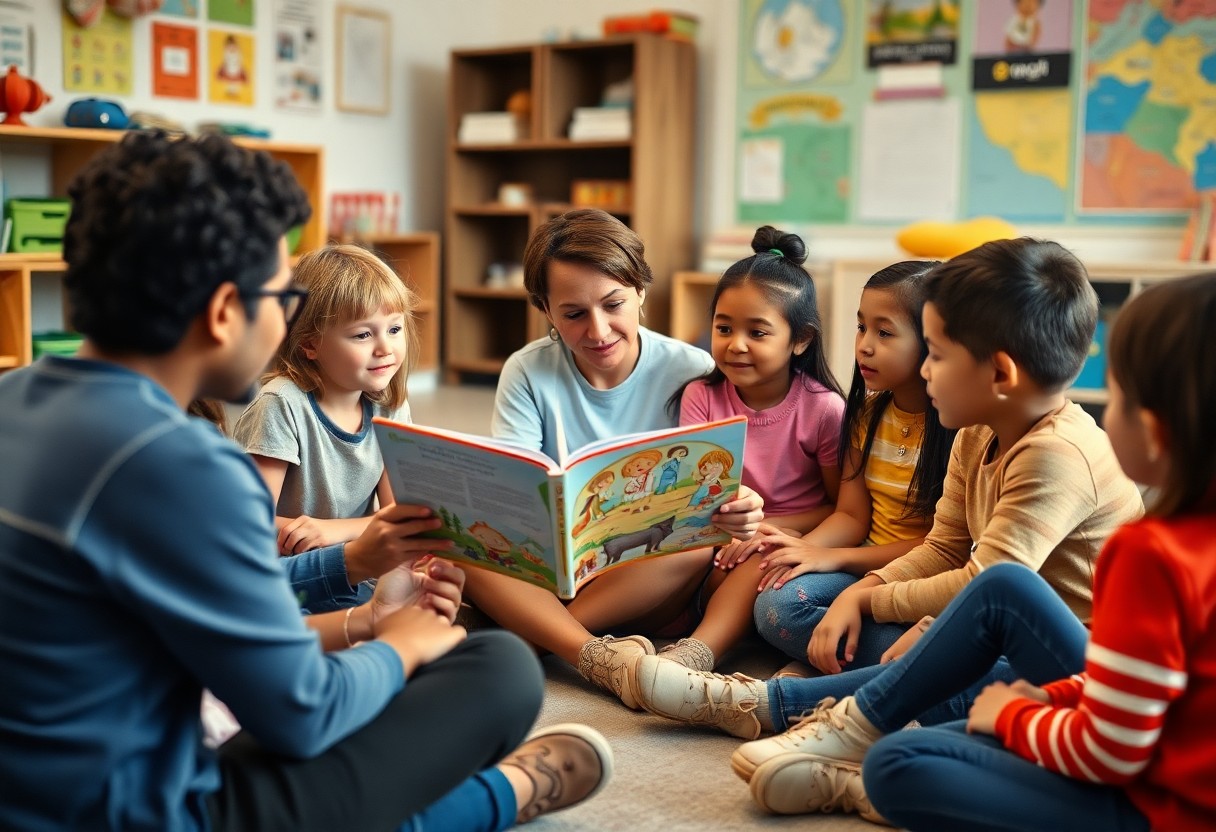
As you explore the world of language learning, you’ll discover that storytelling plays a significant role in your ability to acquire a new language. Your brain is wired to respond to narratives, making storytelling an effective tool for language acquisition. By engaging with stories, you can improve your comprehension, vocabulary, and pronunciation, ultimately enhancing your overall language skills. As you investigate into the world of storytelling, you’ll find that it can make language learning a more enjoyable and interactive experience.

Key Takeaways:

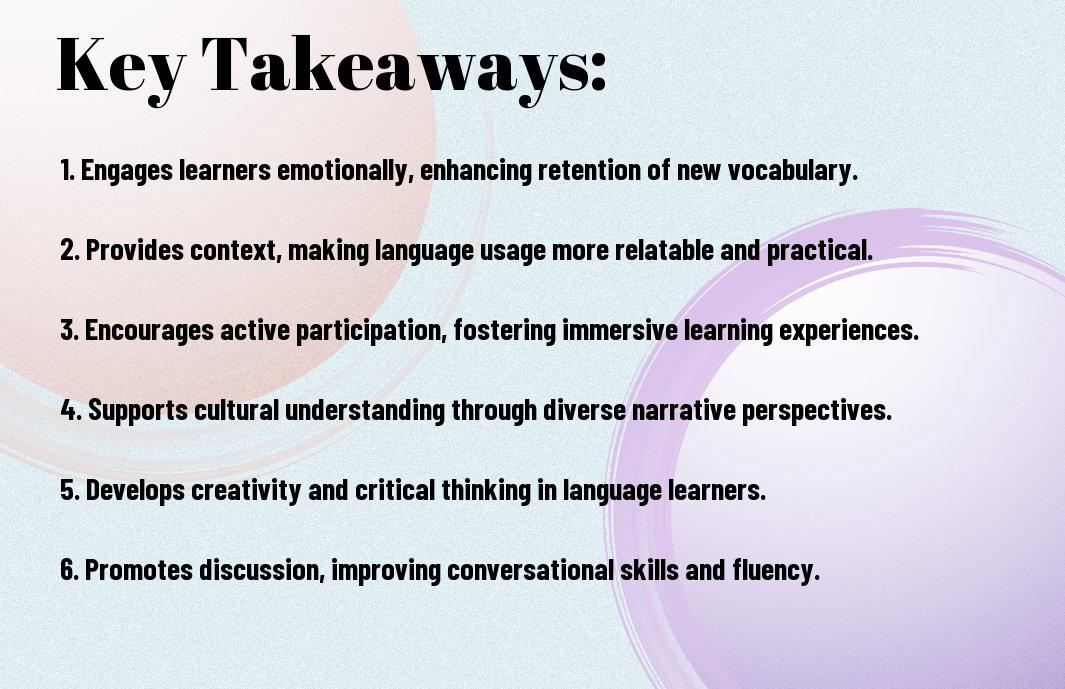
  • The power of storytelling in language acquisition lies in its ability to engage learners and promote emotional connection, making the learning process more enjoyable and effective.
  • Authentic stories can help learners develop their listening and speaking skills, as they are exposed to natural language use and context.
  • Storytelling can facilitate vocabulary acquisition by providing learners with contextualized examples of word usage, making it easier to understand and retain new words.
  • The use of visual aids and gesture in storytelling can enhance learner comprehension and recall, as well as support multimodal learning.
  • Interactive storytelling, where learners are encouraged to participate and contribute to the story, can foster collaboration and communication among learners, promoting a more dynamic language learning environment.

The Power of Narrative

Your ability to engage with a story can significantly enhance your language learning experience, as it allows you to connect with the content on a deeper level, making it more memorable and enjoyable.

Unlocking Language Skills

Achieving fluency in a language requires practice, and storytelling provides an effective way to do so, enabling you to develop your listening, speaking, reading, and writing skills in a captivating and interactive manner.

Cultural Significance of Storytelling

Unveiling the cultural context of a story can help you better understand the language, as it often reflects the values, traditions, and history of the community that speaks it, allowing you to gain a more nuanced understanding of the language.

Power of storytelling lies in its ability to convey cultural values and traditions, and as you explore different stories, you will gain insight into the diverse ways of life and perspectives that shape the language, enabling you to become a more empathetic and effective communicator.
Language Acquisition through Storytelling

Now, as you examine into the world of language acquisition, you’ll find that storytelling plays a significant role. You can explore this concept further by reading The role of storytelling on language learning: A literature review to understand its impact on your language skills.

Vocabulary Expansion

Besides enhancing your comprehension, storytelling helps you discover new words and phrases, expanding your vocabulary and enabling you to express yourself more effectively in your target language.

Grammar and Syntax Development

At the heart of language acquisition lies grammar and syntax development, which is facilitated through storytelling, as you’re exposed to various sentence structures and grammar rules in context.

Consequently, as you engage with stories, you’ll start to notice patterns and relationships between words, phrases, and clauses, allowing you to develop a deeper understanding of how the language works and improving your ability to communicate effectively.
The Role of Imagination

Not surprisingly, imagination plays a significant role in language acquisition, as it enables you to create mental images and scenarios that help you understand and engage with the language. You can find more information on The importance of storytelling for teaching English and how it enhances your imagination.

Creative Expression

Any attempt to acquire a language requires creative expression, and you can achieve this through storytelling, allowing you to develop your linguistic skills in a more engaging and effective way.

Empathy and Perspective-Taking

Empathetically, you can understand the perspectives of others through stories, which helps you develop a deeper understanding of the language and its cultural context.

Expression of emotions and thoughts is a key aspect of language acquisition, and as you engage with stories, you develop your ability to understand and express empathy, which in turn enhances your perspective-taking skills, enabling you to see things from different viewpoints and broaden your understanding of the language.

Storytelling in the Classroom

Despite the challenges of language acquisition, you can create an engaging learning environment by incorporating storytelling into your teaching practice. This approach helps your students develop their language skills in a more interactive and immersive way, making the learning process more enjoyable and effective.

Teaching Methods and Strategies

Taking a student-centered approach, you can use storytelling to facilitate language acquisition by making it more relatable and interesting, thus enhancing your teaching methods and strategies to better suit your students’ needs.

Student Engagement and Motivation

Besides promoting language skills, storytelling also fosters student engagement and motivation, as you encourage your students to participate in the storytelling process, making them more invested in their learning journey.

But as you research deeper into the concept of student engagement and motivation, you will notice that storytelling has a profound impact on your students’ willingness to learn, as it allows them to connect with the material on a deeper level, making the learning experience more enjoyable and increasing their motivation to continue improving their language skills.

The Impact of Digital Media

All around you, digital media is transforming the way you learn and interact with languages, and storytelling is at the forefront of this revolution. You can now access a vast array of language learning resources and tools online, making it easier than ever to immerse yourself in a new language.

Multimedia Storytelling

Almost any language learning platform now incorporates multimedia storytelling elements, such as videos, podcasts, and interactive games, to help you engage with the language in a more dynamic way. You can watch videos, listen to podcasts, and play games that transport you to different cultures and languages.

Online Resources and Tools

By utilizing online resources and tools, you can take your language learning to the next level. You can access language exchange websites, online courses, and mobile apps that offer interactive lessons and exercises to help you practice your language skills.

Tools such as language learning apps and online platforms provide you with a wealth of resources to support your language learning journey. You can use these tools to practice your speaking, writing, and listening skills, and even connect with native speakers to get feedback on your progress. As you explore these online resources, you’ll find that you can tailor your learning experience to your needs and interests, making language acquisition more enjoyable and effective.

The Art of Storytelling

Many language learners have discovered that storytelling is an effective way to acquire a new language. You can immerse yourself in the language and culture by listening to or reading stories. This approach helps you develop your language skills in a more engaging and interactive way, making the learning process enjoyable and effective.

Oral Tradition and Heritage

Beneath the surface of language acquisition lies a rich oral tradition that has been passed down through generations. You can explore the heritage of a language by listening to its stories, which often reflect the culture, history, and values of its speakers. As you research into these stories, you gain a deeper understanding of the language and its context.

Modern Applications and Innovations

Toward the forefront of language learning are modern applications and innovations that utilize storytelling. You can now access a wide range of digital tools and resources that use stories to teach languages, making it more convenient and fun for you to learn. These innovations have opened up new possibilities for language learners like you to engage with the language in a more immersive and interactive way.

Applications of storytelling in modern language learning are diverse and extensive. You can use podcasts, videos, and interactive stories to practice your listening and speaking skills. As you progress, you can create your own stories and share them with others, which helps you develop your writing and speaking skills. By leveraging these modern applications, you can make your language learning journey more enjoyable, effective, and rewarding, and achieve your goals in a shorter amount of time.

Summing up

Ultimately, as you explore the role of storytelling in language acquisition, you realize its significance in enhancing your linguistic skills. You find that storytelling helps you develop your vocabulary, grammar, and pronunciation. Your ability to comprehend and communicate effectively in a new language improves significantly when you engage with stories. By leveraging storytelling, you can make your language learning journey more engaging and effective, leading to better retention and overall language proficiency.

FAQ

Q: What is the significance of storytelling in language acquisition, and how does it impact the learning process?

A: Storytelling plays a vital role in language acquisition as it provides learners with a meaningful context to understand and internalize new vocabulary, grammar, and syntax. Through stories, learners can develop their listening and comprehension skills, as well as their ability to express themselves effectively in the target language.Moreover, storytelling helps to create an emotional connection between the learner and the language, making the learning process more engaging and enjoyable.

Q: How does storytelling facilitate language acquisition in terms of vocabulary building and grammar development?

A: Storytelling is an effective way to build vocabulary and develop grammar skills in language learners. Stories often contain a wide range of vocabulary in context, allowing learners to understand the meanings and usage of words and phrases. Additionally, stories typically follow a narrative structure, which helps learners to develop their understanding of grammar and sentence structure. As learners engage with stories, they can identify and practice using grammatical patterns, such as verb tenses, conditional sentences, and clause structures, in a more authentic and engaging way.

Q: Can storytelling be used as a teaching methodology in language classrooms, and what benefits does it offer to language teachers and learners?

A: Yes, storytelling can be a highly effective teaching methodology in language classrooms. It offers numerous benefits to both language teachers and learners. For teachers, storytelling provides a flexible and adaptable approach to teaching language skills, allowing them to tailor their instruction to the needs and interests of their learners. For learners, storytelling provides an engaging and interactive way to learn a language, helping to increase motivation, participation, and overall language proficiency. Furthermore, storytelling can be used to teach a range of language skills, including reading, writing, listening, and speaking, making it a valuable addition to any language teaching methodology.

The Importance of Grammar in Language Mastery

As you strive to become proficient in a language, you will realize that your understanding and use of grammar is vital to effective communication. Your ability to construct sentences, convey meaning, and express yourself accurately depends on your grasp of grammatical rules and principles. You will find that mastering grammar helps you to better comprehend and appreciate the language, enabling you to express your thoughts and ideas with clarity and precision, which is vital for successful communication in both personal and professional settings.

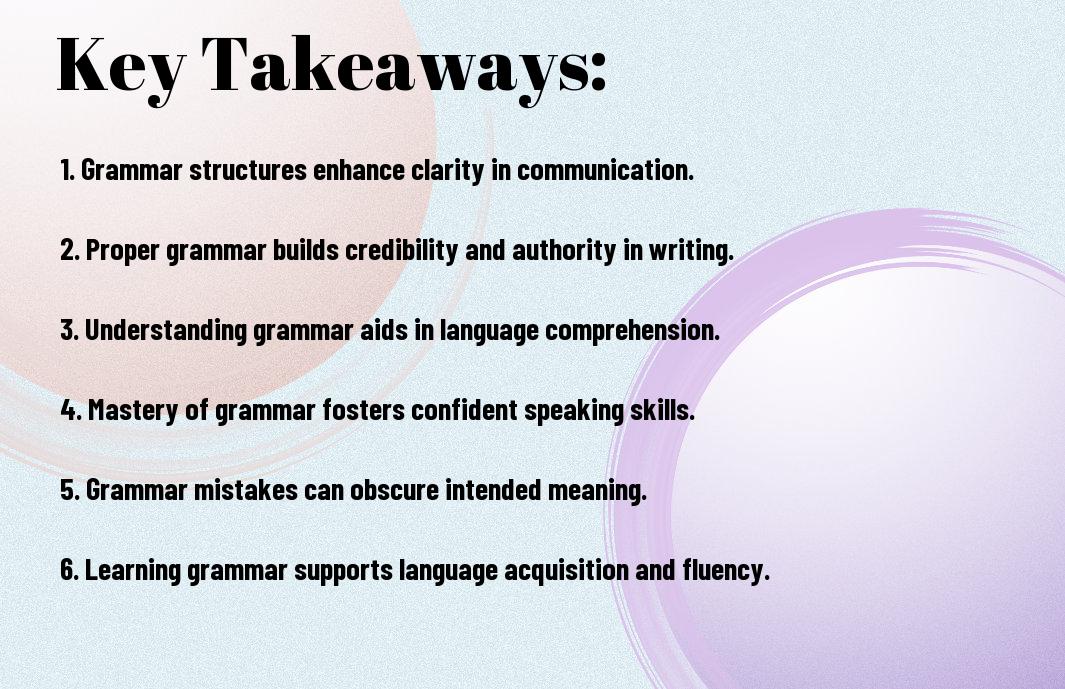
Key Takeaways:

To achieve language mastery, understanding the role of grammar is important. Here are some key points to consider:

  • Effective Communication is greatly influenced by the correct application of grammar rules, as it helps convey meaning and context accurately in written and spoken language.
  • Clear Expression of thoughts and ideas depends on a strong foundation in grammar, allowing individuals to articulate their opinions and engage in meaningful discussions.
  • Language Precision is enhanced by the knowledge of grammatical structures, enabling speakers and writers to distinguish between subtle shades of meaning and convey nuances effectively.
  • Cohesive Writing and speaking are supported by grammar, as it provides the framework for organizing ideas, linking sentences, and creating a logical flow of information.
  • Language Learning is facilitated by a solid understanding of grammatical principles, which serves as a building block for further language development and fluency in communication.

Foundations of Language

Your understanding of language begins with its fundamental elements, and to investigate deeper, you can explore The Importance of Grammar in Language Teaching and Learning research for more insights.

Role of Grammar in Communication

Anyone familiar with language learning knows that grammar plays a significant role in effective communication, enabling you to express your thoughts clearly and correctly.

Importance of Syntax and Semantics

Before exploring advanced linguistic concepts, you must grasp the basics of syntax and semantics, which form the core of language structure and meaning.

At this stage, you are building a strong foundation in language mastery, and understanding syntax and semantics is imperative to convey your intended message accurately, as it helps you comprehend how words are arranged to form meaningful sentences and how meaning is derived from these sentences, allowing you to communicate effectively and efficiently in your target language.

Effective Expression

Some of the most significant benefits of strong grammar skills are seen in your ability to express yourself effectively. When you use grammar correctly, your message is conveyed clearly and concisely, allowing your audience to understand your intended meaning.

Clarity and Precision in Writing

Following proper grammar rules, you ensure that your writing is free of errors, making it easier for your readers to follow your train of thought and grasp your ideas.

Avoiding Ambiguity and Confusion

Across various forms of communication, good grammar helps you avoid misunderstandings and misinterpretations, which can lead to confusion and conflict.

Effective communication is the foundation of building strong relationships, and grammar plays a significant role in achieving this. When you use grammar correctly, you can convey your thoughts and ideas with precision, avoiding ambiguity and confusion, and ensuring that your message is understood as intended, which is crucial for your personal and professional success.

Language Mastery

All language learners strive for language mastery, and grammar is a fundamental component of achieving this goal. You will be able to effectively communicate your thoughts and ideas when you have a strong grasp of grammar. Your language skills will improve significantly as you continue to practice and refine your grammar.

Developing Grammar Skills

Prior to becoming proficient in a language, you need to develop your grammar skills. You can do this by immersing yourself in the language, practicing with native speakers, and studying grammar rules. Your grammar skills will improve as you continue to practice and learn from your mistakes.

Overcoming Common Grammar Mistakes

Generally, grammar mistakes can hinder your ability to communicate effectively. You can overcome these mistakes by being aware of common errors and practicing correct grammar usage. Your language skills will become more sophisticated as you learn to avoid common grammar mistakes.

For instance, when you learn to identify and correct common grammar mistakes, such as subject-verb agreement and tense consistency, you will be able to express yourself more clearly and confidently. You will be able to communicate more effectively in writing and speaking, and your overall language proficiency will improve significantly as you continue to practice and refine your grammar skills.

Language in Context

Keep in mind that grammar is vital to understanding language in its social and cultural context. As you explore the role of grammar, you can learn more about The Importance & Benefits of English Grammar and its significance in effective communication.

Grammar in Different Cultures

Along with variations in language, grammar rules also differ across cultures, and you will encounter unique characteristics as you explore each one, discovering how grammar shapes your understanding of diverse cultural contexts.

Adapting Grammar to Audience and Purpose

Language usage varies depending on your audience and purpose, and you need to consider these factors when communicating to ensure your message is conveyed effectively, taking into account the level of formality and the relationship with your listeners or readers.

A key aspect of mastering grammar is adapting it to your audience and purpose, and as you develop your skills, you will learn to adjust your language to suit different situations, using your knowledge of grammar to convey your message with clarity and precision, making your communication more engaging and effective, and allowing you to connect with your audience on a deeper level, thereby achieving your desired outcome.

Improving Language Skills

Despite the challenges, you can improve your language skills by learning more about grammar, as discussed in The Importance of Grammar in English Language. This will help you to communicate effectively and accurately express your thoughts.

Practice and Reinforcement

Among the various methods to improve your language skills, consistent practice is key to mastering grammar rules and applying them in your daily conversations. You will see significant improvement in your language skills as you practice regularly.

Using Grammar Resources and Tools

For instance, you can utilize online resources and tools to learn and practice grammar rules, which will help you to identify and correct your mistakes, making you a proficient user of the language.

Reinforcement of grammar rules through practice exercises and quizzes will help you to develop a strong foundation in language, enabling you to express your thoughts and ideas with clarity and precision, which is necessary for effective communication, and you will be able to apply this in your daily life, making your language skills more proficient.

Advanced Grammar Techniques

Many language learners strive to improve their grammar skills. You can achieve this by:

  1. Studying verb tenses
  2. Practicing sentence structure
Grammar Concept Description
Conditional sentences Used to express uncertain events

Nuances of Language and Idioms

Beneath the surface of language lies a complex web of nuances. You will discover that mastering idioms and expressions is key to sounding natural in your speech and writing.

Mastering Complex Grammar Concepts

By dedicating time to practice, you will be able to tackle complex grammar concepts with ease. You can start by focusing on one concept at a time, and gradually build your way up to more challenging topics.

Due to the complexity of grammar, you will need to be patient and persistent in your studies. As you examine deeper into the world of grammar, you will find that your understanding of language becomes more sophisticated, and your ability to express yourself improves significantly. You will be able to convey your thoughts and ideas with precision and clarity, and your communication skills will become more effective.

To wrap up

Taking this into account, you now understand the significance of grammar in language mastery. You see, your ability to communicate effectively depends on your grasp of grammar rules. As you continue to learn and practice, your language skills will improve, enabling you to express yourself with confidence and clarity. By prioritizing grammar, you will enhance your overall language proficiency, unlocking new opportunities for personal and professional growth. Your efforts will pay off, and you will become a proficient language user.

FAQ

Q: What role does grammar play in effective communication?

A: Grammar serves as the foundation of language, enabling individuals to express themselves clearly and convey their intended message. It provides the rules and structures that govern how words are used to form meaningful sentences, facilitating comprehension and avoiding misunderstandings. By mastering grammar, individuals can enhance their ability to communicate complex ideas, nuances, and subtleties, ultimately leading to more effective and efficient interaction with others.

Q: How does grammar impact the accuracy and clarity of written and spoken language?

A: Grammar has a significant impact on the accuracy and clarity of both written and spoken language. Proper grammar ensures that the intended meaning is conveyed, and the message is free from ambiguity. Correct use of grammar helps to avoid confusion, misinterpretation, and errors, which can lead to misunderstandings and miscommunications. Moreover, good grammar skills contribute to the overall coherence and logical flow of language, making it easier for the audience to follow and understand the message being conveyed.

Q: Can mastering grammar improve overall language proficiency and open up new opportunities?

A: Mastering grammar can significantly enhance overall language proficiency, as it provides a solid base for language learning and usage. When individuals have a strong grasp of grammar, they are better equipped to understand, interpret, and produce language in various contexts. This, in turn, can open up new opportunities, both personally and professionally. For instance, proficient grammar skills can improve writing and speaking abilities, increase confidence in communication, and even enhance career prospects, as clear and effective communication is highly valued in most industries and social interactions.

How to Make Learning a Language Fun and Enjoyable

You’re about to begin on a language learning journey, and you want to make it an enjoyable experience. As you start, you’ll find that staying motivated is key. You can discover The 12 Most Fun Ways I’ve Learned Languages and apply these methods to your own learning process. By doing so, you’ll turn language learning into a fun and engaging activity, making your progress more effective and sustainable, helping you to reach your goals.

Key Takeaways:

To make learning a language enjoyable and fun, consider the following points:

  • Make it interactive by incorporating games, quizzes, and conversations into your learning routine to keep yourself engaged and motivated.
  • Use authentic materials like TV shows, movies, and music to learn the language in context and get a feel for how it’s used in real-life situations.
  • Focus on immersion by surrounding yourself with the language as much as possible, whether it’s through language exchange apps, speaking with native speakers, or changing your phone settings to the target language.
  • Set achievable goals and celebrate your progress along the way to stay motivated and encouraged throughout your language learning journey.
  • Find a community of fellow language learners to practice with, share tips and resources, and learn from one another’s experiences to make the process more enjoyable and rewarding.

Setting the Stage

Before you initiate on your language learning journey, it’s crucial to create a conducive environment that fosters growth and excitement. You need to set clear goals, gather necessary resources, and develop a positive mindset to stay motivated and engaged throughout the process.

Discovering Motivation

Obviously, one of the most significant factors in language learning is your motivation. You need to identify why you want to learn a new language, whether it’s for travel, work, or personal enrichment, and let this motivation drive your learning process.

Choosing the Right Language

With so many languages to choose from, you need to select one that aligns with your interests, goals, and lifestyle. You should consider factors such as the language’s difficulty level, cultural significance, and practical applications to ensure that you make an informed decision.

At this stage, you’ll want to explore the various language options available to you, considering factors such as the amount of time you have to dedicate to learning, your learning style, and the resources available to support your learning. You may also want to try out language learning apps, watch TV shows or movies in the target language, or speak with native speakers to get a feel for the language and determine which one resonates with you the most.

Immersive Experiences

One of the most effective ways to learn a language is through immersive experiences. You can surround yourself with the language by watching TV shows or movies, listening to music, and speaking with native speakers. This will help you get used to the sound, rhythm, and grammar of the language, making it easier to learn and retain.

Language Learning Apps

Besides traditional learning methods, you can also use language learning apps to make learning a language fun and enjoyable. You can download apps that offer interactive lessons, quizzes, and games to help you learn at your own pace. These apps can be a great supplement to your language learning journey, providing you with a convenient and accessible way to practice your skills.

Cultural Immersion Techniques

Beneath the surface of language learning lies cultural immersion, which can be a powerful tool for language acquisition. You can try cooking traditional meals, attending cultural events, or even hosting a language exchange student to get a taste of the culture and language. This will help you develop a deeper understanding of the language and its context, making you a more effective communicator.

Learning a language through cultural immersion techniques can be a truly enriching experience. You will have the opportunity to explore the customs, traditions, and values of the culture, which will help you better understand the language and its nuances. As you research deeper into the culture, you will find that your language skills improve, and you become more confident in your ability to communicate effectively with native speakers, making your language learning journey more enjoyable and rewarding.

Interactive Learning

After exploring various language learning methods, you’ll find that interactive learning is an effective way to stay engaged. You can use online resources, such as language learning apps and websites, to practice your skills in a fun and immersive environment.

Language Exchange Partners

Altogether, finding a language exchange partner can be a great way to practice your speaking and listening skills, as you’ll be able to converse with a native speaker and get feedback on your pronunciation and grammar.

Group Learning Activities

Together with other learners, you can participate in group learning activities, such as role-plays, discussions, and games, which make learning a language a fun and enjoyable experience. You’ll be able to practice your communication skills in a supportive and interactive environment.

This type of setting allows you to learn from others, share your own experiences, and get instant feedback on your progress. As you participate in group learning activities, you’ll notice significant improvement in your language skills, and you’ll be more motivated to continue learning and improving your abilities.

Making it Personal

Once again, you have the opportunity to take control of your language learning journey. By making it personal, you can increase your motivation and engagement, leading to a more enjoyable experience.

Customizing Your Learning

Among the various approaches to language learning, you can choose the one that suits your style and preferences, allowing you to tailor your experience and make it more enjoyable.

Overcoming Learning Barriers

Your ability to overcome obstacles is key to successful language learning. You can identify and address your weaknesses, developing strategies to stay on track.

Considering your individual challenges and strengths, you can create a plan to overcome any barriers that may arise, ensuring that your language learning journey remains enjoyable and rewarding. By acknowledging and addressing these challenges, you can stay motivated and focused on your goals.

Staying Motivated

Now that you’re on your language learning journey, it’s imperative to maintain your motivation to achieve your goals. You’ll encounter challenges, but with the right mindset, you can overcome them and stay on track.

Setting Achievable Goals

Setting realistic targets helps you stay focused and motivated. You can break down your long-term goals into smaller, manageable objectives, allowing you to track your progress and celebrate your successes.

Rewarding Progress

Between milestones, you’ll want to acknowledge your achievements to stay motivated. You can treat yourself to something special or take a break to do something you enjoy, helping you recharge and come back to your studies with renewed energy.

Indeed, rewarding your progress is an effective way to reinforce positive learning habits and encourage yourself to continue making progress. You can create a system that works for you, such as tracking your progress in a journal or sharing your achievements with a language exchange partner, helping you stay motivated and engaged in the learning process.

Effective Learning Habits

Your approach to learning a language should be engaging and interactive, as you can discover by visiting What are some easy, fun, or interesting ways for someone with no prior knowledge of a foreign language to learn it on their own to get inspiration.

Consistency is Key

Above all, you need to prioritize regular practice to make progress in language learning, as it helps to build momentum and reinforce new skills.

Using Technology to Your Advantage

Among the various tools available, language learning apps and online resources can be particularly helpful in making your study sessions more enjoyable and effective.

Indeed, you can leverage technology to access a wide range of language learning materials, such as interactive exercises, videos, and podcasts, which can be tailored to your learning style and goals, allowing you to learn at your own pace and track your progress over time.

Conclusion

To wrap up, you have the power to make learning a language a fun and enjoyable experience. By incorporating engaging activities and personalized approaches, you can enhance your learning process. As you explore your new language, your confidence will grow, and so will your enthusiasm, making the journey to fluency a rewarding one for you. With the right mindset, you can turn language learning into a delightful adventure that enriches your life.

FAQ

Q: What are some effective ways to make language learning an enjoyable experience?

A: To make learning a language fun and enjoyable, try incorporating activities that you love into the learning process. For example, if you enjoy music, listen to songs in the target language and try to sing along. If you’re a fan of movies or TV shows, watch them with subtitles in the target language. You can also play language learning games, join a language exchange club, or find a language learning buddy to practice with. The key is to find ways to make language learning a positive and engaging experience that you look forward to.

Q: How can I stay motivated and engaged in the language learning process?

A: Staying motivated and engaged in language learning requires setting achievable goals and celebrating your progress along the way. Break down your learning into smaller, manageable tasks, and reward yourself when you reach each milestone. It’s also helpful to track your progress, whether through a language learning app, a journal, or a weekly review session. Surrounding yourself with supportive people, such as language exchange partners or a language learning community, can also help keep you motivated and inspired to continue learning.

Q: Can using technology, such as language learning apps, make the learning process more enjoyable?

A: Yes, using technology can definitely make language learning more enjoyable and accessible. Language learning apps, such as Duolingo, Babbel, or Rosetta Stone, offer interactive lessons, quizzes, and games that can make learning a language feel like a fun and challenging puzzle. Many apps also allow you to track your progress, set reminders, and connect with other learners, which can help keep you motivated and engaged. Additionally, online resources such as language learning podcasts, YouTube channels, and social media groups can provide a wealth of learning materials and opportunities to practice your language skills in a relaxed and entertaining way.

How to Learn a Language in Six Months

You’re about to begin on a challenging journey, one that will test your dedication and perseverance. Your goal is ambitious: to learn a language in just six months. As you start, you’ll face obstacles, but with the right approach, you can overcome them. You’ll need to set a schedule, find effective learning tools, and practice consistently. Your progress will depend on your commitment to the process, and with each passing day, you’ll be one step closer to achieving your goal of becoming proficient in a new language.

Key Takeaways:

  • Set specific goals and a realistic timeline to help you stay motivated and focused throughout the language learning process.
  • Immerse yourself in the language by listening to native speakers, watching foreign films, and speaking with language exchange partners to improve your pronunciation and vocabulary.
  • Use language learning apps and online resources to supplement your learning and provide flexibility in your study schedule.
  • Practice active learning techniques such as speaking and writing in the target language to reinforce your grammar and syntax skills.
  • Focus on consistent practice and regular review to build confidence and fluency in your target language, even if it’s just 15-20 minutes a day.

Setting Goals

The key to learning a language in six months is to set achievable goals. You need to determine what you want to accomplish and by when. This will help you stay focused and motivated throughout the learning process.

Defining Language Proficiency

Upon establishing your objectives, you’ll need to define what language proficiency means to you. You may want to focus on conversational skills, reading comprehension, or writing abilities, and identifying your priorities will help guide your learning journey.

Creating a Realistic Timeline

Personally, you’ll find that creating a schedule is imperative. You should allocate specific times for learning and practicing the language, ensuring that you make consistent progress towards your goals.

Defining a realistic timeline involves breaking down your goals into manageable chunks, allowing you to track your progress and make adjustments as needed. You’ll need to consider your current level of proficiency, the amount of time you can dedicate to learning, and the resources available to you, in order to create a feasible plan that suits your needs and learning style.

Immersion Techniques

It is imperative to surround yourself with the language you want to learn, and you can find many resources online, such as How to Learn a Language in 6 Months (According to Experts), to help you achieve your goal.

Surrounding Yourself with the Language

Behind the scenes of language learning, you’ll find that immersing yourself in the language is key, and you can do this by labeling objects in your home, listening to music, and speaking with native speakers.

Using Media to Learn

By using media such as TV shows, movies, and podcasts, you can improve your listening skills and get used to the rhythm and sound of the language.

Learn to take advantage of these resources by creating a schedule and sticking to it, setting aside time each day to watch, listen, or speak in the target language, and you’ll see improvement in your skills in no time, as you’ll be constantly exposed to the language and forced to think in it, which will help you learn faster and more efficiently.

Effective Learning Strategies

Keep your goals in mind and stay motivated to learn a language in six months. You’ll need to dedicate time and effort to achieve this goal, but with the right approach, you can make significant progress.

Focus on Grammar and Vocabulary

Beneath the surface of language learning lies a foundation of grammar and vocabulary. You’ll need to build your knowledge of these areas to improve your overall language skills, so focus on learning the rules and expanding your vocabulary.

Practicing Speaking and Listening

Efficiently improving your speaking and listening skills requires consistent practice. You’ll need to find ways to engage with the language, such as watching TV shows or speaking with native speakers, to become more comfortable with speaking and listening.

Strategies for improving your speaking and listening skills include listening to podcasts, speaking with language exchange partners, and immersing yourself in the language as much as possible. You can also try shadowing native speakers, repeating what they say to improve your pronunciation and intonation, and taking notes on new vocabulary and phrases to practice later.

Overcoming Challenges

After starting your language learning journey, you’ll encounter obstacles, but with the right mindset, you can overcome them. Check out How to Learn a Language in 6 Months for more tips. You’ll find that staying committed is key to achieving your goal.

Dealing with Language Barriers

Across the globe, language barriers can be daunting, but you can bridge the gap by practicing consistently and seeking help when needed. You’ll start to notice progress in your language skills.

Staying Motivated and Focused

Along the way, you’ll face moments of frustration, but don’t let them discourage you. You must stay motivated and focused on your goal, celebrating small victories along the way.

At this stage, it’s crucial to identify what drives you and use it to your advantage. You can set achievable milestones, find a language learning buddy, or reward yourself for reaching certain goals. By doing so, you’ll maintain a positive mindset and stay on track to learning a language in six months.

Using Technology to Aid Learning

Your journey to learn a language in six months can be significantly enhanced with the help of technology, providing you with a wealth of resources and tools to practice and improve your language skills.

Language Learning Apps and Software

One of the most effective ways to utilize technology is through language learning apps and software, such as Duolingo or Rosetta Stone, which offer interactive lessons and exercises tailored to your learning style and pace.

Online Resources and Communities

Along with apps and software, you can also leverage online resources and communities, like language exchange websites or forums, where you can practice speaking and writing with native speakers and get feedback on your progress.

Even more importantly, these online communities can provide you with motivation and support, connecting you with fellow language learners who share your goals and challenges, and helping you stay engaged and focused throughout your six-month learning journey, as you work towards becoming proficient in your target language.

Staying on Track

All language learners face challenges, but with persistence and dedication, you can overcome them and reach your goal in six months. Setting achievable milestones and celebrating your progress will help you stay motivated.

Tracking Progress and Adjusting the Plan

Beneath the surface of your daily routine, tracking your progress is vital to identify areas for improvement. You can use a language learning app or a journal to monitor your progress and adjust your plan accordingly.

Seeking Help When Needed

Despite your best efforts, you may encounter obstacles that hinder your progress. You can seek help from a language teacher, tutor, or online community to get back on track and address any difficulties you’re facing.

Plan ahead and don’t hesitate to ask for help when you need it, as this will ensure you continue to make progress and achieve your goal of learning a language in six months. You can join online forums or language exchange websites to connect with other learners and native speakers who can provide guidance and support.

Conclusion

Ultimately, you’ve got the roadmap to learn a language in six months. You’ve set your goals, created a schedule, and immersed yourself in the language. Your hard work and dedication will pay off as you become proficient in your new language. You’ll be able to hold conversations, read books, and understand native speakers with ease, opening doors to new cultures and experiences. Stay committed, and you’ll achieve your goal in no time.

FAQ

Q: What is the most effective way to start learning a language in six months?

A: To start learning a language in six months, it is vital to set realistic goals and create a schedule. Begin by learning the basics of the language, such as grammar rules, common phrases, and vocabulary. Immerse yourself in the language by listening to music, watching TV shows or movies, and speaking with native speakers. Additionally, utilize language learning apps, such as Duolingo or Babbel, to supplement your learning. Consistency is key, so aim to study a little every day, even if it’s just for a few minutes.

Q: How can I improve my speaking skills in a short period of six months?

A: Improving speaking skills in a short period of six months requires practice and dedication. Start by speaking with native speakers, either in person or online through language exchange websites. You can also practice speaking by recording yourself and listening to the recordings to identify areas for improvement. Another effective method is to learn phrases and sentences that are commonly used in everyday conversations, such as greetings, introductions, and basic questions. Furthermore, try to think in the target language as much as possible, and describe your daily activities, thoughts, and feelings in the language you are learning.

Q: What role does consistency play in learning a language in six months, and how can I stay motivated?

A: Consistency plays a significant role in learning a language in six months, as regular practice helps to reinforce new language skills and prevents forgetting. To stay motivated, set achievable milestones and reward yourself when you reach them. Find a language learning buddy or join a language learning community to stay accountable and engaged. Track your progress, celebrate your successes, and don’t be too hard on yourself when you make mistakes. Learn to enjoy the process of learning, and make it a part of your daily routine. By doing so, you will stay motivated and be more likely to reach your goal of learning a language in six months.

How to Stay Motivated While Learning a Language

As you initiate on your language learning journey, you’ll likely encounter ups and downs that can impact your motivation. To help you stay on track, you can explore strategies that foster a positive and productive mindset. Visit 7 Unbeatable Tips That Will Fire up Your Motivation to Learn a New Language for expert advice. By implementing these techniques, you can maintain your enthusiasm and achieve your language learning goals, taking your skills to the next level.

Key Takeaways:

To stay motivated while learning a language, consider the following points:

  • Set achievable goals and break them down into smaller, manageable tasks to maintain a sense of progress and accomplishment.
  • Create a study schedule and stick to it, ensuring consistent practice and routine in your language learning journey.
  • Find a language learning community or partner to practice with, providing support and accountability to help you stay motivated.
  • Use various resources such as language learning apps, books, and media to keep your learning experience engaging and fun.
  • Focus on understanding and enjoying the language, rather than just grammar rules, to maintain a positive and motivated attitude towards learning.

Setting Language Learning Goals

The first step in staying motivated while learning a language is to set clear and achievable goals. You need to define what you want to accomplish and by when, whether it’s passing a language proficiency test or being able to hold conversations with native speakers.

Defining Your Motivation

Linguistically, your motivation for learning a language will drive your progress and determination. You should identify why you want to learn the language and what benefits it will bring to your personal and professional life, helping you to stay focused and motivated.

Creating a Study Schedule

Around your daily routine, you should plan out when and how you will study the language, setting aside dedicated time for practice and review, and making sure it fits with your lifestyle and commitments.

With a well-planned study schedule, you can make steady progress and track your improvement, which will help to boost your confidence and motivation, as you see yourself getting closer to your language learning goals, and you will be able to adjust your schedule as needed to stay on track and avoid burnout.

Building a Language Learning Routine

Some of the most successful language learners swear by the power of routine. By incorporating language learning into your daily schedule, you can make steady progress and stay motivated. Consistency is key when it comes to language learning, and having a set routine helps you stay on track.

Establishing a Daily Study Habit

Around the same time each day, set aside a specific time to study and stick to it. You will find that your brain adjusts to this new habit and you will be more focused during your study sessions. This daily habit will help you stay committed to your language learning goals.

Using Language Learning Apps and Resources

Above all, utilizing the right tools can make a significant difference in your language learning journey. You can explore various language learning apps, podcasts, and online resources to find what works best for you. These tools can provide you with interactive lessons, quizzes, and exercises to help you practice your language skills.

In fact, many language learning apps offer personalized lessons, progress tracking, and feedback, which can help you identify areas where you need improvement. You can use these apps to practice speaking, writing, listening, and reading in your target language, and you can even connect with native speakers or language exchange partners to practice your conversation skills. This will help you stay engaged and motivated throughout your language learning journey.

Overcoming Language Learning Obstacles

After encountering obstacles, you may feel discouraged, but it’s important to push through and find ways to overcome them to continue your language learning journey.

Dealing with Self-Doubt and Frustration

To tackle self-doubt and frustration, you need to take a step back, assess your progress, and adjust your approach to better suit your needs and goals, allowing you to regain confidence in your abilities.

Finding a Language Learning Community

Learning from others and sharing your experiences can be highly beneficial, so you should seek out a language learning community where you can connect with fellow learners and native speakers to enhance your language skills.

Language exchange websites, social media groups, and local language meetups are all great resources for you to find a community that fits your interests and learning style, providing you with opportunities to practice your language skills and stay motivated through interaction and support from like-minded individuals.

Staying Motivated with Rewards and Incentives

All language learners face moments of frustration, but with the right motivation, you can overcome these challenges and stay on track with your goals.

Setting Achievable Milestones and Rewards

Incentivizing your progress with rewards can be an excellent way to boost your motivation, as you set achievable milestones and treat yourself to something nice when you reach them, which helps you stay focused on your goals and celebrate small victories along the way.

Celebrating Progress and Reflection

Beyond the rewards, taking time to reflect on your progress is vital, as you evaluate your achievements and identify areas for improvement, allowing you to adjust your strategy and stay motivated.

Further, celebrating your progress, no matter how small, helps you see how far you’ve come and makes you more confident in your ability to reach your language learning goals, which in turn motivates you to continue learning and improving your language skills, as you take pride in your accomplishments and look forward to achieving more.

Immersing Yourself in the Language

Unlike traditional learning methods, immersing yourself in the language can be an effective way to stay motivated. You can find helpful tips on How To Motivate Yourself To Learn a New Language to enhance your learning experience.

Listening to Native Speakers and Music

Against all odds, listening to native speakers and music in the target language can help you develop your ear and get used to the rhythm and melody of the language.

Reading and Watching Language-Based Media

Meanwhile, media such as TV shows, movies, and books can provide you with a more engaging way to learn the language, making it more enjoyable and interactive.

Listening to podcasts, audiobooks, or watching TV shows and movies with subtitles in the target language can help you improve your comprehension and get exposed to different accents and speaking styles, making your learning experience more diverse and fun, and you can apply this knowledge to your daily conversations, enabling you to communicate more effectively.

Seeking Help and Support

Now, when learning a language, you may encounter setbacks, and it’s crucial to know how to overcome them. You can find helpful tips on How to Overcome the Motivation Dip in Language Learning to stay on track.

Finding a Language Exchange Partner

Any language learner can benefit from practicing with a native speaker. You can find language exchange partners online or in language meetups, which will help you improve your speaking skills and get feedback on your progress.

Working with a Language Tutor or Coach

Behind every successful language learner is often a great tutor or coach. You can work with a language tutor or coach who will create a personalized learning plan tailored to your needs and goals, helping you to achieve fluency faster.

Plus, working with a language tutor or coach provides you with additional support and motivation, as you will have regular check-ins and progress tracking, which will help you stay motivated and focused on your language learning journey, allowing you to overcome obstacles and achieve your goals more efficiently.

To wrap up

Taking this into account, you can maintain your motivation while learning a language by setting achievable goals and tracking your progress. You will stay motivated if you celebrate your small victories and continually challenge yourself. Your learning journey will be more enjoyable if you find a study buddy or join a language learning community, helping you to stay engaged and motivated throughout the process.

FAQ

Q: What are some effective ways to stay motivated while learning a language?

A: Staying motivated while learning a language can be challenging, but there are several strategies that can help. Setting achievable goals, both short-term and long-term, can provide a sense of direction and accomplishment. Additionally, finding a language learning buddy or joining a language exchange program can offer moral support and encourage consistent practice. Immersing oneself in the language by watching TV shows or movies, listening to music, and reading books in the target language can also make the learning process more enjoyable and engaging.

Q: How can I avoid burnout and maintain a consistent language learning routine?

A: To avoid burnout, it’s important to pace yourself and not overload your study schedule. Breaking down study sessions into manageable chunks, focusing on different aspects of the language such as grammar, vocabulary, and pronunciation, can help maintain a balanced routine. Taking regular breaks, rewarding yourself for milestones achieved, and mixing up study materials can also help keep the learning process fresh and prevent boredom. Moreover, incorporating language learning into daily activities, such as using flashcards during commutes or practicing with a language learning app during free time, can make the process feel less like a chore.

Q: What role does feedback play in staying motivated during the language learning process?

A: Feedback is a significant motivator in language learning. Receiving constructive feedback on pronunciation, grammar, and vocabulary usage can help learners identify areas for improvement and track their progress. This can be achieved through regular assessments, language exchange conversations, or working with a tutor who provides personalized feedback. Furthermore, self-assessment and reflection on one’s own learning process can offer insights into what works best for the individual, allowing for adjustments to be made to keep the learning journey engaging and rewarding. Positive reinforcement, whether from oneself or others, can significantly boost motivation and encourage continued effort in language learning.

Jhere Skip to content