languages

How to Learn Multiple Languages Simultaneously

You’re about to initiate on a fascinating journey, one that will challenge your mind and broaden your horizons. Learning multiple languages at the same time can be daunting, but with the right approach, you’ll find yourself navigating new linguistic landscapes with ease. Your path to polyglot mastery begins here, and for more insights, you can check out How to learn multiple languages at once | by Lindie Botes, offering valuable perspectives to guide your learning process.

Key Takeaways:

To learn multiple languages simultaneously, consider the following points:

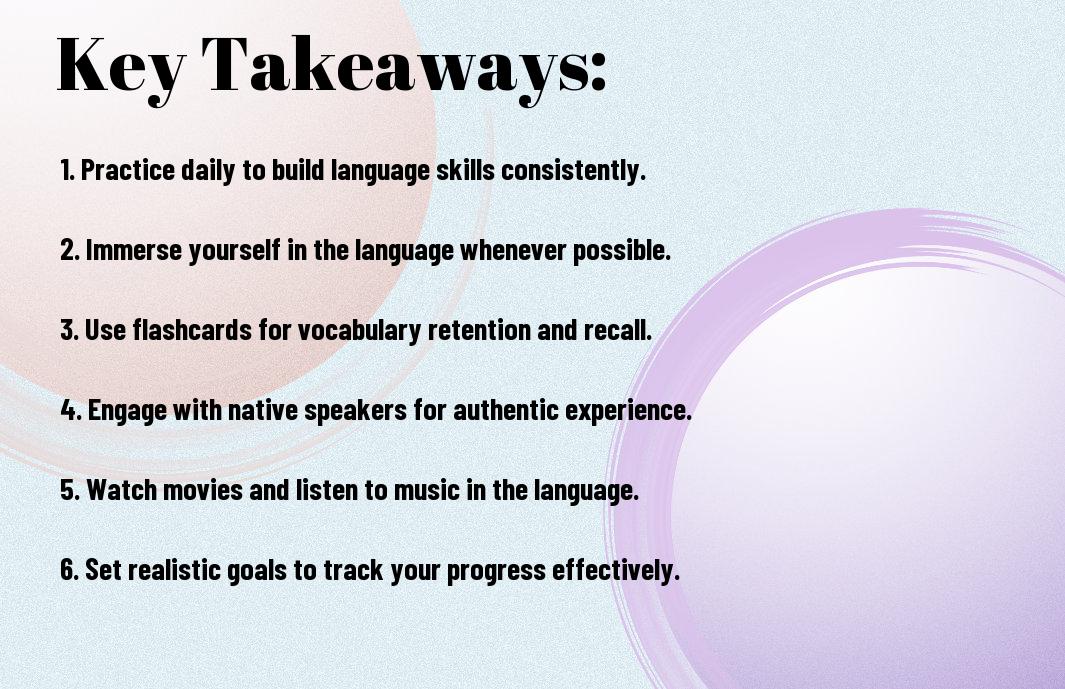
  • Set realistic goals and prioritize your languages to help you stay focused and motivated throughout the learning process.
  • Develop a consistent schedule that allows you to allocate specific times for each language, ensuring you make progress in all of them.
  • Utilize language learning apps and online resources to access a wide range of study materials, practice exercises, and interactive tools tailored to your needs.
  • Immerse yourself in the target languages by listening to music, watching movies, and engaging in conversations with native speakers to improve your comprehension and speaking skills.
  • Focus on commonalities and cognates between languages to leverage your existing knowledge and accelerate the learning process, especially for languages that share similarities in grammar or vocabulary.

Introduction to Learning Multiple Languages

For those of you who dare to take on the challenge, learning multiple languages simultaneously can be a daunting task. You’ll need to be disciplined and focused, but with the right approach, you can achieve your goals.

Setting Language Priorities

Alike other pursuits, prioritizing your languages is imperative. You must decide which languages to focus on first, based on your interests, needs, and goals, to ensure your efforts are directed towards achieving your objectives.

Creating a Schedule

Along with setting priorities, creating a schedule is vital. You should allocate specific times for each language, allowing you to make consistent progress without feeling overwhelmed by the task at hand.

Section by section, you’ll find that creating a schedule is key to making progress in learning multiple languages. As you allocate your time, you’ll need to consider your learning style, goals, and available time, ensuring that your schedule is realistic and achievable, allowing you to make steady progress in each of your chosen languages, and ultimately, helping you to become a proficient speaker in multiple languages, which will opens doors to new opportunities and experiences in your personal and professional life.
Learning Multiple Languages

Some people believe that learning multiple languages simultaneously is a daunting task, but with the right approach, you can achieve your goals. You will need to stay focused and develop a strategy that works for you.

Immersion Techniques

Beyond the traditional classroom setting, you’ll find that surrounding yourself with the languages you want to learn is key. You’ll pick up phrases and vocabulary by listening to music, watching TV shows, and speaking with native speakers, which will help you stay motivated.

Language Learning Apps

Immersing yourself in language learning apps can be an effective way to learn. You’ll find a variety of apps that offer interactive lessons, quizzes, and games to help you learn at your own pace.

Section after section, you’ll discover that language learning apps are a valuable resource for learning multiple languages. You’ll be able to track your progress, set goals, and practice your skills whenever you want, making it easier for you to stay on track and achieve your goals.

Learning Multiple Languages

Keep in mind that learning multiple languages simultaneously requires dedication and a well-structured approach. You can find valuable insights on How To Learn 3 Languages at Once (My Current Approach) to help you get started.

Building Vocabulary

Besides consistent practice, you need to focus on expanding your vocabulary in each language, using flashcards, language learning apps, and reading materials to help you memorize new words and phrases.

Practicing Grammar

At the core of language learning is grammar practice, which you can achieve through language exchange programs, online courses, or practice exercises that help you develop your writing and speaking skills.

In fact, as you practice grammar, you’ll find that your comprehension and communication skills improve significantly, allowing you to express yourself more confidently in each language, and you’ll be able to navigate complex conversations with ease, making your language learning journey more enjoyable and rewarding.

Learning Multiple Languages

After deciding to learn multiple languages, you’ll need to develop a strategy to tackle this challenge. You’ll have to manage your time effectively and prioritize your goals.

Overcoming Language Barriers

Along the way, you’ll encounter obstacles, but with persistence and the right resources, you can overcome them. You’ll find that language barriers will start to break down as you progress.

Staying Motivated

Any language learner knows that motivation is key to success. You’ll need to find ways to stay engaged and enthusiastic about the learning process.

But as you examine deeper into your language learning journey, you’ll discover that staying motivated is not just about setting goals, it’s about tracking your progress, celebrating small victories, and finding joy in the act of learning itself. You’ll need to be creative and find what works best for you to keep your motivation levels high, whether it’s through language exchange programs, reading books in the target language, or watching movies with subtitles. By doing so, you’ll be able to maintain a healthy and consistent learning habit that will ultimately lead to fluency in multiple languages.

Learning Multiple Languages

Your journey to learning multiple languages simultaneously requires a strategic approach, dedication, and the right resources to ensure you stay on track and make steady progress.

Finding Language Partners

Besides traditional classroom instruction, finding a language partner can be a great way to practice your speaking and listening skills, as you engage in conversations and get immediate feedback on your pronunciation and grammar.

Joining Language Communities

Around the world, there are numerous language communities, both online and offline, where you can connect with fellow language learners and native speakers, sharing experiences and learning from one another in a supportive environment.

In addition, joining language communities can provide you with access to a wealth of language learning materials, such as podcasts, videos, and language exchange events, helping you to stay motivated and inspired throughout your language learning journey, as you surround yourself with people who share your passion for languages and cultural exchange.

Learning Multiple Languages

All language learners face challenges, but you can overcome them by creating a schedule and sticking to it. You’ll be able to learn multiple languages simultaneously with dedication and persistence.

Tracking Progress

About the midpoint of your learning journey, you’ll want to assess your progress. You can use language learning apps or journals to track your development and identify areas for improvement.

Adjusting Strategies

One of the most significant advantages of tracking progress is that it allows you to adjust your strategies. You can tweak your approach to better suit your learning style and goals, helping you stay motivated and focused.

Due to the complexity of learning multiple languages, you’ll likely need to make adjustments along the way. As you encounter new challenges, you’ll have to adapt your strategy to overcome them, and that’s where your tracking and analysis come into play. You’ll be able to identify what’s working and what’s not, and make informed decisions about how to proceed, ensuring that you continue to make progress towards your goals.

To wrap up

On the whole, you’ve got the basics down, and now it’s time to put them into practice. You’re ready to explore the world of polyglotism, and your journey starts here. For more insights, check out 11 Tips To Help You Learn Multiple Languages at Once, and get ready to unlock your full potential, as you tackle your language learning goals, and your skills will flourish in no time, transforming your life forever.

FAQ

Q: Is it possible to learn multiple languages simultaneously, and what are the benefits of doing so?

A: Yes, it is entirely possible to learn multiple languages at the same time. This approach can enhance your cognitive abilities, such as memory and problem-solving skills, and it can also broaden your cultural understanding and career opportunities. By learning multiple languages simultaneously, you can identify similarities and differences between languages more easily, which can accelerate your learning process. However, it requires a well-structured plan, dedication, and consistent practice to achieve success.

Q: What strategies can I use to effectively learn multiple languages simultaneously without getting confused or mixing them up?

A: To avoid confusion and mixing up languages, it’s important to set clear goals for each language, allocate specific times for learning each one, and use different study materials and environments for each language. You can also use the spacing repetition technique, where you review vocabulary and grammar rules at increasingly longer intervals to help solidify them in your long-term memory. Additionally, immersing yourself in each language through music, movies, and speaking with native speakers can help you develop a deeper understanding and differentiation between the languages.

Q: How can I manage my time effectively to learn multiple languages simultaneously, especially with a busy schedule?

A: Managing your time effectively is key to learning multiple languages at once, especially when you have a busy schedule. Start by creating a schedule that dedicates specific times of the day or week to language learning. Even small chunks of time, such as 15-20 minutes a day, can be beneficial. Utilize language learning apps, podcasts, and online courses that offer flexible learning opportunities. You can also incorporate language learning into your daily routines, such as listening to a language lesson during your commute or practicing vocabulary during your lunch break. Prioritizing your goals and staying consistent is vital to making progress in learning multiple languages simultaneously.

The Most Useful Languages for Business Professionals

As you navigate the global business landscape, your ability to communicate effectively with international clients and colleagues is vital. You will encounter diverse languages and cultures, and speaking the right language can give you a competitive edge. Your career prospects and business opportunities can expand significantly when you possess language skills that are in high demand. You can enhance your professional profile by acquiring languages that are widely used in international trade and commerce, and this post will guide you in making an informed decision.

Key Takeaways:

To succeed in the global market, business professionals need to be proficient in languages that can open doors to new opportunities. Here are the key takeaways about the most useful languages for business professionals:

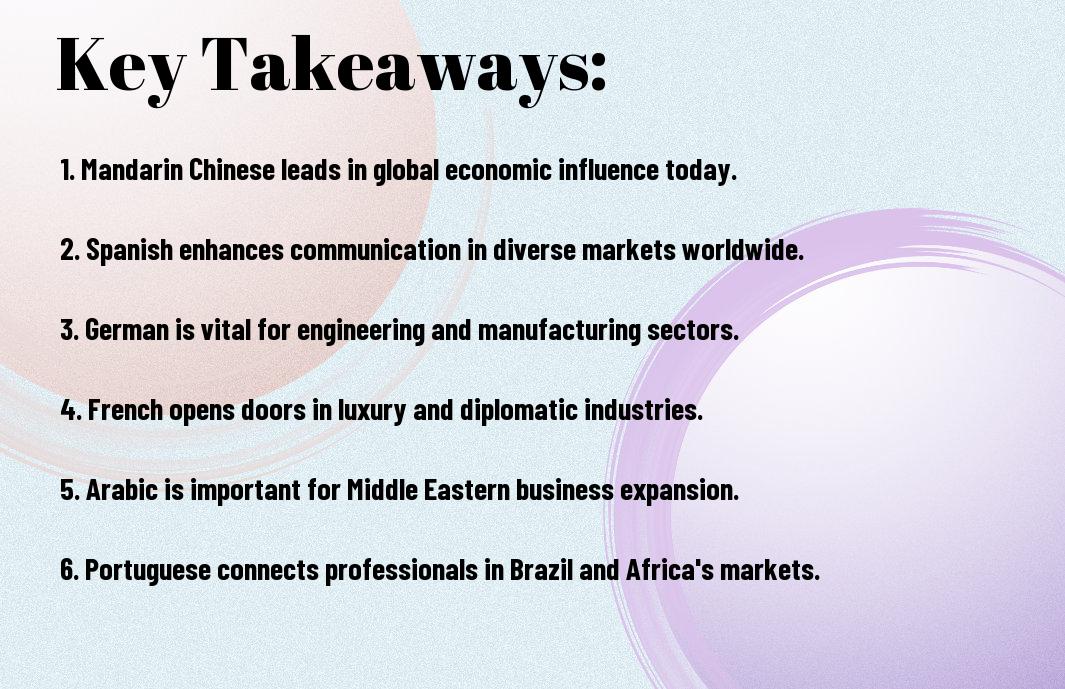
  • Mastering English is necessary for any business professional, as it is the most widely used language in international business and commerce.
  • Learning Mandarin Chinese can provide a competitive edge, given China’s growing economic influence and increasing trade relationships with other countries.
  • Proficiency in Spanish can help business professionals tap into the large and growing markets of Latin America and the United States.
  • Arabic is becoming an important language for business, particularly in the Middle East and North Africa, where many countries are experiencing rapid economic growth.
  • Knowledge of Portuguese can be beneficial for business professionals interested in trading with Brazil, Portugal, and other Portuguese-speaking countries, which offer significant investment opportunities.

Language Selection

Your business expansion plans may involve communicating with clients and partners from diverse linguistic backgrounds, making language selection a vital decision for your company’s success.

Importance of Language in Business

Linguistic skills play a significant role in facilitating effective communication, thereby fostering strong business relationships and driving growth, as you navigate the global market.

Factors Influencing Language Choice

Between cultural differences and geographical considerations, you will need to weigh various factors, including:

  • target market demographics
  • industry-specific terminology
  • regional language preferences

. The decision you make will significantly impact your business’s ability to thrive in a competitive environment.

Choice of language is a strategic move that can either make or break your business, as you consider the nuances of each language and its implications on your operations, including:

  • translation costs
  • cultural adaptation
  • localization requirements

. The language you choose will ultimately determine your company’s reputation and credibility in the eyes of your international clients and partners.

Global Business Languages

Now, as you navigate the world of international business, you’ll find that certain languages can greatly enhance your career prospects and facilitate communication with global clients and partners.

English as a Global Language

Alongside other languages, English has become a dominant language in business, and you’ll likely encounter it frequently in your professional interactions, allowing you to connect with people from diverse cultural backgrounds.

Spanish and Mandarin Chinese

Globally, Spanish and Mandarin Chinese are increasingly important languages for business professionals, as they open doors to vast markets and opportunities in Latin America and Asia, enabling you to tap into these emerging economies.

Consequently, as you consider expanding your language skills, you should think about the regions and industries you’re interested in, and how learning Spanish or Mandarin Chinese can help you build stronger relationships with your target audience, ultimately driving your business forward and giving you a competitive edge in the global marketplace.

Regional Business Languages

Many businesses operate within specific regions, and speaking the local language can give you a competitive edge. You can expand your customer base and build stronger relationships with your clients and partners by communicating in their native language.

Arabic for Middle Eastern Markets

Behind the growing economies of the Middle East lies a wealth of opportunity for your business, and speaking Arabic can help you tap into this market. You can navigate the complexities of Middle Eastern business culture more effectively by learning Arabic.

Portuguese for South American Markets

Middle managers and executives who speak Portuguese have a significant advantage when doing business in South America, particularly in Brazil. You can communicate more effectively with your Brazilian partners and clients by learning Portuguese.

Markets in South America, particularly in Brazil, are growing rapidly, and speaking Portuguese can help you stay ahead of the competition. You can explore new business opportunities and build stronger relationships with your clients and partners by communicating in Portuguese, which can lead to increased sales and revenue for your company.

Language Skills for Career Advancement

Despite the demands of your profession, acquiring language skills can significantly boost your career prospects, enabling you to connect with clients, colleagues, and partners from diverse linguistic backgrounds, thereby enhancing your professional growth.

Improving Communication Skills

Alongside your technical expertise, proficiency in a foreign language can greatly improve your communication skills, allowing you to articulate your ideas, negotiate, and collaborate more effectively in a globalized business environment, which is important for your success.

Enhancing Job Prospects

Beneath the surface of your daily tasks, language skills can significantly enhance your job prospects, opening doors to new career opportunities, higher salary scales, and greater responsibilities, making you a more competitive candidate in the job market.

Indeed, as you pursue your career goals, you will find that language skills give you a distinctive edge, allowing you to tap into new markets, Understand cultural nuances, and make informed decisions that drive business growth, ultimately leading to greater professional satisfaction and success.

Industry-Specific Languages

To succeed in your business endeavors, you need to consider the languages that are prevalent in your industry, as this can significantly impact your ability to communicate with clients, partners, and colleagues.

German for Engineering and Manufacturing

Alongside other languages, German is a key language for engineering and manufacturing, allowing you to tap into the European market and work with German companies, which are known for their innovative technologies and high-quality products.

French for International Trade

Around the world, French is an official language in several international organizations, making it a valuable language for your business, particularly if you are involved in international trade, as it can help you navigate complex trade agreements and negotiations.

Another significant advantage of speaking French is that it can give you access to the African market, where French is widely spoken, and help you build strong relationships with French-speaking business partners, ultimately expanding your business opportunities and increasing your competitiveness in the global market, which can be highly beneficial for your career as you will be able to communicate effectively with clients and partners from diverse linguistic backgrounds.

Language Learning Resources

Once again, understanding the top languages to learn for international business is key to your success, and you can find more information on The top languages to learn for international business to make informed decisions.

Online Courses and Tutorials

For example, you can utilize online platforms that offer language courses and tutorials tailored to your business needs, helping you learn at your own pace.

Language Schools and Institutes

Beneath the surface of online learning, you will find that language schools and institutes provide immersive experiences, allowing you to practice your language skills in a real-world setting.

Also, attending a language school or institute can give you the opportunity to network with other professionals and gain insights into different business cultures, which can be beneficial for your career, as you will be able to understand your clients’ and colleagues’ needs more effectively.

To wrap up

Summing up, as you consider expanding your professional horizons, you’ll find that learning a new language can greatly benefit your career. You can explore the 9 Top Languages To Learn for International Business to determine which ones align with your goals. By doing so, you’ll enhance your skills and stay competitive in the global market, ultimately driving your business forward and increasing your chances of success.

FAQ

Q: What are the most in-demand languages for business professionals in the global market?

A: The most in-demand languages for business professionals include English, Mandarin Chinese, Spanish, Arabic, and Portuguese. English is the primary language of international business, while Mandarin Chinese is increasingly important due to China’s growing economic influence. Spanish and Arabic are also highly valued, given the significant trade relationships with Latin America and the Middle East. Portuguese, spoken in Brazil and several African countries, is also becoming more significant in the business world.

Q: How can learning a foreign language benefit a business professional’s career?

A: Learning a foreign language can significantly enhance a business professional’s career prospects. It can open up new job opportunities, especially in multinational corporations or companies looking to expand into foreign markets. Language skills can also improve communication with international clients, colleagues, and partners, facilitating stronger business relationships and negotiations. Furthermore, speaking multiple languages can increase a professional’s versatility and adaptability in a competitive job market, potentially leading to higher salaries and more senior roles.

Q: Are there any specific industries where knowledge of a second language is particularly advantageous for business professionals?

A: Yes, there are several industries where knowledge of a second language is especially beneficial for business professionals. The finance and banking sector, for example, values language skills highly due to the global nature of financial transactions and investments. The tourism and hospitality industry also greatly benefits from multilingual staff to cater to international clients. Additionally, careers in international trade, diplomacy, and logistics often require proficiency in multiple languages to navigate complex global supply chains and legal regulations. Knowledge of a second language can provide a competitive edge in these fields, leading to greater career advancement opportunities.

10 Easy Tips for Learning New Languages

As you commence on your language learning journey, you’ll discover that acquiring a new language can be a rewarding experience. You’ll be able to communicate with people from diverse cultures and broaden your perspective. Your ability to learn a new language depends on your approach, and with the right strategies, you can make significant progress. You can overcome language barriers and achieve your goals with ease, and this post will guide you through the process with simple and effective tips.————-Key Takeaways:

To improve your language learning skills, consider the following points:

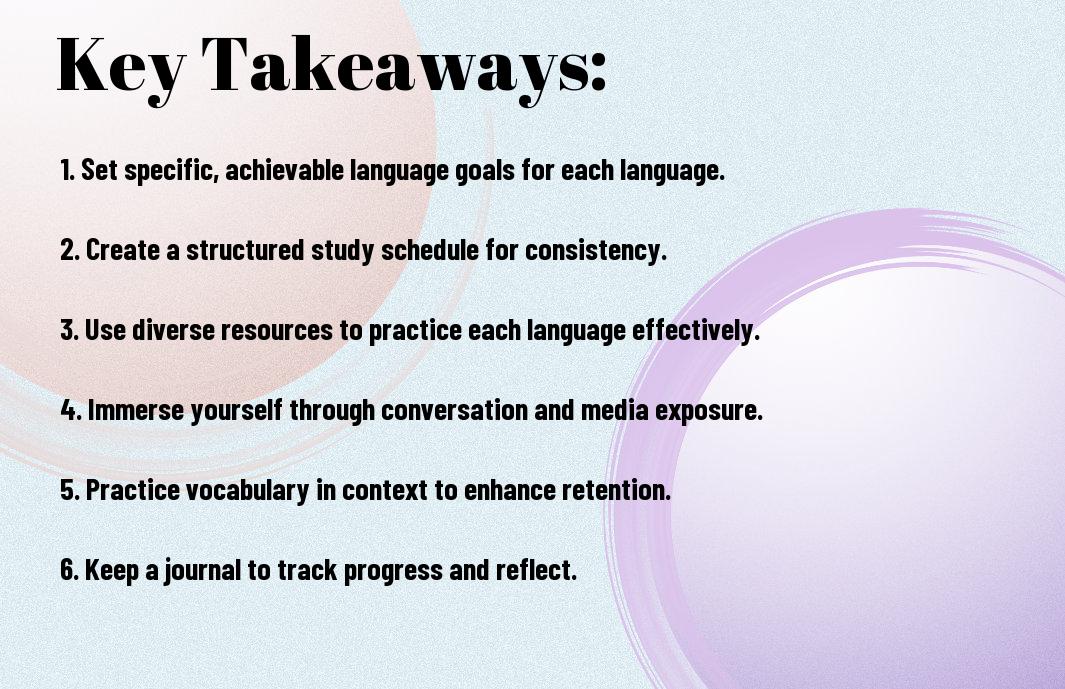
  • Set achievable goals and create a schedule to stay on track with your language learning journey, allowing you to monitor progress and stay motivated.
  • Immerse yourself in the language by listening to music, watching TV shows or movies, and speaking with native speakers to get accustomed to its pronunciation and grammar.
  • Focus on vocabulary building by learning new words and phrases daily, and practice their pronunciation to enhance your speaking skills.
  • Use language learning apps and online resources to access a wide range of study materials, interactive exercises, and pronunciation guides.
  • Practice consistently and be patient with yourself, as learning a new language takes time and effort, but with dedication and the right approach, you can become fluent.

Setting Goals

A clear plan is necessary when learning a new language, and it starts with setting achievable goals. You need to define what you want to accomplish and by when, helping you stay focused and motivated throughout the process.

Defining Motivation

Alongside your goals, you should consider what motivates you to learn a new language, as this will help you stay engaged and driven. You will be more likely to stick to your plan if you have a genuine interest in the language and culture.

Creating a Study Plan

Across various learning methods, having a structured study plan is vital for your success. You should allocate specific times for learning and practicing the language, ensuring consistency and progress.

Goals that are specific, measurable, and attainable are more effective, allowing you to track your progress and make adjustments as needed. You can break down your long-term goals into smaller, manageable tasks, creating a roadmap for your language learning journey, and helping you stay committed to your objectives, with your study plan serving as a guide to keep you on track.

Immersion Techniques

Even the most basic immersion techniques can significantly improve your language learning. You can start by surrounding yourself with the language you want to learn, which will help you get used to its sounds, rhythms, and grammar.

Listening to Native Speakers

Along with reading and writing, listening to native speakers is an necessary part of language learning. You can find numerous podcasts, audiobooks, and speech videos online, which will help you get familiar with the language’s pronunciation and intonation.

Watching Foreign Language Media

Behind the scenes of language learning, watching foreign language media can be a fun and engaging way to improve your skills. You can start with TV shows and movies with subtitles in your native language, which will help you understand the context and follow the story.

Due to the vast amount of foreign language media available, you can choose content that suits your interests and level of proficiency. You can watch TV shows, movies, or even YouTube videos, which will help you learn new vocabulary, phrases, and expressions in context, and improve your listening and comprehension skills.

Language Learning Strategies

Not all language learners are created equal, and your approach to learning a new language will depend on your individual needs and goals. You will need to experiment with different strategies to find what works best for you.

Focus on Grammar Rules

Alongside other skills, a nuanced understanding of grammar rules is vital for effective communication, and you can achieve this by practicing consistently and reviewing grammar rules regularly, which will help you develop a strong foundation in the language.

Building Vocabulary

Linguistically, you will need to focus on building your vocabulary, and you can do this by learning new words and phrases every day, using flashcards, and reading in the target language to get familiar with how words are used in context.

To further enhance your vocabulary, you will need to use the new words you learn in sentences, and engage in conversations with native speakers, which will help you develop a more nuanced understanding of the language and improve your ability to express yourself effectively. You can also use online resources, such as language learning apps and podcasts, to help you stay motivated and track your progress.

Practice Methods

Unlike traditional learning methods, practicing a new language requires consistent effort and dedication. You can find helpful tips on language learning by visiting 7 Tips To Learn Any Language From An Expert to improve your skills.

Speaking with Native Speakers

Among the most effective ways to practice speaking is by engaging with native speakers, which allows you to improve your pronunciation and get a feel for the language in context, helping you to become a more confident speaker.

Writing in the Target Language

For instance, writing in the target language is an excellent way to practice your grammar and vocabulary, and you can start by writing short journal entries or even social media posts to get into the habit.

A key aspect of writing in the target language is to focus on using correct grammar and vocabulary in context, allowing you to develop a more nuanced understanding of the language and improve your overall writing skills, which will also enhance your reading comprehension as you progress.

Overcoming Obstacles

Keep in mind that learning a new language can be challenging, but with the right mindset, you can overcome any obstacle and achieve your goals.

Dealing with Language Barriers

Beyond the initial difficulties, you will encounter language barriers, but you can overcome them by practicing consistently and seeking help when needed, which will help you to improve your language skills.

Staying Motivated

Linguistically, staying motivated is key to learning a new language, and you can achieve this by setting achievable goals and rewarding yourself for your progress.

This approach will help you to stay engaged and motivated throughout your language learning journey, and you will be able to track your progress and make adjustments as needed, which will ultimately help you to become proficient in the new language and achieve your goals.

Additional Resources

Now that you’ve started your language learning journey, you can supplement your efforts with additional resources, such as the article on 25 Tips to Learn a Foreign Language, which offers valuable insights to help you improve your skills.

Language Learning Apps

Learning a new language has become easier with the help of language learning apps, which provide you with interactive lessons and exercises to practice your skills on-the-go, making it easier for you to stay consistent with your learning.

Online Language Courses

Learning a language online has never been more accessible, with numerous courses available that cater to your needs and schedule, allowing you to learn at your own pace and focus on areas where you need improvement, making your learning experience more effective.

Understanding the structure and content of online language courses will help you make the most of your learning experience, as you’ll be able to identify the areas that need more attention and take advantage of the interactive features, such as quizzes, videos, and discussion forums, to practice your language skills and interact with other learners, which will help you stay motivated and achieve your goals.

Summing up

So, you now have the keys to unlock your language learning potential. You can apply these 10 easy tips to enhance your skills and make your journey enjoyable. By incorporating them into your daily routine, you will see significant improvement in your ability to learn new languages, and your confidence will grow as you achieve your goals, taking your language skills to the next level, and expanding your cultural understanding and connections.

FAQ

Q: What is the most effective way to start learning a new language?

A: To start learning a new language, it’s best to begin with the basics, such as learning the alphabet, common phrases, and basic vocabulary. Setting achievable goals and creating a study schedule can also help you stay motivated and track your progress. Additionally, immersive learning techniques, like watching TV shows or movies in the target language, can help you get accustomed to the sound and structure of the language.

Q: How can I improve my pronunciation when learning a new language?

A: Improving pronunciation in a new language can be challenging, but there are several strategies that can help. Listening to native speakers and trying to mimic their intonation and rhythm is an excellent way to start. You can also practice speaking with language exchange partners, either in person or online, to get feedback on your pronunciation. Furthermore, recording yourself speaking and comparing it to native speakers can help you identify areas that need improvement. Using online resources and language learning apps that provide pronunciation lessons and exercises can also be beneficial.

Q: What role does consistency play in learning a new language, and how can I maintain my motivation to continue learning?

A: Consistency is key when it comes to learning a new language. Setting aside a specific time each day or week to study and practice is vital for making steady progress. To maintain motivation, it’s helpful to celebrate small victories along the way, such as having a basic conversation with a native speaker or understanding a difficult text. Finding a language learning community or buddy can also provide support and encouragement. Additionally, varying your study materials and activities, such as switching between textbooks, podcasts, and language learning apps, can help keep the learning process engaging and prevent boredom.

The Best Apps for Learning Foreign Languages

FAQ

Q: What are the most popular language learning apps for beginners?

A: Some of the most popular language learning apps for beginners include Duolingo, Babbel, and Rosetta Stone. Duolingo is a free app that offers a comprehensive language course with interactive lessons and exercises. Babbel is a paid app that provides personalized lessons and focuses on conversational skills. Rosetta Stone is another paid app that uses immersive, interactive technology to help learners develop language skills. All three apps are highly rated and suitable for beginners.

Q: How do language learning apps help with pronunciation and speaking skills?

A: Many language learning apps offer features that help learners improve their pronunciation and speaking skills. For example, some apps use speech recognition technology to analyze the learner’s pronunciation and provide feedback. Others offer recorded audio and video clips of native speakers, allowing learners to listen and mimic the correct pronunciation. Additionally, some apps offer speaking exercises and conversations with native speakers or other learners, which can help build confidence and fluency in speaking a foreign language.

Q: Can language learning apps be used as a replacement for traditional language classes or tutors?

A: While language learning apps can be a highly effective tool for learning a foreign language, they may not be a replacement for traditional language classes or tutors for everyone. Apps can provide a structured learning program, interactive exercises, and immediate feedback, but they may lack the personal attention and human interaction that a teacher or tutor can provide. However, apps can be a great supplement to traditional classes or tutoring, and can help learners stay motivated and engaged in their language learning journey. Ultimately, the most effective approach will depend on the individual learner’s needs, goals, and learning style.

The Best Languages for Travel Enthusiasts

Key Takeaways:

To commence on a journey around the world, it’s necessary to consider the languages that can facilitate communication and immersion in foreign cultures. Here are some key languages for travel enthusiasts:

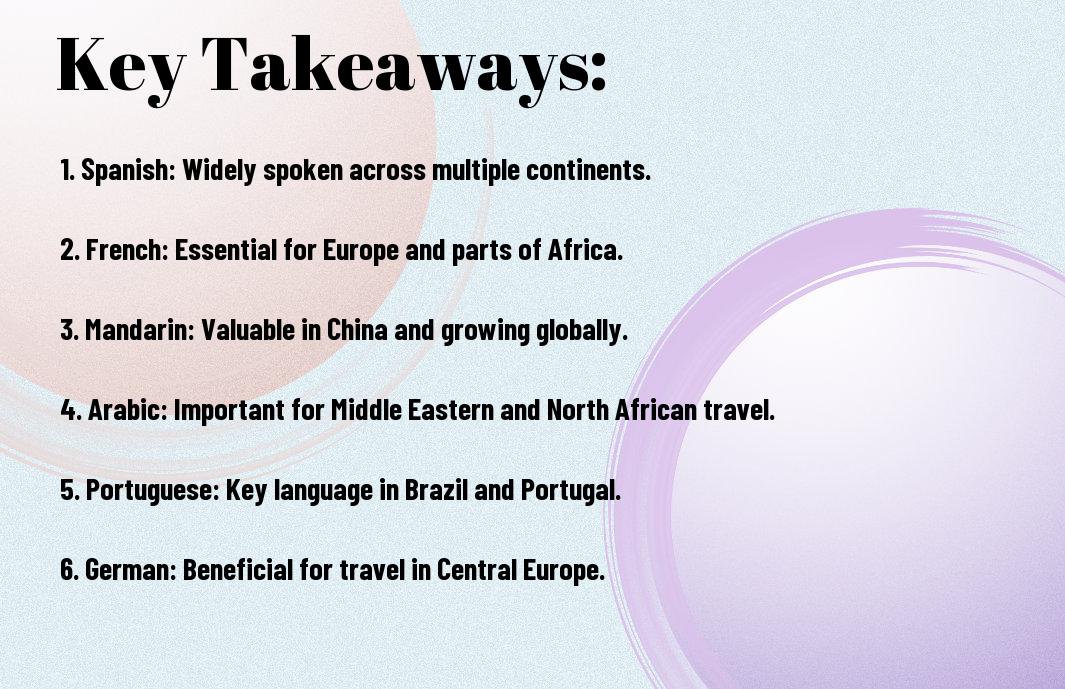
  • The Spanish language is highly beneficial for traveling to Spain, Latin America, and the Caribbean, with over 460 million native speakers worldwide.
  • Mandarin Chinese is a valuable language to learn for travel, as it is spoken by over 1 billion people in China, Taiwan, and other countries with Chinese communities.
  • French is an official language in several international organizations and is spoken in many countries, including France, Canada, Belgium, and several African nations.
  • Arabic is a useful language for traveling to the Middle East and North Africa, with over 300 million native speakers across the region.
  • English is widely spoken and understood in many countries, making it an excellent language to know for international travel, business, and communication.

Language Preferences

For travel enthusiasts, choosing the right language to learn can be overwhelming. You’ll want to consider languages that are widely spoken and can help you navigate various cultures with ease.

Popular languages for travel

Above all, languages like Spanish, Mandarin, and Arabic are top choices, as they are spoken by millions of people worldwide, making your travels more enjoyable and interactive.

Language families for easy learning

After selecting a language, you’ll find that some language families, such as Romance languages, are easier to learn, as they share similarities in grammar and vocabulary, making it simpler for you to pick up.

Considering your goals and travel plans, you’ll likely find that learning a language from a family with many similarities, such as the Romance languages, can be incredibly beneficial, allowing you to communicate with locals and enhance your overall travel experience, as you’ll be able to understand and appreciate the culture more deeply, and you can even apply your knowledge to learn other related languages more quickly.

European Delights

Even if you’re a seasoned traveler, exploring Europe can be a thrilling experience, and speaking the local language can enhance your journey, as you’ll be able to connect with the culture and people on a deeper level, making your travels more enjoyable and allowing you to immerse yourself in the local way of life.

Spanish for the Mediterranean

With the warm climate and beautiful beaches of the Mediterranean, speaking Spanish will make your travels more enjoyable, as you’ll be able to communicate with locals, try delicious food, and explore historic sites, such as Barcelona and Madrid, that showcase the region’s rich history and culture, which will make your trip even more meaningful.

French for romantic getaways

An understanding of French will make your romantic getaway to Paris or the French Riviera even more unforgettable, as you’ll be able to appreciate the art, cuisine, and romantic atmosphere that these destinations have to offer, and you’ll be able to engage with the locals, making your experience more authentic and enjoyable.

And as you stroll along the Seine or visit the Eiffel Tower, you’ll find that speaking French allows you to fully appreciate the beauty and charm of these iconic destinations, and you’ll be able to navigate the city with ease, making the most of your time in France, and creating lasting memories of your romantic getaway, which will stay with you long after you leave.

Asian Adventures

Keep exploring the vibrant cultures of Asia, and you’ll discover a wealth of languages to learn. Your travels will take you to countries with rich histories and diverse traditions.

Mandarin for Chinese culture

Towards understanding the intricacies of Chinese culture, learning Mandarin will open doors to a world of ancient traditions and modern innovations, allowing you to fully immerse yourself in your travels.

Japanese for anime and tech

Just like Japanese enthusiasts, you can investigate into the fascinating world of anime, manga, and cutting-edge technology by learning the Japanese language, which will enhance your experience in this unique country.

Further into your exploration of Japanese culture, you’ll find that speaking the language will give you access to a wide range of experiences, from visiting famous anime and manga studios to attending tech conferences and festivals, making your travels even more memorable and enjoyable, and allowing you to connect with the locals on a deeper level, bringing your adventures to life.

Practical Considerations

All travelers should consider the feasibility of learning a new language while on the go. You can find helpful tips on what’s the best way to learn a language while traveling to make the most of your experience.

Language learning resources

Practically, you’ll need reliable resources to learn a language, such as language learning apps, phrasebooks, or online courses, to help you navigate your destination.

Immersion techniques

For an authentic experience, consider staying with a host family or participating in language exchange programs to improve your language skills.

Language immersion is key to becoming proficient in a new language, and as you surround yourself with native speakers, you’ll pick up nuances and expressions that will enhance your travel experience, allowing you to connect with locals and appreciate your destination on a deeper level, making your journey even more enjoyable and rewarding, and helping you to make the most of your time abroad.

Cultural Connections

Once again, you’ll find that learning a new language can deepen your understanding of the culture you’re visiting, allowing you to navigate everyday situations with ease and make meaningful connections with locals.

Language and customs

Among the many benefits of language learning, you’ll discover that it helps you appreciate the customs and traditions of the place you’re visiting, enabling you to engage with your surroundings in a more authentic way.

Body language and nonverbal cues

Between the lines of language, you’ll pick up on nonverbal cues that convey just as much meaning as spoken words, helping you navigate social situations with confidence and avoid unintended offense.

It is especially important to consider the nuances of body language and nonverbal cues, as they can vary significantly from one culture to another, and being aware of these differences will help you communicate more effectively and build stronger relationships with the people you meet during your travels, allowing you to fully immerse yourself in your new surroundings and make the most of your experience.

Specialized Languages

Despite the popularity of widely spoken languages, learning specialized languages can enhance your travel experiences. You can explore unique cultures and communicate with locals more effectively.

Arabic for Middle Eastern travels

For instance, learning Arabic will help you navigate the Middle East, enabling you to engage with your surroundings and interact with locals in a more meaningful way, making your travels more enjoyable and authentic.

Portuguese for Brazilian and African adventures

Eastern cultures, such as those in Brazil and Africa, will become more accessible as you learn Portuguese, allowing you to appreciate the local customs and traditions that make your travels so enriching.

Even with basic knowledge of Portuguese, you can examine deeper into the vibrant cultures of Brazil and Africa, as you explore the historic cities, stunning landscapes, and lively festivals, creating unforgettable experiences as you connect with the people and places you encounter on your travels.

To wrap up

With this in mind, you can now make an informed decision about the best languages for your travel endeavors. You can explore options like Spanish, Mandarin, or Arabic to enhance your travel experiences. For more insights, visit As a native English speaker, which two further languages would give me the most benefits to discover the perfect fit for your travel goals, and tailor your language learning to your needs, boosting your travel enjoyment.

FAQ

Q: What are the most useful languages for travel enthusiasts to learn for their trips to Europe?

A: For travel enthusiasts planning to explore Europe, learning languages such as Spanish, French, German, and Italian can be highly beneficial. Spanish is widely spoken in Spain, Mexico, and many countries in Central and South America, making it a great choice for those traveling to these regions. French is the official language in France, Belgium, Switzerland, and several African countries, allowing travelers to communicate effectively in these destinations. German is spoken in Germany, Austria, and parts of Switzerland, while Italian is the primary language in Italy. Knowing these languages can enhance the travel experience, facilitate interactions with locals, and provide a deeper understanding of the culture.

Q: Which languages are most useful for travel enthusiasts visiting Asia and how can they help?

A: For travel enthusiasts exploring Asia, learning languages such as Mandarin Chinese, Japanese, and Korean can be extremely helpful. Mandarin Chinese is the most widely spoken language in the world and is used in China, Taiwan, and other Chinese communities worldwide. Japanese is spoken in Japan, and Korean is the primary language in Korea. Knowing these languages can assist travelers in navigating through cities, trying local cuisine, and engaging with the unique cultures of these countries. Additionally, many Asian countries have English as a secondary language, but speaking the local language can lead to more authentic interactions and a more immersive experience.

Q: How can learning a new language benefit travel enthusiasts in terms of cultural immersion and personal growth?

A: Learning a new language can significantly benefit travel enthusiasts by allowing them to fully immerse themselves in the local culture. When travelers can communicate in the native language, they can engage with locals, understand cultural nuances, and appreciate the history and customs of the destination. This, in turn, can lead to a more meaningful and fulfilling travel experience. Moreover, learning a new language requires dedication and persistence, which can foster personal growth and a sense of accomplishment. As travel enthusiasts navigate through unfamiliar territories and communicate with people from diverse backgrounds, they can develop valuable skills such as adaptability, empathy, and open-mindedness, making their travels not only enjoyable but also transformative.

Jhere Skip to content