languages

The Best Books for Learning New Languages

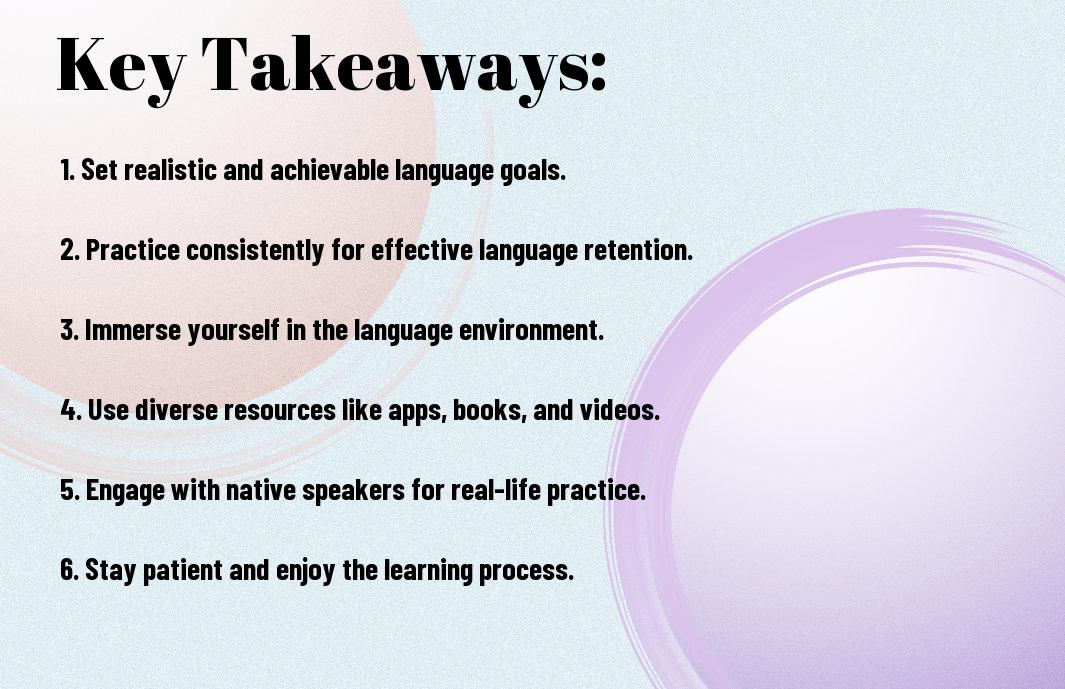
Key Takeaways:

To effectively learn a new language, it’s crucial to have the right resources. Here are the key points to consider when selecting the best books for language learning:

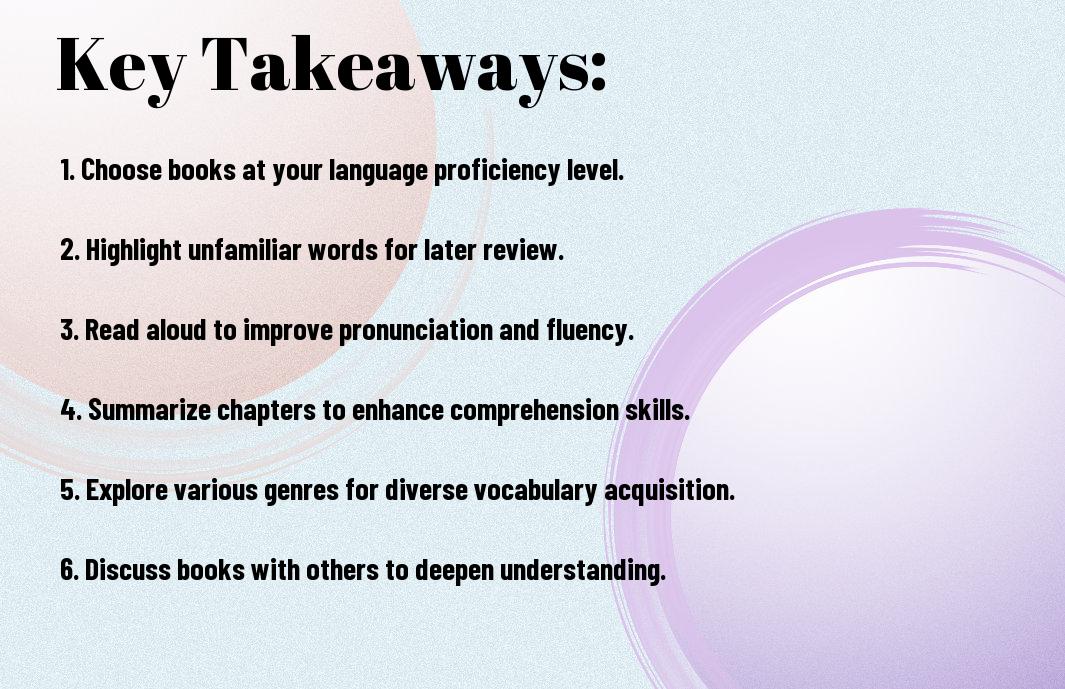
  • Language learning books should focus on grammar and vocabulary building, with exercises and examples to practice new skills.
  • Interactive books with audio and visual aids can enhance the learning experience and improve pronunciation and comprehension.
  • Immersive reading materials, such as novels and articles, can help learners get used to the nuances of the language and contextualize new words and phrases.
  • Specialized books that focus on specific skills, like writing or conversational language, can help learners improve in areas where they need the most practice.
  • Supplementary resources, such as language learning apps and online courses, can provide additional support and motivation for learners to stay on track with their language learning goals.

Language Learning Basics

Your journey to learning a new language begins with understanding the fundamentals. You’ll need to grasp the grammar, syntax, and vocabulary of the language to make progress.

Language Acquisition Methods

Prior to plunging into language learning, you should consider the various methods available. You can choose from immersive programs, language courses, or self-study materials to suit your learning style.

Language Learning Tips

To aid your language learning, consider the following tips:

  • set achievable goals
  • practice consistently
  • engage with native speakers

. Assume that dedicating time to language learning will yield significant improvements in your skills.

And as you probe deeper into the language, you’ll discover more tips to enhance your learning experience:

  • listen to podcasts
  • watch TV shows or movies in the target language
  • read books or articles

. Assume that with persistence and the right resources, you’ll become proficient in your desired language.
Book Recommendations

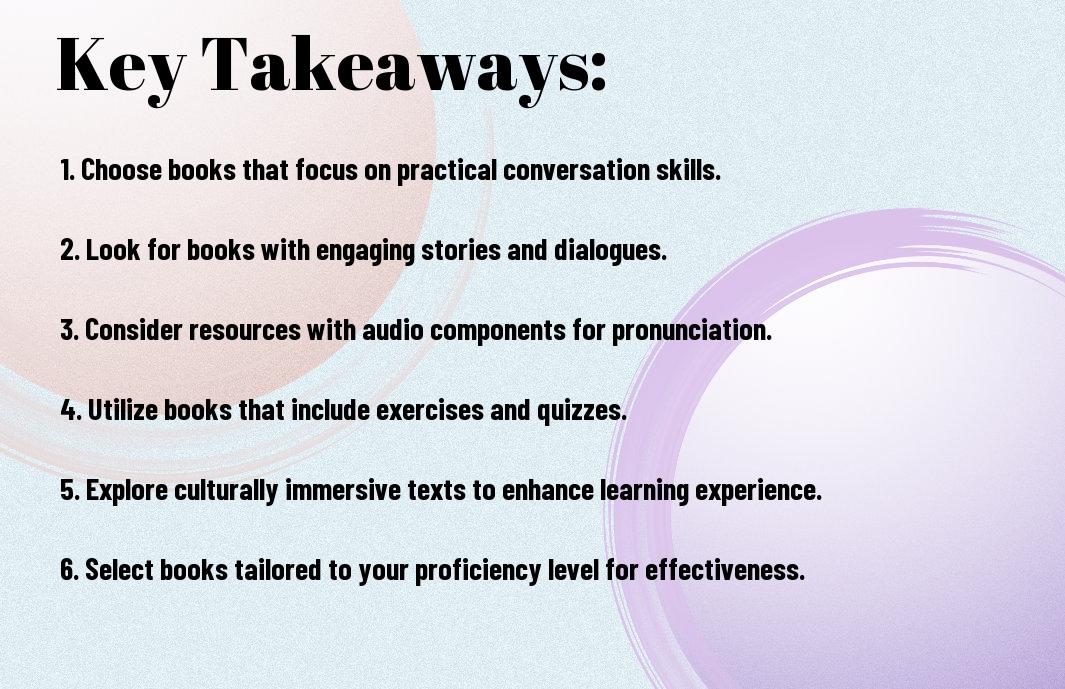
Some of the most effective books for learning new languages are those that offer a combination of grammar, vocabulary, and conversation practice. You will find a range of options to suit your learning style and goals.

Language Textbooks

Along with traditional language classes, textbooks provide a comprehensive approach to learning a new language, covering the basics of grammar, syntax, and vocabulary, allowing you to build a strong foundation in your target language.

Language Learning Guides

At the heart of language learning are guides that focus on specific skills, such as pronunciation, reading, or writing, helping you to improve your overall language proficiency and prepare for real-life situations.

And as you research deeper into language learning guides, you will discover that they often include valuable tips and strategies for overcoming common challenges, such as mastering difficult grammar rules or expanding your vocabulary, enabling you to stay motivated and focused on your language learning journey, and helping you to achieve your goals more effectively.

Language Specific Resources

All language learners will find a wealth of resources available to them, tailored to their specific needs and goals. You can choose from a variety of books, courses, and online tools to help you learn a new language.

English Language Resources

With numerous resources at your disposal, you can improve your English language skills in no time. You will find grammar guides, vocabulary builders, and pronunciation guides to help you master the language.

Foreign Language Resources

To broaden your linguistic horizons, you can explore resources for languages such as Spanish, French, or Mandarin. You will discover a range of materials, from textbooks to language learning apps, to help you learn a new language.

Resources for foreign languages are abundant, and you can find them in various formats, including audio and video recordings, podcasts, and online courses. As you explore into the world of foreign languages, you will find that these resources will help you stay motivated and engaged in your learning journey, allowing you to become proficient in your desired language.

Online Learning Platforms

After exploring various resources, you can find valuable discussions on online platforms, such as the one found at Best books you’ve read about languages and language learning, which can aid your language learning journey.

Language Learning Apps

Learning a new language has become easier with the help of language learning apps, which you can access anywhere, allowing you to practice at your own pace and track your progress.

Online Courses

Beside traditional learning methods, online courses offer a structured approach to learning a new language, providing you with a clear curriculum and expert instructors to guide you.

At the heart of online courses lies the flexibility to learn at your own pace, allowing you to review and practice lessons as many times as you need, making them an excellent supplement to your language learning endeavors, and enabling you to make steady progress towards your goal of becoming proficient in a new language.

Language Immersion Techniques

Unlike traditional language learning methods, immersion techniques involve surrounding yourself with the language you want to learn. You can achieve this by watching TV shows or movies, listening to music, and speaking with native speakers.

Reading and Listening

Prior to advancing in your language skills, you should focus on reading and listening to native materials. You will find that your comprehension improves as you expose yourself to various texts and audio recordings.

Speaking and Writing

Approximately at the same time you start reading and listening, you should begin speaking and writing in your target language. You will notice significant progress as you practice communicating with others and expressing your thoughts in writing.

Even when you feel comfortable with your language skills, you should continue to challenge yourself by engaging in conversations with native speakers and writing short stories or journal entries. You will find that your language skills improve dramatically as you consistently practice speaking and writing, and you will become more confident in your ability to express yourself effectively in your new language.

Overcoming Language Barriers

For many, learning a new language can be a daunting task, but with the right resources, you can break through the barriers that stand in your way. You’ll find that dedication and persistence are key to achieving your goals.

Common Challenges

Akin to many other pursuits, learning a language presents its own set of obstacles, such as grammar rules and pronunciation, which can be overwhelming at first, but as you progress, you’ll become more comfortable with your newfound skills.

Success Stories

Above all, the most inspiring aspect of language learning is the success stories of those who have persevered and achieved fluency, and you can be one of them, unlocking new opportunities and broadening your cultural understanding.

Even as you encounter setbacks, you’ll find that your hard work pays off, and you’ll be able to communicate effectively in your new language, opening doors to new experiences and connections, and you’ll be amazed at how your language skills can enrich your life and expand your perspectives.

To wrap up

On the whole, you now have a solid foundation to start your language learning journey. You can explore various resources, including expert-recommended Books for Learning Languages, to find the best fit for your needs. As you continue, your understanding of languages will expand, and your skills will improve, allowing you to navigate new cultures with ease and confidence in your abilities.

FAQ

Q: What are the most effective books for beginners to learn a new language?

A: For beginners, the most effective books are those that focus on grammar, vocabulary, and pronunciation. Some highly recommended books include “Colloquial” series, “Grammar in Use” series by Cambridge University Press, and “Language Hacking” by Timothy Ferriss. These books provide a comprehensive introduction to the language, with exercises and examples to help learners practice and improve their skills.

Q: How can I choose the best book for my language learning style and goals?

A: To choose the best book for your language learning style and goals, consider what type of learner you are. If you are a visual learner, look for books with many diagrams, pictures, and videos. If you are an auditory learner, look for books that come with audio materials. If your goal is to learn conversational skills, look for books that focus on dialogues and everyday conversations. You can also read reviews, ask for recommendations, and preview the book to ensure it aligns with your needs and preferences.

Q: Are there any books that can help me improve my reading and writing skills in a new language?

A: Yes, there are many books that can help you improve your reading and writing skills in a new language. For reading, try graded readers, which are books written specifically for language learners with vocabulary and grammar appropriate to your level. For writing, try workbooks with writing exercises, such as “Writing in English” or “French Writing Guide”. You can also try reading books in the target language, starting with simple texts and gradually moving to more complex ones, and writing short paragraphs or journal entries to practice your writing skills.

Top Tips for Learning Languages at Any Age

As you consider learning a new language, you may wonder if your age will hinder your progress. However, with the right approach, you can overcome any obstacle and achieve your goal. Your ability to learn a language depends on your dedication and the strategies you employ. You will discover that learning a language can be a rewarding experience, and with our expert guidance, you will be well on your way to becoming proficient in no time, regardless of your age or background.

Key Takeaways:

  • Setting realistic goals is vital for language learners of any age, as it helps to maintain motivation and track progress over time.
  • Language learning at any age can be facilitated by immersion, which involves surrounding oneself with the language through various media, such as TV shows, music, and conversations with native speakers.
  • Using language learning apps can be an effective way to learn a new language, as they offer interactive lessons, quizzes, and exercises tailored to individual learning styles and levels.
  • Practice with a language exchange partner can significantly enhance language skills, especially speaking and listening, by providing opportunities for regular conversation and feedback.
  • Embracing consistency is key to successful language learning, as regular practice helps to reinforce new language skills and build confidence in using the language in everyday situations.

Setting Goals

To get started with learning a language, you need to set realistic goals. You can find helpful tips on language learning at How to learn a language | 8 top tips and advice, which will guide you through the process.

Defining Your Motivation

Your motivation for learning a language is key to your success. You should identify what drives you to learn, whether it’s for travel, work, or personal growth, to help you stay focused and motivated.

Creating a Learning Schedule

Between your work and personal life, you need to find time to dedicate to language learning. You should create a schedule that suits your lifestyle, allowing you to make consistent progress.

Learning a language requires consistent practice, so it’s crucial to allocate specific timeslots for learning and stick to them. You can use a planner, calendar, or app to stay organized and on track, ensuring that you make language learning a regular part of your routine, which will help you achieve your goals more effectively.

Choosing the Right Resources

You will find that there are numerous resources available to help you learn a language, and selecting the right ones can make a significant difference in your learning journey. Consider your learning style, goals, and preferences when choosing resources.

Language Learning Apps

The variety of language learning apps available can be overwhelming, but many offer interactive and engaging lessons, making learning a language fun and accessible. You can try out different apps to see which one works best for you.

Language Exchange Programs

Across the globe, language exchange programs provide opportunities for you to practice speaking with native speakers, helping you improve your pronunciation and comprehension. You can find language exchange programs online or in-person, depending on your preferences.

Even if you are a beginner, language exchange programs can be highly beneficial, as they allow you to learn from native speakers and get feedback on your language skills. You can use these programs to practice speaking, writing, and listening, and you will see improvement in your language abilities over time, helping you to achieve your language learning goals.

Effective Learning Techniques

Now that you’re ready to start learning, explore 7 Tips To Learn Any Language From An Expert for valuable insights. You’ll discover new methods to enhance your language skills and stay motivated throughout your journey.

Immersion Method

Besides traditional classroom learning, surrounding yourself with the language you want to learn can be highly effective. You can watch TV shows or movies, listen to music, and try to speak with native speakers to immerse yourself in the language.

Spaced Repetition

With the help of flashcards and language learning apps, you can utilize spaced repetition to reinforce new vocabulary and grammar rules. You can review material at increasingly longer intervals to help solidify it in your long-term memory.

But what makes spaced repetition so effective is its ability to help you learn new information in a way that’s tailored to your individual needs. As you practice, you’ll find that you’re able to recall words and phrases more easily, and your language skills will improve at a steady pace. You’ll be able to track your progress and adjust your learning schedule accordingly, making the most of your study time.

Overcoming Obstacles

For anyone learning a language, obstacles are inevitable, but with the right mindset, you can overcome them and achieve your goals, and it’s imperative to identify the challenges you’ll face and develop strategies to tackle them, allowing you to stay focused on your language learning journey.

Managing Time Constraints

Beneath the surface of a busy schedule, you can find moments to practice your language skills, such as listening to podcasts or language lessons during your daily commute, and making the most of your time will help you stay on track and make consistent progress.

Dealing with Self-Doubt

Before you begin to feel discouraged, take a step back and assess your progress, celebrating your achievements and identifying areas for improvement, and you’ll see that you’re making progress, even if it doesn’t feel like it, and this will help you build confidence in your abilities.

Achieving fluency in a language takes time and effort, and it’s normal to experience self-doubt, but you can overcome it by setting realistic goals, practicing consistently, and seeking support from language exchange partners, tutors, or online communities, and as you progress, you’ll become more confident in your language skills and more motivated to continue learning.

Practicing Consistently

Keep your language learning on track by setting aside time each day to practice. Consistency is key to developing language skills and making progress. You can start with short sessions, even 10-15 minutes a day, and gradually increase as your schedule allows.

Setting Achievable Milestones

Against the odds of getting discouraged, you set specific, attainable goals for your language learning journey. Break down larger goals into smaller, manageable milestones, and celebrate your achievements along the way. This will help you stay focused and motivated.

Staying Motivated

Around the challenges you may face, find ways to stay engaged and motivated. You can use language learning apps, watch TV shows or movies in the target language, or speak with native speakers to keep your interest alive.

Another way to stay motivated is to track your progress and reflect on how far you’ve come. You can use a language learning journal to note your achievements, identify areas for improvement, and adjust your practice schedule accordingly. This will help you stay motivated and encouraged throughout your language learning journey.

Seeking Feedback and Support

All language learners benefit from seeking feedback and support. You can find valuable resources, such as The Best Ways to Learn a Language According to Research, to guide your learning journey.

Finding a Language Partner

Between language exchange websites and apps, you can easily find a language partner to practice with, helping you improve your speaking and listening skills.

Joining a Language Learning Community

Joining online forums or social media groups dedicated to language learning can connect you with fellow learners and native speakers, providing opportunities for feedback and support.

Understanding the importance of community in language learning, you can leverage these platforms to ask questions, share your progress, and learn from others, ultimately enhancing your language learning experience and staying motivated to reach your goals.

Final Words

On the whole, you have now acquired the top tips for learning languages at any age. You can apply your knowledge to enhance your language skills, and your dedication will yield impressive results. As you progress, you will discover that learning a language is a rewarding experience, and your efforts will enrich your personal and professional life, allowing you to connect with diverse cultures and communities, and broaden your perspectives, making your language learning journey a success.

FAQ

Q: What are the most effective ways to start learning a new language as an adult?

A: As an adult, you can start learning a new language by setting achievable goals and creating a study schedule. Immersion is key, so try to surround yourself with the language as much as possible through listening to music, watching TV shows or movies, and speaking with native speakers. Additionally, using language learning apps and enrolling in a course can provide structure and support. Consistency is important, even 15-20 minutes of study per day can be more effective than one or two long sessions per week.

Q: How can I overcome the fear of speaking a new language and improve my pronunciation?

A: Overcoming the fear of speaking a new language requires practice and patience. Start by speaking as much as you can, even if it’s just with yourself or a language exchange partner. Listen to native speakers and try to mimic their intonation and rhythm. Pronunciation can be improved by listening to and repeating words and phrases, and by recording yourself to identify areas that need improvement. You can also practice speaking with a tutor or language exchange partner, which can help you become more confident and comfortable with speaking in the new language.

Q: What role does consistency and motivation play in successfully learning a new language at any age?

A: Consistency and motivation are vital for successfully learning a new language at any age. Setting specific, achievable goals and tracking progress can help maintain motivation. Finding a study buddy or joining a language learning community can also provide support and encouragement. Additionally, celebrating small victories along the way and rewarding yourself for milestones reached can help keep you motivated and engaged in the learning process. Staying consistent with your study routine, even when it’s challenging, will help you make steady progress and eventually become proficient in the new language.

How to Learn Languages Through Reading Books

You’re about to discover a powerful way to improve your language skills. By reading books in the language you want to learn, you’ll immerse yourself in new vocabulary, grammar, and sentence structures. Your comprehension and pronunciation will improve with each turn of the page. You’ll find that reading books becomes an enjoyable and effective way to learn a new language, and you’ll be motivated to continue your language learning journey.

Key Takeaways:

To learn languages through reading books, consider the following points:

  • Start with simple texts and gradually move to more complex materials to build your reading confidence and comprehension skills.
  • Choose books with translations or bilingual editions to help you understand unfamiliar words and phrases.
  • Focus on vocabulary building by looking up unknown words and phrases, and try to use them in context to improve your language retention.
  • Practice active reading by taking notes, summarizing the plot, and discussing the book with others to enhance your language skills and stay engaged.
  • Incorporate language learning tools, such as dictionaries, flashcards, or language learning apps, to support your reading and learning process.

Benefits of Learning Languages Through Reading

While learning a language through reading books, you’ll discover numerous benefits. You can learn more about this method at 21 Century: Is It Still Possible To Learn A Language By Reading, and find out how it can improve your skills.

Improved Vocabulary

Languages are learned through exposure to new words, and reading books is an excellent way to achieve this, as you encounter various terms and phrases that expand your vocabulary.

Enhanced Grammar

Beside the advantages of vocabulary expansion, reading helps you understand grammar rules and sentence structures, making you a more proficient language user.

At this point, you should be aware that enhanced grammar is a key aspect of language learning, and reading books will help you internalize grammatical rules, allowing you to express yourself more effectively in your target language, and you will see improvement in your writing and speaking skills as you progress.

Choosing the Right Books

Now that you’re ready to start learning a language through reading, it’s time to select the books that suit your needs. You’ll want to find books that interest you and match your language level.

Selecting Authors and Genres

Besides your personal preferences, consider the authors and genres that will help you learn the language. You can start with simple texts and gradually move to more complex ones, exploring different genres to find what works best for you.

Considering Language Levels

Generally, your language level will determine the type of books you can handle. You should choose books with vocabulary and grammar that are not too daunting, allowing you to understand and enjoy the content.

Hence, as you assess your language level, you’ll be able to find books that challenge you without overwhelming you. You’ll look for texts that offer a balance between difficulty and comprehension, enabling you to learn and improve your language skills effectively. You can start with books that have simpler language and gradually move to more complex texts, ensuring a steady progress in your language learning journey.

Creating a Reading Routine

After establishing your reading goals, you’ll need to create a routine that works for you. Set aside time each day to read, even if it’s just 15-20 minutes. Consistency is key when it comes to language learning through reading.

Setting Goals and Schedules

Along with your routine, you’ll want to set achievable goals and schedules for your reading. Determine how many pages or chapters you’ll read each day, and stick to it. This will help you stay on track and make progress in your language learning journey.

Tracking Progress and Staying Motivated

One way to stay motivated is to track your progress. Keep a log of what you’ve read, note new vocabulary, and reflect on what you’ve learned. This will help you see how far you’ve come and encourage you to keep going.

Consequently, as you track your progress, you’ll begin to notice improvements in your language skills. You’ll start to understand more complex texts, and your vocabulary will expand. To stay motivated, reward yourself when you reach certain milestones, such as finishing a book or completing a challenging chapter. This will help you stay engaged and committed to your language learning goals, and you’ll find that reading becomes an enjoyable and rewarding experience.

Overcoming Language Barriers

All language learners face barriers when reading books in a foreign language. You will encounter unfamiliar vocabulary, complex grammar, and confusing expressions. However, with persistence and the right strategies, you can overcome these barriers and improve your language skills.

Using Dictionaries and Translations

One of the most effective ways to overcome language barriers is to use dictionaries and translations. You can look up unknown words, phrases, and expressions to understand their meanings and context, helping you to better comprehend the text.

Practicing Active Reading Techniques

With active reading techniques, you can engage more deeply with the text and improve your comprehension. You will learn to identify main ideas, make inferences, and draw conclusions, all of which will help you to become a more proficient language learner.

At this stage, you are ready to take your reading skills to the next level. As you practice active reading, you will find that your ability to understand and interpret complex texts improves dramatically, allowing you to tackle more challenging books and expand your language skills even further, and you will start to see significant progress in your language learning journey.

Engaging with the Material

Not only will reading books help you learn a new language, but it will also keep you engaged and motivated. You’ll start to look forward to your daily reading sessions, eager to find out what happens next in the story or to learn new facts and information.

Taking Notes and Summarizing

On the path to learning a language, taking notes and summarizing what you’ve read is imperative. You’ll be able to track your progress, identify areas where you need improvement, and solidify new vocabulary and grammar rules in your mind.

Discussing with Others and Joining Communities

With the help of online forums and social media, you can connect with other language learners and native speakers. You’ll be able to get feedback on your progress, ask questions, and stay motivated with the support of like-minded individuals.

With this support system in place, you’ll find that your language skills improve rapidly. You’ll be able to discuss the books you’ve read with others, sharing your thoughts and opinions, and learning from their insights and perspectives. This will not only help you improve your language skills, but also give you a deeper understanding of the material and its cultural context.

Measuring Progress and Setting New Goals

Despite the challenges you may face, tracking your progress is imperative to learning a language through reading books. You’ll be able to identify areas that need improvement and set achievable goals.

Evaluating Language Skills

On occasion, take a step back to assess your language skills. You’ll notice improvements in comprehension, vocabulary, and grammar, which will help you refine your reading strategy.

Adjusting Reading Strategies

About halfway through your learning journey, you may need to adjust your approach. You can try different genres, authors, or difficulty levels to keep your reading engaging and challenging.

In addition to adjusting your reading strategies, you’ll find that your learning pace and style may also evolve. As you become more comfortable with the language, you can tackle more complex texts, explore different topics, and develop a more nuanced understanding of the language, allowing you to refine your goals and continue making progress in your language learning journey.

To wrap up

As a reminder, you’ve learned that reading books is a simple yet effective way to improve your language skills. You’ve discovered how to choose the right books, set goals, and track your progress. By applying these tips, you’ll enhance your vocabulary, grammar, and comprehension. Your journey to mastering a new language will be enjoyable and rewarding, and you’ll become a proficient reader in no time, unlocking a world of knowledge and opportunities.

FAQ

Q: What are the benefits of learning languages through reading books?

A: Learning a language through reading books can be highly effective as it exposes you to a wide range of vocabulary, grammar, and sentence structures in context. As you read, you’ll encounter different writing styles, genres, and topics, which can help you develop a deeper understanding of the language and its nuances. Moreover, reading books can improve your comprehension, vocabulary, and pronunciation, allowing you to become more confident and fluent in the language. By starting with books that match your current level and interests, you can make steady progress and stay motivated in your language learning journey.

Q: How do I choose the right books for language learning through reading?

A: Choosing the right books is crucial for effective language learning through reading. Start by selecting books that align with your current language level, whether you’re a beginner, intermediate, or advanced learner. You can choose books from various genres, such as fiction, non-fiction, or a combination of both, depending on your interests. Look for books with simpler language and shorter sentences if you’re a beginner, and gradually move to more complex texts as your skills improve. You can also consider books with translations or bilingual editions to help you understand difficult passages. Additionally, join online book clubs or language learning communities to discuss your progress and get recommendations from fellow learners.

Q: What strategies can I use to get the most out of reading books for language learning?

A: To maximize your language learning through reading, use a combination of strategies. Begin by setting achievable goals, such as reading a certain number of pages or chapters per week. As you read, take notes on new vocabulary, idioms, and phrases, and look them up in a dictionary to understand their meanings and usage. You can also create flashcards or use language learning apps to help you memorize new words. Furthermore, practice active reading by summarizing the plot, identifying main characters, and analyzing the author’s writing style. Discussing what you’ve read with a language exchange partner or tutor can also help you improve your speaking and listening skills, while reinforcing your understanding of the language.

The Advantages of Knowing Rare Languages

As you explore the world of languages, you may find that speaking a rare language can open doors to new opportunities. Your ability to communicate in a less common tongue can set you apart, providing a unique perspective and understanding of diverse cultures. You will gain a competitive edge in various fields, from business to academia, and enhance your travel experiences by connecting with local communities in a more authentic way, enriching your personal and professional life.

Key Takeaways:

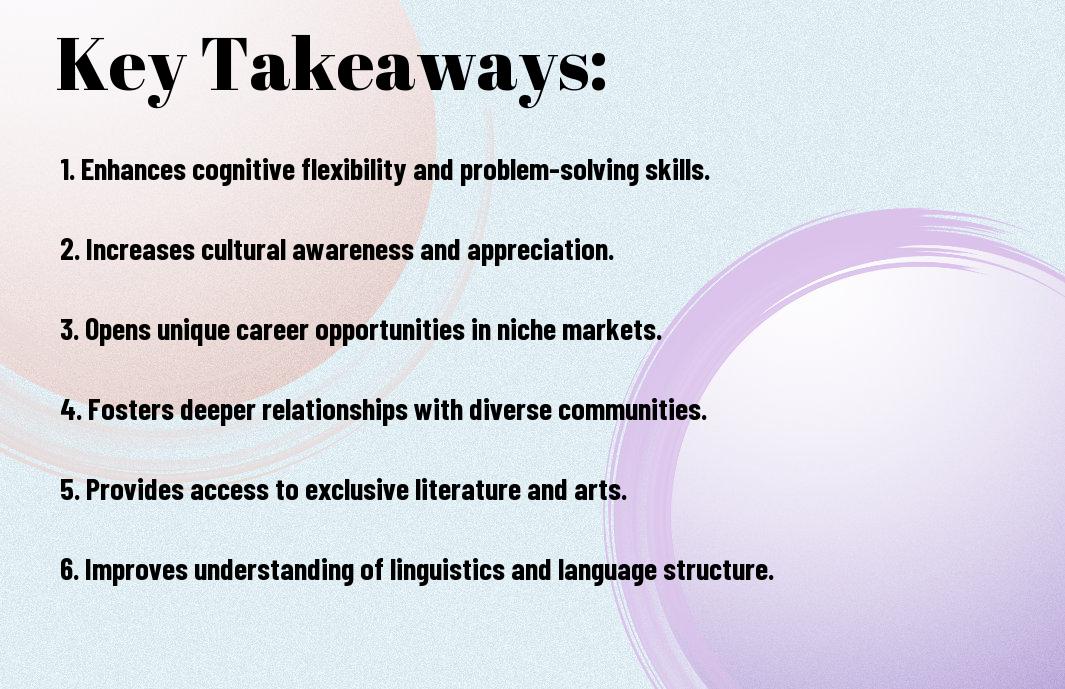
  • The ability to speak a rare language can give you a competitive edge in the job market, as it opens up opportunities for cultural exchange and international business.
  • Knowledge of obscure languages can also provide a unique perspective on the world, allowing you to access historical texts and cultural artifacts that might be inaccessible to others.
  • Speaking a less common language can be a valuable asset for diplomats, journalists, and researchers, who often need to communicate with people from diverse linguistic backgrounds.
  • Additionally, learning a rare language can be a fascinating hobby, providing a mental challenge and an opportunity to connect with communities that may be underrepresented in mainstream culture.
  • Overall, the benefits of language learning extend far beyond practical applications, as it can also broaden your understanding of the world and enrich your personal life through cultural enrichment and social connections.

Historical Significance

While knowing rare languages allows you to tap into the past, it also provides a unique perspective on historical events and cultural context, enabling you to understand your heritage in a more nuanced way.

Linguistic Heritage

Around the globe, you can discover languages that have been spoken for centuries, and by learning them, you can gain insight into your own linguistic roots and the diversity of human expression.

Cultural Preservation

Like a key to unlocking cultural treasures, knowing rare languages helps you appreciate the traditions and customs of communities that may be unfamiliar to you, allowing you to broaden your understanding of the world and your place in it.

Above all, as you investigate into the cultural preservation aspect of rare languages, you will find that it not only helps to maintain the cultural identity of communities but also enables you to connect with people from diverse backgrounds, fostering global understanding and cooperation, and enriching your life with new experiences and perspectives.

Career Opportunities

Any individual who knows rare languages can explore various career opportunities. You can learn more about some unique benefits to learning a more uncommon language and how it can benefit your career.

Diplomatic Roles

Against the backdrop of increasing globalization, you can leverage your rare language skills to secure diplomatic roles, representing your country or organization in international forums.

Translation Services

With the rise of international trade and tourism, you can offer your translation services to individuals and businesses, helping them communicate effectively across linguistic and cultural barriers.

It is worth noting that your skills in rare languages can also lead to specialized translation services, such as literary translation, technical translation, or audio-visual translation, allowing you to work on diverse projects and expand your professional network.

Cognitive Benefits

Once again, you will find that learning rare languages has numerous advantages, as discussed in this What are the benefits of learning an uncommon, less popular foreign language forum. Your brain will benefit from the challenge of learning a new language.

Enhanced Memory

By learning a rare language, you will improve your memory and concentration, as your brain will be able to process new information more efficiently.

Improved Analytical Skills

Benefits of learning a rare language include improved analytical skills, as you will be able to break down complex language structures and understand their components.

Considering the complexity of rare languages, you will develop your analytical skills, which will help you in other areas of your life, such as problem-solving and critical thinking, making you a more efficient and effective individual in your personal and professional pursuits.

Social Connections

Now, knowing rare languages can open doors to new social connections, enabling you to communicate with people from diverse cultural backgrounds, fostering deeper relationships and a broader understanding of the world.

Community Building

Beyond language barriers, you can build stronger communities by connecting with people who share your interest in rare languages, allowing you to engage in meaningful conversations and exchange ideas.

Global Networking

Globally, speaking rare languages can expand your professional network, giving you access to a unique group of individuals who share your passion for languages, and potentially leading to new career opportunities.

Also, as you navigate global networking, you’ll find that speaking rare languages can be a valuable asset in international business, diplomacy, and cultural exchange, allowing you to bridge gaps between communities and foster cooperation, ultimately enhancing your career prospects and personal growth.

Personal Enrichment

Unlike other skills, knowing rare languages can bring a unique sense of accomplishment and pride to your life. You will experience a deeper connection to the culture and community associated with the language, broadening your understanding of the world.

Broadened Perspectives

Contrary to what you might think, learning a rare language can open your eyes to new ways of thinking and problem-solving. You will gain a fresh outlook on life, allowing you to approach challenges from a different angle.

Intellectual Curiosity

Behind the desire to learn a rare language lies a sense of curiosity and adventure. You are driven to explore the unknown, to uncover the secrets and nuances of a language that few people speak.

Understanding the intricacies of a rare language can be a fascinating journey, as you investigate into the grammar, syntax, and vocabulary that make it unique. You will discover how the language reflects the history, customs, and values of its speakers, and how it has evolved over time, giving you a deeper appreciation for the diversity of human expression.

Practical Applications

Not only can knowing rare languages enhance your career prospects, but it also opens up a world of opportunities for you to engage with diverse cultures and communities.

Travel and Exploration

Beneath the surface of popular tourist destinations, you will discover unique experiences and interactions that await you when you speak a rare language, allowing you to navigate uncharted territories with ease.

Academic Research

Around the globe, scholars like you are constantly seeking to uncover new knowledge, and knowing a rare language can provide you with access to previously unexplored texts and resources.

Exploration of rare languages can lead you to uncover hidden gems in academic research, enabling you to make innovative contributions to your field and distinguishing your work from that of your peers, as you investigate into the nuances of languages that few others can understand, you will be able to provide fresh insights and perspectives that can shape the course of your discipline.

To wrap up

Now, as you consider the benefits of knowing rare languages, you can see how it enhances your career and travel opportunities. You gain a competitive edge in the job market and a deeper understanding of diverse cultures. Your ability to communicate with people from unique backgrounds expands your perspectives, making you a more empathetic and open-minded individual. By learning rare languages, you broaden your horizons and unlock new experiences.

FAQ

Q: What are the career benefits of knowing rare languages?

A: Knowing rare languages can significantly enhance one’s career opportunities, especially in fields such as international business, diplomacy, and education. It can provide a competitive edge in the job market, as individuals with rare language skills are often in high demand. Moreover, it can open up opportunities for working abroad or with international organizations, leading to a more diverse and exciting career path.

Q: How can knowing rare languages improve cultural understanding and appreciation?

A: Knowing rare languages allows individuals to gain a deeper understanding and appreciation of the associated cultures. By being able to communicate in a rare language, one can engage with native speakers, access cultural resources such as literature and media, and participate in cultural events. This can foster greater empathy, tolerance, and global awareness, enabling individuals to navigate diverse cultural contexts with confidence and sensitivity.

Q: Can knowing rare languages contribute to brain development and cognitive abilities?

A: Yes, learning and knowing rare languages can have a positive impact on brain development and cognitive abilities. It has been shown to improve memory, problem-solving skills, and multitasking abilities. Furthermore, it can delay the onset of age-related cognitive decline and even help to prevent certain neurodegenerative diseases. The cognitive benefits of learning rare languages can also transfer to other areas of life, such as improved academic performance and enhanced overall mental agility.

The Most Influential Languages in Global Communication

As you navigate the complexities of global interaction, you’ll notice that certain languages dominate your conversations, media, and online content. Your ability to communicate effectively relies on understanding these languages, which have become the cornerstone of international exchange. You may wonder which languages hold the most sway, and how they impact your daily life, from business to social media. This essay will explore the most influential languages, shedding light on their significance and your role in the global conversation.

Key Takeaways:

To understand the dynamics of global communication, it’s imperative to identify the languages that have the most significant impact. Here are the key points:

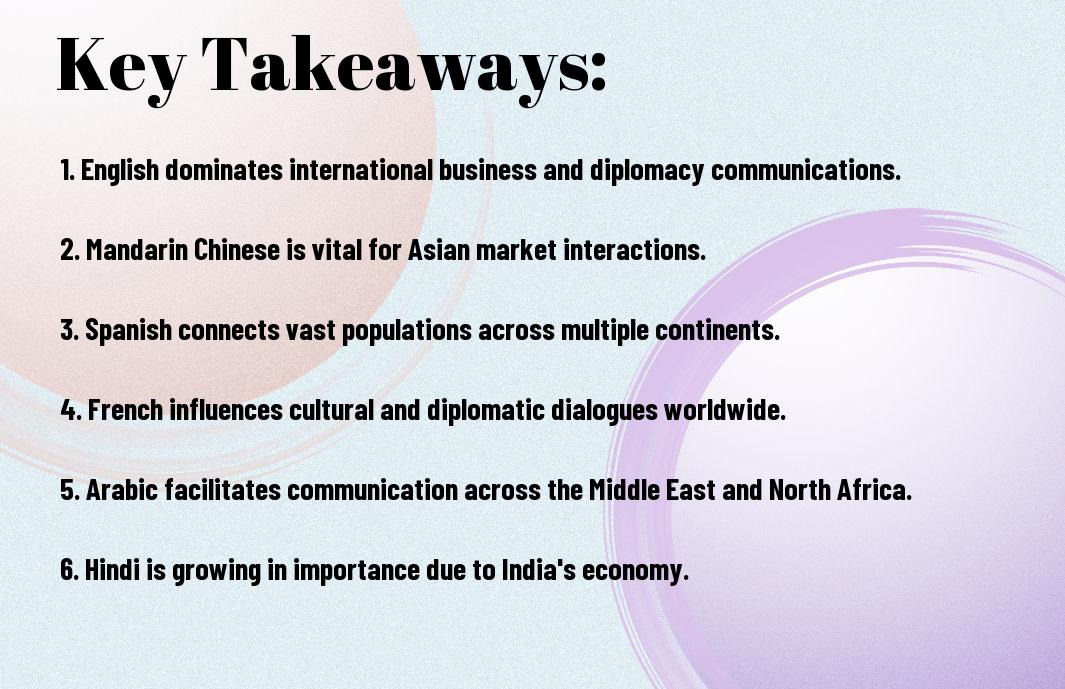
  • The English language plays a dominant role in global communication, serving as the primary language for international business, science, and technology.
  • The use of Mandarin Chinese is increasingly significant due to China’s growing economic influence, making it a key language for trade and cultural exchange.
  • The spread of Arabic and Spanish is also notable, given the large number of native speakers and the geographic reach of these languages, which contributes to their importance in global communication networks.

    Language Dominance

    Your understanding of language dominance is shaped by the most widely spoken languages in the world, which have a significant impact on global communication.

    English as a Global Language

    Around the globe, English is the language of international business, science, and entertainment, making it the most dominant language in the world, and you likely use it to communicate with people from different countries.

    Mandarin Chinese as a Rising Power

    Language skills in Mandarin Chinese are becoming increasingly valuable, as China’s economic influence expands, and you may find yourself needing to learn this language to stay competitive in the global market.

    Global economic trends indicate that Mandarin Chinese will continue to grow in importance, and as you consider the languages that will shape the future of international communication, you should take into account the rising status of Mandarin Chinese, which is already spoken by over a billion people, and its potential to rival English as a global language.

    Historical Influence

    Even as you explore the history of languages, you’ll notice that some have had a lasting impact on global communication. The influence of ancient languages can still be seen in modern languages today, shaping the way you express yourself and understand others.

    Latin and its Legacy

    Around the time of the Roman Empire, Latin emerged as a dominant language, and its legacy can be seen in many modern languages, including your own, as you use words derived from Latin roots in your daily conversations.

    Arabic and its Impact on Science and Culture

    Always a significant force, Arabic has contributed greatly to your understanding of science, mathematics, and culture, as you find Arabic terms and concepts woven into your knowledge of these fields.

    And as you probe deeper into the history of Arabic’s influence, you’ll discover that it has had a profound impact on the development of various sciences, including mathematics, astronomy, and medicine, with many Arabic terms and concepts becoming an integral part of your vocabulary and understanding of these subjects.

    Economic Factors

    To understand the influence of languages in global communication, you should consider the economic factors at play. Some key points to note include:

    • Global trade
    • Commerce

    As you explore the role of languages in the economy, you can find more information in My Guide to the Most Influential Languages in the World as a language learner. Any language you choose to learn will impact your career prospects.

    Trade and Commerce

    Alongside economic growth, a number of languages have emerged as key players in international trade. You will find that languages such as English, Mandarin, and Arabic are dominant in global commerce, facilitating communication between nations and driving economic development.

    Global Business and Language

    Business leaders recognize the importance of language skills in today’s global market. You need to be able to communicate effectively with clients, partners, and colleagues from diverse linguistic backgrounds to succeed in international business.

    For instance, as you navigate the complexities of global business, you will encounter various languages that hold significant economic value. You may find that speaking multiple languages, such as Spanish, French, or German, can give you a competitive edge in your career, allowing you to connect with customers, negotiate deals, and expand your business into new markets. You will discover that language skills are imperative for building strong relationships with international partners and staying ahead in the global economy.

    Cultural Exchange

    Keep in mind that languages play a significant role in shaping your understanding of the world. As you engage with different cultures, you’ll find that language is a key factor in facilitating exchange and cooperation.

    Language and Identity

    Culturally, your language helps define your sense of self and community, influencing your perceptions and interactions with others. You’ll notice that language is often closely tied to identity, shaping your values and beliefs.

    Language and Media

    Beneath the surface of global communication, your access to information is often determined by the languages you speak. You’ll find that language can limit or expand your access to media, shaping your worldview and cultural knowledge.

    In fact, as you explore the role of language in media, you’ll discover that it has a profound impact on your ability to engage with global events, ideas, and cultures. You’ll see that languages like English, Spanish, and Mandarin dominate international media, while others may be largely absent, limiting your exposure to diverse perspectives and ideas.

    Technological Advancements

    Unlike traditional methods, technological advancements have revolutionized the way you communicate globally. You can explore The 10 Most Spoken Languages In The World to understand the impact of technology on language learning.

    Internet and Social Media

    Above all, the internet and social media have made it easier for you to connect with people from diverse linguistic backgrounds, fostering global communication and cultural exchange.

    Language Learning and Translation Tools

    Adeptly, language learning and translation tools have become crucial for effective global communication, enabling you to overcome language barriers and engage with people from different parts of the world.

    Learning a new language has become more accessible than ever, thanks to the array of language learning and translation tools available to you. You can now use online resources to learn languages at your own pace, and translation tools to communicate with people who speak different languages, making global communication more efficient and effective for you.

    Regional Languages

    After exploring global languages, you’ll find that regional languages play a significant role in shaping your communication. You’ll notice that certain languages dominate specific regions, influencing culture and trade.

    Spanish and Portuguese in the Americas

    Linguistically, you’ll observe that Spanish and Portuguese are prevalent in the Americas, with your interactions often involving these languages in business and tourism.

    French and German in Europe

    Similarly, you’ll discover that French and German are prominent in Europe, with your travels often requiring knowledge of these languages to navigate effectively.

    A closer look at French and German in Europe reveals that you’ll encounter these languages in various aspects of your life, from education to entertainment, making them crucial for your understanding of European culture and communication.

    To wrap up

    Conclusively, you now have a sense of the most influential languages in global communication. You see that your ability to speak languages like English, Mandarin, or Spanish can significantly impact your interactions worldwide. As you navigate the complexities of global communication, your understanding of these languages will serve as a foundation for forging connections across cultures, and you will be better equipped to engage with diverse perspectives and ideas.

    FAQ

    Q: What are the most influential languages in global communication and why are they significant?

    A: The most influential languages in global communication include English, Mandarin, Spanish, Arabic, and French. These languages are significant because they are widely spoken and are often used as official languages in international organizations, business, and diplomacy. English, for instance, is the primary language of international business, science, and technology, while Mandarin is the most spoken language in the world, with a large number of native speakers. Spanish and Arabic are also widely spoken and are official languages in many countries, while French is an official language in several international organizations, including the United Nations.

    Q: How do these languages impact global communication and international relations?

    A: The most influential languages in global communication have a profound impact on international relations, trade, and cultural exchange. They facilitate communication between people from different countries and cultures, enabling the exchange of ideas, goods, and services. For example, English is often used as a lingua franca in international business meetings, while Arabic is an important language for communication in the Middle East and North Africa. Additionally, the spread of these languages has also led to the exchange of cultural practices, values, and beliefs, promoting cross-cultural understanding and cooperation. The dominance of these languages can also influence the way information is disseminated and consumed globally, shaping public opinion and international policy.

    Q: What is the future of language in global communication, and will the dominance of these languages continue?

    A: The future of language in global communication is likely to be shaped by technological advancements, demographic changes, and shifting global power dynamics. While English is likely to remain a dominant language in global communication, the rise of emerging economies such as China and India may lead to an increased use of Mandarin and other languages. Additionally, the growing importance of social media and online communication may lead to the emergence of new languages or dialects, such as pidgins or simplified languages. Furthermore, language learning and translation technologies are becoming increasingly sophisticated, making it easier for people to communicate across language barriers, which may reduce the dominance of a few select languages and promote greater linguistic diversity in global communication.

Jhere Skip to content