Learning

How to Embrace Mistakes in Language Learning

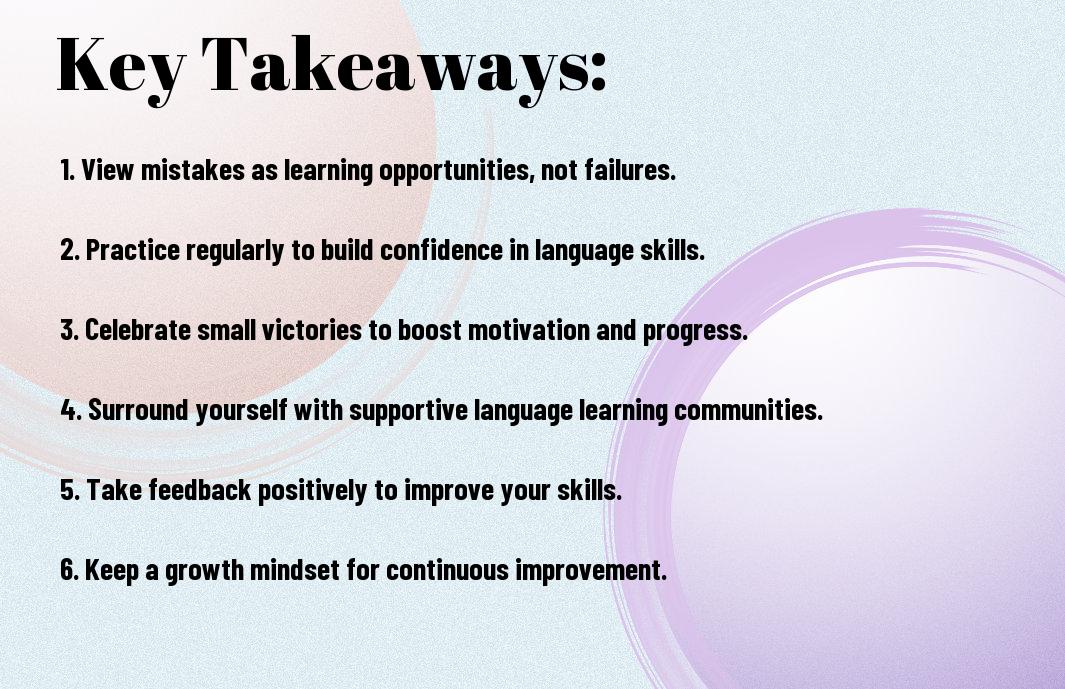
Key Takeaways:

  • Embracing mistakes is a natural part of the language learning process, and it’s necessary to view them as opportunities for growth and improvement.
  • Practice and perseverance are key to overcoming the fear of making mistakes, and to developing a growth mindset that allows learners to take risks and try new things.
  • By reframing mistakes as a normal and necessary part of the learning process, language learners can build confidence and develop a more positive attitude towards their language learning journey.

    Embracing Mistakes as a Learning Opportunity

    A key aspect of language learning is accepting that mistakes are an inevitable part of the journey. As you navigate the complexities of a new language, you will encounter numerous obstacles, but it is how you respond to these challenges that will ultimately determine your success.

    Viewing Mistakes as a Natural Part of the Learning Process

    Proceeding with the understanding that mistakes are a natural part of the learning process, you begin to see that errors are not failures, but rather stepping stones to improvement. You start to view your mistakes as opportunities to learn and grow, rather than as setbacks to be lamented.

    Developing a Growth Mindset in Language Learning

    Progressing through the language learning process, you come to realize that your abilities can be developed through dedication and hard work. You understand that your intelligence and language proficiency are not fixed traits, but rather skills that can be honed and improved over time.

    Plus, as you adopt a growth mindset, you begin to approach challenges with confidence and enthusiasm, rather than fear and trepidation. You start to see that each mistake is a chance to learn and improve, and that your language skills are constantly evolving. This mindset allows you to stay motivated and engaged, even in the face of difficulties, and to make steady progress towards your language learning goals.
    Overcoming Fear and Anxiety

    Any language learner knows that fear and anxiety can be significant obstacles to progress. You can learn more about the benefits of embracing mistakes in language learning by reading The Magic of Mistakes in Language Learning | by Ashia Jade, which offers valuable insights into the process.

    Recognizing the Sources of Fear and Anxiety in Language Learning

    By acknowledging the sources of your fear and anxiety, you can begin to address them effectively, taking the first step towards a more confident and proficient language learning experience.

    Building Confidence through Gradual Exposure to Challenges

    About the most effective way to build confidence is through gradual exposure to challenges, allowing you to become comfortable with taking risks and making mistakes in a supportive environment.

    Fear of making mistakes can hold you back from achieving your language learning goals, but by gradually exposing yourself to challenging situations, you will become more confident in your abilities, and your fear will slowly dissipate, making you a more proficient and self-assured language learner, capable of navigating complex conversations and interactions with ease, and you will find that your progress accelerates as you become more comfortable with the process of learning from your mistakes.

    Learning from Errors

    Now, as you navigate the complexities of language learning, you will inevitably encounter mistakes. These errors are an integral part of the learning process, and they provide valuable opportunities for growth and improvement.

    Identifying Common Mistakes and Their Causes

    Errors, in fact, are gateways to understanding your weaknesses and areas for development. By examining your mistakes, you can pinpoint the root causes and start working on correcting them, thus refining your language skills.

    Using Mistakes as a Chance to Improve Language Skills

    Skills, such as speaking, writing, and listening, can be honed by analyzing your mistakes and using them as a stepping stone for progress. You can learn to rephrase sentences, correct grammar, and expand your vocabulary by understanding where you went wrong.

    Hence, as you use mistakes as a chance to improve your language skills, you will find that your progress accelerates. You will become more adept at recognizing patterns of error and developing strategies to overcome them, leading to a more proficient and confident use of the language. Your ability to articulate thoughts, engage in conversations, and comprehend complex texts will significantly improve, allowing you to communicate effectively and achieve your goals.

    Practicing Self-Compassion

    All language learners make mistakes, and it’s necessary to treat yourself with kindness when you do. You’ll learn to accept your errors and move forward, rather than dwelling on them.

    Treating Yourself with Kindness and Patience

    Upon encountering a setback, you should take a step back and assess your emotions. You will find that patience and understanding help you navigate the challenges of language learning, allowing you to grow and improve.

    Focusing on Progress Rather than Perfection

    Gently, you shift your attention from flawless language skills to the progress you’ve made so far. You acknowledge the small victories, and this helps you stay motivated and encouraged throughout your learning journey.

    This approach enables you to track your development over time, celebrating the milestones you’ve achieved and identifying areas where you need more practice. You will find that focusing on progress rather than perfection helps you develop a more positive and resilient mindset, allowing you to overcome obstacles and continue making progress in your language learning endeavors, and you will be able to see how far you’ve come, which will boost your confidence and drive to keep learning.

    Creating a Supportive Environment

    For effective language learning, you need to establish an atmosphere that fosters growth and minimizes anxiety about making mistakes. This involves creating a space where you feel comfortable practicing your new language skills without fear of judgment.

    Surrounding Yourself with Positive Influences

    Prior to making significant progress, you should seek out supportive people who encourage your language learning efforts and provide helpful feedback. This will help you stay motivated and focused on your goals.

    Finding a Language Learning Community

    About the time you start looking for opportunities to practice your language skills, you will find that joining a community of fellow learners can be incredibly beneficial. You will be able to engage in conversations, share tips, and learn from one another.

    Community support is vital as you navigate the challenges of language learning. You will find that being part of a group of like-minded individuals helps you stay accountable, gain confidence, and develop a more nuanced understanding of the language. As you interact with your peers, you will begin to see improvements in your speaking, writing, and listening skills, which will, in turn, enhance your overall learning experience.

    Developing Resilience

    After encountering mistakes, you begin to develop resilience, a vital skill in language learning. As you can see in the article Mistakes help you learn – freedom to fail in games and language learning, learning from mistakes is key to progress.

    Dealing with Setbacks and Failures

    Across various aspects of language learning, you will face setbacks, but it’s how you respond that matters, and by acknowledging these setbacks, you can adjust your approach.

    Staying Motivated and Focused on Long-Term Goals

    By maintaining a growth mindset, you stay motivated and focused on your long-term goals, even when faced with difficulties, and this mindset allows you to keep moving forward.

    This approach helps you to concentrate on the larger picture, keeping in mind that language learning is a long-term process, and your ability to stay motivated will be your most valuable asset in overcoming obstacles and achieving your goals, as you continue to make progress and improve your language skills over time, with persistence and dedication.

    Conclusion

    Hence, as you continue on your language learning journey, you will encounter mistakes, but it is how you respond to them that matters. You must view your mistakes as opportunities for growth, and use them to inform your practice, refining your skills and deepening your understanding of the language, allowing you to improve with each passing day, and ultimately, becoming a proficient language learner.

    FAQ

    Q: What is the most effective way to view mistakes in language learning?

    A: When learning a new language, it’s important to see mistakes as an inevitable and valuable part of the learning process. Instead of fearing or being discouraged by errors, learners should embrace them as opportunities for growth and improvement. By doing so, learners can develop a more positive mindset and become more resilient in the face of challenges. This perspective allows learners to approach mistakes with curiosity, analyze what went wrong, and make adjustments to improve their language skills.

    Q: How can language learners overcome the fear of making mistakes in speaking and writing?

    A: To overcome the fear of making mistakes, language learners can start by practicing in low-stakes situations, such as speaking with a language exchange partner or writing journal entries. As they become more comfortable, they can gradually move on to more challenging situations, like engaging in conversations with native speakers or writing for an audience. Additionally, learners can focus on developing a growth mindset, celebrating their efforts and progress rather than fixating on perfection. By taking small steps and being kind to themselves, learners can build confidence and become more willing to take risks in their language learning journey.

    Q: What strategies can language learners use to learn from their mistakes and improve their language skills?

    A: Language learners can use several strategies to learn from their mistakes and improve their language skills. One approach is to keep a language learning journal to track errors, identify patterns, and reflect on what they’ve learned. Another strategy is to seek feedback from teachers, tutors, or language exchange partners, using their corrections and guidance to refine their skills. Learners can also practice self-correction by listening to or reading their own work, identifying areas for improvement, and making revisions. By being proactive and intentional in their learning, language learners can turn mistakes into valuable learning opportunities and make steady progress towards their language learning goals.

The Role of Language Learning Challenges in Progress

As you begin on your language learning journey, you will undoubtedly encounter numerous challenges that test your resolve and abilities. Your progress will be influenced by how you respond to these obstacles, and it is through overcoming them that you will experience significant growth. You will develop new strategies and approaches, adapting to the demands of language acquisition, and in doing so, you will refine your skills and deepen your understanding of the language, ultimately propelling your progress forward.

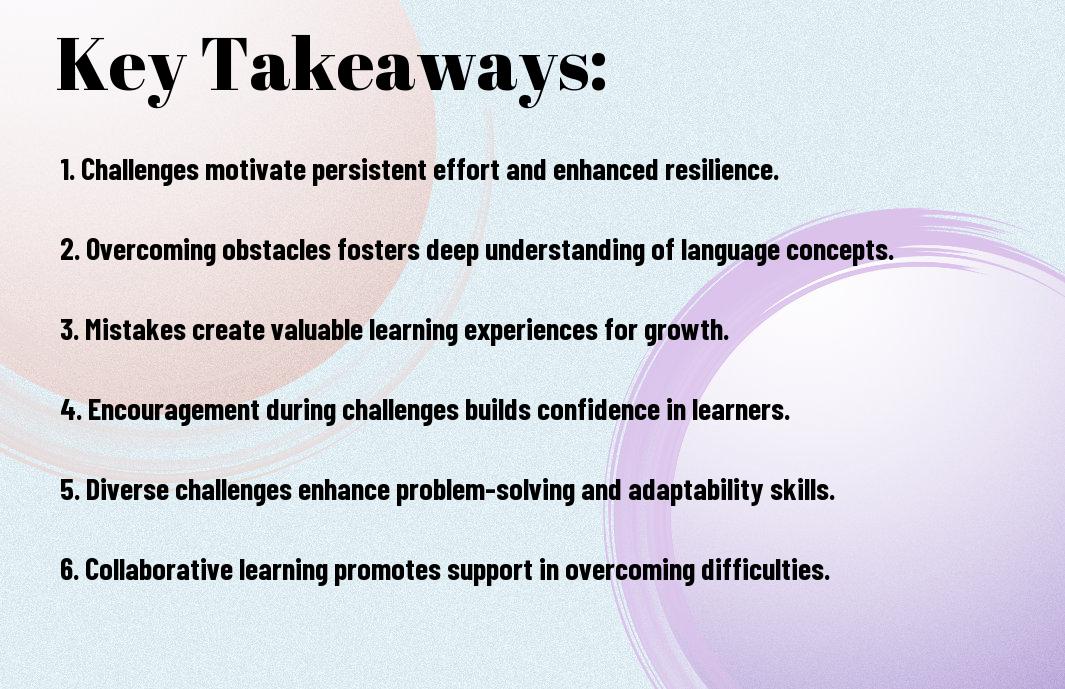
Key Takeaways:

  • Overcoming language barriers is crucial for achieving fluency in a new language, as it helps to build confidence and improve communication skills.
  • Challenging yourself with difficult vocabulary and grammar concepts can help to accelerate language learning progress and develop a deeper understanding of the language.
  • Embracing errors and setbacks as opportunities for growth and improvement can help language learners to stay and engaged in the learning process, ultimately leading to greater success in achieving their language learning goals.

Challenges in Language Acquisition

To overcome language learning challenges, you must first understand the obstacles that hinder your progress. As you begin on this journey, you will encounter various barriers that can impede your ability to acquire a new language.

Cognitive Barriers

With the complexities of language acquisition, you will face cognitive barriers that affect your ability to process and retain new information. Your brain’s ability to absorb and process new linguistic rules and patterns can be a significant hurdle.

Environmental Factors

At the outset, you are influenced by your surroundings, which can either facilitate or hinder your language learning process. You may encounter:

  • Lack of exposure to native speakers
  • Insufficient resources
  • Distracting learning environments

Knowing your environmental factors can help you develop strategies to mitigate their impact.

Hence, as you navigate the challenges of language acquisition, you will find that environmental factors play a significant role in shaping your learning experience. You may encounter:

  • Access to language learning tools
  • Opportunities for practice
  • Social support from peers and instructors

Knowing these factors will enable you to create a conducive learning environment that supports your language learning goals.

The Impact of Language Learning Challenges

There’s no denying that language learning challenges have a profound effect on your progression as a learner, pushing you to re-evaluate your approach and strive for improvement, which ultimately leads to growth.

On Personal Development

Besides the obvious benefits of language acquisition, overcoming challenges fosters resilience and adaptability, enabling you to tackle obstacles with confidence and persistence, which in turn enhances your overall personal development.

On Social Interactions

Above all, language learning challenges impact your ability to engage with others, as you navigate complex social situations and develop effective communication strategies, allowing you to build stronger relationships with native speakers and connect with diverse communities.

Language learning challenges, in the context of social interactions, present you with opportunities to engage in meaningful conversations, share your perspectives, and learn from others, thereby broadening your understanding of different cultures and ways of life, and enabling you to become a more empathetic and open-minded individual.

Overcoming Language Learning Obstacles

After encountering various hurdles, you can still make significant progress in language learning by persisted effort and dedication. You will find that your hard work pays off as you become more proficient in the language.

Effective Learning Strategies

Efficiently, you can develop strategies to tackle language learning challenges, such as setting achievable goals and practicing consistently, which will help you stay motivated and track your progress.

Technological Tools

Among the numerous resources available, you can utilize language learning apps, online courses, and podcasts to supplement your learning, making it more engaging and convenient.

Further, technological tools provide you with access to a vast array of learning materials, allowing you to practice at your own pace and focus on specific areas of improvement, thus enhancing your overall language learning experience.

Language Learning in Diverse Contexts

Not all language learning occurs in a traditional classroom setting. You will encounter diverse contexts that shape your learning experience, from informal conversations to formal instruction.

Cultural Influences

Akin to a key that unlocks new perspectives, cultural influences play a significant role in language learning, as you navigate different social norms and values that impact your communication style.

Institutional Support

Contextual factors, such as access to resources and instructional methods, affect your language learning journey, and you will find that institutional support can significantly impact your progress.

Another aspect of institutional support that you should consider is the quality of feedback and assessment, as constructive criticism and evaluation can help you refine your language skills and address areas that need improvement, allowing you to make informed decisions about your learning path.

The Role of Motivation in Language Learning

For effective language learning, you need to understand the factors that drive your progress, such as motivation, which you can explore further in Language learning: its challenges and rewards | EssayGenius.

Intrinsic Motivation

Beneath the surface of your language learning journey, you will find that intrinsic motivation, driven by personal interest and satisfaction, plays a significant role in your progress.

Extrinsic Motivation

After setting your language learning goals, you will likely encounter extrinsic motivation, driven by external factors such as rewards or social pressure, which can also impact your learning experience.

A closer examination of extrinsic motivation reveals that it can be a powerful tool to supplement your intrinsic motivation, helping you stay on track and achieve your language learning objectives, as you navigate the challenges and rewards that come with learning a new language, and you will find that understanding these motivations is crucial to your success.

Strategies for Success

Unlike other learning endeavors, language learning challenges require a unique set of strategies to overcome. You will need to develop a personalized approach to tackle difficulties and stay motivated.

Goal Setting

By establishing clear objectives, you can focus your efforts and track your progress, helping you to stay on course and make steady improvements in your language skills.

Feedback and Assessment

After receiving feedback on your language proficiency, you can identify areas for improvement and adjust your learning strategy accordingly, allowing you to refine your skills and move forward with confidence.

This process of feedback and assessment is crucial to your growth as a language learner, as it enables you to evaluate your strengths and weaknesses, and make informed decisions about your learning path, helping you to overcome challenges and achieve your goals in a more efficient and effective manner, and you will find that your language skills improve significantly as you continue to practice and refine your approach.

Final Words

With this in mind, you can now approach language learning with a newfound understanding of the challenges that lie ahead. As you tackle your linguistic goals, consider exploring 4 common language learning challenges to take on in class to enhance your skills. By acknowledging and overcoming these obstacles, you will ultimately refine your language proficiency and foster a deeper appreciation for the complexities of language learning, allowing your progress to flourish.

FAQ

Q: What is the significance of language learning challenges in measuring progress?

A: Language learning challenges play a significant role in measuring progress as they help learners assess their current level of proficiency, identify areas that require improvement, and set realistic goals for future development. By overcoming these challenges, learners can develop a sense of accomplishment and motivation, which can further enhance their language learning journey. Additionally, language learning challenges provide an opportunity for learners to develop problem-solving skills, think creatively, and learn from their mistakes.

Q: How do language learning challenges impact the development of language skills?

A: Language learning challenges have a profound impact on the development of language skills, including reading, writing, listening, and speaking. By engaging with challenging materials and tasks, learners can improve their comprehension, vocabulary, and grammar. Furthermore, language learning challenges encourage learners to practice active listening, speak confidently, and express themselves effectively in writing. As learners overcome these challenges, they develop a stronger foundation in the language, which enables them to communicate more effectively and accurately convey their intended message.

Q: What strategies can language learners use to overcome common language learning challenges and track their progress?

A: To overcome common language learning challenges and track their progress, learners can use several strategies, including setting achievable goals, creating a study schedule, and practicing consistently. Learners can also utilize language learning apps, join online communities, and engage with native speakers to stay motivated and receive feedback. Moreover, learners can track their progress by keeping a language learning journal, monitoring their test scores, and reflecting on their achievements. By adopting these strategies, learners can develop a growth mindset, stay focused, and make steady progress towards becoming proficient in the target language.

The Best Languages to Learn for Tech Enthusiasts

As you probe into the world of technology, you’ll find that learning the right programming languages can significantly enhance your skills. Your interest in tech likely stems from a desire to innovate and create. To achieve this, you need to speak the language of computers. In this article, you will discover the most valuable languages to learn, allowing you to unlock new possibilities and stay ahead in the ever-evolving tech landscape. You are about to initiate on a journey to expand your technical abilities.

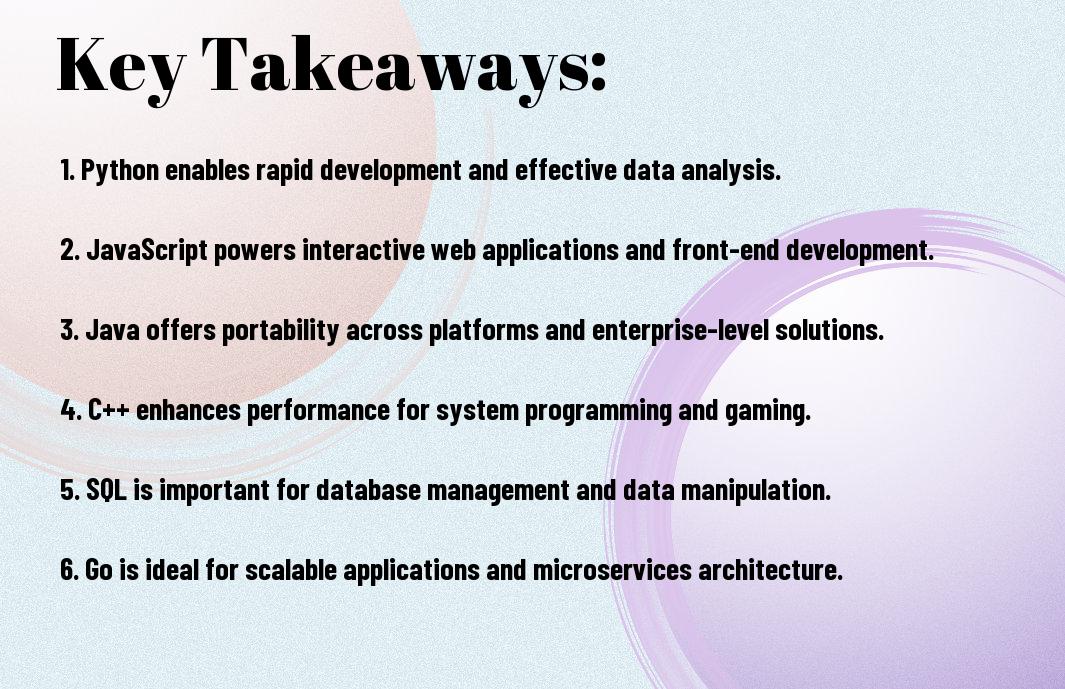
Key Takeaways:

  • The best languages to learn for tech enthusiasts include Python, Java, and JavaScript, as they are widely used in web development, data analysis, and artificial intelligence.
  • Programming languages such as C++ and Ruby are also in high demand, particularly in the fields of game development and system administration.
  • Learning in-demand languages like Swift and Kotlin can open up opportunities for mobile app development and cross-platform development, making them attractive options for tech enthusiasts looking to expand their skill set.

Benefits of Learning Programming Languages

While learning programming languages, you will discover a wide range of benefits that can enhance your tech enthusiasts’ journey. You will gain a deeper understanding of computer systems and open up new possibilities for your career and personal projects.

Improved Career Opportunities

Backing up your passion for tech with programming skills, you can unlock new career paths and increase your earning potential. You will become a more competitive candidate in the job market, with a wide range of career options available to you.

Enhanced Problem-Solving Skills

Around the globe, programmers are valued for their ability to analyze problems and develop creative solutions. You will develop strong logical thinking and problem-solving skills, which will benefit you in many areas of your life.

Improved problem-solving skills will enable you to approach complex challenges with confidence, breaking them down into manageable parts and devising innovative solutions. You will learn to debug your code, identify errors, and optimize your programs, skills that will serve you well in your future projects and endeavors.

Top Languages for Tech Enthusiasts

You will find that learning the right programming languages can significantly enhance your tech career. Your choice of language will depend on your interests and goals, but some languages are more in-demand than others.

Python for Data Science and Machine Learning

On the cutting edge of tech, Python stands out for its simplicity and versatility in data science and machine learning applications. Your proficiency in Python can open doors to exciting opportunities in these fields.

JavaScript for Web Development

Across the web development landscape, JavaScript is a dominant force, enabling you to create interactive and dynamic websites. Your knowledge of JavaScript will allow you to build robust web applications and enhance user experiences.

Consequently, as you probe deeper into JavaScript, you will discover its extensive range of libraries and frameworks, such as React and Angular, which can help you streamline your development process and create complex web applications with ease. Your mastery of JavaScript will grant you a competitive edge in the job market and open up new avenues for innovation and experimentation.

Emerging Languages in the Tech Industry

Once again, you find yourself at the forefront of innovation, with new programming languages emerging to shape the tech landscape. You can explore languages like Kotlin, Swift, and others that are gaining traction in the industry.

Kotlin for Android App Development

Among the emerging languages, Kotlin stands out for its simplicity and effectiveness in Android app development. You will find it easy to learn and use, making it an excellent choice for your next project.

Swift for iOS App Development

Similarly, Swift is quickly becoming the go-to language for iOS app development, offering you a powerful tool to create seamless and intuitive user experiences. You can leverage its high-performance capabilities to bring your app ideas to life.

At the heart of Swift’s popularity is its ability to provide you with a clean and modern syntax, making it easy to write and maintain code. You can focus on developing your app’s features and functionality, knowing that Swift will handle the underlying complexity, allowing you to create high-quality iOS apps with ease and efficiency, and taking your development skills to the next level.

Language Learning Resources

After selecting the language you want to learn, you’ll need to find the right resources to help you get started. You’ll find a wide range of options available, from online courses to books and documentation.

Online Courses and Tutorials

Resources like Codecademy, Coursera, and Udemy offer interactive coding lessons and exercises to help you learn at your own pace. You can explore various topics, from basic programming to advanced specialized courses.

Books and Documentation

On top of online resources, you can supplement your learning with books and official documentation. You can find comprehensive guides, tutorials, and reference materials to deepen your understanding of the language.

Courses may provide a foundation, but books and documentation offer in-depth knowledge and detailed explanations. You can use them to clarify concepts, explore specific topics, and develop a more nuanced understanding of the language, allowing you to become a proficient tech enthusiast.

Key Considerations for Beginners

Now, as you launch on your journey to learn a new language for tech, you’ll want to consider what languages are in demand. You can find insights on What foreign language is preferable to learn if I work on the tech industry to inform your decision.

Choosing the Right Language

Among the various options, you’ll need to select a language that aligns with your interests and career goals, considering factors such as job prospects and industry trends.

Setting Realistic Goals and Expectations

By setting achievable milestones, you’ll be able to track your progress and stay motivated throughout the learning process, which is important for success.

Language learning requires dedication and persistence, so it’s important to set realistic goals and expectations for yourself. You should consider your prior experience, the amount of time you can devote to learning, and the resources available to you. This will help you create a tailored plan that suits your needs and ensures you make steady progress in your chosen language.

Advanced Topics and Specializations

Your journey as a tech enthusiast can take you to various advanced topics, including:

  1. Artificial Intelligence
  2. Cybersecurity
Topic Description
AI Machine learning and robotics
Cybersecurity Network security and threat analysis

Artificial Intelligence and Robotics

Beside the fundamentals, you’ll explore AI applications, such as machine learning and natural language processing, to create intelligent systems that can interact with you.

Cybersecurity and Networking

After mastering the basics, you’ll investigate into network architecture, threat analysis, and security protocols to protect your systems from vulnerabilities.

Networking requires a deep understanding of how devices communicate, and as you learn more about cybersecurity, you’ll be able to design and implement secure networks that safeguard your data and systems from potential threats, allowing you to stay one step ahead of hackers and protect your digital assets.

Summing up

Ultimately, as you explore the world of tech, you’ll find that learning certain languages can enhance your skills and open new doors. You’ll discover that languages like Python, Java, and JavaScript are highly valued in the industry. By mastering these languages, you can expand your capabilities and take your tech endeavors to the next level, making your journey as a tech enthusiast more rewarding and productive. Your efforts will pay off, and you’ll be well-equipped to tackle complex challenges in the ever-evolving tech landscape.

FAQ

Q: What programming languages are most in demand for tech enthusiasts looking to start a career in the industry?

A: For tech enthusiasts, learning programming languages such as Python, JavaScript, and Java can significantly enhance career prospects. Python is versatile and widely used in data science, artificial intelligence, and machine learning. JavaScript is imperative for web development, allowing enthusiasts to create interactive web pages and develop desktop and mobile applications. Java is another popular choice, particularly for Android app development and enterprise software development. These languages are consistently in high demand across various sectors of the tech industry.

Q: How does learning a programming language benefit a tech enthusiast in terms of career advancement and personal projects?

A: Learning a programming language can profoundly impact a tech enthusiast’s career and personal projects. Professionally, it opens up opportunities in software development, data analysis, and IT, among other fields. On a personal level, it enables enthusiasts to develop their own apps, games, or software, fostering creativity and innovation. Moreover, understanding programming concepts can improve problem-solving skills and logical thinking, which are valuable assets in any career path. By acquiring programming skills, tech enthusiasts can also contribute to open-source projects, collaborate with other developers, and stay updated with the latest technological advancements.

Q: Are there any resources or platforms that tech enthusiasts can use to learn programming languages, especially for those who are beginners?

A: Yes, there are numerous resources and platforms available for tech enthusiasts to learn programming languages, catering to all levels of expertise, including beginners. Online platforms like Codecademy, Coursera, and edX offer interactive coding lessons and courses from renowned universities and institutions. Websites such as GitHub provide access to a community of developers and a wealth of open-source projects to learn from and contribute to. Additionally, YouTube channels and forums dedicated to programming can offer tutorials, tips, and support for learners. For beginners, it’s also beneficial to start with the basics of programming concepts before entering into a specific language, ensuring a solid foundation for further learning.

How to Balance Learning Multiple Languages

As you launch on the challenging journey of learning multiple languages, you will face a common dilemma: how to allocate your time and energy effectively. Your goal is to make steady progress in each language without feeling overwhelmed. You need to prioritize your schedule, set realistic goals, and develop a strategy to manage your workload. By doing so, you will be able to navigate the complexities of language learning and achieve your objectives.

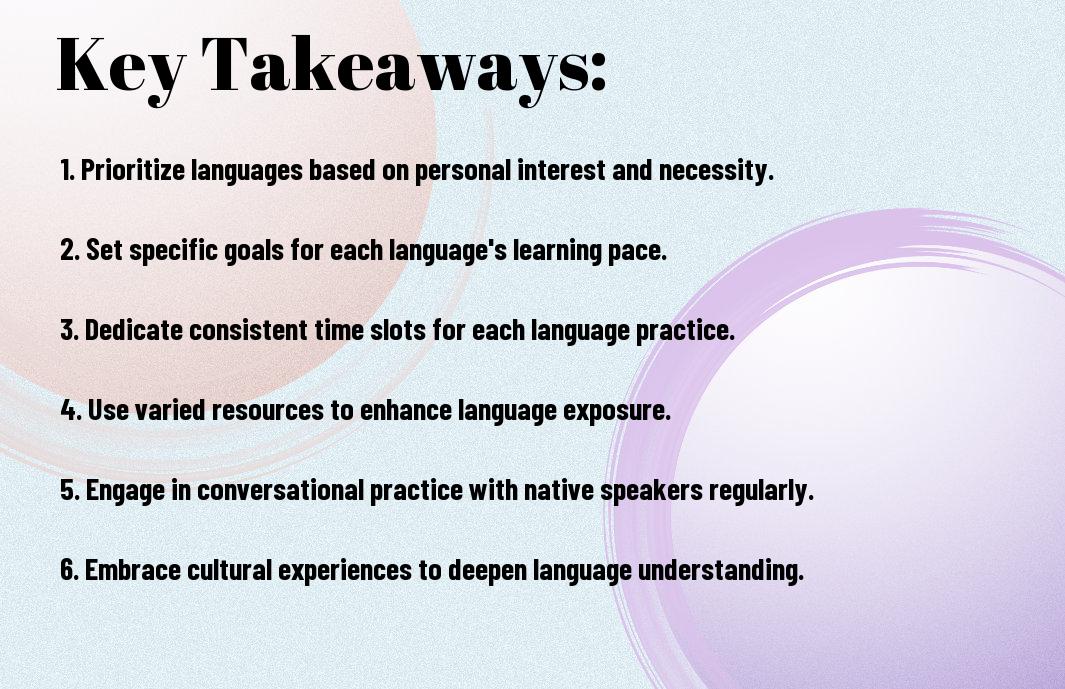
Key Takeaways:

To effectively balance learning multiple languages, consider the following points:

  • Set realistic goals and priorities to manage your time and energy efficiently, ensuring you make steady progress in each language.
  • Develop a consistent study routine, allocating specific times for each language to maintain momentum and avoid confusion between languages.
  • Utilize language learning tools and resources, such as apps, podcasts, and language exchange programs, to stay engaged and motivated in your learning journey.

Setting Goals

For your language learning journey to be successful, you need to define what you want to achieve. You can find helpful advice on managing multiple languages at For those who study two languages at the same time, how do you balance your study routine?, which can inform your approach.

Defining Language Learning Objectives

About your goals, you should consider what motivates you to learn multiple languages, and what you hope to accomplish, to help guide your efforts.

Creating a Study Schedule

With a clear plan, you can allocate time for each language, ensuring you make progress in all of them, which is vital for achieving your objectives.

It is imperative to prioritize your goals and allocate specific times for studying each language, using tools like calendars or planners to stay organized and on track, allowing you to make consistent progress and avoid burnout, as you work towards your goals, you will find that having a schedule helps you stay focused and motivated.

Language Selection

Assuming you have decided to learn multiple languages, the next step is to select the languages you want to learn. This decision will have a significant impact on your learning journey, and you should consider your motivations, interests, and goals when making this choice.

Choosing Languages to Learn

The most effective way to approach language selection is to think about your personal and professional goals, and how learning a particular language will help you achieve them. You should consider the language’s relevance to your career, travel plans, or cultural interests.

Prioritizing Language Acquisition

Along with considering your goals, you should also think about your learning style and the level of difficulty associated with each language. You may want to start with a language that is relatively easy for you to learn, and then move on to more challenging ones.

Hence, as you prioritize your language acquisition, you will need to weigh the importance of each language and allocate your time and resources accordingly. You may need to focus on one language at a time, or divide your time between two or more languages, depending on your learning style and goals. By prioritizing your language acquisition, you can create a realistic and achievable learning plan that works for you.

Time Management

Your schedule is key to balancing multiple language learning. You must prioritize your time to accommodate each language, ensuring consistent progress.

Allocating Time for Each Language

For efficient learning, divide your time among languages, setting aside dedicated periods for each, considering your goals and proficiency levels.

Avoiding Burnout and Maintaining Motivation

Timely breaks and realistic goals help you stay motivated, as overexertion can lead to burnout, hindering your progress.

And as you navigate the challenges of learning multiple languages, you will find that maintaining a balance between study and rest is vital to your success, allowing you to recharge and approach each language with renewed enthusiasm and focus, thus preventing the exhaustion that can accompany intense learning periods.

Learning Strategies

To develop effective learning strategies, you must consider your goals and schedule. As you launch on learning multiple languages, your approach should be tailored to your needs and preferences.

Immersion Techniques

With consistent practice, you can surround yourself with the languages you’re learning, using music, TV shows, and conversation to reinforce your skills.

Language Learning Tools and Resources

With access to various online platforms and language learning apps, you can supplement your learning and stay organized, tracking your progress and identifying areas for improvement.

Tools such as flashcard apps and language exchange websites can be invaluable in your language learning journey, providing you with the flexibility to learn at your own pace and connect with native speakers to practice your skills, helping you to refine your pronunciation and build confidence in using your new languages.

Staying Organized

Now that you’ve begined on learning multiple languages, staying organized is key to making progress. You’ll need to prioritize your time and schedule to ensure you’re allocating enough time for each language.

Tracking Progress and Setting Milestones

Along with setting a schedule, tracking your progress and setting milestones will help you stay motivated. You can use a journal or app to monitor your progress and celebrate your achievements.

Managing Language Learning Materials

The abundance of language learning materials can be overwhelming, but you can simplify your learning process by categorizing and prioritizing your resources. You can sort your materials into folders or digital files for easy access.

Hence, as you gather more materials, you’ll find it easier to manage your resources and focus on your learning goals. You can then adjust your approach as needed, ensuring that you’re using the most effective materials for your language learning journey, and making the most of your time and effort.

Overcoming Challenges

Keep in mind that learning multiple languages can be daunting, but with persistence, you can overcome the hurdles. You will encounter setbacks, but it’s important to stay focused on your goals.

Dealing with Language Learning Plateaus

With time, you may feel like you’re not making progress, but this is a normal part of the learning process. You can break through the plateau by adjusting your study routine or trying new materials.

Seeking Help and Support

Around you, there are numerous resources available to aid in your language learning journey. You can find language exchange partners, online forums, or tutors to help you stay motivated and improve your skills.

And as you seek help and support, you’ll find that your language learning experience becomes more enjoyable and rewarding. You can join online communities or language clubs, where you can practice speaking with native speakers and get feedback on your progress, helping you to refine your skills and stay engaged in the learning process.

Final Words

Conclusively, as you navigate the complex process of learning multiple languages, you will find that your approach must be tailored to your unique needs and goals. You must prioritize your time, set achievable milestones, and maintain consistency in your practice. By doing so, you will be able to effectively balance your language learning journey and make steady progress in mastering the languages you desire.

FAQ

Q: What is the best way to balance learning multiple languages simultaneously?

A: To effectively balance learning multiple languages, it’s crucial to create a schedule that allows you to dedicate specific times to each language. Set realistic goals and prioritize your languages based on your proficiency level and interests. Allocate your time wisely, focusing on the languages that require more attention, and make sure to leave some buffer time for review and practice. Consistency is key, so try to study each language at the same time every day or week to develop a routine.

Q: How can I avoid mixing up vocabulary and grammar rules when learning multiple languages?

A: To avoid confusion and mixing up vocabulary and grammar rules, it’s helpful to use separate notebooks, flashcards, or language learning apps for each language. This will help you keep your study materials organized and prevent you from getting languages mixed up. Additionally, focus on one language at a time during study sessions, and try to immerse yourself in each language by listening to music, watching TV shows or movies, or speaking with native speakers. This will help you develop a sense of the rhythm, tone, and nuances of each language, making it easier to distinguish between them.

Q: What strategies can I use to maintain motivation and track progress when learning multiple languages?

A: To maintain motivation and track progress, set achievable milestones and celebrate your successes, no matter how small. Use language learning apps, spreadsheets, or journals to track your progress, identify areas that need improvement, and adjust your study plan accordingly. Join a language learning community or find a language exchange partner to stay motivated and get support from others who are going through similar experiences. Regularly test your language skills, whether through quizzes, conversations with native speakers, or writing exercises, to gauge your progress and stay motivated to continue learning and improving.

How to Adapt Learning Styles for Language Acquisition

You’re about to initiate on a journey to learn a new language, and your approach will make all the difference. As you start this process, you’ll discover that your learning style plays a significant role in your progress. Your ability to absorb and retain information is unique, and understanding your strengths will help you navigate the challenges of language acquisition. You’ll need to identify what works best for you to unlock your full potential and make steady progress in your language learning endeavors.

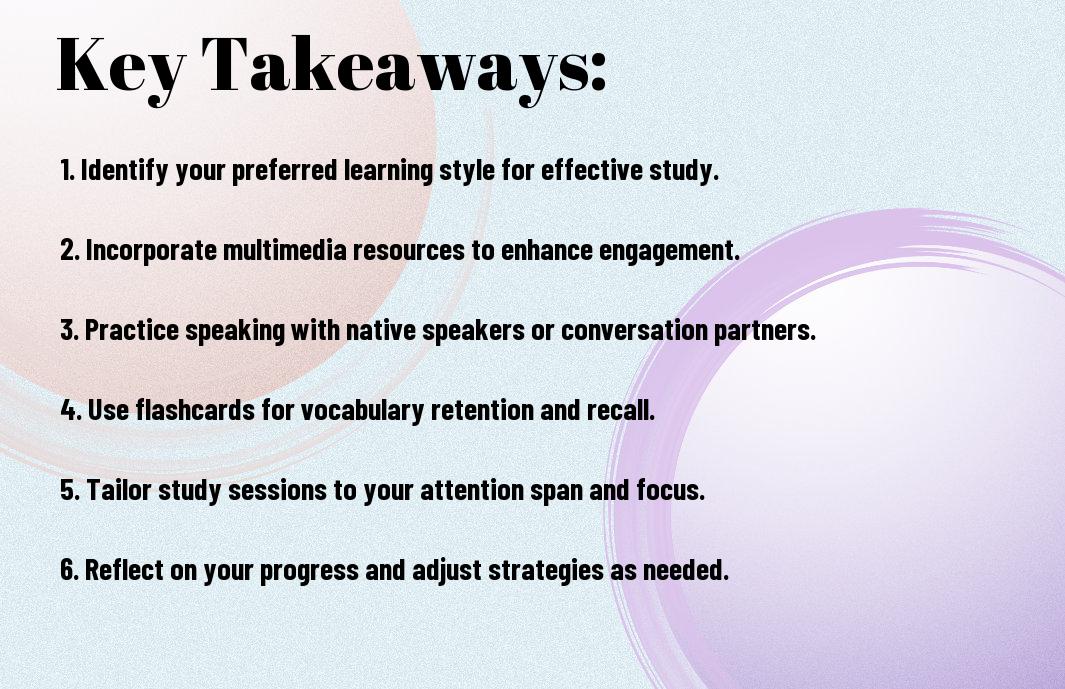
Key Takeaways:

To effectively adapt learning styles for language acquisition, consider the following points:

  • Understanding individual learning preferences is crucial to tailor the teaching approach, as some learners may be more visual, auditory, or kinesthetic.
  • Implementing a flexible curriculum that incorporates various teaching methods, such as group work, role-playing, and technology integration, can cater to different learning styles and enhance language retention.
  • Encouraging self-directed learning and providing opportunities for feedback and reflection can help learners develop autonomy and improve their language skills more efficiently, leading to better academic achievement and increased confidence in using the target language.

    Identifying Learning Styles

    A key step in adapting your learning approach is to identify your individual learning style, which can significantly impact your language acquisition journey, so you can tailor your study methods to suit your needs and maximize your progress.

    Visual Learning

    After determining your learning style, if you find that you are a visual learner, you will likely benefit from using images, videos, and graphics to help you understand and retain new language information, allowing you to associate words and concepts with visual cues that you can easily recall.

    Auditory Learning

    One of the most effective ways to learn a new language is through auditory means, and if you are an auditory learner, you will likely find that listening to music, podcasts, or native speakers helps you pick up the sounds, rhythms, and intonations of the language, making it easier for you to mimic and reproduce them in your own speech.

    Understanding how auditory learning works can help you take advantage of its benefits, and as you tune in to the unique sounds and rhythms of your target language, you will start to develop your ability to distinguish between similar sounds, pick up on nuances of pronunciation, and even improve your own speaking skills, allowing you to engage more effectively with native speakers and immerse yourself in the language, all of which are necessary components of successful language acquisition.

    Language Acquisition Principles

    Some key principles guide your language learning journey, and understanding them is important to adapting your learning style. You’ll find that acquiring a new language is a complex process that involves multiple factors, including your motivation, learning environment, and individual characteristics.

    Immersion Techniques

    Practically, the most effective way to learn a language is to surround yourself with it, using immersion techniques to absorb the sounds, rhythms, and grammar of the new language. You can achieve this by listening to music, watching TV shows or movies, and speaking with native speakers.

    Repetition and Practice

    With consistent effort, you’ll start to see progress in your language skills, and repetition and practice will become your most valuable tools. You’ll need to practice speaking, writing, and listening regularly to reinforce new language patterns and build your confidence.

    Further, as you engage in repetition and practice, you’ll notice that your brain starts to rewire itself, making new connections and strengthening existing ones, allowing you to access the language more easily and spontaneously, and your skills will become more automatic and natural-sounding, helping you to communicate effectively in your new language.

    Adaptation Strategies

    Not every learner is the same, and adapting your learning style is key to language acquisition. You can found more information about Language Learning Styles and What Works for You to help you tailor your approach. This will enable you to make the most of your language learning journey.

    Personalized Learning Plans

    Besides understanding your learning style, creating a personalized plan helps you stay focused and motivated. You can identify your strengths and weaknesses, and develop strategies to improve your language skills. This will allow you to make progress at your own pace.

    Technology Integration

    Integrating technology into your language learning can be a game-changer. You can access a wide range of resources, from language learning apps to online courses, to help you practice and improve your skills. This will enable you to learn more efficiently and effectively.

    Learning a new language with technology integration can be a fun and engaging experience. You can use interactive tools, such as language exchange websites and mobile apps, to practice your speaking and listening skills. You can also access online resources, such as videos and podcasts, to learn new vocabulary and grammar rules. This will help you stay motivated and interested in the learning process.

    Effective Instruction Methods

    Many language learners benefit from tailored instruction, and you can adapt your teaching to suit individual styles. By understanding your students’ strengths and weaknesses, you can create a more effective learning environment, helping them to absorb and retain new language skills.

    Interactive Lessons

    Efficient instruction involves engaging your students in interactive lessons, where you encourage discussion, role-playing, and hands-on activities, allowing them to practice their language skills in a supportive setting, and you can adjust your approach to meet their unique needs.

    Real-World Applications

    Realistic learning experiences help you connect language acquisition to everyday life, making it more relatable and interesting, as you learn to communicate in practical situations, and your language skills become more relevant and useful.

    Further exploration of real-world applications can help you discover new ways to make language learning more enjoyable and effective, such as using authentic materials, like news articles or videos, to teach vocabulary and grammar in context, allowing you to see the language in action and apply it to your own life.

    Overcoming Learning Barriers

    To tackle the obstacles that hinder your language acquisition, you need to understand the roots of your learning difficulties. Identifying these barriers is the first step towards creating a personalized learning plan that suits your needs.

    Building Confidence

    Besides developing a growth mindset, you can build confidence by setting achievable goals and celebrating your progress, no matter how small. This will help you stay motivated and focused on your language learning journey.

    Addressing Learning Disabilities

    Between the lines of language learning lies the importance of acknowledging any learning disabilities you may have. You can work with your instructor to develop strategies that cater to your needs, ensuring you have an equal opportunity to learn and succeed.

    In addition to seeking guidance from your instructor, you can also explore various tools and resources designed to support learners with disabilities. By doing so, you’ll be able to create a tailored approach that addresses your unique challenges and helps you overcome them, ultimately enhancing your language acquisition experience.

    Implementation and Assessment

    Unlike other learning processes, adapting learning styles for language acquisition requires a tailored approach. You’ll need to consider your individual needs and goals to create an effective plan.

    Setting Goals and Objectives

    Among the first steps in implementing your language learning plan is setting achievable goals and objectives. You’ll want to identify what you want to accomplish and by when, helping you stay focused and motivated.

    Evaluating Progress

    Against the backdrop of your overall progress, it’s important to regularly assess your language skills. You’ll want to track your improvement and make adjustments as needed to stay on track.

    Indeed, evaluating your progress is an ongoing process that helps you refine your approach and make informed decisions about your learning strategy. As you assess your progress, you’ll identify areas where you need more practice or review, allowing you to adjust your plan and make steady gains in your language skills, and you will be able to develop a more effective learning style that suits your needs.

    Conclusion

    Following this guide, you’ll be able to tailor your learning approach to suit your needs, making language acquisition more effective. You’ll identify your learning style and adapt it to absorb new language skills, using techniques that work best for you. Your journey to mastering a new language will be more efficient, and you’ll be able to track your progress, staying motivated along the way.

    FAQ

    Q: What are the different types of learning styles and how do they impact language acquisition?

    A: There are several learning styles, including visual, auditory, and kinesthetic. Visual learners acquire language best through images, videos, and written texts. Auditory learners thrive in environments where they can listen to native speakers, podcasts, or audio recordings. Kinesthetic learners, on the other hand, learn by practicing and engaging in physical activities related to the language, such as role-playing or writing. Understanding and adapting to these learning styles can significantly enhance the language learning process, making it more effective and engaging for learners.

    Q: How can language instructors adapt their teaching methods to accommodate different learning styles in the classroom?

    A: Instructors can adapt their teaching methods by incorporating a variety of activities and resources that cater to different learning styles. For instance, they can use multimedia presentations for visual learners, provide audio materials and encourage class discussions for auditory learners, and design interactive exercises and activities for kinesthetic learners. Additionally, instructors can offer one-on-one support or group work that allows learners to work in their preferred style, thereby promoting a more inclusive and effective learning environment.

    Q: What strategies can language learners use to identify and utilize their preferred learning style for more effective language acquisition outside of the classroom?

    A: Language learners can start by identifying their preferred learning style through self-assessment or by trying out different learning methods to see what works best for them. Once they have identified their style, they can seek out resources and tools that align with it, such as language learning apps, videos, podcasts, or language exchange programs. They can also create a personalized learning plan that incorporates their preferred style, setting realistic goals and tracking their progress. This self-directed approach enables learners to take charge of their language learning, making the process more enjoyable and fostering a deeper engagement with the target language.

Jhere Skip to content