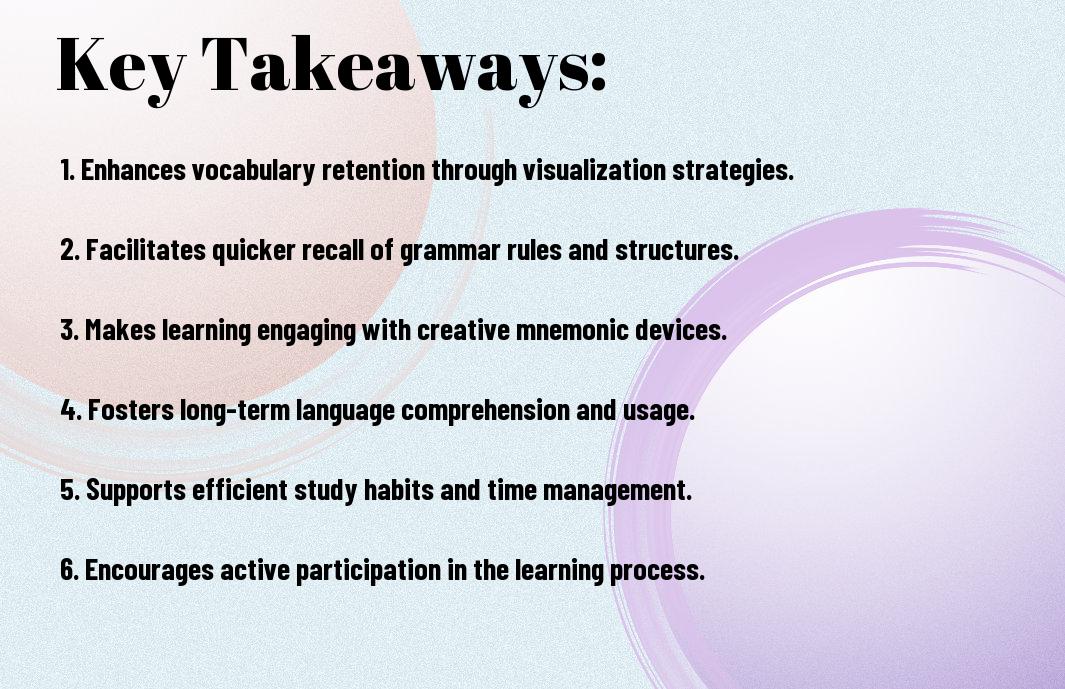
- Effective use of mnemonic devices can significantly improve language learners’ ability to retain new vocabulary and grammar rules, leading to better overall language proficiency.
- Association techniques, such as linking new words to personal experiences or emotions, can help learners to connect new language information to their existing knowledge and experiences, making it easier to recall.
- Developing a range of repetition strategies, including spaced repetition and active recall, can help language learners to consolidate new language information in their long-term memory, allowing for more efficient and effective language learning.

The Power of Memory
Before you commence on your language learning journey, it’s imperative to understand the significance of memory techniques in acquiring and retaining new information, and you’ll soon discover how it can elevate your learning experience.
Improving Vocabulary Retention
Retention of new words and phrases is key to language learning, and you’ll find that using memory aids like flashcards and association can significantly improve your ability to recall vocabulary, making your learning process more efficient and enjoyable for you.
Enhancing Language Comprehension
Powering your way through language barriers, you’ll discover that memory techniques can help you grasp complex grammar rules, idiomatic expressions, and nuances of the language, allowing you to communicate more effectively and confidently, as you progress in your learning journey.
This ability to comprehend and engage with the language on a deeper level will enable you to navigate real-life situations with ease, understand various contexts, and even pick up on subtle cues, all of which will make you a more proficient and expressive language user, capable of conveying your thoughts and ideas with precision and clarity.
Effective Memory Techniques
Even the most avid language learners can struggle to commit new information to long-term memory. You’ll find that employing memory techniques can greatly enhance your ability to absorb and retain new language skills.
Association and Visualization
Around the time you start learning a new language, you’ll discover that linking new words to vivid mental images or personal experiences helps solidify them in your mind, making recall easier for you.
Repetition and Spaced Repetition
About the most effective way to reinforce new language skills is through repetition, where you revisit and practice new words or phrases at increasingly longer intervals, allowing you to gradually build a strong foundation.
Due to the way your brain processes and retains information, spaced repetition can be particularly helpful in language learning, as it helps prevent the forgetting curve and allows you to focus on the most challenging material, ultimately making your learning process more efficient and effective for you.
Language Learning Strategies
Unlike other skills, language learning requires a combination of cognitive and memorization techniques. You will find that using the right strategies can greatly enhance your ability to absorb and retain new information, making the learning process more efficient and effective.
Using Mnemonics and Acronyms
After experimenting with different methods, you’ll discover that mnemonics and acronyms can be powerful tools in your language learning arsenal, helping you to associate new words and phrases with memorable images or sounds.
Creating Mental Maps and Chains
Among the various techniques at your disposal, creating mental maps and chains can be a particularly effective way to organize and connect new information, allowing you to visualize relationships between words and concepts.
Maps of your mental landscape can become increasingly complex as you learn more, but this is a good thing – it means you’re building a rich and interconnected web of knowledge that you can draw upon as you continue to learn and grow, and you’ll find that your ability to recall and use new language improves dramatically as a result.
Overcoming Language Barriers
Despite the challenges you face in learning a new language, you can overcome them by utilizing effective memory techniques. You can learn more about how working memory impacts language acquisition by reading The Role of Working Memory in SLA, which sheds light on this fascinating topic.
Building Confidence and Fluency
Fluidly, you’ll start to notice improvements in your language skills as you practice consistently, and your confidence will grow, allowing you to express yourself more effectively in your new language.
Practicing Active Recall and Summarization
Linguistically, you’ll find that active recall and summarization are powerful tools to reinforce your learning, helping you to better understand and retain new information.
Understanding how to apply these techniques can make a significant difference in your language learning journey, as you’ll be able to engage more actively with the material, testing your knowledge and identifying areas where you need more practice, and you’ll find that your progress will accelerate as you continue to challenge yourself in this way.
The Role of Technology
After delving into the world of memory techniques, you’ll find that technology plays a significant role in enhancing your language learning experience. You can utilize various digital tools to aid in your learning journey, making the process more engaging and effective.
Utilizing Language Learning Apps
The advent of language learning apps has revolutionized the way you learn a new language, providing you with a wealth of resources at your fingertips, from interactive lessons to speech recognition tools.
Leveraging Digital Flashcards and Quizzes
The digital equivalent of traditional flashcards and quizzes offers you a convenient way to test your knowledge and track your progress, helping you identify areas where you need to focus your attention.
With digital flashcards and quizzes, you can create customized learning materials tailored to your needs, allowing you to practice vocabulary and grammar in a fun and interactive way, and you’ll find that your language skills improve significantly as you continue to use these tools to reinforce your learning.
Maintaining Motivation
All language learners face the challenge of staying motivated, and you are no exception. You’ll encounter obstacles, but with the right mindset, you can overcome them and achieve your goals.
Setting Realistic Goals and Rewards
Motivated by your desire to learn, you set achievable targets and reward yourself for each milestone reached, keeping your enthusiasm high.
Finding a Language Learning Community
Between the lines of language learning books and online resources, you discover the value of connecting with fellow learners, sharing experiences, and gaining new insights.
For instance, joining a language exchange program or online forum can provide you with a sense of belonging and accountability, as you engage with others who are on a similar journey, helping you stay motivated and inspired to continue improving your language skills.
Summing up
Presently, you’ve seen how memory techniques can be a powerful ally in your language learning journey. You’ve discovered that by using these techniques, you can improve your ability to absorb and retain new information, making your learning process more efficient. As you continue to hone your skills, you’ll find that your mind becomes a sharper tool, capable of picking up nuances and details that once seemed elusive, and your grasp of the language will become more confident and intuitive, drawing you deeper into the world of communication.
FAQ
Q: What is the significance of memory techniques in language learning, and how do they impact the learning process?
A: Memory techniques play a vital role in language learning as they enable learners to effectively encode, store, and retrieve vocabulary, grammar rules, and other important language components. By utilizing methods such as mnemonics, visualization, and chunking, learners can improve their ability to absorb and apply new language information, leading to enhanced fluency and accuracy in communication. These techniques also help to alleviate the cognitive load associated with language learning, allowing learners to focus on higher-level skills such as comprehension and expression.
Q: How can memory techniques be applied to vocabulary acquisition in language learning, and what are some effective methods for learners to try?
A: Memory techniques can be applied to vocabulary acquisition through various methods, including the use of flashcards, word associations, and mind maps. Learners can also employ techniques such as spaced repetition, where vocabulary is reviewed at increasingly longer intervals to help solidify it in long-term memory. Additionally, learners can use visual imagery to associate new words with memorable images or scenarios, making them easier to recall. By incorporating these methods into their study routine, learners can expand their vocabulary and improve their ability to use new words in context.
Q: Can memory techniques be used to improve grammar and sentence structure in language learning, and if so, how can learners effectively utilize them?
A: Yes, memory techniques can be used to improve grammar and sentence structure in language learning. Learners can use techniques such as rhymes, songs, or chants to help them internalize grammar rules and patterns, making them easier to apply in sentence construction. Additionally, learners can create mental frameworks or diagrams to organize and visualize grammar concepts, such as verb conjugations or sentence diagrams. By using these techniques, learners can develop a deeper understanding of how the language works and improve their ability to express themselves accurately and effectively in writing and speaking.
Memory
What are the most effective methods for retaining vocabulary in a new language

Consistency is key when it comes to retaining vocabulary in a new language. To enhance your language learning journey, you can try various effective methods. Whether it’s practicing daily, using flashcards, or immersing yourself in the language, there are strategies that can help you retain and expand your vocabulary. For more tips on mastering vocabulary retention, check out Ten ways to learn new words as a language learner. Be mindful of, persistence and dedication are vital in achieving your language learning goals.
Key Takeaways:
- Consistent practice: Regularly engaging with the language through reading, writing, speaking, and listening helps reinforce vocabulary retention.
- Utilize mnemonics: Creating mental associations or using memory tricks can make vocabulary easier to recall.
- Use spaced repetition: Reviewing vocabulary at increasing intervals over time can solidify long-term retention.

Setting the Foundation
For 7 Most Effective Ways To Learn Vocabulary In A New Language, setting a strong foundation is crucial for retaining vocabulary. When begining on learning a new language, creating a structured routine is key to your success.
Creating a Language Learning Routine
The first step in setting the foundation for retaining vocabulary in a new language is establishing a consistent language learning routine. By dedicating specific times each day to practice vocabulary, you create a habit that reinforces language retention. Whether it’s 15 minutes in the morning or half an hour before bed, consistency is key. Make language learning a part of your daily routine to internalize vocabulary effectively.
Building a Vocabulary Notebook
Creating a vocabulary notebook is a powerful tool for retaining new words and phrases in a structured way. This notebook can be physical or digital, depending on your preference. In this notebook, you can jot down new words, their meanings, and even example sentences to provide context. Organizing your vocabulary in this manner helps you review and reinforce the words regularly, leading to better retention over time.
Plus, you can personalize your vocabulary notebook by categorizing words based on topics or themes, making it easier to recall and associate related words together. This method not only aids in vocabulary retention but also enhances your overall language learning experience.
Active Recall Techniques
If you want to retain vocabulary in a new language effectively, active recall techniques are key. By actively engaging with the material rather than just passively reviewing it, you can significantly improve your retention. Here are some effective methods to incorporate active recall techniques into your language learning routine.
Flashcards: A Classic Method
One classic method that has stood the test of time is using flashcards. This simple yet powerful technique involves writing a word or phrase in the target language on one side of the card and the translation on the other. By regularly quizzing yourself with these flashcards, you strengthen your memory and improve your recall of vocabulary.
Quizzing Yourself: The Power of Self-Testing
One effective way to practice active recall is by quizzing yourself regularly. This can be done using various methods, such as covering up the meanings of words in your notes and trying to recall them, or writing out sentences using newly learned vocabulary without looking at your resources. By actively recalling the information without prompts, you reinforce your memory and deepen your understanding of the language.
Classic self-testing techniques like quizzing yourself not only help with memorization but also enhance your ability to recall information quickly and accurately. This active engagement with the material promotes more robust connections in your brain, making the vocabulary more accessible when you need it.
Games and Activities: Making Learning Fun
Self-testing doesn’t have to be boring – incorporating games and activities into your language learning routine can make the process more enjoyable and effective. There are numerous language learning apps and online platforms that offer interactive games and quizzes designed to help you retain vocabulary in a fun and engaging way. By making learning enjoyable, you are more likely to stay motivated and committed to your language learning journey.
Making learning fun through games and activities not only breaks the monotony of traditional study methods but also stimulates different areas of your brain, further enhancing your retention of vocabulary. Consider incorporating language learning games into your routine to keep things engaging and exciting while reinforcing your knowledge.

Contextual Learning
Reading in the Target Language
For contextual learning, reading in the target language can be incredibly beneficial. Not only does it expose you to new vocabulary in different contexts, but it also helps you understand how words are used in real-life situations. When you read, pay attention to the context in which words are used, as this can give you a deeper understanding of their meanings and nuances.
Listening to Native Speakers
With listening to native speakers, you immerse yourself in the natural flow and rhythm of the language. This can help you pick up on pronunciation, intonation, and how words are connected in speech. By regularly listening to native speakers, you train your ear to recognize words and phrases more quickly, which can enhance your vocabulary retention.
This method also allows you to grasp colloquial expressions, slang, and idiomatic phrases that might not be found in textbooks. Additionally, hearing how words are pronounced by native speakers can improve your own pronunciation and fluency in the language.
Watching TV Shows and Movies with Subtitles
Subtitles are a great tool for language learning as they provide you with both auditory and visual input. When watching TV shows and movies in the target language with subtitles, you can associate spoken words with their written form, reinforcing your vocabulary retention. This method also helps you understand how words are pronounced and spelled correctly.
Furthermore, watching TV shows and movies can expose you to a variety of accents and dialects, helping you become more familiar with different nuances of the language. Subtitles act as a safety net, aiding comprehension and allowing you to follow along even if you miss a word or phrase.
Reading, listening, and watching with subtitles are effective ways to immerse yourself in the language and retain vocabulary in a new language. Be mindful of, consistency is key when using these methods, so make them a part of your daily language learning routine for optimal results.
Repetition and Spaced Review
Keep repeating those new words if you want them to stick in your memory. The power of repetition cannot be overstated when it comes to language learning. However, what can take your vocabulary retention to the next level is spaced repetition.
The Science Behind Spaced Repetition
Repetition alone isn’t enough; you need to space out your review sessions intelligently. The spaced repetition technique involves revisiting words at increasing intervals to strengthen your long-term memory. This method leverages the psychological spacing effect, which shows that information is better retained when revisited at spaced intervals rather than cramming all at once.
Using Apps and Software for Efficient Review
Using language learning apps and software can supercharge your vocabulary retention efforts. These tools often incorporate spaced repetition algorithms into their programs, helping you review words at optimal intervals for maximum retention. They can track your progress, identify your weak areas, and tailor the review sessions to suit your learning pace.
Apps and software offer a convenient way to carry your vocabulary review wherever you go. With mobile applications, you can sneak in quick review sessions during your commute or while waiting in line, making the most of those idle moments to reinforce your language skills.
Creating a Review Schedule
For a more structured approach to vocabulary retention, creating a review schedule can keep you on track. Allocate specific time slots each day for reviewing your language flashcards or app exercises. Consistency is key here, as regular and spaced out review sessions will help cement those new words in your memory.
Reviewing right before bedtime can also be beneficial, as studies suggest that information reviewed before sleep is better consolidated in the brain. Experiment with different times of the day to find what works best for you in retaining vocabulary effectively.

Mnemonics and Associations
Now let’s explore the use of mnemonics and associations to help you retain vocabulary in a new language.
The Power of Association
With the power of association, you connect new words or phrases to something familiar or meaningful to you. By linking the new vocabulary to something already ingrained in your memory, you create stronger neural connections, making it easier to recall the words when you need them. For example, if you’re learning the word “casa” in Spanish for house, you can associate it with your own house or a friend’s house to solidify the meaning in your mind.
Creating Memorable Mnemonics
One effective technique for retaining vocabulary is creating memorable mnemonics. Mnemonics are memory aids that help you associate new words with visual or auditory cues. For instance, you can visualize a picture or story that represents the word you want to remember. If you’re trying to learn the French word “poisson” for fish, you could imagine a fish wearing a crown (poiSSon sounds like “king” in English) to help cement the association in your memory.
Association is key to making mnemonics work efficiently. By forming strong connections between the new vocabulary and something you already know, you enhance your ability to recall the words accurately.
Using Music and Rhythm to Aid Memory
Memorable melodies and rhythms can also be powerful tools for retaining vocabulary. Research has shown that music can enhance memory retention and recall. By setting new words to a catchy tune or rhythm, you create a pleasurable learning experience that sticks in your mind. So, consider creating your language playlists or rhymes to help you remember imperative vocabulary effortlessly.
Plus, incorporating music and rhythm into your language learning routine not only aids in memorization but also adds an element of fun and creativity to your study sessions. So, don’t hesitate to sing along with new words or create your own language jingles to make vocabulary retention a joyful experience.
Immersion and Interaction
Surrounding Yourself with the Language
Many language learners find that immersing themselves in the new language is one of the most effective ways to retain vocabulary. Surrounding yourself with the language by changing the language settings on your devices, listening to music and watching movies in the target language, and reading books or news articles can help reinforce the words you have learned.
Additionally, labeling objects in your home with their corresponding foreign word can create a language-rich environment, making it easier for you to remember vocabulary through daily interactions.
Practicing with Native Speakers
Interaction with native speakers is vital for language retention. By practicing with native speakers, you not only improve your speaking and listening skills but also gain insight into colloquial expressions and cultural nuances that textbooks may not cover. It can be intimidating at first, but don’t be afraid to make mistakes – native speakers appreciate your efforts in learning their language.
Engaging in conversations with native speakers can help you solidify vocabulary, as you have to actively recall words on the spot. This real-time interaction challenges your brain to retrieve and apply the vocabulary you have learned, reinforcing your memory.
Joining Language Exchange Communities
Language exchange communities provide a platform for you to connect with language learners who are native speakers of the language you’re studying, and vice versa. By engaging in language exchange sessions, you not only practice speaking with native speakers but also teach them your native language in return.
Another benefit of joining language exchange communities is the cultural exchange experience. Through conversations and interactions with native speakers, you not only improve your language skills but also gain insight into their traditions, customs, and way of life, enriching your overall language learning experience.
Conclusion
Drawing together all the effective methods for retaining vocabulary in a new language, it is clear that consistent practice, active engagement with the language, and using a variety of techniques like flashcards, spaced repetition, and language learning apps can significantly boost your retention. By immersing yourself in the language, setting achievable goals, and making vocabulary learning a daily habit, you can make steady progress in expanding your language skills.
Recall, everyone’s language learning journey is unique, so it’s important to find the methods that work best for you and stick with them. With dedication and persistence, you’ll see improvements in your vocabulary retention and overall language proficiency over time. So, keep up the good work, stay motivated, and enjoy the journey of learning a new language!
FAQ
Q: What are the most effective methods for retaining vocabulary in a new language?
A: To retain vocabulary in a new language effectively, it is important to practice consistently. One of the most effective methods is spaced repetition, where you review words at increasing intervals to strengthen your memory. Flashcards, language learning apps, and incorporating new words into sentences or conversations can also help reinforce vocabulary retention.
Q: How can I make vocabulary learning more engaging and meaningful?
A: To make vocabulary learning more engaging and meaningful, try to connect new words to images, experiences, or emotions. Creating mnemonics, using interactive resources like videos or games, and exploring cultural contexts related to the language can make the learning process more enjoyable and memorable.
Q: Are there specific techniques to boost vocabulary retention while learning a new language?
A: Yes, there are various techniques that can boost vocabulary retention while learning a new language. Some effective strategies include practicing active listening, repeating words aloud, writing vocabulary lists or sentences, and participating in language exchange with native speakers. Additionally, setting specific learning goals, tracking your progress, and revisiting previously learned words regularly can enhance retention.