overcome

How to Overcome Language Learning Anxiety

As you initiate on your language learning journey, you may encounter a common obstacle: language learning anxiety. You may feel nervous about speaking, worried about making mistakes, or intimidated by native speakers. Your anxiety can hinder your progress and prevent you from reaching your full potential. However, with the right strategies and mindset, you can overcome your anxiety and become a confident language learner, unlocking a world of new opportunities and experiences. You will learn how to manage your anxiety and improve your language skills.

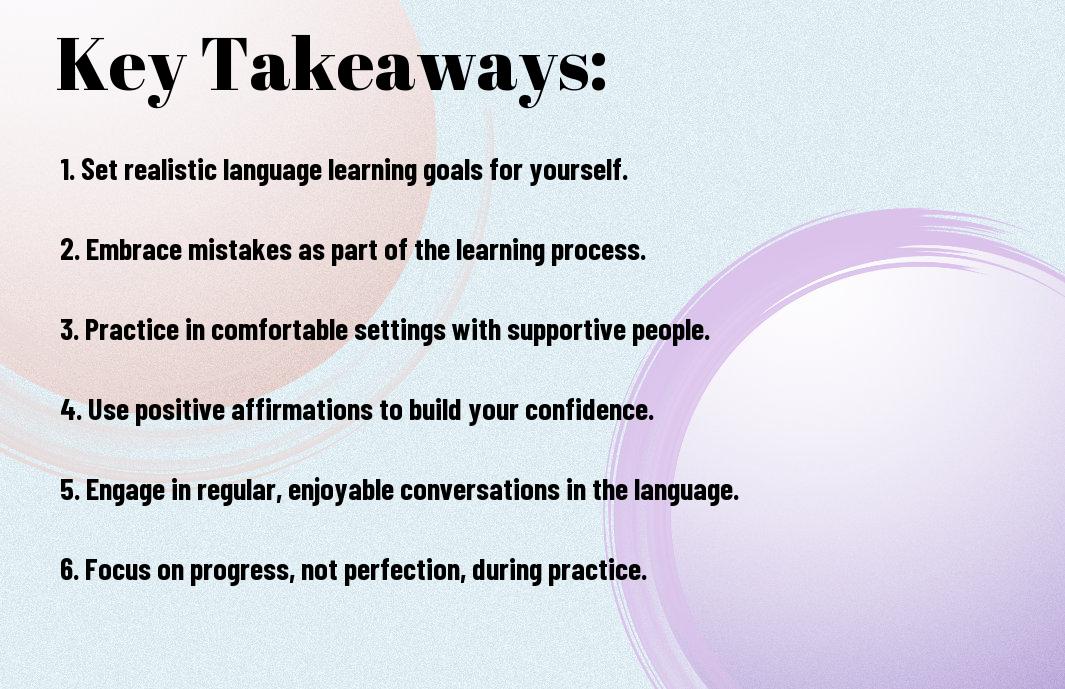
Key Takeaways:

To overcome language learning anxiety, consider the following points:

  • Develop a growth mindset by viewing challenges as opportunities for improvement, rather than threats to ego or self-image, which can help to reduce anxiety and foster a more positive attitude towards language learning.
  • Improve your self-efficacy by setting realistic goals, celebrating small achievements, and focusing on progress rather than perfection, allowing you to build confidence in your language abilities.
  • Practice relaxation techniques such as deep breathing, meditation, or yoga to manage anxiety and stress, creating a more conducive learning environment and enhancing your overall well-being as a language learner.

Recognizing Anxiety

Before you can overcome language learning anxiety, you need to understand what it is and how it affects you. You can find more information on Overcoming Foreign Language Speech Anxiety to help you get started.

Identifying the Signs

For instance, you may experience physical symptoms such as a racing heart or sweating when speaking in a foreign language. You can identify these signs to better understand your anxiety.

Acknowledging the Fears

Above all, you need to acknowledge your fears and concerns about language learning. You must accept that it’s normal to feel anxious when speaking a new language.

Consequently, as you acknowledge your fears, you’ll be able to address them more effectively. You’ll be able to develop strategies to manage your anxiety and improve your language skills, allowing you to become a more confident language learner.
Setting Realistic Goals

One of the most effective ways to overcome language learning anxiety is to set achievable objectives. By doing so, you can track your progress and stay motivated, which helps to build confidence in your language skills.

Breaking Down Barriers

Reasonable expectations help you to focus on making gradual improvements, allowing you to overcome obstacles that may have previously seemed insurmountable, and you will begin to see yourself making steady progress in your language learning journey.

Celebrating Small Wins

Barring none, acknowledging and celebrating your small achievements is crucial to maintaining a positive mindset, as you work towards your language learning goals, you will find that your anxiety starts to fade away.

Due to the fact that you are consistently making progress and celebrating your small victories, you will start to feel more confident in your ability to learn and use the language, and this will help you to stay motivated and engaged throughout the learning process, helping you to overcome language learning anxiety and achieve your goals.

Creating a Supportive Environment

To create an environment conducive to language learning, you can explore various strategies, such as those outlined in effective strategies to overcome foreign language anxiety, to help you stay motivated and focused.

Finding Language Learning Communities

Around you, there are numerous language exchange programs and online forums where you can connect with fellow learners and native speakers, making your learning journey more enjoyable and interactive.

Building a Network of Encouragers

With a strong support system, you can overcome language learning anxiety and stay committed to your goals, as you surround yourself with people who encourage and motivate you to improve your language skills.

This network of encouragers can provide you with valuable feedback, help you set realistic goals, and celebrate your progress, making your language learning experience more rewarding and helping you to stay on track, as you work towards becoming proficient in your target language, and you can achieve this by joining language clubs, attending language events, or participating in online language learning communities, where you can meet like-minded individuals who share your interests and goals.

Developing a Growth Mindset

Despite the challenges you may face, developing a growth mindset is vital for overcoming language learning anxiety. You can achieve this by believing that your abilities can be developed through dedication and hard work.

Embracing Mistakes as Learning Opportunities

Across various language learning contexts, you will encounter mistakes, but you can use them as opportunities to learn and improve your skills, allowing you to grow as a learner.

Focusing on Progress, Not Perfection

With each step you take towards your language learning goals, focus on the progress you make, rather than striving for perfection, and you will find that your anxiety decreases and your confidence grows.

Perfection is an unattainable goal, and striving for it can lead to frustration and Burnout. Instead, you should focus on making progress, celebrating small victories, and using them as motivation to continue learning and improving your language skills. By doing so, you will develop a more positive and resilient mindset, which will help you navigate the challenges of language learning with greater ease and confidence.

Practicing Relaxation Techniques

All language learners face anxiety, but you can overcome it by practicing relaxation techniques. This helps you manage stress and stay focused on your goals. You will feel more confident and motivated to continue learning.

Breathing Exercises for Calmness

The key to relaxation is slow, deep breathing. You can practice breathing exercises to calm your mind and body, preparing you for language learning challenges. This simple technique helps you stay focused and composed.

Visualization for Confidence Boost

After mastering breathing exercises, you can move on to visualization techniques. You can imagine yourself successfully communicating in your target language, which boosts your confidence and reduces anxiety. This technique helps you prepare for real-life conversations.

Practicing visualization regularly, you will become more comfortable with your language skills, and your anxiety will decrease. You can visualize yourself in different scenarios, such as ordering food or participating in a conversation, and imagine how you would handle them confidently. This technique helps you build mental resilience and develop a positive mindset, vital for overcoming language learning anxiety.

Embracing Cultural Immersion

Unlike other language learning methods, embracing cultural immersion helps you connect with the language on a deeper level, making it easier to overcome anxiety and improve your skills.

Surrounding Yourself with the Language

With constant exposure to your target language, you’ll become more comfortable and confident in your ability to understand and communicate, making language learning feel more manageable and enjoyable for you.

Engaging with Native Speakers

With each conversation with a native speaker, you’ll gain valuable insights into the language and culture, helping you to build your skills and overcome anxiety in a supportive and interactive environment, tailored to your needs and goals.

Understanding the nuances of language and cultural differences is key to successful communication, and engaging with native speakers allows you to learn from their experiences, perspectives, and everyday expressions, enabling you to develop a more authentic and personal connection with the language, and ultimately, to become a more confident and proficient language user, capable of expressing yourself effectively in various situations.

Summing up

So, you have learned various strategies to manage your language learning anxiety. You understand that acknowledging your feelings and setting realistic goals can help you stay motivated. By practicing relaxation techniques and seeking support, you can build confidence in your language skills. As you progress, your anxiety will decrease, and you will become a more effective language learner, able to reach your full potential and achieve your goals.

FAQ

Q: What causes language learning anxiety and how can I identify it in myself?

A: Language learning anxiety can stem from various factors such as fear of making mistakes, fear of being judged, or past experiences of failure. To identify language learning anxiety in yourself, look out for symptoms like avoidance of speaking or writing in the target language, physical symptoms such as a racing heart or sweating when attempting to communicate, or a general feeling of apprehension when faced with language learning tasks. Recognizing these signs is the first step towards overcoming language learning anxiety.

Q: What strategies can help me manage and reduce language learning anxiety?

A: Several strategies can help manage and reduce language learning anxiety. One effective approach is to set achievable goals and celebrate small successes, which can help build confidence and motivation. Additionally, practicing relaxation techniques such as deep breathing, meditation, or yoga can help reduce anxiety levels. Engaging in regular, low-stakes interactions with native speakers, such as through language exchange programs or informal conversations, can also help desensitize you to the anxiety of communicating in the target language. Furthermore, focusing on the process of learning rather than perfection can help shift your mindset and make the learning experience more enjoyable.

Q: How can I create a supportive environment that fosters language learning and helps alleviate anxiety?

A: Creating a supportive environment is key to alleviating language learning anxiety. Surround yourself with positive and encouraging people who support your language learning goals. This could include language exchange partners, tutors, or online communities of fellow learners. Using positive self-talk and affirmations can also help reinforce a growth mindset and reduce self-criticism. Additionally, make your learning space comfortable and conducive to learning, free from distractions and stressors. Utilizing technology, such as language learning apps or videos, can also provide a sense of control and flexibility, allowing you to learn at your own pace and review material as needed, which can help alleviate feelings of anxiety and overwhelm.

How to Overcome Challenges in Language Pronunciation

You begin on learning a new language, but your progress is hindered by difficulties in pronunciation. Your accent and intonation may not match native speakers, hindering effective communication. As you strive to improve, you face obstacles that seem insurmountable. Your journey to master the language is not alone, many have walked this path and succeeded. This article will guide you through practical steps to tackle your pronunciation challenges and enhance your language skills.

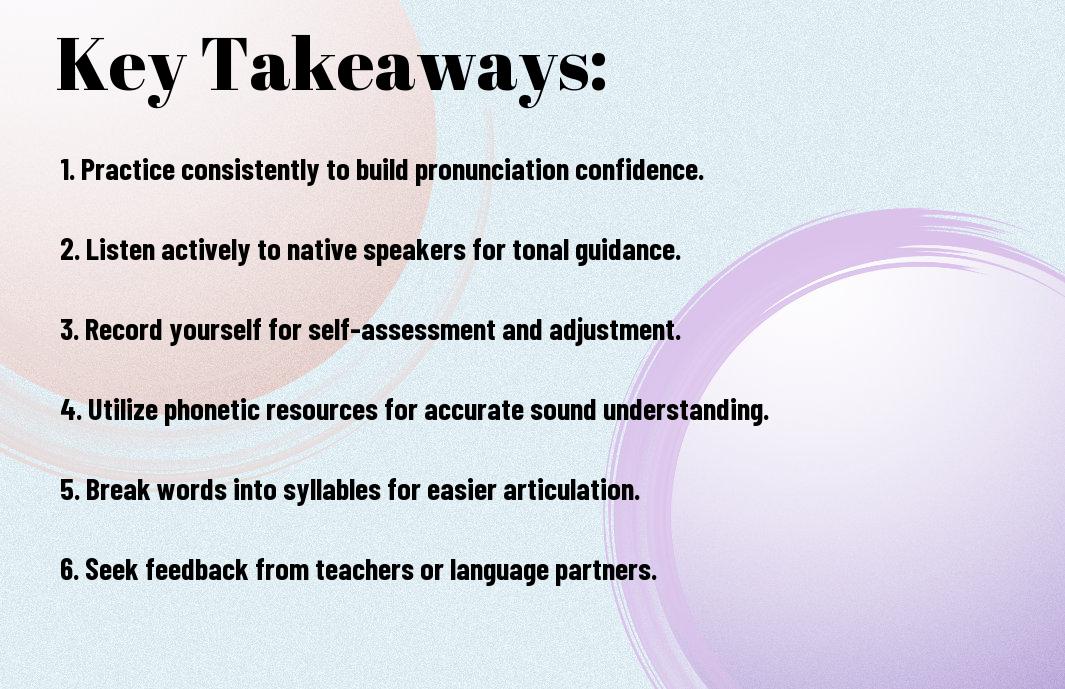
Key Takeaways:

To improve your language pronunciation, consider the following points:

  • Focus on Individual Sounds: Understanding and practicing the phonetics of the language is the first step to improving your pronunciation. Pay attention to how each sound is formed and try to mimic the native speakers.
  • Develop a Consistent Practice routine: Regular practice helps to build muscle memory, making it easier to produce the correct sounds and intonation patterns. Set aside time each day to practice speaking and listening to the language.
  • Immerse Yourself in the Target Language: Surrounding yourself with the language as much as possible can help you get used to its rhythm and melody. Listen to music, watch movies, and engage in conversations with native speakers to improve your pronunciation and get a feel for how the language is used in context.

    Identifying Challenges

    Before you can overcome challenges in language pronunciation, you need to identify what they are. This involves recognizing the sounds, intonations, and rhythms that are difficult for you to produce. You will need to listen to native speakers and compare your own pronunciation to theirs.

    Common pronunciation difficulties

    Against the backdrop of various accents and dialects, you will find that certain sounds are consistently troublesome for non-native speakers. You may struggle with the “th” sound, vowel lengths, or diphthongs, which are common challenges that many learners face.

    Personalizing your challenges

    Across the range of language learning materials and resources, you will find that your own challenges are unique to your native language and pronunciation background. You should assess your own strengths and weaknesses to determine which areas of pronunciation need the most attention.

    Hence, as you work on personalizing your challenges, you will begin to notice patterns and areas where you consistently struggle. You can then focus your practice on these specific sounds, intonations, and rhythms, using targeted exercises and activities to improve your pronunciation. This tailored approach will help you make steady progress and eventually overcome the challenges that hold you back.

    Setting Goals

    Some of the most effective language learners are those who set clear goals for themselves. You will need to define what you want to achieve in terms of pronunciation and create a plan to get there. This will help you stay focused and motivated as you work to improve your language skills.

    Defining your objectives

    Achieving clarity on what you want to accomplish is imperative. You should identify specific areas of pronunciation that you want to improve, such as accent or intonation, and set realistic targets for yourself.

    Creating a practice schedule

    Objectives guide your practice, and you should establish a regular routine to work on your pronunciation. You will find it helps to allocate a specific time each day to practice speaking and listening to the language.

    With a schedule in place, you can begin to make steady progress towards your goals. You will find that consistent practice helps you develop good habits and increases your confidence in using the language. As you stick to your routine, you will start to notice improvements in your pronunciation, and this will motivate you to continue working towards your objectives.

    Practicing Techniques

    Despite the difficulties you may face, consistent practice is key to improving your language pronunciation. You will need to develop a routine that works for you, incorporating various techniques to help you overcome your challenges.

    Listening and imitation

    The most effective way to improve your pronunciation is by listening to native speakers and imitating their intonation, rhythm, and accent. You can find numerous resources online, including videos, podcasts, and audio recordings, to help you practice.

    Recording and self-assessment

    Recording yourself speaking is an excellent method to identify areas that need improvement. You can then listen to the recordings, assess your performance, and work on correcting your mistakes.

    Indeed, by regularly recording yourself, you will become more aware of your pronunciation and be able to track your progress over time, making adjustments as needed to achieve your goals. You will be able to pinpoint specific sounds or words that are difficult for you to pronounce and focus your practice on those areas, leading to steady improvement in your language pronunciation skills.

    Overcoming Obstacles

    For language learners, overcoming obstacles is a significant part of the pronunciation journey. You can find more information about common challenges and how to tackle them at Barriers and Solutions to Overcome in English Pronunciation, which will help you identify your weaknesses and work on them.

    Managing anxiety and fear

    One of the main obstacles you will face is managing your anxiety and fear of speaking in a foreign language, which can hinder your progress and prevent you from practicing regularly.

    Building confidence and perseverance

    Any improvement in your pronunciation requires your consistent effort and practice, and as you progress, you will start to notice changes in your accent and fluency.

    The key to building confidence and perseverance is to set achievable goals and celebrate your small victories, which will help you stay motivated and committed to your pronunciation journey, and you will find that your hard work and dedication will pay off in the long run, enabling you to communicate effectively and confidently in your target language.

    Seeking Resources

    Unlike traditional classroom settings, seeking resources for language pronunciation improvement can be done independently. You can find various materials online, such as language learning podcasts, videos, and mobile apps, to help you enhance your pronunciation skills.

    Language exchange programs

    Above all, language exchange programs offer you the opportunity to practice speaking with native speakers, which can significantly improve your pronunciation. You will be able to engage in conversations and get feedback on your pronunciation from language exchange partners.

    Online tools and tutorials

    At your fingertips, you have numerous online tools and tutorials that provide pronunciation lessons, interactive exercises, and speech analysis. You can access these resources anytime and practice at your own pace, focusing on specific areas of difficulty.

    To make the most of online tools and tutorials, you should start by assessing your current pronunciation level and identifying areas that need improvement. You can then select the most suitable resources and create a personalized practice schedule, ensuring consistent progress and refinement of your language skills.

    Monitoring Progress

    Once again, you find yourself at a stage where evaluating your advancement is necessary. Monitoring your progress in language pronunciation is vital to identify areas that require improvement and to adjust your strategy accordingly.

    Tracking improvements

    Against the backdrop of your overall progress, you will notice certain aspects of your pronunciation that have improved significantly. By keeping a record of your progress, you can pinpoint the specific sounds, intonations, or rhythms that have become more natural to you.

    Adjusting your approach

    Prior to making any significant changes, you should assess what has been working for you and what hasn’t. Your approach to pronunciation practice may need tweaking, and recognizing the methods that yield the best results is necessary to continued improvement.

    This process of adjustment is ongoing, and you will likely need to make changes to your practice routine as you progress. By being aware of what works best for you, you can refine your approach and focus on the areas where you need the most improvement, ultimately leading to more efficient and effective language learning.

    To wrap up

    Upon reflecting on your journey to improve language pronunciation, you will find that your dedication and persistence have been key to your progress. You have learned to identify your weaknesses and tackle them head-on, and your hard work has paid off. As you continue to practice, you will notice significant improvements in your ability to communicate effectively, and your confidence will grow. With time, you will become a proficient speaker, capable of expressing your thoughts and ideas with clarity and precision, and your language skills will flourish.

    FAQ

    Q: What are the most common challenges in language pronunciation and how can I identify them?

    A: The most common challenges in language pronunciation include mastering correct intonation, vowel and consonant sounds, and syllable stress. To identify your specific challenges, try recording yourself speaking and listening to the recording to pinpoint areas that need improvement. You can also practice speaking with native speakers or language exchange partners who can provide feedback on your pronunciation. Additionally, you can take online pronunciation tests or assessments to identify your strengths and weaknesses.

    Q: How can I improve my language pronunciation skills, especially if I have a strong accent or limited exposure to native speakers?

    A: Improving language pronunciation skills takes consistent practice and dedication. Start by listening to and mimicking native speakers through videos, podcasts, or audiobooks. Practice speaking regularly, even if it’s just for a few minutes a day, and focus on specific sounds or intonation patterns that are challenging for you. You can also use online resources such as pronunciation videos, language learning apps, or speech therapy exercises to help you improve. Furthermore, try to surround yourself with the language as much as possible by watching TV shows or movies, reading books or articles, and engaging in conversations with others in the target language.

    Q: What role does self-practice and self-correction play in overcoming challenges in language pronunciation, and how can I make the most of these strategies?

    A: Self-practice and self-correction are important components of overcoming challenges in language pronunciation. By regularly practicing pronunciation on your own, you can develop muscle memory and improve your ability to produce sounds and intonation patterns correctly. To make the most of self-practice, set aside dedicated time each day to practice speaking, listening, and recording yourself. Use a mirror to observe your mouth and lip movements, and pay close attention to your own pronunciation, making adjustments as needed. You can also create a self-correction checklist to track your progress and identify areas that need extra attention, allowing you to target your practice more effectively and achieve greater improvement over time.

Skip to content