Retention

The Science of Retaining Language Knowledge

As you initiate on learning a new language, you’re likely wondering how to retain the knowledge you gain. You’ve probably discovered that acquiring language skills is only half the battle, and maintaining them is just as important. To improve your language retention, you can explore The Best Ways to Learn a Language According to Research, which offers valuable insights to help you develop effective learning strategies and make the most of your language learning journey, enabling you to achieve your goals.

Key Takeaways:

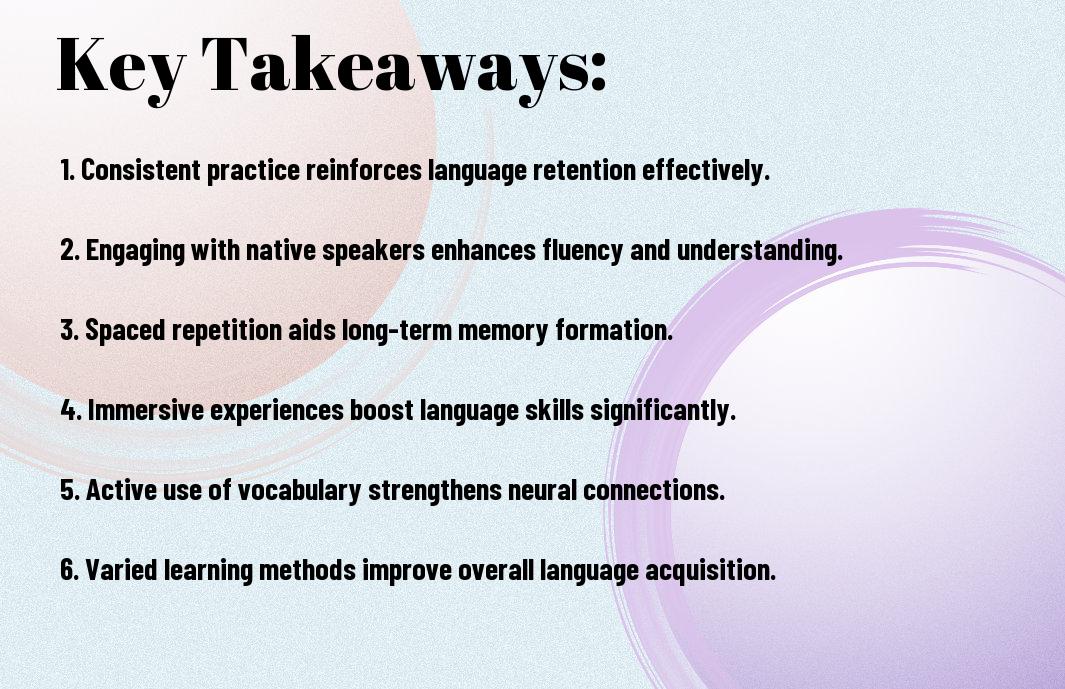
  • The consolidation of language knowledge is a gradual process that involves the transformation of information from short-term to long-term memory, and repetition plays a significant role in this process.
  • Spaced repetition is an effective technique for retaining language knowledge, as it involves reviewing material at increasingly longer intervals to help solidify it in long-term memory and prevent forgetting.
  • Active recall is a powerful method for reinforcing language knowledge, as it involves actively engaging with the material, such as through quizzing or summarizing, rather than simply passively re-reading it, to strengthen retention and improve fluency.
Language Acquisition

Your ability to acquire a new language is a complex process that involves multiple factors, including your motivation, learning style, and exposure to the language.

The Process of Learning

Beneath the surface of language acquisition lies a intricate process of learning, where you absorb and process new information, and gradually build your language skills.

Factors Affecting Language Retention

Around the time you start learning a new language, several factors come into play, including:

  • your learning environment
  • the quality of instruction

, Any of these factors can significantly impact your ability to retain language knowledge.

Acquisition of a new language is influenced by various factors, including:

  • your prior knowledge of languages
  • the similarity between your native language and the new language

, Any of these factors can affect the speed and ease of language acquisition, and you should be aware of them to maximize your learning potential.
Memory and Language

Some of the most significant factors in retaining language knowledge are tied to your brain’s ability to store and recall information. Your memory plays a vital role in learning and retaining new vocabulary, grammar, and language rules.

The Role of Memory in Language Retention

One key aspect of language retention is your brain’s capacity to associate new information with existing knowledge, making it easier for you to recall and use your new language skills.

Strategies for Improving Memory

Any effort you put into developing effective memory strategies will greatly benefit your language learning journey, enabling you to absorb and apply new language knowledge more efficiently.

Memory strategies such as repetition, spaced repetition, and active recall can help you reinforce your language skills and commit them to long-term memory, allowing you to access and use them when needed, and as you continue to practice and build on your skills, you will find that your ability to retain language knowledge improves significantly, enabling you to communicate more effectively in your target language.

Practice and Repetition

Despite the initial excitement of learning a new language, retaining language knowledge requires consistent effort. You will need to practice regularly to solidify your understanding and prevent forgetting.

The Importance of Practice in Language Retention

Beneath the surface of language learning lies the foundation of practice, which helps you build a strong grasp of the language. You will find that consistent practice enables your brain to absorb and process new information more efficiently.

Effective Practice Techniques

By incorporating variety into your practice routine, you can stay engaged and motivated. You can try different activities such as speaking, writing, and listening to improve your language skills.

At the heart of effective practice techniques is the ability to tailor your approach to your individual needs. You can experiment with different methods, such as spaced repetition, flashcards, or language exchange programs, to find what works best for you and optimize your practice sessions to achieve your language goals.

Language Exposure

All individuals learns a language through exposure, and as you continue to learn, your brain absorbs and processes the new information. According to Cognitive scientists define critical period for learning language, the timing of this exposure can affect your ability to retain language knowledge.

The Impact of Language Exposure on Retention

Around the time you start learning a language, you are most receptive to new information, and the amount of exposure you get can significantly impact your retention rate, as your brain starts to solidify the new language patterns.

Ways to Increase Language Exposure

Against the backdrop of your busy schedule, finding ways to increase your language exposure is vital, and you can start by listening to music, watching TV shows, or speaking with native speakers in your target language.

Due to the abundance of language learning resources available, you can easily find what works best for you, whether it’s language learning apps, podcasts, or online courses, and as you consistently expose yourself to the language, you’ll see an improvement in your retention and overall language proficiency, allowing you to become a more confident language user.

Individual Differences

Now, when it comes to retaining language knowledge, you’ll find that individual differences play a significant role. Your ability to learn and retain a language is influenced by various factors, including your learning style, personality traits, and cognitive abilities.

Learning Styles and Language Retention

Among the factors that affect your language retention, learning styles are an important consideration. You may find that you learn best through visual, auditory, or kinesthetic methods, and understanding your preferred learning style can help you develop strategies to improve your language retention.

Personality Traits and Language Learning

Behind your ability to learn a language, personality traits such as motivation, anxiety, and self-discipline can have a significant impact. You may notice that your personality traits influence your approach to language learning, and being aware of these traits can help you tailor your learning approach to your individual needs.

Individual differences in personality traits can significantly impact your language learning journey. You may find that you are more motivated to learn a language due to your personality traits, such as being open to new experiences or enjoying social interactions. As you become more aware of your personality traits, you can use this knowledge to develop a personalized learning approach that leverages your strengths and addresses your weaknesses, ultimately enhancing your ability to retain language knowledge.

Technology and Language Learning

Not surprisingly, technology plays a significant role in language learning, offering you various tools and resources to enhance your language skills.

The Role of Technology in Language Retention

Around the time you start learning a new language, you’ll find that technology helps you stay on track, providing interactive lessons and exercises to reinforce your learning.

Effective Language Learning Apps and Tools

Applications like language learning platforms and mobile apps are designed to help you learn and practice a new language, giving you access to a wealth of resources and materials to support your learning journey.

It is crucial to explore different options to find the tools that work best for you, as you can choose from a variety of apps and platforms that cater to your learning style and goals, helping you to effectively retain language knowledge and achieve fluency.

To wrap up

With this in mind, you now understand the key elements that facilitate your language knowledge retention. You can apply these principles to your learning routine, maximizing your ability to retain new language skills. By incorporating effective strategies, you will be able to reinforce your understanding and maintain your proficiency over time, ensuring that your language knowledge endures and your communication skills continue to improve, helping you to achieve your goals. Your dedication will yield lasting results.

FAQ

Q: What is the most effective way to retain language knowledge over a long period of time?

A: The most effective way to retain language knowledge is through consistent practice and exposure. This can be achieved by setting aside time each day to engage in language-related activities such as reading, writing, listening, and speaking. Additionally, using flashcards, language learning apps, and participating in conversations with native speakers can help reinforce language skills and prevent forgetting. It’s also important to review and practice language regularly, even if it’s just for a few minutes a day, to keep the language fresh in your mind.

Q: How does the brain process and store language information, and what can be done to optimize this process?

A: The brain processes and stores language information in a complex network of neurons and synapses. When learning a new language, the brain creates new connections between these neurons, which can be strengthened through practice and repetition. To optimize this process, it’s helpful to break down language into smaller chunks, such as grammar rules and vocabulary, and to practice each component separately before combining them. Additionally, using mnemonic devices, such as associations and visualizations, can help to encode language information in a more meaningful way, making it easier to retrieve later. Getting enough sleep and reducing stress can also help to consolidate language information in long-term memory.

Q: Can language knowledge be retained through passive exposure, such as watching TV shows or listening to music in the target language, or is active practice necessary?

A: While passive exposure to a language, such as watching TV shows or listening to music, can help to improve listening and comprehension skills, it is not enough on its own to retain language knowledge. Active practice, such as speaking, writing, and engaging in conversations, is necessary to reinforce language skills and prevent forgetting. Passive exposure can be a helpful supplement to active practice, but it should not replace it. Additionally, actively engaging with the language, such as by summarizing what you’ve heard or read, or responding to questions and prompts, can help to deepen your understanding and retention of the language. A combination of both passive exposure and active practice is likely to be the most effective way to retain language knowledge.

The Importance of Immersion for Language Retention

As you pursue language learning, you’ll discover that immersion is key to retaining your new skills. Your ability to hold conversations and understand native speakers depends on it. To better understand the benefits, consider What the Research Says About Immersion – Tara Williams Fortune’s findings, which highlight the positive impact of Surrounding yourself with the language on your retention and proficiency. You’ll see significant improvements in your language abilities when you prioritize immersion.

Key Takeaways:

To maximize language learning effectiveness, consider the following points about immersion and its impact on retention:

  • Surrounding yourself with the language you’re trying to learn can significantly enhance vocabulary retention and improve pronunciation skills, as it provides a more engaging and interactive learning environment.
  • Consistent exposure to the target language through media, such as TV shows, movies, and music, can help solidify language patterns and promote long-term retention.
  • Practical application of language skills in real-life situations is key to effective learning, as it allows learners to contextualize their knowledge and develop a deeper understanding of cultural nuances and idiomatic expressions.

The Role of Immersion in Language Learning

To learn a language effectively, you need to surround yourself with it. Immersion plays a significant role in language learning, as it helps you become familiar with the language in context. You will pick up nuances and expressions that you might not learn in a classroom setting.

Language Surroundings and Retention

By placing yourself in an environment where the language is spoken, you increase your chances of retaining the language. Your brain absorbs the language naturally, making it easier to understand and use it in everyday conversations.

The Brain’s Response to Immersed Environments

Environments that surround you with a language stimulate your brain to adapt and learn. You start to think in the language, making connections between words and concepts more efficiently. Your ability to understand and communicate in the language improves significantly.

Indeed, as you immerse yourself in a language, you will notice changes in the way your brain processes information. You will start to recognize patterns and associations that are unique to the language, and your proficiency will increase rapidly. You will be able to express yourself more confidently and accurately, and your comprehension will improve, allowing you to engage with native speakers more effectively.

Effective Methods for Immersion

Some of the most effective methods for immersion include surrounding yourself with the language you want to learn, using media and interacting with native speakers. You can start by making small changes to your daily routine, such as listening to music or watching TV shows in the target language.

Foreign Language Media Consumption

Consuming media in the target language is an excellent way to improve your listening and comprehension skills. You can watch TV shows or movies with subtitles, listen to podcasts or radio shows, and even read books or articles in the target language to help you stay immersed.

Cultural Exchange Programs and Travel

Travelling to a country where the language is spoken or participating in cultural exchange programs can be a great way to immerse yourself in the language. You will have the opportunity to interact with native speakers, learn about the culture and customs, and practice your language skills in real-life situations.

To take full advantage of cultural exchange programs and travel, you should try to engage with the local community as much as possible. You can stay with a host family, participate in local events, and try to avoid speaking your native language as much as possible. By doing so, you will be able to pick up nuances of the language and develop a more authentic accent, helping you to improve your language retention and become a more confident speaker.

Overcoming Language Barriers through Immersion

Many language learners struggle to overcome language barriers, but immersion can help. By surrounding yourself with the language, you can improve your skills and gain confidence in your ability to communicate effectively.

Building Confidence in Speaking and Listening

On the path to language proficiency, you’ll find that immersion helps you build confidence in speaking and listening. As you engage with native speakers, you’ll become more comfortable with the sounds, rhythms, and nuances of the language.

Enhancing Vocabulary and Grammar

Through consistent exposure to the language, you’ll enhance your vocabulary and grammar skills. You’ll learn to use context clues to understand unfamiliar words and phrases, and develop a sense of how to use grammar correctly in different situations.

At this stage, you’ll notice significant improvement in your ability to express yourself in the language. Your vocabulary will expand, and you’ll be able to use grammar rules to construct more complex sentences, allowing you to convey your thoughts and ideas more effectively. As you continue to immerse yourself in the language, you’ll find that your skills will continue to improve, and you’ll become a more proficient and confident language user.

The Impact of Technology on Immersive Learning

Your ability to learn a language can be significantly enhanced by technology, which provides numerous tools and resources to support immersive learning, helping you to stay engaged and motivated throughout the process.

Language Learning Apps and Software

Leveraging language learning apps and software can be an effective way to access interactive lessons, exercises, and quizzes, allowing you to practice your language skills in a flexible and convenient manner, anytime and anywhere.

Online Communities and Forums

Influencing your language learning journey, online communities and forums offer a space to interact with native speakers, ask questions, and share experiences, enabling you to immerse yourself in the language and culture.

Online interactions with fellow language learners and native speakers can help you develop a deeper understanding of the language and its nuances, as you learn from others and share your own knowledge and experiences, ultimately enhancing your language retention and proficiency.

Measuring the Success of Immersion

Unlike other language learning methods, immersion provides a unique opportunity to assess your progress in a realistic setting. You can evaluate your language skills by engaging in conversations, reading local materials, and participating in cultural events.

Assessment Methods for Language Retention

Alongside traditional testing methods, you can use language proficiency exams and self-assessment tools to track your progress. You will be able to identify areas for improvement and adjust your immersion strategy accordingly.

Evaluating the Effectiveness of Immersion Programs

Alike many other educational programs, evaluating the effectiveness of immersion programs requires a thorough analysis of your language skills before and after the program. You will be able to see significant improvements in your language retention and overall communication skills.

At this stage, you can reflect on your experience and identify the aspects of the immersion program that were most beneficial to your language learning. You can use this information to adjust your future language learning strategy and make informed decisions about your continued education. By evaluating the effectiveness of immersion programs, you can optimize your language learning and achieve your goals more efficiently.

Challenges and Limitations of Immersion

Now that you’re aware of the benefits of immersion, it’s vital to consider the challenges you may face, as they can impact your language retention significantly.

Accessibility and Financial Constraints

Challenging circumstances, such as limited access to native speakers or financial constraints, can hinder your ability to immerse yourself in a language, making it difficult to achieve optimal language retention.

Individual Learning Styles and Preferences

Above all, your individual learning style and preferences play a significant role in determining the effectiveness of immersion, as you may respond better to certain methods over others.

Further, you should consider that your learning style and preferences can influence how you approach immersion, and being aware of these factors can help you tailor your approach to maximize language retention, allowing you to make the most out of your immersion experience and achieve your language goals.

Summing up

Drawing together the key points, you can see that immersion plays a significant role in your language retention. As you surround yourself with the language, you improve your comprehension and production skills. Your ability to think in the target language increases, enabling you to communicate more effectively. By immersing yourself in the language, you enhance your overall learning experience and set yourself up for long-term success.

FAQ

Q: What role does immersion play in language retention, and why is it significant for language learners?

A: Immersion plays a vital role in language retention as it allows learners to surround themselves with the language they are trying to learn, making it an integral part of their daily lives. By immersing themselves in the language, learners are exposed to its nuances, rhythms, and idiomatic expressions, which helps in developing a deeper understanding and a more natural usage of the language. This, in turn, aids in better retention and proficiency over time.

Q: How does immersion contribute to the development of linguistic skills, such as speaking, listening, reading, and writing, in the context of language retention?

A: Immersion significantly enhances linguistic skills by providing learners with opportunities to practice speaking, listening, reading, and writing in authentic contexts. For instance, speaking and listening skills are refined through interactions with native speakers, watching local media, or participating in conversations. Reading and writing skills are improved by engaging with native materials such as books, newspapers, and online content. This holistic approach to learning helps in reinforcing language structures, vocabulary, and cultural insights, thereby supporting long-term language retention.

Q: What strategies can language learners adopt to incorporate immersion into their daily routine, especially those who do not have the opportunity to live in a country where their target language is spoken?

A: Language learners can adopt several strategies to incorporate immersion into their daily routine, even without living in a country where their target language is spoken. Watching TV shows and movies, listening to music and podcasts, reading books and news in the target language, and engaging in conversations with native speakers through language exchange apps or online communities are effective ways to immerse oneself in the language. Additionally, changing the language settings on personal devices, using language learning apps, and practicing speaking and writing in the target language daily can also simulate an immersive environment, facilitating language retention and fluency.

Skip to content