You’re taking the first step towards becoming proficient in a new language, and creating a routine is important to your success. Your language learning journey will be more efficient with a well-planned schedule. By establishing a consistent routine, you’ll make steady progress and stay motivated. Your dedication will pay off as you develop the skills and confidence to communicate effectively in your target language, and this post will guide you through the process of building a routine that suits your needs and goals.

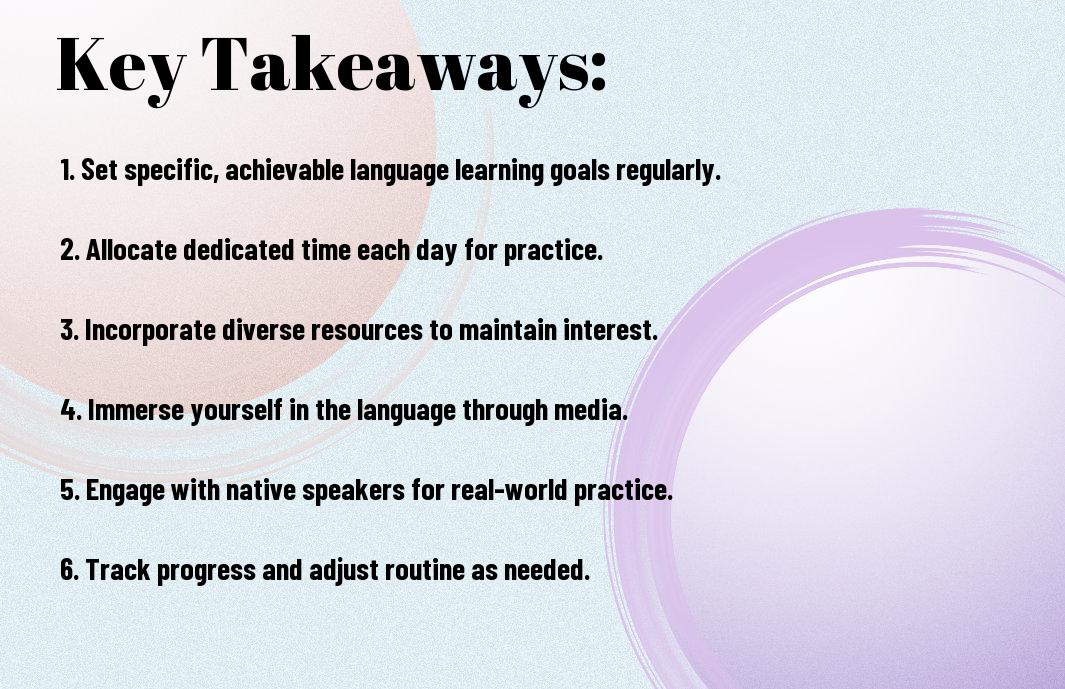
Key Takeaways:
- To establish an effective language learning routine, it’s imperative to set realistic goals and track progress, allowing for adjustments as needed to stay motivated and focused on the learning journey.
- Implementing a consistent schedule is vital, dedicating a specific time each day to language learning, whether it’s reading, listening, speaking, or writing in the target language.
- Incorporating variety in the learning routine, such as using different resources and activities, can help keep the learning process engaging and prevent boredom, ultimately leading to a more productive language learning experience.
Setting Goals
A well-structured language learning routine starts with setting achievable goals, which you can learn more about in My Successful Language Learning Routine: Tips & Resources, to help you stay motivated and focused.
Defining Language Learning Objectives
Along with identifying your motivation, you need to define your language learning objectives, which will serve as a guiding force behind your efforts, helping you to stay on track and make consistent progress.
Creating a Realistic Study Schedule
Studying consistently is key to language learning, so you should allocate a specific time slot each day or week to practice, ensuring that it fits seamlessly into your lifestyle and other commitments.
Understanding your availability and schedule is vital when creating a realistic study schedule, as you need to be honest about how much time you can dedicate to language learning each day or week, taking into account factors such as work, family, and other responsibilities, to avoid setting yourself up for failure and maintain a consistent learning routine.
Choosing Learning Materials
Clearly, selecting the right learning materials is necessary for your language learning journey. You need to find resources that fit your learning style, goals, and schedule.
Textbooks and Language Learning Software
Similarly, software programs and textbooks can provide structured learning experiences, offering comprehensive lessons and exercises to help you build a strong foundation in the language.
Online Resources and Mobile Apps
Any language learner can access a vast array of online resources and mobile apps, which offer flexible and convenient learning opportunities, allowing you to learn at your own pace.
Choosing the right online resources and mobile apps can be overwhelming, but you can start by exploring popular options, reading reviews, and trying out demos to find the ones that best suit your needs and preferences, enabling you to stay motivated and engaged in your language learning routine.
Building a Study Routine
Once again, the key to language learning success lies in establishing a regular study routine. You need to prioritize your goals and allocate sufficient time for learning, ensuring consistency and progress. Your routine should be tailored to your needs, interests, and schedule, allowing you to make steady progress and stay motivated.
Setting Aside Dedicated Study Time
Along with setting goals, you should allocate a specific time slot for studying, free from distractions and interruptions. You will be able to focus on your language learning, making the most of your time and energy, and tracking your progress more effectively.
Creating a Consistent Study Environment
Behind every successful language learner is a well-organized study space, conducive to focus and productivity. You should optimize your environment to facilitate learning, eliminating distractions and minimizing stress, which will help you stay on track and achieve your goals.
Considering your individual preferences and needs, you can create a study environment that fosters comfort, motivation, and engagement. You can choose a quiet corner, invest in a comfortable chair, or use a specific app to block social media, allowing you to concentrate on your language learning materials and make steady progress towards your goals. By doing so, you will be able to establish a consistent routine and stay committed to your language learning journey.
Practicing Language Skills
Despite the challenges you may face, consistent practice is key to improving your language skills. You will need to allocate time for various activities to enhance your language proficiency.
Reading and Writing Exercises
Beneath the surface of language learning lies the foundation of reading and writing exercises, which you can use to improve your grammar, vocabulary, and comprehension by completing exercises, writing journal entries, or reading books and articles in the target language.
Speaking and Listening Drills
Across the spectrum of language learning, speaking and listening drills are necessary for your progress, as they help you develop pronunciation, intonation, and conversation skills through speaking with native speakers, listening to podcasts, or watching TV shows and movies in the target language.
Skills such as conversation, pronunciation, and comprehension are honed through speaking and listening drills, allowing you to engage in real-life conversations with more confidence, and you will find that your language skills improve significantly as you consistently practice speaking and listening in the target language.
Overcoming Obstacles
Now that you’ve established your language learning routine, you’ll inevitably encounter obstacles that can hinder your progress, but with the right strategies, you can overcome them and stay on track to achieving your goals.
Managing Motivation and Burnout
Among the most significant challenges you’ll face is maintaining motivation, as it’s easy to get discouraged when you’re not seeing progress, but by setting achievable milestones and rewarding yourself, you can stay motivated and engaged in your learning journey.
Dealing with Grammar and Vocabulary Challenges
Beside the frustration of not understanding certain grammar rules or struggling to learn new vocabulary, you can break down complex concepts into manageable parts and practice consistently to build your confidence and proficiency.
Indeed, dealing with grammar and vocabulary challenges requires patience and persistence, and as you continue to practice and expose yourself to the language, you’ll develop a deeper understanding of the nuances and complexities of the language, and your skills will improve significantly, allowing you to communicate more effectively and achieve your language learning goals.
Tracking Progress
For effective language learning, monitoring your progress is necessary. You need to evaluate your performance to identify areas of improvement and adjust your routine accordingly.
Keeping a Language Learning Journal
The key to successful tracking is documenting your journey. You can write down your daily achievements, note new vocabulary, and reflect on your challenges, helping you to stay motivated and focused on your goals.
Using Progress Tracking Tools
Beside traditional journaling, you can utilize various digital tools to track your progress. You can find numerous apps and software designed to help you monitor your language learning, providing you with detailed statistics and insights.
Considering the plethora of options available, you can choose the tool that best suits your needs, whether it’s a simple habit tracker or a comprehensive language learning platform. You can use these tools to set milestones, track your vocabulary growth, and analyze your pronunciation, giving you a clear picture of your progress and helping you refine your strategy to achieve your language learning goals.
Summing up
The key to language learning is consistency and you can achieve this by creating a routine that works for you. By setting realistic goals and prioritizing your time, you will be able to make steady progress in your language learning journey. Your routine should include a mix of different activities, such as reading, writing, and speaking, to keep you engaged and motivated, and with persistence and dedication, you will see significant improvement in your language skills over time.
FAQ
Q: What are the key elements to include in a language learning routine?
A: To build an effective language learning routine, it’s important to incorporate a combination of activities that focus on different aspects of language acquisition, such as reading, writing, listening, and speaking. Start by setting specific goals, like dedicating a certain amount of time each day or week to language learning. Allocate time for vocabulary building, grammar practice, and conversational exercises. Additionally, utilize a variety of resources like textbooks, language learning apps, podcasts, and language exchange programs to maintain diversity and engagement in your routine.
Q: How can I stay motivated and track progress in my language learning routine?
A: Staying motivated and tracking progress are vital components of a successful language learning routine. Begin by establishing achievable milestones and celebrating each accomplishment, no matter how small. Use a planner, calendar, or mobile app to schedule and track your daily or weekly language learning activities. Regularly assess your progress through self-evaluation, quizzes, or conversations with a language partner. Sharing your goals and progress with a friend or joining a language learning community can also provide an added motivation boost and support system.
Q: Can I adapt my language learning routine to fit my busy schedule and learning style?
A: Adapting your language learning routine to fit your lifestyle and learning preferences is not only possible but also highly advisable for long-term success. Identify your most productive times of the day and dedicate those to language learning. If you’re a visual learner, incorporate more videos and images into your routine. For auditory learners, podcasts and audio books might be more effective. Even short, consistent sessions each day can be more beneficial than lengthy, sporadic study sessions. Be flexible and willing to adjust your routine as your schedule changes or as you discover new learning materials and techniques that suit you better.