tips

10 Easy Tips for Learning New Languages

As you commence on your language learning journey, you’ll discover that acquiring a new language can be a rewarding experience. You’ll be able to communicate with people from diverse cultures and broaden your perspective. Your ability to learn a new language depends on your approach, and with the right strategies, you can make significant progress. You can overcome language barriers and achieve your goals with ease, and this post will guide you through the process with simple and effective tips.————-Key Takeaways:

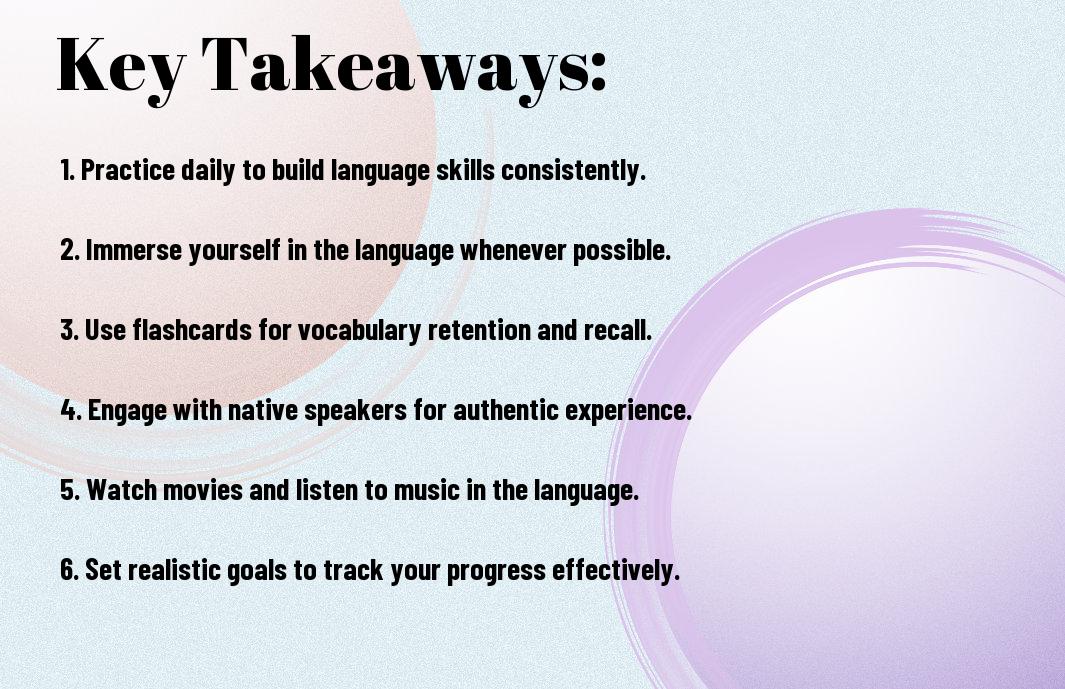
To improve your language learning skills, consider the following points:

  • Set achievable goals and create a schedule to stay on track with your language learning journey, allowing you to monitor progress and stay motivated.
  • Immerse yourself in the language by listening to music, watching TV shows or movies, and speaking with native speakers to get accustomed to its pronunciation and grammar.
  • Focus on vocabulary building by learning new words and phrases daily, and practice their pronunciation to enhance your speaking skills.
  • Use language learning apps and online resources to access a wide range of study materials, interactive exercises, and pronunciation guides.
  • Practice consistently and be patient with yourself, as learning a new language takes time and effort, but with dedication and the right approach, you can become fluent.

Setting Goals

A clear plan is necessary when learning a new language, and it starts with setting achievable goals. You need to define what you want to accomplish and by when, helping you stay focused and motivated throughout the process.

Defining Motivation

Alongside your goals, you should consider what motivates you to learn a new language, as this will help you stay engaged and driven. You will be more likely to stick to your plan if you have a genuine interest in the language and culture.

Creating a Study Plan

Across various learning methods, having a structured study plan is vital for your success. You should allocate specific times for learning and practicing the language, ensuring consistency and progress.

Goals that are specific, measurable, and attainable are more effective, allowing you to track your progress and make adjustments as needed. You can break down your long-term goals into smaller, manageable tasks, creating a roadmap for your language learning journey, and helping you stay committed to your objectives, with your study plan serving as a guide to keep you on track.
Immersion Techniques

Even the most basic immersion techniques can significantly improve your language learning. You can start by surrounding yourself with the language you want to learn, which will help you get used to its sounds, rhythms, and grammar.

Listening to Native Speakers

Along with reading and writing, listening to native speakers is an necessary part of language learning. You can find numerous podcasts, audiobooks, and speech videos online, which will help you get familiar with the language’s pronunciation and intonation.

Watching Foreign Language Media

Behind the scenes of language learning, watching foreign language media can be a fun and engaging way to improve your skills. You can start with TV shows and movies with subtitles in your native language, which will help you understand the context and follow the story.

Due to the vast amount of foreign language media available, you can choose content that suits your interests and level of proficiency. You can watch TV shows, movies, or even YouTube videos, which will help you learn new vocabulary, phrases, and expressions in context, and improve your listening and comprehension skills.

Language Learning Strategies

Not all language learners are created equal, and your approach to learning a new language will depend on your individual needs and goals. You will need to experiment with different strategies to find what works best for you.

Focus on Grammar Rules

Alongside other skills, a nuanced understanding of grammar rules is vital for effective communication, and you can achieve this by practicing consistently and reviewing grammar rules regularly, which will help you develop a strong foundation in the language.

Building Vocabulary

Linguistically, you will need to focus on building your vocabulary, and you can do this by learning new words and phrases every day, using flashcards, and reading in the target language to get familiar with how words are used in context.

To further enhance your vocabulary, you will need to use the new words you learn in sentences, and engage in conversations with native speakers, which will help you develop a more nuanced understanding of the language and improve your ability to express yourself effectively. You can also use online resources, such as language learning apps and podcasts, to help you stay motivated and track your progress.

Practice Methods

Unlike traditional learning methods, practicing a new language requires consistent effort and dedication. You can find helpful tips on language learning by visiting 7 Tips To Learn Any Language From An Expert to improve your skills.

Speaking with Native Speakers

Among the most effective ways to practice speaking is by engaging with native speakers, which allows you to improve your pronunciation and get a feel for the language in context, helping you to become a more confident speaker.

Writing in the Target Language

For instance, writing in the target language is an excellent way to practice your grammar and vocabulary, and you can start by writing short journal entries or even social media posts to get into the habit.

A key aspect of writing in the target language is to focus on using correct grammar and vocabulary in context, allowing you to develop a more nuanced understanding of the language and improve your overall writing skills, which will also enhance your reading comprehension as you progress.

Overcoming Obstacles

Keep in mind that learning a new language can be challenging, but with the right mindset, you can overcome any obstacle and achieve your goals.

Dealing with Language Barriers

Beyond the initial difficulties, you will encounter language barriers, but you can overcome them by practicing consistently and seeking help when needed, which will help you to improve your language skills.

Staying Motivated

Linguistically, staying motivated is key to learning a new language, and you can achieve this by setting achievable goals and rewarding yourself for your progress.

This approach will help you to stay engaged and motivated throughout your language learning journey, and you will be able to track your progress and make adjustments as needed, which will ultimately help you to become proficient in the new language and achieve your goals.

Additional Resources

Now that you’ve started your language learning journey, you can supplement your efforts with additional resources, such as the article on 25 Tips to Learn a Foreign Language, which offers valuable insights to help you improve your skills.

Language Learning Apps

Learning a new language has become easier with the help of language learning apps, which provide you with interactive lessons and exercises to practice your skills on-the-go, making it easier for you to stay consistent with your learning.

Online Language Courses

Learning a language online has never been more accessible, with numerous courses available that cater to your needs and schedule, allowing you to learn at your own pace and focus on areas where you need improvement, making your learning experience more effective.

Understanding the structure and content of online language courses will help you make the most of your learning experience, as you’ll be able to identify the areas that need more attention and take advantage of the interactive features, such as quizzes, videos, and discussion forums, to practice your language skills and interact with other learners, which will help you stay motivated and achieve your goals.

Summing up

So, you now have the keys to unlock your language learning potential. You can apply these 10 easy tips to enhance your skills and make your journey enjoyable. By incorporating them into your daily routine, you will see significant improvement in your ability to learn new languages, and your confidence will grow as you achieve your goals, taking your language skills to the next level, and expanding your cultural understanding and connections.

FAQ

Q: What is the most effective way to start learning a new language?

A: To start learning a new language, it’s best to begin with the basics, such as learning the alphabet, common phrases, and basic vocabulary. Setting achievable goals and creating a study schedule can also help you stay motivated and track your progress. Additionally, immersive learning techniques, like watching TV shows or movies in the target language, can help you get accustomed to the sound and structure of the language.

Q: How can I improve my pronunciation when learning a new language?

A: Improving pronunciation in a new language can be challenging, but there are several strategies that can help. Listening to native speakers and trying to mimic their intonation and rhythm is an excellent way to start. You can also practice speaking with language exchange partners, either in person or online, to get feedback on your pronunciation. Furthermore, recording yourself speaking and comparing it to native speakers can help you identify areas that need improvement. Using online resources and language learning apps that provide pronunciation lessons and exercises can also be beneficial.

Q: What role does consistency play in learning a new language, and how can I maintain my motivation to continue learning?

A: Consistency is key when it comes to learning a new language. Setting aside a specific time each day or week to study and practice is vital for making steady progress. To maintain motivation, it’s helpful to celebrate small victories along the way, such as having a basic conversation with a native speaker or understanding a difficult text. Finding a language learning community or buddy can also provide support and encouragement. Additionally, varying your study materials and activities, such as switching between textbooks, podcasts, and language learning apps, can help keep the learning process engaging and prevent boredom.

Top Tips for Learning Languages at Any Age

As you consider learning a new language, you may wonder if your age will hinder your progress. However, with the right approach, you can overcome any obstacle and achieve your goal. Your ability to learn a language depends on your dedication and the strategies you employ. You will discover that learning a language can be a rewarding experience, and with our expert guidance, you will be well on your way to becoming proficient in no time, regardless of your age or background.

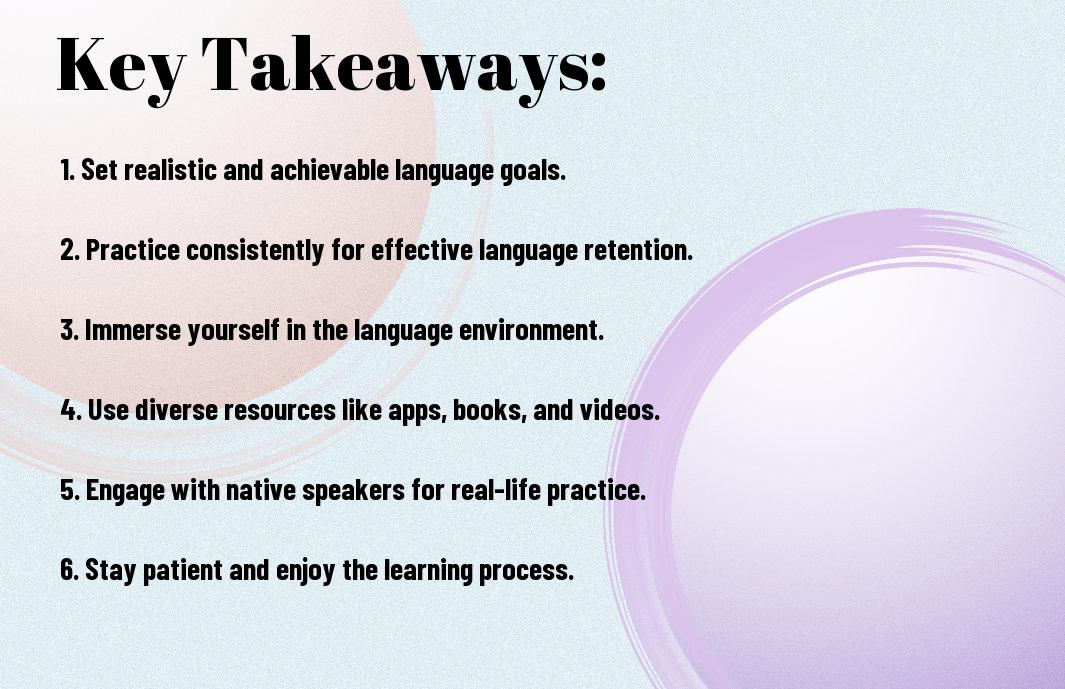
Key Takeaways:

  • Setting realistic goals is vital for language learners of any age, as it helps to maintain motivation and track progress over time.
  • Language learning at any age can be facilitated by immersion, which involves surrounding oneself with the language through various media, such as TV shows, music, and conversations with native speakers.
  • Using language learning apps can be an effective way to learn a new language, as they offer interactive lessons, quizzes, and exercises tailored to individual learning styles and levels.
  • Practice with a language exchange partner can significantly enhance language skills, especially speaking and listening, by providing opportunities for regular conversation and feedback.
  • Embracing consistency is key to successful language learning, as regular practice helps to reinforce new language skills and build confidence in using the language in everyday situations.

Setting Goals

To get started with learning a language, you need to set realistic goals. You can find helpful tips on language learning at How to learn a language | 8 top tips and advice, which will guide you through the process.

Defining Your Motivation

Your motivation for learning a language is key to your success. You should identify what drives you to learn, whether it’s for travel, work, or personal growth, to help you stay focused and motivated.

Creating a Learning Schedule

Between your work and personal life, you need to find time to dedicate to language learning. You should create a schedule that suits your lifestyle, allowing you to make consistent progress.

Learning a language requires consistent practice, so it’s crucial to allocate specific timeslots for learning and stick to them. You can use a planner, calendar, or app to stay organized and on track, ensuring that you make language learning a regular part of your routine, which will help you achieve your goals more effectively.

Choosing the Right Resources

You will find that there are numerous resources available to help you learn a language, and selecting the right ones can make a significant difference in your learning journey. Consider your learning style, goals, and preferences when choosing resources.

Language Learning Apps

The variety of language learning apps available can be overwhelming, but many offer interactive and engaging lessons, making learning a language fun and accessible. You can try out different apps to see which one works best for you.

Language Exchange Programs

Across the globe, language exchange programs provide opportunities for you to practice speaking with native speakers, helping you improve your pronunciation and comprehension. You can find language exchange programs online or in-person, depending on your preferences.

Even if you are a beginner, language exchange programs can be highly beneficial, as they allow you to learn from native speakers and get feedback on your language skills. You can use these programs to practice speaking, writing, and listening, and you will see improvement in your language abilities over time, helping you to achieve your language learning goals.

Effective Learning Techniques

Now that you’re ready to start learning, explore 7 Tips To Learn Any Language From An Expert for valuable insights. You’ll discover new methods to enhance your language skills and stay motivated throughout your journey.

Immersion Method

Besides traditional classroom learning, surrounding yourself with the language you want to learn can be highly effective. You can watch TV shows or movies, listen to music, and try to speak with native speakers to immerse yourself in the language.

Spaced Repetition

With the help of flashcards and language learning apps, you can utilize spaced repetition to reinforce new vocabulary and grammar rules. You can review material at increasingly longer intervals to help solidify it in your long-term memory.

But what makes spaced repetition so effective is its ability to help you learn new information in a way that’s tailored to your individual needs. As you practice, you’ll find that you’re able to recall words and phrases more easily, and your language skills will improve at a steady pace. You’ll be able to track your progress and adjust your learning schedule accordingly, making the most of your study time.

Overcoming Obstacles

For anyone learning a language, obstacles are inevitable, but with the right mindset, you can overcome them and achieve your goals, and it’s imperative to identify the challenges you’ll face and develop strategies to tackle them, allowing you to stay focused on your language learning journey.

Managing Time Constraints

Beneath the surface of a busy schedule, you can find moments to practice your language skills, such as listening to podcasts or language lessons during your daily commute, and making the most of your time will help you stay on track and make consistent progress.

Dealing with Self-Doubt

Before you begin to feel discouraged, take a step back and assess your progress, celebrating your achievements and identifying areas for improvement, and you’ll see that you’re making progress, even if it doesn’t feel like it, and this will help you build confidence in your abilities.

Achieving fluency in a language takes time and effort, and it’s normal to experience self-doubt, but you can overcome it by setting realistic goals, practicing consistently, and seeking support from language exchange partners, tutors, or online communities, and as you progress, you’ll become more confident in your language skills and more motivated to continue learning.

Practicing Consistently

Keep your language learning on track by setting aside time each day to practice. Consistency is key to developing language skills and making progress. You can start with short sessions, even 10-15 minutes a day, and gradually increase as your schedule allows.

Setting Achievable Milestones

Against the odds of getting discouraged, you set specific, attainable goals for your language learning journey. Break down larger goals into smaller, manageable milestones, and celebrate your achievements along the way. This will help you stay focused and motivated.

Staying Motivated

Around the challenges you may face, find ways to stay engaged and motivated. You can use language learning apps, watch TV shows or movies in the target language, or speak with native speakers to keep your interest alive.

Another way to stay motivated is to track your progress and reflect on how far you’ve come. You can use a language learning journal to note your achievements, identify areas for improvement, and adjust your practice schedule accordingly. This will help you stay motivated and encouraged throughout your language learning journey.

Seeking Feedback and Support

All language learners benefit from seeking feedback and support. You can find valuable resources, such as The Best Ways to Learn a Language According to Research, to guide your learning journey.

Finding a Language Partner

Between language exchange websites and apps, you can easily find a language partner to practice with, helping you improve your speaking and listening skills.

Joining a Language Learning Community

Joining online forums or social media groups dedicated to language learning can connect you with fellow learners and native speakers, providing opportunities for feedback and support.

Understanding the importance of community in language learning, you can leverage these platforms to ask questions, share your progress, and learn from others, ultimately enhancing your language learning experience and staying motivated to reach your goals.

Final Words

On the whole, you have now acquired the top tips for learning languages at any age. You can apply your knowledge to enhance your language skills, and your dedication will yield impressive results. As you progress, you will discover that learning a language is a rewarding experience, and your efforts will enrich your personal and professional life, allowing you to connect with diverse cultures and communities, and broaden your perspectives, making your language learning journey a success.

FAQ

Q: What are the most effective ways to start learning a new language as an adult?

A: As an adult, you can start learning a new language by setting achievable goals and creating a study schedule. Immersion is key, so try to surround yourself with the language as much as possible through listening to music, watching TV shows or movies, and speaking with native speakers. Additionally, using language learning apps and enrolling in a course can provide structure and support. Consistency is important, even 15-20 minutes of study per day can be more effective than one or two long sessions per week.

Q: How can I overcome the fear of speaking a new language and improve my pronunciation?

A: Overcoming the fear of speaking a new language requires practice and patience. Start by speaking as much as you can, even if it’s just with yourself or a language exchange partner. Listen to native speakers and try to mimic their intonation and rhythm. Pronunciation can be improved by listening to and repeating words and phrases, and by recording yourself to identify areas that need improvement. You can also practice speaking with a tutor or language exchange partner, which can help you become more confident and comfortable with speaking in the new language.

Q: What role does consistency and motivation play in successfully learning a new language at any age?

A: Consistency and motivation are vital for successfully learning a new language at any age. Setting specific, achievable goals and tracking progress can help maintain motivation. Finding a study buddy or joining a language learning community can also provide support and encouragement. Additionally, celebrating small victories along the way and rewarding yourself for milestones reached can help keep you motivated and engaged in the learning process. Staying consistent with your study routine, even when it’s challenging, will help you make steady progress and eventually become proficient in the new language.

How to Learn Grammar Without Getting Overwhelmed

As you initiate on your journey to learn grammar, you may feel overwhelmed by the numerous rules and Exceptions. Your goal is to become proficient, but the task seems daunting. You can start by breaking it down into manageable chunks, focusing on one aspect at a time. For guidance, you can visit tips to Study English Grammar Without Getting Bored and discover ways to make your learning process more enjoyable and effective.

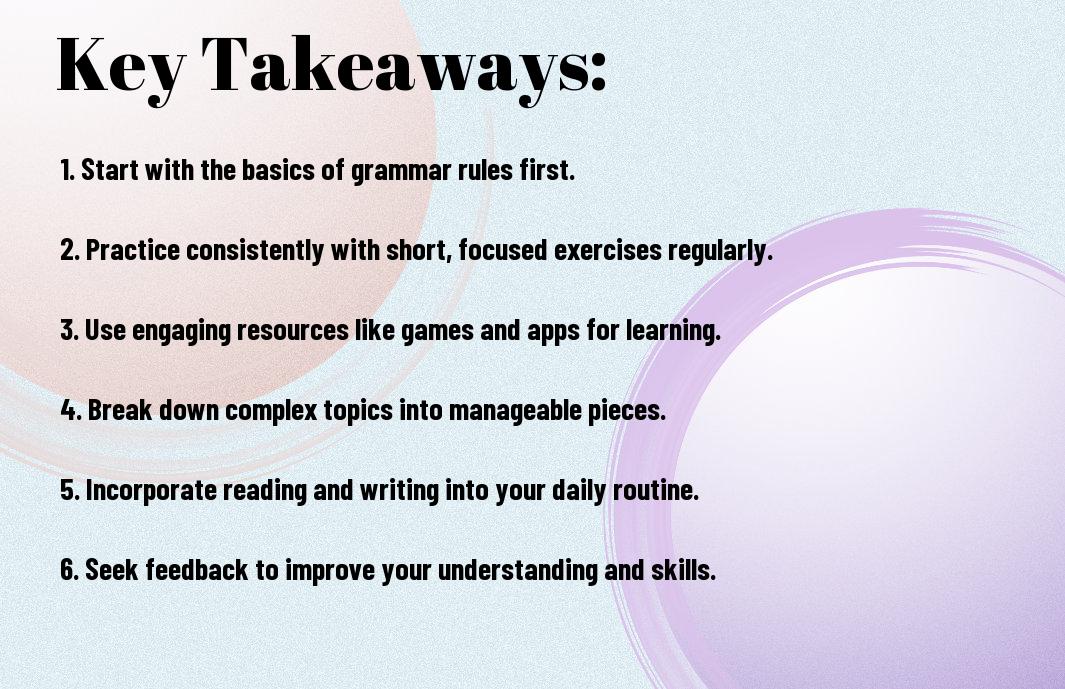
Key Takeaways:

To learn grammar effectively without feeling overwhelmed, consider the following points:

  • Focus on mastering the basics first, such as verb tenses, nouns, and sentence structure, before moving on to more complex grammar rules.
  • Use practical exercises and real-life examples to practice grammar, making it more engaging and easier to understand, rather than just memorizing rules.
  • Break down your learning into manageable chunks, setting achievable goals and tracking your progress, to help you stay motivated and avoid feeling overwhelmed by the amount of grammar to learn.

Setting Goals

Your approach to learning grammar should begin with a clear idea of what you want to achieve, allowing you to focus your efforts and track your progress.

Defining Objectives

Establishing a clear set of objectives helps you understand what you need to learn, enabling you to direct your attention to specific areas of grammar that require improvement.

Creating a Study Plan

To develop an effective study routine, you will need to break down your goals into manageable tasks, allocating time for each activity and setting realistic deadlines for completion.

Defining a study schedule that suits your needs and learning style is vital, as it enables you to make steady progress and maintain motivation, knowing that you are moving closer to your objectives with each passing day, and you can adjust your plan as you learn and grow.

Building Foundations

Some of the most effective methods for learning grammar involve starting with the basics and gradually building your knowledge. You will need to understand the fundamental principles of grammar, including parts of speech, verb tenses, and sentence structure. By establishing a solid foundation, you will be better equipped to tackle more complex concepts.

Learning Basic Rules

Previously, you may have found grammar rules to be confusing, but now you can approach them in a methodical way. You start by learning the basic rules, such as subject-verb agreement and noun declension, and then apply them to simple sentences. As you progress, you will become more comfortable with the rules and be able to use them in context.

Practicing Exercises

Meanwhile, as you learn the rules, you should also practice applying them through exercises. You can find many online resources that offer grammar exercises tailored to your level, from beginner to advanced. Between these resources, you will be able to practice your grammar skills in a variety of contexts.

Indeed, practicing exercises is vital to reinforcing your understanding of grammar rules. You will find that the more you practice, the more comfortable you become with using grammar in context. Your ability to apply the rules to real-life situations will improve, and you will start to develop your own writing style, using grammar to convey meaning and nuance in your writing.

Immersing in Language

Not long after you start learning grammar, you will find that immersing yourself in the language is necessary to your progress. You can do this by surrounding yourself with the language as much as possible, whether through TV shows, music, or conversations with native speakers.

Reading and Listening

One of the most effective ways to immerse yourself is by reading and listening to content in the target language. You can start with simple texts and podcasts, gradually increasing the difficulty level as your skills improve, allowing you to get used to the language’s rhythm and structure.

Speaking and Writing

Speaking directly to native speakers and writing in the target language will help you to practice your grammar skills. You will be able to test your understanding of grammar rules and get feedback on your mistakes, which is vital for your improvement.

Immersing yourself in speaking and writing activities forces you to think in the target language, applying grammar rules naturally. As you engage in conversations and write texts, you will develop your ability to use grammar correctly, and your communication skills will become more spontaneous and fluent, helping you to express your thoughts and ideas more effectively.

Overcoming Challenges

Many learners face difficulties when trying to learn grammar, but with persistence and the right approach, you can overcome these obstacles and achieve your goals. You will encounter challenges, but by acknowledging and addressing them, you can continue to make progress and improve your understanding of grammar.

Identifying Common Mistakes

Behind every mistake lies an opportunity to learn and improve, so take note of your errors and use them as a chance to refine your skills. You will begin to notice patterns in your mistakes, allowing you to focus your efforts on areas where you need the most improvement.

Seeking Help and Resources

Above all, do not be afraid to ask for help when you need it, as seeking guidance is a key part of the learning process. You can find numerous resources available to support your learning, from online tutorials to language exchange partners, to help you navigate difficult concepts and stay motivated.

Common challenges that you may face when seeking help and resources include finding reliable and engaging materials, as well as staying committed to your learning goals. You can address these challenges by exploring different types of resources, such as podcasts, videos, and language learning apps, to find what works best for you and your learning style. By doing so, you will be able to overcome obstacles and continue making progress in your grammar learning journey.

Staying Motivated

Keep your goals in mind and celebrate small victories to maintain enthusiasm for learning grammar. You will encounter challenges, but persistence is key to making progress. Stay focused on your objectives and you will be more likely to stay motivated throughout the learning process.

Finding Study Groups

Among the most effective ways to learn grammar is to join a study group, where you can engage with others who share your interests and goals. You can learn from one another, share tips, and stay accountable, making the learning process more enjoyable and interactive.

Tracking Progress

About the most significant aspect of learning grammar is monitoring your development, which helps you identify areas that need improvement. You can use various tools, such as journals or mobile apps, to track your progress and adjust your approach as needed.

This process of tracking your progress allows you to reflect on your strengths and weaknesses, enabling you to make informed decisions about your learning strategy. By regularly evaluating your progress, you can refine your approach, set realistic targets, and make steady progress towards mastering grammar, which in turn will help you stay motivated and engaged in the learning process.

Advanced Techniques

Once again, you will find that mastering grammar requires dedication and persistence. Consider the following:

  1. Practice consistently
  2. Review regularly
Technique Description
Drills Repetitive exercises

Analyzing Grammar Structures

Among the various methods, you will discover that analyzing grammar structures is vital. You will break down sentences to understand how they work, and this will help you to identify patterns and improve your overall grasp of grammar.

Applying Grammar in Context

Around the time you start applying grammar in context, you will notice significant improvement in your language skills. You will learn to use grammar in real-life situations, making your learning more effective.

It is at this stage that you will start to see the benefits of your hard work, as you begin to apply grammar rules in your writing and conversation, and your communication becomes more accurate and fluent. You will be able to express yourself with confidence, and your language skills will improve dramatically.

To wrap up

As a reminder, you have the power to learn grammar at your own pace. You can break down complex rules into manageable chunks, focus on your weaknesses, and practice consistently. By doing so, you will gradually build your confidence and develop a solid understanding of grammar, making your learning journey less daunting and more enjoyable, allowing you to improve your language skills effectively. Your progress will be steady, and your grasp of grammar will become more secure over time.

FAQ

Q: What is the best way to start learning grammar without feeling overwhelmed by the numerous rules and exceptions?

A: To begin learning grammar without feeling overwhelmed, it’s important to start with the basics. Begin by understanding the parts of speech, such as nouns, verbs, adjectives, and adverbs. Focus on one topic at a time, and make sure you have a solid grasp of each concept before moving on to the next. Utilize online resources, grammar workbooks, or language learning apps that provide interactive and engaging lessons. Breaking down your learning process into manageable chunks will help you stay focused and motivated.

Q: How can I practice grammar effectively without getting bored or overwhelmed by the complexity of the rules?

A: Practicing grammar can be engaging and fun if you incorporate it into your daily activities. Try to read books, articles, or news in the language you’re learning, and pay attention to how grammar is used in context. Watching TV shows or movies with subtitles can also help you see grammar in action. Additionally, speaking with native speakers or language exchange partners can provide you with opportunities to practice your grammar skills in conversations. You can also use language learning apps that offer interactive exercises, quizzes, and games to make grammar practice more enjoyable and challenging.

Q: Are there any resources or tools that can help me learn grammar in a structured and organized manner without feeling overwhelmed by the amount of information?

A: Yes, there are many resources and tools available to help you learn grammar in a structured and organized way. Grammar textbooks, online courses, and language learning platforms often provide a step-by-step approach to learning grammar, with lessons and exercises that build on each other. You can also use flashcards to help you memorize grammar rules and exceptions, and create a schedule to track your progress and stay on track. Furthermore, joining a language learning community or finding a study buddy can provide you with support and motivation, and help you stay engaged and focused on your grammar learning journey.

Jhere Skip to content