Vocabulary

The Role of Vocabulary Expansion in Language Fluency

As you strive to improve your language skills, you’ll find that expanding your vocabulary is crucial to achieving fluency. Your ability to express yourself effectively depends on the words at your disposal. Research, such as the study on Effects of Language Skills and Strategy Use on Vocabulary Acquisition, highlights the significance of vocabulary in language learning. By broadening your vocabulary, you’ll enhance your overall language proficiency and be able to communicate more confidently.

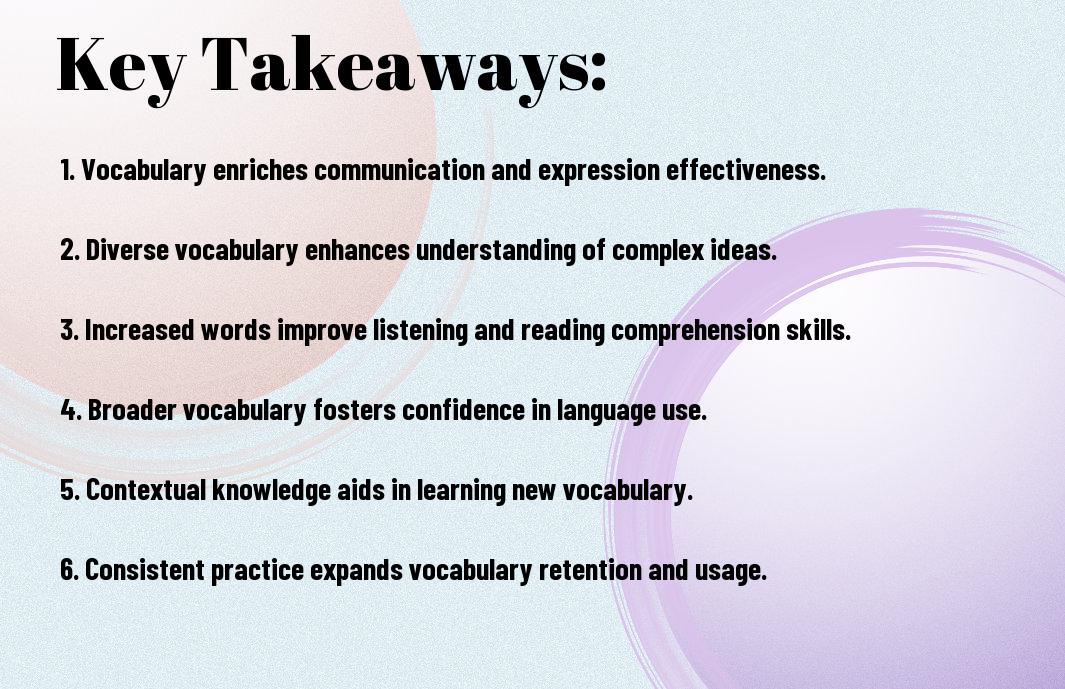
Key Takeaways:

To achieve language fluency, vocabulary expansion plays a significant role. Here are some key points to consider:

  • Expanding vocabulary helps to improve communication skills, enabling individuals to express themselves more effectively and accurately convey their thoughts and ideas.
  • Contextual learning is crucial for vocabulary expansion, as it allows individuals to understand how words are used in different situations and develop a deeper understanding of linguistic nuances.
  • Consistent practice and exposure to various language sources, such as books, media, and conversations, can help individuals develop a more extensive vocabulary range and enhance their overall language proficiency.

Foundations of Language Fluency

To establish a strong command of a language, you need to understand the significance of vocabulary expansion. As you explore into the world of language learning, you will discover that vocabulary plays a vital role in your journey, and you can find more information on Why Vocabulary Matters in Language Learning to improve your skills.

The Importance of Vocabulary

Fluently, you will notice that a robust vocabulary is vital for effective communication, enabling you to express your thoughts and ideas with clarity and precision, which in turn will enhance your overall language proficiency.

Language Acquisition and Development

Against the backdrop of language learning, you will encounter various challenges, but developing a strong vocabulary will help you overcome them, and as you progress, you will find that your language skills improve significantly.

Considering your language learning goals, you should focus on acquiring new words and phrases, practicing them in context, and reviewing them regularly to reinforce your learning, and you will see that your language acquisition and development will become more effortless and natural, allowing you to communicate more confidently and accurately in your target language.
Vocabulary Expansion Techniques

The key to improving your language fluency lies in expanding your vocabulary, and there are several techniques to achieve this. You can use flashcards, vocabulary apps, and language learning software to learn new words and phrases.

Reading and Exposure

Prior to developing a strong vocabulary, you need to expose yourself to various texts, such as books, articles, and news. You will encounter new words and phrases, which will help you understand their context and usage.

Practice and Reinforcement

Between learning new words and using them in conversation, you need to practice consistently. You can practice by speaking with native speakers, writing journal entries, or using language exchange websites.

A significant aspect of practice and reinforcement is to use your new vocabulary in context. As you try to use the words and phrases you have learned, you will find that your language skills improve dramatically, and you will become more confident in your ability to express yourself effectively. You will be able to convey your thoughts and ideas with precision, and your communication will become more nuanced and sophisticated.

Effective Strategies for Vocabulary Building

Keep in mind that expanding your vocabulary is an ongoing process that requires consistent practice and dedication. You will need to incorporate various techniques into your daily routine to achieve language fluency.

Contextual Learning

Around you, there are numerous opportunities to learn new words in context, such as reading books, watching movies, or engaging in conversations with native speakers, which will help you understand how to use vocabulary in different situations.

Active Recall and Review

Revisiting previously learned vocabulary on a regular basis is vital to reinforce your understanding and retention of new words, allowing you to apply them more effectively in your communication.

Effective use of active recall and review involves setting aside time to regularly test yourself on newly acquired vocabulary, using flashcards or quizzes to assess your knowledge, and identifying areas where you need additional practice, enabling you to refine your skills and develop a more sophisticated command of language, as you progress towards achieving your goal of language fluency.

Overcoming Language Barriers

Not being able to communicate effectively in a foreign language can be frustrating. You may struggle to express your thoughts and ideas, leading to feelings of isolation. However, with vocabulary expansion, you can overcome language barriers and enhance your language fluency.

Language Immersion and Surroundings

Among the most effective ways to learn a language is to surround yourself with it. You can do this by watching TV shows or movies, listening to music, and speaking with native speakers. This immersion will help you pick up new vocabulary and phrases, making you more fluent in the language.

Technology and Language Tools

Any language learner can benefit from the numerous tools and resources available online. You can use apps, language learning software, and online courses to improve your vocabulary and language skills. These tools can be accessed from anywhere, making it easier for you to learn a language at your own pace.

Immersion through technology can be a powerful way to learn a language. You can use virtual reality to practice conversations, play language learning games, and engage with native speakers online. As you explore these tools, you will find that your vocabulary expands, and your language fluency improves, allowing you to communicate more effectively in the language you are learning.

Measuring Language Fluency

Despite the complexity of language fluency, it can be measured through various assessments. You will find that language proficiency tests, such as TOEFL or IELTS, evaluate your reading, writing, speaking, and listening skills.

Assessment and Evaluation

Across different linguistic backgrounds, you will encounter various evaluation methods. You can assess your language skills through self-assessment, peer review, or standardized tests, which help identify areas for improvement.

Progress Tracking and Adjustment

Alteration of your learning strategy is necessary as you track your progress. You will adjust your approach based on your performance, focusing on areas where you need improvement, and this helps you refine your language skills over time.

Measuring your progress in language fluency involves tracking your performance over time, and you will use this information to refine your learning strategy. As you monitor your development, you can identify patterns and trends, allowing you to make informed decisions about your language learning approach, and you will find that this leads to more effective language acquisition.

Implementing Vocabulary Expansion in Education

Your approach to implementing vocabulary expansion in education should be multifaceted, involving various strategies to enhance language learning. This can be achieved through a combination of curriculum design, teacher training, and support, ultimately leading to improved language fluency.

Curriculum Design and Planning

The development of a well-structured curriculum is important for effective vocabulary expansion. You will need to consider the needs and abilities of your students, incorporating a range of vocabulary-building activities and materials into your lesson plans.

Teacher Training and Support

By providing teachers with the necessary training and resources, you can ensure that they are equipped to deliver high-quality vocabulary instruction. This enables them to create an engaging and supportive learning environment, fostering students’ language development.

With comprehensive training, you will be better positioned to assess your students’ progress, identifying areas where they may require additional support. This allows you to tailor your teaching approach to meet the unique needs of your students, ultimately enhancing their vocabulary expansion and language fluency. As you implement these strategies, you will be able to observe significant improvements in your students’ ability to communicate effectively.

Conclusion

Taking this into account, you will find that vocabulary expansion plays a significant role in enhancing your language fluency. As you continue to learn and practice, your ability to express yourself effectively improves. Your comprehension and communication skills become more refined, allowing you to engage in complex conversations with ease. By prioritizing vocabulary expansion, you can take your language skills to the next level and become a more confident communicator.

FAQ

Q: What is the significance of vocabulary expansion in achieving language fluency?

A: Vocabulary expansion plays a vital role in language fluency as it enables individuals to express themselves more effectively and accurately. A broader vocabulary range allows learners to understand and convey complex ideas, nuances, and subtleties of the language, thereby enhancing their overall communication skills. As vocabulary grows, so does the ability to engage in more sophisticated conversations, comprehend various texts, and articulate thoughts with precision.

Q: How does vocabulary expansion impact reading comprehension and writing skills in language learning?

A: The impact of vocabulary expansion on reading comprehension and writing skills is profound. When learners have a larger vocabulary, they are better equipped to decipher unfamiliar words from context, deduce meaning, and grasp the overall message of a text. This, in turn, improves reading comprehension. Similarly, in writing, an expanded vocabulary allows for more varied and precise expression of ideas, leading to clearer, more engaging, and articulate writing. It also enables the use of more complex sentence structures and the conveyance of subtle shades of meaning, significantly enhancing writing skills.

Q: What strategies can language learners employ to effectively expand their vocabulary?

A: Language learners can employ several strategies to expand their vocabulary effectively. One of the most effective methods is through extensive reading, where learners are exposed to new words in context. Keeping a vocabulary notebook to jot down new words and their meanings is also highly beneficial. Engaging in conversations with native speakers, using flashcards, and learning prefixes, suffixes, and roots can also significantly aid in vocabulary expansion. Furthermore, learners can utilize online resources, vocabulary building apps, and play word games to make the process more engaging and fun, thereby accelerating their language learning journey.

How can one improve their reading comprehension in a new language

Most language learners find improving reading comprehension in a new language to be a challenging task. However, with dedication and the right strategies, you can enhance your understanding and proficiency. By actively engaging with the language through reading materials, using language learning apps, practicing with native speakers, and maintaining a consistent study routine, you can significantly boost your reading comprehension skills in a new language. This blog post will provide you with practical tips and techniques to help you on your language learning journey.

Key Takeaways:

  • Practice regularly: Consistent reading practice is important to improving reading comprehension in a new language.
  • Use context clues: Pay attention to surrounding words, phrases, and sentences to help understand the meaning of unfamiliar words.
  • Build vocabulary: Increasing your word bank in the new language will significantly enhance your reading comprehension skills.

Setting the Foundation

Learn the Basics of the Language

On your journey to improve reading comprehension in a new language, it is crucial to start by learning the basics. Familiarize yourself with the alphabet, pronunciation rules, and basic grammar structures. Understanding how sentences are formed and the meaning behind different verb tenses will provide you with a solid foundation to build upon.

Familiarize Yourself with Common Vocabulary

With the basics in place, it’s time to immerse yourself in common vocabulary. Start by learning words that are frequently used in everyday conversations or written texts. Make flashcards or use language learning apps to practice and reinforce these new words. By expanding your vocabulary, you will begin to recognize familiar words and phrases more easily, enhancing your overall reading comprehension.

Foundation:

Building a strong foundation in a new language takes time and dedication. By mastering the basics and familiarizing yourself with common vocabulary, you set yourself up for success in improving your reading comprehension. Do not forget, consistent practice and patience are key as you progress on your language learning journey.

Building Blocks of Comprehension

Now, let’s explore into the foundational elements that enhance your reading comprehension in a new language. By understanding these building blocks, you can navigate texts effectively and extract the intended meaning.

Identifying Main Ideas and Supporting Details

Any proficient reader knows that grasping the main ideas and supporting details is crucial for comprehension. When reading in a new language, pay attention to keywords that signal main points. Skim through the text initially to identify these key terms and then explore deeper into the supporting details that elaborate on the main idea. This strategy will help you create a mental map of the text and understand the writer’s message more clearly.

Recognizing Text Structures and Organization

Recognizing the text structures and organization is vital for interpreting the content effectively. Different types of writing, such as narratives, expository texts, or persuasive essays, follow distinct organizational patterns. By familiarizing yourself with these structures, you can anticipate the flow of the text and comprehend it more easily. For example, narratives often follow a chronological order, while expository texts may use compare and contrast or cause and effect structures. Recognizing these patterns will provide you with valuable insights into the author’s purpose and help you make sense of the information presented.

Active Reading Strategies

All language learners face the challenge of improving their reading comprehension in a new language. One key strategy to enhance your understanding of a text is to actively engage with it. This involves more than just passively reading the words on the page; it requires you to interact with the material and think critically as you go along.

Asking Questions and Making Inferences

To deepen your understanding of a text in a new language, start by asking yourself questions as you read. What is the main idea of this paragraph? Why did the author choose this particular word? By actively questioning the text, you engage with it on a deeper level, which can help clarify any confusion and improve comprehension. Additionally, making inferences based on the information provided can fill in gaps and aid in connecting ideas within the text.

Visualizing and Summarizing Text

Strategies like visualizing events or characters in your mind as you read can make the content more vivid and memorable, aiding in comprehension. Summarizing the key points of each section in your own words can also reinforce your understanding of the material. This active engagement with the text not only improves comprehension but also enhances retention of the information for future reference.

With practice, these active reading strategies will become second nature, allowing you to navigate texts in a new language with greater ease and understanding. By incorporating these techniques into your regular study routine, you can make significant strides in improving your overall reading comprehension skills.

Overcoming Language Barriers

After reading the article on To Improve Language Comprehension DON’T Try …, you may feel equipped to take on the challenge of improving your reading comprehension in a new language. When faced with language barriers, there are several techniques you can use to enhance your understanding and progress more effectively.

Dealing with Unfamiliar Vocabulary

Any time you encounter unfamiliar vocabulary while reading in a new language, don’t let it discourage you. Instead, make it a learning opportunity. Keep a notebook or use language learning apps to jot down these words and look up their meanings later. By actively engaging with new vocabulary, you will gradually expand your language proficiency and comprehension skills.

Using Context Clues and Inference

Clues surrounding unfamiliar words, phrases, or concepts in a text can provide you with valuable context that aids comprehension. Pay attention to the surrounding sentences and paragraphs to infer the meanings of unfamiliar words. Additionally, look for cues such as tone, style, or the overall theme of the text to help you grasp the intended message. By sharpening your inference skills, you can decipher unknown language elements more effectively.

Dealing with language barriers is a natural part of the language learning process. Embrace challenges as opportunities to enhance your reading comprehension skills and gradually overcome obstacles as you immerse yourself in the language.

Improving Fluency and Accuracy

Once again, when it comes to enhancing your reading comprehension in a new language, working on both fluency and accuracy is crucial. Practicing Regular Reading Habits can significantly contribute to your progress. The more you immerse yourself in reading materials, the more familiar you will become with the language’s structure and vocabulary.

Practicing Regular Reading Habits

The key to improving your reading comprehension skills is consistency. Set aside time each day to read in the language you are learning. Start with shorter texts and gradually work your way up to more challenging material. By exposing yourself to the language regularly, you will notice improvements in both your fluency and understanding.

Enhancing Vocabulary through Reading

Regular exposure to a wide range of vocabulary is important for language acquisition. As you read, pay attention to new words and phrases. Keep a vocabulary journal to jot down unfamiliar terms and their meanings. You can also create flashcards to review and reinforce your new vocabulary regularly.

A diverse reading routine, including newspapers, books, and online articles, will expose you to different writing styles and genres. This exposure will not only enhance your vocabulary but also improve your understanding of the language’s nuances and complexities.

Enhancing Critical Thinking

Unlike passive reading, actively engaging with a text requires critical thinking skills. These skills are important for improving reading comprehension in a new language. By employing critical thinking, you can examine deeper into the text, understand the author’s message, and analyze the content effectively.

Analyzing and Evaluating Text

Thinking critically while reading involves analyzing and evaluating the text for its content, structure, and argument. This process helps you not only understand the main idea but also grasp the supporting details and their significance. As you read in a new language, make sure to break down the text into smaller parts, look for patterns, and make connections between different ideas. By doing so, you can enhance your comprehension and retain more information.

Identifying Author’s Purpose and Tone

Enhancing your reading comprehension also involves identifying the author’s purpose and tone. The author’s purpose refers to why they wrote the text – whether to inform, persuade, entertain, or describe. Understanding the tone, on the other hand, helps you grasp the author’s attitude towards the subject matter. By paying attention to these aspects while reading in a new language, you can gain deeper insights into the text and interpret it more accurately.

Summing up

To wrap up, improving your reading comprehension in a new language requires patience, practice, and a strategic approach. Start by building your vocabulary, then progress to reading materials that are slightly challenging but still understandable. Take notes, ask questions, and seek feedback to reinforce your understanding. Make use of language learning resources, such as online courses, language exchange partners, and language learning apps to supplement your learning. Remember that consistency is key, so make reading in your new language a regular habit to see progress over time. With dedication and perseverance, you’ll soon find yourself reading and understanding in a new language with confidence.

FAQ

Q: How can I improve my reading comprehension in a new language?

A: To improve your reading comprehension in a new language, it is necessary to practice regularly. Make reading a daily habit, starting with material that is slightly above your current level to gradually challenge yourself. Additionally, using apps, flashcards, and language exchange platforms can help expand your vocabulary and improve your understanding of the language.

Q: Are there any specific strategies that can help me enhance my reading comprehension skills?

A: Yes, there are several strategies you can use to enhance your reading comprehension in a new language. Practice active reading by asking yourself questions about the text, summarizing paragraphs, and predicting what will come next. Breaking down longer texts into smaller sections and focusing on understanding the main ideas before delving into details can also be beneficial.

Q: How can I monitor my progress and identify areas for improvement in my reading comprehension?

A: Tracking your progress in reading comprehension can be done by keeping a journal of the texts you have read, noting any new vocabulary learned, and reflecting on what parts were challenging. Taking regular comprehension quizzes, discussing the texts with language partners, or seeking feedback from language teachers can also help you identify areas for improvement and tailor your practice accordingly.

Jhere Skip to content