As you navigate the complexities of human communication, you begin to notice that your words and expressions are shaped by the cultural context in which you live. Your language is not just a means of conveying thoughts, but also a reflection of your cultural identity. You will find that the way you express yourself is influenced by the values, norms, and beliefs of your community, shaping your perceptions and interactions with the world around you. This intersection of culture and language is a fascinating topic that warrants exploration.
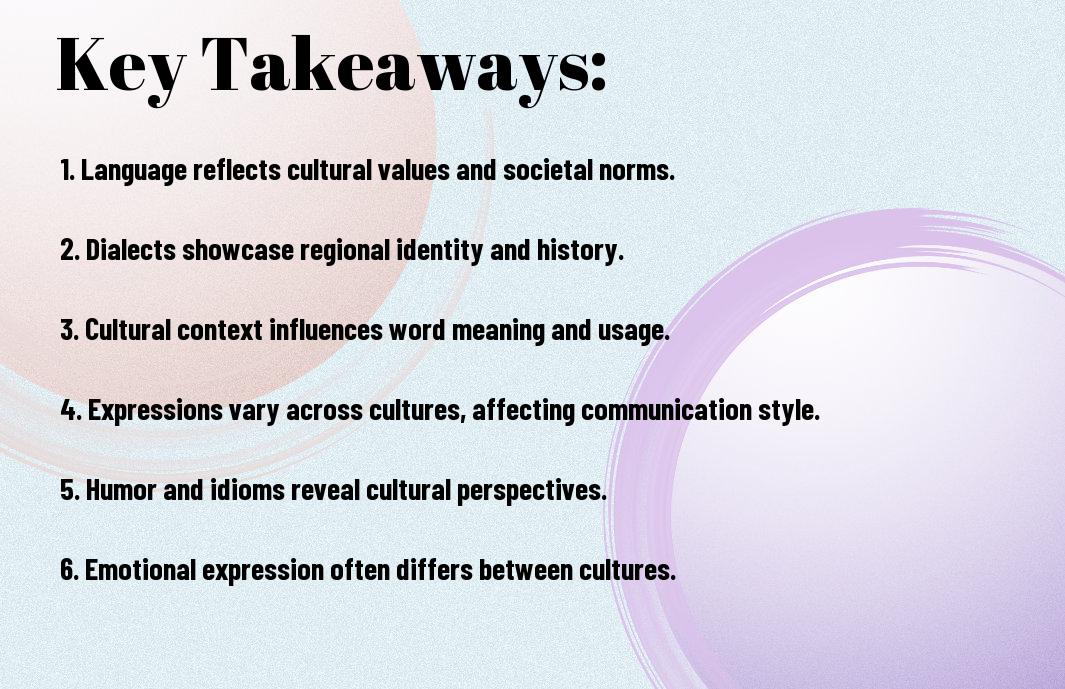
Key Takeaways:
- The cultural background of a speaker can significantly influence their language expression, shaping the way they convey meaning and negotiate social relationships through communication.
- Idiomatic expressions and colloquialisms often have cultural references that may not be immediately understood by non-native speakers, highlighting the importance of cultural competence in effective communication.
- Linguistic nuances such as tone, pitch, and body language can vary greatly across cultures, and being aware of these differences is imperative for successful communication in multicultural settings.
Language and Cultural Identity
A person’s language is often a fundamental aspect of their cultural identity, influencing how you perceive yourself and your place within a community, and shaping your interactions with others in profound ways, as you navigate the complexities of cultural expression.
The Role of Culture in Shaping Language
Prior to examining the intricacies of language and culture, you must consider how culture shapes the very language you speak, affecting the words you choose, the tone you convey, and the nuances you express, all of which are influenced by your cultural background and the values you hold dear.
Language as a Reflection of Cultural Values
Inherent in your language is a reflection of your cultural values, as the phrases you use, the idioms you express, and the stories you tell all convey the beliefs and traditions that are unique to your cultural heritage, and as you communicate, you are, in essence, sharing a part of yourself and your cultural identity with others.
Values such as respect, hierarchy, and community are often embedded in the language you speak, and as you use language to communicate, you are reinforcing these values, perpetuating the cultural norms that have been passed down to you, and shaping your sense of self and your connection to your cultural community, and you begin to see that language is not just a means of communication, but a vital part of your cultural identity, influencing how you think, feel, and interact with the world around you.
Expressions and Nuances
It is imperative to consider the role of culture in shaping your language expression, as it influences the way you convey meaning and negotiate social relationships. Your cultural background determines your linguistic habits, from the words you choose to the tone you use, and this, in turn, affects how others perceive you.
Idioms and Colloquialisms in Different Cultures
Prior to delving into the complexities of language, you should note that idioms and colloquialisms vary significantly across cultures, and their meanings are often specific to a particular region or community. Your understanding of these expressions depends on your familiarity with the cultural context in which they are used.
Nonverbal Communication Across Cultures
Conversely, communication is not limited to verbal expressions, and your nonverbal cues, such as body language and facial expressions, can convey just as much information as spoken words. You should be aware that these cues can have different meanings in different cultures, and your ability to interpret them correctly is vital to effective communication.
It is worth noting that nonverbal communication can be particularly problematic when interacting with people from other cultures, as your unconscious behaviors and gestures may be misinterpreted. You may unintentionally offend someone or convey a message that is different from your intended meaning, highlighting the need for you to be mindful of your nonverbal cues and to educate yourself about the cultural norms of the communities you interact with.
Cultural Influences on Language Development
To understand the impact of culture on language, you should consider the role of cultural background in shaping your language expression. As you explore the relationship between culture and language, you may find it helpful to consult resources such as exploring the impact of culture on language learning to deepen your understanding.
Language Acquisition and Cultural Background
On the path to language acquisition, your cultural background plays a significant role in determining your language expression, as it influences the way you perceive and interpret the world around you, shaping your linguistic preferences and abilities.
Language Contact and Cultural Exchange
Exchange of cultural practices and values occurs when languages come into contact, and as you engage with speakers of other languages, you will notice the exchange of linguistic features, leading to the creation of new language varieties and expressions.
For instance, when you observe the language contact phenomenon, you will see that it results in code-switching, borrowing, and convergence, which are all indicative of the dynamic interplay between languages and cultures, and as you probe deeper into this phenomenon, you will gain a deeper understanding of the complex relationship between language and culture, and how it affects your expression and communication.
Language and Cultural Diversity
Unlike other aspects of human society, language is deeply intertwined with cultural diversity, influencing your perception of the world and shaping your identity. As you explore the complexities of language, you will discover that cultural diversity is reflected in the vast array of languages spoken globally.
Multilingualism and Cultural Identity
Around the time you begin to appreciate the significance of language, you will notice that multilingualism plays a significant role in shaping cultural identity, allowing you to connect with diverse communities and broaden your cultural understanding.
Language Endangerment and Cultural Preservation
Alongside the issue of language diversity, you will find that language endangerment poses a significant threat to cultural preservation, as you witness languages disappearing at an alarming rate, taking with them unique cultural practices and traditions.
Aiding your understanding of language endangerment and cultural preservation, you will see that as languages disappear, the cultural heritage and history of communities are also lost, highlighting the need for concerted efforts to document and preserve endangered languages, thereby safeguarding the cultural diversity that makes your world a richer and more fascinating place to live in.
Communication Across Cultures
Many languages are spoken across cultures, and you will encounter various forms of expression as you navigate these diverse cultural landscapes. Your interactions will be shaped by the nuances of each culture, influencing how you perceive and convey meaning. As you communicate, you will need to consider the subtleties of language that vary greatly between cultures.
Barriers to Effective Cross-Cultural Communication
Besides the obvious linguistic differences, you will also face nonverbal barriers, such as distinct customs and norms, which can hinder effective communication. Your ability to understand and adapt to these differences will significantly impact the success of your interactions across cultures, and you must be aware of potential miscommunications that can arise from these barriers.
Strategies for Successful Intercultural Interaction
Culturally sensitive approaches will enable you to navigate complex cultural contexts with greater ease, and you will find that being open to learning about different cultures is imperative in developing effective communication strategies. Your willingness to engage with diverse perspectives will facilitate more meaningful interactions, allowing you to build stronger relationships across cultural boundaries.
This approach to intercultural interaction requires you to be aware of your own cultural biases and to be willing to question your assumptions. As you engage with people from diverse cultural backgrounds, you will need to be patient and observant, taking the time to understand the nuances of each culture and to adapt your communication style accordingly. By doing so, you will be able to foster greater understanding and cooperation, leading to more successful interactions across cultures.

Implications and Applications
Keep in mind that understanding the impact of culture on language expression has significant implications for your interactions with people from diverse backgrounds. You will be able to navigate complex social situations more effectively and communicate your ideas with greater precision.
Language Teaching and Cultural Sensitivity
Across various disciplines, you will find that cultural awareness is vital in language teaching, as it enables you to tailor your instruction to the needs of your students and foster a more inclusive learning environment. You will be able to create lessons that are sensitive to the cultural backgrounds of your students.
Translation and Interpretation in Multicultural Contexts
On the surface, translation and interpretation may seem like straightforward processes, but you will soon discover that they involve a deep understanding of the cultural nuances of the languages involved. You will need to consider the subtleties of language and culture to convey the intended meaning accurately.
At the heart of effective translation and interpretation lies a profound appreciation for the cultural context in which communication takes place. You will need to consider the values, beliefs, and practices that underlie the language and adjust your approach accordingly, taking into account the potential for miscommunication and striving to facilitate understanding between people from different cultural backgrounds. As you research deeper into the complexities of translation and interpretation, you will develop a greater appreciation for the intricate dance between language and culture.
Final Words
On the whole, you have witnessed how culture intricately weaves into the fabric of language expression, influencing your perceptions and understanding of the world. As you reflect on this phenomenon, you begin to appreciate the profound impact culture has on shaping your thoughts and opinions, ultimately affecting the way you communicate with others and navigate your surroundings, forcing you to consider the complex dynamics at play in your daily interactions.
FAQ
Q: How does culture influence language expression and what are the implications for communication across different cultural backgrounds?
A: Culture significantly influences language expression by shaping the way individuals perceive and convey meaning. Different cultures have unique norms, values, and customs that are embedded in their language, affecting not only the words and phrases used but also the tone, context, and non-verbal cues. For instance, in some cultures, directness is valued, while in others, indirectness is preferred. Understanding these cultural nuances is imperative for effective communication across different cultural backgrounds, as it helps avoid misunderstandings and fosters more respectful and empathetic interactions. By acknowledging and adapting to these differences, individuals can enhance their ability to communicate effectively in multicultural settings.
Q: In what ways do cultural differences in language expression impact business and international relations, and how can these challenges be addressed?
A: Cultural differences in language expression can substantially impact business and international relations by creating barriers to effective communication. For example, idioms, humor, and figurative language that are common in one culture may be confusing or offensive in another. In a business context, this can lead to misunderstandings, missed opportunities, or damaged relationships. To address these challenges, it’s beneficial for individuals involved in international business or relations to undergo cross-cultural training. This training can help them understand the cultural context of the languages they interact with, learn to navigate differences in communication styles, and develop strategies for clear and respectful communication. Furthermore, using simple and straightforward language, avoiding cultural references that may not translate well, and seeking clarification when necessary can also mitigate potential issues.
Q: How does the impact of culture on language expression affect the process of language learning, and what strategies can language learners use to better understand and adapt to these cultural nuances?
A: The impact of culture on language expression significantly affects the process of language learning, as learners must not only acquire linguistic knowledge but also understand the cultural context in which the language is used. Cultural nuances can influence everything from the appropriateness of certain vocabulary in different situations to the importance of non-verbal communication. To better understand and adapt to these cultural nuances, language learners can immerse themselves in the culture by engaging with native speakers, watching local media, and participating in cultural events. Additionally, seeking out language learning materials that incorporate cultural insights and practicing active listening and observation can help learners become more aware of cultural differences in language use. It’s also important for learners to be patient and open-minded, acknowledging that cultural and linguistic mistakes are a natural part of the learning process.

