As you prepare for competitive exams, you may be wondering which languages will give you an edge. Your language skills can set you apart from others, and learning the right ones can boost your chances of success. You will discover that certain languages are in high demand and can open doors to new opportunities. By choosing the right languages, you can enhance your career prospects and stay ahead of the competition, making your language learning journey a valuable investment in your future.
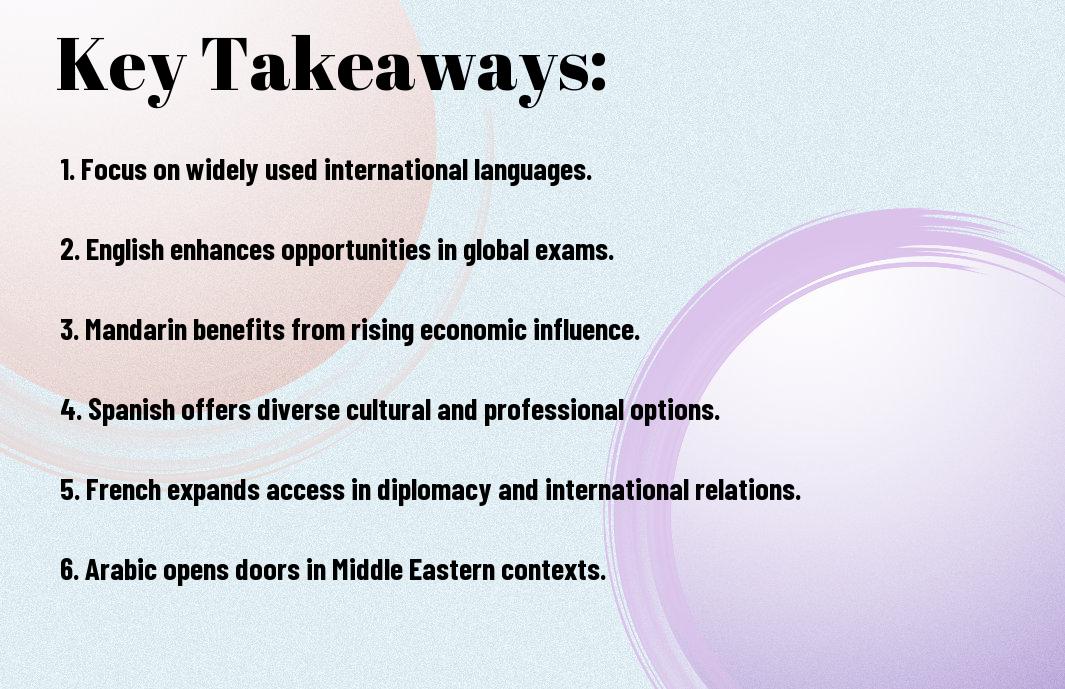
Key Takeaways:
To succeed in competitive exams, choosing the right languages to learn is important. Here are the key points to consider:
- Focus on popular languages such as English, Spanish, and Mandarin, as they are widely used and can open up more job opportunities.
- Learning languages like French, German, or Italian can also be beneficial, as they are highly valued in international business and diplomacy.
- Developing programming skills in languages like Python, Java, or C++ can be advantageous, as they are in high demand in the tech industry and can give you a competitive edge.
Benefits of Learning Languages for Competitive Exams
While preparing for competitive exams, learning languages can give you an edge over others. It not only enhances your understanding of different cultures but also improves your overall performance.
Enhanced Career Opportunities
By acquiring language skills, you open yourself up to a world of job opportunities, increasing your chances of getting hired by multinational companies and organizations that value language proficiency.
Improved Cognitive Skills
Skills such as memory, attention, and problem-solving are improved when you learn a new language, which can help you perform better in your exams and other areas of life.
And as you continue to learn and practice a new language, you will notice significant improvements in your cognitive abilities, allowing you to approach problems from different angles and think more critically, which will benefit you in all aspects of your competitive exams and beyond.
Most In-Demand Languages for Competitive Exams
There’s a growing need to learn new languages to stay competitive in exams, and you can boost your chances by choosing the right ones, as it will help you to achieve your goals, you can prepare yourself for a wide range of opportunities.
English
Examinations often require proficiency in English, and you will find that it is a common language used in many competitive exams, so it’s important to focus on improving your English skills to perform well in your exams, and you will increase your chances of getting selected.
Spanish
Above all, Spanish is a highly valued language, and you will benefit from learning it, as it is becoming increasingly popular, and you can take advantage of this trend to enhance your language skills, which can give you an edge over others in competitive exams.
Languages like Spanish can open doors to new opportunities for you, and you can explore various career options, as Spanish is widely spoken in many countries, and you will find that knowing Spanish can help you to communicate effectively with people from diverse backgrounds, and you can make the most of your language skills to achieve success in competitive exams.
Language Skills Required for Competitive Exams
To excel in competitive exams, you need to possess strong language skills, which are imperative for scoring well in various sections of the exams, including verbal ability and comprehension.
Reading Comprehension
Contrary to popular belief, reading comprehension is not just about reading a passage, but also about understanding the context, tone, and vocabulary used, which you will need to master to answer questions correctly.
Writing Abilities
Regarding your writing skills, you should be able to express your thoughts clearly and concisely, using proper grammar, syntax, and vocabulary, which will help you to score well in the writing section of the exams.
It is also important to note that your writing abilities will be tested in various formats, such as essays, letters, and summaries, so you need to be well-versed in different writing styles and formats to perform well in the exams.

Tips for Learning Languages for Competitive Exams
For effective language learning, you’ll need a solid strategy. Consider the following:
- Set achievable goals
- Use language learning apps
Thou shalt see improvement in your language skills with dedication and persistence.
Immersive Learning
Similarly, one of the best ways to learn a language is through immersion, surrounding yourself with the language you want to learn, which will help you to pick up the language quickly.
Consistent Practice
Likewise, languages require regular practice to master, and you should make it a part of your daily routine to see significant improvement in your language skills.
Practice is key to language learning, and you should aim to practice consistently, even if it’s just for a few minutes each day, to develop a strong foundation in the language and improve your chances of success in competitive exams, and you will be able to use your language skills effectively in your exam.
Popular Language Learning Resources
After deciding on a language to learn, you’ll need to find the right resources to help you prepare for competitive exams. You can choose from a variety of options, including online courses, language learning apps, and study materials.
Online Courses
One of the most effective ways to learn a language is through online courses, which provide you with structured lessons and expert instructors to guide you through your learning journey. You can find online courses on platforms like Coursera, Udemy, and edX.
Language Learning Apps
Onwards with technology, you can access language learning apps that offer interactive lessons and exercises to help you improve your language skills. You can download apps like Duolingo, Babbel, and Rosetta Stone to get started.
Further, language learning apps provide you with the flexibility to learn at your own pace, anytime and anywhere, making it easier to fit language learning into your busy schedule. You can track your progress, set goals, and practice speaking, writing, and listening skills with these apps, helping you to stay motivated and focused on your language learning goals.
Common Challenges in Learning Languages for Competitive Exams
Not all students find it easy to learn a new language, especially when preparing for competitive exams. You can find more information on The 12 Most Important Languages To Learn For Success to help you get started.
Limited Time
Competitively, you will face challenges with limited time to learn a language, making it important to prioritize your study schedule and focus on the most important aspects of the language.
Difficulty in Pronunciation
With the complexity of languages, you may struggle with pronunciation, which can hinder your progress and make it difficult to communicate effectively.
Further, difficulty in pronunciation can be attributed to the differences in sound, intonation, and rhythm between your native language and the target language, making it important to practice regularly and seek feedback from native speakers or language instructors to improve your pronunciation skills.
To wrap up
Hence, you can maximize your chances of success in competitive exams by choosing the right languages to learn. You can select from a variety of languages, considering your interests and career goals. For more information, you can visit The 7 Best Languages To Learn (and Why They’re Useful) to make an informed decision about your language learning journey, enhancing your skills and boosting your prospects.
FAQ
Q: What are the most beneficial languages to learn for competitive exams in terms of career opportunities?
A: Learning languages such as English, Spanish, Mandarin, Arabic, and French can significantly enhance your career opportunities in fields like international business, diplomacy, and education. English is widely used in global communication, while Spanish and Mandarin offer access to large and growing economies. Arabic is important for careers in international relations and diplomacy in the Middle East, and French is valuable for those interested in working with French-speaking countries or international organizations like the United Nations.
Q: How can learning a foreign language impact one’s performance in competitive exams, especially in fields like international relations and global business?
A: Mastering a foreign language can greatly improve your performance in competitive exams by opening up more job opportunities, enhancing cultural understanding, and demonstrating your ability to adapt to new environments. In fields like international relations and global business, proficiency in a foreign language can be a key differentiator, allowing you to communicate effectively with clients, colleagues, and stakeholders from diverse linguistic backgrounds. Furthermore, many competitive exams, such as those for the Foreign Service or international corporations, include language proficiency tests, where fluency in a foreign language can be a significant advantage.
Q: What resources and study strategies are available for individuals looking to learn a new language specifically for competitive exams, and how can one balance language learning with other exam preparations?
A: Individuals can utilize various resources such as language learning apps (like Duolingo), online courses (through platforms like Coursera or edX), and language exchange programs to learn a new language. Effective study strategies include setting realistic goals, practicing consistently, and immersing oneself in the language through media and interaction with native speakers. To balance language learning with other exam preparations, it’s advisable to create a schedule that allocates specific times for language study, exam preparation, and practice tests. Additionally, incorporating language learning into daily routines, such as listening to podcasts or watching TV shows in the target language, can help manage time efficiently and reinforce learning.