As you learn a new language, your progress is significantly influenced by the feedback you receive. You use this feedback to adjust your pronunciation, grammar, and vocabulary, making adjustments to improve your communication skills. Your ability to understand and implement feedback effectively determines how quickly you advance in your language learning journey, allowing you to refine your language skills and achieve your goals. You will explore the significance of feedback in language learning and how it impacts your development.

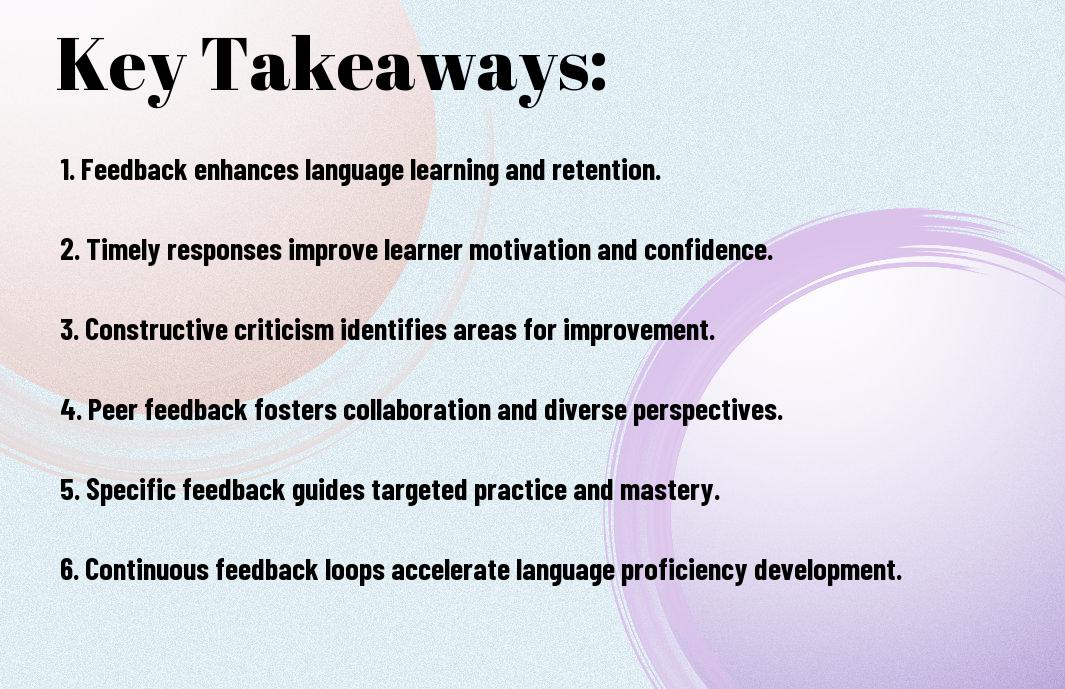
Key Takeaways:
- The effectiveness of language learning is greatly influenced by the quality and timeliness of feedback received by learners, as it helps them to identify and correct errors, and develop a sense of accuracy and fluency in their language use.
- Constructive feedback is vital for language learners to improve their language skills, as it provides them with guidance and support to overcome challenges and achieve their learning objectives.
- The impact of feedback on language learning is maximized when it is individualized, relevant, and actionable, allowing learners to reflect on their performance, set goals, and develop a sense of autonomy in their language learning journey.
The Importance of Feedback
Before you begin your language learning journey, it’s necessary to understand the significance of feedback. You can learn more about this topic by visiting The Role of Feedback in Language Learning: Constructive Criticism. Thou will find it helpful in improving your language skills.
Types of Feedback
The types of feedback you can expect include:
- Positive feedback
- Negative feedback
- Constructive feedback
- Descriptive feedback
- Evaluative feedback
Thou can use these types to assess your progress.
| Feedback Type | Description |
|---|---|
| Positive | Encourages good performance |
| Negative | Highlights poor performance |
| Constructive | Provides suggestions for improvement |
| Descriptive | Describes your performance |
| Evaluative | Evaluates your performance |
Feedback in Language Learning
Against the backdrop of language learning, you need to understand that feedback is vital. You will benefit from it as it helps you identify areas of improvement.
Learning a new language requires dedication and practice. As you commence on this journey, you will encounter various challenges, and feedback will play a significant role in helping you overcome them. You can use feedback to adjust your learning strategy, focus on areas that need improvement, and develop a more effective learning plan. By embracing feedback, you will become a more proficient language learner, and your progress will be more noticeable. Thou will be able to communicate more effectively in your target language.
The Role of Teacher Feedback
You will find that teacher feedback plays a significant role in your language progress, as it helps you identify areas for improvement and track your development over time.
Constructive Criticism
Around the concept of constructive criticism, it’s crucial to understand that your teacher’s feedback is aimed at enhancing your language skills, and you should use it to adjust your learning strategy and make progress.
Effective Feedback Techniques
To maximize the impact of feedback, your teacher will use various techniques, such as providing clear and specific comments, setting achievable goals, and encouraging self-assessment, all of which will help you evaluate your performance and make informed decisions about your learning.
Feedback is an ongoing process that involves not only receiving comments from your teacher but also reflecting on your own learning and identifying areas where you need more practice or review, enabling you to take ownership of your language development and make steady progress towards your goals, with your teacher’s guidance and support.
Peer Feedback and Self-Assessment
All language learners can benefit from peer feedback and self-assessment, as these processes help you identify your strengths and weaknesses, and track your progress over time. You can use this information to adjust your learning strategy and make targeted improvements.
Benefits of Peer Review
Prior to receiving feedback from others, you may not be aware of certain errors or areas for improvement in your language use. You can learn from your peers’ perspectives and insights, and use their feedback to refine your skills.
Self-Assessment Strategies
Beneath the surface of language learning lies the importance of self-reflection. You can develop self-assessment strategies, such as keeping a language learning journal or recording yourself speaking, to evaluate your progress and set goals for yourself.
Considering your own language learning goals and objectives, you can tailor your self-assessment strategies to suit your needs. You will find that regularly reflecting on your progress and identifying areas for improvement helps you stay motivated and focused on your goals, allowing you to make the most of your language learning experience and achieve greater success.
Feedback Tools and Technologies
After exploring the importance of feedback in language learning, you can now research into the various tools and technologies that facilitate this process. You will find a range of options to enhance your learning experience.
Digital Feedback Platforms
Following the trend of digitalization, you can utilize feedback platforms that offer personalized feedback on your language progress, helping you identify areas for improvement and track your growth over time.
Automated Feedback Systems
By leveraging technology, you can access automated feedback systems that provide instant feedback on your language assignments and exercises, enabling you to learn at your own pace and make necessary adjustments to your learning strategy.
In fact, automated feedback systems use sophisticated algorithms to analyze your language proficiency and provide detailed feedback on grammar, vocabulary, and pronunciation, allowing you to refine your skills and achieve greater accuracy in your language use, and you can use this feedback to adjust your learning approach and focus on areas where you need more practice or review.
Overcoming Feedback Challenges
Despite the importance of feedback in language progress, you may face challenges in giving or receiving it. You need to be aware of these challenges to overcome them effectively.
Common Barriers to Feedback
To tackle feedback challenges, you should identify the common barriers that hinder your progress, such as cultural or personal differences, and develop strategies to address them.
Strategies for Improvement
Similarly, feedback is necessary for your growth, and you can improve by soliciting constructive feedback from others, being open to criticism, and using it to adjust your approach.
Consequently, as you implement these strategies, you will find that your ability to give and receive feedback improves, allowing you to refine your language skills more efficiently and effectively, and you will be able to track your progress and make adjustments as needed to achieve your language goals.
Implementing Feedback in Language Instruction
For effective language learning, you need to incorporate feedback into your instruction. This involves creating a supportive environment where your students feel comfortable receiving and acting on feedback.
Feedback-Informed Lesson Planning
FeedbackInformed decisions are vital when designing your lessons, as you will be able to tailor your instruction to meet the specific needs of your students, addressing areas where they require improvement.
Creating a Feedback-Rich Environment
FeedbackOriented approaches help you establish a positive and encouraging atmosphere, where your students are motivated to learn and improve, and you can provide them with constructive feedback to guide their progress.
But as you create a feedback-rich environment, you will also need to consider the types of feedback that are most effective for your students, such as written or verbal feedback, and how frequently you should provide it to support their language development, helping you to adjust your instruction and ensure your students achieve their goals.
Summing up
Taking this into account, you can see that feedback plays a significant role in your language progress. As you receive and act on feedback, you refine your language skills, adjusting your pronunciation, grammar, and vocabulary. Your ability to understand and communicate effectively improves, allowing you to express yourself more confidently. By leveraging feedback, you enhance your overall language proficiency, making steady progress towards your goals. You can apply this insight to optimize your learning journey.
FAQ
Q: What is the significance of feedback in language learning and how does it impact progress?
A: Feedback plays a vital role in language learning as it enables learners to identify their strengths and weaknesses, and make necessary adjustments to improve their language skills. Effective feedback helps learners to develop a better understanding of language structures, vocabulary, and pronunciation, and it also boosts their confidence in using the language. Moreover, feedback helps to clarify any misconceptions or errors, allowing learners to refine their language skills and make steady progress.
Q: How can feedback be used to enhance language proficiency and what types of feedback are most effective?
A: Feedback can be used to enhance language proficiency by providing learners with insights into their language use, highlighting areas that need improvement, and suggesting strategies for development. The most effective types of feedback are those that are timely, specific, and focused on the learner’s individual needs. This can include corrective feedback on grammar and vocabulary, feedback on pronunciation and intonation, and feedback on the coherence and clarity of written and spoken language. Additionally, self-assessment and peer feedback can also be valuable tools in the language learning process, as they encourage learners to take an active role in their own development.
Q: How can language learners effectively utilize feedback to accelerate their language progress and achieve their goals?
A: Language learners can effectively utilize feedback by being open to constructive criticism, reflecting on the feedback they receive, and using it as a basis for setting goals and developing a plan for improvement. It is also important for learners to seek feedback from multiple sources, including teachers, peers, and self-assessment, to gain a comprehensive understanding of their language abilities. Furthermore, learners should prioritize feedback that is specific, actionable, and aligned with their learning objectives, and use it to adjust their learning strategies and practices to maximize their language progress. By doing so, learners can harness the full potential of feedback to drive their language development and achieve their goals.
