simon weiner

How to Learn a Language While Watching TV

You can turn your daily TV time into a language learning experience. As you watch your favorite shows, you can improve your listening and speaking skills. Your language skills will improve significantly with consistent practice. For more resources on language learning, visit Language Learning with Netflix, TV Shows, Movies and Music to explore new ways to learn. You will be able to learn a language while enjoying your favorite TV shows.

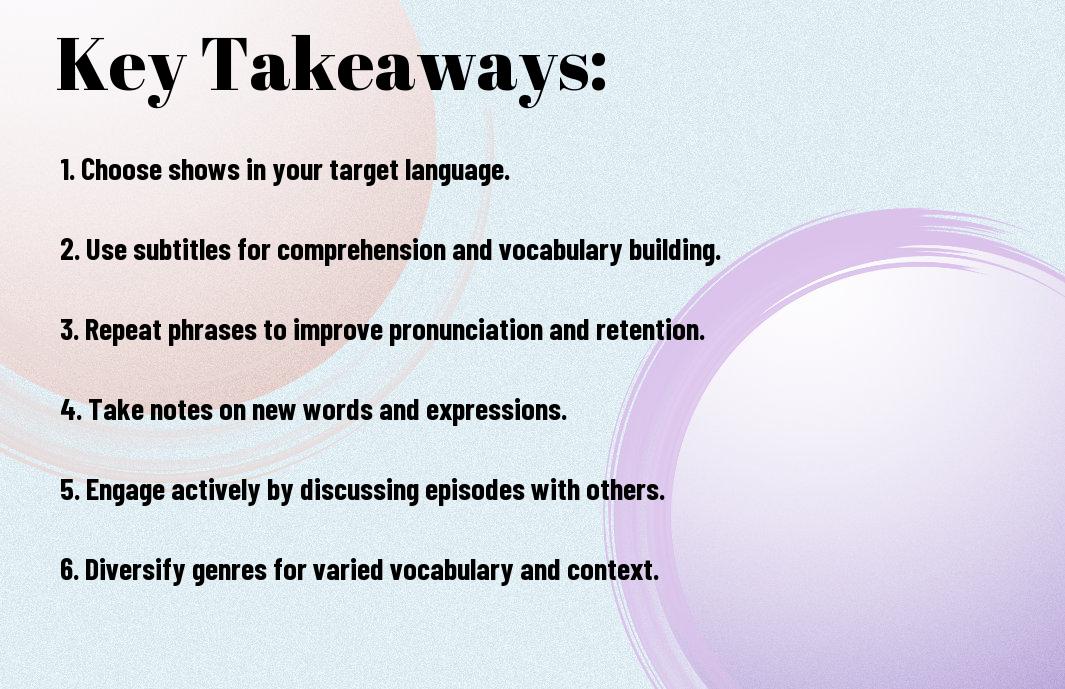
Key Takeaways:

  • Start by selecting a TV show or movie in the language you want to learn, with subtitles in the target language for better understanding.
  • Use the pause and rewind functions to relisten to dialogue and catch phrases you didn’t understand the first time.
  • Take notes on new vocabulary and phrases and try to use them in your own conversations to reinforce learning.
  • Try to summarize the plot of the episode or scene in the target language to improve speaking and comprehension skills.
  • Make it a habit to watch TV shows or movies in the target language regularly, even if it’s just for a few minutes a day, to consolidate learning and make progress over time.

Section

Your language learning journey can be enhanced by watching TV, and with the right approach, you can make the most of your viewing experience to improve your language skills.

subsection

Any time you dedicate to watching TV in the target language can be beneficial, and you can start by setting aside a specific time each day or week to watch your favorite shows with subtitles or dubbing.

subsection

One of the most effective ways to learn a language while watching TV is to start with shows that interest you, making the learning process more enjoyable and increasing your motivation to continue.

Understanding the context of the shows you watch is key to learning a language, and as you progress, you can gradually move on to more complex programs and conversations, expanding your vocabulary and grammar skills.

Choosing the Right TV Shows

An effective way to learn a language is to choose TV shows that match your level of proficiency, allowing you to follow the dialogue and understand the plot without getting frustrated or lost.

Section on choosing the right TV shows is important, as it enables you to select programs that cater to your interests and learning style, making the language learning process more engaging and effective, and you can explore different genres, such as dramas, comedies, or documentaries, to find what works best for you.

Setting Up a Learning Environment

A suitable environment for language learning is vital, and you can create one by setting up a dedicated space for watching TV, free from distractions, where you can focus on the shows and take notes or practice speaking and listening.

To maximize your language learning experience, you can also use additional resources, such as language learning apps or textbooks, to supplement your TV watching, and track your progress, identifying areas where you need improvement, and you will be able to adjust your learning strategy accordingly, making steady progress in your language learning journey.

Section

All language learners can benefit from watching TV to improve their skills. You will be exposed to new vocabulary, grammar, and pronunciation, which will help you to improve your language proficiency.

subsection

Before starting to watch TV in a foreign language, you should choose a show that interests you and has subtitles in your native language. This will help you to understand the dialogue and follow the plot.

subsection

Similarly, you should start with simple shows and gradually move to more complex ones. This will help you to get used to the language and improve your listening skills.

Paying Attention to Dialogue

Attentively listening to the dialogue is imperative when watching TV to learn a language. You should focus on the pronunciation, intonation, and rhythm of the speakers.

A key aspect of paying attention to dialogue is to repeat what the speakers say. This will help you to improve your pronunciation and get used to the rhythm of the language.

Taking Notes and Summarizing

On the basis of what you have watched, you should take notes on new vocabulary and phrases. This will help you to review and practice what you have learned.

The most effective way to take notes is to summarize the plot and write down key phrases and vocabulary. You will be able to review what you have learned and improve your writing skills.

Section

To learn a language while watching TV, you’ll need to be intentional about your viewing habits. You can start by choosing shows and movies in the target language, with subtitles in your native language or the target language itself.

subsection

About the benefits of watching TV in a foreign language, you’ll find that it helps you get used to the sound and rhythm of the language. This can be a great way to improve your listening skills.

subsection

Similarly, the more you watch, the more you’ll pick up on phrases and expressions that native speakers use. This can help you sound more natural when you speak the language.

But as you continue to watch, you’ll start to notice patterns and inconsistencies in the language. This is where you can start to learn more about the language and its nuances.

Learning New Words and Phrases

Afters watching a show or movie, you can go back and look up words and phrases that you didn’t understand. This can help you learn new vocabulary and expand your knowledge of the language.

Plus, as you learn new words and phrases, you’ll be able to use them in context, which can help you better understand how they’re used in everyday conversation.

Practicing Grammar and Sentence Structure

For practicing grammar and sentence structure, you can try to repeat phrases and sentences that you hear on TV. This can help you get a feel for how the language is structured and how to use it correctly.

It is also important to note that practicing grammar and sentence structure can be done actively, by speaking and writing, or passively, by listening and reading, and your goal is to achieve a balance between the two.

Section

For language learners, watching TV can be a great way to improve your skills. You can start by choosing shows in the target language, with or without subtitles. This will help you get used to the sounds, rhythms, and grammar of the language. As you progress, you can adjust the level of difficulty to suit your needs.

subsection

Above all, consistency is key when learning a language through TV shows. You should try to watch a little every day, even if it’s just for a few minutes. This will help you stay engaged and motivated, and you’ll be more likely to pick up new words and phrases.

subsection

The most effective way to learn a language through TV is to combine it with other study methods. You can take notes on new vocabulary, practice speaking and listening, and review grammar rules. This will help you reinforce your learning and make progress faster.

For instance, you can start by watching a show with subtitles in your native language, then switch to subtitles in the target language, and finally watch without subtitles. This will help you improve your listening and comprehension skills.

Watching with Subtitles and Translations

Below the surface of entertainment, TV shows with subtitles and translations can be a powerful learning tool. You can use them to improve your reading and listening skills, and to learn new vocabulary in context.

At the beginning, it’s a good idea to start with shows that have subtitles in your native language, then gradually move to shows with subtitles in the target language. This will help you get used to the sounds and rhythms of the language.

Engaging in Conversations and Discussions

About the best way to learn a language, engaging in conversations and discussions is vital. You can use TV shows as a starting point, then discuss them with friends or language exchange partners.

Watching TV shows and discussing them with others can help you improve your speaking and listening skills, and learn new vocabulary and grammar in context. You can also use TV shows as a way to learn about different cultures and customs, and to improve your understanding of the language.

Section

Many language learners find that watching TV is an excellent way to improve their skills. You can start by watching your favorite shows with subtitles in the target language. This will help you get used to the sounds, rhythms, and grammar of the language. As you progress, you can try watching without subtitles to challenge yourself.

subsection

Contrary to what you might think, watching TV in a foreign language can be beneficial. You will pick up new vocabulary and phrases, and improve your listening skills. You can also learn about different cultures and ways of life. This will help you stay motivated and interested in the language.

subsection

Allying yourself with a language learning routine that includes TV watching can be very effective. You can watch TV shows or movies with a language exchange partner or tutor, and discuss what you have watched. This will help you practice your speaking skills and get feedback on your pronunciation.

In fact, incorporating TV watching into your language learning routine can be a great way to make the process more enjoyable. You can choose shows that interest you, and watch them at your own pace. This will help you stay motivated and make progress in your language learning journey.

Dealing with Difficulties and Frustrations

Counter to your expectations, you may encounter some difficulties while watching TV in a foreign language. You might struggle to understand certain accents or dialects, or find it hard to follow complex storylines. But don’t worry, this is a normal part of the learning process.

At this stage, it’s imperative to be patient and persistent. You can try watching the same show or movie multiple times, or look up episodes with transcripts or summaries. This will help you improve your comprehension and build your confidence.

Setting Goals and Tracking Progress

Alongside your TV watching routine, you should set goals and track your progress. You can start by setting achievable goals, such as watching a certain number of episodes per week, or improving your comprehension by a certain percentage. This will help you stay motivated and focused.

Frustrations may arise when you don’t see immediate progress, but it’s imperative to keep track of your achievements. You can use a language learning journal or app to monitor your progress, and adjust your goals accordingly. This will help you stay on track and make the most of your TV watching experience.

Section

Keep in mind that learning a language while watching TV can be an effective method, as seen in discussions on How do people learn language from watching TV shows in a foreign language. You can develop your listening skills and get used to the natural flow of the language.

subsection

Around the time you start watching TV shows in the target language, you’ll begin to pick up on phrases and vocabulary that you can use in your daily conversations. You’ll also get a feel for how the language is used in context.

subsection

Behind every successful language learner is a strategy that involves consistent practice and exposure to the language. You’ll find that watching TV shows is just one part of the process, and you’ll need to supplement your learning with other activities.

Another important aspect of language learning is to practice active listening and speaking. You can do this by repeating phrases and lines from your favorite TV shows, or by having conversations with native speakers.

Using Language Learning Apps and Websites

By utilizing language learning apps and websites, you can take your language skills to the next level. You’ll have access to a wide range of resources, including interactive lessons and exercises.

It’s worth noting that many language learning apps and websites offer personalized lessons and feedback, which can help you identify areas where you need to improve. You can use these tools to supplement your TV watching and take your language skills to the next level.

Reading Books and Articles in the Target Language

Language learning involves more than just listening and speaking – you’ll also need to practice reading and writing. You can start by reading books and articles in the target language, which will help you develop your comprehension skills.

At the beginning, it may be challenging to read in the target language, but as you progress, you’ll find that your skills improve. You can start with simple texts and gradually move on to more complex materials, and you’ll be able to understand and communicate more effectively in the target language.

Final Words

Ultimately, you will find that learning a language while watching TV can be an enjoyable and effective way to improve your language skills. You can enhance your comprehension by starting with shows you know, using subtitles, and taking notes. As you progress, you will become more comfortable with your target language, and your listening and speaking skills will improve. With consistent practice, you will see significant progress in your language abilities, and you will be able to hold conversations with native speakers in no time, making your language learning journey rewarding.

FAQ

Q: What are the benefits of learning a language while watching TV?

A: Learning a language while watching TV provides an opportunity to immerse yourself in the language and get used to its natural flow and pronunciation. It can help improve your listening skills, vocabulary, and comprehension. Additionally, watching TV shows or movies in the target language can make the learning process more enjoyable and engaging, as you get to watch your favorite shows while learning. You can also pick up cultural references, idioms, and expressions that are commonly used in everyday conversation.

Q: How can I effectively learn a language while watching TV without getting distracted?

A: To effectively learn a language while watching TV without getting distracted, start by choosing a TV show or movie with subtitles in the target language. Begin with shows that have simple language and gradually move to more complex ones. Take notes on new vocabulary and phrases, and try to summarize what you’ve watched in your own words. You can also pause the video to look up unfamiliar words or phrases, and try to speak along with the characters to improve your pronunciation. Setting goals, such as watching a certain number of episodes per week, can also help you stay focused and motivated.

Q: What resources can I use in addition to TV shows to enhance my language learning experience?

A: In addition to TV shows, there are several resources you can use to enhance your language learning experience. Language learning apps, such as Duolingo or Babbel, can provide you with interactive exercises and quizzes to practice your language skills. You can also use online dictionaries, language exchange websites, or podcasts to supplement your learning. Furthermore, joining a language learning community or finding a language exchange partner can provide you with opportunities to practice speaking and get feedback on your language skills. By combining these resources with watching TV, you can create a well-rounded language learning routine that helps you achieve your goals.

How to Learn Languages Through Reading Books

You’re about to discover a powerful way to improve your language skills. By reading books in the language you want to learn, you’ll immerse yourself in new vocabulary, grammar, and sentence structures. Your comprehension and pronunciation will improve with each turn of the page. You’ll find that reading books becomes an enjoyable and effective way to learn a new language, and you’ll be motivated to continue your language learning journey.

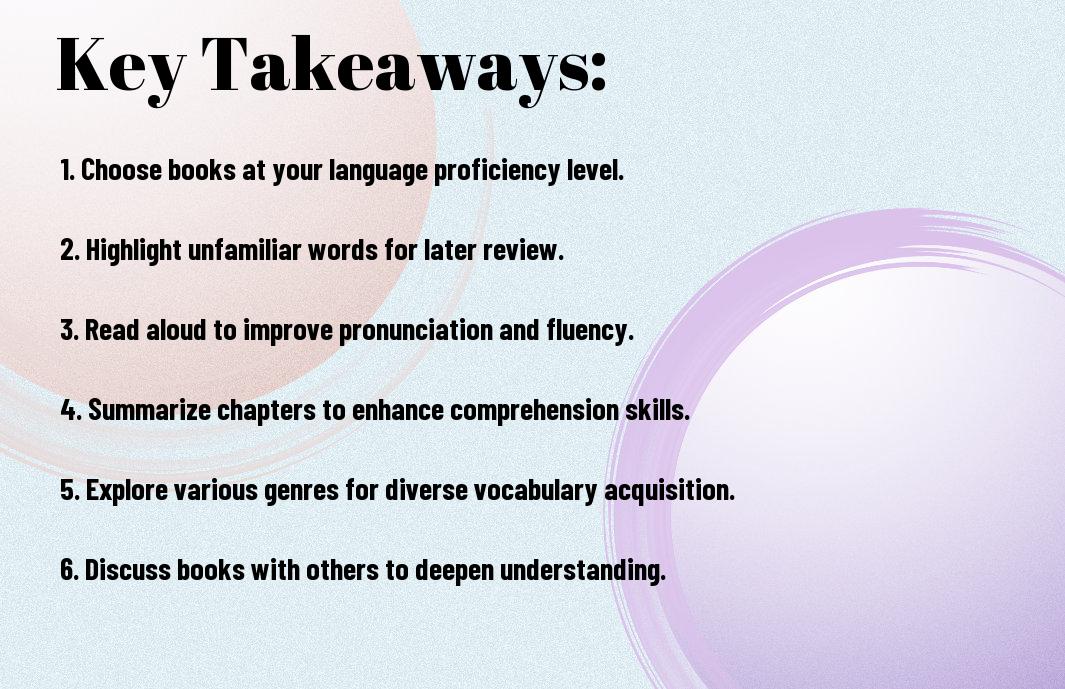
Key Takeaways:

To learn languages through reading books, consider the following points:

  • Start with simple texts and gradually move to more complex materials to build your reading confidence and comprehension skills.
  • Choose books with translations or bilingual editions to help you understand unfamiliar words and phrases.
  • Focus on vocabulary building by looking up unknown words and phrases, and try to use them in context to improve your language retention.
  • Practice active reading by taking notes, summarizing the plot, and discussing the book with others to enhance your language skills and stay engaged.
  • Incorporate language learning tools, such as dictionaries, flashcards, or language learning apps, to support your reading and learning process.

Benefits of Learning Languages Through Reading

While learning a language through reading books, you’ll discover numerous benefits. You can learn more about this method at 21 Century: Is It Still Possible To Learn A Language By Reading, and find out how it can improve your skills.

Improved Vocabulary

Languages are learned through exposure to new words, and reading books is an excellent way to achieve this, as you encounter various terms and phrases that expand your vocabulary.

Enhanced Grammar

Beside the advantages of vocabulary expansion, reading helps you understand grammar rules and sentence structures, making you a more proficient language user.

At this point, you should be aware that enhanced grammar is a key aspect of language learning, and reading books will help you internalize grammatical rules, allowing you to express yourself more effectively in your target language, and you will see improvement in your writing and speaking skills as you progress.

Choosing the Right Books

Now that you’re ready to start learning a language through reading, it’s time to select the books that suit your needs. You’ll want to find books that interest you and match your language level.

Selecting Authors and Genres

Besides your personal preferences, consider the authors and genres that will help you learn the language. You can start with simple texts and gradually move to more complex ones, exploring different genres to find what works best for you.

Considering Language Levels

Generally, your language level will determine the type of books you can handle. You should choose books with vocabulary and grammar that are not too daunting, allowing you to understand and enjoy the content.

Hence, as you assess your language level, you’ll be able to find books that challenge you without overwhelming you. You’ll look for texts that offer a balance between difficulty and comprehension, enabling you to learn and improve your language skills effectively. You can start with books that have simpler language and gradually move to more complex texts, ensuring a steady progress in your language learning journey.

Creating a Reading Routine

After establishing your reading goals, you’ll need to create a routine that works for you. Set aside time each day to read, even if it’s just 15-20 minutes. Consistency is key when it comes to language learning through reading.

Setting Goals and Schedules

Along with your routine, you’ll want to set achievable goals and schedules for your reading. Determine how many pages or chapters you’ll read each day, and stick to it. This will help you stay on track and make progress in your language learning journey.

Tracking Progress and Staying Motivated

One way to stay motivated is to track your progress. Keep a log of what you’ve read, note new vocabulary, and reflect on what you’ve learned. This will help you see how far you’ve come and encourage you to keep going.

Consequently, as you track your progress, you’ll begin to notice improvements in your language skills. You’ll start to understand more complex texts, and your vocabulary will expand. To stay motivated, reward yourself when you reach certain milestones, such as finishing a book or completing a challenging chapter. This will help you stay engaged and committed to your language learning goals, and you’ll find that reading becomes an enjoyable and rewarding experience.

Overcoming Language Barriers

All language learners face barriers when reading books in a foreign language. You will encounter unfamiliar vocabulary, complex grammar, and confusing expressions. However, with persistence and the right strategies, you can overcome these barriers and improve your language skills.

Using Dictionaries and Translations

One of the most effective ways to overcome language barriers is to use dictionaries and translations. You can look up unknown words, phrases, and expressions to understand their meanings and context, helping you to better comprehend the text.

Practicing Active Reading Techniques

With active reading techniques, you can engage more deeply with the text and improve your comprehension. You will learn to identify main ideas, make inferences, and draw conclusions, all of which will help you to become a more proficient language learner.

At this stage, you are ready to take your reading skills to the next level. As you practice active reading, you will find that your ability to understand and interpret complex texts improves dramatically, allowing you to tackle more challenging books and expand your language skills even further, and you will start to see significant progress in your language learning journey.

Engaging with the Material

Not only will reading books help you learn a new language, but it will also keep you engaged and motivated. You’ll start to look forward to your daily reading sessions, eager to find out what happens next in the story or to learn new facts and information.

Taking Notes and Summarizing

On the path to learning a language, taking notes and summarizing what you’ve read is imperative. You’ll be able to track your progress, identify areas where you need improvement, and solidify new vocabulary and grammar rules in your mind.

Discussing with Others and Joining Communities

With the help of online forums and social media, you can connect with other language learners and native speakers. You’ll be able to get feedback on your progress, ask questions, and stay motivated with the support of like-minded individuals.

With this support system in place, you’ll find that your language skills improve rapidly. You’ll be able to discuss the books you’ve read with others, sharing your thoughts and opinions, and learning from their insights and perspectives. This will not only help you improve your language skills, but also give you a deeper understanding of the material and its cultural context.

Measuring Progress and Setting New Goals

Despite the challenges you may face, tracking your progress is imperative to learning a language through reading books. You’ll be able to identify areas that need improvement and set achievable goals.

Evaluating Language Skills

On occasion, take a step back to assess your language skills. You’ll notice improvements in comprehension, vocabulary, and grammar, which will help you refine your reading strategy.

Adjusting Reading Strategies

About halfway through your learning journey, you may need to adjust your approach. You can try different genres, authors, or difficulty levels to keep your reading engaging and challenging.

In addition to adjusting your reading strategies, you’ll find that your learning pace and style may also evolve. As you become more comfortable with the language, you can tackle more complex texts, explore different topics, and develop a more nuanced understanding of the language, allowing you to refine your goals and continue making progress in your language learning journey.

To wrap up

As a reminder, you’ve learned that reading books is a simple yet effective way to improve your language skills. You’ve discovered how to choose the right books, set goals, and track your progress. By applying these tips, you’ll enhance your vocabulary, grammar, and comprehension. Your journey to mastering a new language will be enjoyable and rewarding, and you’ll become a proficient reader in no time, unlocking a world of knowledge and opportunities.

FAQ

Q: What are the benefits of learning languages through reading books?

A: Learning a language through reading books can be highly effective as it exposes you to a wide range of vocabulary, grammar, and sentence structures in context. As you read, you’ll encounter different writing styles, genres, and topics, which can help you develop a deeper understanding of the language and its nuances. Moreover, reading books can improve your comprehension, vocabulary, and pronunciation, allowing you to become more confident and fluent in the language. By starting with books that match your current level and interests, you can make steady progress and stay motivated in your language learning journey.

Q: How do I choose the right books for language learning through reading?

A: Choosing the right books is crucial for effective language learning through reading. Start by selecting books that align with your current language level, whether you’re a beginner, intermediate, or advanced learner. You can choose books from various genres, such as fiction, non-fiction, or a combination of both, depending on your interests. Look for books with simpler language and shorter sentences if you’re a beginner, and gradually move to more complex texts as your skills improve. You can also consider books with translations or bilingual editions to help you understand difficult passages. Additionally, join online book clubs or language learning communities to discuss your progress and get recommendations from fellow learners.

Q: What strategies can I use to get the most out of reading books for language learning?

A: To maximize your language learning through reading, use a combination of strategies. Begin by setting achievable goals, such as reading a certain number of pages or chapters per week. As you read, take notes on new vocabulary, idioms, and phrases, and look them up in a dictionary to understand their meanings and usage. You can also create flashcards or use language learning apps to help you memorize new words. Furthermore, practice active reading by summarizing the plot, identifying main characters, and analyzing the author’s writing style. Discussing what you’ve read with a language exchange partner or tutor can also help you improve your speaking and listening skills, while reinforcing your understanding of the language.

The Power of Bilingualism in Early Childhood Development

As you consider the best ways to support your child’s early development, you may be wondering about the benefits of bilingualism. You can give your child a significant advantage by introducing two languages from an early age. Your child’s brain is wired to absorb and process multiple languages, and doing so can have a lasting impact on their cognitive, social, and emotional growth. By raising a bilingual child, you can broaden their cultural understanding and open up new opportunities for their future.

Key Takeaways:

  • The brain development of bilingual children is enhanced, as it improves cognitive flexibility and problem-solving skills from an early age, setting them up for future academic success.
  • Bilingual children have an academic advantage, as they tend to perform better in reading and mathematics, and have a broader vocabulary range compared to their monolingual peers.
  • Language skills are developed at a rapid pace in early childhood, and bilingual children are able to pick up phonological awareness and grammatical structures more easily, making them more proficient in both languages.
  • Bilingualism in early childhood also promotes social benefits, such as greater empathy and cultural understanding, as children are exposed to different customs and traditions from a young age.
  • The long-term effects of bilingualism in early childhood development are numerous, including improved career opportunities and a stronger sense of identity, making it a valuable investment for children’s future personal and professional lives.

Benefits of Bilingualism

The ability to speak multiple languages from a young age has numerous benefits for your child’s development, including improved cognitive skills and enhanced social interactions. As you explore the advantages of bilingualism, you’ll discover how it can shape your child’s future.

Cognitive Advantages

For instance, being bilingual can improve your child’s problem-solving skills and memory, allowing them to approach challenges from different perspectives and adapt to new situations more easily. You’ll notice your child’s brain developing in unique ways as they navigate multiple languages.

Social and Cultural Benefits

At the heart of bilingualism lies a profound impact on your child’s social and cultural development, enabling them to connect with diverse communities and foster deeper understanding and empathy. You’ll find that your child’s bilingual abilities open doors to new relationships and experiences.

It is worth noting that the social and cultural benefits of bilingualism extend beyond language itself, influencing your child’s identity, values, and worldview. As you support your child’s bilingual journey, you’ll witness them developing a more nuanced and accepting outlook on life, preparing them to thrive in an increasingly globalized world.

Language Development in Early Childhood

Now, as you explore the world of bilingualism in early childhood, you’ll discover the significant impact it has on language development. Your child’s brain is wired to absorb and process multiple languages, setting the stage for a lifelong journey of linguistic exploration.

Language Acquisition Process

Beside the complexities of language, you’ll find that your child’s language acquisition process is shaped by their environment and interactions. Your role as a parent or caregiver is to provide a nurturing space for language growth, allowing your child to develop their skills at their own pace.

Factors Influencing Language Development

During development, several factors influence your child’s language development, including:

  • Genetics
  • Environment
  • Culture

. Recognizing these factors will help you better support your child’s language journey.

Hence, as you investigate deeper into the factors influencing language development, you’ll notice that your child’s linguistic growth is shaped by a combination of genetic and environmental factors. You can consider the following:

  • Exposure to multiple languages
  • Quality of interactions
  • Socioeconomic status

. Recognizing the interplay between these factors will enable you to create a supportive environment for your child’s language development.

The Impact of Bilingualism on Brain Development

After discovering the benefits of bilingualism, you may wonder how it affects your child’s brain development. Bilingualism has a significant impact on the brain, shaping its structure and function in unique ways. As you introduce your child to multiple languages, their brain adapts and changes, leading to enhanced cognitive abilities.

Neuroplasticity and Language

About the time your child starts learning a second language, their brain begins to reorganize and refine its neural connections. This process, known as neuroplasticity, allows your child’s brain to adapt and change in response to new language experiences.

Enhanced Cognitive Flexibility

At this stage, you may notice your child developing enhanced cognitive flexibility, which enables them to switch between languages and tasks with ease. As your child navigates multiple languages, their brain becomes more efficient at processing and switching between different mental sets.

Brain function is significantly improved when your child is bilingual, and this is evident in their ability to focus, problem-solve, and multitask. You will observe that your child can seamlessly switch between languages, demonstrating an impressive level of cognitive flexibility. This ability to adapt to new situations and think creatively will serve your child well throughout their life, opening up new opportunities and experiences for them to explore.

Parental Involvement and Support

All parents play a significant role in their child’s bilingual development, and you can support this process by learning about the benefits of bilingualism, such as those outlined in Advantages of a bilingual brain – Child & Family Development.

Creating a Bilingual Environment

Bilingually, you can create an environment that fosters language development by speaking to your child in both languages and providing them with bilingual resources and activities.

Encouraging Language Use

Creating opportunities for your child to practice both languages is vital, and you can do this by setting aside time to speak with them in each language, reading bilingual books, and engaging in activities that promote language use.

Hence, as you encourage your child to use both languages, you will notice their confidence and proficiency grow, and you can support this growth by responding to them in the language they use, thus creating a positive and encouraging environment for bilingual development. You can also engage in conversations with your child, ask them questions, and listen to their responses to promote language use and development. By doing so, you will be helping your child to develop a strong foundation in both languages and setting them up for success in their future academic and professional pursuits.

Overcoming Challenges and Common Misconceptions

To successfully raise a bilingual child, you need to be aware of the potential challenges that may arise and address common misconceptions about bilingualism in early childhood development.

Addressing Language Delay Concerns

Besides the benefits of bilingualism, you may have concerns about language delay, but research shows that bilingual children can overcome this and develop language skills at a similar rate to monolingual children.

Debunking Myths about Bilingualism

With the increasing popularity of bilingualism, you will encounter various myths and misconceptions, and it’s imperative to separate fact from fiction to make informed decisions about your child’s language development.

But as you examine deeper into the world of bilingualism, you will discover that many of these myths are unfounded, and that bilingual children can thrive in multiple languages, developing a unique set of cognitive and social skills that will benefit them throughout their lives, and you can take pride in providing your child with the gift of bilingualism, enriching their future opportunities and broadening their cultural understanding.

Implementing Bilingual Education

Not only is bilingualism beneficial for children, but it can also be effectively implemented in early childhood education. You can learn more about the benefits of bilingualism by visiting Bilingualism in the Early Years: What the Science Says.

Curriculum Design and Implementation

Beneath the surface of a well-structured bilingual program lies a thoughtful curriculum design. You will need to consider how to balance languages and allocate time for each language in your daily schedule.

Teacher Training and Support

Once you have designed your curriculum, you will need to ensure your teachers are equipped to deliver it effectively. You should provide your teachers with training and support to help them develop the skills they need to teach bilingual classes.

And as you probe deeper into teacher training and support, you will find that it is vital to provide ongoing professional development opportunities for your teachers. You can do this by offering workshops, mentoring programs, and coaching sessions that focus on bilingual education best practices, language development, and cultural sensitivity. By investing in your teachers’ professional growth, you can ensure that your bilingual program is successful and that your students receive the high-quality education they deserve.

To wrap up

Following this exploration of bilingualism in early childhood development, you now understand the significant benefits it brings to your child’s cognitive and social growth. As you consider introducing a second language to your child, you can expect enhanced problem-solving skills and a broader cultural perspective. By embracing bilingualism, you are investing in your child’s future, providing them with a valuable skill that will last a lifetime and open doors to new opportunities. Your decision will have a lasting impact on your child’s development.

FAQ

Q: What are the cognitive benefits of bilingualism in early childhood development?

A: The power of bilingualism in early childhood development has been shown to have a significant impact on cognitive abilities. Bilingual children tend to develop enhanced executive function, which includes skills such as problem-solving, planning, and decision-making. Additionally, bilingualism has been linked to delayed onset of age-related cognitive decline and a lower risk of dementia. This is because bilingual children’s brains are constantly switching between two languages, which exercises their cognitive flexibility and adaptability.

Q: How does bilingualism affect language development in young children?

A: Bilingualism can have a profoundly positive effect on language development in young children. When exposed to two languages from an early age, children can develop native-like fluency in both languages, with the ability to understand and communicate effectively in each. Moreover, bilingual children often develop a greater awareness of language structures and rules, which can aid in their overall language development and literacy skills. It’s also worth noting that bilingual children may experience a slight delay in vocabulary development, but this is usually temporary and catches up by around the age of 5.

Q: Can introducing a second language at a young age confuse a child or hinder their ability to learn their native language?

A: No, introducing a second language at a young age will not confuse a child or hinder their ability to learn their native language. In fact, the opposite is true: when done properly, bilingual education can enrich a child’s understanding of both languages. Children as young as infants can differentiate between two languages and begin to develop an understanding of the distinct grammar, vocabulary, and pronunciation of each. With consistent exposure and support, bilingual children can thrive in both languages, leading to a lifetime of linguistic and cultural benefits.

The Advantages of Knowing Rare Languages

As you explore the world of languages, you may find that speaking a rare language can open doors to new opportunities. Your ability to communicate in a less common tongue can set you apart, providing a unique perspective and understanding of diverse cultures. You will gain a competitive edge in various fields, from business to academia, and enhance your travel experiences by connecting with local communities in a more authentic way, enriching your personal and professional life.

Key Takeaways:

  • The ability to speak a rare language can give you a competitive edge in the job market, as it opens up opportunities for cultural exchange and international business.
  • Knowledge of obscure languages can also provide a unique perspective on the world, allowing you to access historical texts and cultural artifacts that might be inaccessible to others.
  • Speaking a less common language can be a valuable asset for diplomats, journalists, and researchers, who often need to communicate with people from diverse linguistic backgrounds.
  • Additionally, learning a rare language can be a fascinating hobby, providing a mental challenge and an opportunity to connect with communities that may be underrepresented in mainstream culture.
  • Overall, the benefits of language learning extend far beyond practical applications, as it can also broaden your understanding of the world and enrich your personal life through cultural enrichment and social connections.

Historical Significance

While knowing rare languages allows you to tap into the past, it also provides a unique perspective on historical events and cultural context, enabling you to understand your heritage in a more nuanced way.

Linguistic Heritage

Around the globe, you can discover languages that have been spoken for centuries, and by learning them, you can gain insight into your own linguistic roots and the diversity of human expression.

Cultural Preservation

Like a key to unlocking cultural treasures, knowing rare languages helps you appreciate the traditions and customs of communities that may be unfamiliar to you, allowing you to broaden your understanding of the world and your place in it.

Above all, as you investigate into the cultural preservation aspect of rare languages, you will find that it not only helps to maintain the cultural identity of communities but also enables you to connect with people from diverse backgrounds, fostering global understanding and cooperation, and enriching your life with new experiences and perspectives.

Career Opportunities

Any individual who knows rare languages can explore various career opportunities. You can learn more about some unique benefits to learning a more uncommon language and how it can benefit your career.

Diplomatic Roles

Against the backdrop of increasing globalization, you can leverage your rare language skills to secure diplomatic roles, representing your country or organization in international forums.

Translation Services

With the rise of international trade and tourism, you can offer your translation services to individuals and businesses, helping them communicate effectively across linguistic and cultural barriers.

It is worth noting that your skills in rare languages can also lead to specialized translation services, such as literary translation, technical translation, or audio-visual translation, allowing you to work on diverse projects and expand your professional network.

Cognitive Benefits

Once again, you will find that learning rare languages has numerous advantages, as discussed in this What are the benefits of learning an uncommon, less popular foreign language forum. Your brain will benefit from the challenge of learning a new language.

Enhanced Memory

By learning a rare language, you will improve your memory and concentration, as your brain will be able to process new information more efficiently.

Improved Analytical Skills

Benefits of learning a rare language include improved analytical skills, as you will be able to break down complex language structures and understand their components.

Considering the complexity of rare languages, you will develop your analytical skills, which will help you in other areas of your life, such as problem-solving and critical thinking, making you a more efficient and effective individual in your personal and professional pursuits.

Social Connections

Now, knowing rare languages can open doors to new social connections, enabling you to communicate with people from diverse cultural backgrounds, fostering deeper relationships and a broader understanding of the world.

Community Building

Beyond language barriers, you can build stronger communities by connecting with people who share your interest in rare languages, allowing you to engage in meaningful conversations and exchange ideas.

Global Networking

Globally, speaking rare languages can expand your professional network, giving you access to a unique group of individuals who share your passion for languages, and potentially leading to new career opportunities.

Also, as you navigate global networking, you’ll find that speaking rare languages can be a valuable asset in international business, diplomacy, and cultural exchange, allowing you to bridge gaps between communities and foster cooperation, ultimately enhancing your career prospects and personal growth.

Personal Enrichment

Unlike other skills, knowing rare languages can bring a unique sense of accomplishment and pride to your life. You will experience a deeper connection to the culture and community associated with the language, broadening your understanding of the world.

Broadened Perspectives

Contrary to what you might think, learning a rare language can open your eyes to new ways of thinking and problem-solving. You will gain a fresh outlook on life, allowing you to approach challenges from a different angle.

Intellectual Curiosity

Behind the desire to learn a rare language lies a sense of curiosity and adventure. You are driven to explore the unknown, to uncover the secrets and nuances of a language that few people speak.

Understanding the intricacies of a rare language can be a fascinating journey, as you investigate into the grammar, syntax, and vocabulary that make it unique. You will discover how the language reflects the history, customs, and values of its speakers, and how it has evolved over time, giving you a deeper appreciation for the diversity of human expression.

Practical Applications

Not only can knowing rare languages enhance your career prospects, but it also opens up a world of opportunities for you to engage with diverse cultures and communities.

Travel and Exploration

Beneath the surface of popular tourist destinations, you will discover unique experiences and interactions that await you when you speak a rare language, allowing you to navigate uncharted territories with ease.

Academic Research

Around the globe, scholars like you are constantly seeking to uncover new knowledge, and knowing a rare language can provide you with access to previously unexplored texts and resources.

Exploration of rare languages can lead you to uncover hidden gems in academic research, enabling you to make innovative contributions to your field and distinguishing your work from that of your peers, as you investigate into the nuances of languages that few others can understand, you will be able to provide fresh insights and perspectives that can shape the course of your discipline.

To wrap up

Now, as you consider the benefits of knowing rare languages, you can see how it enhances your career and travel opportunities. You gain a competitive edge in the job market and a deeper understanding of diverse cultures. Your ability to communicate with people from unique backgrounds expands your perspectives, making you a more empathetic and open-minded individual. By learning rare languages, you broaden your horizons and unlock new experiences.

FAQ

Q: What are the career benefits of knowing rare languages?

A: Knowing rare languages can significantly enhance one’s career opportunities, especially in fields such as international business, diplomacy, and education. It can provide a competitive edge in the job market, as individuals with rare language skills are often in high demand. Moreover, it can open up opportunities for working abroad or with international organizations, leading to a more diverse and exciting career path.

Q: How can knowing rare languages improve cultural understanding and appreciation?

A: Knowing rare languages allows individuals to gain a deeper understanding and appreciation of the associated cultures. By being able to communicate in a rare language, one can engage with native speakers, access cultural resources such as literature and media, and participate in cultural events. This can foster greater empathy, tolerance, and global awareness, enabling individuals to navigate diverse cultural contexts with confidence and sensitivity.

Q: Can knowing rare languages contribute to brain development and cognitive abilities?

A: Yes, learning and knowing rare languages can have a positive impact on brain development and cognitive abilities. It has been shown to improve memory, problem-solving skills, and multitasking abilities. Furthermore, it can delay the onset of age-related cognitive decline and even help to prevent certain neurodegenerative diseases. The cognitive benefits of learning rare languages can also transfer to other areas of life, such as improved academic performance and enhanced overall mental agility.

How to Improve Pronunciation in a Foreign Language

As you launch on learning a new language, you’ll find that improving your pronunciation is imperative to effective communication. You’ll want to sound natural and confident when speaking, and with practice, you can achieve this. Your ability to pronounce words correctly will depend on your understanding of the language’s sounds, intonation, and rhythm. By focusing on these aspects, you can enhance your speaking skills and take your language learning to the next level, enabling you to express yourself more accurately and fluently in your new language.

Key Takeaways:

To enhance your skills in speaking a foreign language, focus on the following aspects:

  • Develop a regular practice routine to improve your pronunciation by listening to native speakers and repeating what they say to get used to the intonation and pitch.
  • Focus on individual sounds and prepare a list of words that contain the sounds you struggle with, practicing them daily to improve your articulation.
  • Immerse yourself in the language by watching TV shows or movies, listening to music, and engaging in conversations with native speakers to get accustomed to the hythm and flow of the language.
  • Use technology to your advantage by utilizing language learning apps that offer pronunciation correction tools and interactive exercises to help you improve your pronunciation.
  • Seek feedback from others, whether it’s a language teacher or a language exchange partner, to identify areas that need improvement and work on correcting your pronunciation.

Setting Goals

To improve your pronunciation in a foreign language, you need to establish a clear direction. Setting specific, achievable goals will help you stay motivated and focused on your objectives.

Defining Pronunciation Objectives

Along with identifying areas that need improvement, you should determine what you want to achieve in terms of pronunciation. Consider what aspects of pronunciation you want to work on, such as intonation, accent, or rhythm.

Creating a Study Plan

With a clear understanding of your goals, you can create a study plan tailored to your needs. You will need to decide on the materials, resources, and activities that will help you achieve your objectives.

It is imperative to break down your study plan into manageable tasks and set realistic deadlines. You can start by allocating specific times for practice, whether it’s daily or weekly, and identifying the resources you will use, such as language learning apps, podcasts, or language exchange partners. By doing so, you will be able to track your progress and make adjustments to your plan as needed, ensuring you stay on track to achieving your pronunciation goals.

Listening and Imitation

It is necessary to listen to native speakers and imitate their pronunciation to improve your language skills. You can find helpful resources, such as 7 Ways to Practice Foreign Language Pronunciation, to guide you in your learning journey.

Exposure to Native Speakers

Against all odds, surrounding yourself with native speakers can significantly enhance your pronunciation. You will pick up on their intonation, rhythm, and speech patterns, allowing you to improve your language skills naturally.

Repeating and Recording

The key to improving pronunciation is consistent practice. You can start by repeating phrases and recording yourself to identify areas that need improvement.

Speakers who take the time to listen to their own recordings can easily pinpoint their mistakes and work on correcting them. You will be able to notice the progress you make over time, which will motivate you to continue practicing and refining your pronunciation skills.

Practice Techniques

For effective pronunciation improvement, you need to practice consistently. You can start by listening to native speakers, repeating words and phrases, and recording yourself to identify areas for improvement.

Speaking with Native Speakers

Around you, there are likely native speakers of the language you’re learning, and speaking with them can help you improve your pronunciation. You can engage in conversations, ask for feedback, and learn from their intonation and rhythm.

Using Language Learning Apps

Applications like language learning tools can aid your pronunciation practice. You can use them to access audio and video materials, practice speaking and listening, and track your progress.

Understanding how to use language learning apps effectively is key to improving your pronunciation. You can start by exploring the app’s features, setting goals, and practicing regularly, which will help you develop your speaking skills and boost your confidence in using the language.

Overcoming Obstacles

Want to stop saying “Bon-Jer”? How To Improve Your Accent and Pronunciation for helpful tips.

Common Pronunciation Challenges

BETWEEN the sounds and intonations, you may find some difficulties in mimicking native speakers, as your native language influences your accent and pronunciation.

Strategies for Improvement

ONE of the most effective ways to improve your pronunciation is to practice consistently, focusing on individual sounds and intonations that are difficult for you.

Overcoming pronunciation challenges takes time and practice, so you need to be patient and persistent. You can start by listening to native speakers, mimicking their intonation and rhythm, and recording yourself to identify areas that need improvement. By following these strategies and staying committed, you can improve your pronunciation and become a more confident speaker in your target language.

Immersion and Consistency

Unlike other language skills, improving pronunciation requires consistent practice. You can learn more about it on How to Improve Your Foreign Language Pronunciation to enhance your skills.

Surrounding Yourself with the Language

By listening to native speakers and engaging with the language daily, you can improve your pronunciation and get used to the sounds and rhythms of the language.

Regular Practice Routine

The key to improving your pronunciation is to practice regularly, setting aside time each day to focus on your language skills and monitor your progress.

Surrounding yourself with the language and practicing regularly will help you develop a routine that will lead to significant improvements in your pronunciation over time, and as you continue to practice, you will become more comfortable and confident in your ability to communicate effectively in your target language.

Feedback and Evaluation

All language learners need to assess their pronunciation to identify areas for improvement. You can use various tools and methods to evaluate your progress and make adjustments accordingly.

Seeking Feedback from Others

Assessment from native speakers or language instructors helps you refine your pronunciation. You can ask them to point out errors and provide suggestions for improvement, enabling you to adjust your pronunciation accordingly.

Self-Assessment and Progress Tracking

Behind every successful language learner is a willingness to track progress. You can record yourself speaking and listen to identify areas that need improvement, helping you to focus your practice.

To effectively track your progress, you use a pronunciation journal to note down difficult sounds, intonations, and rhythms. You can also set achievable goals and celebrate your successes, which will help you stay motivated and committed to improving your pronunciation in the foreign language.

Final Words

Presently, you have acquired knowledge on enhancing your pronunciation skills in a foreign language. You can now practice consistently to improve your accent and intonation. As you progress, your listening and speaking skills will also develop, enabling you to communicate more effectively. By following these tips, you will be able to refine your pronunciation and become a more confident speaker of the foreign language, allowing you to express yourself more accurately and effortlessly in your daily interactions.

FAQ

Q: What is the most effective way to improve pronunciation in a foreign language?

A: To improve pronunciation in a foreign language, it is vital to practice consistently and immerse yourself in the language as much as possible. Listen to native speakers, watch TV shows or movies in the target language, and try to mimic the intonation, rhythm, and individual sounds. You can also use online resources, language learning apps, or work with a language tutor who can provide personalized feedback on your pronunciation.

Q: How can I overcome a strong accent when speaking a foreign language?

A: Overcoming a strong accent requires dedication and regular practice. Start by focusing on the individual sounds of the language that are difficult for you to pronounce. Listen to how native speakers produce these sounds and practice them in isolation before incorporating them into words and sentences. Recording yourself speaking and listening to the recordings can help you identify areas that need improvement. Additionally, try to speak with native speakers as much as possible, as this will help you get used to the natural flow and pronunciation of the language.

Q: Are there any specific techniques or exercises that can help improve pronunciation in a foreign language?

A: Yes, there are several techniques and exercises that can help improve pronunciation. One effective method is shadowing, where you listen to a native speaker and repeat what they say, trying to mimic their intonation, rhythm, and pronunciation as closely as possible. Another technique is to practice tongue twisters or specific phrases that target difficult sounds or intonation patterns. You can also try to practice speaking in front of a mirror, paying attention to the position of your lips, tongue, and jaw when producing different sounds. Using pronunciation practice apps or working with a language exchange partner can also provide you with a variety of exercises and feedback to help you improve your pronunciation skills.

Skip to content