- The Internet offers a wide range of free resources for language learners, including online courses, language learning apps, and YouTube channels, which can be accessed from anywhere with an internet connection.
and language learning communities provide opportunities for language learners to practice their speaking and writing skills with native speakers, helping to improve their pronunciation and vocabulary. - Utilizing podcasts and online radio stations can help language learners get used to the sound and rhythm of the language, while also learning new words and phrases in

Language Learning Fundamentals
Before exploring into the world of language learning, you’ll want to establish a strong foundation. Understanding the basics of language acquisition will help you navigate the process and make steady progress. You’ll need to consider your goals, motivation, and learning style to create an effective plan.
Key Principles of Language Acquisition
Following the initial stages of language learning, you’ll find that consistent practice and exposure to the language are necessary. You’ll begin to notice patterns and improve your skills through repetition and feedback. As you progress, you’ll develop a deeper understanding of the language and its nuances.
Setting Goals and Motivation
Before setting out on your language learning journey, you’ll need to define your objectives and motivations. You’ll want to identify what drives you to learn the language and what you hope to achieve. This will help you stay focused and motivated throughout the process.
Even as you establish your goals and motivations, you’ll find that your approach may evolve over time. You’ll need to regularly assess your progress and adjust your strategy to ensure you’re meeting your objectives. By doing so, you’ll be able to stay on track and maintain a strong momentum in your language learning endeavors.
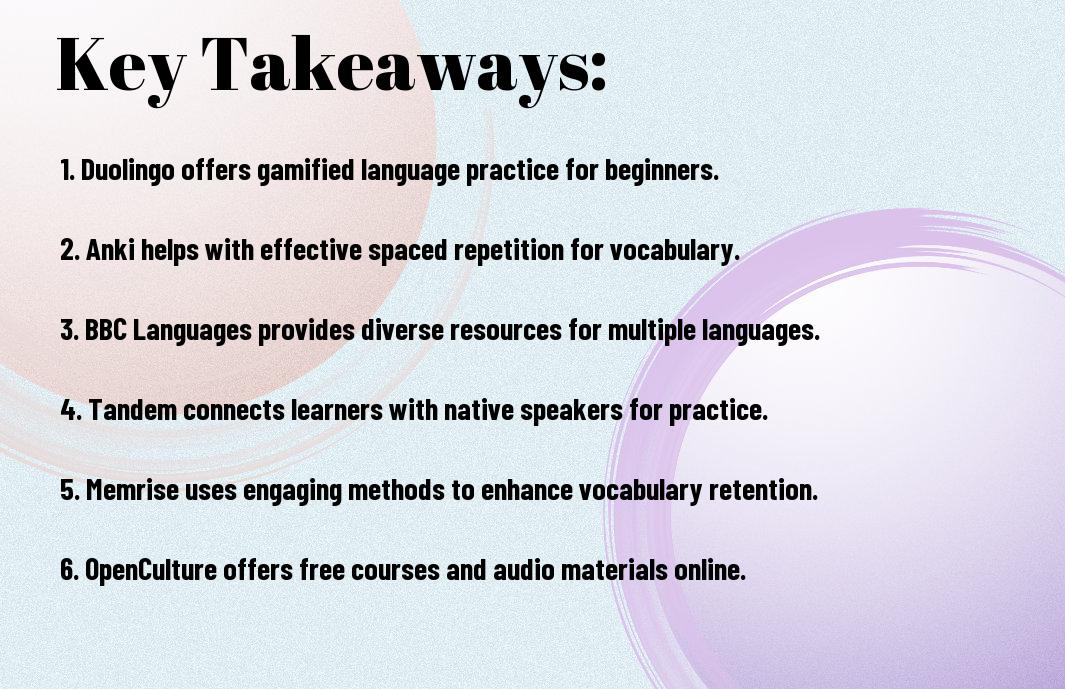
Online Resources
There’s a wealth of online resources available to aid you in your language learning journey. You can find numerous tools and platforms that cater to your needs, whether you’re a beginner or an advanced learner.
Language Learning Apps
Beneath the surface of language learning lies a plethora of apps designed to facilitate your progress. You can choose from a variety of apps that offer interactive lessons, quizzes, and exercises to help you improve your language skills.
Websites and Forums
For your convenience, numerous websites and forums are available that provide valuable resources, including language lessons, podcasts, and discussion boards where you can engage with other learners and native speakers.
It is worth exploring these websites and forums, as they offer a wide range of materials and opportunities for you to practice your language skills, get feedback, and stay motivated throughout your learning process.
Audio and Video Materials
Now that you have explored various language learning resources, it’s time to explore into audio and video materials that can enhance your learning experience. You can find a plethora of free resources online, including podcasts, audiobooks, YouTube channels, and videos that cater to your language learning needs.
Podcasts and Audiobooks
With an array of options available, you can choose podcasts and audiobooks that suit your learning style and interests. You can listen to news, stories, and conversations in the target language, improving your listening skills and getting accustomed to different accents and pronunciation.
YouTube Channels and Videos
At your fingertips, you have access to numerous YouTube channels and videos dedicated to language learning. You can watch video lessons, tutorials, and explanations that help you understand complex grammar rules and vocabulary.
Considering the vast amount of content available on YouTube, you can easily find channels that align with your learning goals and preferences. You can learn from experienced teachers, native speakers, and fellow learners who share their experiences and tips, making your language learning journey more engaging and effective.
Reading and Writing Tools
To improve your language skills, you can utilize various online resources, such as the discussion on Free Language Resources!!! All legal and legit. to find the best tools for your needs.
Language Exchange Websites
Alongside these tools, you can practice your language skills on language exchange websites, where you can connect with native speakers and get feedback on your writing and speaking.
Online Libraries and E-books
Likewise, language learners can access a vast array of reading materials through online libraries and e-books, which provide you with a wealth of resources to practice your reading comprehension.
Considering your interests and goals, you can explore online libraries and e-books to find texts that suit your level and genre preferences, helping you to stay motivated and engaged in the learning process, and ultimately, improving your reading and writing skills in your target language.
Practice and Feedback
After dedicating time to learning a new language, you’ll want to put your skills to the test. Practicing and receiving feedback is necessary to improve your language abilities.
Language Exchange Partners
The most effective way to practice a language is by speaking with a native speaker, and you can find language exchange partners online who can help you with this.
Self-Assessment and Correction Tools
After mastering the basics, you’ll need to assess your progress and identify areas for improvement, which is where self-assessment and correction tools come in handy for your language learning journey.
Hence, tools like language learning apps and online resources can help you track your progress, correct mistakes, and provide personalized feedback to refine your language skills, enabling you to take your language learning to the next level and achieve your goals.
Additional Tips and Recommendations
Keep in mind that learning a language requires dedication and practice. Consider the following:
- Set achievable goals
- Use language learning apps
. Knowing your own learning style will help you make the most of these resources.
Immersion and Consistency
By surrounding yourself with the language you want to learn, you can improve your skills more quickly. Try listening to music, watching TV shows, and speaking with native speakers to immerse yourself in the language.
Overcoming Common Challenges
The key to overcoming common challenges is to stay motivated and persistent. You will encounter setbacks, but don’t give up – keep practicing and you will see progress.
With the right mindset and strategies, you can overcome common challenges such as lack of motivation, difficulty with grammar, and limited exposure to the language. You can try breaking your study sessions into shorter intervals, finding a language exchange partner, or rewarding yourself for reaching milestones to stay motivated and engaged in the learning process.
Conclusion
Summing up, you now have a wealth of free resources at your fingertips to aid your language learning journey. You can utilize these tools to enhance your skills, expand your vocabulary, and improve your pronunciation. With your newfound knowledge, you will be well-equipped to navigate the world of language learning and achieve your goals, making the most of the resources available to you.
FAQ
Q: What are some of the best free online resources for learning a new language?
A: There are many excellent free online resources for learning a new language, including Duolingo, Coursera, and edX, which offer a wide range of courses and materials for various languages. Additionally, language learning podcasts like “Coffee Break” and “News in Slow” provide an engaging and interactive way to improve listening and speaking skills. YouTube channels such as EnglishClass101 and SpanishDict also offer a wealth of free language lessons and explanations.
Q: How can I practice speaking and listening skills with native speakers for free?
A: Practicing speaking and listening skills with native speakers is an imperative part of language learning. One of the best free resources for this is the Tandem app, which connects learners with native speakers of their target language for language exchange and practice. Another great option isConversation Exchange, a website that allows users to find language exchange partners and practice speaking and listening skills via text, voice, or video chat. Additionally, many language learning communities on Reddit and Facebook offer opportunities to connect with native speakers and practice language skills.
Q: Are there any free resources that can help me improve my reading and writing skills in a foreign language?
A: Yes, there are many free resources available to help improve reading and writing skills in a foreign language. Project Gutenberg and ManyBooks offer a wide range of free e-books in various languages, which can be a great way to practice reading comprehension. For writing practice, Lang-8 is a free online journaling platform that allows users to write in their target language and receive feedback from native speakers. Additionally, language learning blogs like Omniglot and FluentU provide a wealth of free reading materials, including articles, news, and language lessons, to help learners improve their reading and writing skills.
- Utilizing podcasts and online radio stations can help language learners get used to the sound and rhythm of the language, while also learning new words and phrases in
simon weiner
How to Overcome Language Learning Anxiety
As you initiate on your language learning journey, you may encounter a common obstacle: language learning anxiety. You may feel nervous about speaking, worried about making mistakes, or intimidated by native speakers. Your anxiety can hinder your progress and prevent you from reaching your full potential. However, with the right strategies and mindset, you can overcome your anxiety and become a confident language learner, unlocking a world of new opportunities and experiences. You will learn how to manage your anxiety and improve your language skills.
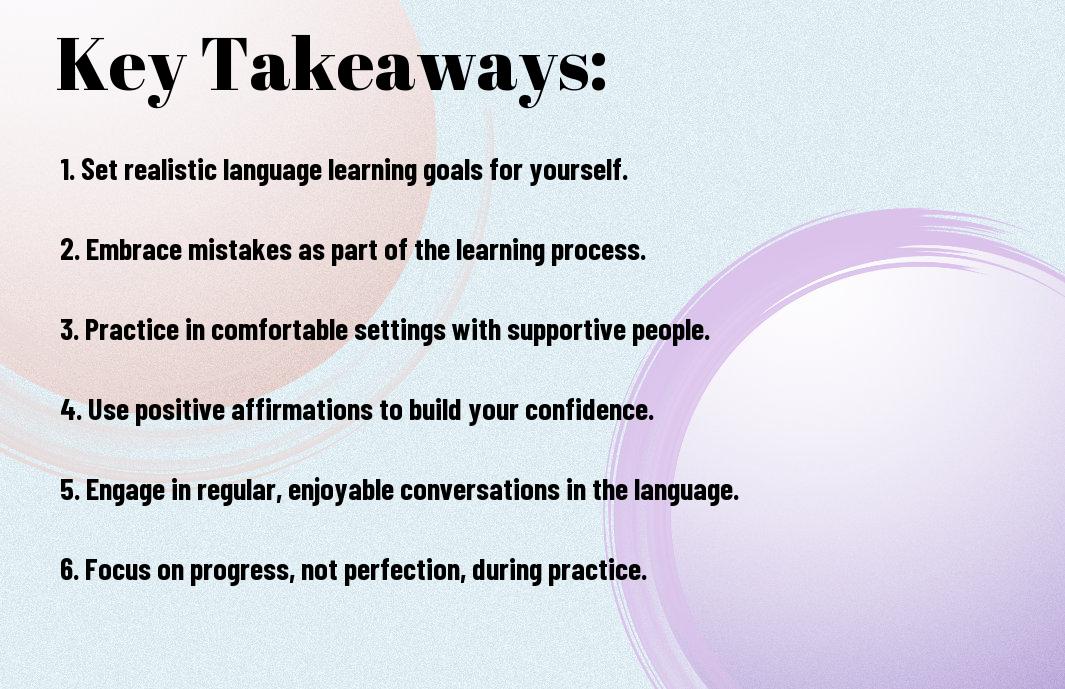
Key Takeaways:
To overcome language learning anxiety, consider the following points:
- Develop a growth mindset by viewing challenges as opportunities for improvement, rather than threats to ego or self-image, which can help to reduce anxiety and foster a more positive attitude towards language learning.
- Improve your self-efficacy by setting realistic goals, celebrating small achievements, and focusing on progress rather than perfection, allowing you to build confidence in your language abilities.
- Practice relaxation techniques such as deep breathing, meditation, or yoga to manage anxiety and stress, creating a more conducive learning environment and enhancing your overall well-being as a language learner.
Recognizing Anxiety
Before you can overcome language learning anxiety, you need to understand what it is and how it affects you. You can find more information on Overcoming Foreign Language Speech Anxiety to help you get started.
Identifying the Signs
For instance, you may experience physical symptoms such as a racing heart or sweating when speaking in a foreign language. You can identify these signs to better understand your anxiety.
Acknowledging the Fears
Above all, you need to acknowledge your fears and concerns about language learning. You must accept that it’s normal to feel anxious when speaking a new language.
Consequently, as you acknowledge your fears, you’ll be able to address them more effectively. You’ll be able to develop strategies to manage your anxiety and improve your language skills, allowing you to become a more confident language learner.
Setting Realistic Goals
One of the most effective ways to overcome language learning anxiety is to set achievable objectives. By doing so, you can track your progress and stay motivated, which helps to build confidence in your language skills.
Breaking Down Barriers
Reasonable expectations help you to focus on making gradual improvements, allowing you to overcome obstacles that may have previously seemed insurmountable, and you will begin to see yourself making steady progress in your language learning journey.
Celebrating Small Wins
Barring none, acknowledging and celebrating your small achievements is crucial to maintaining a positive mindset, as you work towards your language learning goals, you will find that your anxiety starts to fade away.
Due to the fact that you are consistently making progress and celebrating your small victories, you will start to feel more confident in your ability to learn and use the language, and this will help you to stay motivated and engaged throughout the learning process, helping you to overcome language learning anxiety and achieve your goals.
Creating a Supportive Environment
To create an environment conducive to language learning, you can explore various strategies, such as those outlined in effective strategies to overcome foreign language anxiety, to help you stay motivated and focused.
Finding Language Learning Communities
Around you, there are numerous language exchange programs and online forums where you can connect with fellow learners and native speakers, making your learning journey more enjoyable and interactive.
Building a Network of Encouragers
With a strong support system, you can overcome language learning anxiety and stay committed to your goals, as you surround yourself with people who encourage and motivate you to improve your language skills.
This network of encouragers can provide you with valuable feedback, help you set realistic goals, and celebrate your progress, making your language learning experience more rewarding and helping you to stay on track, as you work towards becoming proficient in your target language, and you can achieve this by joining language clubs, attending language events, or participating in online language learning communities, where you can meet like-minded individuals who share your interests and goals.

Developing a Growth Mindset
Despite the challenges you may face, developing a growth mindset is vital for overcoming language learning anxiety. You can achieve this by believing that your abilities can be developed through dedication and hard work.
Embracing Mistakes as Learning Opportunities
Across various language learning contexts, you will encounter mistakes, but you can use them as opportunities to learn and improve your skills, allowing you to grow as a learner.
Focusing on Progress, Not Perfection
With each step you take towards your language learning goals, focus on the progress you make, rather than striving for perfection, and you will find that your anxiety decreases and your confidence grows.
Perfection is an unattainable goal, and striving for it can lead to frustration and Burnout. Instead, you should focus on making progress, celebrating small victories, and using them as motivation to continue learning and improving your language skills. By doing so, you will develop a more positive and resilient mindset, which will help you navigate the challenges of language learning with greater ease and confidence.
Practicing Relaxation Techniques
All language learners face anxiety, but you can overcome it by practicing relaxation techniques. This helps you manage stress and stay focused on your goals. You will feel more confident and motivated to continue learning.
Breathing Exercises for Calmness
The key to relaxation is slow, deep breathing. You can practice breathing exercises to calm your mind and body, preparing you for language learning challenges. This simple technique helps you stay focused and composed.
Visualization for Confidence Boost
After mastering breathing exercises, you can move on to visualization techniques. You can imagine yourself successfully communicating in your target language, which boosts your confidence and reduces anxiety. This technique helps you prepare for real-life conversations.
Practicing visualization regularly, you will become more comfortable with your language skills, and your anxiety will decrease. You can visualize yourself in different scenarios, such as ordering food or participating in a conversation, and imagine how you would handle them confidently. This technique helps you build mental resilience and develop a positive mindset, vital for overcoming language learning anxiety.
Embracing Cultural Immersion
Unlike other language learning methods, embracing cultural immersion helps you connect with the language on a deeper level, making it easier to overcome anxiety and improve your skills.
Surrounding Yourself with the Language
With constant exposure to your target language, you’ll become more comfortable and confident in your ability to understand and communicate, making language learning feel more manageable and enjoyable for you.
Engaging with Native Speakers
With each conversation with a native speaker, you’ll gain valuable insights into the language and culture, helping you to build your skills and overcome anxiety in a supportive and interactive environment, tailored to your needs and goals.
Understanding the nuances of language and cultural differences is key to successful communication, and engaging with native speakers allows you to learn from their experiences, perspectives, and everyday expressions, enabling you to develop a more authentic and personal connection with the language, and ultimately, to become a more confident and proficient language user, capable of expressing yourself effectively in various situations.
Summing up
So, you have learned various strategies to manage your language learning anxiety. You understand that acknowledging your feelings and setting realistic goals can help you stay motivated. By practicing relaxation techniques and seeking support, you can build confidence in your language skills. As you progress, your anxiety will decrease, and you will become a more effective language learner, able to reach your full potential and achieve your goals.
FAQ
Q: What causes language learning anxiety and how can I identify it in myself?
A: Language learning anxiety can stem from various factors such as fear of making mistakes, fear of being judged, or past experiences of failure. To identify language learning anxiety in yourself, look out for symptoms like avoidance of speaking or writing in the target language, physical symptoms such as a racing heart or sweating when attempting to communicate, or a general feeling of apprehension when faced with language learning tasks. Recognizing these signs is the first step towards overcoming language learning anxiety.
Q: What strategies can help me manage and reduce language learning anxiety?
A: Several strategies can help manage and reduce language learning anxiety. One effective approach is to set achievable goals and celebrate small successes, which can help build confidence and motivation. Additionally, practicing relaxation techniques such as deep breathing, meditation, or yoga can help reduce anxiety levels. Engaging in regular, low-stakes interactions with native speakers, such as through language exchange programs or informal conversations, can also help desensitize you to the anxiety of communicating in the target language. Furthermore, focusing on the process of learning rather than perfection can help shift your mindset and make the learning experience more enjoyable.
Q: How can I create a supportive environment that fosters language learning and helps alleviate anxiety?
A: Creating a supportive environment is key to alleviating language learning anxiety. Surround yourself with positive and encouraging people who support your language learning goals. This could include language exchange partners, tutors, or online communities of fellow learners. Using positive self-talk and affirmations can also help reinforce a growth mindset and reduce self-criticism. Additionally, make your learning space comfortable and conducive to learning, free from distractions and stressors. Utilizing technology, such as language learning apps or videos, can also provide a sense of control and flexibility, allowing you to learn at your own pace and review material as needed, which can help alleviate feelings of anxiety and overwhelm.
The Role of Feedback in Language Progress
As you learn a new language, your progress is significantly influenced by the feedback you receive. You use this feedback to adjust your pronunciation, grammar, and vocabulary, making adjustments to improve your communication skills. Your ability to understand and implement feedback effectively determines how quickly you advance in your language learning journey, allowing you to refine your language skills and achieve your goals. You will explore the significance of feedback in language learning and how it impacts your development.

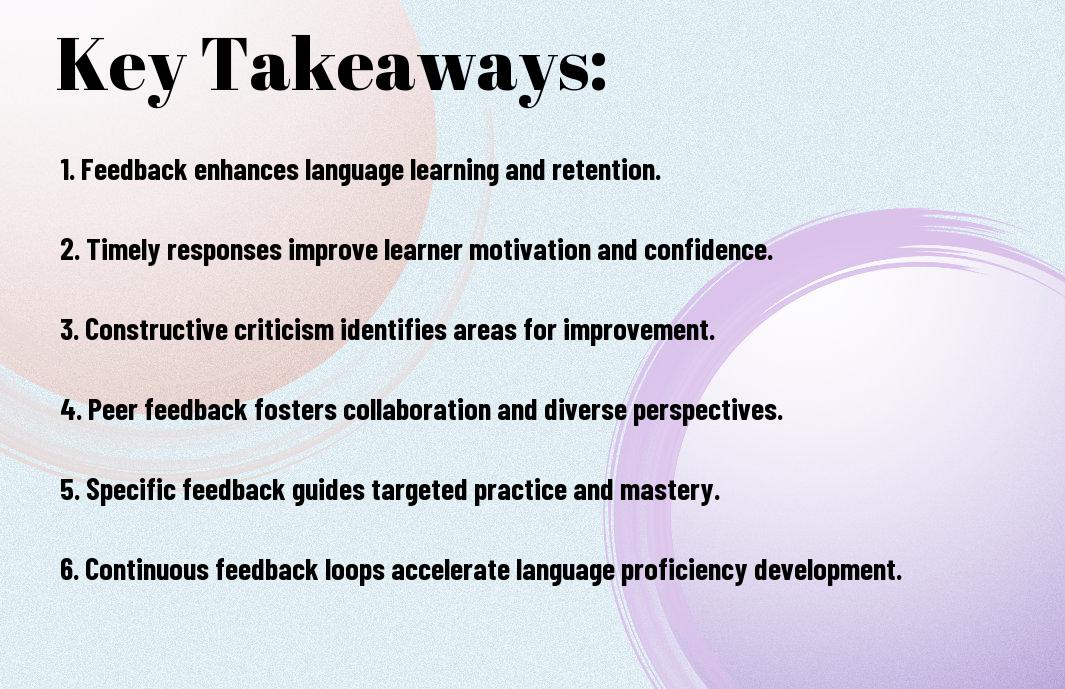
Key Takeaways:
- The effectiveness of language learning is greatly influenced by the quality and timeliness of feedback received by learners, as it helps them to identify and correct errors, and develop a sense of accuracy and fluency in their language use.
- Constructive feedback is vital for language learners to improve their language skills, as it provides them with guidance and support to overcome challenges and achieve their learning objectives.
- The impact of feedback on language learning is maximized when it is individualized, relevant, and actionable, allowing learners to reflect on their performance, set goals, and develop a sense of autonomy in their language learning journey.
The Importance of Feedback
Before you begin your language learning journey, it’s necessary to understand the significance of feedback. You can learn more about this topic by visiting The Role of Feedback in Language Learning: Constructive Criticism. Thou will find it helpful in improving your language skills.
Types of Feedback
The types of feedback you can expect include:
- Positive feedback
- Negative feedback
- Constructive feedback
- Descriptive feedback
- Evaluative feedback
Thou can use these types to assess your progress.
| Feedback Type | Description |
|---|---|
| Positive | Encourages good performance |
| Negative | Highlights poor performance |
| Constructive | Provides suggestions for improvement |
| Descriptive | Describes your performance |
| Evaluative | Evaluates your performance |
Feedback in Language Learning
Against the backdrop of language learning, you need to understand that feedback is vital. You will benefit from it as it helps you identify areas of improvement.
Learning a new language requires dedication and practice. As you commence on this journey, you will encounter various challenges, and feedback will play a significant role in helping you overcome them. You can use feedback to adjust your learning strategy, focus on areas that need improvement, and develop a more effective learning plan. By embracing feedback, you will become a more proficient language learner, and your progress will be more noticeable. Thou will be able to communicate more effectively in your target language.
The Role of Teacher Feedback
You will find that teacher feedback plays a significant role in your language progress, as it helps you identify areas for improvement and track your development over time.
Constructive Criticism
Around the concept of constructive criticism, it’s crucial to understand that your teacher’s feedback is aimed at enhancing your language skills, and you should use it to adjust your learning strategy and make progress.
Effective Feedback Techniques
To maximize the impact of feedback, your teacher will use various techniques, such as providing clear and specific comments, setting achievable goals, and encouraging self-assessment, all of which will help you evaluate your performance and make informed decisions about your learning.
Feedback is an ongoing process that involves not only receiving comments from your teacher but also reflecting on your own learning and identifying areas where you need more practice or review, enabling you to take ownership of your language development and make steady progress towards your goals, with your teacher’s guidance and support.
Peer Feedback and Self-Assessment
All language learners can benefit from peer feedback and self-assessment, as these processes help you identify your strengths and weaknesses, and track your progress over time. You can use this information to adjust your learning strategy and make targeted improvements.
Benefits of Peer Review
Prior to receiving feedback from others, you may not be aware of certain errors or areas for improvement in your language use. You can learn from your peers’ perspectives and insights, and use their feedback to refine your skills.
Self-Assessment Strategies
Beneath the surface of language learning lies the importance of self-reflection. You can develop self-assessment strategies, such as keeping a language learning journal or recording yourself speaking, to evaluate your progress and set goals for yourself.
Considering your own language learning goals and objectives, you can tailor your self-assessment strategies to suit your needs. You will find that regularly reflecting on your progress and identifying areas for improvement helps you stay motivated and focused on your goals, allowing you to make the most of your language learning experience and achieve greater success.
Feedback Tools and Technologies
After exploring the importance of feedback in language learning, you can now research into the various tools and technologies that facilitate this process. You will find a range of options to enhance your learning experience.
Digital Feedback Platforms
Following the trend of digitalization, you can utilize feedback platforms that offer personalized feedback on your language progress, helping you identify areas for improvement and track your growth over time.
Automated Feedback Systems
By leveraging technology, you can access automated feedback systems that provide instant feedback on your language assignments and exercises, enabling you to learn at your own pace and make necessary adjustments to your learning strategy.
In fact, automated feedback systems use sophisticated algorithms to analyze your language proficiency and provide detailed feedback on grammar, vocabulary, and pronunciation, allowing you to refine your skills and achieve greater accuracy in your language use, and you can use this feedback to adjust your learning approach and focus on areas where you need more practice or review.
Overcoming Feedback Challenges
Despite the importance of feedback in language progress, you may face challenges in giving or receiving it. You need to be aware of these challenges to overcome them effectively.
Common Barriers to Feedback
To tackle feedback challenges, you should identify the common barriers that hinder your progress, such as cultural or personal differences, and develop strategies to address them.
Strategies for Improvement
Similarly, feedback is necessary for your growth, and you can improve by soliciting constructive feedback from others, being open to criticism, and using it to adjust your approach.
Consequently, as you implement these strategies, you will find that your ability to give and receive feedback improves, allowing you to refine your language skills more efficiently and effectively, and you will be able to track your progress and make adjustments as needed to achieve your language goals.
Implementing Feedback in Language Instruction
For effective language learning, you need to incorporate feedback into your instruction. This involves creating a supportive environment where your students feel comfortable receiving and acting on feedback.
Feedback-Informed Lesson Planning
FeedbackInformed decisions are vital when designing your lessons, as you will be able to tailor your instruction to meet the specific needs of your students, addressing areas where they require improvement.
Creating a Feedback-Rich Environment
FeedbackOriented approaches help you establish a positive and encouraging atmosphere, where your students are motivated to learn and improve, and you can provide them with constructive feedback to guide their progress.
But as you create a feedback-rich environment, you will also need to consider the types of feedback that are most effective for your students, such as written or verbal feedback, and how frequently you should provide it to support their language development, helping you to adjust your instruction and ensure your students achieve their goals.
Summing up
Taking this into account, you can see that feedback plays a significant role in your language progress. As you receive and act on feedback, you refine your language skills, adjusting your pronunciation, grammar, and vocabulary. Your ability to understand and communicate effectively improves, allowing you to express yourself more confidently. By leveraging feedback, you enhance your overall language proficiency, making steady progress towards your goals. You can apply this insight to optimize your learning journey.
FAQ
Q: What is the significance of feedback in language learning and how does it impact progress?
A: Feedback plays a vital role in language learning as it enables learners to identify their strengths and weaknesses, and make necessary adjustments to improve their language skills. Effective feedback helps learners to develop a better understanding of language structures, vocabulary, and pronunciation, and it also boosts their confidence in using the language. Moreover, feedback helps to clarify any misconceptions or errors, allowing learners to refine their language skills and make steady progress.
Q: How can feedback be used to enhance language proficiency and what types of feedback are most effective?
A: Feedback can be used to enhance language proficiency by providing learners with insights into their language use, highlighting areas that need improvement, and suggesting strategies for development. The most effective types of feedback are those that are timely, specific, and focused on the learner’s individual needs. This can include corrective feedback on grammar and vocabulary, feedback on pronunciation and intonation, and feedback on the coherence and clarity of written and spoken language. Additionally, self-assessment and peer feedback can also be valuable tools in the language learning process, as they encourage learners to take an active role in their own development.
Q: How can language learners effectively utilize feedback to accelerate their language progress and achieve their goals?
A: Language learners can effectively utilize feedback by being open to constructive criticism, reflecting on the feedback they receive, and using it as a basis for setting goals and developing a plan for improvement. It is also important for learners to seek feedback from multiple sources, including teachers, peers, and self-assessment, to gain a comprehensive understanding of their language abilities. Furthermore, learners should prioritize feedback that is specific, actionable, and aligned with their learning objectives, and use it to adjust their learning strategies and practices to maximize their language progress. By doing so, learners can harness the full potential of feedback to drive their language development and achieve their goals.
How to Set Realistic Language Learning Goals
As you begin on your language learning journey, you’ll need to define your objectives. Your goals will serve as a roadmap, guiding your progress and motivating you to stay on track. You’ll want to set targets that are achievable, yet challenging enough to prompt improvement. By doing so, you’ll be able to monitor your advancement and make adjustments as needed, ultimately leading to successful language acquisition. In this article, you’ll learn how to establish effective goals, tailored to your needs and abilities.
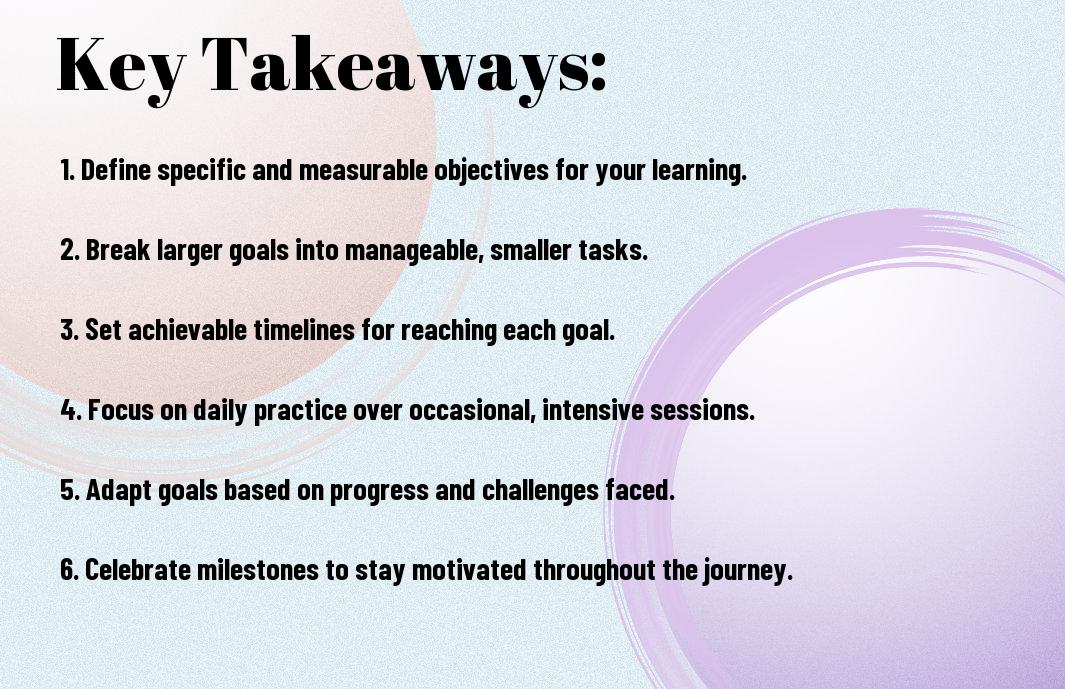
Key Takeaways:
To achieve success in language learning, it’s imperative to establish a clear plan. Here are the main points to consider:
- Setting Specific objectives is vital for language learners, as it helps to maintain focus and direction throughout the learning process.
- Establishing Measurable milestones enables learners to track their progress and make adjustments to their strategy as needed, ensuring they stay on track.
- Creating a Flexible schedule allows learners to accommodate unexpected setbacks and make adjustments to their goals, promoting a more effective and sustainable learning experience.
Setting the Foundation
A well-structured approach to language learning begins with understanding your objectives, as outlined in What Are Your Language Learning Goals? – SmarterLanguage, to guide your progress.
Defining Realistic Goals
For instance, you should consider what you want to achieve and by when, to set a clear direction for your learning journey, ensuring your goals are specific and attainable.
Assessing Current Language Level
On the path to setting realistic goals, you need to evaluate your current language proficiency to determine where to start and how to proceed effectively.
Even as you assess your language level, you will find that understanding your strengths and weaknesses helps you to create a more tailored approach to learning, allowing you to focus on areas that need improvement and build upon your existing knowledge.

Identifying Motivation
Any language learner’s journey begins with understanding what drives them to learn a new language. Your motivation will serve as the foundation for your goals, helping you stay focused and motivated throughout the process.
Determining Why You Want to Learn a Language
Identifying your reasons for learning a language is important to setting realistic goals. You need to consider what sparked your interest in the language and what you hope to achieve by learning it.
Finding Your Inner Drive
Inner motivations such as personal satisfaction or cultural interest can be powerful drivers of your language learning journey. You should explore what internally motivates you to learn a language, as this will help you stay committed to your goals.
In fact, understanding your inner drive can help you overcome obstacles and stay motivated even when faced with challenging language learning tasks, allowing you to make steady progress towards your goals and ultimately achieve success in your language learning endeavor, as you will be driven by a genuine desire to learn and improve your language skills.
Breaking Down Goals
To achieve your language learning objectives, you need to break them down into manageable parts. This involves dividing your goals into short-term and long-term targets, allowing you to focus on specific tasks and track your progress.
Short-Term Objectives
At this stage, you identify what you want to accomplish in a short period, such as learning basic phrases or vocabulary within a few weeks. You can set daily or weekly targets, like practicing a language for 30 minutes each day.
Long-Term Aspirations
With a clear understanding of your short-term objectives, you can now set your long-term goals, such as becoming fluent in a language or passing a proficiency test. You should consider your motivation and available time when setting these goals.
Consequently, your long-term aspirations will serve as a guiding force, helping you stay motivated and committed to your language learning journey. As you progress, you can adjust your goals to reflect your improving skills and knowledge, ensuring you continue to challenge yourself and make steady progress towards becoming proficient in your target language.
Creating a Learning Plan
Now that you have set your language learning goals, it’s time to create a plan to achieve them. You will need to break down your long-term goals into smaller, manageable tasks to make steady progress.
Setting Achievable Milestones
About the time you start learning a language, you should identify key milestones that mark your progress. You will be able to track your advancement and stay motivated by setting these milestones.
Developing a Study Schedule
One of the most effective ways to learn a language is to establish a regular study routine. You should allocate a specific time each day or week to focus on language learning, ensuring consistent progress.
In addition to setting a study schedule, you will need to consider your learning style, availability, and goals when planning your routine. You should prioritize tasks such as vocabulary building, grammar practice, and speaking, and allocate sufficient time for each activity to optimize your learning experience.
Overcoming Obstacles
Many language learners encounter setbacks that hinder their progress, but with the right mindset, you can overcome these obstacles and stay on track with your language learning goals.
Anticipating Challenges
Along with setting realistic goals, you should also consider the potential challenges you may face, such as lack of motivation or limited practice time, and think about how you will address them.
Finding Solutions
Anticipating potential problems will help you develop strategies to overcome them, and you can start by identifying the resources you need to stay motivated and engaged in your language learning journey.
A key part of finding solutions is to break down larger challenges into smaller, manageable tasks, and you can do this by creating a schedule that allows you to practice consistently, even if it’s just for a few minutes each day, and by seeking out language exchange partners or online communities to support your learning.
Tracking Progress
Once again, setting realistic goals is not enough; you must also track your progress. You can find inspiration for tracking methods on forums like What are some good language learning goals you’ve set?, where language learners share their experiences.
Monitoring Your Improvement
One way to monitor your improvement is to keep a language learning journal, where you note your progress, setbacks, and lessons learned.
Adjusting Your Approach
Below the surface of tracking progress lies the need to adjust your approach as you learn and grow, making changes to optimize your language learning strategy.
Even as you make progress, you may find that certain methods or materials are not working for you, and it’s imperative to be willing to adjust your approach to stay on track and achieve your goals, considering what works best for your learning style and schedule.
Conclusion
Drawing together the pieces of language learning, you now have a clear roadmap to set realistic goals. You will be able to create a schedule and track your progress, helping you stay motivated. By setting achievable targets, you will make steady progress and improve your language skills. Your efforts will pay off, and you will become a proficient language learner, capable of communicating effectively in your desired language.
FAQ
Q: What are the key considerations when setting realistic language learning goals?
A: When setting realistic language learning goals, it’s important to consider your current language proficiency level, the amount of time you can dedicate to learning each day or week, and your motivation for learning the language. Be honest about your schedule and capabilities to avoid setting yourself up for disappointment. Break down your long-term goals into smaller, achievable milestones, and prioritize consistency over speed. This will help you stay motivated and track your progress effectively.
Q: How can I create a personalized language learning plan that suits my needs and goals?
A: To create a personalized language learning plan, start by identifying your strengths, weaknesses, and learning style. If you’re a visual learner, incorporate more videos and images into your study routine. If you prefer auditory learning, focus on podcasts and audio materials. Set specific, measurable objectives, such as improving your reading comprehension or enhancing your vocabulary within a certain timeframe. Use a planner, app, or spreadsheet to schedule your study sessions and track your progress. Regularly assess and adjust your plan as needed to ensure you’re on track to meet your goals.
Q: What strategies can I use to stay motivated and track progress towards my language learning goals?
A: Staying motivated and tracking progress is vital to achieving your language learning goals. One effective strategy is to find a language learning buddy or join a community of learners for support and accountability. Celebrate your achievements, no matter how small, to maintain a positive mindset. Use language learning apps or journals to monitor your progress, and adjust your goals as needed. Immerse yourself in the language by watching TV shows or movies, listening to music, or reading books in the target language. This will help you stay engaged and motivated, making the learning process more enjoyable and increasing your chances of success.
How Learning a Language Can Enhance Travel Experiences
You step off the train, into a foreign land, where your native tongue is a distant memory. As you navigate unfamiliar streets, you realize that speaking the local language can be your key to unlocking authentic experiences. Your travels become more intimate, more immersive, when you can converse with the people you meet. You begin to grasp the nuances of the culture, to taste the flavors, to hear the rhythms, in a way that transcends mere tourism, and you start to feel the thrill of discovery.

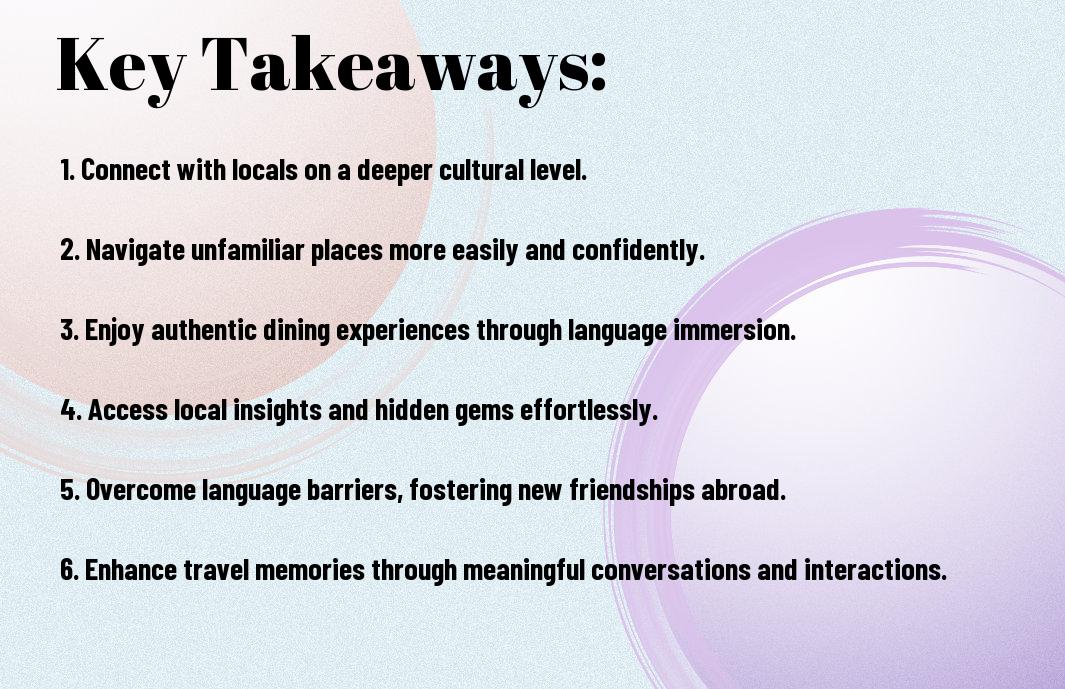
Key Takeaways:
To make the most out of your travel experiences, learning a language can be incredibly beneficial. Here are a few key points to consider:
- Immersing yourself in a foreign culture can be greatly enhanced by speaking the local language, allowing you to connect with the people and understand their customs more deeply.
- Learning a new language can also broaden your travel horizons, enabling you to navigate unfamiliar places with more confidence and independence, and to discover hidden gems that might be overlooked by other tourists.
- Engaging with native speakers in their own language can lead to more authentic experiences, such as trying local cuisine, attending cultural events, and forming meaningful connections with the people you meet during your travels.
Discovering New Cultures
The world opens up when you learn a language, and cultural immersion becomes a reality. You’ll explore deeper into the traditions and customs of the places you visit, and your travel experiences will be all the more richer for it.
Immersion through Language
Before you commence on your journey, learning the local language will give you a unique perspective on the culture. You’ll begin to understand the nuances of communication and develop a deeper appreciation for the way people live and interact with one another.
Connecting with Locals
To truly experience a place, you need to connect with its people, and speaking their language is the key. You’ll be able to engage in conversations, ask questions, and learn about the local way of life in a more meaningful way.
The connections you make with locals will be some of the most memorable moments of your trip. You’ll find yourself invited to share meals, attend local events, and experience the authentic side of the culture, all because you took the time to learn the language and connect with the people who call it home.
Enhancing Travel Experiences
Some of the most rewarding travel experiences come from understanding the local culture, and language plays a significant role in this. You can enhance your travel experiences by learning the local language, as seen in this article about Enhancing Travel Experiences with the Right Language and Communication.
Improved Navigation
Before you begin on your journey, learning the local language will help you navigate unfamiliar places with ease, allowing you to ask for directions and understand signs and menus.
Deeper Appreciation of History and Customs
After immersing yourself in the local language, you will gain a deeper appreciation of the history and customs of the place you are visiting, enabling you to engage with the locals on a more meaningful level.
Navigation through the city becomes a breeze, but it’s the nuances of the culture that truly come alive when you speak the language. You start to notice the subtle details, the gestures, and the idioms that are unique to the place, giving you a richer understanding of the history and customs that shape the daily lives of the people you meet.
Language Learning Tips
Once again, you’ll find that learning a language enhances your travel experiences. Consider the following:
- Take a class
- Use language learning apps
The key to success lies in consistent practice.
Pre-Trip Preparation
Beneath the surface of tourist attractions, you’ll discover a world of authentic experiences. You can start by learning basic phrases, reading about the culture, and understanding local customs to make the most of your trip.
Immersive Learning Techniques
Anyway, you can surround yourself with the language by watching movies, listening to music, and speaking with native speakers to improve your skills.
Immersive language learning techniques will transport you to a new world. You’ll start to think in the language, and your conversations will become more natural, allowing you to connect with locals on a deeper level, and your travels will become more meaningful and enjoyable.
Breaking Down Barriers
Despite the initial intimidation, learning a language can open doors to unparalleled travel experiences, allowing you to connect with locals and explore deeper into foreign cultures.
Overcoming Language Fears
With newfound language skills, you’ll find yourself navigating unfamiliar territories with ease, your confidence growing as you engage with native speakers and discover the nuances of their language.
Building Confidence
Breaking free from language constraints, you’ll begin to see the world in a new light, as your ability to communicate empowers you to take risks and venture off the beaten path, immersing yourself in the local way of life.
A sense of accomplishment will accompany you as you build confidence in your language abilities, and you’ll find that even the smallest interactions, like ordering food or asking for directions, become opportunities to practice and refine your skills, ultimately enriching your travel experience and broadening your perspective on the world and its diverse cultures.
Cultural Insights
Now, as you research into a new language, you’ll uncover the nuances of a culture, revealing a deeper understanding of the people and their way of life. Your travels become more meaningful, as you grasp the subtle differences that make each place unique.
Uncovering Hidden Gems
Above all, learning a language allows you to discover hidden gems, like local cafes and secret spots, that most tourists miss. You’ll experience the authentic side of a culture, unfiltered by translation apps or guidebooks.
Gaining New Perspectives
Beneath the surface of a culture, you’ll find a wealth of knowledge and insight, waiting to be uncovered. You’ll begin to see the world from a new angle, as your language skills open doors to fresh experiences and encounters.
This newfound understanding will stay with you long after your travels are over, influencing your worldview and broadening your horizons. You’ll find that learning a language has not only enhanced your travels but also enriched your life, as you continue to explore and discover new cultures and perspectives.
Practical Applications
Keep in mind that speaking the local language can make your travels more authentic. You’ll navigate unfamiliar places with ease, interacting with locals and immersing yourself in their culture.
Language Learning Resources
For instance, you can leverage language learning apps, phrasebooks, and online courses to prepare for your trip. You’ll find that these resources help you learn vital phrases and vocabulary.
Travel Planning Strategies
One key aspect of traveling is planning. You should research your destination, looking into local customs and phrases that will help you connect with the community.
Also, as you examine deeper into planning your trip, you’ll find that understanding the local language opens up more possibilities. You’ll be able to read signs, menus, and directions, making your journey smoother and more enjoyable, allowing you to wander freely and discover hidden gems that you might have otherwise missed.
Summing up
Now, you’ve got the keys to unlock your travel adventures. Learning a language can enhance your experiences, making you a participant, not just a spectator. You’ll navigate foreign streets with confidence, engage with locals, and uncover hidden gems. Your journey becomes richer, your connections deeper, and your stories more vivid. You’ll return home with a newfound appreciation for cultures and a sense of accomplishment, already planning your next linguistic adventure.
FAQ
Q: How can learning a language enhance my travel experiences?
A: Learning a language can significantly enhance your travel experiences by allowing you to communicate effectively with locals, navigate unfamiliar places with ease, and gain a deeper understanding of the culture. When you speak the local language, you can engage with people, ask for directions, and order food with confidence, making your travel experiences more authentic and enjoyable. Additionally, language skills can help you to avoid misunderstandings, appreciate local customs, and access exclusive experiences that might not be available to non-speakers.
Q: What are some ways language skills can help me connect with locals during my travels?
A: Language skills can help you connect with locals in various ways, such as through conversations with shopkeepers, hotel staff, and fellow travelers. You can also use your language skills to participate in local events, join guided tours, and attend cultural festivals, which can provide you with a unique perspective on the local way of life. Furthermore, speaking the local language can help you to make friends with the people you meet, leading to a more immersive and meaningful travel experience. You can also use language to show respect for the local culture, which can lead to a more positive and welcoming experience.
Q: Can learning a language before traveling really make a difference in my overall travel experience?
A: Absolutely, learning a language before traveling can make a significant difference in your overall travel experience. Even basic language skills, such as knowing how to greet people, ask for help, and order food, can go a long way in making your travels more enjoyable. When you take the time to learn the local language, you demonstrate respect for the culture and people, which can lead to a more positive and enriching experience. Moreover, language skills can help you to avoid tourist traps, find hidden gems, and experience the local lifestyle, making your travels more authentic and memorable. By investing time in learning a language, you can unlock a more immersive and fulfilling travel experience.