simon weiner

How to Improve Writing Skills in a New Language

You are about to initiate on a journey to enhance your writing skills in a new language. As you strive to express yourself clearly and effectively, your writing will become a reflection of your thoughts and ideas. You will learn to convey your message with precision and clarity, just as a skilled craftsman shapes his tools. Your goal is within reach, and with dedication and practice, you will master the art of writing in a new language, unlocking a world of communication and expression.

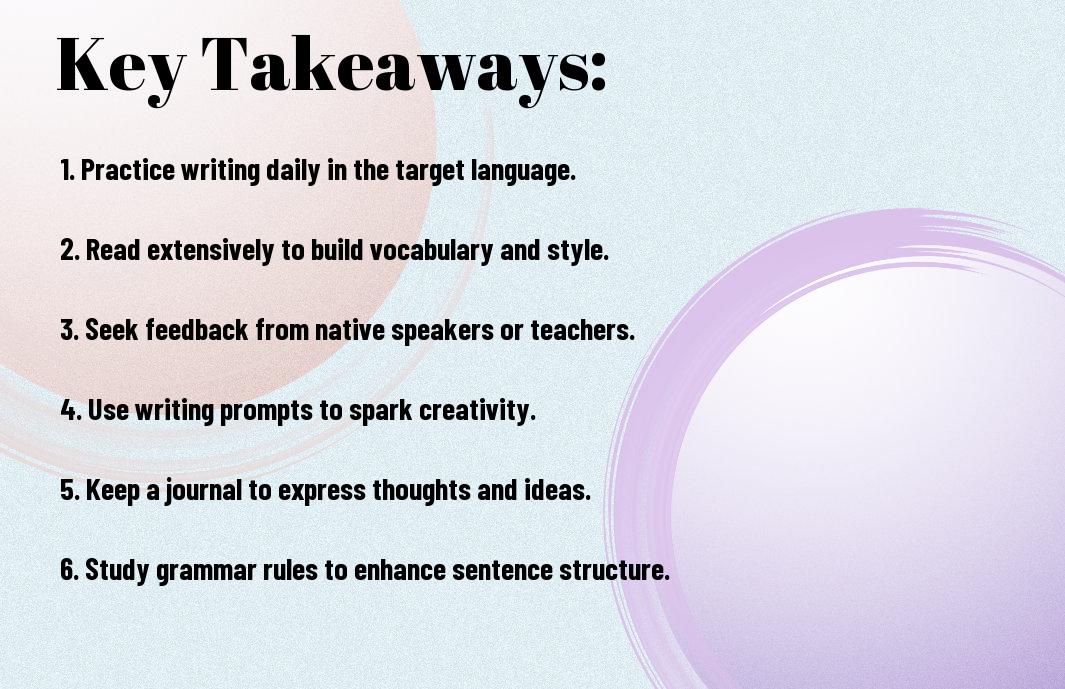
Key Takeaways:

To improve writing skills in a new language, consider the following points:

  • Practice consistent writing to develop your skills and build confidence in expressing yourself in the new language. This can be achieved by setting aside time each day or week to write in the target language.
  • Focus on grammar rules and vocabulary building to enhance your writing abilities. Understanding the language’s grammar and having a wide range of vocabulary will help you to express your thoughts and ideas more effectively.
  • Seek feedback from others, such as language exchange partners or tutors, to identify areas for improvement and refine your writing skills. This will help you to pinpoint mistakes and develop a more nuanced understanding of the language.

Setting Goals

To improve your writing skills in a new language, you need to establish a clear direction. This involves determining what you want to achieve and how you plan to get there. By setting specific, measurable objectives, you will be able to focus your efforts and track your progress.

Defining Language Objectives

Any aspiring writer knows that defining language objectives is crucial. You must identify your strengths and weaknesses, and set realistic targets for improvement. This will help you to concentrate on the areas that need the most attention, ensuring that your writing skills develop in a balanced and effective way.

Creating a Study Schedule

Setting a regular study routine is vital to making progress. You should allocate a specific time each day or week to practice writing in the new language, and stick to it as much as possible. This will help you to stay motivated and make steady improvements over time.

Creating a study schedule that works for you is a key part of the learning process. You should consider your other commitments and obligations, and find a routine that fits comfortably into your lifestyle. As you progress, you can adjust your schedule as needed to ensure that you continue to make progress and stay on track with your goals. You will find that having a regular study routine helps you to stay focused and motivated, and that your writing skills will improve more quickly as a result.
Building Vocabulary

You can improve your writing skills in a new language by expanding your vocabulary, as seen in the discussion on What are the must-dos to improve writing skills in a foreign language. This will help you express yourself more effectively.

Learning New Words

Beneath the surface of language learning lies the foundation of vocabulary building. You start by learning new words and their meanings, which will help you construct sentences and express your thoughts.

Practicing Word Usage

Vigorously practicing word usage is key to mastering vocabulary. You can start by using flashcards or writing short paragraphs using new words.

With consistent practice, you will become more confident in using new words in context, and your writing skills will improve dramatically. You will be able to express yourself more clearly and accurately, and your writing will become more engaging and effective. As you practice, pay attention to word connotations, nuances, and idiomatic expressions, and try to use them in your writing to add depth and complexity to your language.

Improving Grammar

Once again, as you examine into the world of writing in a new language, you will find that your grammar skills require attention. To enhance your writing, visit 9 Hacks to Improve Your Writing Skills for valuable insights.

Reviewing Language Rules

Besides regular practice, you need to revisit the fundamentals of your target language to solidify your understanding of its grammar rules, ensuring your writing is coherent and error-free.

Applying Grammar in Writing

With each sentence you write, you apply the grammar rules you’ve learned, gradually refining your skills through consistent practice and attention to detail.

Language learners like you face the challenge of applying grammar rules in context, which is why it’s imperative to write regularly, using your knowledge to construct sentences that convey your intended meaning, and over time, you will develop a keen sense of what sounds natural and correct in your new language.

Developing Writing Habits

Your writing skills will improve significantly as you develop consistent writing habits, allowing you to express yourself more effectively in a new language.

Writing Regularly

To make progress, you should set aside time each day to practice writing, even if it’s just for a few minutes, and focus on writing about topics that interest you.

Getting Feedback

At this stage, you will need to identify someone who can provide you with constructive feedback on your writing, such as a language teacher or a fellow learner.

Indeed, getting feedback is an vital part of the learning process, and you should be open to correcting your mistakes and learning from them, which will help you to refine your writing style and improve your overall language skills.

Overcoming Challenges

Despite the difficulties you may face, improving your writing skills in a new language is achievable with persistence and dedication. You will encounter obstacles, but with the right mindset, you can overcome them and become a proficient writer.

Managing Writer’s Block

Besides the usual writing struggles, you may also experience writer’s block, which can be frustrating and hinder your progress. You can try taking breaks, changing your environment, or seeking inspiration from other sources to get your creative juices flowing again.

Dealing with Self-Doubt

Delving into the world of writing in a new language can be daunting, and you may doubt your abilities. You may question whether your writing is good enough or if you are making progress, but it’s important to push through these doubts and keep writing.

Indeed, self-doubt can be a significant hurdle, but you can overcome it by focusing on your strengths and celebrating small victories. As you continue to write and practice, you will become more confident in your abilities, and your writing will improve. You will learn to identify areas that need improvement and work on them, which will help you grow as a writer and eventually overcome self-doubt.

Seeking Resources

For improving your writing skills in a new language, you need to look for resources that cater to your needs. You can start by searching online for language learning websites, blogs, and educational institutions that offer writing courses.

Finding Language Learning Materials

Locating the right language learning materials is key to your progress. You can find a plethora of books, podcasts, and videos that can help you improve your writing skills in a new language.

Joining Writing Communities

The act of joining writing communities can be a great way to get feedback on your writing. You can join online forums, social media groups, or local writing clubs where you can share your work and learn from others.

But as you join these communities, you will also have the opportunity to engage with other learners and native speakers, which can help you refine your writing style and get accustomed to the nuances of the language. You will be able to share your work, participate in discussions, and learn from the feedback you receive, ultimately helping you to improve your writing skills in the new language.

Summing up

As a reminder, your progress in improving writing skills in a new language depends on consistent practice and dedication. You will refine your writing by reading widely, learning from your mistakes, and seeking feedback. With time and effort, you will develop a clear and expressive writing style, allowing you to convey your thoughts and ideas effectively in the new language.

FAQ

Q: What are the most effective ways to improve writing skills in a new language?

A: To improve your writing skills in a new language, start by reading as much as you can in that language. This exposes you to different writing styles, vocabulary, and grammar structures. Practice writing regularly, even if it’s just for a few minutes each day. Begin with simple exercises like journaling or writing short paragraphs about your daily activities. As you progress, move on to more complex tasks such as writing essays or short stories. Another significant step is to get feedback on your writing. This could be from a language exchange partner, a tutor, or even online communities where you can share your work and receive constructive criticism.

Q: How can I enhance my vocabulary and grammar when writing in a new language?

A: Enhancing your vocabulary and grammar is fundamental to improving your writing skills in a new language. Focus on learning vocabulary in context, rather than just memorizing lists of words. Reading extensively and using flashcards can be helpful. For grammar, practice is key. Use online resources or language learning apps that offer grammar lessons and exercises. Watching TV shows or movies in the target language with subtitles can also help you learn grammar and vocabulary in a more engaging way. Additionally, try to practice active writing, where you apply the new vocabulary and grammar rules in your writing exercises. This helps solidify your understanding and improves your ability to use them correctly.

Q: What role does consistency and feedback play in improving writing skills in a new language?

A: Consistency and feedback are necessary components of improving your writing skills in a new language. Setting aside time each day or each week to write ensures that you are continuously practicing and improving. Consistency helps develop your writing muscle, making it easier to express your thoughts and ideas over time. Feedback, whether from a teacher, peer, or through self-assessment, provides you with insights into areas that need improvement. It helps you identify patterns of mistakes, learn from them, and develop strategies to avoid making those mistakes in the future. Regular feedback can significantly speed up your learning process, making your writing more coherent, fluent, and effective in conveying your intended message.

How to Learn Formal and Informal Language Styles

As you navigate the complexities of language, you’ll encounter various styles that can impact your communication. You need to master both formal and informal language to effectively convey your message. Your ability to switch between these styles will depend on your understanding of their distinct features and appropriate usage. By learning these styles, you will be able to express yourself clearly and confidently in different situations, from professional settings to casual conversations, and adapt your language to suit your audience.

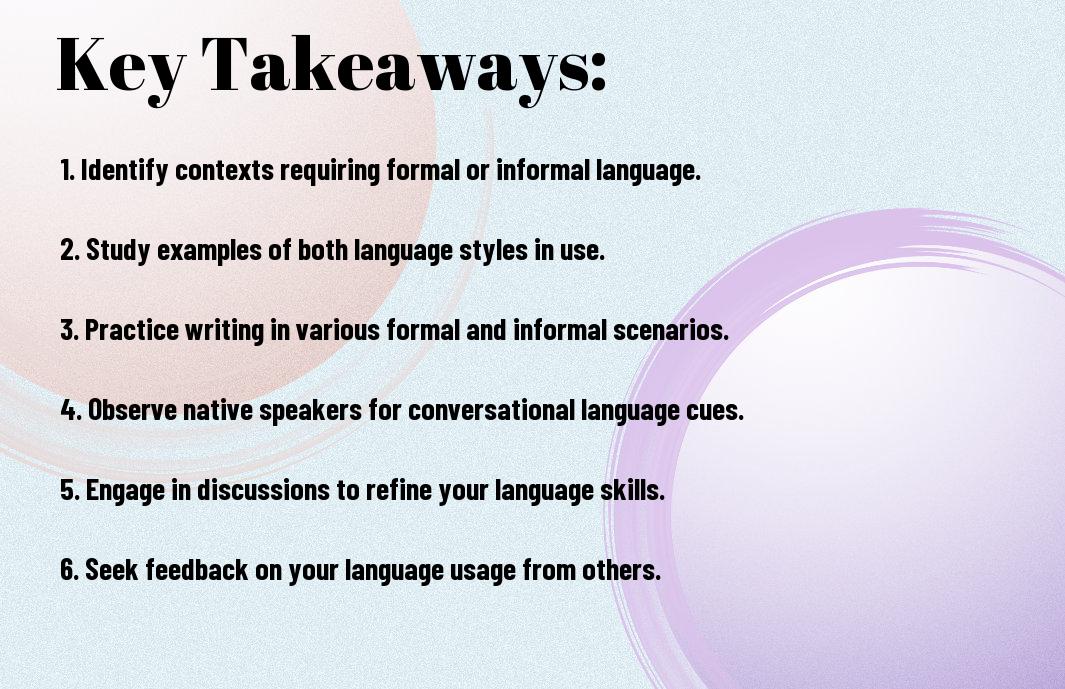
Key Takeaways:

To develop effective communication skills, it’s crucial to learn both formal and informal language styles. Here are three key points to consider:

  • Understanding the context is vital in determining whether to use formal or informal language, as it helps to establish the tone and audience engagement.
  • Vocabulary and grammar play a significant role in distinguishing between formal and informal language styles, with formal language often requiring more complex structures and sophisticated words.
  • Practicing both written and spoken communication in different settings will help to improve your ability to switch between formal and informal language styles, making you a more effective and versatile communicator.

Mastering Formal Language

Your ability to express yourself in formal language is necessary for making a good impression in academic and professional settings. You will need to develop a strong command of grammar, syntax, and vocabulary to communicate effectively.

Learning Formal Vocabulary

With consistent practice, you will become familiar with words and phrases commonly used in formal language, enabling you to convey your ideas with precision and clarity. You should focus on learning words with formal connotations and practice using them in context.

Practicing Formal Writing

Any attempt to write in a formal style requires attention to detail and a commitment to using proper grammar and spelling. You should strive to write clear, concise sentences that effectively convey your message, avoiding colloquialisms and slang.

Hence, as you practice writing in a formal style, you will become more aware of your tone and language use, allowing you to adjust your writing to suit different audiences and purposes, and to convey your ideas with confidence and authority, which is vital for effective communication in formal settings.

Exploring Informal Language

Some languages have distinct formal and informal styles, and understanding these differences is vital for effective communication. You will need to learn the nuances of informal language to express yourself naturally in everyday conversations.

Familiarizing Yourself with Colloquialisms

About the time you start learning informal language, you will encounter colloquial expressions that are unique to a particular region or culture. You will find that these expressions add flavor to your language and help you connect with native speakers.

Using Informal Language in Context

The key to mastering informal language is to use it in the right context. You will need to consider your audience, the situation, and the topic of conversation to determine whether formal or informal language is more suitable.

But as you practice using informal language in different contexts, you will develop a sense of what sounds natural and what doesn’t. You will learn to use contractions, colloquial expressions, and everyday phrases to make your language more relatable and engaging, and you will become more confident in your ability to express yourself in informal settings.

Developing Language Flexibility

To become proficient in using formal and informal language styles, you need to practice and immerse yourself in different linguistic environments. This will help you develop the ability to adapt your language to various contexts and audiences.

Adapting to Different Audiences

Developing your awareness of the audience is key to effective communication. You should consider the social status, age, and background of your listeners or readers to adjust your language accordingly, using vocabulary and tone that resonate with them.

Switching Between Formal and Informal Styles

One of the most significant challenges you will face is switching between formal and informal language styles. You need to be able to adjust your tone, vocabulary, and syntax to suit the occasion, whether it’s a job interview or a casual conversation with friends.

Language flexibility is necessary when switching between formal and informal styles. You will need to assess the situation and adjust your language to convey your message effectively, taking into account the level of formality required and the audience’s expectations. As you practice, you will become more comfortable navigating these different styles, and your communication will become more effective and nuanced.

Overcoming Language Barriers

Keep in mind that mastering formal and informal language styles is vital to effective communication. You can learn more about adapting your language to different situations by visiting Formal and Informal English: Adapting Your Language to Different Situations for valuable insights.

Identifying Cultural Differences

Around the world, cultural nuances influence language use, and you must consider these variations to communicate successfully. You will find that understanding these differences helps you tailor your language style to your audience.

Building Confidence in Language Use

To build confidence, practice using formal and informal language in different contexts, and you will become more comfortable with your language skills. This practice will help you navigate various social situations with ease.

With consistent practice, you will develop a keen sense of when to use formal or informal language, allowing you to express yourself more effectively in your personal and professional life. You will become adept at adjusting your tone and language style to suit your audience, making you a more confident and articulate communicator.

Effective Communication Strategies

After developing your skills in formal and informal language, you will be able to adapt your tone and style to suit various contexts, ensuring your message is conveyed clearly and effectively.

Using Tone and Audience Awareness

On the path to mastering language styles, you will learn to recognize the significance of tone and audience awareness, enabling you to tailor your language to engage and persuade your audience.

Avoiding Ambiguity and Jargon

Across different communication channels, you will encounter various obstacles, including ambiguity and jargon, which can hinder the effectiveness of your message, and it is your task to overcome them.

Considering the potential pitfalls of ambiguous language and jargon, you should strive to use clear and concise language, avoiding technical terms or complex phrases that may confuse your audience, and instead, opt for simple and straightforward expressions that convey your intended meaning, allowing you to communicate your ideas with precision and clarity.

Applying Language Skills

Not until you practice using formal and informal language styles will you become proficient in applying them in various contexts, allowing you to communicate effectively with different audiences.

Real-Life Scenarios and Applications

Betwixt personal and professional relationships, you will encounter situations where using the appropriate language style is crucial, and being able to switch between them seamlessly will make you a more effective communicator.

Continuous Learning and Improvement

Similar to other skills, your language skills will evolve as you confront new situations, and by engaging with various materials, such as books and articles, you will refine your ability to use language styles appropriately.

In fact, as you continue to learn and improve, you will develop a keen sense of when to use formal or informal language, and your communication will become more nuanced and sophisticated, allowing you to express yourself with clarity and precision in any situation, which will serve you well in both personal and professional endeavors, and will ultimately make you a more confident and effective communicator.

Conclusion

Drawing together the lessons learned, you now have a foundation to develop your skills in formal and informal language styles. As you continue to practice, visit Examining and Using Formal and Informal Language Styles to refine your understanding. You will become adept at shifting between styles, enhancing your communication and expressing yourself effectively in various contexts, making your language skills more versatile and effective.

FAQ

Q: What is the difference between formal and informal language styles, and why is it important to learn both?

A: Formal language is used in professional, academic, or official settings, characterized by complex vocabulary, precise grammar, and a polite tone. Informal language, on the other hand, is used in casual conversations with friends, family, or social media, often featuring colloquial expressions, contractions, and a relaxed tone. Mastering both styles is crucial to effectively communicate in various contexts, convey the intended message, and build strong relationships. Understanding the nuances of formal and informal language enables individuals to adapt their communication approach to suit the audience, purpose, and setting.

Q: How can I improve my skills in using formal language, especially in writing and public speaking?

A: To enhance your formal language skills, start by reading literary works, academic journals, and professional articles, which will expose you to sophisticated vocabulary, sentence structures, and tone. Practice writing formal essays, reports, or emails, focusing on clarity, coherence, and proper grammar. For public speaking, join a debate club, take a speech course, or participate in presentations at work or school. Listen to TED talks, podcasts, or speeches by esteemed leaders to observe how they use rhetorical devices, body language, and tone to convey their message. Recording yourself and seeking feedback from others can also help you refine your formal communication style.

Q: Are there any tips for distinguishing between formal and informal language in everyday conversations, and how can I switch between the two seamlessly?

A: To differentiate between formal and informal language in conversations, pay attention to the context, audience, and purpose. In formal situations, use titles (e.g., Mr./Ms./Dr.), last names, and avoid slang, jargon, or profanity. In informal settings, use first names, colloquial expressions, and a more relaxed tone. To switch between the two styles, be mindful of your language usage and adjust your tone, vocabulary, and body language accordingly. Practice code-switching by engaging in conversations with people from diverse backgrounds, ages, or professions, which will help you develop the ability to navigate different language styles with ease and confidence. Additionally, being an active listener and observing the communication style of others can also aid in making a smooth transition between formal and informal language.

The Best Languages to Learn for Global Travelers

As you plan your next international trip, you may wonder which languages will help you navigate foreign countries with ease. Your language skills can greatly impact your travel experience, enabling you to connect with locals and appreciate cultural nuances. You will find that learning the right languages can unlock new destinations and experiences, making your travels more enjoyable and immersive.

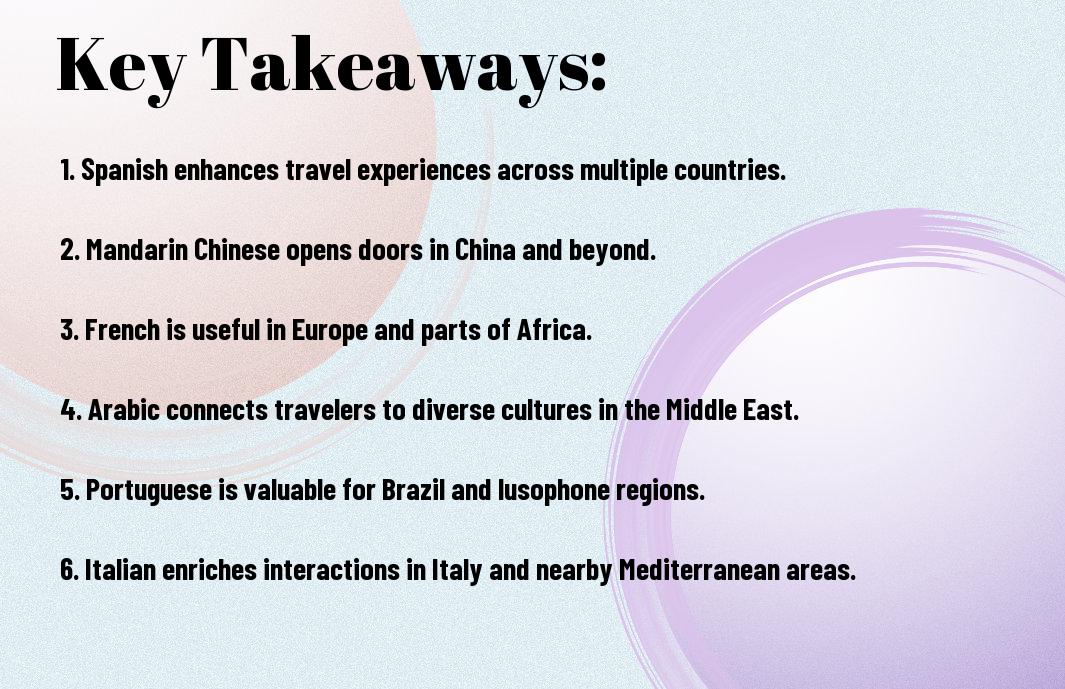
Key Takeaways:

To thrive as a global traveler, it’s important to understand the most effective languages to learn. Here are three key points to consider:

  • Learning Spanish can significantly enhance travel experiences in Central and South America, as well as Europe, due to its widespread use and cultural significance.
  • Understanding Mandarin Chinese can provide global travelers with a competitive edge, particularly in Asia, where it is the most widely spoken language and a key component of international business.
  • Becoming proficient in Arabic can open doors to Middle Eastern and North African cultures, offering travelers unparalleled opportunities to engage with local communities and appreciate the region’s rich heritage.

    Essential Languages for Globetrotters

    Your travel experiences can be greatly enhanced by learning the local languages of the countries you visit, allowing you to connect with the culture and people on a deeper level.

    Spanish for South America and Europe

    Around 460 million people speak Spanish, making it a valuable language to learn for travel to South America and Europe, enabling you to communicate effectively and navigate your way through these regions with ease.

    Arabic for the Middle East and North Africa

    African and Asian countries have a significant number of Arabic speakers, and learning this language will open doors to rich cultural experiences and history in the Middle East and North Africa, allowing you to engage with the local population.

    Languages like Arabic can be challenging to learn, but the benefits of speaking it will make your travels to the Middle East and North Africa much more enjoyable, as you’ll be able to appreciate the local customs, read signs and menus, and interact with the friendly locals who will appreciate your effort to communicate in their language.

    Languages for the Asian Trail

    Clearly, Asia offers a diverse array of languages to learn, each with its own unique benefits for travelers. You can navigate multiple countries with knowledge of a single language, making your journey more enjoyable and immersive.

    Mandarin Chinese for China and Taiwan

    Between the lines of cultural and linguistic heritage, you’ll find Mandarin Chinese to be an invaluable asset for your travels in China and Taiwan, enabling you to connect with locals and explore hidden gems.

    Japanese for Japan and East Asia

    Comparable to Chinese in terms of its complexity and beauty, Japanese is a highly sought-after language for travelers visiting Japan and other parts of East Asia, where you can discover vibrant cities and traditional landscapes.

    Asian cultures are notoriously polite and respectful, and as you examine into the world of Japanese language, you’ll find that learning key phrases and vocabulary will enhance your travel experience, allowing you to engage with your surroundings and the people you meet, making your journey even more unforgettable and personally fulfilling for you.

    European Languages for the mains

    Unlike other continents, Europe offers a diverse array of languages, making it crucial to choose the right one for your travels. You’ll find that speaking the local language can enhance your experience and allow you to connect with the culture on a deeper level.

    French for Western Europe

    Beneath the surface of Western Europe lies a rich cultural heritage, and learning French will give you access to this world. You’ll be able to navigate France, Belgium, and Switzerland with ease, and your language skills will be appreciated by the locals.

    German for Central and Eastern Europe

    Among the languages spoken in Central and Eastern Europe, German stands out as a valuable asset for travelers. You’ll find that speaking German will open doors to Austria, Germany, and parts of Switzerland, allowing you to explore these regions with confidence.

    Considering your travel plans, learning German will also give you a deeper understanding of the history and culture of Central and Eastern Europe. You’ll be able to engage with the locals, try authentic cuisine, and visit popular attractions without language barriers, making your travel experience even more enjoyable and rewarding.

    Language Learning Tips for Travelers

    Many travelers find language learning to be a challenging task. Here are some tips:

    • Set achievable goals
    • Practice consistently

    . Knowing your learning style will help you choose the most effective method.

    Immersion and Language Schools

    Towards improving your language skills, consider enrolling in a language school or immersing yourself in the local culture, which will help you learn faster and more effectively.

    Online Resources and Language Apps

    Between language learning apps and online courses, you have a wide range of options to choose from, allowing you to learn at your own pace and convenience.

    Even with the numerous online resources available, you can still find the most suitable one for your needs by trying out a few and selecting the one that best fits your learning style and goals, helping you to stay motivated and engaged throughout your language learning journey.

    Cultural Insights and Language Nuances

    After immersing yourself in a new language, you’ll discover the nuances that shape your interactions with locals, revealing a richer travel experience as you navigate unfamiliar territories.

    Non-Verbal Communication and Customs

    Around every corner, you’ll encounter unique non-verbal cues and customs that can significantly impact your interactions, and being aware of these differences will help you communicate more effectively and avoid unintentionally offending locals.

    Local Dialects and Slang

    Similarly to customs, local dialects and slang can vary greatly, and understanding these variations will enhance your travel experience, allowing you to connect with locals on a deeper level and appreciate the diversity of the language you’re learning.

    But as you research deeper into local dialects and slang, you’ll find that they often convey subtle shades of meaning and context that can completely change the tone of a conversation, and being able to pick up on these nuances will make you a more confident and engaging traveler, capable of navigating even the most unfamiliar situations with ease and poise, and you’ll be better equipped to express yourself and understand the culture in a more authentic way.

    Language Challenges and Rewards

    Despite the difficulties, learning a new language can be rewarding. You can discover the 14 Best Languages to Learn for Travel and enhance your travel experiences.

    Overcoming Language Barriers

    Besides the initial struggles, you will find that learning a language helps you navigate foreign countries with ease, allowing you to engage with locals and immerse yourself in their culture.

    Enhancing Travel Experiences through Language

    Linguistically, you will be able to appreciate the nuances of foreign cultures, from reading signs and menus to understanding the history and customs of the places you visit.

    Barriers to communication will fade away as you learn to speak and understand the local language, enabling you to have a more authentic and enjoyable travel experience, and you will be able to make the most of your time abroad, exploring new destinations and forming meaningful connections with the people you meet along the way.

    Final Words

    Hence, as you initiate on your global travels, you’ll find that learning the best languages will enhance your experience. You can discover the Most Useful Languages for World Travel to better navigate foreign lands. Your language skills will bridge cultural gaps, allowing you to fully immerse yourself in your destinations and create lasting connections with the people you meet.

    FAQ

    Q: What are the most widely spoken languages that I should consider learning for global travel?

    A: As a global traveler, learning languages such as English, Mandarin Chinese, Spanish, Arabic, and French can significantly enhance your travel experiences. English is widely spoken in many countries and is often the language of international communication. Mandarin Chinese is the most spoken language in the world, with a large number of native speakers, while Spanish and Arabic are official languages in many countries across the globe. French is also widely spoken, particularly in Europe and parts of Africa. Learning any of these languages will facilitate communication and deepen your cultural connections during your travels.

    Q: How can learning a foreign language impact my travel experiences and interactions with local cultures?

    A: Learning a foreign language can profoundly impact your travel experiences by allowing you to engage more deeply with local cultures. When you speak the local language, you can navigate more easily, read signs and menus, and communicate with locals, which can lead to more authentic interactions and a richer cultural understanding. It also shows respect for the culture and people you are visiting, often leading to warmer welcomes and more meaningful connections. Furthermore, language skills can open up opportunities for unique experiences, such as homestays, local volunteer work, or participation in cultural events, which might not be accessible otherwise.

    Q: Are there any language learning resources or tips that can help me learn a language quickly and effectively for my travels?

    A: Yes, there are numerous resources and tips that can help you learn a language quickly and effectively for travel. Utilizing language learning apps like Duolingo, Rosetta Stone, or Babbel can provide structured lessons and interactive exercises. Immersion is also a powerful tool; watch local movies, listen to music, and try to find a language exchange partner. Focus on learning key phrases and vocabulary related to travel, such as directions, food, and basic greetings. Additionally, consider enrolling in a language course or hiring a tutor for personalized feedback. Lastly, practice consistently, even if it’s just for a few minutes each day, to build your language skills and confidence before your trip.

How to Learn a Language Through Interactive Apps

As you consider learning a new language, you’ll find that your options are vast. You can choose from various methods, but one effective approach is to use interactive apps. You’ll discover that these apps offer a range of tools and features to help you learn at your own pace. With your device always within reach, you’ll have the opportunity to practice your language skills whenever you want, making progress towards your goal of becoming proficient in a new language.

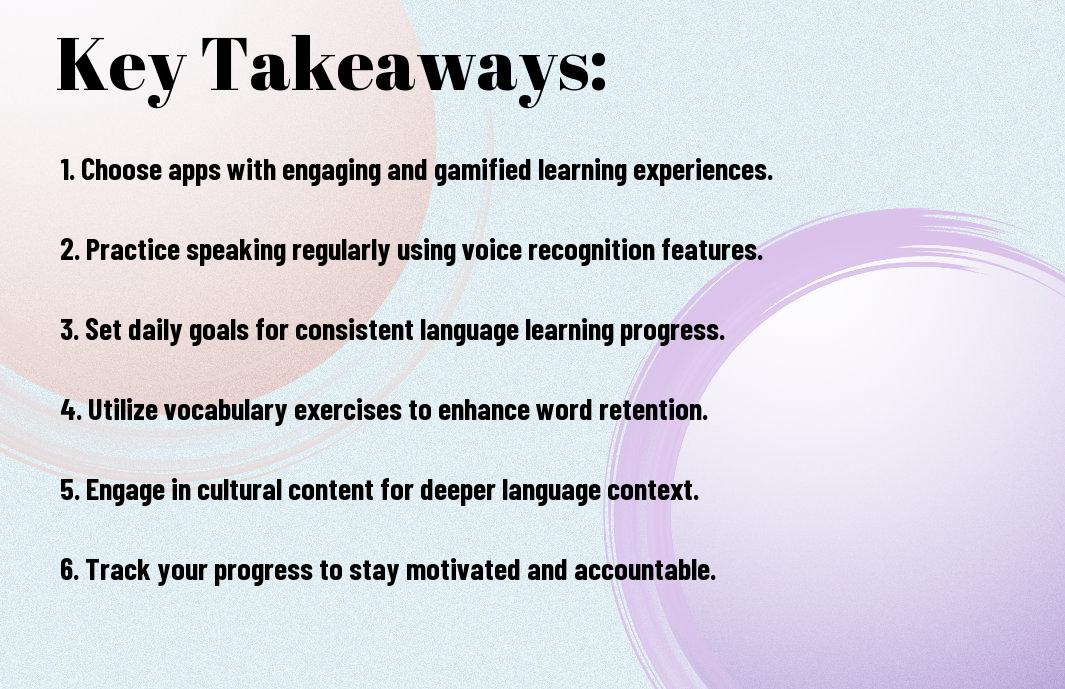
Key Takeaways:

To learn a language effectively through interactive apps, consider the following points:

  • Focus on Immersion by using apps that offer interactive lessons, quizzes, and games to simulate real-life conversations and scenarios, helping you to become familiar with the language in a more engaging way.
  • Look for apps that provide Personalized learning experiences, tailoring the content to your learning style, level, and goals, ensuring that you stay motivated and progress at your own pace.
  • Utilize apps that offer Spaced Repetition techniques, which help you review and practice vocabulary and grammar at optimal intervals, reinforcing your learning and improving long-term retention of the language.

Choosing the Right App

To begin your language learning journey, you need to select an app that suits your needs. With numerous options available, it’s vital to consider your goals and preferences when making a decision.

Evaluating Language Learning Goals

Around your objectives, you should consider what you want to achieve through language learning. Are you looking to improve your speaking skills or focus on reading and writing? Your goals will help you narrow down the options and choose an app that aligns with your needs.

Exploring App Features and Reviews

On the app stores, you can find a wide range of language learning apps, each with its unique features and strengths. You should browse through the descriptions, look at the screenshots, and read the reviews from other users to get an idea of what each app offers.

Further exploration of app features and reviews will help you make an informed decision. You can check if the app offers interactive lessons, speech recognition technology, and opportunities to practice with native speakers. By doing so, you can find the app that best fits your learning style and helps you achieve your language learning goals.

Setting Up Your Learning Environment

Some preliminary steps are necessary to create an effective language learning environment. You can start by browsing online forums such as Best app to learn languages? (from your personal experience) to find the most suitable app for your needs.

Creating a Dedicated Learning Space

Establishing a quiet and comfortable area for learning will help you stay focused. You should consider designating a specific spot for your language learning activities, free from distractions and interruptions.

Setting Achievable Daily Goals

Aiming to dedicate a certain amount of time each day to language learning will help you make steady progress. You can start by setting realistic targets, such as 15-30 minutes of practice per day, and adjust as needed.

With achievable daily goals in place, you will be able to track your progress and stay motivated. You can break down your goals into smaller tasks, such as completing a certain number of lessons or practicing a specific skill, and adjust your schedule accordingly to ensure consistent progress in your language learning journey.

Interactive Lessons and Exercises

For effective language learning, interactive apps offer a range of lessons and exercises tailored to your needs. You can access various topics, from grammar and vocabulary to pronunciation and comprehension, all in one place.

Engaging with Audio and Visual Content

Encountering multimedia content, such as videos, images, and audio recordings, helps you immerse yourself in the language and get a feel for how it’s used in context, making your learning experience more enjoyable and interactive.

Practicing Speaking and Writing Skills

Audibly, you will be able to improve your speaking skills by interacting with the app’s speech recognition technology, which provides instant feedback on your pronunciation and intonation, allowing you to refine your speaking skills.

With regular practice, you will see significant improvement in your ability to express yourself in writing and speaking, as the app provides you with a safe space to make mistakes and learn from them, helping you to build confidence in your language skills and gradually increase your proficiency level.

Tracking Progress and Staying Motivated

Now that you’ve started using interactive apps to learn a language, it’s vital to monitor your progress and stay motivated to achieve your goals.

Using App-Based Quizzes and Tests

About the time you begin to feel confident in your language skills, app-based quizzes and tests can help you assess your knowledge and identify areas for improvement.

Joining Language Learning Communities

Beneath the surface of language learning apps, you’ll find opportunities to connect with fellow learners, which can be a great motivator to keep you engaged.

Understanding the value of community support, you can leverage these platforms to practice your language skills with native speakers, get feedback on your progress, and learn from others who share your interests, helping you to stay motivated and inspired throughout your language learning journey, and you will be able to track your progress more effectively.

Overcoming Common Challenges

All language learners face obstacles, but with the right approach, you can overcome them. You will encounter difficulties, and it’s important to stay motivated and patient.

Dealing with Grammar and Vocabulary Struggles

With persistence, you can tackle grammar and vocabulary challenges. You will find that consistent practice helps to build your skills, and your understanding of the language will improve over time.

Finding Language Exchange Partners

Partners in language learning can be invaluable, providing you with opportunities to practice your speaking and listening skills. You can search for language exchange partners online or through social media groups.

Dealing with the challenge of finding language exchange partners can be straightforward. You can join online communities, such as language learning forums or social media groups, where you can connect with native speakers or other learners. This will help you to find someone to practice with, and you can support each other in your language learning journey.

Maximizing App Effectiveness

Unlike traditional learning methods, interactive language apps offer a unique opportunity to track your progress and identify areas for improvement, allowing you to adjust your learning strategy and maximize your time.

Supplementing with Other Language Learning Resources

On top of using language learning apps, you can supplement your learning with other resources such as language exchange websites, podcasts, and books to create a well-rounded learning experience and improve your skills faster.

Staying Consistent and Patient

Before you start using language learning apps, you should set realistic goals and expectations, as learning a language takes time and effort, and it’s necessary to stay motivated and consistent in your practice to achieve your goals.

Due to the nature of language learning, you will encounter setbacks and challenges, but by staying patient and persistent, you can overcome them and continue to make progress, and your hard work will pay off in the long run, as you become more proficient in your target language and start to see improvement in your speaking, writing, and listening skills.

Conclusion

The key to learning a language through interactive apps lies in your ability to consistently practice and engage with the material. You can effectively supplement your learning by using these apps to practice speaking, writing, and listening skills. As you progress, you will find that your proficiency in the language improves, and you become more confident in your ability to communicate effectively.

FAQ

Q: What are the benefits of learning a language through interactive apps?

A: Learning a language through interactive apps offers several benefits, including flexibility, accessibility, and personalized learning. Interactive apps allow users to learn at their own pace, anytime and anywhere, making it an ideal option for those with busy schedules. Additionally, many apps offer interactive features such as quizzes, games, and conversations with native speakers, which can make the learning process more engaging and effective. Overall, interactive language learning apps can help users stay motivated, track progress, and achieve their language learning goals.

Q: How do I choose the right interactive language learning app for my needs?

A: Choosing the right interactive language learning app depends on several factors, including your language level, learning style, and goals. It’s important to consider the type of content offered, such as grammar lessons, vocabulary building, and pronunciation practice. You should also look for apps that offer interactive features, such as speech recognition, chatbots, and social sharing, which can enhance the learning experience. Furthermore, reading reviews, trying out free trials, and comparing features can help you make an informed decision and find the app that best suits your needs and learning preferences.

Q: Can I become fluent in a language by using interactive language learning apps alone?

A: While interactive language learning apps can be an effective tool for learning a language, they should be used in conjunction with other language learning methods to achieve fluency. Apps can provide a solid foundation in grammar, vocabulary, and pronunciation, but they may not offer the same level of immersion and practice as speaking with native speakers, watching TV shows or movies, or reading books in the target language. To become fluent, it’s important to supplement app-based learning with consistent practice, such as language exchange programs, tutoring, or language meetups, which can help improve speaking, listening, and writing skills in a more comprehensive way.

The Role of AI in Revolutionizing Language Learning

As you commence on learning a new language, you’re likely to encounter a myriad of innovative tools and techniques. You’ll discover that artificial intelligence (AI) is transforming the way you acquire and practice languages. Your language learning journey is about to become more engaging and effective, thanks to AI-powered platforms that offer personalized lessons, real-time feedback, and immersive experiences. You’re on the cusp of a revolution that will change the face of language learning forever, and this article will guide you through the exciting possibilities that AI has in store for you.

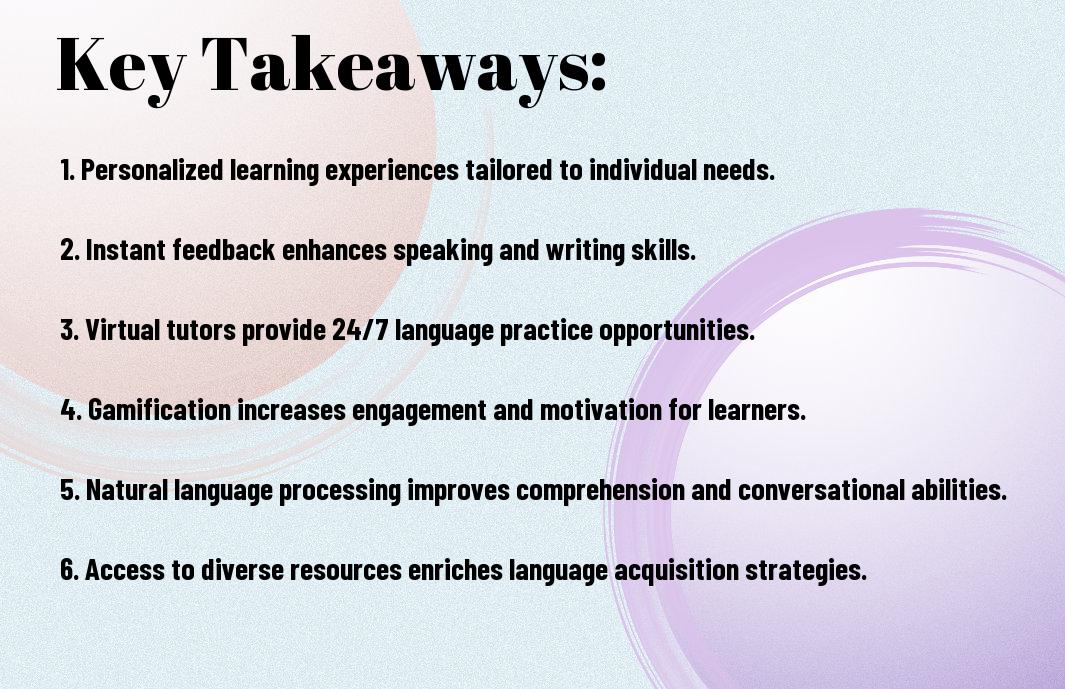
Key Takeaways:

To understand the impact of artificial intelligence on language learning, consider the following points:

  • The integration of Artificial Intelligence (AI) in language learning platforms is enhancing the personalization of lessons, allowing learners to engage in more tailored and interactive experiences.
  • AI-powered chatbots are being used to simulate conversations, helping learners to improve their pronunciation and fluency in a more immersive environment.
  • The use of Machine Learning algorithms enables language learning systems to analyze learner behavior, providing real-time feedback and adaptive assessments that adjust the difficulty level of lessons according to individual learner’s progress and needs.

The Current State of Language Learning

Before plunging into the role of AI in language learning, it’s important to understand where you stand today. You likely have experience with traditional language learning methods, which have been the norm for decades.

Traditional Methods

Methods such as classroom instruction and language learning software have been your primary options. You’ve probably used textbooks, language exchange programs, and online resources to learn a new language.

Limitations of Human Instruction

Behind the scenes of traditional language learning lies a significant challenge: the limitations of human instruction. You may have experienced these limitations firsthand, from inconsistent teaching quality to lack of personalized feedback.

It is worth noting that human instruction has several drawbacks, including high costs, limited scalability, and the potential for biased teaching methods. As you consider your own language learning journey, you may have encountered these limitations, which can hinder your progress and hinder your ability to achieve fluency in a new language. You may have found that your learning style and pace are not adequately accommodated, leading to frustration and disappointment.

The Emergence of AI in Language Learning

Clearly, the integration of Artificial Intelligence (AI) in language learning has been a significant development in recent years, transforming the way you approach language acquisition. You can now leverage AI-powered tools to enhance your learning experience, making it more engaging and effective.

Basic Concepts and Principles

Linguistically, you’ll find that AI-based language learning systems rely on complex algorithms and natural language processing techniques to facilitate interaction and comprehension. You can explore these concepts to better understand how AI enhances your language learning journey.

Early Applications and Successes

Around the turn of the century, you may have noticed the emergence of AI-driven language learning platforms, which paved the way for more sophisticated tools and applications. You can see how these early successes laid the groundwork for the advanced language learning systems you use today.

Even as you consider the current state of AI in language learning, you’ll notice that those early applications and successes have had a lasting impact on the field. You can appreciate how they enabled the development of more advanced tools, such as chatbots and virtual assistants, which now play a significant role in enhancing your language learning experience. You’ll find that these tools provide personalized feedback, real-time corrections, and interactive exercises, making your language learning journey more enjoyable and effective.

AI-Powered Language Learning Tools

Keep in mind that AI-powered language learning tools are revolutionizing the way you learn languages. These tools use algorithms to analyze your progress, identify areas of improvement, and provide personalized feedback.

Chatbots and Virtual Assistants

Alongside traditional teaching methods, AI-powered chatbots and virtual assistants are being used to simulate conversations, helping you practice your speaking skills and build confidence in your language abilities.

Adaptive Learning Software

Besides chatbots, adaptive learning software is another AI-powered tool that adjusts to your learning pace and style, providing you with tailored lessons and exercises to help you achieve your language goals.

The adaptive learning software utilizes machine learning algorithms to assess your strengths and weaknesses, and then creates a customized learning plan that focuses on areas where you need improvement, allowing you to learn more efficiently and effectively, and helping you to track your progress over time, as you make your way towards becoming proficient in your target language.

Benefits of AI-Driven Language Learning

For language learners, AI-driven language learning offers numerous advantages, making the process more efficient and effective, allowing you to achieve your goals faster.

Personalized Instruction

Instruction tailored to your needs and abilities enables you to focus on areas where you need improvement, ensuring that your learning experience is optimized for maximum progress and retention.

Enhanced Engagement and Motivation

Before exploring into the world of language learning, you may have wondered how to stay motivated, but with AI-driven tools, you can engage in interactive and immersive experiences that make learning fun and exciting.

Motivation is what drives you to continue learning, and AI-powered language learning platforms provide you with a sense of accomplishment and feedback, encouraging you to push beyond your limits and explore the possibilities of language learning, as you discover new words, phrases, and expressions that broaden your understanding of the language and culture.

Overcoming Language Barriers with AI

Despite the complexities of language, AI has made significant strides in breaking down barriers. You can now communicate with people from diverse linguistic backgrounds, facilitating global interactions and collaborations.

Real-Time Translation

Fortunately, AI-powered translation tools enable you to converse in real-time, bridging the gap between languages and fostering meaningful exchanges. You can engage with others effortlessly, regardless of your native tongue.

Cultural and Contextual Insights

Above all, AI provides you with a deeper understanding of cultural nuances and contextual references, allowing you to navigate complex social situations with ease. You gain valuable insights into the subtleties of language, enabling more effective communication.

Consequently, as you examine deeper into the world of language learning with AI, you will discover that cultural and contextual insights are crucial to truly mastering a language. You will be able to grasp the intricacies of idioms, colloquialisms, and figurative language, enabling you to express yourself more accurately and connect with others on a deeper level, ultimately enhancing your overall language learning experience.

Future Directions and Challenges

After exploring the current state of AI in language learning, you may wonder what the future holds. You will see significant advancements in AI-powered language learning tools, enabling more personalized and effective learning experiences.

Integrating AI with Human Teachers

About to revolutionize the education sector, AI will augment the role of human teachers, allowing them to focus on providing guidance and support while AI handles more administrative tasks, freeing up your time to concentrate on what matters most.

Addressing Ethical and Access Concerns

Humane considerations will play a significant role in the development of AI-powered language learning tools, as you will need to ensure that these tools are accessible and beneficial to all users, regardless of their background or socio-economic status.

Ethical concerns, such as bias in AI algorithms and data privacy, will be at the forefront of your mind as you navigate the development and implementation of AI-powered language learning tools, and you will need to consider the potential consequences of your actions on your users, taking a thoughtful and informed approach to mitigate any negative effects and ensure that your tools are used for the betterment of society.

To wrap up

With these considerations, you now have a deeper understanding of the significant impact of AI on language learning. As you continue to explore this topic, you can learn more about How artificial intelligence is revolutionizing language learning and its potential to enhance your learning experience. You will likely find that AI-driven tools can tailor language instruction to your needs, making your learning journey more efficient and effective.

FAQ

Q: How is AI transforming the language learning process?

A: AI is revolutionizing language learning by providing personalized learning experiences, automating grading and feedback, and offering real-time language practice opportunities. With AI-powered language learning tools, learners can engage in interactive conversations, receive instant corrections, and access a vast library of learning materials tailored to their individual needs and proficiency levels. This enables more efficient and effective language acquisition, making it possible for learners to achieve fluency faster.

Q: What are the benefits of using AI-powered chatbots in language learning?

A: AI-powered chatbots are increasingly being used in language learning to provide learners with a unique opportunity to practice their speaking and writing skills in a simulated conversation environment. The benefits of using AI-powered chatbots include improved pronunciation, enhanced vocabulary, and increased confidence in using the language. Additionally, chatbots can offer around-the-clock support, allowing learners to practice at their own pace and convenience, and receive immediate feedback on their performance.

Q: How can AI help language learners overcome common challenges such as pronunciation and grammar?

A: AI can help language learners overcome common challenges such as pronunciation and grammar by providing advanced speech recognition technology and intelligent tutoring systems. These tools can detect and correct pronunciation errors, offering personalized feedback and suggestions for improvement. Furthermore, AI-powered grammar correction tools can analyze learners’ writing and provide instant feedback on grammatical accuracy, syntax, and sentence structure, enabling learners to develop a stronger foundation in the language and improve their overall communication skills.

Skip to content