simon weiner

How to Make the Most of Language Study Time

You want to learn a new language, but your schedule is tight. You need to make the most of your study time. To do this, you must prioritize your goals and focus on what works best for you. Check out tips on Making Time for Language Study | How I Find Time to Learn and create your own effective study routine, maximizing your progress in minimal time.

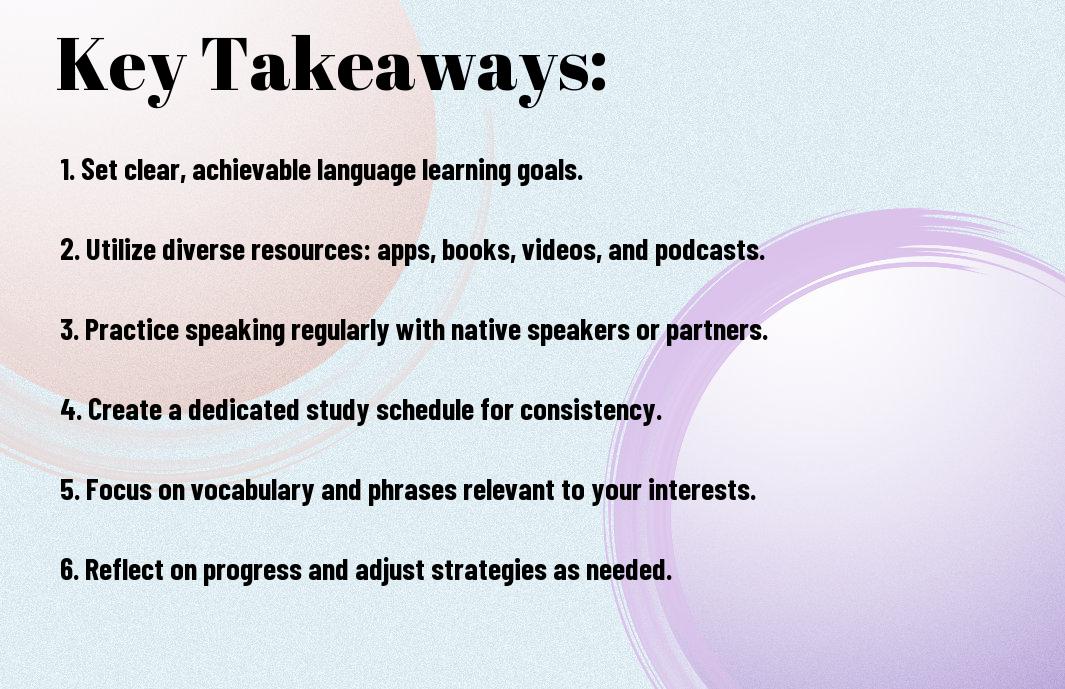
Key Takeaways:

To maximize your language learning efficiency, consider the following points:

  • Set specific goals for your study sessions to help you stay focused and motivated, ensuring you make the most of your time.
  • Use active learning techniques, such as speaking and writing, to engage with the language and reinforce your understanding of new concepts.
  • Practice consistent review to solidify your knowledge and prevent forgetting, helping you to build a strong foundation in the language over time.

Setting Goals

Your language study time is limited, so you need to make the most of it. Setting clear goals helps you focus on what you want to achieve.

Defining Objectives

Besides identifying your motivation, you need to define what you want to accomplish. You set specific objectives, like improving grammar or vocabulary.

Creating a Schedule

At the outset, you plan out your study time. You allocate specific times for learning and practicing your language skills.

In fact, creating a schedule helps you prioritize your tasks and manage your time effectively. You can break down your study time into smaller chunks, focusing on different skills like reading, writing, or speaking, and make adjustments as needed to stay on track and achieve your goals.

Choosing Materials

The key to making the most of your language study time is selecting the right materials. You can find many resources online, such as learning a new language efficiently, to help you get started.

Textbooks and Workbooks

For beginners, textbooks and workbooks are a good place to start, providing a structured approach to learning a new language.

Online Resources and Apps

Above all, online resources and apps offer a wide range of learning tools, from language learning platforms to podcasts and videos.

This abundance of online resources allows you to personalize your learning experience, focusing on your weaknesses and interests, and catering to your learning style, making your language study time more effective and enjoyable, as you progress at your own pace, with your preferred tools, and you can track your progress, adjusting your strategy as needed.

Practicing Consistency

All language learners aim to make progress, and you are no exception. You need to stay on track, setting achievable goals and sticking to your schedule. This will help you build habits and make the most of your study time.

Daily Routine

Once you’ve set your goals, you can start creating a daily routine that works for you. You’ll need to allocate a specific time for language study, and try to minimize distractions during that time. Your daily routine should be realistic and flexible, allowing you to make adjustments as needed.

Review and Revision

Around the time you’ve completed a study session, you should take a few minutes to review what you’ve learned. You’ll find that going over the material helps solidify it in your mind, making it easier to recall later. Your review sessions should be regular, and focused on reinforcing your understanding of the language.

Further, as you continue with your review and revision, you’ll start to notice areas where you need more practice. You can use this information to adjust your study plan, focusing on the topics that are giving you trouble. By doing so, you’ll be able to make the most of your study time, and see steady progress in your language skills. You’ll find that your hard work pays off, and you become more confident in your ability to communicate in the language.

Enhancing Comprehension

Keep your study time focused on understanding the language. You’ll gain more from your efforts by concentrating on comprehension than by just memorizing rules.

Active Listening

Often,you find yourself trying to make sense of what you hear. Tune in to podcasts, audiobooks, or conversations to improve your listening skills.

Engaging in Conversation

Between conversations with native speakers and language exchange partners, you’ll find opportunities to practice speaking and improve your comprehension.

Listening to others speak, you start to pick up on nuances of the language, such as idioms and expressions. You can then use these in your own conversations, helping you to sound more natural and fluent in the language you’re studying.

Overcoming Obstacles

To make the most of your language study time, you need to be prepared to face challenges. You’ll encounter setbacks, but with the right mindset, you can overcome them and stay on track.

Managing Motivation

After setting your goals, you’ll need to find ways to stay motivated. You can do this by rewarding yourself for milestones achieved and tracking your progress to see how far you’ve come.

Dealing with Difficulties

For every language learner, difficulties are inevitable. You’ll struggle with grammar, vocabulary, and pronunciation, but don’t let that discourage you. Break down the challenges into smaller, manageable parts, and focus on one thing at a time.

Also, when dealing with difficulties, you’ll need to develop a growth mindset. You’ll need to be patient with yourself and acknowledge that making mistakes is a natural part of the learning process. By doing so, you’ll be able to learn from your mistakes and move forward, improving your language skills with each passing day.

Tracking Progress

After dedicating time to language study, you need to monitor your progress. You track your advancements, identify areas for improvement, and adjust your strategy accordingly.

Keeping a Journal

By documenting your daily language study, you reflect on your journey and pinpoint what works best for you. Your journal becomes a valuable tool to evaluate your progress.

Setting Milestones

Among the most effective ways to track progress is setting specific goals. You define achievable milestones, focusing on what you want to accomplish in your language study.

This approach helps you stay motivated and directed. You break down your long-term goals into manageable tasks, celebrating each milestone achieved, and use this momentum to propel your language study forward, making steady progress towards fluency.

Conclusion

Drawing together the strategies outlined, you can maximize your language study time. You prioritize your goals, focus on consistent practice, and utilize effective resources. By doing so, you make the most of your time and accelerate your progress. Your dedication and persistence will yield tangible results, and you will become proficient in the language. You will be able to communicate effectively and achieve your objectives.

FAQ

Q: What is the best way to prioritize tasks when studying a language to make the most of my study time?

A: To maximize your language study time, it’s necessary to set clear goals and prioritize tasks based on your learning objectives. Start by identifying your weaknesses and areas that need improvement, then allocate your time accordingly. For instance, if you struggle with grammar, devote more time to grammar exercises and practice. Utilize a planner or app to schedule your study sessions, ensuring a balanced approach that includes reading, writing, listening, and speaking practice. This structured approach will help you stay focused and make the most out of your study time.

Q: How can I effectively use language learning apps and online resources to supplement my study routine?

A: Integrating language learning apps and online resources into your study routine can significantly enhance your learning experience. Begin by selecting apps that align with your learning goals, such as those focusing on vocabulary building, grammar practice, or conversational skills. Utilize these tools to fill gaps in your schedule, such as during commutes or breaks, to practice consistently. Many apps offer interactive exercises, quizzes, and games that make learning engaging and fun. Additionally, online resources like language exchange websites, podcasts, and YouTube channels can provide diverse learning materials and opportunities to engage with native speakers, further enriching your study time.

Q: What strategies can I employ to stay motivated and maintain consistency in my language study routine?

A: Staying motivated and consistent is key to making the most of your language study time. One effective strategy is to find a language learning buddy or join a study group, where you can practice speaking, share tips, and learn from each other’s experiences. Setting achievable milestones and rewarding yourself upon reaching them can also boost motivation. Immersing yourself in the language by watching TV shows or movies, listening to music, and trying to think in the language can make the learning process enjoyable and engaging. Furthermore, tracking your progress through journals or language learning logs can help you visualize your improvements, reinforcing your commitment to regular study and encouraging you to push forward.

The Importance of Immersion for Language Retention

As you pursue language learning, you’ll discover that immersion is key to retaining your new skills. Your ability to hold conversations and understand native speakers depends on it. To better understand the benefits, consider What the Research Says About Immersion – Tara Williams Fortune’s findings, which highlight the positive impact of Surrounding yourself with the language on your retention and proficiency. You’ll see significant improvements in your language abilities when you prioritize immersion.

Key Takeaways:

To maximize language learning effectiveness, consider the following points about immersion and its impact on retention:

  • Surrounding yourself with the language you’re trying to learn can significantly enhance vocabulary retention and improve pronunciation skills, as it provides a more engaging and interactive learning environment.
  • Consistent exposure to the target language through media, such as TV shows, movies, and music, can help solidify language patterns and promote long-term retention.
  • Practical application of language skills in real-life situations is key to effective learning, as it allows learners to contextualize their knowledge and develop a deeper understanding of cultural nuances and idiomatic expressions.

The Role of Immersion in Language Learning

To learn a language effectively, you need to surround yourself with it. Immersion plays a significant role in language learning, as it helps you become familiar with the language in context. You will pick up nuances and expressions that you might not learn in a classroom setting.

Language Surroundings and Retention

By placing yourself in an environment where the language is spoken, you increase your chances of retaining the language. Your brain absorbs the language naturally, making it easier to understand and use it in everyday conversations.

The Brain’s Response to Immersed Environments

Environments that surround you with a language stimulate your brain to adapt and learn. You start to think in the language, making connections between words and concepts more efficiently. Your ability to understand and communicate in the language improves significantly.

Indeed, as you immerse yourself in a language, you will notice changes in the way your brain processes information. You will start to recognize patterns and associations that are unique to the language, and your proficiency will increase rapidly. You will be able to express yourself more confidently and accurately, and your comprehension will improve, allowing you to engage with native speakers more effectively.

Effective Methods for Immersion

Some of the most effective methods for immersion include surrounding yourself with the language you want to learn, using media and interacting with native speakers. You can start by making small changes to your daily routine, such as listening to music or watching TV shows in the target language.

Foreign Language Media Consumption

Consuming media in the target language is an excellent way to improve your listening and comprehension skills. You can watch TV shows or movies with subtitles, listen to podcasts or radio shows, and even read books or articles in the target language to help you stay immersed.

Cultural Exchange Programs and Travel

Travelling to a country where the language is spoken or participating in cultural exchange programs can be a great way to immerse yourself in the language. You will have the opportunity to interact with native speakers, learn about the culture and customs, and practice your language skills in real-life situations.

To take full advantage of cultural exchange programs and travel, you should try to engage with the local community as much as possible. You can stay with a host family, participate in local events, and try to avoid speaking your native language as much as possible. By doing so, you will be able to pick up nuances of the language and develop a more authentic accent, helping you to improve your language retention and become a more confident speaker.

Overcoming Language Barriers through Immersion

Many language learners struggle to overcome language barriers, but immersion can help. By surrounding yourself with the language, you can improve your skills and gain confidence in your ability to communicate effectively.

Building Confidence in Speaking and Listening

On the path to language proficiency, you’ll find that immersion helps you build confidence in speaking and listening. As you engage with native speakers, you’ll become more comfortable with the sounds, rhythms, and nuances of the language.

Enhancing Vocabulary and Grammar

Through consistent exposure to the language, you’ll enhance your vocabulary and grammar skills. You’ll learn to use context clues to understand unfamiliar words and phrases, and develop a sense of how to use grammar correctly in different situations.

At this stage, you’ll notice significant improvement in your ability to express yourself in the language. Your vocabulary will expand, and you’ll be able to use grammar rules to construct more complex sentences, allowing you to convey your thoughts and ideas more effectively. As you continue to immerse yourself in the language, you’ll find that your skills will continue to improve, and you’ll become a more proficient and confident language user.

The Impact of Technology on Immersive Learning

Your ability to learn a language can be significantly enhanced by technology, which provides numerous tools and resources to support immersive learning, helping you to stay engaged and motivated throughout the process.

Language Learning Apps and Software

Leveraging language learning apps and software can be an effective way to access interactive lessons, exercises, and quizzes, allowing you to practice your language skills in a flexible and convenient manner, anytime and anywhere.

Online Communities and Forums

Influencing your language learning journey, online communities and forums offer a space to interact with native speakers, ask questions, and share experiences, enabling you to immerse yourself in the language and culture.

Online interactions with fellow language learners and native speakers can help you develop a deeper understanding of the language and its nuances, as you learn from others and share your own knowledge and experiences, ultimately enhancing your language retention and proficiency.

Measuring the Success of Immersion

Unlike other language learning methods, immersion provides a unique opportunity to assess your progress in a realistic setting. You can evaluate your language skills by engaging in conversations, reading local materials, and participating in cultural events.

Assessment Methods for Language Retention

Alongside traditional testing methods, you can use language proficiency exams and self-assessment tools to track your progress. You will be able to identify areas for improvement and adjust your immersion strategy accordingly.

Evaluating the Effectiveness of Immersion Programs

Alike many other educational programs, evaluating the effectiveness of immersion programs requires a thorough analysis of your language skills before and after the program. You will be able to see significant improvements in your language retention and overall communication skills.

At this stage, you can reflect on your experience and identify the aspects of the immersion program that were most beneficial to your language learning. You can use this information to adjust your future language learning strategy and make informed decisions about your continued education. By evaluating the effectiveness of immersion programs, you can optimize your language learning and achieve your goals more efficiently.

Challenges and Limitations of Immersion

Now that you’re aware of the benefits of immersion, it’s vital to consider the challenges you may face, as they can impact your language retention significantly.

Accessibility and Financial Constraints

Challenging circumstances, such as limited access to native speakers or financial constraints, can hinder your ability to immerse yourself in a language, making it difficult to achieve optimal language retention.

Individual Learning Styles and Preferences

Above all, your individual learning style and preferences play a significant role in determining the effectiveness of immersion, as you may respond better to certain methods over others.

Further, you should consider that your learning style and preferences can influence how you approach immersion, and being aware of these factors can help you tailor your approach to maximize language retention, allowing you to make the most out of your immersion experience and achieve your language goals.

Summing up

Drawing together the key points, you can see that immersion plays a significant role in your language retention. As you surround yourself with the language, you improve your comprehension and production skills. Your ability to think in the target language increases, enabling you to communicate more effectively. By immersing yourself in the language, you enhance your overall learning experience and set yourself up for long-term success.

FAQ

Q: What role does immersion play in language retention, and why is it significant for language learners?

A: Immersion plays a vital role in language retention as it allows learners to surround themselves with the language they are trying to learn, making it an integral part of their daily lives. By immersing themselves in the language, learners are exposed to its nuances, rhythms, and idiomatic expressions, which helps in developing a deeper understanding and a more natural usage of the language. This, in turn, aids in better retention and proficiency over time.

Q: How does immersion contribute to the development of linguistic skills, such as speaking, listening, reading, and writing, in the context of language retention?

A: Immersion significantly enhances linguistic skills by providing learners with opportunities to practice speaking, listening, reading, and writing in authentic contexts. For instance, speaking and listening skills are refined through interactions with native speakers, watching local media, or participating in conversations. Reading and writing skills are improved by engaging with native materials such as books, newspapers, and online content. This holistic approach to learning helps in reinforcing language structures, vocabulary, and cultural insights, thereby supporting long-term language retention.

Q: What strategies can language learners adopt to incorporate immersion into their daily routine, especially those who do not have the opportunity to live in a country where their target language is spoken?

A: Language learners can adopt several strategies to incorporate immersion into their daily routine, even without living in a country where their target language is spoken. Watching TV shows and movies, listening to music and podcasts, reading books and news in the target language, and engaging in conversations with native speakers through language exchange apps or online communities are effective ways to immerse oneself in the language. Additionally, changing the language settings on personal devices, using language learning apps, and practicing speaking and writing in the target language daily can also simulate an immersive environment, facilitating language retention and fluency.

How to Learn Expressions and Sayings in a New Language

As you initiate on learning a new language, you’ll encounter a plethora of expressions and sayings that may perplex you. Your journey to mastery will be smoother if you grasp these idiomatic phrases, which often convey nuanced meanings. You’ll find that understanding these expressions is important to communicating effectively and sounding natural in your new language. In this article, you’ll discover practical tips to help you learn and integrate these expressions into your vocabulary, enabling you to express yourself with confidence and precision.

Key Takeaways:

To effectively learn expressions and sayings in a new language, consider the following points:

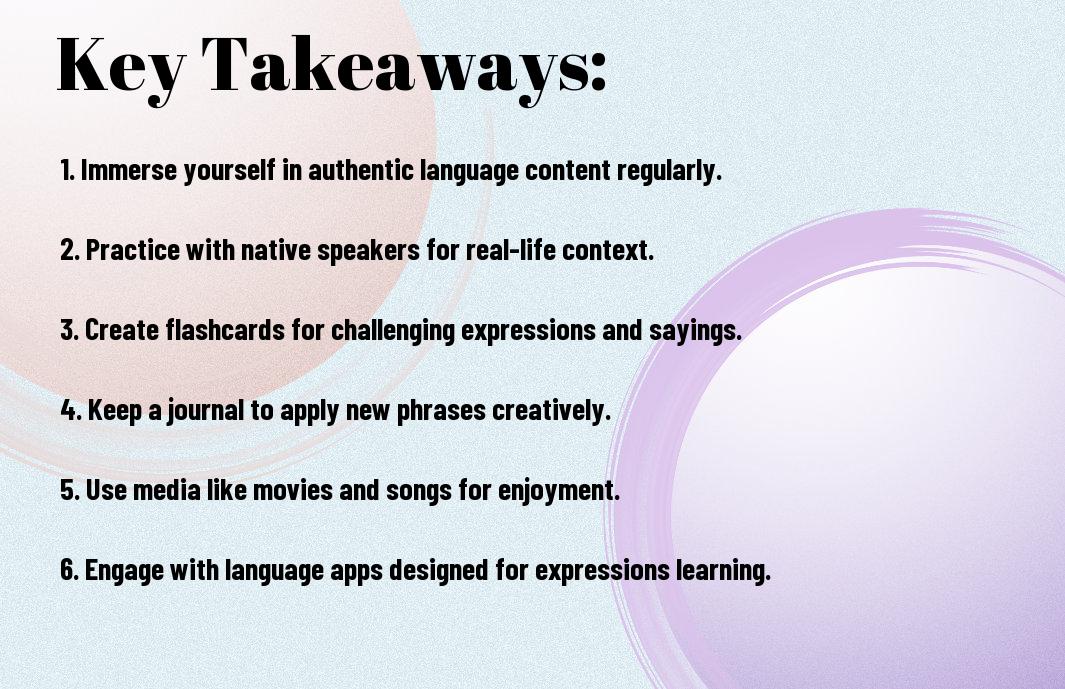
  • Focus on common phrases and idiomatic expressions that are frequently used in everyday conversations, as they can help you sound more natural and fluent in the language.
  • Practice active listening and try to pick up expressions and sayings from native speakers, such as through TV shows, movies, or podcasts, to get a feel for how they are used in context.
  • Use flashcards or language learning apps to help you memorize and practice expressions and sayings, and try to use them in your own conversations to reinforce your learning and build confidence.

Section

For effective language learning, you need to focus on expressions and sayings that are commonly used by native speakers. You will find that these phrases are necessary to understanding the nuances of the language and communicating effectively. As you learn these expressions, you will become more confident in your language skills.

subsection: Identifying Common Expressions

Along with learning basic vocabulary, you should pay attention to expressions that are frequently used in everyday conversations. You can find these expressions in TV shows, movies, and books, which will help you get a feel for how they are used in context.

subsection: Learning Idiomatic Language

Like a native speaker, you will need to learn idiomatic language to sound natural and fluent. You can start by learning common idioms and phrases, and then practice using them in your own sentences.

With practice, you will become more comfortable using idiomatic language, and your speech will sound more natural. You will be able to express yourself more effectively, and you will be better understood by native speakers. As you continue to learn, you will find that your language skills improve dramatically, and you will be able to communicate with greater ease and confidence.

Section

If you’re looking to learn expressions and sayings in a new language, it’s crucial to start with the basics. You’ll need to familiarize yourself with common phrases and idioms that native speakers use daily. This will help you better understand the language and improve your communication skills.

subsection: Using Flashcards and Vocabulary Lists

Among the various methods to learn expressions, using flashcards and vocabulary lists is an effective approach. You can create your own flashcards with phrases on one side and their meanings on the other, or use online resources that provide pre-made lists. This method allows you to practice and reinforce your knowledge of new expressions at your own pace.

subsection: Practicing with Native Speakers

On the path to mastering expressions and sayings, interacting with native speakers is invaluable. You can engage in conversations, ask questions, and learn from their responses. This will help you gain a deeper understanding of how expressions are used in context.

Understanding the nuances of language is key to using expressions effectively. As you practice with native speakers, pay attention to the way they use expressions in different situations, and try to replicate this in your own conversations. You’ll find that your language skills improve significantly as you become more comfortable using expressions and sayings like a native speaker.

Section

Despite the challenges of learning a new language, you can master expressions and sayings with practice and dedication. You will find that your vocabulary expands rapidly as you immerse yourself in the language, and understanding expressions becomes second nature.

subsection: Reading and Listening to Authentic Materials

Similarly, you will discover that reading and listening to authentic materials helps you learn expressions in context, allowing you to grasp their meanings and usage more effectively. You can find a wide range of materials online, from news articles to podcasts, that will aid in your learning process.

subsection: Watching TV Shows and Movies with Subtitles

Among the most effective ways to learn expressions, watching TV shows and movies with subtitles is an excellent method, as you can see and hear the language in action. You will pick up phrases and expressions naturally, and your comprehension will improve significantly.

But as you watch TV shows and movies with subtitles, you should also take note of the cultural references and nuances that underlie the expressions. You will find that understanding these subtleties is necessary to using the expressions correctly, and your language skills will become more sophisticated as a result. You will be able to express yourself more accurately and confidently, and your communication will become more effective.

Section

To learn expressions and sayings in a new language, you can explore various resources, such as language learning forums and websites. For instance, you can visit How to quickly and efficiently learn new idioms in foreign languages to gain insights from language experts and learners.

subsection: Focusing on Context and Nuance

Similarly, understanding the context in which expressions are used is vital to your learning process. You should observe how native speakers use idioms and phrases in different situations to grasp their meanings and connotations.

subsection: Avoiding Literal Translations

An necessary part of learning expressions is avoiding literal translations, as they can lead to misunderstandings and miscommunications. You should focus on understanding the figurative meaning of idioms and phrases to use them effectively in your language practice.

At this stage, you will need to practice using expressions in context, which will help you to develop your language skills and sound more natural in your communication. You can start by using flashcards or language learning apps to practice using idioms and phrases in different sentences and conversations.

Section

Not all language learners find it easy to grasp expressions and sayings in a new language. You will encounter numerous idioms, phrases, and expressions that do not translate literally. As you begin your journey, you will find that learning these expressions is an crucial part of becoming proficient in the language.

subsection: Building a Personal Dictionary

Before plunging into the world of expressions, you should start compiling a list of words and phrases you come across. You can use flashcards or a notebook to note down expressions, their meanings, and examples of how to use them in context. This will help you to keep track of what you have learned.

subsection: Reviewing and Refining Your Knowledge

On a daily basis, you should set aside time to go over what you have learned. You can test yourself by covering the expression and trying to recall its meaning, or by creating your own sentences using the expressions you have learned.

Your progress in learning expressions and sayings will depend on how consistently you practice and expose yourself to the language. As you continue to learn and practice, you will start to notice improvement in your ability to understand and use expressions in context, and your language skills will become more nuanced and sophisticated, allowing you to communicate more effectively with native speakers.

Section

Many language learners struggle to learn expressions and sayings in a new language. You will encounter numerous idiomatic phrases that do not translate directly, making it difficult to understand their meanings. As you progress in your language learning journey, you will need to develop strategies to learn and use these expressions effectively.

subsection: Overcoming Common Challenges

Besides the obvious difficulties, you will face obstacles such as limited exposure to native speakers and lack of context. You must find ways to overcome these challenges and stay on track with your language learning goals, using available resources to improve your understanding of expressions and sayings.

subsection: Staying Motivated and Engaged

Among the most effective ways to learn expressions and sayings is to engage with native speakers and immerse yourself in the language. You can achieve this by watching TV shows, listening to podcasts, and reading books in the target language, which will help you stay motivated and interested in the learning process.

Challenges will arise, but with persistence and dedication, you can overcome them. As you continue to learn and practice expressions and sayings, you will become more confident in your ability to communicate effectively in the new language. You will start to notice improvements in your comprehension and production of idiomatic phrases, and your language skills will become more nuanced and expressive, allowing you to convey your thoughts and ideas with greater precision and clarity.

Conclusion

On the whole, you will find that learning expressions and sayings in a new language is a gradual process. As you immerse yourself in your target language, you will start to pick up on common phrases and idioms, and your understanding of the language will become more nuanced. With consistent practice, you will become more confident in using these expressions in your everyday conversations, and your language skills will improve significantly, allowing you to communicate more effectively.

FAQ

Q: What is the best way to start learning expressions and sayings in a new language?

A: To start learning expressions and sayings in a new language, begin by familiarizing yourself with common phrases and idiomatic expressions used in everyday conversations. You can find these in language learning textbooks, online resources, or by watching TV shows and movies in the target language. Start with simple expressions and gradually move on to more complex ones, practicing their usage in context to improve your comprehension and pronunciation.

Q: How can I effectively practice and memorize new expressions and sayings in a foreign language?

A: Effective practice of new expressions and sayings involves active engagement with the language. Try to use flashcards to memorize phrases, and create scenarios or short stories where you can apply them. Engaging in conversations with native speakers, either in person or through language exchange apps, is also highly beneficial. Listening to podcasts, radio shows, or news in the target language can help you get accustomed to how expressions are used in different contexts. Consistency is key, so set aside time each day to review and practice what you’ve learned.

Q: What role does cultural understanding play in learning and using expressions and sayings correctly in a new language?

A: Understanding the cultural context is vital when learning expressions and sayings in a new language. Expressions often carry cultural nuances and references that, if misunderstood, can lead to miscommunication. Studying the culture associated with the language can provide insight into why certain expressions are used in specific situations. Be aware that what might be a common or harmless expression in one culture could be offensive or inappropriate in another. Therefore, learning about cultural differences and practices will help you use expressions and sayings appropriately and respectfully, enhancing your communication skills in the new language.

How to Adapt Language Skills for Real-Life Scenarios

As you navigate your daily life, you encounter various situations that demand effective communication. You need to tailor your language skills to fit different contexts, such as work, social interactions, or travel. Your ability to adapt your language skills will enhance your relationships, career, and overall experiences. By learning how to adjust your tone, vocabulary, and expression, you can convey your message accurately and confidently in any real-life scenario, making you a more efficient and successful communicator.

Key Takeaways:

To effectively adapt language skills for real-life scenarios, consider the following points:

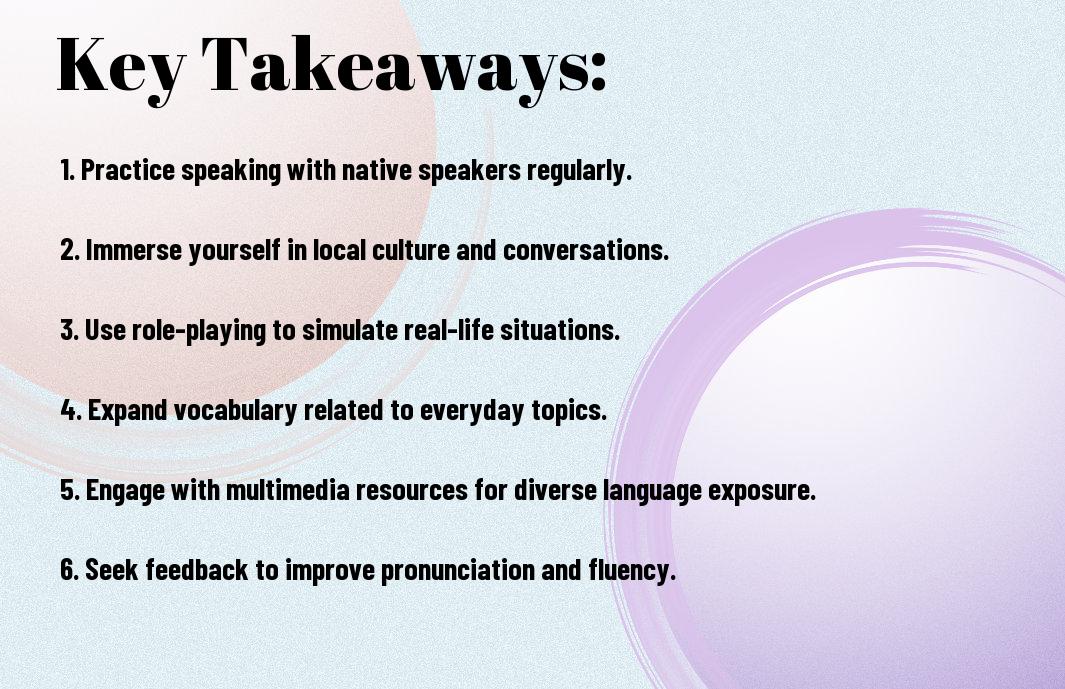
  • Developing practical vocabulary is imperative, as it enables individuals to communicate effectively in everyday situations, such as shopping, dining, or navigating public transportation.
  • Improving conversation skills is vital, as it allows individuals to engage in meaningful interactions with others, including negotiations, debates, and discussions.
  • Enhancing cultural awareness is also important, as it helps individuals to understand the nuances of language and behavior in different social contexts, facilitating more effective communication and avoiding potential misunderstandings.

Developing Language Skills

Before you can adapt language skills for real-life scenarios, you need to develop a strong foundation in language skills, including reading, writing, listening, and speaking. This foundation will help you communicate effectively in various situations.

Improving Vocabulary

Around the time you start learning a new language, you will notice that expanding your vocabulary is important to understanding and expressing yourself. You can improve your vocabulary by reading books, using flashcards, and learning new words in context.

Enhancing Grammar

By practicing grammar exercises and speaking with native speakers, you can enhance your grammar skills and sound more natural when speaking. You will be able to construct sentences correctly and use the right verb tenses.

Due to the complexity of grammar rules, you will need to practice consistently to master them. As you continue to practice, you will become more confident in your ability to express yourself accurately and effectively, and your language skills will improve significantly, allowing you to communicate successfully in real-life scenarios.

Real-Life Applications

Assuming you have developed your language skills, it’s time to apply them in real-life scenarios. You can learn more about enhancing your communication skills by visiting Nurturing Pragmatic Language Skills: Effective Techniques to Assist Communication for valuable insights.

Communicating in the Workplace

Among the various settings where you will apply your language skills, the workplace is a significant one. You will need to communicate effectively with colleagues, clients, and supervisors to achieve your goals and succeed in your career.

Interacting with Native Speakers

Native speakers will be one of the groups you interact with, and being able to communicate with them is vital. You want to make a good impression and be understood, so it’s vital to practice your language skills in real-life conversations.

It is vital to be mindful of cultural differences and nuances when interacting with native speakers. You should be prepared to learn from them, ask questions, and clarify any misunderstandings to ensure effective communication and build strong relationships.

Adapting to Different Scenarios

Once again, you’ll find that adapting your language skills to real-life scenarios is key to effective communication. You can learn more about Skill-Based Branching Scenarios For Communication to improve your skills.

Formal and Informal Settings

Formally, you will need to adjust your tone and language to suit the setting, whether it’s a business meeting or a social gathering, to ensure your message is conveyed effectively.

Cultural Differences and Nuances

Across different cultures, you will encounter various communication styles, and being sensitive to these differences will help you navigate interactions with ease and avoid misunderstandings.

Understanding the cultural context of your interactions will allow you to tailor your language skills to your audience, taking into account their values, customs, and beliefs, and enabling you to communicate more effectively and build stronger relationships.

Effective Communication Strategies

All effective communication starts with a solid foundation of language skills, and you can develop your skills to succeed in real-life scenarios by practicing and adapting your approach to different situations, which will help you convey your message and negotiate with others.

Active Listening

Efficiently, you will be able to engage with others when you focus on the speaker, understanding their perspective, and responding thoughtfully, which enables you to build trust and strong relationships.

Clear and Concise Expression

Bridging the gap between your thoughts and the listener’s understanding, you can express yourself clearly by using simple language, avoiding jargon, and organizing your ideas in a logical manner, making it easier for others to follow your message.

Concise expression of your thoughts is key to keeping your audience engaged, as you can convey complex ideas in a straightforward way, saving time and energy for both you and your listener, and you will find that your message is better understood and acted upon when you communicate in a clear and direct manner.

Overcoming Language Barriers

Despite the difficulties you may face, adapting your language skills to real-life scenarios is achievable. You can bridge the gap by learning idiomatic expressions and practicing with native speakers.

Language Learning Tips

Besides regular practice, you can improve your language skills by:

  • immersing yourself in the language
  • using language learning apps

The key to successful language adaptation is consistent practice and exposure to the language.

Common Challenges and Solutions

Along with the benefits of language adaptation, you will encounter challenges. You may struggle with pronunciation, vocabulary, or grammar, but you can find solutions by seeking help from tutors or language exchange partners.

Considering your individual needs and goals, you can develop strategies to overcome common challenges, such as creating a study plan, setting achievable goals, and tracking your progress, which will help you stay motivated and focused on your language learning journey.

Practicing Language Skills

Not only does practicing language skills help you build confidence, but it also enables you to apply your knowledge in real-life situations, making your language learning journey more effective.

Speaking and Writing Exercises

Previously, you may have focused on grammar rules, but now you can engage in speaking and writing exercises to improve your language proficiency, allowing you to express yourself more accurately and fluently.

Immersion and Interactive Activities

Actions like watching TV shows, listening to podcasts, and engaging in conversations with native speakers can help you develop your language skills in a more engaging and interactive way, making your learning experience more enjoyable and productive.

In addition, as you participate in these activities, you will be exposed to different accents, idioms, and expressions, which will help you to better understand the nuances of the language and improve your ability to communicate effectively in various real-life scenarios, allowing you to navigate everyday situations with ease and confidence.

To wrap up

Considering all points, you now have a solid foundation to adapt your language skills for real-life scenarios. You can apply your knowledge to effectively communicate in various situations, making your interactions more efficient and successful. By practicing and refining your skills, you will enhance your ability to express yourself and achieve your goals, allowing you to navigate real-life scenarios with confidence and precision, using your language skills to your advantage.

FAQ

Q: What are the most effective ways to improve language skills for real-life scenarios?

A: To improve language skills for real-life scenarios, it is crucial to practice speaking, listening, reading, and writing in context. This can be achieved by engaging in conversations with native speakers, watching TV shows or movies, listening to podcasts or radio shows, and reading books or articles on various topics. Additionally, using language learning apps, participating in language exchange programs, and taking language courses can also help to enhance language skills and prepare individuals for real-life situations.

Q: How can I adapt my language skills to communicate effectively in a professional setting?

A: Adapting language skills for a professional setting involves learning industry-specific vocabulary, understanding cultural nuances, and developing strong communication skills. This can be done by researching common terminology and phrases used in the industry, attending professional events or conferences, and practicing presentations or meetings with colleagues or mentors. Furthermore, being aware of non-verbal communication, such as body language and tone of voice, can also help to convey confidence and professionalism in a work environment.

Q: What strategies can I use to overcome language barriers and improve communication in everyday situations?

A: To overcome language barriers and improve communication in everyday situations, it is helpful to use visual aids, simplify language, and ask for clarification when necessary. This can involve using maps or pictures to explain directions, speaking slowly and clearly, and asking others to repeat or rephrase information to ensure understanding. Moreover, being patient, open-minded, and respectful of cultural differences can also facilitate effective communication and help to build strong relationships with people from diverse backgrounds.

How Learning Languages Enhances Cultural Appreciation

As you begin on learning a new language, you’ll discover that it’s not just about mastering grammar and vocabulary, but also about gaining a deeper understanding of the culture behind it. You’ll find that your language skills will allow you to connect with people from diverse backgrounds, appreciate their customs, and explore their history. By immersing yourself in a language, you’ll broaden your perspective and develop a more nuanced understanding of the world, enabling you to engage with different cultures in a more meaningful way, and enriching your life in the process.

Key Takeaways:

To understand the significance of language learning in cultural appreciation, consider the following points:

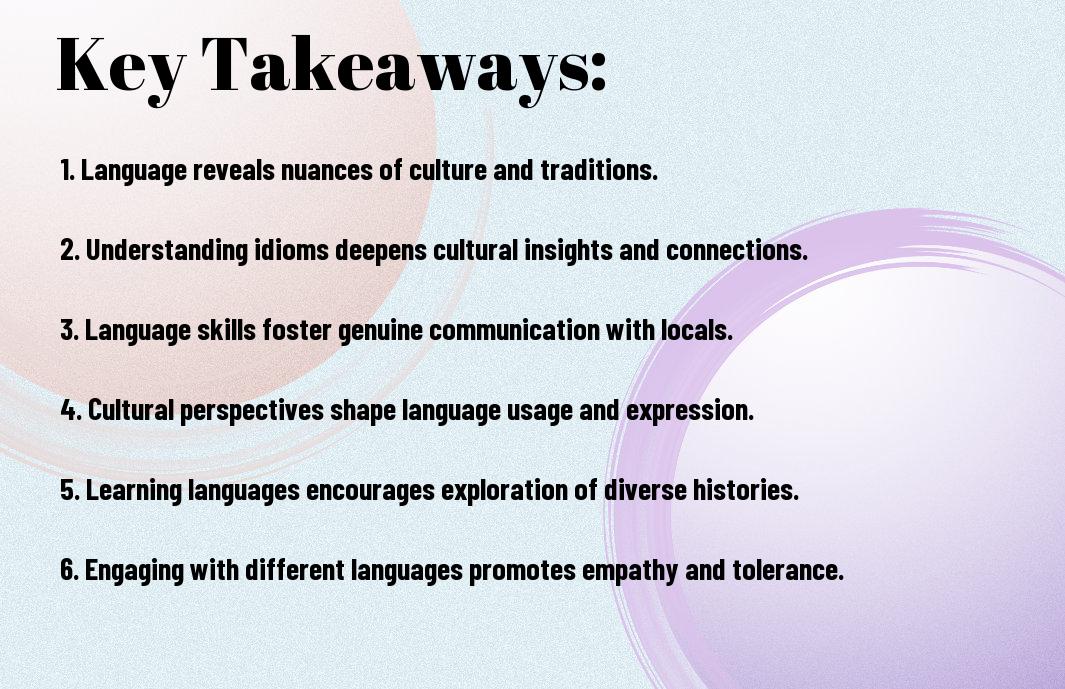
  • Learning a language allows individuals to gain a deeper understanding of a culture’s history, traditions, and values, enabling them to better appreciate the cultural heritage and diversity.
  • Language skills can also facilitate communication and connection with people from diverse cultural backgrounds, fostering empathy and understanding through direct engagement with native speakers.
  • Moreover, acquiring a new language can broaden one’s perspective and enhance cultural awareness, allowing individuals to navigate different cultural norms and practices with greater ease and confidence.

Language as a Cultural Key

Before venturing into the world of languages, you’ll find that learning a new language can unlock numerous cultural doors. As you explore the benefits of language learning, you can discover How Learning a Second Language Helps Children Develop Deeper Cultural Understanding, which can enrich your life in many ways.

Unlocking Cultural Nuances

Any attempt to understand a culture without its language will be limited, as you will miss out on the subtle nuances that language conveys. You will find that language learning helps you grasp cultural references and context.

Language Learning as a Tool for Cultural Immersion

Any language learner knows that immersion is key to language acquisition, and you will find that it also applies to cultural appreciation. You can engage with native speakers, watch local media, and participate in cultural events, which will enhance your cultural understanding.

And as you investigate deeper into language learning, you will discover that it becomes a powerful tool for cultural immersion, allowing you to connect with people from diverse backgrounds and fostering a deeper appreciation for the cultural practices and traditions that shape their daily lives, enabling you to navigate your interactions with more sensitivity and awareness, which will, in turn, enrich your life in many ways.

The Benefits of Multilingualism

You will discover a new world of opportunities when you become multilingual, as it opens doors to new cultures, communities, and perspectives, ultimately enriching your life and broadening your understanding of the world.

Broadening Perspectives

Besides gaining a deeper understanding of different cultures, learning a new language allows you to see the world from a unique point of view, challenging your assumptions and fostering empathy and tolerance, which are vital in today’s globalized society.

Enhancing Travel Experiences

One of the most significant advantages of being multilingual is the ability to fully immerse yourself in foreign cultures when traveling, as you can communicate with locals, read signs and menus, and appreciate the local way of life, making your travel experiences more authentic and enjoyable.

But as you explore deeper into the culture of the place you are visiting, you will find that your language skills will allow you to connect with people on a more profound level, sharing stories, traditions, and customs, and creating lasting memories of your travels, making your experiences even more rewarding and enriching, and allowing you to develop a deeper appreciation for the diversity of human experience.

Cultural Insights through Language

Not only does learning a language provide you with a new skill, but it also offers you a unique perspective on the culture associated with it, allowing you to gain a deeper understanding of the traditions, customs, and values of the people who speak it.

Idioms and Expressions

Prior to submerging into the nuances of a language, you’ll discover that idioms and expressions are an integral part of communication, giving you insight into the daily life and interactions of native speakers, and enabling you to better navigate your interactions with them.

Cultural References and Allusions

For your understanding of a culture to be truly comprehensive, you need to familiarize yourself with the cultural references and allusions that are embedded in the language, as they often hold significant meanings and connotations that may not be immediately apparent to non-native speakers like you.

And as you examine deeper into the cultural references and allusions, you’ll find that they can significantly enhance your appreciation of the culture, allowing you to decipher subtle hints and underlying messages in conversations, literature, and media, and to engage more meaningfully with the people and the culture you’re interested in.

Language Learning and Empathy

All language learners develop a deeper understanding of different cultures, which fosters empathy and tolerance. You become more aware of the nuances of communication and can better navigate interactions with people from diverse backgrounds.

Building Bridges between Cultures

Across cultures, language learning helps you connect with others and appreciate their perspectives. You can engage in meaningful conversations, share experiences, and build lasting relationships.

Breaking Down Stereotypes

As you learn a new language, you:

  • Discover the complexity of a culture
  • Gain insight into historical contexts
  • Develop a more nuanced understanding
  • Thou shalt find that your perceptions of other cultures will shift, and you will become a more open-minded and empathetic person.

    Language Culture
    Spanish Latin American
    Mandarin Chinese
    Arabic Middle Eastern
    French European
    Japanese East Asian

    At the heart of language learning is the ability to break down stereotypes and develop a deeper understanding of different cultures. You can:

    • Explore cultural traditions
      • Analyze historical events
        • Engage with native speakers
        • Thou shalt find that your language learning journey is not only about acquiring a new skill, but also about broadening your perspective and becoming a more empathetic and culturally aware individual.

          Language Culture
          German European
          Italian European
          Portuguese Latin American
          Russian Eastern European
          Korean East Asian

          The Role of Language in Cultural Heritage

          After exploring the significance of language in culture, you will discover that it plays a vital role in shaping your identity and connecting you to your heritage. Language is the key to understanding and appreciating the customs, traditions, and values of a culture.

          Preserving Traditional Practices

          Protecting cultural heritage through language helps you understand and respect traditional practices, allowing you to appreciate the unique characteristics of a culture and connect with your roots.

          Promoting Cultural Exchange

          The ability to communicate in multiple languages enables you to engage with people from diverse backgrounds, fostering global understanding and cooperation, and broadening your perspective on the world.

          For instance, when you learn a new language, you gain access to a wealth of literature, music, and art that might have been inaccessible to you otherwise, allowing you to experience the richness and diversity of a culture firsthand and develop a deeper appreciation for the traditions and customs that shape it.

          Practical Applications of Language Learning

          Despite the numerous benefits of language learning, its practical applications are often overlooked. You can apply your language skills in various aspects of your life, from career advancement to personal growth, allowing you to connect with people from diverse backgrounds and fostering a deeper understanding of different cultures.

          Career Opportunities

          Practically, learning a new language can significantly enhance your career prospects, as you become a more competitive candidate in the job market, capable of communicating with clients, colleagues, and customers from diverse linguistic backgrounds, thereby expanding your professional network and opportunities.

          Personal Enrichment

          Professionally, acquiring a new language can also lead to personal enrichment, as you gain a new perspective on the world, allowing you to appreciate cultural nuances and subtleties that would be lost in translation, and enabling you to engage more deeply with the culture, whether through reading literature, watching films, or engaging in conversations with native speakers.

          To further explore the benefits of personal enrichment through language learning, you can research into the world of literature, music, and art from the culture you’re interested in, and discover new authors, artists, and musicians that resonate with you, allowing you to develop a more nuanced understanding of the culture and its people, and fostering a deeper connection with the language and its speakers.

          Summing up

          From above, you can see that learning languages enhances your cultural appreciation, allowing you to engage with diverse communities and understand their perspectives. As you explore new languages, you gain insight into the history, customs, and values of different societies, broadening your understanding of the world and fostering empathy. Your ability to communicate in multiple languages enables you to navigate cultural nuances, making you a more informed and open-minded individual.

          FAQ

          Q: How does learning a new language contribute to a deeper understanding of a culture?

          A: Learning a new language allows individuals to access and appreciate the unique cultural nuances, customs, and traditions associated with that language. By acquiring a new language, one can gain insight into the history, literature, music, and art of the culture, ultimately broadening their perspective and fostering a more profound appreciation for the cultural heritage. This, in turn, enables learners to engage more effectively with native speakers, participate in cultural events, and develop a more authentic connection with the culture.

          Q: Can learning a language enhance one’s ability to appreciate cultural differences and avoid stereotypes?

          A: Yes, learning a language can significantly enhance one’s ability to appreciate cultural differences and avoid stereotypes. As learners become more familiar with the language, they begin to understand the cultural context in which it is spoken, including the values, beliefs, and attitudes that shape the culture. This newfound understanding helps to break down cultural barriers and challenges preconceived notions, allowing learners to develop a more nuanced and informed perspective on the culture. By immersing themselves in the language and culture, individuals can develop empathy and tolerance, ultimately becoming more open-minded and culturally sensitive.

          Q: How can language learning facilitate a more authentic cultural experience when traveling or interacting with people from diverse backgrounds?

          A: Language learning can greatly facilitate a more authentic cultural experience when traveling or interacting with people from diverse backgrounds. By speaking the local language, individuals can engage more meaningfully with native speakers, ask questions, and seek recommendations, allowing them to discover hidden gems and experience the culture in a more immersive way. Moreover, language skills can help learners to navigate everyday situations, such as ordering food, shopping, or using public transportation, with greater ease and confidence. As a result, language learning can transform a trip into a rich and unforgettable cultural experience, filled with meaningful interactions and lasting connections.

Skip to content