simon weiner

How does immersion in a language environment aid in language acquisition

Your language acquisition can significantly benefit from immersing yourself in a language environment. Surrounding yourself with native speakers, authentic conversations, and cultural nuances allows you to absorb language effortlessly. Research shows that immersion enhances fluency, comprehension, and pronunciation, as your brain adapts to thinking and processing information in the new language. By fully immersing yourself, you can accelerate your language learning journey and reach proficiency faster than traditional methods. Embrace the language environment, and watch your language skills flourish!

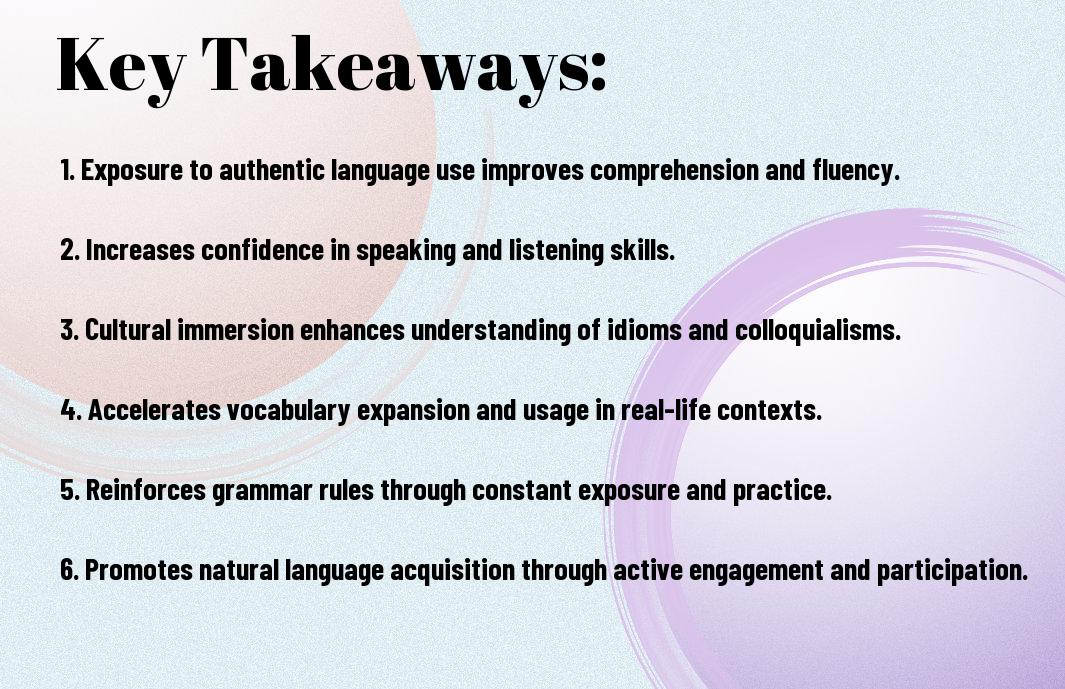
Key Takeaways:

  • Increased Exposure: Immersion in a language environment provides increased exposure to the language through daily interactions, which aids in language acquisition.
  • Contextual Learning: Being surrounded by native speakers helps learners understand the language in its cultural and contextual context, leading to a deeper understanding and quicker acquisition.
  • Forced Practice: In an immersive environment, individuals are forced to practice the language in order to communicate effectively, leading to faster improvement and fluency.
The Power of Immersion

Surrounding Yourself with the Language

Before delving into the benefits of immersion in a language environment, it’s crucial to understand the impact of surrounding yourself with the language. When you immerse yourself in an environment where the target language is spoken daily, you are constantly exposed to its sounds, rhythms, and nuances. This exposure helps your brain acclimate to the language more naturally.

Creating an Environment for Language Acquisition

The key to effective language acquisition lies in creating an environment that fosters continuous learning. One way to do this is by incorporating the language into your daily activities. By listening to music, watching movies, or reading books in the target language, you are reinforcing your learning in a practical and engaging way. Surrounding yourself with native speakers and practicing conversations can also significantly enhance your proficiency.

Understanding that creating an environment conducive to language acquisition involves not only passive exposure but also active engagement is crucial. To truly internalize a language, you must actively participate in conversations, practice writing and reading, and immerse yourself in cultural experiences that require you to use the language in real-life scenarios. This dynamic approach ensures that you not only grasp the language’s technical aspects but also its cultural subtleties and nuances.

Language Exposure and Brain Development

Neuroplasticity and Language Learning

Now, let’s explore into the fascinating world of neuroplasticity and how it impacts your language learning journey. Your brain has an incredible ability to adapt and change in response to new experiences, a phenomenon known as neuroplasticity. When you immerse yourself in a language environment, exposing your brain to a constant stream of new sounds, words, and grammatical structures, you are vitally rewiring your brain to accommodate this new language.

With each conversation you have, each sentence you read, and each word you hear, your brain forms new connections and strengthens existing ones related to the language you are learning. This process of neural networking is crucial for language acquisition, as it helps solidify your understanding and fluency in the new language over time.

The Role of Context in Language Processing

Processing language in context is key to truly grasping its nuances and meaning. When you hear a word or phrase in isolation, it can be challenging to fully comprehend its significance. However, when that same word or phrase is used in a sentence or conversation, you are provided with valuable context that aids in your understanding.

It is through exposure to language in various contexts – whether through conversations, books, movies, or everyday interactions – that you begin to develop a deeper grasp of the language. Context helps you make connections between words, decipher idiomatic expressions, and infer meaning from subtle cues like tone of voice and body language.

Interactive Opportunities for Language Practice

Conversational Partners and Language Exchange

To truly immerse yourself in a language environment and advance your language skills, finding conversational partners and participating in language exchanges can be incredibly beneficial. By engaging in conversations with native speakers or fellow learners, you have the opportunity to practice your speaking and listening skills in a real-life context. These interactions can help you improve your fluency, vocabulary, and cultural understanding, allowing you to become more confident in using the language.

Engaging with Native Speakers and Cultural Events

The immersion experience becomes even richer when you actively engage with native speakers and participate in cultural events. By attending local gatherings, festivals, or performances, you get to experience the language in its natural setting and gain insights into the cultural nuances that influence communication. These experiences provide a unique opportunity to not only practice the language but also deepen your understanding of the customs, traditions, and values associated with it.

Partnerships with native speakers can offer a more personalized and in-depth exploration of the language and culture. By forming connections with individuals who can provide guidance, support, and authentic language practice, you can accelerate your learning journey and develop a profound appreciation for the linguistic and cultural diversity that surrounds you.

Authentic Materials and Real-Life Contexts

Using Authentic Texts, Videos, and Audio Materials

For language learners, exposure to authentic texts, videos, and audio materials is invaluable. When you engage with real-life content in the language you are learning, you not only improve your vocabulary and grammar but also gain a deeper understanding of cultural nuances and context. Authentic materials help you connect the words and phrases you learn in a textbook to how they are actually used in everyday conversations, films, music, news broadcasts, and more.

By incorporating authentic materials into your language learning routine, you can enhance your listening comprehension, improve your speaking skills, and develop a more natural and fluent communication style. Whether you are reading a newspaper article, watching a movie without subtitles, or listening to a podcast in the target language, these real-world resources provide you with exposure to the language as it is truly spoken and written, ultimately accelerating your language acquisition process.

Immersing Yourself in Real-Life Situations and Scenarios

On the other hand, immersing yourself in real-life situations and scenarios allows you to put your language skills to the test in a practical and immersive way. Whether you are traveling to a country where the language is spoken, participating in language exchange meetups, or simply practicing conversations with native speakers, immersing yourself in authentic contexts provides you with the opportunity to apply what you have learned in a meaningful and interactive manner.

With each new real-life interaction, you gain confidence in your language abilities, improve your pronunciation, and increase your cultural understanding. From ordering food at a local restaurant to navigating public transportation or engaging in social interactions, these real-world experiences not only reinforce your language skills but also expose you to the nuances of communication that textbooks alone cannot capture. Embrace these opportunities for immersion, and you will see significant progress in your language acquisition journey.

The Importance of Consistency and Repetition

Regular Exposure to the Language Environment

After immersing yourself in a language environment, the key to language acquisition lies in consistent and repeated exposure to the language. Just like learning any new skill, the more you are exposed to the language, the more familiar and comfortable you become with it. Regular exposure helps you pick up on nuances, tones, and structures that are necessary for fluency.

Building Habits and Routines for Language Acquisition

Regular exposure alone is not enough to fully grasp a new language. You need to actively build habits and routines that incorporate the language into your daily life. By incorporating language learning into your daily routines, such as listening to podcasts during your commute, reading in the language before bed, or practicing conversations with native speakers regularly, you strengthen your language skills consistently over time.

Plus, building habits and routines for language acquisition helps reinforce what you have learned and solidifies your language skills. By making language learning a part of your daily life, you are more likely to stay motivated and dedicated to the process, ultimately leading to faster and more effective language acquisition.

Overcoming Barriers and Challenges

Dealing with Language Anxiety and Fear

Fear can be a major barrier when immersing yourself in a new language environment. You might worry about making mistakes, not being understood, or feeling embarrassed. However, it’s important to remember that making mistakes is a natural part of the learning process. Embrace these mistakes as learning opportunities and stepping stones toward fluency. Instead of letting fear hold you back, use it as a motivator to push yourself out of your comfort zone and grow.

Strategies for Staying Motivated and Focused

Fear of failure or feeling overwhelmed can sometimes dampen your motivation to continue learning a new language. To combat this, try breaking down your language learning goals into smaller, manageable tasks. Celebrate small victories along the way to keep your motivation levels high. Additionally, surrounding yourself with supportive peers or language partners can provide encouragement and help you stay focused on your language acquisition journey.

Strategies such as setting realistic goals, tracking your progress, and rewarding yourself for milestones achieved can help maintain your motivation over the long term. Remember that language acquisition is a gradual process, and staying committed to your learning journey will ultimately lead to success.

To wrap up

Upon reflecting on how immersion in a language environment aids in language acquisition, you can see the undeniable benefits of being surrounded by the language you are trying to learn. By constantly hearing it spoken, engaging with native speakers, and navigating real-life situations where that language is required, you are forcing your brain to adapt and learn in a way that cannot be replicated in a classroom setting. This active participation in the language not only helps you grasp the grammar and vocabulary but also fosters a deeper understanding of the cultural nuances and idiomatic expressions that are crucial to truly mastering a language.

So, if you are looking to enhance your language skills and achieve fluency, consider immersing yourself in an environment where that language is spoken daily. By living, working, or studying in a place where you are forced to communicate in the target language, you are setting yourself up for accelerated learning and a more profound connection to the language and culture. Recall, language acquisition is not just about memorizing words and rules; it’s about truly experiencing and engaging with the language in a meaningful way, and immersion provides the ideal opportunity for that.

Q: How does immersion in a language environment aid in language acquisition?

A: Immersion in a language environment provides exposure to the language in real-life contexts, allowing learners to practice listening, speaking, reading, and writing skills in a natural setting. This constant exposure and practice help improve language fluency and proficiency.

Q: What are the benefits of immersion in a language environment for language acquisition?

A: Immersion in a language environment helps learners develop cultural understanding, improve pronunciation, and enhance vocabulary retention. It also boosts confidence in using the language and fosters a deeper appreciation for the culture associated with the language.

Q: How can one create an immersion experience in a language environment?

A: Creating an immersion experience involves surrounding oneself with the target language as much as possible. This can be achieved by listening to music, watching movies or TV shows, reading books, interacting with native speakers, and participating in language exchange programs. The key is to consistently engage with the language in various contexts.

What are the benefits of learning a second language at an early age

You step into a world of endless possibilities when you initiate on the journey of learning a second language at an early age. Research, such as The Impact of Early Language Learning, shows that young minds soak up language like sponges, enhancing cognitive development, cultural awareness, and future career opportunities. Embrace the transformative benefits of bilingualism for a brighter future!

Key Takeaways:

  • Cognitive Development: Learning a second language at an early age can improve cognitive skills such as problem-solving, critical thinking, and multitasking.
  • Improved Academic Performance: Children who are bilingual tend to have better academic performance in subjects like math, reading, and vocabulary.
  • Cultural Awareness: Early exposure to a second language helps children appreciate different cultures, fostering open-mindedness and tolerance.

Cognitive Advantages

Improved Memory and Concentration

For cognitive development, learning a second language at an early age can significantly improve your memory and concentration. Studies have shown that bilingual individuals have better working memory than monolinguals, which allows you to retain and process information more effectively. This enhanced cognitive function not only helps you in language learning but also in various other academic and professional tasks that require focus and retention of information.

Enhanced Problem-Solving Skills

Any young child exposed to a second language from an early age can develop enhanced problem-solving skills. This is because learning a new language involves deciphering new rules and structures, which can stimulate your brain to think more critically and creatively. By navigating the complexities of two languages, you are crucially exercising your brain and honing your ability to think outside the box when faced with challenges.

It is like giving your brain a gymnastics workout, where it becomes more flexible and agile in tackling problems from different angles. So, by learning a second language early on, you are not just expanding your linguistic repertoire but also sharpening your cognitive abilities for a lifetime of academic and professional success.

Academic Benefits

You may be surprised to learn that learning a second language at an early age can have a significant impact on your academic performance. Here are some key academic benefits:

Better Performance in Other Subjects

An early start in learning a second language can actually improve your performance in other subjects like math and reading. Studies have shown that students who are bilingual tend to outperform their monolingual peers in these areas. This is because learning a second language enhances cognitive abilities such as problem-solving skills, critical thinking, and memory.

Increased Access to Higher Education

Performance in second language acquisition can open doors to higher education opportunities that may not have been available otherwise. Many universities value applicants who have studied a second language, as it demonstrates a commitment to learning, adaptability, and cultural awareness. This can give you a competitive edge in the admissions process.

For instance, some colleges have language proficiency requirements for certain programs or may offer scholarships specifically for bilingual students. By learning a second language early on, you are setting yourself up for success in the future when pursuing higher education.

Career Opportunities

Broader Job Prospects and Career Advancement

Prospects for career advancement are significantly enhanced when you are fluent in a second language. In today’s global economy, companies are seeking individuals with multilingual abilities to communicate effectively with international partners and clients. By learning a second language at an early age, you are equipping yourself with a valuable skill that sets you apart from others in the job market. Employers often view bilingual candidates as assets due to their ability to bridge language barriers and facilitate smooth communication in diverse settings.

Improved Communication with International Clients and Colleagues

International business relationships are strengthened when you can communicate with clients and colleagues in their native language. Your proficiency in a second language opens doors to new networking opportunities, collaborations, and projects that may not have been accessible otherwise. By understanding cultural nuances and being able to converse fluently in another language, you showcase your adaptability and cultural intelligence, key traits sought after in today’s professional landscape.

With the global marketplace becoming increasingly interconnected, the ability to communicate effectively with international clients and colleagues can significantly impact your career trajectory. Your language skills can make you a valuable asset in negotiations, presentations, and overall relationship-building with stakeholders from around the world.

Cultural Enrichment

Unlike those who only speak one language, you, as a young learner of a second language, have the opportunity to develop a deeper appreciation for diverse cultures.

Deeper Appreciation for Diverse Cultures

Cultures around the world are deeply tied to language, and by learning a second language at an early age, you open yourself up to understanding and respecting different customs, traditions, and ways of life. This exposure can broaden your perspective, foster empathy, and help you navigate a multicultural world with ease.

Enhanced Travel Experiences and Social Connections

Enrichment

With your growing language skills, you’ll find that traveling to different countries becomes a more enriching experience. You can communicate with locals in their native language, immerse yourself in the culture more authentically, and discover hidden gems that tourists often miss. Additionally, speaking a second language can open doors to forming deeper connections with people from diverse backgrounds, forging friendships that transcend linguistic and cultural barriers.

Brain Development

Delayed Onset of Age-Related Cognitive Decline

Age-related cognitive decline is a natural part of aging, but did you know that learning a second language at an early age can help delay its onset? Research has shown that bilingual individuals tend to develop dementia, Alzheimer’s, and other cognitive diseases about 4-5 years later than monolingual individuals. By constantly engaging both languages, you are giving your brain a regular workout, which can contribute to maintaining cognitive function as you age.

Increased Gray Matter in the Brain

When you learn a second language at an early age, you are not only expanding your linguistic abilities but also increasing the gray matter in your brain. This boost in gray matter, which is associated with processing information, problem-solving, and executive function, can result in enhanced cognitive skills and better academic performance overall. So, the next time you are practicing your second language, remember that you are also strengthening your brain!

To maximize the benefits of the increased gray matter in your brain from learning a second language, it is necessary to continue practicing and engaging with both languages regularly. This ongoing cognitive stimulation can lead to improved cognitive flexibility, better multitasking abilities, and even increased creativity. Embrace the journey of learning a second language – your brain will thank you for it!

Social Benefits

Once again, learning a second language at an early age brings about various social benefits. These advantages not only enrich your personal experiences but also positively impact your relationships with others.

Improved Relationships with Native Speakers

On your journey to mastering a second language, you’ll find that your interactions with native speakers become more meaningful and authentic. By speaking their language, you are showing a genuine interest in their culture and background, creating a stronger bond based on mutual understanding. This deeper connection can lead to friendships that bridge cultural gaps and foster a sense of unity and camaraderie.

Increased Empathy and Tolerance

With the ability to communicate in a second language, you develop a heightened sense of empathy and tolerance towards different perspectives and ways of life. You gain a deeper appreciation for diversity and multiculturalism, recognizing the beauty in linguistic and cultural differences. This broader worldview not only enriches your own life but also fosters a more inclusive and accepting society.

Speakers of multiple languages have been shown to have a greater capacity for empathy, as they can better understand and relate to individuals from various backgrounds. This empathy plays a key role in building harmonious relationships and promoting a more interconnected global community.

Conclusion

Summing up, learning a second language at an early age provides a multitude of benefits that can have a lasting impact on your cognitive abilities, academic performance, and opportunities later in life. By exposing yourself to a new language during the critical period of language development, you are not only improving your linguistic skills but also enhancing your overall brain function and problem-solving abilities.

Furthermore, being bilingual opens up a world of cultural experiences, career possibilities, and cross-cultural connections that can enrich your life in countless ways. So, consider starting your language learning journey early and reap the rewards of becoming a global, well-rounded individual with a unique set of skills and perspectives.

Q: What are the benefits of learning a second language at an early age?

A: Learning a second language at an early age has numerous benefits, including enhanced cognitive abilities, improved problem-solving skills, and increased cultural awareness.

Q: How does learning a second language at an early age enhance cognitive abilities?

A: Studies have shown that learning a second language at a young age can improve brain development, memory retention, and multitasking abilities. It can also help children become better at focusing and switching between tasks.

Q: In what ways does learning a second language at an early age improve cultural awareness?

A: Learning a second language exposes children to different cultures, traditions, and perspectives. This exposure can help them develop empathy, tolerance, and a greater appreciation for diversity, ultimately fostering a more inclusive and global mindset.

How can technology be used to enhance language learning

With the advancements in technology, you have a wealth of resources at your fingertips to enhance your language learning journey. From interactive language apps and online tutorials to virtual language exchange platforms, technology offers endless opportunities to practice, improve, and immerse yourself in a new language. Embracing these digital tools can revolutionize the way you learn and master a foreign language, making the process more engaging and effective than ever before.

Key Takeaways:

  • Personalized learning: Technology allows for personalized language learning experiences tailored to individual needs and preferences.
  • Interactive tools: Interactive tools such as language learning apps, virtual tutoring sessions, and online language games can make learning fun and engaging.
  • Access to authentic resources: Technology provides access to authentic resources such as videos, podcasts, and news articles, allowing learners to practice language skills in real-world contexts.

The Digital Age of Language Learning

Before submerging into the various ways technology can enhance language learning, it’s crucial to understand the impact of the digital age on education. Technology has revolutionized the way we acquire knowledge and skills, especially in language learning. According to a recent article on How Technology Can Be Used to Help Children Learn …, digital tools have opened up a world of possibilities for language learners of all ages.

Online Resources and Language Learning Platforms

For language learners, the availability of online resources and language learning platforms has transformed the traditional classroom experience. With just a few clicks, you can access a wealth of materials such as interactive exercises, video tutorials, and virtual language exchange programs. These resources not only make learning more engaging and dynamic but also cater to different learning styles and paces.

Mobile Apps for Language Acquisition

Learning a new language has never been more convenient, thanks to the plethora of mobile apps designed to facilitate language acquisition. Whether you’re commuting to work, waiting in line, or taking a quick break, you can practice vocabulary, grammar, and pronunciation on the go. Mobile apps provide a flexible and personalized learning experience, allowing you to set goals, track your progress, and receive instant feedback.

Digital tools have revolutionized language learning by making it more accessible, interactive, and convenient. Whether you prefer online resources, language learning platforms, or mobile apps, technology offers a diverse range of tools to enhance your language acquisition journey. Embrace the digital age of language learning and unlock your full linguistic potential with the help of innovative technological solutions.

Personalized Learning Experiences

While technology has revolutionized the way we learn languages, one of its most significant impacts is in providing personalized learning experiences tailored to your specific needs and learning style. Through adaptive technology and AI-powered tools, language learning can now be customized to suit your individual requirements.

Adaptive Technology for Language Instruction

For personalized language learning experiences, adaptive technology plays a crucial role. By analyzing your strengths and weaknesses, these systems can dynamically adjust the learning material to focus on areas where you need improvement. Whether it’s vocabulary, grammar, or pronunciation, adaptive technology ensures that you receive targeted practice and feedback to enhance your language skills effectively.

AI-Powered Language Tutors and Chatbots

Tutors

Understanding that every language learner has unique needs, AI-powered language tutors and chatbots offer personalized assistance round the clock. These virtual tutors can provide real-time feedback, engage you in conversations to practice speaking, and even offer cultural insights to make your learning experience more immersive and engaging.

Interactive and Immersive Learning

Virtual Reality and Augmented Reality in Language Learning

After experiencing the traditional methods of language learning, you may find yourself craving a more engaging and immersive way to practice. With the advancements in technology, virtual reality (VR) and augmented reality (AR) have brought about a revolution in language learning. By immersing yourself in a virtual environment where you can interact with native speakers and real-life scenarios, you can enhance your language skills in a way that feels natural and authentic.

Gamification and Language Acquisition

Augmented by gamification, language acquisition becomes more enjoyable and effective. By turning your language learning journey into a game, you can stay motivated and engaged throughout the process. Whether it’s earning points for completing tasks, competing with friends, or unlocking achievements, gamification adds an element of fun and excitement to your language learning experience. It makes you more eager to practice and progress consistently.

It transforms what could be perceived as a tedious chore into an enjoyable and rewarding activity. As you navigate through various levels, challenges, and quests, you develop a sense of accomplishment and satisfaction that keeps you coming back for more. Gamification not only makes language learning fun but also helps you stay committed and focused on your goals.

Access to Authentic Materials and Resources

Now, let’s explore how technology can provide you with access to authentic materials and resources to enhance your language learning experience.

Online Language Exchange Platforms and Communities

Online language exchange platforms and communities offer you the opportunity to practice your language skills with native speakers from around the world. Through these platforms, you can connect with language partners who are looking to learn your native language in exchange for helping you with theirs. This real-life interaction allows you to improve your speaking, listening, and cultural understanding in a practical and engaging way.

Access to Native Speaker Media and Cultural Content

Media such as television shows, movies, music, and podcasts created by native speakers can provide you with valuable exposure to authentic language use and cultural nuances. By incorporating these resources into your language learning routine, you can improve your listening comprehension, vocabulary, and cultural awareness. Additionally, technology allows you to easily access and consume a wide range of native speaker media anytime, anywhere.

With the rise of streaming platforms and social media, you can explore a diverse selection of content in your target language. Whether you enjoy watching foreign films, listening to music in another language, or following influencers from different cultures, incorporating these authentic materials into your language learning journey can make the process more enjoyable and effective.

Real-Time Feedback and Assessment

Despite the challenges of learning a new language, technology has made it easier than ever to receive real-time feedback and assessment on your skills. By leveraging tools such as Technology Tools for Language Learning, you can now track your progress and identify areas for improvement more efficiently.

Automated Language Proficiency Testing and Evaluation

To streamline the process of assessing your language proficiency, automated testing and evaluation tools are now available. These tools use algorithms to analyze your vocabulary, grammar, and comprehension skills, providing instant feedback on your strengths and weaknesses. By taking advantage of these resources, you can tailor your learning approach and focus on areas that need the most improvement.

Speech Recognition Technology for Pronunciation Feedback

Proficiency in pronunciation is crucial for mastering a new language. With the help of speech recognition technology, you can now receive instant feedback on your pronunciation accuracy. These tools analyze your spoken words and provide guidance on how to adjust your articulation for better clarity and fluency. By practicing with these tools regularly, you can enhance your speaking skills and sound more natural when communicating in the target language.

With the advancement of technology in language learning, you have access to valuable resources that can help you improve your proficiency in a more efficient and effective way. By leveraging real-time feedback and assessment tools, you can enhance your language skills and reach your learning goals faster than ever before.

Teacher Training and Support

Professional Development for Language Teachers in the Digital Age

Unlike traditional teaching methods, integrating technology into language learning requires language teachers to adapt and learn new approaches to effectively utilize digital tools in the classroom. Teachers must stay updated on the latest trends and advancements in educational technology to create engaging and interactive lessons that cater to the diverse learning styles of students.

Technology Integration in Language Teaching Methodologies

Development in language teaching methodologies includes incorporating technology to enhance language acquisition, communication, and cultural understanding. By integrating technology such as language learning apps, online resources, and interactive teaching platforms, language teachers can create immersive learning experiences that motivate students to actively participate in their language learning journey.

The seamless integration of technology in language teaching methodologies allows educators to create dynamic and personalized learning environments that cater to the individual needs of students. By incorporating multimedia content, interactive exercises, and real-time feedback mechanisms, teachers can effectively engage students and monitor their progress more efficiently.

Summing up

Hence, technology offers a plethora of opportunities to enhance language learning. By utilizing various online platforms, apps, and tools, you can immerse yourself in the language, practice speaking and listening skills, receive instant feedback, and connect with native speakers. These resources cater to different learning styles and preferences, making language learning more accessible and engaging than ever before.

Embracing technology in your language learning journey can help you progress faster, stay motivated, and overcome challenges more effectively. Whether you are a beginner or an advanced learner, incorporating tech tools into your study routine can provide a dynamic and interactive way to improve your language skills. So why not explore the vast array of technological resources available and take your language learning to the next level?

Q: How can technology be used to enhance language learning?

A: Technology can be used in various ways to enhance language learning. Some methods include using language learning apps, online language courses, language exchange platforms, and virtual reality language immersion experiences.

Q: What are the benefits of using technology for language learning?

A: The benefits of using technology for language learning include increased accessibility to language resources, interactive learning experiences, personalized learning options, real-time feedback on pronunciation and grammar, and the opportunity to practice language skills with native speakers from around the world.

Q: Are there any disadvantages to using technology for language learning?

A: While technology offers many advantages for language learning, some disadvantages include the potential for distractions, lack of face-to-face interaction with teachers, limited opportunities for spontaneous conversation practice, and the need for self-discipline and motivation to stay engaged in online learning environments.

What are the most effective methods for retaining vocabulary in a new language

Consistency is key when it comes to retaining vocabulary in a new language. To enhance your language learning journey, you can try various effective methods. Whether it’s practicing daily, using flashcards, or immersing yourself in the language, there are strategies that can help you retain and expand your vocabulary. For more tips on mastering vocabulary retention, check out Ten ways to learn new words as a language learner. Be mindful of, persistence and dedication are vital in achieving your language learning goals.

Key Takeaways:

  • Consistent practice: Regularly engaging with the language through reading, writing, speaking, and listening helps reinforce vocabulary retention.
  • Utilize mnemonics: Creating mental associations or using memory tricks can make vocabulary easier to recall.
  • Use spaced repetition: Reviewing vocabulary at increasing intervals over time can solidify long-term retention.

Setting the Foundation

For 7 Most Effective Ways To Learn Vocabulary In A New Language, setting a strong foundation is crucial for retaining vocabulary. When begining on learning a new language, creating a structured routine is key to your success.

Creating a Language Learning Routine

The first step in setting the foundation for retaining vocabulary in a new language is establishing a consistent language learning routine. By dedicating specific times each day to practice vocabulary, you create a habit that reinforces language retention. Whether it’s 15 minutes in the morning or half an hour before bed, consistency is key. Make language learning a part of your daily routine to internalize vocabulary effectively.

Building a Vocabulary Notebook

Creating a vocabulary notebook is a powerful tool for retaining new words and phrases in a structured way. This notebook can be physical or digital, depending on your preference. In this notebook, you can jot down new words, their meanings, and even example sentences to provide context. Organizing your vocabulary in this manner helps you review and reinforce the words regularly, leading to better retention over time.

Plus, you can personalize your vocabulary notebook by categorizing words based on topics or themes, making it easier to recall and associate related words together. This method not only aids in vocabulary retention but also enhances your overall language learning experience.

Active Recall Techniques

If you want to retain vocabulary in a new language effectively, active recall techniques are key. By actively engaging with the material rather than just passively reviewing it, you can significantly improve your retention. Here are some effective methods to incorporate active recall techniques into your language learning routine.

Flashcards: A Classic Method

One classic method that has stood the test of time is using flashcards. This simple yet powerful technique involves writing a word or phrase in the target language on one side of the card and the translation on the other. By regularly quizzing yourself with these flashcards, you strengthen your memory and improve your recall of vocabulary.

Quizzing Yourself: The Power of Self-Testing

One effective way to practice active recall is by quizzing yourself regularly. This can be done using various methods, such as covering up the meanings of words in your notes and trying to recall them, or writing out sentences using newly learned vocabulary without looking at your resources. By actively recalling the information without prompts, you reinforce your memory and deepen your understanding of the language.

Classic self-testing techniques like quizzing yourself not only help with memorization but also enhance your ability to recall information quickly and accurately. This active engagement with the material promotes more robust connections in your brain, making the vocabulary more accessible when you need it.

Games and Activities: Making Learning Fun

Self-testing doesn’t have to be boring – incorporating games and activities into your language learning routine can make the process more enjoyable and effective. There are numerous language learning apps and online platforms that offer interactive games and quizzes designed to help you retain vocabulary in a fun and engaging way. By making learning enjoyable, you are more likely to stay motivated and committed to your language learning journey.

Making learning fun through games and activities not only breaks the monotony of traditional study methods but also stimulates different areas of your brain, further enhancing your retention of vocabulary. Consider incorporating language learning games into your routine to keep things engaging and exciting while reinforcing your knowledge.

Contextual Learning

Reading in the Target Language

For contextual learning, reading in the target language can be incredibly beneficial. Not only does it expose you to new vocabulary in different contexts, but it also helps you understand how words are used in real-life situations. When you read, pay attention to the context in which words are used, as this can give you a deeper understanding of their meanings and nuances.

Listening to Native Speakers

With listening to native speakers, you immerse yourself in the natural flow and rhythm of the language. This can help you pick up on pronunciation, intonation, and how words are connected in speech. By regularly listening to native speakers, you train your ear to recognize words and phrases more quickly, which can enhance your vocabulary retention.

This method also allows you to grasp colloquial expressions, slang, and idiomatic phrases that might not be found in textbooks. Additionally, hearing how words are pronounced by native speakers can improve your own pronunciation and fluency in the language.

Watching TV Shows and Movies with Subtitles

Subtitles are a great tool for language learning as they provide you with both auditory and visual input. When watching TV shows and movies in the target language with subtitles, you can associate spoken words with their written form, reinforcing your vocabulary retention. This method also helps you understand how words are pronounced and spelled correctly.

Furthermore, watching TV shows and movies can expose you to a variety of accents and dialects, helping you become more familiar with different nuances of the language. Subtitles act as a safety net, aiding comprehension and allowing you to follow along even if you miss a word or phrase.

Reading, listening, and watching with subtitles are effective ways to immerse yourself in the language and retain vocabulary in a new language. Be mindful of, consistency is key when using these methods, so make them a part of your daily language learning routine for optimal results.

Repetition and Spaced Review

Keep repeating those new words if you want them to stick in your memory. The power of repetition cannot be overstated when it comes to language learning. However, what can take your vocabulary retention to the next level is spaced repetition.

The Science Behind Spaced Repetition

Repetition alone isn’t enough; you need to space out your review sessions intelligently. The spaced repetition technique involves revisiting words at increasing intervals to strengthen your long-term memory. This method leverages the psychological spacing effect, which shows that information is better retained when revisited at spaced intervals rather than cramming all at once.

Using Apps and Software for Efficient Review

Using language learning apps and software can supercharge your vocabulary retention efforts. These tools often incorporate spaced repetition algorithms into their programs, helping you review words at optimal intervals for maximum retention. They can track your progress, identify your weak areas, and tailor the review sessions to suit your learning pace.

Apps and software offer a convenient way to carry your vocabulary review wherever you go. With mobile applications, you can sneak in quick review sessions during your commute or while waiting in line, making the most of those idle moments to reinforce your language skills.

Creating a Review Schedule

For a more structured approach to vocabulary retention, creating a review schedule can keep you on track. Allocate specific time slots each day for reviewing your language flashcards or app exercises. Consistency is key here, as regular and spaced out review sessions will help cement those new words in your memory.

Reviewing right before bedtime can also be beneficial, as studies suggest that information reviewed before sleep is better consolidated in the brain. Experiment with different times of the day to find what works best for you in retaining vocabulary effectively.

Mnemonics and Associations

Now let’s explore the use of mnemonics and associations to help you retain vocabulary in a new language.

The Power of Association

With the power of association, you connect new words or phrases to something familiar or meaningful to you. By linking the new vocabulary to something already ingrained in your memory, you create stronger neural connections, making it easier to recall the words when you need them. For example, if you’re learning the word “casa” in Spanish for house, you can associate it with your own house or a friend’s house to solidify the meaning in your mind.

Creating Memorable Mnemonics

One effective technique for retaining vocabulary is creating memorable mnemonics. Mnemonics are memory aids that help you associate new words with visual or auditory cues. For instance, you can visualize a picture or story that represents the word you want to remember. If you’re trying to learn the French word “poisson” for fish, you could imagine a fish wearing a crown (poiSSon sounds like “king” in English) to help cement the association in your memory.

Association is key to making mnemonics work efficiently. By forming strong connections between the new vocabulary and something you already know, you enhance your ability to recall the words accurately.

Using Music and Rhythm to Aid Memory

Memorable melodies and rhythms can also be powerful tools for retaining vocabulary. Research has shown that music can enhance memory retention and recall. By setting new words to a catchy tune or rhythm, you create a pleasurable learning experience that sticks in your mind. So, consider creating your language playlists or rhymes to help you remember imperative vocabulary effortlessly.

Plus, incorporating music and rhythm into your language learning routine not only aids in memorization but also adds an element of fun and creativity to your study sessions. So, don’t hesitate to sing along with new words or create your own language jingles to make vocabulary retention a joyful experience.

Immersion and Interaction

Surrounding Yourself with the Language

Many language learners find that immersing themselves in the new language is one of the most effective ways to retain vocabulary. Surrounding yourself with the language by changing the language settings on your devices, listening to music and watching movies in the target language, and reading books or news articles can help reinforce the words you have learned.

Additionally, labeling objects in your home with their corresponding foreign word can create a language-rich environment, making it easier for you to remember vocabulary through daily interactions.

Practicing with Native Speakers

Interaction with native speakers is vital for language retention. By practicing with native speakers, you not only improve your speaking and listening skills but also gain insight into colloquial expressions and cultural nuances that textbooks may not cover. It can be intimidating at first, but don’t be afraid to make mistakes – native speakers appreciate your efforts in learning their language.

Engaging in conversations with native speakers can help you solidify vocabulary, as you have to actively recall words on the spot. This real-time interaction challenges your brain to retrieve and apply the vocabulary you have learned, reinforcing your memory.

Joining Language Exchange Communities

Language exchange communities provide a platform for you to connect with language learners who are native speakers of the language you’re studying, and vice versa. By engaging in language exchange sessions, you not only practice speaking with native speakers but also teach them your native language in return.

Another benefit of joining language exchange communities is the cultural exchange experience. Through conversations and interactions with native speakers, you not only improve your language skills but also gain insight into their traditions, customs, and way of life, enriching your overall language learning experience.

Conclusion

Drawing together all the effective methods for retaining vocabulary in a new language, it is clear that consistent practice, active engagement with the language, and using a variety of techniques like flashcards, spaced repetition, and language learning apps can significantly boost your retention. By immersing yourself in the language, setting achievable goals, and making vocabulary learning a daily habit, you can make steady progress in expanding your language skills.

Recall, everyone’s language learning journey is unique, so it’s important to find the methods that work best for you and stick with them. With dedication and persistence, you’ll see improvements in your vocabulary retention and overall language proficiency over time. So, keep up the good work, stay motivated, and enjoy the journey of learning a new language!

FAQ

Q: What are the most effective methods for retaining vocabulary in a new language?

A: To retain vocabulary in a new language effectively, it is important to practice consistently. One of the most effective methods is spaced repetition, where you review words at increasing intervals to strengthen your memory. Flashcards, language learning apps, and incorporating new words into sentences or conversations can also help reinforce vocabulary retention.

Q: How can I make vocabulary learning more engaging and meaningful?

A: To make vocabulary learning more engaging and meaningful, try to connect new words to images, experiences, or emotions. Creating mnemonics, using interactive resources like videos or games, and exploring cultural contexts related to the language can make the learning process more enjoyable and memorable.

Q: Are there specific techniques to boost vocabulary retention while learning a new language?

A: Yes, there are various techniques that can boost vocabulary retention while learning a new language. Some effective strategies include practicing active listening, repeating words aloud, writing vocabulary lists or sentences, and participating in language exchange with native speakers. Additionally, setting specific learning goals, tracking your progress, and revisiting previously learned words regularly can enhance retention.

How does cultural understanding enhance language learning

You might wonder how expanding your cultural knowledge can actually improve your language learning experience. In this informative post, we will explore the fascinating connection between cultural understanding and language acquisition. Embracing different cultures not only enriches your overall learning journey but also provides valuable insights into the nuances and intricacies of a language. By delving into the cultural context behind the language, you can gain a deeper appreciation and comprehension of the language itself. Let’s dive in and discover the powerful impact of cultural understanding on your language learning endeavors.

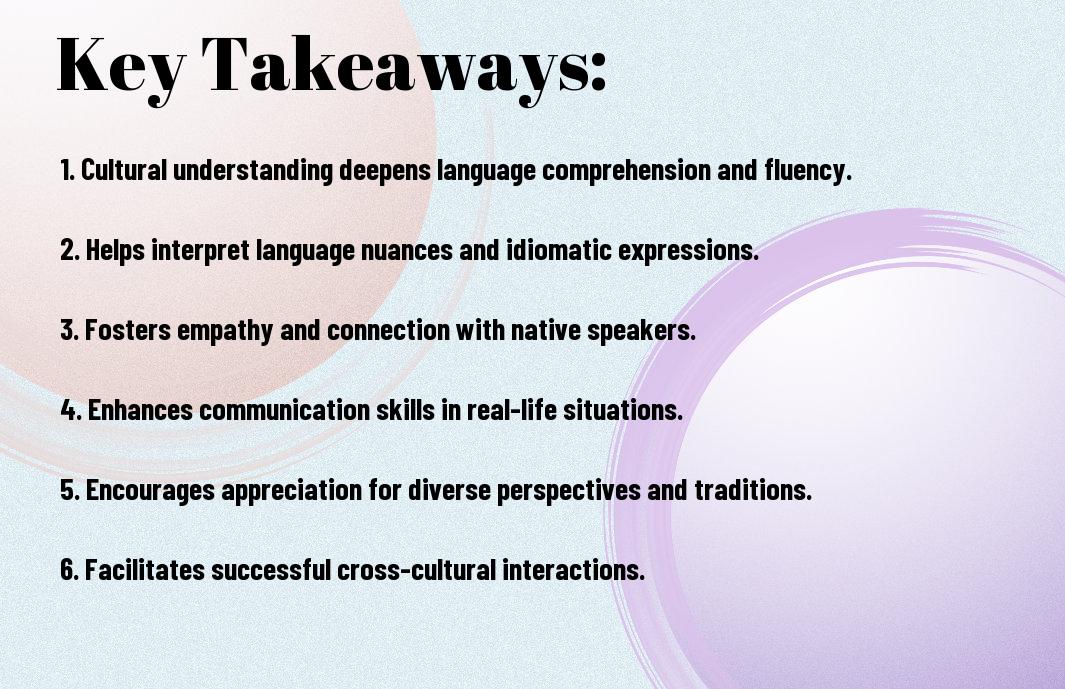
Key Takeaways:

  • Improved Communication: Cultural understanding can enhance language learning by providing context and depth to the language. This can help learners communicate more effectively and with increased cultural sensitivity.
  • Increased Motivation: Learning about a culture can spark interest and motivation in language learners, making the learning process more engaging. Understanding cultural nuances can also make language learning more meaningful and enjoyable.
  • Enhanced Language Proficiency: Cultural understanding can lead to a deeper understanding of the language’s idioms, expressions, and nuances. This can help learners achieve a higher level of proficiency and fluency in the language.

The Interconnectedness of Language and Culture

Language as a Reflection of Culture

To truly understand a language, you must research into the culture from which it stems. Language is not just a set of words strung together; it is a reflection of the values, beliefs, and societal norms of a particular group of people. When you learn a new language, you are not just memorizing vocabulary and grammar rules; you are gaining insight into the way a specific culture perceives the world around them. For example, the existence of different words to describe the same concept in various languages can reveal unique cultural perspectives and priorities.

Cultural Nuances in Language

Cultural nuances play a significant role in shaping language. Each culture has its own set of customs, traditions, and social cues, which are intricately woven into the language spoken by its people. Understanding these nuances is crucial for effective communication and language learning. For instance, the use of formal and informal language forms in many languages is a reflection of the hierarchical social structures present in those cultures.

Plus, recognizing cultural nuances in language can help you avoid misunderstandings and misinterpretations. For example, in some cultures, direct communication is valued, while in others, indirect communication is preferred. By being aware of these differences, you can adapt your language use accordingly and navigate intercultural interactions more smoothly.

Breaking Down Barriers

It is crucial to break down cultural barriers in language learning to fully embrace and understand a new language. Cultures greatly influence language, and having cultural awareness can significantly enhance your language learning experience. Understanding the cultural context behind a language can help you navigate nuances and expressions that may not directly translate.

Overcoming Stereotypes and Preconceptions

When learning a new language, it is crucial to overcome stereotypes and preconceptions that you may hold about a particular culture. These biases can hinder your ability to fully immerse yourself in the language and understand its true meaning. By challenging these assumptions and being open-minded, you can create a more positive learning environment and deepen your cultural understanding. Explore more about Cultural Awareness in Language Learning.

For Embracing Cultural Differences

Embracing Cultural Differences

Embracing cultural differences in language learning allows you to gain a deeper appreciation for the language and its origins. By immersing yourself in different cultural practices, traditions, and values, you can better understand the context in which the language is spoken. Embracing cultural differences also fosters empathy and respect for diverse perspectives, enriching your language learning journey.

To fully embrace cultural differences, you can engage in activities such as attending cultural events, watching films or reading literature from the target language’s culture, or even connecting with native speakers to learn more about their traditions and way of life.

The Power of Contextualization

Learning Language in Cultural Context

Not only does learning a language involve understanding grammar rules and vocabulary, but it also requires you to grasp the cultural context in which the language is used. By immersing yourself in the culture of the language you are trying to learn, you gain a deeper appreciation for the nuances and subtleties that are integral to effective communication.

Authentic Materials and Real-Life Examples

For a more enriched language learning experience, it is crucial to incorporate authentic materials and real-life examples into your studies. This could include watching movies, listening to music, reading books, or engaging in conversations with native speakers. These real-world applications help you understand how the language is used in everyday situations, making your learning more practical and dynamic.

Context plays a vital role in language acquisition as it helps you see the language in action, bringing it to life beyond just words on a page. By contextualizing your learning, you connect with the language on a deeper level, making it more meaningful and memorable.

Powerful learning happens when you engage with authentic materials and real-life examples, as they provide you with a direct link to the culture and language you are studying. This firsthand exposure allows you to pick up nuances, idiomatic expressions, and cultural references that are crucial for effective communication. By incorporating authentic materials into your language learning journey, you not only improve your language skills but also gain a deeper understanding and appreciation of the culture that shapes the language.

Enhancing Comprehension through Cultural Insight

Once again, cultural understanding plays a vital role in enhancing your language learning journey. By delving deeper into a culture, you gain valuable insights that help you comprehend the language in a more profound way. This deeper comprehension goes beyond just grammar and vocabulary, allowing you to grasp the nuances of the language through cultural context.

Idioms, Proverbs, and Figurative Language

Insight into a culture provides you with the key to unraveling the mysteries of idioms, proverbs, and figurative language. These elements are deeply rooted in the cultural beliefs, practices, and history of a society. By understanding the cultural context behind these expressions, you not only improve your language skills but also gain a deeper appreciation for the culture itself.

Cultural References and Allusions

Cultural references and allusions are scattered throughout a language, enriching its vocabulary with layers of meaning that can be easily missed if you are not familiar with the culture. By immersing yourself in the culture, you become attuned to these references, allowing you to grasp the full implications of a word or phrase. This heightened awareness enhances your language comprehension and enables you to communicate more effectively.

Incorporating cultural references and allusions into your language learning journey adds depth to your understanding and proficiency. It allows you to connect more intimately with the language, enabling you to have more meaningful interactions and convey your thoughts and emotions with greater precision.

Building Empathy and Connection

Unlike simply learning vocabulary and grammar, cultural understanding in language learning helps you develop empathy and connection with others. According to a study on Why Learning a New Language Improves Tolerance, acquiring a new language can enhance your ability to understand different perspectives and viewpoints, leading to increased tolerance and acceptance of diverse cultures.

Perspective-Taking and Active Listening

An crucial aspect of cultural understanding is the ability to engage in perspective-taking and active listening. By immersing yourself in the language and culture of another community, you learn to see the world through their eyes, which fosters empathy and helps you form deeper connections with individuals from different backgrounds.

Fostering Cross-Cultural Relationships

To truly excel in language learning and cultural understanding, it’s crucial to embrace the opportunity to foster cross-cultural relationships. By engaging with native speakers, participating in cultural events, and embracing local traditions, you not only enhance your language skills but also develop meaningful connections that transcend linguistic barriers. Embracing diversity and actively seeking to understand and appreciate different cultures will enrich your language learning journey and broaden your worldview.

Empathy and connection are at the core of cultural understanding, and through language learning, you can cultivate a deeper appreciation for diverse perspectives and forge meaningful relationships with people from all walks of life.

Cultural Competence in Language Instruction

Despite the importance of cultural competence in language instruction, it is often an aspect that is overlooked. However, incorporating cultural elements into language teaching can greatly enhance the learning experience for students.

Teacher Training and Cultural Awareness

To ensure cultural understanding enhances language learning, it is crucial for language teachers to undergo training that emphasizes cultural awareness. Teachers who are culturally aware can create a more inclusive and engaging environment for students from diverse backgrounds. By understanding the cultural nuances of the language being taught, educators can provide a richer learning experience that goes beyond grammar and vocabulary.

Incorporating Cultural Elements in Lesson Plans

Lesson plans that integrate cultural elements can make language learning more meaningful and relevant. By including cultural references, traditions, and practices in lessons, students can better connect with the language and develop a deeper appreciation for the culture. This approach not only improves language retention but also fosters a sense of cultural empathy and understanding among learners.

Awareness

By prioritizing cultural competence in language instruction, you can create a more immersive and impactful learning experience for students. Embracing cultural diversity in the classroom not only enhances language learning but also promotes empathy, tolerance, and global awareness among learners. As an educator, you have the power to shape a culturally rich and inclusive learning environment that prepares students to thrive in an interconnected world.

Conclusion

From above, you can see that cultural understanding plays a crucial role in enhancing language learning. By immersing yourself in the culture of the language you are learning, you not only gain a deeper appreciation for the language but also develop a better understanding of its nuances and complexities. This deep level of cultural understanding can significantly improve your language skills and make the learning process more enjoyable and meaningful.

Furthermore, when you take the time to learn about the customs, traditions, and history of a culture, you are better equipped to communicate effectively with native speakers and build stronger connections with them. This cultural insight can help you navigate conversations more confidently, avoid misunderstandings, and develop a true appreciation for the language you are learning. In essence, cultural understanding enriches your language learning experience and empowers you to become a more proficient and culturally sensitive communicator.

FAQ

Q: How does cultural understanding enhance language learning?

A: Understanding the culture of the language you are learning helps you grasp the nuances and context of the language better. It provides insight into the customs, traditions, and social norms that influence the language’s usage.

Q: What are the benefits of incorporating cultural understanding in language learning?

A: By incorporating cultural understanding, language learners can become more proficient in communication by understanding the cultural references, idioms, and non-verbal cues that are integral to effective language use. It also promotes empathy, respect, and appreciation for different cultures.

Q: How can learners improve their cultural understanding while learning a new language?

A: Learners can improve their cultural understanding by immersing themselves in the culture through activities such as watching movies, reading books, listening to music, trying traditional foods, and interacting with native speakers. Joining cultural exchange programs and studying abroad are also effective ways to deepen cultural understanding.

Skip to content