simon weiner

What role does grammar play in mastering a new language

There’s a pivotal role that grammar plays in your journey to mastering a new language. Understanding the rules and structure of grammar not only helps you construct meaningful sentences but also allows you to effectively communicate thoughts and ideas. By grasping grammar, you cultivate a strong foundation for language proficiency, enabling you to navigate conversations with clarity and precision. Embrace the intricacies of grammar as a tool to unlock the full potential of your linguistic abilities.

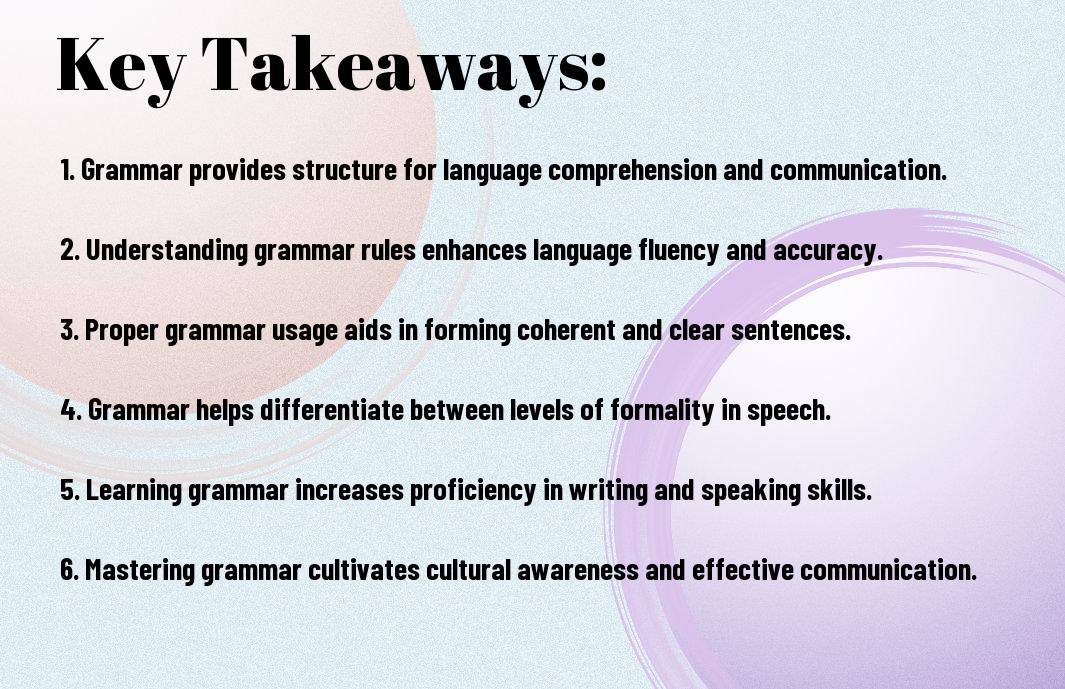
Key Takeaways:

  • Grammar is the backbone: Understanding grammar rules is crucial in mastering a new language as it provides the structure for meaningful communication.
  • Ensures clarity and accuracy: Proper grammar usage helps in conveying thoughts accurately and clearly, minimizing misunderstandings in conversations.
  • Boosts confidence: Proficiency in grammar gives language learners confidence in expressing themselves fluently and effectively in the target language.

The Foundation of Language

Grammar as the Building Blocks

For you to master a new language, you must understand that grammar serves as the foundation of any language. Just like building a house requires a strong foundation, mastering a language requires a solid understanding of grammar. Grammar provides the structure and rules that govern how words are put together to form sentences. By learning grammar, you will be able to construct meaningful and coherent sentences in the new language.

When you grasp the basic grammar rules, such as verb conjugation, sentence structure, and word order, you will be equipped with the building blocks needed to communicate effectively in the new language. While grammar may seem daunting at first, remember that it is imperative for you to progress and become fluent in the language.

The Importance of Syntax and Semantics

For you to truly master a new language, you must also understand the importance of syntax and semantics. Syntax refers to the arrangement of words in a sentence to convey meaning, while semantics focuses on the meaning of words and how they contribute to the overall understanding of a sentence. By grasping syntax and semantics, you will be able to express your thoughts clearly and accurately in the new language.

The way words are organized in a sentence can completely change the meaning of what you are trying to say. By paying attention to syntax and semantics, you will avoid misunderstandings and effectively convey your message to others. Understanding how syntax and semantics work together will make your language learning journey smoother and more successful.

The Role of Grammar in Communication

Clearly, grammar plays a crucial role in communication when mastering a new language. It serves as the foundation for effectively conveying your thoughts and ideas to others. By understanding the rules of grammar, you can structure your sentences in a way that makes sense and is coherent to the listener or reader.

Effective Expression of Ideas

An necessary aspect of grammar in communication is the effective expression of ideas. When you have a strong grasp of grammar, you can articulate your thoughts clearly and succinctly. Knowing how to use different tenses, word order, and sentence structure allows you to express yourself accurately, making it easier for others to understand you.

Avoiding Miscommunication

Miscommunication can easily arise when grammar rules are not followed correctly. Incorrect verb conjugation, misuse of punctuation, or improper word choice can lead to misunderstandings. By mastering grammar, you can minimize the risk of miscommunication and ensure that your message is conveyed accurately.

Miscommunication can hinder effective communication and create confusion between you and the listener. By paying attention to grammar rules, you can avoid potential pitfalls that may lead to misinterpretation of your intended meaning.

Grammar and Vocabulary Acquisition

All language learners have pondered the importance of grammar rules in the process of mastering a new language. Some argue that grammar rules serve as the backbone of a language, facilitating better understanding and communication. On the other hand, there are those who believe in a more natural approach, focusing on vocabulary acquisition and immersion. If you’re still unsure about the role grammar plays in your language learning journey, you can explore different perspectives on How important are grammar rules when learning a new language?

How Grammar Aids in Learning New Words

An vital aspect of grammar in language learning is its role in helping you understand and remember new words. Grammar rules provide a framework within which new vocabulary can be learned and applied correctly. For example, knowing the grammatical rules related to verb conjugation can help you understand how different words are used in various contexts, thus expanding your vocabulary more effectively.

The Interplay between Grammar and Lexicon

The relationship between grammar and vocabulary is symbiotic. While grammar rules offer the structure for language usage, vocabulary enriches the language with meaning. The interplay between grammar and lexicon is crucial for achieving fluency in a new language. By grasping grammar principles, you can better comprehend the nuances of vocabulary usage, and by expanding your lexicon, you enhance your ability to apply grammar rules accurately. This dynamic interaction between grammar and vocabulary is fundamental in your language acquisition journey.

Another important aspect to consider is that grammar provides the rules that govern how words are combined to form meaningful sentences. Without a solid understanding of grammar, it can be challenging to convey your thoughts accurately or comprehend the messages conveyed by others. Therefore, mastering grammar alongside vocabulary acquisition is vital for becoming proficient in a new language.

The Impact of Grammar on Reading and Writing Skills

Despite the challenges that grammar rules may present, mastering them is crucial for enhancing your reading and writing skills in a new language. Understanding grammar plays a significant role in both decoding and encoding text, which are important aspects of language acquisition.

Decoding and Encoding Text

Encoding text involves your ability to express your thoughts and ideas clearly in writing. By applying grammar rules correctly, you can construct sentences that effectively convey your message. Understanding the structure of a language, such as word order and verb conjugation, is vital for producing coherent written text.

Improving Comprehension and Fluency

Grammar also plays a crucial role in improving your comprehension and fluency when reading in a new language. By grasping grammar rules, you can better understand the relationships between words in a sentence and interpret the meaning of the text more accurately. This, in turn, enhances your reading fluency and overall language proficiency.

To enhance your reading and writing skills in a new language, it is important to dedicate time and effort to mastering grammar rules. By consistently practicing and applying these rules in your language learning journey, you will gradually improve your ability to decode and encode text effectively, as well as enhance your comprehension and fluency in the language.

Grammar and Cultural Nuances

Unlike The Importance of Grammar in English Language, where grammar is mainly viewed as a structural component of language, mastering grammar in a new language goes beyond just rules and syntax. It also involves understanding the cultural nuances that are embedded in the language.

Idiomatic Expressions and Colloquialisms

For a language learner, grasping idiomatic expressions and colloquialisms is crucial for effective communication. These expressions are unique to each language and often carry different meanings than their literal translations. By mastering these nuances, you not only blend in better with native speakers but also gain insights into the cultural context and humor of the language.

Cultural References and Allusions

For language mastery, it’s vital to probe into the cultural references and allusions present in the language. Understanding these references not only improves your language skills but also broadens your cultural knowledge. It enables you to connect more deeply with native speakers and facilitates a more nuanced understanding of the language.

Expressions that carry cultural significance may not have direct equivalents in your native language, so learning them expands your cultural literacy and enhances your ability to communicate effectively in a foreign language.

Overcoming Grammar Challenges

Common Pitfalls and Errors

To master a new language, you must be aware of common pitfalls and errors that learners often face when it comes to grammar. One of the most frequent mistakes is trying to translate directly from your native language, leading to awkward phrasing and incorrect word order. Additionally, incorrect verb conjugations and misuse of articles are common issues that can hinder your language learning progress.

Strategies for Improvement

For overcoming these challenges, it is important to immerse yourself in the language as much as possible. Practice regularly with native speakers or language exchange partners to get real-time feedback on your grammar usage. Additionally, utilizing language learning apps and resources that focus on grammar exercises can help you reinforce your understanding and application of grammar rules.

An effective strategy for improving your grammar skills is to break down complex grammar rules into smaller, more manageable parts. Instead of trying to learn everything at once, focus on one grammar concept at a time and practice it until you feel comfortable. This approach can prevent overwhelm and help you gradually build your grammatical proficiency.

Understanding

Understanding the importance of grammar in mastering a new language is crucial. Grammar serves as the foundation of a language, providing you with the structure and rules needed to effectively communicate. By identifying common pitfalls, implementing strategies for improvement, and breaking down complex grammar concepts, you can overcome grammar challenges and enhance your language learning journey.

Summing up

As a reminder, grammar plays a crucial role in mastering a new language. It provides you with the rules and structure necessary to communicate effectively and understand the language in its entirety. By familiarizing yourself with grammar rules, you can enhance your language skills and become more proficient in speaking, writing, and comprehending a new language.

Q: Why is grammar important when mastering a new language?

A: Grammar is crucial in language learning as it provides the structure and rules needed to form correct sentences and communicate effectively.

Q: How can grammar help in improving language skills?

A: Understanding grammar helps learners to construct sentences correctly, convey their thoughts accurately, and enhance their overall language proficiency.

Q: What are the consequences of neglecting grammar in language learning?

A: Neglecting grammar can lead to confusion, miscommunication, and inaccuracies in language usage, hindering the ability to fully grasp and master a new language.

How important is pronunciation in language learning, and what are the best ways to improve it

There’s a pivotal factor in language learning that often gets overlooked but plays a crucial role in communication – pronunciation. Your ability to pronounce words correctly can significantly impact your overall language fluency and understanding. In this blog post, we will research into why pronunciation is crucial in language learning and explore some of the best strategies to enhance your pronunciation skills. By implementing these tips, you can boost your confidence and improve your communication effectiveness in any language you are learning.

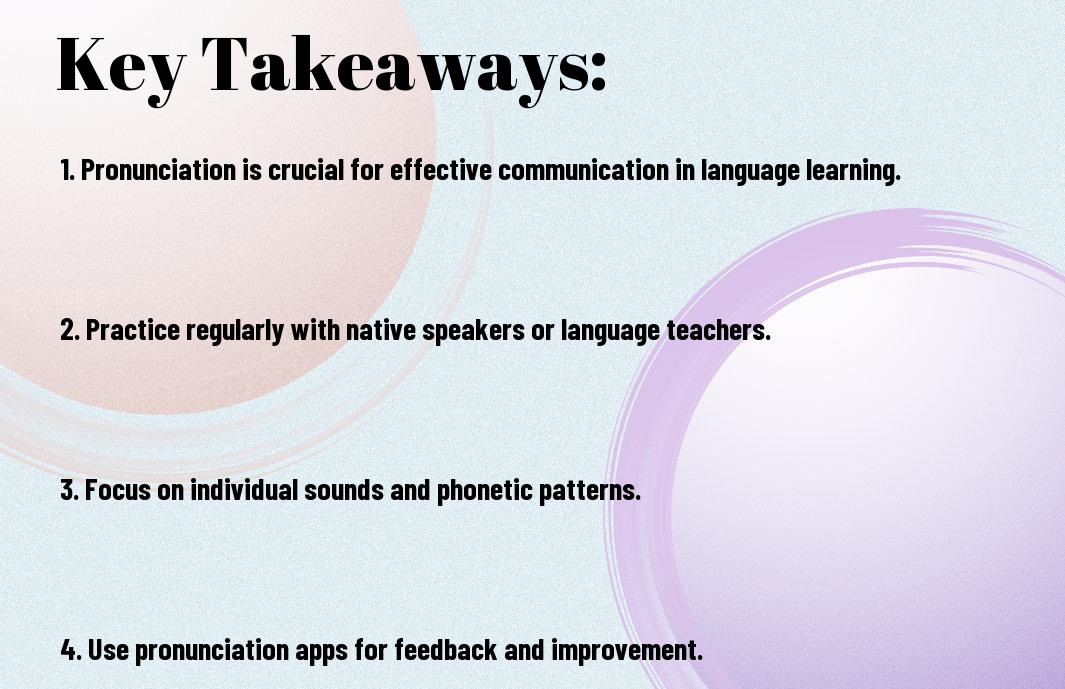
Key Takeaways:

  • Pronunciation is crucial in language learning: Proper pronunciation helps in clear communication and understanding in a second language.
  • Practice regularly: Consistent practice is key to improving pronunciation, whether through language immersion, audio resources, or working with a language tutor.
  • Focus on individual sounds: Pay attention to specific phonemes and practice their pronunciation to refine your overall language skills.

The Significance of Pronunciation in Language Learning

Why Pronunciation Matters

Significance is placed on pronunciation in language learning because it is crucial for effective communication. Proper pronunciation not only enhances your language skills but also makes it easier for native speakers to understand you. When you speak with accurate pronunciation, you convey your message clearly and confidently, which can lead to more meaningful interactions and connections with others.

The Impact of Poor Pronunciation on Communication

The impact of poor pronunciation on communication cannot be underestimated. When your pronunciation is off, it can lead to misunderstandings and confusion. It may hinder your ability to express yourself effectively and might even affect your confidence in using the language. Incorrect pronunciation can also create barriers in your communication with native speakers, making it harder for them to comprehend your message.

Another consequence of poor pronunciation is that it may affect how you are perceived by others. Native speakers may find it challenging to take you seriously or may assume that you are less proficient in the language if your pronunciation is not accurate. This could potentially limit your opportunities for advancement in your language learning journey.

Common Challenges in Mastering Pronunciation

Some language learners may encounter various challenges when it comes to mastering pronunciation. These obstacles can hinder your progress and make it difficult to communicate effectively in a target language. Understanding and addressing these challenges will help you improve your pronunciation skills and build confidence in your language learning journey.

Phonological Differences Between Languages

Common challenges in mastering pronunciation stem from the phonological differences between your native language and the language you are learning. Sounds that exist in one language may not exist in another, making it challenging to produce these new sounds accurately. For example, the pronunciation of tones in tonal languages like Mandarin Chinese or the guttural sounds in Arabic can be particularly challenging for learners whose native language lacks similar sounds.

Individual Speech Patterns and Habits

Pronunciation difficulties can also arise from individual speech patterns and habits that you have developed in your native language. Your brain may subconsciously try to apply the pronunciation rules of your first language to the new language you are learning, leading to inaccuracies. Overcoming these habits requires conscious effort and practice to retrain your mouth and ears to recognize and produce new sounds accurately.

Another aspect that can affect your pronunciation is your comfort level with making mistakes. Fear of embarrassment and self-consciousness can hinder your willingness to practice speaking out loud and experiment with new sounds. Embracing a growth mindset and understanding that making mistakes is a natural part of the language learning process can help you overcome this barrier.

Fear of Embarrassment and Self-Consciousness

Individuals may feel self-conscious about their pronunciation, worrying about being judged or laughed at by others. This fear of making mistakes can lead to a reluctance to practice speaking and a lack of confidence in your language skills. Remember that everyone makes pronunciation errors when learning a new language, and embracing these mistakes as opportunities for growth can help you progress more effectively.

Plus, seeking feedback from teachers, language partners, or language learning communities can provide valuable insights and encouragement to help you improve your pronunciation skills with confidence.

Effective Strategies for Improving Pronunciation

Listen and Imitate: The Power of Audio Models

On your journey to improving pronunciation, listening to native speakers and imitating their speech patterns is a powerful way to enhance your own pronunciation skills. Audio models provide you with a clear example of how words should sound, helping you grasp the nuances of pronunciation that may not be evident from written materials alone. By actively listening and mimicking these models, you can train your ear to recognize subtle differences in sounds and improve your own articulation.

Practice with a Language Exchange Partner or Tutor

Models to further enhance your pronunciation skills, practicing with a language exchange partner or tutor can provide invaluable feedback and guidance. Engaging in conversations with native speakers allows you to practice real-life scenarios and receive immediate corrections on your pronunciation. This interactive approach not only helps you refine your pronunciation but also boosts your confidence in speaking the language fluently.

Understanding the importance of regular practice, working with a language exchange partner or tutor can offer personalized support and insights into your specific pronunciation challenges. Through consistent practice and feedback, you can target areas for improvement and make noticeable progress in perfecting your pronunciation.

Record Yourself: Identifying Areas for Improvement

Effective pronunciation requires self-awareness and the ability to identify areas that need improvement. Recording yourself speaking in the target language allows you to listen back and pinpoint areas where your pronunciation may fall short. By comparing your recordings to native speakers or language resources, you can recognize patterns of mispronunciation and focus your efforts on refining those specific sounds or intonations.

Audio feedback from self-recordings can provide valuable insights into your progress and help you track improvements in your pronunciation over time. Utilize this self-assessment tool regularly to fine-tune your pronunciation skills and tailor your practice sessions for maximum impact.

The Role of Technology in Pronunciation Practice

Once again, technology proves to be a valuable tool in language learning, especially when it comes to improving pronunciation. With a variety of apps, online resources, and speech recognition software available, you have many options to enhance your pronunciation skills effectively.

Language Learning Apps with Pronunciation Features

On your language learning journey, consider utilizing apps that offer pronunciation features. These apps often incorporate voice recognition technology to provide feedback on your pronunciation accuracy. They may also include interactive exercises and drills specifically designed to help you improve your speaking skills.

Online Resources for Pronunciation Exercises and Drills

On your quest for better pronunciation, you can access a plethora of online resources that offer pronunciation exercises and drills. These resources range from websites with audio examples of native speakers pronouncing words to platforms with interactive exercises that allow you to practice and receive instant feedback on your pronunciation.

Apps such as Duolingo and Babbel offer pronunciation exercises and drills to help you fine-tune your speaking skills. These tools make practicing pronunciation engaging and interactive, allowing you to improve gradually over time.

Speech Recognition Software for Feedback

Feedback is crucial when working on your pronunciation, and speech recognition software can provide valuable insights into your language skills. Programs like Rosetta Stone and Pimsleur incorporate speech recognition technology to analyze your pronunciation and offer feedback on areas for improvement. This instant feedback can be instrumental in refining your pronunciation habits.

For instance, using speech recognition software, you can differentiate between subtle pronunciation nuances and work on perfecting your accent through targeted exercises. The real-time feedback allows you to track your progress and adjust your pronunciation practice accordingly.

Building Confidence in Pronunciation

All language learners face the challenge of improving their pronunciation at some point in their journey. You might have come across discussions like “How important is it to you to improve your pronunciation…” on forums, reflecting the common concern many learners share. Building confidence in pronunciation involves embracing your learning process and focusing on gradual improvement rather than striving for perfection.

Focus on Intelligibility Over Perfection

With pronunciation, the goal should be to aim for intelligibility rather than flawless pronunciation. It’s natural to have an accent, as long as you can communicate your message effectively. Don’t let the pursuit of perfection hinder your progress. Embrace your unique way of speaking as part of your language journey.

Developing a Growth Mindset

Intelligibility in pronunciation comes from consistent practice and a growth mindset. Rather than viewing pronunciation as a fixed trait, see it as a skill that can be developed over time. Celebrate the improvements you make, no matter how small they may seem at first. Bear in mind, every step forward is a step towards clearer communication.

Another crucial aspect of developing a growth mindset in pronunciation is to welcome constructive feedback. Instead of feeling discouraged by corrections, see them as opportunities to refine your pronunciation further. Embrace the process of learning and see each correction as a step towards improvement.

Celebrating Small Victories and Progress

Pronunciation improvement is a journey filled with small victories and progress that should be acknowledged and celebrated. Every time you master a tricky sound or receive a compliment on your pronunciation, take a moment to appreciate how far you’ve come. These moments of success are vital in boosting your confidence and motivation to continue improving.

Victories might include successfully ordering a meal in a foreign language without being misunderstood or engaging in a conversation where your pronunciation is clear. Each of these accomplishments builds your confidence and encourages you to keep honing your pronunciation skills. Bear in mind, it’s the small steps that lead to significant progress in your language learning journey.

Overcoming Common Pronunciation Obstacles

Your language learning journey may encounter some pronunciation obstacles along the way. To gain a deeper understanding of the importance of pronunciation in language learning, check out How important is pronunciation and accent when learning a new language on Quora. Here are some common hurdles you may face and tips to overcome them.

Dealing with Silent Letters and Diphthongs

Obstacles like silent letters and diphthongs can present challenges in pronunciation. When faced with silent letters, remember to pay attention to native speakers and mimic their pronunciation. For diphthongs, practice saying them slowly and then gradually increase your speed. Listening to audio resources and practicing with language partners can also help you master these tricky sounds.

Mastering Rhythm and Stress Patterns

The rhythm and stress patterns in a language play a crucial role in effective communication. The way words are stressed in sentences can change the meaning or tone of a conversation. To master these patterns, immerse yourself in the language through music, movies, and podcasts. By listening attentively to native speakers and practicing speaking with the correct stress and intonation, you’ll enhance your overall pronunciation skills.

Another obstacle that you may encounter in language learning is conquering accents and intonation. Accents can vary greatly from region to region, affecting how words are pronounced and the musicality of the language. Intonation, the rise and fall of pitch in speech, also plays a significant role in conveying emotions and intentions in communication. To conquer these challenges, expose yourself to a variety of accents through listening to different dialects, engaging with native speakers, and practicing speaking with a focus on intonation. By embracing these differences and actively working on your accent and intonation, you can sharpen your pronunciation skills and enhance your overall language proficiency.

With these strategies and a positive attitude towards overcoming pronunciation obstacles, you can make significant progress in improving your language skills. Remember that practice and persistence are key in refining your pronunciation and sounding more like a native speaker. Embrace the journey of learning a new language, and celebrate each step forward in your linguistic development.

Summing up

With these considerations in mind, it is evident that pronunciation plays a crucial role in language learning. Improving your pronunciation can greatly enhance your ability to communicate effectively and be understood by native speakers. To enhance your pronunciation skills, practicing regularly, listening to native speakers, and utilizing technology such as language learning apps can be highly beneficial.

Q: Why is pronunciation important in language learning?

A: Proper pronunciation is crucial for effective communication in a foreign language. It helps you be understood by native speakers and improves your listening comprehension skills.

Q: What are the benefits of improving pronunciation in language learning?

A: Improved pronunciation can boost your confidence when speaking the language, enhance your overall language skills, and make it easier for you to connect with native speakers and immerse yourself in the culture.

Q: What are the best ways to improve pronunciation in language learning?

A: Some effective ways to improve pronunciation include practicing regularly, listening to native speakers, using language learning apps with speech recognition features, working with a language tutor, and participating in language exchange programs.

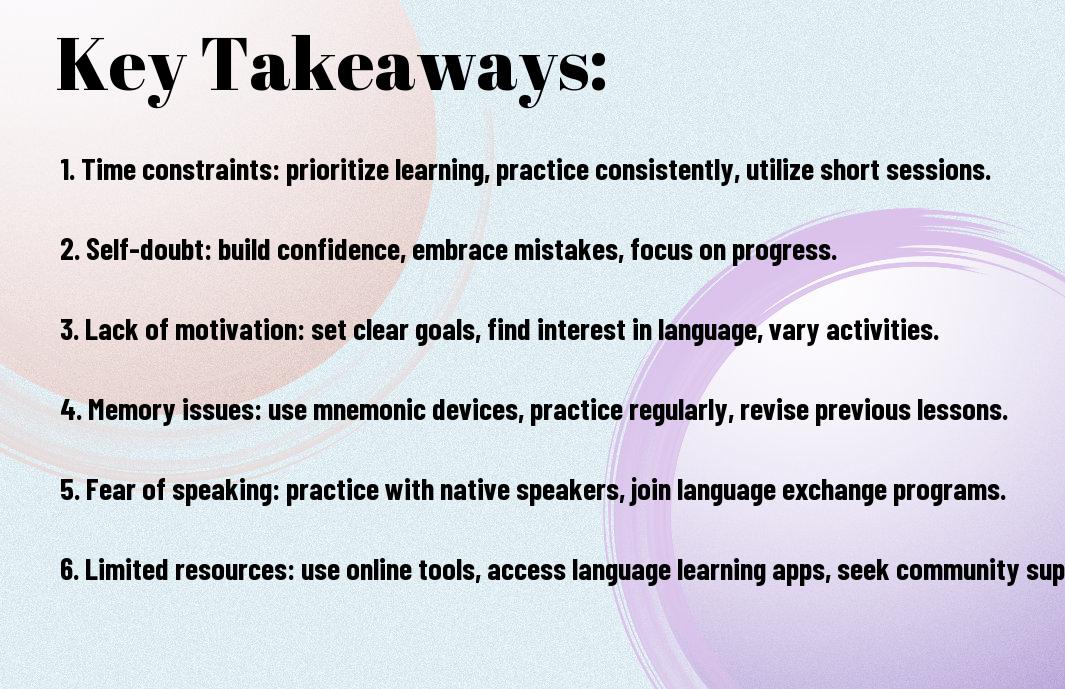
What are the common challenges faced by adult language learners, and how can they be overcome

With the world becoming increasingly interconnected, the ability to learn a new language as an adult is crucial. However, as an adult language learner, you may face challenges such as time constraints, fear of making mistakes, lack of immersion, and difficulty in retaining new vocabulary. In this blog post, we will explore these common hurdles and provide practical tips on how you can overcome them to enhance your language learning journey. So, let’s dive in and discover how you can conquer these obstacles and become a more confident and proficient language learner!

Key Takeaways:

  • Motivation is crucial: Adult language learners often face challenges such as lack of motivation, busy schedules, and competing priorities. It is important to set clear goals, find meaningful reasons to learn the language, and stay committed to the learning process.
  • Practice and consistency are key: Consistent practice is necessary for language learning. Adults should create a study routine, practice regularly, immerse themselves in the language through various activities, and seek opportunities to use the language in real-life situations.
  • Overcoming fear of making mistakes: Fear of making mistakes can hinder adult language learners’ progress. It is important to remember that making mistakes is a natural part of the learning process. Learners should embrace their mistakes, learn from them, and use them as opportunities to improve their language skills.

The Struggle is Real

While commenceing on your journey to learn a new language, you are likely to encounter a multitude of challenges that can make the process seem daunting. From linguistic barriers to cultural differences, these obstacles can sometimes hinder your progress and leave you feeling frustrated. However, with the right approach and strategies, you can overcome these challenges and make significant strides in your language learning journey.

Linguistic Barriers

Barriers such as grammar rules, pronunciation differences, and complex sentence structures can make it difficult for adult language learners to grasp a new language. These challenges can be particularly daunting if the new language belongs to a different language family or has a writing system that is vastly different from your native language. To overcome linguistic barriers, it is imperative to practice regularly, engage with native speakers, and seek the help of a tutor or language exchange partner who can provide guidance and feedback.

Cultural Differences

Linguistic challenges are often intertwined with cultural differences, as language is deeply connected to a society’s beliefs, customs, and values. Understanding the cultural context of a language is crucial for effective communication and language proficiency. By immersing yourself in the culture of the language you are learning—through music, films, literature, and social interactions—you can gain a deeper appreciation for the language and overcome cultural barriers that may impede your progress.

Cultural differences can also manifest in language etiquette, body language, and expressions that may not have direct translations in your native language. By being open-minded and curious about different cultural norms and practices, you can navigate these differences with respect and sensitivity, ultimately enhancing your language learning experience.

Fear and Self-Doubt

Any adult language learner can relate to the feelings of fear and self-doubt that often accompany the language learning journey. These emotions can stem from various sources such as the fear of making mistakes, feeling embarrassed about speaking incorrectly, or doubting your ability to master a new language. In this chapter, we will explore how you can overcome these challenges and build your confidence as a language learner.

Overcoming Embarrassment

For many adult language learners, one of the biggest hurdles to overcome is the fear of embarrassment. You may worry about mispronouncing words, using incorrect grammar, or not being understood by native speakers. However, it’s necessary to remember that making mistakes is a natural part of the learning process. In fact, embracing your mistakes and learning from them is one of the most effective ways to improve your language skills. In the article How To Overcome Struggles Faced by Adult Learners …, you can find valuable tips on how to navigate through these feelings of embarrassment and turn them into opportunities for growth.

Building Confidence

Any adult language learner can attest to the fact that confidence plays a crucial role in language acquisition. When you believe in your abilities and approach language learning with a positive mindset, you are more likely to succeed. Building confidence in your language skills involves practicing regularly, setting achievable goals, and celebrating your progress along the way. Additionally, surrounding yourself with a supportive language learning community and seeking feedback from native speakers can boost your confidence and motivation.

Understanding that everyone makes mistakes and that language learning is a journey with ups and downs can help you build the confidence needed to overcome challenges. By embracing your mistakes, setting realistic goals, and seeking support from fellow learners, you can cultivate a strong sense of confidence in your language learning abilities.

Time Management and Prioritization

Many adult language learners struggle with finding enough time in the day to dedicate to language learning amidst their various responsibilities. Scheduling language learning sessions can be a challenge, especially when juggling work, family, and other commitments. To overcome this challenge, it’s vital to block out specific times in your daily or weekly schedule dedicated solely to language learning. By treating these learning sessions as non-negotiable appointments, you prioritize language learning and ensure it receives the attention it deserves.

Scheduling Language Learning

On your calendar or planner, designate specific time slots for language learning, and try to stick to them as closely as possible. Whether it’s early in the morning before the day gets hectic or late at night when things wind down, find a time that works best for you and make it a consistent part of your routine. Do not forget, consistency is key in language learning, so establishing a regular study schedule will help you progress more effectively.

Staying Motivated

The journey of learning a new language can be long and challenging, leading many adult learners to feel demotivated at times. The key to staying motivated is to set clear and achievable goals for yourself. Break down your language learning journey into smaller milestones, such as learning a certain number of new words per week or holding a basic conversation within a specific timeframe. Celebrate your achievements along the way to keep yourself motivated and engaged with the learning process.

Additionally, surrounding yourself with the language you’re learning can also help keep you motivated. Listen to music, watch movies or TV shows, or follow social media accounts in the target language to immerse yourself in it outside of study sessions. This constant exposure will reinforce your learning and make it feel more relevant and enjoyable.

Learning Styles and Strategies

After reading about the common challenges faced by ESL students, it’s crucial to understand that each person has a unique way of learning. Finding the right method that suits your learning style is crucial. Some people learn better through visual aids, while others prefer auditory or kinesthetic methods. Experiment with different techniques to see what works best for you. Don’t be afraid to mix and match various strategies until you find the ones that resonate most with you.

Finding the Right Method

To make the most of your language learning journey, it’s vital to identify the methods that cater to your individual learning style. Visual learners may benefit from using flashcards, videos, or colorful mind maps. Auditory learners could find listening to podcasts, music, or language audio lessons helpful. Kinesthetic learners might prefer using gestures, acting out scenarios, or engaging in hands-on activities to reinforce their language skills. By understanding how you learn best, you can tailor your study approach to optimize your language acquisition.

Using Technology to Your Advantage

For modern language learners, technology offers a wealth of resources to enhance your learning experience. Online language courses, language exchange apps, and interactive learning platforms provide flexibility and convenience. You can access a vast array of digital tools to practice reading, writing, speaking, and listening skills. Integrating technology into your language learning routine can make studying more engaging and interactive. Take advantage of language learning apps, video tutorials, and social media language groups to immerse yourself in the language and connect with other learners worldwide.

Advantage

Incorporating technology into your language learning journey can expose you to authentic language use, cultural insights, and real-life scenarios. Language learning apps often incorporate gamification elements to make studying enjoyable and motivate you to progress. Additionally, digital platforms offer instant feedback on your exercises, pronunciation, and language comprehension, allowing you to track your improvement over time. By leveraging technology effectively, you can turn your device into a powerful language learning tool that complements traditional study methods.

Practice, Practice, Practice

On your language learning path, consistent practice is key to mastering a new language. Dedicate regular time to practice speaking, listening, reading, and writing in the target language. Practice not only improves your language skills but also boosts your confidence in using the language. Engage in conversations with native speakers, join language exchange programs, or participate in language meet-up groups to apply what you’ve learned in real-life situations. The more you practice, the more comfortable and proficient you’ll become in the language.

It

It’s crucial to create a study routine that includes daily practice sessions and opportunities to interact with the language. Set specific language learning goals and track your progress to stay motivated and focused. Embrace your mistakes as part of the learning process and learn from them. Regular practice, combined with a positive attitude and perseverance, will significantly enhance your language proficiency over time.

Overcoming Plateaus

Identifying Stagnation

Now, as you progress on your language learning journey, you may encounter times when you feel like your improvement has stalled. Any language learner experiences plateaus, where your skills seem to hit a ceiling, and no matter how much effort you put in, you don’t seem to be moving forward.

It’s vital to recognize when you’ve reached a plateau so that you can take steps to overcome it. Reflect on your recent progress and be honest with yourself about whether you’ve stopped advancing. Identifying stagnation is the first step towards reigniting your language learning momentum.

Shaking Things Up

An effective way to overcome plateaus is to shake things up in your learning routine. Try experimenting with different study methods, resources, or even change the setting where you typically practice. An abrupt change in your routine can reignite your motivation and stimulate your brain in new ways.

By introducing variety into your learning process, you can keep things fresh and challenging. For example, if you’ve solely focused on vocabulary drills, switch gears and engage in conversational practice with a language exchange partner. This change can help break the monotony and push you past the plateau.

With a bit of creativity and willingness to step out of your comfort zone, you can find innovative ways to keep your language learning journey engaging and rewarding.

Seeking Feedback

Plateaus are a common occurrence in language learning, but they don’t have to hinder your progress indefinitely. Seeking feedback from teachers, tutors, or even fellow language learners can provide you with valuable insights into areas where you may be stuck.

Feedback can help you pinpoint weaknesses in your language skills and guide you on how to address them effectively. Additionally, receiving encouragement and constructive criticism from others can reignite your motivation and drive to push through the plateau.

Stagnation is a natural part of the language learning process, but with the right strategies and support, you can overcome these challenges and continue advancing towards your fluency goals.

The Power of Community

Unlike learning in isolation, being part of a community can greatly enhance your language learning journey. Engaging with others who are also on the same path can provide motivation, support, and valuable opportunities to practice and improve your skills.

Joining Language Exchange Groups

To maximize your language learning experience, consider joining language exchange groups in your local community or online. These groups typically consist of language learners who are looking to practice with native speakers in a conversational setting. By participating in these exchanges, you can not only improve your language skills but also gain cultural insights and make new friends.

Finding a Language Buddy

Buddy

It’s important to find a language buddy who shares your goals and interests in language learning. This person can be a native speaker of the language you are learning or someone at a similar proficiency level. Having a language buddy gives you a dedicated partner to practice with, ask questions, and keep each other accountable in your learning journey.

Online Resources and Forums

The

Online resources and forums are valuable tools for adult language learners. Platforms like language learning apps, online forums, and social media groups provide access to a wealth of information, language exchange opportunities, and support from a global community of language enthusiasts. You can find study materials, language exchange partners, and even virtual language meetups to practice speaking and listening skills.

Online resources and forums offer flexibility and convenience, allowing you to engage with language learning whenever and wherever you are. Whether you have a quick question, need help with a particular grammar rule, or want to practice speaking with a native speaker, these online platforms are accessible 24/7 to support your language learning journey.

Final Words

Upon reflecting on the common challenges faced by adult language learners, it is clear that there are various obstacles that can hinder your progress. However, by recognizing these challenges and implementing effective strategies, you can overcome them and achieve your language learning goals. Remember to stay patient and consistent in your efforts, as language acquisition is a gradual process that requires time and dedication.

It is important to stay motivated and find ways to make your language learning experience enjoyable. Surround yourself with the language as much as possible, practice regularly, and seek support from peers or language instructors when needed. By staying positive, setting realistic goals, and utilizing available resources, you can navigate through the challenges of adult language learning and make significant progress in mastering a new language.

Q: What are the common challenges faced by adult language learners?

A: Adult language learners often face challenges such as limited time due to work or family commitments, difficulty in retaining new vocabulary, and fear of making mistakes when speaking.

Q: How can adult language learners overcome the challenge of limited time?

A: Adult language learners can overcome the challenge of limited time by setting aside small, consistent blocks of time each day for language practice, utilizing apps or online resources for on-the-go learning, and incorporating language learning into daily activities like commuting or chores.

Q: How can adult language learners overcome the fear of making mistakes when speaking?

A: Adult language learners can overcome the fear of making mistakes when speaking by practicing speaking with a language partner or tutor who provides supportive feedback, focusing on progress rather than perfection, and embracing mistakes as a natural part of the learning process.

How can one maintain proficiency in a language that is not frequently used

You may find yourself proficient in a language but struggle to maintain it when not regularly used. Keeping up with a language requires consistent effort and practice, even if you are not using it daily. In this post, you will discover effective strategies to help you stay proficient in a language that is not frequently spoken in your environment. By incorporating these tips into your routine, you can ensure that your language skills remain sharp and ready for use whenever needed.

Key Takeaways:

  • Consistent Practice: Regularly engaging with the language through reading, writing, listening, and speaking helps maintain proficiency.
  • Language Exchange: Finding a language partner or group to practice with can keep skills sharp and provide opportunities for conversation.
  • Immersive Experiences: Watching movies, listening to music, or participating in cultural activities in the language can help immerse oneself and prevent language skills from deteriorating.

Identifying Language Decay

In order to combat language decay, it’s crucial to first identify the signs of language rustiness. By recognizing these indicators early on, you can take proactive steps to maintain and improve your proficiency in a less frequently used language.

Recognizing the signs of language rustiness

Common signs of language decay include difficulty in recalling vocabulary, struggling with grammar structures, or feeling a lack of confidence when speaking or writing in the language. If you find yourself hesitating more often than usual or feeling less comfortable communicating in the language, it may be time to address these issues before they worsen.

Common mistakes that lead to language proficiency loss

Language proficiency loss can often be attributed to common mistakes such as neglecting regular practice, relying solely on passive learning methods like reading or listening without actively engaging in speaking or writing, or failing to maintain exposure to the language through media, conversations, or cultural immersion. These missteps can gradually erode your language skills over time.

With consistent effort and a proactive approach to addressing these common mistakes, you can prevent language proficiency loss and keep your skills sharp even when not frequently using the language in daily life. By recognizing the signs of language decay and taking steps to mitigate them, you can maintain and even improve your proficiency over time.

Setting Language Goals

You may find it challenging to maintain proficiency in a language that is not frequently used. Setting clear language goals can help you stay motivated and focused on your language learning journey. Check out resources like ‘Maintaining Proficiency Outside of the Classroom’ to gather ideas and strategies.

Defining achievable language proficiency objectives

Achievable language proficiency objectives are crucial for tracking your progress and staying on course. Start by assessing your current level of proficiency and then set specific, measurable goals. For example, you might aim to have a certain level of fluency in conversations, or be able to read and comprehend articles in the target language. Breaking down your goals into smaller, manageable steps can make the process less overwhelming and more attainable.

Creating a language maintenance schedule

Schedule regular time slots for language practice in your daily or weekly routine. Consistency is key to maintaining proficiency, so allocate dedicated time for activities such as reading, listening to podcasts, watching movies, or engaging in conversation with native speakers. By integrating language practice into your schedule, you are more likely to stay engaged and make steady progress.

Language maintenance schedules can vary based on individual preferences and availability. Experiment with different times of the day to determine when you are most alert and receptive to language learning. Whether it’s a daily 30-minute session or longer sessions a few times a week, find a schedule that works for you and stick to it as closely as possible to ensure steady language skill development.

Language Practice Strategies

Not using a language frequently can lead to a decline in proficiency over time. To maintain and improve your language skills, it is imperative to incorporate various practice strategies into your routine.

Reading and Listening Comprehension Exercises

Comprehension exercises are crucial for enhancing your language skills. To improve your reading comprehension, try reading books, articles, or watching movies and TV shows in the language you want to practice. For listening skills, listen to podcasts, songs, or audiobooks. It is beneficial to focus on different accents and dialects to broaden your understanding of the language.

Speaking and Writing Practice Techniques

Practice speaking the language regularly, even if you don’t have a language partner. You can record yourself speaking or have conversations with native speakers through language exchange platforms. For writing practice, try journaling, writing essays, or maintaining a blog in the language. By consistently practicing speaking and writing, you can strengthen your language skills and become more fluent over time.

To make the most of your speaking and writing practice, set specific goals for yourself. Whether it’s writing a certain number of sentences each day or participating in language exchange sessions weekly, having clear objectives will help you stay motivated and track your progress in the language.

Language Exchange Programs and Online Resources

Resources such as language exchange programs and online platforms can provide valuable opportunities to practice your language skills. Join language exchange groups where you can interact with native speakers who are learning your language. Additionally, use language learning apps, websites, and online forums to access learning materials, interactive exercises, and language communities.

This exposure to different resources and interactions with speakers of the language can help you stay engaged and motivated in your language learning journey. Incorporating these tools into your practice routine can significantly enhance your proficiency and keep your language skills sharp.

Immersion and Exposure

Surrounding yourself with the target language

Now, to maintain proficiency in a language that is not frequently used, one of the most effective methods is to surround yourself with the target language as much as possible. This means immersing yourself in environments where the language is spoken, such as joining language meetups, seeking out cultural events, or finding language exchange partners.

Watching TV shows and movies in the target language

On yourself, another great way to stay proficient in the target language is by watching TV shows and movies in that language. This provides a way to not only practice listening skills but also to pick up on colloquial expressions and cultural nuances that are often not taught in formal language courses.

Watching TV shows and movies in the target language can be an enjoyable way to stay engaged with the language. You can start with subtitles in your native language and then gradually switch to subtitles in the target language as you become more comfortable.

Listening to podcasts and radio shows in the target language

Language, listening to podcasts and radio shows in the target language is a convenient way to incorporate language learning into your daily routine. Whether you listen during your commute, while exercising, or during downtime, this practice helps you tune your ear to the language and exposes you to various accents and speaking styles.

Plus, podcasts and radio shows often cover a wide range of topics, allowing you to explore different vocabulary and improve your understanding of specialized terms in the language.

Overcoming Obstacles

Once again, maintaining proficiency in a language that is not frequently used can present various obstacles. However, with determination and the right strategies, you can overcome these challenges and continue to progress in your language skills.

Dealing with language learning plateaus

Plateaus are common in language learning, where you may feel like your progress has stalled. During these times, it’s vital to stay patient and persistent. To overcome plateaus, try mixing up your study routine by incorporating new materials, such as podcasts, movies, or books in the language you’re learning. Additionally, practicing with a language partner or tutor can provide fresh perspectives and insights to help you break through the plateau and continue advancing.

Managing time constraints and busy schedules

With busy schedules, finding time to practice a language can be challenging. It’s crucial to prioritize language learning and integrate it into your daily routine. You can make use of short pockets of time throughout the day, such as during your commute or lunch break, to engage with the language. Utilizing language learning apps or setting specific goals can also help you stay on track with your language practice.

This subsection focuses on effective time management strategies to help you incorporate language learning into your busy schedule seamlessly. By creating a structured study plan and setting realistic goals, you can make steady progress in maintaining your language proficiency.

Staying motivated and avoiding burnout

Language learning is a journey that requires consistent effort and dedication. To stay motivated, set clear goals and celebrate your achievements along the way. Surround yourself with the language through music, films, or connecting with native speakers. Take breaks when needed to prevent burnout, and remember that learning a language is a gradual process that requires persistence and resilience.

Understanding the importance of self-care and balance is crucial in staying motivated and avoiding burnout when maintaining proficiency in a language. By listening to your needs and adjusting your study routine as necessary, you can sustain your enthusiasm for learning and continue reaching new milestones in your language journey.

Language Learning Tools and Resources

Unlike traditional methods of language learning, today, you have access to a multitude of tools and resources that can help you maintain proficiency in a language that you do not frequently use. These resources can be conveniently accessed online, making it easier for you to incorporate language learning into your daily routine.

Language learning apps and software

Apps and language learning software have revolutionized the way people learn languages. With interactive lessons, vocabulary training, and even pronunciation practice, these tools provide a convenient way for you to keep up with your language skills. Whether you have a few minutes during your commute or before bed, you can easily squeeze in some language practice with these handy apps.

Online language courses and tutorials

For a more structured approach to language learning, online language courses and tutorials are an excellent option. Many platforms offer courses designed by language experts that cover various aspects of the language, from grammar to conversation practice. These courses often allow you to learn at your own pace, making it easier for you to fit language learning into your busy schedule.

Online language courses and tutorials also provide opportunities for interaction with instructors and fellow learners, giving you a sense of community and support as you work on maintaining your language proficiency.

Language exchange websites and social media groups

Courses on language exchange websites and social media groups offer a unique way to practice your language skills. By connecting with native speakers or other language learners, you can engage in conversations, receive feedback on your language use, and even make new friends. These platforms create a dynamic and interactive environment for you to keep your language skills sharp.

To get the most out of language exchange websites and social media groups, ensure that you actively participate in conversations, ask questions, and offer to help others with their language learning journey. By immersing yourself in these communities, you can stay motivated and engaged in maintaining your language proficiency.

Final Words

With this in mind, it is vital to stay dedicated and consistent in your efforts to maintain proficiency in a language that is not frequently used. Practice regularly, engage in conversations with native speakers whenever possible, and immerse yourself in the language through books, movies, music, and online resources. Remember that language proficiency is a skill that requires ongoing practice to stay sharp and avoid deterioration over time.

If you are looking for more tips on how to maintain fluency in a language you are not using frequently, you can also check out this Quora post that provides some valuable insights and strategies to help you keep your language skills sharp.

FAQ

Q: How can one maintain proficiency in a language that is not frequently used?

A: To maintain proficiency in a language that is not frequently used, consider setting aside dedicated time each day or week for language practice. This could include activities such as reading, listening to music or podcasts, watching movies, or speaking with native speakers. Consistency is key to retaining language skills.

Q: What are some effective ways to practice a language on a regular basis?

A: Some effective ways to practice a language regularly include joining language exchange groups, using language learning apps or online platforms, participating in language classes or workshops, and immersing yourself in the language through cultural activities or travel experiences. Find what works best for you and make it a part of your routine.

Q: How can one stay motivated when maintaining proficiency in a language?

A: To stay motivated while maintaining proficiency in a language, set specific and achievable goals for your language learning journey. Celebrate small successes along the way, track your progress, and reward yourself for reaching milestones. Additionally, connect with others who share your passion for the language to stay inspired and motivated.

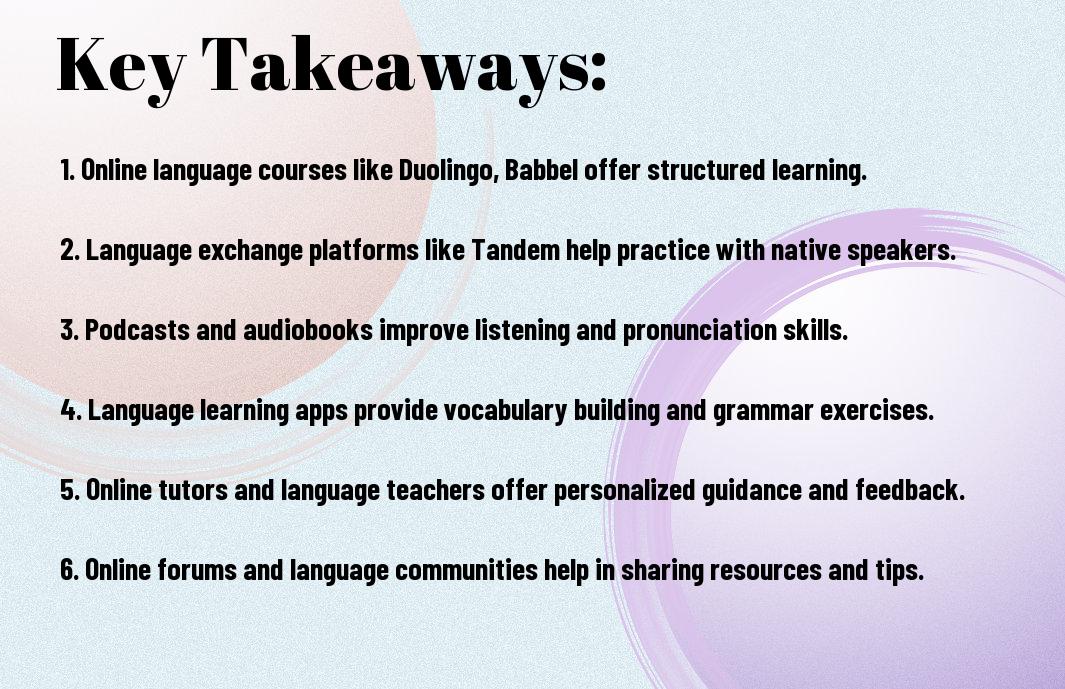
What are the best resources for self-study in language learning

Many language learners like yourself often wonder about the most effective resources for self-study in language learning. Fear not, for in this informative post, we will guide you through a curated list of top resources that will help you on your language learning journey. From online platforms and mobile apps to books and podcasts, we’ll help you navigate the sea of options and find the perfect tools to enhance your self-study experience. So, grab your favorite language learning tool and let’s dive in!

Key Takeaways:

  • Utilize online language learning platforms: Websites and apps such as Duolingo, Babbel, and Rosetta Stone offer structured language lessons, interactive exercises, and progress tracking to aid in self-study.
  • Engage with native speakers: Join language exchange programs, online forums, or language meetup groups to practice speaking with native speakers, receive feedback, and immerse yourself in the language.
  • Access free resources: Make use of free resources like YouTube tutorials, podcasts, language learning blogs, and online dictionaries to supplement your self-study and enhance your language skills.

Setting Your Language Learning Goals

While begining on the journey of learning a new language, it is crucial to set clear goals to keep yourself motivated and on track. Identifying your motivation and defining your objectives are key steps in this process.

Identifying Your Motivation

One of the first steps in setting language learning goals is to identify your motivation. Are you learning a new language for travel, work, personal growth, or simply for fun? Understanding why you want to learn a language will help you stay committed when faced with challenges along the way. Your motivation will act as a driving force to keep you going, even when the going gets tough.

Defining Your Objectives

Objectives are the specific, measurable goals that will guide your language learning journey. Whether you aim to achieve fluency, pass a language proficiency test, or simply hold a basic conversation, defining your objectives will give you a clear direction to focus your efforts. Remember to set both short-term and long-term objectives, breaking down the learning process into manageable steps to avoid feeling overwhelmed.

A clear set of objectives will help you track your progress, celebrate small victories along the way, and stay motivated to reach your ultimate language learning goals. By defining concrete objectives, you will know exactly what you are working towards and can adjust your study methods as needed to stay on course.

Language Learning Apps and Online Platforms

There’s a plethora of language learning apps and online platforms available today that make learning a new language more accessible and convenient than ever before. Whether you prefer the gamified approach of language learning apps or the structured curriculum of online platforms, there is something out there to suit your learning style.

Duolingo: The Popular Choice

Online platforms like Duolingo have gained immense popularity in the language learning world due to their engaging interface and fun, interactive lessons. Duolingo offers a wide range of languages to choose from and allows you to practice reading, writing, listening, and speaking skills in a balanced way.

Babbel: Comprehensive and Structured

Popular among language learners looking for a more structured approach, Babbel provides comprehensive lessons that cover grammar, vocabulary, and cultural insights. The platform tailors your learning experience based on your level and goals, offering a more personalized path to fluency.

The

Rosetta Stone: A Paid Option with a Proven Track Record

Learning a language through Rosetta Stone involves a paid subscription, but it comes with a proven track record of success. The platform focuses on immersive learning, using images, audio, and text to help you truly understand and internalize the language you’re studying. With speech recognition technology, Rosetta Stone also provides valuable feedback on your pronunciation.

Language Exchange Websites and Communities

italki: Finding a Language Partner or Tutor

To truly immerse yourself in a language and accelerate your learning, you need to practice speaking with native speakers. On italki, you can find language partners or tutors who can help you improve your speaking skills. Whether you’re looking for casual conversations or structured lessons, italki offers a platform to connect with speakers of your target language.

Conversation Exchange: Practicing with Native Speakers

To hone your language skills through real conversations, platforms like Conversation Exchange are invaluable. Engaging with native speakers not only helps you improve your speaking abilities but also enriches your cultural understanding. Conversation Exchange facilitates language practice through structured language exchange meetings, making it easier for you to find language partners.

Practicing with native speakers is a key aspect of language learning. These conversations expose you to the nuances of the language, improve your pronunciation, and boost your confidence in using the language in real-life situations. Take advantage of platforms like Conversation Exchange to enhance your language skills through authentic interactions.

Reddit’s Language Learning Community: Support and Resources

Finding a supportive community can make a significant difference in your language learning journey. On Reddit, you can join various language learning subreddits to connect with fellow learners, exchange tips, and find valuable resources. Reddit’s Language Learning Community offers a space where you can seek advice, share your progress, and engage in discussions about language learning strategies.

Engage in language exchange on Reddit to broaden your perspectives and gain insights from learners worldwide. The platform provides a diverse range of language-related topics, resources, and a supportive community to keep you motivated and informed on your language learning path.

Language Learning Podcasts

Now, let’s explore some of the best language learning podcasts that can aid you in your self-study journey.

Coffee Break: Relaxing and Informative

On your language learning journey, sometimes you just need a relaxing yet informative podcast to help you absorb new vocabulary and phrases. Coffee Break language podcasts are perfect for this. With a variety of languages to choose from, including Spanish, French, Italian, and more, these podcasts provide a blend of language lessons and cultural insights. You can listen to them while sipping your morning coffee or during your commute, making learning a new language a part of your daily routine.

News in Slow: Listening Comprehension

Comprehension is key in language learning, and what better way to enhance your listening skills than with News in Slow podcasts. These podcasts deliver the news in a slowed-down pace, making it easier for you to grasp the content and improve your comprehension. You can stay updated on current events while honing your language skills, making the learning process both educational and engaging.

Learning a new language can be daunting, but with the right resources, like News in Slow podcasts, you can gradually build your listening skills and boost your confidence in understanding the language more effectively.

60-Second Italian: Bite-Sized Lessons

Podcasts like 60-Second Italian offer bite-sized language lessons that fit perfectly into your busy schedule. In just a minute, you can learn a new phrase, vocabulary, or grammar point, making it ideal for quick study sessions throughout your day. These podcasts are not only informative but also practical, allowing you to practice and consolidate your language skills in short bursts. Next time you have a minute to spare, why not use it to enhance your Italian language proficiency with 60-Second Italian podcasts?

Italian learners particularly find these podcasts beneficial as they provide concise yet valuable lessons that can easily fit into even the busiest of schedules. By incorporating these short lessons into your daily routine, you can steadily progress in your Italian language learning journey.

Language Learning Books and Audiobooks

Despite the plethora of language learning resources available today, choosing the right ones can be a daunting task. To guide you through this process, you can refer to Choosing The Best Language Resources – Part 1: Self-Study which offers valuable insights into selecting the most effective materials for your self-study journey.

Textbooks: “Language Hacking” by Timothy Ferriss

Books like “Language Hacking” by Timothy Ferriss can be a great addition to your language learning arsenal. Ferriss’ approach focuses on teaching you the most crucial and practical phrases to kickstart your conversational skills in a new language. By emphasizing real-life conversations and interactions, this book can help you rapidly progress in your language abilities.

Language Learning Memoirs: “Fluent Forever” by Gabriel Wyner

Memoirs such as “Fluent Forever” by Gabriel Wyner provide a unique perspective on language acquisition. Wyner shares his personal language learning journey and offers practical tips and strategies based on his own experiences. Reading about the challenges and triumphs of others in their language learning quests can be both inspiring and insightful for your own study approach.

This memoir investigates into the author’s struggles and breakthroughs in mastering multiple languages, giving you a glimpse into the dedication and strategies required to achieve fluency. “Fluent Forever” can motivate you to persist in your language learning endeavors and adopt effective methods for faster progress.

Audiobooks: “Pimsleur” for Listening Skills

Any language learner knows the importance of developing strong listening skills, and audiobooks like “Pimsleur” can aid in honing this ability. Pimsleur’s audio lessons are designed to help you improve your comprehension and pronunciation through interactive exercises and drills. These audiobooks are a valuable resource for practicing your listening skills on the go, allowing you to immerse yourself in the language anytime, anywhere.

Audiobooks can be a convenient and effective way to enhance your language learning experience, especially when focusing on auditory skills like listening and pronunciation. With tools like “Pimsleur” at your disposal, you can make significant strides in your language proficiency by integrating listening practice into your daily routine.

YouTube Channels and Language Learning Vlogs

All language learners have found YouTube to be a goldmine of resources for self-study. Whether you are a beginner or trying to master a new language, YouTube channels and language learning vlogs offer a variety of engaging content to enhance your language skills. Here are some standout channels you should check out:

EnglishClass101: Engaging Video Lessons

An excellent resource for English learners, EnglishClass101 provides engaging video lessons that cover a wide range of topics from grammar to vocabulary and cultural insights. With a focus on practical language skills and real-life scenarios, these video lessons are both educational and entertaining, making your learning experience enjoyable and effective.

Language Mastery: Tips and Strategies

Mastery in language learning is not just about memorizing vocabulary and grammar rules; it also involves developing effective strategies and habits. Language Mastery channel offers valuable tips on how to improve your language learning process, including effective study techniques, time management strategies, and ways to stay motivated. Recognizing the importance of a well-rounded approach to language learning, this channel equips you with the tools you need to succeed.

  • Create a language learning schedule that fits your routine.
  • Engage with native speakers through language exchange programs or online platforms.

Polyglot Pablo: Inspiring Language Learning Journeys

Learning from the experiences of others can be incredibly motivating and insightful in your language learning journey. Polyglot Pablo’s vlogs showcase his inspiring language learning adventures, documenting the challenges, successes, and strategies he employs to achieve fluency in multiple languages. By following Polyglot Pablo’s journey, you can gain valuable insights and tips to navigate your own language learning path successfully.

Learning a new language can be an exciting and fulfilling experience, especially when you have access to engaging and informative resources like language learning vlogs on YouTube. Whether you are looking for practical lessons, tips for mastering a language, or inspiration from polyglots, these channels offer a wealth of valuable content to support your language learning goals.

Final Words

As a reminder, language learning is a journey that requires dedication, consistency, and the right resources. By incorporating a mix of online tools like Duolingo and Babbel, along with books and podcasts in your target language, you can create a well-rounded self-study plan that suits your learning style. Don’t forget to leverage language exchange platforms like Tandem or HelloTalk to practice speaking and interacting with native speakers. Be mindful of, the key to success lies in staying motivated and enjoying the process of learning a new language.

For further insights and recommendations on language learning resources, you can also check out this Quora discussion. Keep exploring, practicing, and immersing yourself in the language to achieve your fluency goals. With the right tools and a positive mindset, you’ll be well on your way to mastering a new language. Bonne chance!

Q: What are some of the best resources for self-study in language learning?

A: Some of the best resources for self-study in language learning include language learning apps such as Duolingo and Rosetta Stone, online platforms like Babbel and Memrise, language exchange websites like Tandem and HelloTalk, as well as textbooks and workbooks specific to the language you are learning.

Q: How can I effectively use language learning resources for self-study?

A: To effectively use language learning resources for self-study, set clear goals, establish a consistent study routine, practice speaking and listening skills regularly, seek out opportunities for real-life language practice, and supplement your learning with a variety of resources to keep it engaging and dynamic.

Q: What are some additional resources that can enhance my language learning journey?

A: In addition to language learning apps and online platforms, you can enhance your language learning journey by watching foreign language films and TV shows, listening to music and podcasts in the target language, reading books and articles, joining language learning communities or forums, and immersing yourself in the culture of the language you are learning.

Skip to content