
You begin on learning a new language, but your progress is hindered by difficulties in pronunciation. Your accent and intonation may not match native speakers, hindering effective communication. As you strive to improve, you face obstacles that seem insurmountable. Your journey to master the language is not alone, many have walked this path and succeeded. This article will guide you through practical steps to tackle your pronunciation challenges and enhance your language skills.
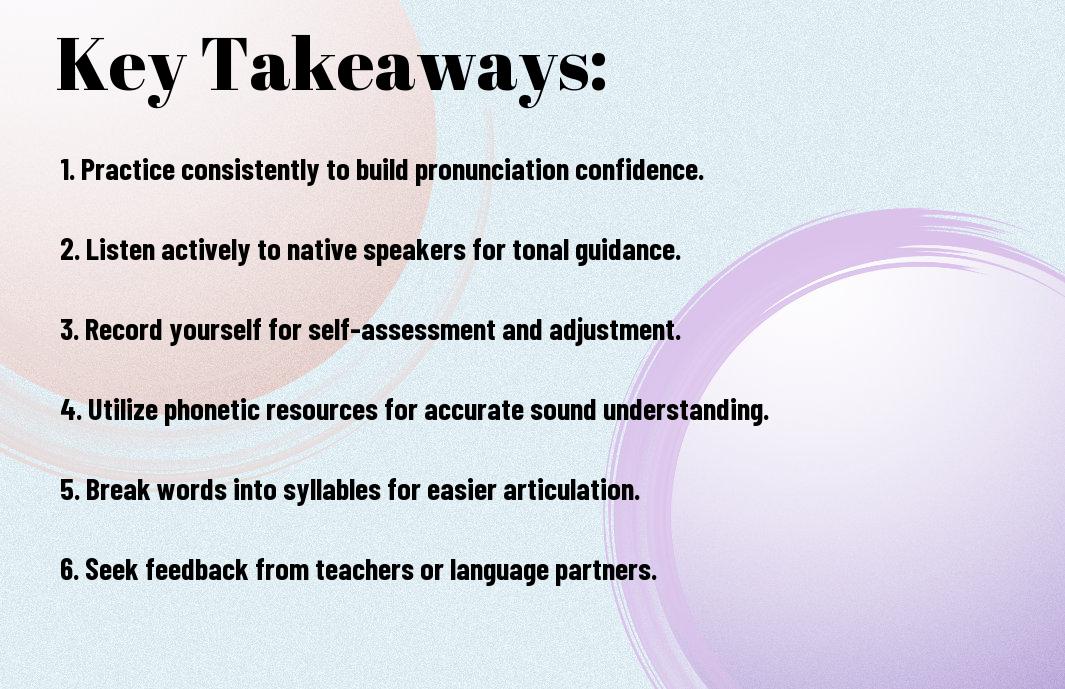
Key Takeaways:
To improve your language pronunciation, consider the following points:
- Focus on Individual Sounds: Understanding and practicing the phonetics of the language is the first step to improving your pronunciation. Pay attention to how each sound is formed and try to mimic the native speakers.
- Develop a Consistent Practice routine: Regular practice helps to build muscle memory, making it easier to produce the correct sounds and intonation patterns. Set aside time each day to practice speaking and listening to the language.
- Immerse Yourself in the Target Language: Surrounding yourself with the language as much as possible can help you get used to its rhythm and melody. Listen to music, watch movies, and engage in conversations with native speakers to improve your pronunciation and get a feel for how the language is used in context.
Identifying Challenges
Before you can overcome challenges in language pronunciation, you need to identify what they are. This involves recognizing the sounds, intonations, and rhythms that are difficult for you to produce. You will need to listen to native speakers and compare your own pronunciation to theirs.
Common pronunciation difficulties
Against the backdrop of various accents and dialects, you will find that certain sounds are consistently troublesome for non-native speakers. You may struggle with the “th” sound, vowel lengths, or diphthongs, which are common challenges that many learners face.
Personalizing your challenges
Across the range of language learning materials and resources, you will find that your own challenges are unique to your native language and pronunciation background. You should assess your own strengths and weaknesses to determine which areas of pronunciation need the most attention.
Hence, as you work on personalizing your challenges, you will begin to notice patterns and areas where you consistently struggle. You can then focus your practice on these specific sounds, intonations, and rhythms, using targeted exercises and activities to improve your pronunciation. This tailored approach will help you make steady progress and eventually overcome the challenges that hold you back.
Setting Goals
Some of the most effective language learners are those who set clear goals for themselves. You will need to define what you want to achieve in terms of pronunciation and create a plan to get there. This will help you stay focused and motivated as you work to improve your language skills.
Defining your objectives
Achieving clarity on what you want to accomplish is imperative. You should identify specific areas of pronunciation that you want to improve, such as accent or intonation, and set realistic targets for yourself.
Creating a practice schedule
Objectives guide your practice, and you should establish a regular routine to work on your pronunciation. You will find it helps to allocate a specific time each day to practice speaking and listening to the language.
With a schedule in place, you can begin to make steady progress towards your goals. You will find that consistent practice helps you develop good habits and increases your confidence in using the language. As you stick to your routine, you will start to notice improvements in your pronunciation, and this will motivate you to continue working towards your objectives.

Practicing Techniques
Despite the difficulties you may face, consistent practice is key to improving your language pronunciation. You will need to develop a routine that works for you, incorporating various techniques to help you overcome your challenges.
Listening and imitation
The most effective way to improve your pronunciation is by listening to native speakers and imitating their intonation, rhythm, and accent. You can find numerous resources online, including videos, podcasts, and audio recordings, to help you practice.
Recording and self-assessment
Recording yourself speaking is an excellent method to identify areas that need improvement. You can then listen to the recordings, assess your performance, and work on correcting your mistakes.
Indeed, by regularly recording yourself, you will become more aware of your pronunciation and be able to track your progress over time, making adjustments as needed to achieve your goals. You will be able to pinpoint specific sounds or words that are difficult for you to pronounce and focus your practice on those areas, leading to steady improvement in your language pronunciation skills.
Overcoming Obstacles
For language learners, overcoming obstacles is a significant part of the pronunciation journey. You can find more information about common challenges and how to tackle them at Barriers and Solutions to Overcome in English Pronunciation, which will help you identify your weaknesses and work on them.
Managing anxiety and fear
One of the main obstacles you will face is managing your anxiety and fear of speaking in a foreign language, which can hinder your progress and prevent you from practicing regularly.
Building confidence and perseverance
Any improvement in your pronunciation requires your consistent effort and practice, and as you progress, you will start to notice changes in your accent and fluency.
The key to building confidence and perseverance is to set achievable goals and celebrate your small victories, which will help you stay motivated and committed to your pronunciation journey, and you will find that your hard work and dedication will pay off in the long run, enabling you to communicate effectively and confidently in your target language.
Seeking Resources
Unlike traditional classroom settings, seeking resources for language pronunciation improvement can be done independently. You can find various materials online, such as language learning podcasts, videos, and mobile apps, to help you enhance your pronunciation skills.
Language exchange programs
Above all, language exchange programs offer you the opportunity to practice speaking with native speakers, which can significantly improve your pronunciation. You will be able to engage in conversations and get feedback on your pronunciation from language exchange partners.
Online tools and tutorials
At your fingertips, you have numerous online tools and tutorials that provide pronunciation lessons, interactive exercises, and speech analysis. You can access these resources anytime and practice at your own pace, focusing on specific areas of difficulty.
To make the most of online tools and tutorials, you should start by assessing your current pronunciation level and identifying areas that need improvement. You can then select the most suitable resources and create a personalized practice schedule, ensuring consistent progress and refinement of your language skills.
Monitoring Progress
Once again, you find yourself at a stage where evaluating your advancement is necessary. Monitoring your progress in language pronunciation is vital to identify areas that require improvement and to adjust your strategy accordingly.
Tracking improvements
Against the backdrop of your overall progress, you will notice certain aspects of your pronunciation that have improved significantly. By keeping a record of your progress, you can pinpoint the specific sounds, intonations, or rhythms that have become more natural to you.
Adjusting your approach
Prior to making any significant changes, you should assess what has been working for you and what hasn’t. Your approach to pronunciation practice may need tweaking, and recognizing the methods that yield the best results is necessary to continued improvement.
This process of adjustment is ongoing, and you will likely need to make changes to your practice routine as you progress. By being aware of what works best for you, you can refine your approach and focus on the areas where you need the most improvement, ultimately leading to more efficient and effective language learning.
To wrap up
Upon reflecting on your journey to improve language pronunciation, you will find that your dedication and persistence have been key to your progress. You have learned to identify your weaknesses and tackle them head-on, and your hard work has paid off. As you continue to practice, you will notice significant improvements in your ability to communicate effectively, and your confidence will grow. With time, you will become a proficient speaker, capable of expressing your thoughts and ideas with clarity and precision, and your language skills will flourish.
FAQ
Q: What are the most common challenges in language pronunciation and how can I identify them?
A: The most common challenges in language pronunciation include mastering correct intonation, vowel and consonant sounds, and syllable stress. To identify your specific challenges, try recording yourself speaking and listening to the recording to pinpoint areas that need improvement. You can also practice speaking with native speakers or language exchange partners who can provide feedback on your pronunciation. Additionally, you can take online pronunciation tests or assessments to identify your strengths and weaknesses.
Q: How can I improve my language pronunciation skills, especially if I have a strong accent or limited exposure to native speakers?
A: Improving language pronunciation skills takes consistent practice and dedication. Start by listening to and mimicking native speakers through videos, podcasts, or audiobooks. Practice speaking regularly, even if it’s just for a few minutes a day, and focus on specific sounds or intonation patterns that are challenging for you. You can also use online resources such as pronunciation videos, language learning apps, or speech therapy exercises to help you improve. Furthermore, try to surround yourself with the language as much as possible by watching TV shows or movies, reading books or articles, and engaging in conversations with others in the target language.
Q: What role does self-practice and self-correction play in overcoming challenges in language pronunciation, and how can I make the most of these strategies?
A: Self-practice and self-correction are important components of overcoming challenges in language pronunciation. By regularly practicing pronunciation on your own, you can develop muscle memory and improve your ability to produce sounds and intonation patterns correctly. To make the most of self-practice, set aside dedicated time each day to practice speaking, listening, and recording yourself. Use a mirror to observe your mouth and lip movements, and pay close attention to your own pronunciation, making adjustments as needed. You can also create a self-correction checklist to track your progress and identify areas that need extra attention, allowing you to target your practice more effectively and achieve greater improvement over time.
