How can studying linguistics aid in learning new languages

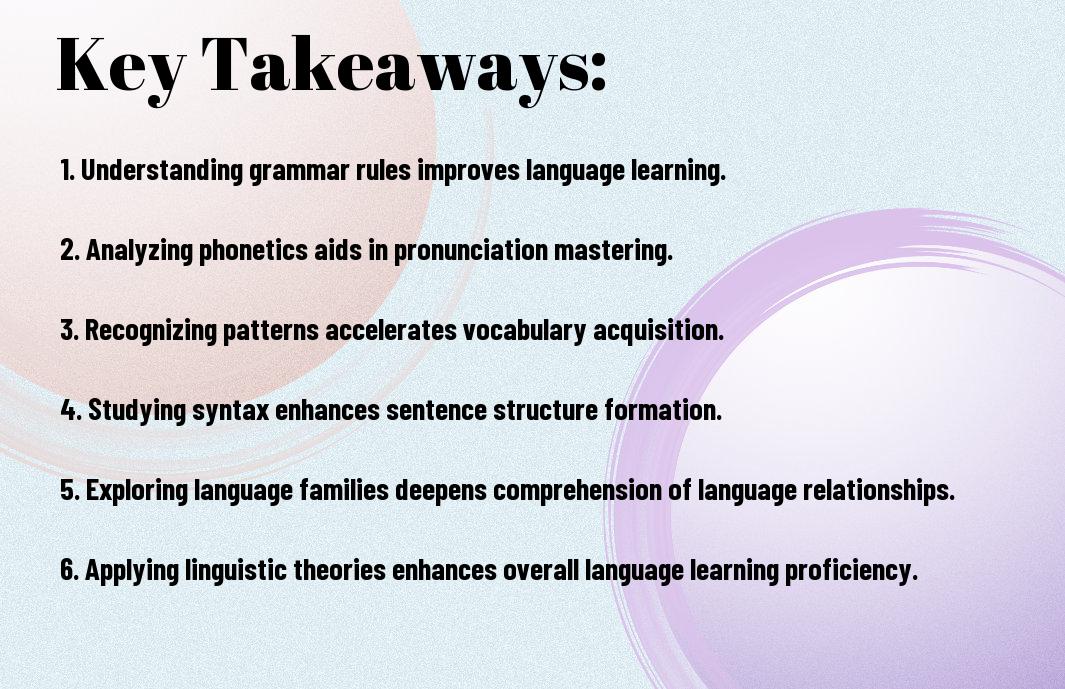
There’s a substantial advantage to delving into linguistics when launching on the journey of learning a new language. Understanding the underlying structures, patterns, and rules that govern languages can significantly enhance your ability to grasp new linguistic concepts and apply them effectively. By studying linguistics, you’ll gain a deeper insight into how languages function, which will equip you with the tools to navigate the complexities of acquiring a new language with confidence and proficiency.

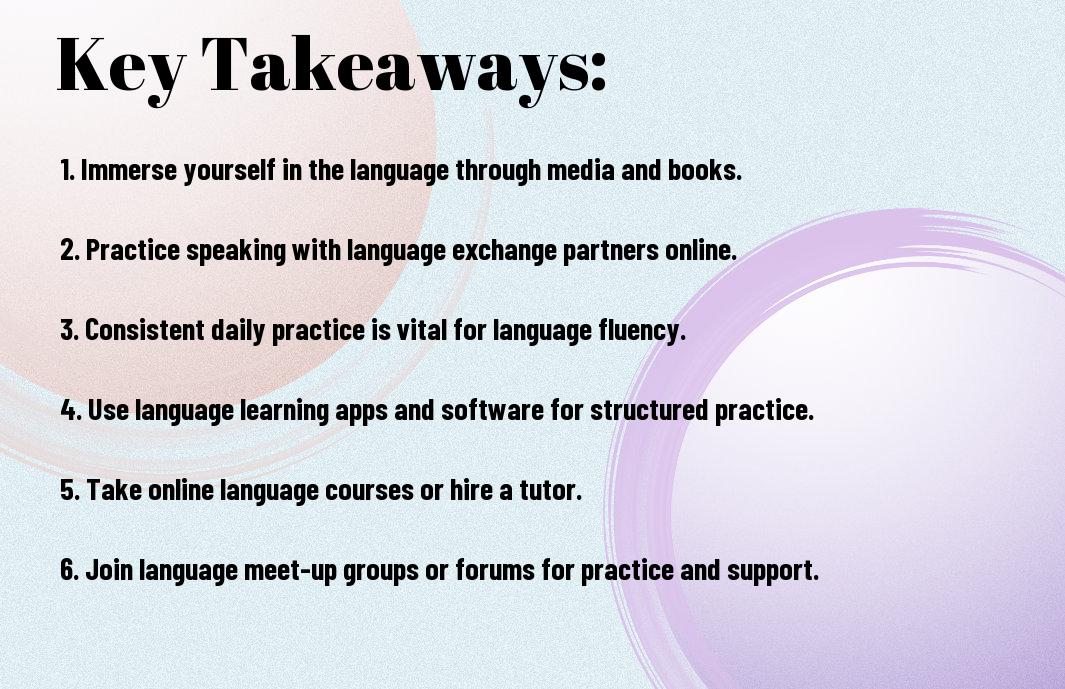
Key Takeaways:

  • Understanding language structures: Studying linguistics can help learners recognize patterns in different languages, making it easier to understand and learn new languages.
  • Improving language learning strategies: Knowledge of linguistics concepts such as phonetics, syntax, and semantics can guide language learners in adopting effective study techniques and strategies.
  • Enhancing communication skills: Linguistics provides insights into how languages work, enabling learners to communicate more effectively and accurately in various languages.

The Building Blocks of Language

Phonetics and Phonology: Decoding Sounds

Language starts with sounds. Phonetics and phonology focus on the study of speech sounds and patterns. By understanding the intricacies of phonetics, you can improve your pronunciation and accent in a new language. Learning phonetics can help you differentiate between similar sounds that may not exist in your native language, giving you a better grasp of the language you are learning. Moreover, mastering phonetics can also enhance your listening skills, as you become more attuned to how words are pronounced.

Morphology: The Structure of Words

Structure is crucial in language. Morphology, the study of how words are formed and their internal structure, plays a significant role in language learning. By delving into morphology, you gain insights into how words are constructed, including prefixes, suffixes, and root words. Understanding morphology can help you decipher the meanings of unfamiliar words by breaking them down into their constituent parts. This knowledge allows you to expand your vocabulary more efficiently and comprehend the intricate connections between words in the language you are studying.

This deep examine morphology equips you with the tools to not only decipher new words but also to create your own. As you grasp the foundations of morphological rules and word formation, you can apply this knowledge to enhance your language skills and express yourself more effectively in the language you are trying to master.

Grammar and Syntax

Clearly, studying linguistics can greatly aid you in learning new languages. By understanding the principles of grammar and syntax, you can decipher the rules that govern how words are organized and structured in a sentence. This knowledge allows you to grasp the nuances of sentence construction and word order, which vary across languages. If you are interested in delving deeper into why studying linguistics is beneficial, you can check out Why Study Linguistics?

Sentence Structure and Word Order

With a foundation in linguistics, you can analyze the sentence structure and word order of different languages more effectively. This understanding enables you to comprehend how changing the arrangement of words can alter the meaning of a sentence. By comparing and contrasting the syntax of your native language with the language you are learning, you can identify patterns and draw parallels that aid in your language acquisition journey.

Tense, Aspect, and Mood: Unraveling Complexity

Word order is just the tip of the iceberg when it comes to grammar and syntax. Tense, aspect, and mood are crucial elements that influence how verbs function in a sentence. By studying linguistics, you can unravel the complexity of these aspects and understand how they impact the meaning and structure of sentences in different languages. This knowledge equips you with the skills to navigate the intricacies of verb conjugation and sentence formation.

Understanding the intricacies of tense, aspect, and mood can be challenging, but with a linguistic perspective, you can break down these concepts into digestible parts. By grasping the rules and patterns that govern these elements, you can enhance your ability to communicate accurately and fluently in a new language.

Semantics and Pragmatics

Now, let’s investigate into the fascinating fields of semantics and pragmatics in linguistics, which can greatly aid you in learning new languages.

Meaning-Making: Words, Context, and Culture

One of the fundamental aspects of semantics is understanding how meaning is constructed through words, context, and culture. By studying semantics, you will learn how words convey specific meanings based on linguistic structures and cultural norms. This knowledge will help you navigate the nuances of language use in different cultural settings, making your language learning journey more nuanced and effective.

Implicature and Inference: Beyond Literal Meaning

Words do not always convey just their literal meanings. In this subsection, you will explore implicature and inference, which are crucial aspects of pragmatics. Understanding implicatures – the implied meanings beyond the literal interpretations of words – and inferences – the logical deductions made based on the context – will elevate your language comprehension skills. By grasping these concepts, you will be able to decipher hidden meanings, jokes, and metaphors in a new language more effectively.

In the subsection on Implicature and Inference: Beyond Literal Meaning, you will learn how to look beyond the surface meaning of words and recognize the underlying messages conveyed through language use. This skill is crucial for becoming a proficient language learner, as it allows you to understand the subtle nuances and implied meanings in conversations and texts.

Language Acquisition and Development

Despite Why Study Linguistics? – Department of Linguistics, many people still underestimate the importance of linguistics in aiding language learning. Understanding how languages are acquired and developed can provide valuable insights for learners. By delving into the mechanisms that underlie language acquisition, you can gain a deeper appreciation of the complexity and nuances of the languages you are trying to learn.

How Children Learn Language: Insights for Adults

The process of language acquisition in children offers valuable lessons for adult language learners. Children effortlessly pick up languages through exposure and interaction with their environment. They learn to distinguish sounds, recognize patterns, and internalize grammar rules naturally. As an adult learner, observing and understanding these natural processes can help you adapt your learning strategies. Emulating the immersive environment that children experience can enhance your language learning journey.

Language Contact and Change: The Role of Environment

Acquisition of a new language is influenced by the environments in which you immerse yourself. The contact between languages in multilingual settings can lead to linguistic changes and adaptations. Exposure to diverse linguistic environments can enrich your understanding of language structures and facilitate language learning. By recognizing the role of environment in language contact and change, you can strategically choose environments that support your language learning goals.

Learn how language contact in multilingual settings can introduce new vocabulary, alter pronunciation, and shape grammatical structures. By engaging with diverse linguistic environments, you can expand your language repertoire and enhance your proficiency. The dynamic nature of language contact highlights the importance of cultural immersion and interaction in language learning.

Cognitive Benefits of Linguistic Knowledge

Improved Memory and Attention

Unlike studying other subjects, delving into linguistics can significantly improve your memory and attention. By learning the intricacies of different languages, you are constantly engaging your brain in recognizing patterns, memorizing vocabulary, and understanding complex grammar rules. This mental exercise helps strengthen your memory retention capacity and enhances your ability to focus on tasks.

Enhanced Problem-Solving and Critical Thinking

Improved linguistic knowledge can also lead to enhanced problem-solving and critical thinking skills. When you study linguistics, you analyze language structures, syntax, and semantics, which require you to think logically and critically. This analytical thinking can be applied to various real-life situations where you need to solve problems or make decisions.

Enhanced problem-solving and critical thinking skills acquired through the study of linguistics can benefit you in various aspects of your life, such as academic pursuits, professional endeavors, and even personal interactions. The ability to think analytically and solve complex issues is a valuable skill that can set you apart in many situations.

Applications in Language Learning

Identifying Patterns and Anomalies

On your language learning journey, studying linguistics can help you identify patterns and anomalies within the language you are learning. By understanding the underlying structures and rules of grammar, phonetics, and syntax, you can make connections that may not be immediately obvious. This analytical skill can assist you in recognizing common language patterns, which in turn can make learning new vocabulary and grammar rules more intuitive and efficient.

Developing Effective Language Learning Strategies

Language learning involves more than just memorizing vocabulary and grammar rules; it requires effective strategies to immerse yourself in the language and culture. By leveraging your understanding of linguistics, you can tailor your learning approach to suit your individual needs. Linguistics can provide insights into how languages are acquired and processed, enabling you to optimize your learning methods to enhance comprehension and retention.

Another benefit of incorporating linguistics into your language learning journey is the ability to better comprehend the nuances of a language. Learning about phonology, morphology, and semantics can deepen your understanding of how words are formed and interpreted in context. This advanced knowledge can give you a competitive edge in mastering new languages with accuracy and fluency.

Final Words

Presently, studying linguistics can greatly aid you in learning new languages. By understanding the structures, patterns, and rules of language, you will have a more solid foundation when approaching a new language. Linguistics can provide insights into how different languages are related, helping you recognize similarities and differences that can facilitate the learning process. Additionally, studying linguistics can enhance your phonetic awareness and help you grasp unfamiliar sounds more easily, enabling better pronunciation in your target language.

Overall, delving into linguistics can not only broaden your linguistic comprehension but also improve your language learning skills. So, if you are eager to explore new languages and expand your cultural horizons, consider incorporating linguistics into your language learning journey – the benefits are boundless. Happy learning!

Q: How can studying linguistics aid in learning new languages?

A: By studying linguistics, individuals can gain a deeper understanding of language structures, which can help them identify patterns and rules in the language they are trying to learn.

Q: What aspects of linguistics can be particularly helpful in language learning?

A: Phonetics and phonology can be beneficial in improving pronunciation, while syntax and morphology can assist in understanding sentence structure and word formation in the target language.

Q: Can studying linguistics enhance language learning strategies?

A: Yes, studying linguistics can provide learners with a toolkit of language learning strategies and techniques based on scientific principles, making the language learning process more efficient and effective.

What are the most effective strategies for overcoming language learning plateaus

Persistence is key when it comes to overcoming language learning plateaus. As you navigate the ups and downs of mastering a new language, it’s common to reach a point where your progress slows down. In this blog post, we’ll explore effective strategies that can help you push through these plateaus and continue on your journey to language fluency. By incorporating these proven techniques into your language learning routine, you’ll be able to overcome obstacles and reach new heights in your linguistic skills.

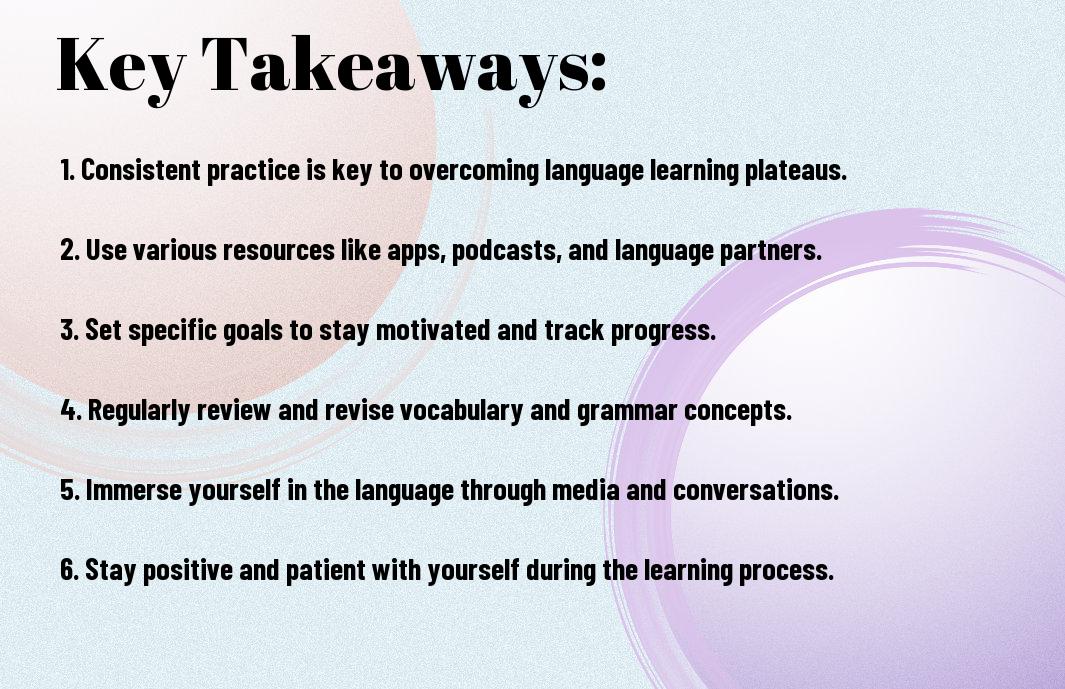
Key Takeaways:

  • Consistent Practice: Regular and consistent practice is key to overcoming language learning plateaus. Dedicate time daily to practice listening, speaking, reading, and writing in the target language.
  • Immersion: Immerse yourself in the language by watching movies, listening to music, reading books, and engaging with native speakers. This helps reinforce your learning and improve your fluency.
  • Seek Feedback: Get feedback from language tutors, teachers, or native speakers to identify areas for improvement and correct mistakes. This personalized feedback can help you break through plateaus and continue progressing in your language learning journey.

Identifying the Plateau

Recognizing the signs of stagnation

Signs that you may have hit a language learning plateau include feeling like you’re not progressing, struggling to remember new words or grammar rules, and finding it difficult to stay motivated to continue learning. Plateaus are common in the language learning journey, but they don’t have to be permanent.

Assessing your current language level

The first step in overcoming a plateau is to assess your current language level. This involves taking a step back and evaluating where you are in your learning journey. You can do this by taking a practice test, having a conversation with a native speaker, or even teaching someone else the language.

This assessment will give you a clearer picture of your strengths and weaknesses, helping you identify areas where you may be struggling and need to focus your efforts. Knowing your current level is crucial for setting realistic goals and creating a plan to overcome the plateau.

Re-evaluating Goals and Motivation

Even when you feel stuck in your language learning journey, there are effective strategies you can implement to push through plateaus. One crucial aspect to consider is re-evaluating your goals and motivation. By taking the time to reassess what you want to achieve and why you are pursuing language learning, you can reignite your passion and drive to continue making progress.

Setting realistic and achievable goals

Goals serve as a roadmap for your language learning journey. If you find yourself hitting a plateau, it might be time to revisit your goals. Are they specific, measurable, achievable, relevant, and time-bound (SMART)? Setting realistic and achievable goals can help you track your progress and stay motivated. Break down larger goals into smaller milestones, making it easier to stay focused and celebrate your achievements along the way.

Finding new sources of motivation

Reevaluating your motivation for learning a new language can provide the renewed energy needed to overcome plateaus. Perhaps you could seek out new language exchange partners, immerse yourself in foreign films and music, or set aside time for cultural experiences related to the language you are learning. Bear in mind, motivation can come from various sources, so explore different avenues to keep your enthusiasm high.

This shift in perspective can help revitalize your language learning journey and keep you motivated to push through plateaus. By exploring new ways to stay engaged and passionate about the language you are learning, you can reignite your excitement and drive to continue making progress.

Creating a language learning vision board

Goals alone may not always be enough to keep you motivated during challenging times in your language learning journey. Creating a language learning vision board can provide a visual representation of your goals, aspirations, and the reasons behind your language learning journey. Include images, quotes, and milestones on your vision board to remind you of the bigger picture and keep you inspired to overcome any obstacles that come your way.

By incorporating a language learning vision board into your routine, you can reinforce your goals visually and stay connected to your deepest motivations for learning a new language. This visual tool can serve as a powerful reminder of why you started your language learning journey and help you stay focused on your objectives.

Shaking Up Your Routine

To overcome language learning plateaus, you must shake up your routine from time to time. Sticking to the same study habits can lead to stagnation in your progress. Here are some effective strategies to help you break through the plateau:

Changing your study environment

Routine is comfortable, but it can also be limiting. By changing your study environment, you can stimulate your brain in new ways and enhance your learning experience. Try studying in a different room, a new cafe, or even outdoors. The change of scenery can reignite your motivation and help you see things from a fresh perspective.

Trying new language learning apps and tools

A great way to shake up your routine is by exploring a variety of language learning apps and tools. Different apps offer unique features and teaching methods, so experimenting with a new one can introduce fresh ways to engage with the language. Whether it’s through gamified learning, speech recognition technology, or interactive lessons, trying out different tools can make your study sessions more dynamic and effective.

Apps like Duolingo, Babbel, and Rosetta Stone are popular choices, but don’t be afraid to venture into lesser-known apps that might better suit your learning style and preferences.

Incorporating different learning styles

To maximize your language learning potential, it’s imperative to adjust your approach based on your learning style. Everyone has a unique way of absorbing information, whether it’s through visual aids, audio cues, hands-on activities, or group discussions. By incorporating a mix of learning styles into your study routine, you can cater to your strengths and make the learning process more enjoyable and effective.

Consider incorporating visual aids like flashcards, watching foreign films or TV shows for listening practice, joining conversation groups for verbal practice, or even teaching the language to someone else to reinforce your understanding. By diversifying your learning methods, you can keep your brain engaged and overcome plateaus more easily.

Focusing on Weaknesses

Identifying areas for improvement

Despite your dedication to learning a new language, you may find yourself hitting a plateau in your progress. The first step in overcoming this is to identify the specific areas where you struggle the most. Whether it’s grammar, vocabulary, pronunciation, or listening comprehension, pinpointing your weaknesses will allow you to tailor your practice sessions more effectively.

Creating a customized practice schedule

The key to breaking through language learning plateaus is focusing on your weaknesses. Once you’ve identified the specific areas that need improvement, it’s important to create a customized practice schedule that prioritizes these aspects. By dedicating more time and effort to the skills you find challenging, you can make significant strides in your language proficiency.

Focusing on your weaknesses doesn’t mean neglecting your strengths; it means being strategic about where you allocate your learning resources. By incorporating targeted exercises and activities that address your specific areas for improvement, you can accelerate your progress and overcome any plateau you may encounter.

Practicing active listening and speaking

A crucial aspect of language learning is actively engaging with the spoken language. By immersing yourself in listening exercises, such as podcasts, audiobooks, or conversations with native speakers, you can improve your comprehension skills and become more accustomed to the natural flow of the language. Additionally, practicing speaking regularly, whether through language exchange with a partner or recording yourself, can help you refine your pronunciation and gain confidence in expressing yourself.

To enhance your listening and speaking abilities, incorporate activities that challenge you to interact with the language in real-time. Engaging in discussions, participating in language meetups, or even practicing with language learning apps that offer speaking exercises can help you break through plateaus and make continuous progress in your language acquisition journey.

Seeking Out New Resources

For Strategies for Overcoming Language Learning Plateaus, when you hit a language learning plateau, seeking out new resources can reignite your motivation and help you break through barriers. Here are some effective strategies to expand your language learning toolbox.

Exploring podcasts and audio materials

On your language learning journey, podcasts and audio materials can be invaluable resources. They allow you to immerse yourself in the language through listening, helping you improve your listening comprehension and pronunciation. Listening regularly to podcasts in the language you’re learning can also expose you to different accents, vocabulary, and speech patterns, enhancing your overall language skills.

Reading in the target language

audioOn top of podcasts, incorporating reading into your language learning routine is crucial. Reading in your target language not only exposes you to new vocabulary and sentence structures but also improves your writing skills and overall language proficiency. By reading various materials such as books, articles, and blogs, you can enhance your comprehension and cultural understanding of the language.

In the context of reading in the target language, make it a habit to read something every day, even if it’s just for a few minutes. You can start with children’s books or short articles and gradually progress to more complex texts as you become more comfortable with the language.

Watching TV shows and movies with subtitles

ReadingBy incorporating TV shows and movies with subtitles in the language you’re learning into your language study routine, you can improve your listening skills, expand your vocabulary, and familiarize yourself with colloquial expressions. Watching visual content can also make language learning more engaging and enjoyable, helping you stay motivated and committed to your language learning goals.

Subtitles can be a helpful tool to aid your comprehension while watching foreign language shows and movies, especially when you’re still at an intermediate level. Initially, you can start with subtitles in your native language and then switch to subtitles in the target language as you become more proficient.

Building a Support Network

Your language learning journey can sometimes feel like a rollercoaster with its ups and downs. Building a support network of like-minded language learners can be instrumental in helping you overcome plateaus and stay motivated on your path to fluency.

Joining a language exchange community

Exchange ideas, tips, and encouragement with others who are also learning a new language by joining a language exchange community. These platforms provide a space where you can practice speaking with native speakers, get feedback on your progress, and even make new friends who share your passion for language learning.

Finding a language learning buddy

For a more personalized approach, finding a language learning buddy can be incredibly beneficial. This individual can be someone at a similar level of proficiency or a native speaker of the language you are learning. Regular conversations and study sessions with your buddy can help keep you accountable, provide mutual support, and make learning a language more enjoyable.

Support from a language learning buddy can significantly boost your motivation and confidence. They can help you navigate challenging aspects of the language, share learning resources, and celebrate milestones with you along the way. Having a buddy by your side can make the language learning journey feel less daunting and more achievable.

Attending language meetups and events

Meetups and events specifically designed for language learners are excellent opportunities to practice your speaking skills in a supportive and social environment. These gatherings often include language exchange sessions, cultural activities, and workshops led by language experts. By participating in these events, you can immerse yourself in the language, network with other learners, and gain valuable insights to propel your language skills forward.

Attending language meetups and events not only provides you with the chance to practice speaking in a real-life setting but also exposes you to different accents, dialects, and cultural nuances. Interacting with a diverse group of people who share your interest in language learning can broaden your perspective and enhance your overall learning experience. So, grab your language learning buddy and head to the next meetup to boost your language skills together!

Final Words

Ultimately, by implementing a combination of effective strategies, you can break through language learning plateaus and continue progressing in your language fluency journey. Consistent practice, using a variety of resources, setting specific and achievable goals, seeking help from native speakers or language tutors, and maintaining a positive attitude are key components in overcoming these obstacles.

Recall, language learning is a marathon, not a sprint, and plateaus are a natural part of the process. Embrace the challenges, stay motivated, and adjust your approach as needed. With dedication and perseverance, you will push through these plateaus and reach new heights in your language proficiency.

Q: What are some common signs of a language learning plateau?

A: Some common signs of a language learning plateau include feeling like you are not making progress, struggling to retain new vocabulary, finding it difficult to understand native speakers, and feeling unmotivated to continue learning.

Q: How can I overcome a language learning plateau?

A: To overcome a language learning plateau, try switching up your study routine, setting specific and achievable goals, practicing regularly with native speakers, immersing yourself in the language through media and cultural activities, and seeking feedback from teachers or language exchange partners.

Q: Are there any specific strategies that are particularly effective for breaking through a language learning plateau?

A: Some effective strategies for overcoming language learning plateaus include focusing on specific areas of weakness, such as grammar or pronunciation, using spaced repetition techniques to review vocabulary, challenging yourself with more difficult material, taking breaks when needed, and reminding yourself of your long-term language learning goals.

How important is it to learn the cultural context behind idioms and expressions in a new language

Many language learners often explore studying idioms and expressions in a new language without considering the cultural context behind them. However, understanding the cultural background of these linguistic nuances is crucial for truly grasping their meaning and using them appropriately in conversation. By delving into the cultural roots of idioms and expressions, you not only enhance your language skills but also gain insights into the history, values, and customs of the people who speak the language, ultimately deepening your connection to the new language and its speakers.

Key Takeaways:

  • Enhances Understanding: Learning the cultural context behind idioms and expressions in a new language can enhance your overall understanding of the language as it provides insight into the values, beliefs, and traditions of that culture.
  • Improves Communication: Understanding the cultural context of idioms and expressions can help you communicate more effectively with native speakers, as it enables you to use these phrases appropriately in conversation.
  • Fosters Cultural Awareness: By delving into the cultural background of idioms and expressions, you can gain a deeper appreciation for the diversity and uniqueness of different cultures, fostering cultural awareness and sensitivity.

The Importance of Cultural Context

A crucial aspect of learning a new language is understanding the cultural context behind idioms and expressions. When you probe into the origins and meanings of these linguistic elements, you gain valuable insights into the history, beliefs, and customs of the people who speak the language. This knowledge enriches your understanding of the language and helps you communicate more effectively with native speakers.

Idioms and Expressions as Cultural Signifiers

An idiomatic expression often carries a deeper cultural meaning that may not be apparent at first glance. By exploring the cultural context of these phrases, you uncover the underlying values and beliefs of a community. For example, the English expression “raining cats and dogs” may seem nonsensical if taken literally, but understanding its historical origins sheds light on the heavy downpours common in certain regions.

Misinterpretation and Miscommunication

To avoid misinterpretation and miscommunication in a new language, it is crucial to grasp the cultural nuances of idioms and expressions. Without this knowledge, you may inadvertently use a phrase inappropriately or fail to recognize when someone is employing a figure of speech. This can lead to confusion or unintentional offense in your interactions with native speakers.

With a solid understanding of the cultural context behind idioms and expressions, you not only improve your language skills but also deepen your appreciation for the rich tapestry of human communication. Embrace the opportunity to learn about different cultures through their unique linguistic nuances, and watch as your language proficiency and cultural awareness flourish together.

Language as Culture

Any language is deeply intertwined with the culture it originates from. When you probe into a new language, understanding its idioms and expressions can offer you a unique insight into the cultural context in which it is spoken. Idioms: A linguistic Journey Across Cultures, highlighted by Cultural Awareness, emphasizes the importance of grasping the cultural nuances behind idiomatic expressions.

The Role of History and Tradition

Language reflects the history and traditions of a community, shaping the way people communicate and express themselves. By learning the cultural background of idioms and expressions, you gain a deeper appreciation for the heritage of the language you are studying. Each idiom carries a story, often rooted in historical events or traditional practices, providing you with a window into the cultural evolution of a society.

Cultural References and Allusions

On your linguistic journey, encountering idioms that reference specific cultural elements can be fascinating. These references can range from folklore and mythology to historical figures and events. Understanding these allusions not only improves your language skills but also enriches your cultural literacy. It enables you to connect more deeply with native speakers and comprehend the subtle nuances of their communication.

Tradition plays a crucial role in shaping the idiomatic expressions of a language, preserving age-old customs and beliefs within the fabric of everyday speech. By exploring the cultural references embedded in idioms, you not only enhance your language proficiency but also gain a broader understanding of the traditions that have shaped a particular society over time.

Idioms and Expressions in Different Cultures

All languages are rich with idioms and expressions that reflect the culture they originate from. Understanding the cultural context behind these idiomatic expressions can greatly enhance your language learning experience. It not only helps you grasp the deeper meaning of the words but also gives you insight into the values, beliefs, and social norms of the people who speak that language. If you’re wondering why learning idioms is important, you can find more insights on Why is learning idioms important?.

Colorful Expressions in Latin American Spanish

With its vibrant and diverse cultures, Latin America is a treasure trove of colorful idiomatic expressions in Spanish. From Mexico to Argentina, each country has its own unique set of sayings that encapsulate the essence of daily life. Learning these expressions not only helps you communicate more effectively but also allows you to connect on a deeper level with native speakers. Whether it’s understanding the significance of “echar agua al mar” (to do something pointless) or the humor behind “estar en las nubes” (to be daydreaming), delving into the world of Latin American idioms adds a layer of richness to your language skills.

Proverbial Wisdom in African Cultures

One of the most fascinating aspects of African cultures is the wealth of proverbial wisdom passed down through generations. Proverbs play a significant role in conveying moral lessons, traditional values, and societal norms. Exploring African proverbs in languages like Swahili, Yoruba, or Xhosa not only exposes you to linguistic diversity but also provides a window into the collective wisdom of different tribes and communities. By unraveling the meanings behind proverbs such as “Haba na haba, hujaza kibaba” (Little by little, fills the measure), you can gain a deeper understanding of the cultural ethos that shapes communication in African societies.

Understanding idioms and expressions in different cultures goes beyond language proficiency—it allows you to appreciate the nuances of communication and the richness of human diversity. By immersing yourself in the colorful tapestry of idiomatic expressions from around the world, you not only enhance your language skills but also cultivate a deeper appreciation for the cultural heritage that shapes linguistic creativity.

The Challenges of Learning Idioms and Expressions

Linguistic and Cultural Barriers

On your journey to learning a new language, you may come across the challenge of idioms and expressions that seem perplexing or nonsensical. These linguistic hurdles can often be attributed to the unique cultural contexts in which they were born. Understanding idiomatic expressions requires not only a grasp of the language itself but also an insight into the cultural background that shaped them. Without this cultural knowledge, you may find yourself lost in translation, unable to decipher the true meaning behind these figurative phrases.

The Role of Context and Inference

The intricacies of idioms and expressions lie not only in their literal words but also in the context in which they are used. The way a particular phrase is employed in conversation or writing can greatly impact its intended meaning. This reliance on context poses a challenge to language learners, as it requires a deep understanding of the nuanced ways in which words can be woven together to convey subtle nuances and emotions.

Inference plays a crucial role in unraveling the complexities of idiomatic expressions. By carefully analyzing the context in which an idiom is used, you can infer the underlying message or sentiment that the speaker or writer intends to convey. This skill of inference is vital in piecing together the puzzle of idioms and expressions, allowing you to explore beneath the surface and grasp the true essence of the language.

Strategies for Mastering Idioms and Expressions

Immersion and Exposure

Exposure to a language and its cultural context is crucial when it comes to mastering idioms and expressions. Immersing yourself in the language through conversations, movies, music, and literature helps you pick up on common phrases and their meanings. The more you expose yourself to the language naturally used by native speakers, the better you will understand and use idioms and expressions in context.

Analyzing Cultural References

Idioms and expressions often stem from specific cultural references, making it important to analyze the context in which they are used. By delving into the history, traditions, and beliefs of a particular culture, you gain insight into the origins of idioms and expressions. Understanding the cultural references behind these linguistic elements not only helps you remember them better but also enables you to use them appropriately in conversations.

The analysis of cultural references behind idioms and expressions enhances your overall language proficiency by providing a deeper connection to the language you are learning. It allows you to appreciate the nuances and subtleties embedded within these linguistic components, leading to a more authentic and meaningful communication experience.

The Benefits of Learning Idioms and Expressions

Enhanced Communication and Connection

With your knowledge of idioms and expressions in a new language, you can enhance your communication skills and form deeper connections with native speakers. Idioms are often used in everyday conversations, and understanding them shows that you have a deeper understanding of the language and its nuances. This can help you to communicate more effectively and build rapport with others.

Deeper Cultural Understanding and Appreciation

The more idioms and expressions you learn in a new language, the better you grasp the cultural context in which they are used. This understanding allows you to appreciate the culture on a deeper level and gain insights into the beliefs, values, and traditions of the native speakers. It can also help you avoid misunderstandings or misinterpretations that may arise from literal translations of idiomatic expressions.

Communication is not only about words but also about cultural nuances and context. By familiarizing yourself with idioms and expressions in a new language, you are equipping yourself to engage more authentically with native speakers and truly immerse yourself in the language and culture.

Summing up

Learning the cultural context behind idioms and expressions in a new language is crucial for gaining a deeper understanding and appreciation of its speakers. By delving into the history, customs, and values tied to these linguistic quirks, you not only improve your language skills but also develop a more nuanced insight into the society where the language is spoken. Embracing the cultural context of idioms allows you to connect more authentically with native speakers and navigate social interactions with greater sensitivity.

So, next time you encounter a new idiom or expression in your language studies, take the time to explore its cultural significance. Your efforts will not only enhance your language proficiency but also enrich your overall learning experience by immersing you deeper into the customs and traditions of the language you are passionate about mastering.

Q: Why is it important to learn the cultural context behind idioms and expressions in a new language?

A: Understanding the cultural context behind idioms and expressions helps learners grasp the deeper meaning and nuances of the language. It allows them to communicate more effectively and avoid misunderstandings.

Q: How does learning the cultural context enhance language proficiency?

A: Cultural knowledge provides insight into the history, traditions, and values of a community, which are often reflected in idioms and expressions. By learning the context, learners can better relate to native speakers and feel more confident using the language.

Q: Can cultural misunderstandings arise from misinterpreting idioms and expressions?

A: Yes, misinterpreting idioms and expressions can lead to cultural misunderstandings or offense. Without understanding the context, a literal translation may not convey the intended meaning or could be taken the wrong way. This highlights the importance of cultural awareness in language learning.

How can one develop fluency in a language without living in a country where it is spoken

Overcoming the barrier of not living in a country where your target language is spoken may seem daunting, but with the right strategies, dedication, and consistency, you can still achieve fluency. By immersing yourself in the language through online resources, language exchange programs, practicing regularly with native speakers, and incorporating the language into your daily life, you can make significant progress towards mastering a new language. Developing fluency is about embracing a growth mindset and turning every opportunity into a chance to learn and improve. Let’s explore effective ways for you to reach your language goals no matter where you are.

Key Takeaways:

  • Immerse Yourself: Create an immersive environment by surrounding yourself with the language through music, movies, books, and podcasts.
  • Practice Regularly: Consistent practice is key to developing fluency, so dedicate time each day to study, speak, and engage with the language.
  • Utilize Language Learning Tools: Take advantage of online resources, language exchange programs, and language learning apps to supplement your learning and practice.

Setting Realistic Goals and Motivation

Before stepping into the journey of language learning, it’s important to set realistic goals and find the motivation that will drive you towards fluency. In a forum discussion on “Is it truly possible to become fluent without living in the country of the used language”, many language learners share their experiences and insights on how to succeed in learning a language effectively outside of its native environment.

Defining Fluency and Setting Achievable Targets

Realistic goals start with defining what fluency means to you. Fluency may differ from person to person – for some, it’s the ability to hold a casual conversation, while for others, it’s being able to discuss complex topics. Setting achievable targets such as mastering specific vocabulary or improving listening skills can help you progress steadily towards your ultimate fluency goal.

Finding Your Why: Staying Motivated on the Journey to Fluency

Defining your reason for wanting to learn a language is crucial to staying motivated through the ups and downs of the learning process. Whether it’s for career advancement, personal growth, or connecting with others culturally, understanding your ‘why’ can give you the drive to keep pushing forward, even when you face challenges.

Another aspect of motivation is celebrating small victories along the way. Acknowledging your progress, no matter how small, can help boost your confidence and keep you motivated to continue your language learning journey. Be mindful of, every step you take brings you closer to fluency!

Building a Language Learning Habit

Assuming you want to develop fluency in a language without living in a country where it is spoken, one of the key steps is to build a consistent language learning habit.

Creating a Schedule and Sticking to It

On your language learning journey, setting aside dedicated time each day or week for practice is crucial. By creating a schedule that works for you and sticking to it, you’ll establish a routine that reinforces your language learning efforts. Whether it’s early in the morning before work or in the evening before bed, find a time that suits your lifestyle and commit to it.

Using Language Learning Apps and Tools Effectively

Effectively incorporating language learning apps and tools into your routine can significantly enhance your learning experience. These resources offer interactive exercises, vocabulary practice, and even opportunities for live conversation practice.

Using language apps like Duolingo, Babbel, or Rosetta Stone can help you stay engaged and motivated while tracking your progress. Pairing these apps with additional tools such as language exchange platforms like Tandem or HelloTalk can provide opportunities to practice with native speakers and receive feedback on your skills.

Immersion Without Borders

All language learners dream of immersing themselves in a foreign country to learn a language effortlessly. However, the reality is that not everyone has the opportunity to pick up and move. But fear not, because with the right approach, you can create your very own language immersion experience right from the comfort of your home.

Accessing Native Materials and Media

Immersion in a language involves surrounding yourself with authentic materials and media in that language. Thanks to the internet, you have easy access to a wealth of resources such as books, movies, podcasts, and music in your target language. By incorporating these into your daily routine, you can train your ears to the cadence and rhythm of the language, improve vocabulary, and pick up on nuances that textbooks may not cover.

Finding Language Exchange Partners and Online Communities

On top of immersing yourself in native materials, interacting with native speakers is another key component for language fluency. There are numerous online platforms where you can connect with language exchange partners who are fluent in the language you are learning and are looking to practice your native language in return. These language partners can provide real-time feedback, cultural insights, and opportunities for authentic conversations, all of which are vital for improving your language skills.

Partners can also introduce you to online communities dedicated to language learning, where you can ask questions, share resources, and engage with like-minded individuals on your language learning journey. Joining these communities can provide additional motivation, support, and a sense of camaraderie as you strive to become fluent in the language of your choice.

Focused Practice for Fluency

To develop fluency in a language without living in a country where it is spoken, you need focused practice. This means honing your skills in listening, speaking, reading, and writing through targeted exercises and activities. Let’s probe into how you can achieve this.

Developing Listening and Speaking Skills

Listening is a fundamental skill in language learning. To improve your listening comprehension, immerse yourself in the language as much as possible. Listen to podcasts, watch movies or TV shows, and try to have conversations with native speakers. Speaking regularly, even if it’s just to yourself, can also help you become more comfortable with the rhythm and structure of the language. Consider finding a language exchange partner to practice speaking with and receive feedback on your pronunciation and sentence structure.

Improving Reading and Writing Abilities

Reading is a great way to expand your vocabulary and improve your comprehension skills. Challenge yourself with a variety of materials, from children’s books to news articles, to build your reading proficiency. Writing regularly in the language can also enhance your fluency. Keep a journal, write essays, or even participate in online forums or language exchange platforms where you can receive feedback on your writing. The more you practice, the more natural and confident you will become in expressing yourself in writing.

Developing your reading and writing abilities goes hand in hand with improving your overall language proficiency. Reading exposes you to different styles of writing and helps you grasp grammar rules and sentence structures. Writing regularly not only helps you practice applying the rules and vocabulary you’ve learned but also boosts your confidence in forming coherent thoughts and arguments in the language.

Overcoming Common Obstacles

Many obstacles may arise when trying to develop fluency in a language without being immersed in the culture where it is spoken. However, with determination and the right strategies, you can overcome these challenges and make significant progress in your language learning journey.

Dealing with Self-Doubt and Fear of Mistakes

Mistakes are a natural part of the language learning process. Don’t let the fear of making errors hold you back. Embrace your mistakes as opportunities to learn and improve. Remember that every native speaker was once a beginner too, and they made mistakes along the way. Be kind to yourself and have patience as you navigate through the ups and downs of learning a new language. Surround yourself with supportive resources such as language exchange partners, online communities, and language learning apps to boost your confidence and motivation.

Managing Time Constraints and Staying Consistent

Staying consistent in your language learning practice is key to making progress. Find pockets of time in your daily routine, such as during your commute, lunch break, or before bed, to dedicate to language study. Set realistic goals for yourself and create a study schedule that works for you. Use language learning tools like flashcards, podcasts, and language learning apps to make the most of your study time. Bear in mind, even short and consistent practice sessions can yield significant results over time.

Fear not if you have a busy schedule. You don’t need to spend hours a day studying to make progress. By staying consistent and incorporating language learning into your daily routine, even for just 15-30 minutes a day, you can build momentum and move closer to your fluency goals.

Leveraging Technology for Language Learning

Not being in a country where the language you are learning is spoken doesn’t have to limit your progress. Technology offers a plethora of resources that can help you immerse yourself in the language from the comfort of your own home.

Using Language Learning Podcasts and Videos

Learning from podcasts and videos is an engaging way to improve your language skills. By listening to native speakers and watching conversations in the target language, you can improve your listening comprehension, vocabulary, and pronunciation. Many language learning platforms offer podcasts specifically designed for learners at different levels, making it easier for you to find content that suits your needs.

Taking Online Courses and MOOCs

Videos can be a powerful tool in your language learning journey. Online courses and Massive Open Online Courses (MOOCs) provide structured lessons taught by language experts. These courses often include interactive exercises, quizzes, and opportunities for live practice sessions with instructors or other learners. With dedication and consistency, you can make significant progress in your language skills by taking advantage of these online resources.

To wrap up

As a reminder, developing fluency in a language without living in a country where it is spoken is absolutely achievable with dedication and the right approach. By immersing yourself in the language through online resources, language exchange programs, language meetups, and cultural events, you can constantly expose yourself to the language and practice regularly. Consistency is key, so make sure to set aside time each day to engage with the language in various forms.

Furthermore, don’t be afraid to make mistakes and keep pushing yourself out of your comfort zone. Embrace the challenges that come with learning a new language and see them as opportunities for growth. Recall, progress may be gradual, but with perseverance and a positive mindset, you can undoubtedly improve your language skills and achieve fluency over time. So keep at it, and enjoy the journey of learning a new language!

Q: How can I develop fluency in a language without living in a country where it is spoken?

A: One effective way to develop fluency in a language without living in a country where it is spoken is to immerse yourself in the language as much as possible. This can be done by watching movies, TV shows, listening to music, and reading books in that language.

Q: What are some other ways to improve fluency in a language while not residing in a country where it is spoken?

A: Another useful method is to find a language exchange partner or participate in language exchange programs online. This will give you the opportunity to practice speaking with native speakers and receive feedback on your language skills.

Q: Are there any online courses or resources that can help in developing fluency in a language?

A: Yes, there are numerous online courses and resources available, such as language learning apps, online language courses, and language learning websites. These tools provide structured lessons, practice exercises, and opportunities to interact with other language learners, which can greatly aid in improving fluency.

What are the benefits and challenges of learning a language through formal classes versus informal methods

You might be wondering about the best approach to learning a new language. Should you enroll in formal classes or opt for informal methods? In this informative piece, we will explore the benefits and challenges of each learning style. By understanding the differences between formal classes and informal methods, you can make an informed decision on the most effective way to launch on your language-learning journey.

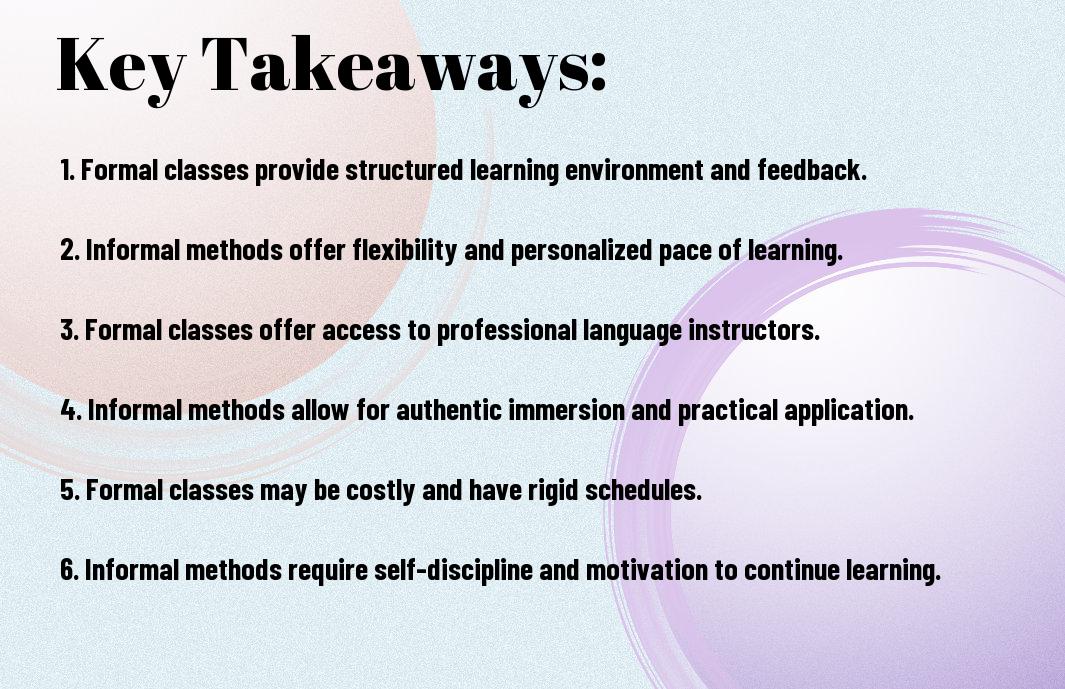
Key Takeaways:

  • Formal Classes:
    • Structured learning environment with a curriculum and set schedule.
    • Access to qualified instructors who can provide guidance and feedback.
    • Potential for certification or recognized qualification upon completion.
  • Informal Methods:
    • Flexibility to learn at your own pace and focus on topics of interest.
    • Varied resources such as online tutorials, language exchange partners, and multimedia content.
    • Opportunities for immersion and practical application of language skills in real-life situations.

Formal Language Classes

Your question on Reddit about whether language learning material tends to emphasize formal methods is an important one. Let’s research into the benefits and challenges of learning a language through formal classes.

Structured Learning Environment

Formal language classes provide a structured learning environment that can be beneficial for those who thrive on clear guidelines and a set curriculum. This structure can help you stay on track with your language learning goals and provides a sense of progression as you move through the material systematically. Additionally, formal classes often incorporate a variety of learning activities such as grammar exercises, vocabulary drills, and conversation practice, which can offer a well-rounded approach to language acquisition.

Access to Qualified Instructors

The presence of qualified instructors in formal language classes is invaluable. These instructors are typically trained language professionals who can provide expert guidance, feedback, and correction. They can help you navigate the complexities of grammar, pronunciation, and cultural nuances, offering insights that you may not easily find in self-study materials. Their feedback can be crucial in fine-tuning your language skills and ensuring that you are on the right track in your learning journey.

It is important to take advantage of the opportunity to engage with these instructors, ask questions, and seek clarification on any challenging aspects of the language. Their expertise and support can significantly enhance your learning experience and accelerate your progress in mastering a new language.

Benefits of Formal Language Classes

Even though informal language learning methods can be beneficial, enrolling in formal language classes can offer you structured guidance and a more comprehensive learning experience. According to the Difference Between Formal and Informal Learning, formal classes provide a focused environment where you can systematically hone your language skills.

Improved Grammar and Syntax

Language classes aim to enhance your understanding of grammar rules and syntax, which are vital components of effective communication. By learning in a formal setting, you have the opportunity to grasp the intricacies of sentence structure and grammar, leading to clearer and more concise communication.

Enhanced Vocabulary

An imperative aspect of language acquisition is vocabulary expansion. In formal classes, you are exposed to a wide range of vocabulary through textbooks, exercises, and interactive sessions. This exposure helps you build a robust vocabulary repertoire that you can utilize in various contexts.

Plus, formal classes often include vocabulary-building exercises and assignments tailored to your proficiency level, ensuring steady progress in bolstering your word bank.

Opportunities for Practice and Feedback

One of the significant advantages of formal language classes is the consistent opportunities they provide for practice and feedback. In a classroom setting, you engage in speaking, listening, reading, and writing exercises under the guidance of experienced instructors.

Grammar corrections, pronunciation tips, and constructive feedback from teachers and classmates enable you to refine your language skills effectively. This iterative process of practicing and receiving feedback accelerates your learning journey and boosts your confidence in using the language.

Informal Language Learning Methods

Once again, informal language learning methods provide a flexible and dynamic approach to mastering a new language. These methods offer a range of benefits, including personalized learning experiences, the opportunity to practice in real-life situations, and the ability to connect with native speakers and immerse yourself in the culture of the language you are learning.

Language Exchange Programs

With language exchange programs, you have the chance to learn from a native speaker while also teaching them your native language. This reciprocal learning arrangement allows you to practice speaking, listening, and even writing in a natural and conversational setting. Language exchange programs can be a great way to improve your language skills while making new friends from around the world.

Online Resources and Apps

Language learning apps and online resources have revolutionized the way we approach learning a new language. With a plethora of apps available at your fingertips, you can learn on the go, at your own pace, and according to your specific interests and needs. These resources often utilize interactive exercises, games, and multimedia tools to make learning engaging and effective.

Plus, online language communities and forums provide a platform for you to connect with fellow language learners, ask questions, and practice your skills in a supportive online environment.

Immersion through Travel or Media

Through immersion experiences such as travel or exposure to foreign language media, you can surround yourself with the language and culture you are learning. Traveling to a country where the language is spoken allows you to practice your skills in real-life situations, from ordering food at a local restaurant to navigating public transportation. Similarly, consuming media in the target language, such as watching movies, listening to music, or reading books, can help improve your listening comprehension and vocabulary.

For instance, watching foreign films with subtitles can help you pick up colloquial expressions and improve your understanding of different accents and dialects. Immersing yourself in the language through travel or media not only enhances your language skills but also broadens your cultural awareness and appreciation.

Benefits of Informal Language Learning Methods

Flexibility and Autonomy

To truly excel in learning a new language, flexibility and autonomy are paramount. Informal language learning methods provide you with the freedom to choose when, where, and how you want to study. You can tailor your learning experience to suit your preferences and schedule, allowing you to fully immerse yourself in the language at your own pace.

Cost-Effective

Benefits of informal language learning methods also extend to cost-effectiveness. Without the financial burden of formal classes, you can explore various resources such as online language learning platforms, language exchange programs, and free educational websites to enhance your language skills at little to no cost.

For instance, you can leverage online language exchange platforms to practice speaking with native speakers for free, providing valuable real-time feedback and cultural insights.

Real-Life Application and Context

For a language to truly become a part of you, it must be used in real-life situations. Informal language learning methods allow you to apply what you’ve learned in authentic contexts, such as engaging in conversations with native speakers, watching foreign films without subtitles, or reading articles in your target language.

Informal language learning encourages you to step out of your comfort zone and embrace the language in its natural habitat, helping you develop practical language skills that are necessary for fluency.

Challenges of Formal Language Classes

Limited Scheduling and Location Options

To fully immerse yourself in learning a new language, you may find that formal classes have limited scheduling options that might not align with your daily commitments. Classes are typically held at set times and locations, making it challenging to accommodate if you have a busy schedule or live far from the class venue. This can hinder your progress and motivation to keep up with the coursework.

High Costs and Financial Burden

An obstacle you may face when opting for formal language classes is the high costs associated with enrollment. Language courses, especially those offered through recognized institutions, can come with a significant financial burden. The fees for classes, study materials, and possibly transportation or accommodation if the classes are not in your local area, all add up to a substantial investment.

Furthermore, the financial commitment required for formal classes might put pressure on you to perform well, leading to added stress and potentially affecting your learning experience.

Potential for Boring or Unengaging Instruction

Scheduling conflicts may not be the only challenge you encounter in formal language classes. There is also the risk of facing monotonous or unengaging instruction, which can make the learning process less effective and enjoyable. Some traditional language classes may rely heavily on textbook exercises and repetitive drills, failing to capture your interest and passion for the language.

Any lack of engagement in class can hinder your progress and motivation to continue learning, ultimately impacting the outcome of your language acquisition journey.

Challenges of Informal Language Learning Methods

Now, let’s look at some of the challenges you may face when learning a language through informal methods. One of the significant challenges of informal language learning is the lack of structure and accountability.

Lack of Structure and Accountability

When you learn a language informally, you may find it challenging to maintain a consistent study schedule. Without a structured curriculum or regular classes to attend, it’s easy to procrastinate or lose motivation. Furthermore, without clear goals or a sense of accountability to a teacher or classmates, you might struggle to track your progress effectively.

Limited Access to Qualified Feedback

Methods of informal language learning, such as language exchange partners or self-study resources, may not always provide you with the high-quality feedback you need to improve your language skills. While these resources can be valuable for practice, they may lack the expertise and in-depth knowledge that a qualified language instructor can offer.

Access to qualified feedback is vital for honing your pronunciation, grammar, and overall language proficiency. Without this guidance, you may unknowingly reinforce incorrect language patterns or pronunciation, making it harder to reach fluency.

Difficulty in Staying Motivated

Staying motivated to learn a new language without the structure and support of formal classes can be a significant challenge. Without external accountability or clear milestones to work towards, you may find it hard to stay consistent in your study habits. The initial excitement of starting a new language often fades over time, making it easy to lose interest and momentum.

The lack of interactions with peers or a teacher in informal learning settings can also lead to feelings of isolation and disconnection, further dampening your motivation to continue learning.

To wrap up

Presently, you have learned about the benefits and challenges of learning a language through formal classes versus informal methods. Formal classes offer structured learning, access to expert guidance, and opportunities for practice and feedback. On the other hand, informal methods such as immersion, self-study, and language exchange provide a more flexible and personalized approach, as well as real-world application of language skills.

Ultimately, the most effective way to learn a language depends on your learning style, goals, and preferences. You may find success in a combination of both formal and informal methods, tailored to suit your individual needs. By understanding the advantages and drawbacks of each approach, you can make informed decisions to enhance your language learning journey and achieve fluency in a way that works best for you.

Q: What are the benefits of learning a language through formal classes?

A: Formal classes provide structured learning environments with qualified instructors who can offer guidance, feedback, and support throughout the learning process. Additionally, formal classes often follow a curriculum that covers all aspects of the language, including grammar, vocabulary, and pronunciation.

Q: What are the benefits of learning a language through informal methods?

A: Informal methods, such as self-study through apps, podcasts, or language exchange partners, offer flexibility and the ability to learn at your own pace. Informal methods also provide opportunities for real-world language practice and cultural immersion, which can enhance language proficiency.

What are the challenges of learning a language through formal classes versus informal methods?

A: Challenges of learning through formal classes include the cost of tuition, rigid schedules, and limited opportunities for practical application outside the classroom. On the other hand, informal methods may lack structured guidance, accountability, and depth of knowledge that a formal class can provide. It’s important to consider your learning style, goals, and resources when choosing between formal classes and informal methods.

Skip to content