Immersion

The Importance of Immersion in Language Learning

As you launch on learning a new language, you’ll find that surrounding yourself with it is important to your progress. Your ability to absorb and understand the language improves significantly when you’re immersed in its sounds, rhythms, and nuances. By placing yourself in an environment where the language is spoken, you’ll begin to pick up on subtleties that might elude you in a classroom setting, allowing you to develop a more authentic and intuitive grasp of the language.

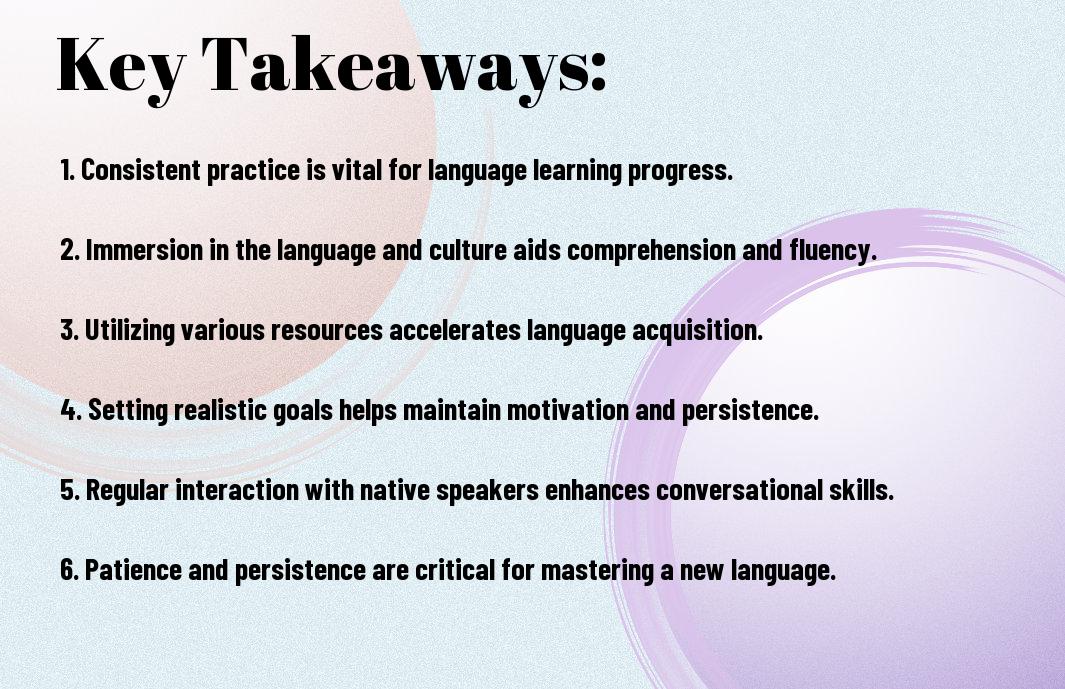
Key Takeaways:

  • The effectiveness of language learning is significantly enhanced through immersive experiences, allowing learners to engage with the language in a more natural and interactive way.
  • Surrounding oneself with the target language, whether through travel, language exchange programs, or media consumption, facilitates deeper understanding and retention of language skills.
  • Authentic materials and real-life situations provide learners with the opportunity to develop practical language skills, enabling them to apply their knowledge in everyday contexts.
  • Consistency and frequency of exposure to the target language are important for language acquisition, as they help to build fluency and confidence in communication.
  • By engaging with the language in a variety of contexts and settings, learners can develop a more nuated understanding of the language, including its cultural and social aspects.

Benefits of Immersion

For language learners, immersion is a highly effective method that offers numerous advantages. You will find that your language skills improve rapidly as you surround yourself with the language you are trying to learn.

Enhanced Language Retention

Any effort you put into immersing yourself in a language will likely yield significant results in terms of language retention. You will be more likely to absorb and retain new vocabulary and grammar rules when you are surrounded by the language.

Improved Pronunciation

Pronouncing words correctly is a key aspect of language learning, and immersion helps you achieve this. You will pick up the nuances of pronunciation by listening to native speakers and mimicking their intonation and accent.

But what’s more, as you continue to immerse yourself in the language, you will start to notice the subtleties of pronunciation that are often lost in traditional language learning methods. You will begin to develop an ear for the language, allowing you to distinguish between similar sounds and pronounce words with greater accuracy, which in turn will enhance your overall communication skills and make you a more confident language user.
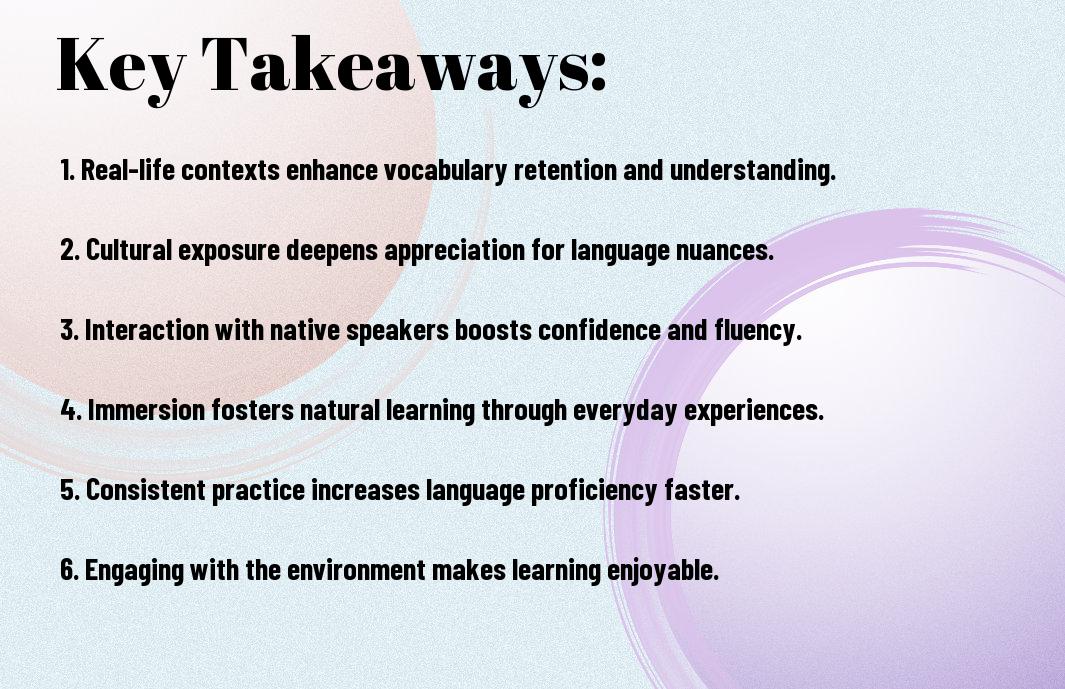
Language Surroundings

Clearly, the environment you learn in plays a significant role in language acquisition. You are more likely to pick up a language when surrounded by its sounds, rhythms, and nuances.

Cultural Exposure

Surrounded by cultural references, you begin to understand the language in context, and your comprehension deepens. This exposure helps you develop a sense of the language’s unique characteristics.

Authentic Materials

Adjacent to traditional learning methods, authentic materials can enhance your learning experience. You can engage with real-life texts, videos, and conversations to improve your language skills.

With authentic materials, you can access a wealth of information that reflects everyday language use. You can listen to podcasts, watch TV shows, and read newspapers to get a feel for how the language is used in different contexts, allowing you to develop a more nuanced understanding of the language and its various forms.

Interactive Environment

Many language learners find that engaging with the language in a dynamic setting enhances their learning experience. You can surround yourself with the language by using digital tools, watching TV shows or movies, and listening to music in the target language.

Conversations and Discussions

Interacting with native speakers or fellow learners through conversations and discussions helps you develop your speaking skills and build confidence in using the language. You will find that your language abilities improve as you engage in debates, role-plays, or simple chats.

Immersive Activities

Engaging activities such as reading, writing, and role-playing help you absorb the language naturally. You can try writing a journal, creating a video blog, or participating in a language exchange to immerse yourself in the language.

Due to the effectiveness of immersive activities, you will notice significant progress in your language skills as you consistently engage in these activities, making the learning process more enjoyable and effective for you.

Learning through Experience

Despite the benefits of traditional classroom learning, you will find that immersing yourself in a language leads to more effective retention and recall. Your ability to understand and communicate in the target language improves significantly when you are surrounded by native speakers and authentic materials.

Real-Life Applications

Following your initial exposure to the language, you begin to notice the real-life applications of your newfound skills, and your comprehension of the language deepens. You start to appreciate the nuances of the language and develop a more sophisticated understanding of its usage in everyday situations.

Practical Skills Development

Applications of language learning are numerous, and you will discover that your ability to navigate everyday situations in the target language becomes more confident. Your capacity to engage in conversations, read authentic texts, and write coherent passages improves dramatically as you continue to immerse yourself in the language.

At the heart of practical skills development lies the notion that you should be able to apply your language skills in a variety of contexts, from professional settings to social interactions. As you progress in your language learning journey, you will find that your ability to think critically and solve problems in the target language becomes more refined, enabling you to tackle complex situations with ease and confidence, and your overall language proficiency will continue to grow.

Personal Growth and Development

After engaging in immersive language learning, you will notice significant improvements in your overall personal growth and development, as you become more aware of your strengths and weaknesses, and develop a greater sense of self-awareness.

Confidence Building

Among the many benefits of immersion, you will find that your confidence in communicating in a new language increases, allowing you to express yourself more effectively and engage in meaningful interactions with native speakers.

Intercultural Competence

By immersing yourself in a foreign culture, you will gain a deeper understanding of the customs, traditions, and values of the people who speak the language, enabling you to navigate complex social situations with ease and sensitivity.

Growth in intercultural competence will enable you to see the world from different perspectives, fostering empathy, tolerance, and a broader understanding of the global community, and as you continue to learn and grow, you will become a more nuanced and thoughtful individual, capable of making meaningful connections across cultural boundaries.

Effective Immersion Techniques

Unlike traditional language learning methods, immersion techniques can help you learn a language more effectively. You can explore various programs, such as those discussed in Immersion Programs Teach Much More Than Another Language, to find what works best for you.

Language Exchange Programs

With the rise of online platforms, you can now connect with native speakers and engage in language exchange programs, which can help you improve your speaking and listening skills.

Technology-Enhanced Learning

Beside traditional classroom learning, technology-enhanced learning offers you a range of tools and resources to practice your language skills, from language learning apps to online courses.

At the heart of technology-enhanced learning is the ability to tailor your learning experience to your needs and interests, allowing you to learn at your own pace and focus on areas where you need improvement, making your language learning journey more efficient and effective.

Conclusion

As a reminder, you will find that immersion is vital to language learning, allowing you to engage with your target language in a more natural way. You will notice significant improvements in your comprehension and communication skills when you surround yourself with the language. Your ability to think and express yourself in the new language will become more effortless, enabling you to connect with native speakers on a deeper level, and broaden your cultural understanding.

FAQ

Q: What is immersion and how does it relate to language learning?

A: Immersion is a method of learning a language by surrounding oneself with the language as much as possible, making it an integral part of daily life. This approach involves not just speaking the language, but also listening to it, reading it, writing it, and even thinking in it. By immersing oneself in the language, learners can pick up nuances and subtleties that might be missed in a traditional classroom setting, thereby enhancing their fluency and comprehension.

Q: How does immersion benefit language learners in terms of vocabulary and grammar acquisition?

A: Immersion exposes learners to a vast array of vocabulary and grammatical structures in context, which aids in understanding how the language is used in real-life situations. This contextual learning helps learners to better retain vocabulary and apply grammatical rules correctly, as they see and experience the language in action. Moreover, immersion often provides learners with opportunities to engage with native speakers, which can lead to a more natural and spontaneous acquisition of language skills.

Q: What are some effective ways to immerse oneself in a language when living in a non-target language environment?

A: For individuals living in an environment where the target language is not predominantly spoken, there are still several ways to achieve immersion. One method is to consume media (such as TV shows, movies, podcasts, and books) in the target language. Setting the language on one’s phone, computer, and other devices to the target language can also increase exposure. Additionally, connecting with native speakers through language exchange apps or online communities, as well as speaking with oneself in the target language, can simulate an immersive environment. Lastly, creating a routine that includes writing, reading, and listening in the target language daily can further enhance the immersion experience.

The Importance of Immersion for Language Retention

As you pursue language learning, you’ll discover that immersion is key to retaining your new skills. Your ability to hold conversations and understand native speakers depends on it. To better understand the benefits, consider What the Research Says About Immersion – Tara Williams Fortune’s findings, which highlight the positive impact of Surrounding yourself with the language on your retention and proficiency. You’ll see significant improvements in your language abilities when you prioritize immersion.

Key Takeaways:

To maximize language learning effectiveness, consider the following points about immersion and its impact on retention:

  • Surrounding yourself with the language you’re trying to learn can significantly enhance vocabulary retention and improve pronunciation skills, as it provides a more engaging and interactive learning environment.
  • Consistent exposure to the target language through media, such as TV shows, movies, and music, can help solidify language patterns and promote long-term retention.
  • Practical application of language skills in real-life situations is key to effective learning, as it allows learners to contextualize their knowledge and develop a deeper understanding of cultural nuances and idiomatic expressions.

The Role of Immersion in Language Learning

To learn a language effectively, you need to surround yourself with it. Immersion plays a significant role in language learning, as it helps you become familiar with the language in context. You will pick up nuances and expressions that you might not learn in a classroom setting.

Language Surroundings and Retention

By placing yourself in an environment where the language is spoken, you increase your chances of retaining the language. Your brain absorbs the language naturally, making it easier to understand and use it in everyday conversations.

The Brain’s Response to Immersed Environments

Environments that surround you with a language stimulate your brain to adapt and learn. You start to think in the language, making connections between words and concepts more efficiently. Your ability to understand and communicate in the language improves significantly.

Indeed, as you immerse yourself in a language, you will notice changes in the way your brain processes information. You will start to recognize patterns and associations that are unique to the language, and your proficiency will increase rapidly. You will be able to express yourself more confidently and accurately, and your comprehension will improve, allowing you to engage with native speakers more effectively.

Effective Methods for Immersion

Some of the most effective methods for immersion include surrounding yourself with the language you want to learn, using media and interacting with native speakers. You can start by making small changes to your daily routine, such as listening to music or watching TV shows in the target language.

Foreign Language Media Consumption

Consuming media in the target language is an excellent way to improve your listening and comprehension skills. You can watch TV shows or movies with subtitles, listen to podcasts or radio shows, and even read books or articles in the target language to help you stay immersed.

Cultural Exchange Programs and Travel

Travelling to a country where the language is spoken or participating in cultural exchange programs can be a great way to immerse yourself in the language. You will have the opportunity to interact with native speakers, learn about the culture and customs, and practice your language skills in real-life situations.

To take full advantage of cultural exchange programs and travel, you should try to engage with the local community as much as possible. You can stay with a host family, participate in local events, and try to avoid speaking your native language as much as possible. By doing so, you will be able to pick up nuances of the language and develop a more authentic accent, helping you to improve your language retention and become a more confident speaker.

Overcoming Language Barriers through Immersion

Many language learners struggle to overcome language barriers, but immersion can help. By surrounding yourself with the language, you can improve your skills and gain confidence in your ability to communicate effectively.

Building Confidence in Speaking and Listening

On the path to language proficiency, you’ll find that immersion helps you build confidence in speaking and listening. As you engage with native speakers, you’ll become more comfortable with the sounds, rhythms, and nuances of the language.

Enhancing Vocabulary and Grammar

Through consistent exposure to the language, you’ll enhance your vocabulary and grammar skills. You’ll learn to use context clues to understand unfamiliar words and phrases, and develop a sense of how to use grammar correctly in different situations.

At this stage, you’ll notice significant improvement in your ability to express yourself in the language. Your vocabulary will expand, and you’ll be able to use grammar rules to construct more complex sentences, allowing you to convey your thoughts and ideas more effectively. As you continue to immerse yourself in the language, you’ll find that your skills will continue to improve, and you’ll become a more proficient and confident language user.

The Impact of Technology on Immersive Learning

Your ability to learn a language can be significantly enhanced by technology, which provides numerous tools and resources to support immersive learning, helping you to stay engaged and motivated throughout the process.

Language Learning Apps and Software

Leveraging language learning apps and software can be an effective way to access interactive lessons, exercises, and quizzes, allowing you to practice your language skills in a flexible and convenient manner, anytime and anywhere.

Online Communities and Forums

Influencing your language learning journey, online communities and forums offer a space to interact with native speakers, ask questions, and share experiences, enabling you to immerse yourself in the language and culture.

Online interactions with fellow language learners and native speakers can help you develop a deeper understanding of the language and its nuances, as you learn from others and share your own knowledge and experiences, ultimately enhancing your language retention and proficiency.

Measuring the Success of Immersion

Unlike other language learning methods, immersion provides a unique opportunity to assess your progress in a realistic setting. You can evaluate your language skills by engaging in conversations, reading local materials, and participating in cultural events.

Assessment Methods for Language Retention

Alongside traditional testing methods, you can use language proficiency exams and self-assessment tools to track your progress. You will be able to identify areas for improvement and adjust your immersion strategy accordingly.

Evaluating the Effectiveness of Immersion Programs

Alike many other educational programs, evaluating the effectiveness of immersion programs requires a thorough analysis of your language skills before and after the program. You will be able to see significant improvements in your language retention and overall communication skills.

At this stage, you can reflect on your experience and identify the aspects of the immersion program that were most beneficial to your language learning. You can use this information to adjust your future language learning strategy and make informed decisions about your continued education. By evaluating the effectiveness of immersion programs, you can optimize your language learning and achieve your goals more efficiently.

Challenges and Limitations of Immersion

Now that you’re aware of the benefits of immersion, it’s vital to consider the challenges you may face, as they can impact your language retention significantly.

Accessibility and Financial Constraints

Challenging circumstances, such as limited access to native speakers or financial constraints, can hinder your ability to immerse yourself in a language, making it difficult to achieve optimal language retention.

Individual Learning Styles and Preferences

Above all, your individual learning style and preferences play a significant role in determining the effectiveness of immersion, as you may respond better to certain methods over others.

Further, you should consider that your learning style and preferences can influence how you approach immersion, and being aware of these factors can help you tailor your approach to maximize language retention, allowing you to make the most out of your immersion experience and achieve your language goals.

Summing up

Drawing together the key points, you can see that immersion plays a significant role in your language retention. As you surround yourself with the language, you improve your comprehension and production skills. Your ability to think in the target language increases, enabling you to communicate more effectively. By immersing yourself in the language, you enhance your overall learning experience and set yourself up for long-term success.

FAQ

Q: What role does immersion play in language retention, and why is it significant for language learners?

A: Immersion plays a vital role in language retention as it allows learners to surround themselves with the language they are trying to learn, making it an integral part of their daily lives. By immersing themselves in the language, learners are exposed to its nuances, rhythms, and idiomatic expressions, which helps in developing a deeper understanding and a more natural usage of the language. This, in turn, aids in better retention and proficiency over time.

Q: How does immersion contribute to the development of linguistic skills, such as speaking, listening, reading, and writing, in the context of language retention?

A: Immersion significantly enhances linguistic skills by providing learners with opportunities to practice speaking, listening, reading, and writing in authentic contexts. For instance, speaking and listening skills are refined through interactions with native speakers, watching local media, or participating in conversations. Reading and writing skills are improved by engaging with native materials such as books, newspapers, and online content. This holistic approach to learning helps in reinforcing language structures, vocabulary, and cultural insights, thereby supporting long-term language retention.

Q: What strategies can language learners adopt to incorporate immersion into their daily routine, especially those who do not have the opportunity to live in a country where their target language is spoken?

A: Language learners can adopt several strategies to incorporate immersion into their daily routine, even without living in a country where their target language is spoken. Watching TV shows and movies, listening to music and podcasts, reading books and news in the target language, and engaging in conversations with native speakers through language exchange apps or online communities are effective ways to immerse oneself in the language. Additionally, changing the language settings on personal devices, using language learning apps, and practicing speaking and writing in the target language daily can also simulate an immersive environment, facilitating language retention and fluency.

What are the key factors in successfully learning a new language

Just commenceing on the journey of learning a new language? Mastering a new language can be a challenging yet rewarding experience. From consistent practice and exposure to native speakers to understanding the cultural context, there are key factors that can significantly impact your language learning success. In this blog post, we will explore the vital elements that can help you on your path to fluency. Let’s dive in and discover how you can effectively learn a new language and broaden your horizons.

Key Takeaways:

  • Consistent practice: Regular and consistent practice is necessary for language learning.
  • Immerse yourself in the language: Surround yourself with the language through media, books, and conversations.
  • Patience and perseverance: Learning a new language takes time, so stay patient and motivated throughout the process.

Setting Realistic Goals

The key to successfully learning a new language lies in setting realistic goals. By establishing clear objectives and breaking them down into manageable chunks, you can make steady progress and stay motivated throughout your language learning journey.

Defining Achievable Objectives

One of the first steps in setting realistic language learning goals is defining achievable objectives. These objectives should be specific, measurable, and realistic. For example, instead of setting a vague goal like “I want to become fluent in Spanish,” try setting a more specific objective such as “I want to be able to hold a basic conversation in Spanish within three months.”

Breaking Down Long-term Goals into Manageable Chunks

The key to making progress in learning a new language is breaking down long-term goals into manageable chunks. This approach can help prevent you from feeling overwhelmed and enhance your sense of accomplishment as you achieve smaller milestones along the way. For instance, if your long-term goal is to reach an advanced level of proficiency in French, you can break it down into smaller objectives like mastering basic grammar concepts, building vocabulary related to specific topics, and practicing speaking and listening skills regularly.

Objectives that are broken down into smaller, more manageable tasks are easier to track and achieve, keeping you motivated and focused on your language learning goals. Bear in mind, Rome wasn’t built in a day, and fluency in a new language won’t happen overnight. By setting realistic goals and breaking them down into smaller steps, you can make consistent progress and eventually reach fluency in the language you are learning.

Creating an Optimal Learning Environment

You can significantly enhance your language learning journey by creating an optimal learning environment. Various factors influence language learning, and understanding them can help you tailor your study space and routine to maximize your progress. If you want to explore more on this topic, check out What factors influence language learning?.

Designing a Conducive Study Space

One of the first steps in creating an optimal learning environment is designing a conducive study space. Choose a quiet and well-lit area where you can focus without distractions. Keep all your language learning materials organized and within reach to maintain a sense of productivity and efficiency.

Minimizing Distractions and Interruptions

Space. To truly immerse yourself in the language learning process, it’s crucial to minimize distractions and interruptions. Find a time of day when you are least likely to be disturbed and inform those around you about your study schedule. Turn off notifications on your phone and computer to maintain your focus on learning the language.

Plus, consider using noise-canceling headphones or background music specifically designed to enhance concentration. By creating a serene and interruption-free study environment, you can boost your retention and comprehension of the new language.

Finding the Right Language Learning Resources

For successful language learning, the resources you choose play a crucial role. Textbooks, language learning apps, and online courses are traditional tools that can provide structured lessons, grammar explanations, and vocabulary practice. Textbooks offer comprehensive coverage of language rules and exercises to reinforce your understanding. Language learning apps and online courses offer interactive and engaging ways to learn with features like flashcards, quizzes, and audio exercises that cater to different learning styles.

Textbooks, Language Learning Apps, and Online Courses

For an effective language learning experience, it’s crucial to choose resources that align with your learning preferences and goals. Textbooks are beneficial for those who prefer a structured approach and enjoy working through lessons systematically. Language learning apps are suitable for those who prefer learning on-the-go and in short, interactive bursts. Online courses are ideal for learners seeking a more comprehensive and interactive learning experience with opportunities for feedback and practice.

Utilizing Authentic Materials and Native Speakers

One of the most effective ways to enhance your language skills is by incorporating authentic materials and interacting with native speakers. Immersing yourself in movies, music, books, and news in the target language can help you grasp colloquial expressions, cultural nuances, and improve your listening skills. Engaging with native speakers through conversation exchanges, language meetups, or online language exchange platforms can provide real-life practice and help you gain confidence in speaking the language.

Utilizing authentic materials allows you to experience the language in its natural context, enabling you to pick up on subtleties that may not be taught in traditional resources. Interacting with native speakers gives you the opportunity to practice your speaking and listening skills in real-time, helping you progress faster and develop a more authentic accent and intonation.

Developing Effective Language Learning Habits

After reading the insightful article on 7 Steps to Learn a New Language, you can take inspiration to establish effective language learning habits.

Establishing a Consistent Study Routine

To make significant progress in learning a new language, consistency is key. Setting aside dedicated time each day, even if it’s just 20-30 minutes, can greatly impact your language proficiency. Whether it’s early in the morning, during lunch breaks, or before bedtime, finding a routine that works for you will help maintain your focus and momentum. By incorporating language learning into your daily schedule, you create a habit that will eventually become second nature.

Practicing Active Recall and Spaced Repetition

Effective language learning involves engaging in active recall and spaced repetition techniques. This means actively recalling vocabulary, phrases, and grammar rules from memory rather than simply re-reading them. By testing yourself on what you’ve learned at regular intervals, spaced repetition helps reinforce memory retention. Incorporating these strategies into your study sessions can enhance your learning efficiency and long-term retention of language skills.

Consistent practice of active recall and spaced repetition not only aids in memorization but also strengthens your ability to recall information quickly and accurately. By actively engaging with the material and spacing out your review sessions strategically, you optimize your learning process and ensure that the knowledge stays fresh in your memory.

Overcoming Common Language Learning Obstacles

Once again, as you commence on the journey of learning a new language, you may encounter common obstacles that can hinder your progress. By understanding these challenges and learning how to navigate through them, you can increase your chances of successfully mastering a new language.

Dealing with Fear of Mistakes and Embarrassment

Common among language learners is the fear of making mistakes and feeling embarrassed when speaking the new language. Do not forget, making mistakes is a natural part of the learning process. Embrace them as opportunities to improve and grow. Instead of worrying about what others may think, focus on practicing and pushing yourself out of your comfort zone. The more you practice, the more confident you will become in expressing yourself in the new language.

Managing Frustration and Motivation

An crucial aspect of overcoming obstacles in language learning is managing your frustration and keeping yourself motivated throughout the journey. It’s common to feel frustrated when you encounter challenging aspects of the language or when progress seems slow. Break down your learning goals into smaller, achievable tasks. Celebrate your accomplishments along the way, whether it’s mastering a new vocabulary set or holding a conversation in the new language. Surround yourself with sources of motivation, such as setting realistic goals, tracking your progress, and seeking support from language learning communities or tutors.

Language learning is a process that requires patience, persistence, and a positive mindset. By acknowledging and addressing common obstacles like fear of mistakes, embarrassment, frustration, and lack of motivation, you can overcome these challenges and stay motivated on your language learning journey.

Leveraging Language Learning Strategies

Using Mnemonics and Association Techniques

To enhance your language learning, leverage mnemonic devices and association techniques. The human brain is adept at remembering vivid or unusual information, so creating associations or mental images can significantly aid in retaining new vocabulary. For example, when learning a new word in a foreign language, try associating it with a vivid image or a word in your native language that sounds similar. This technique can help cement the new word in your memory and make it easier to recall when needed.

Focusing on Grammar, Vocabulary, and Pronunciation

Language learning involves mastering the trifecta of grammar, vocabulary, and pronunciation. Grammar provides the structural framework for a language, dictating how words are arranged to form meaningful sentences. Vocabulary is the building blocks of communication, enabling you to express thoughts and ideas accurately. Pronunciation is crucial for effective communication, as it ensures that your message is clear and easily understood by native speakers.

With consistent practice and attention to these three key areas, you can make significant strides in your language learning journey. Note, language acquisition is a gradual process, so be patient with yourself as you work on honing your grammar, expanding your vocabulary, and perfecting your pronunciation.

To wrap up

On the whole, successfully learning a new language requires dedication, practice, and immersion. By setting clear goals, staying motivated, and practicing regularly, you can make significant progress in your language learning journey. Remember to be patient with yourself and celebrate small victories along the way. Immersing yourself in the language and culture through authentic resources will also greatly enhance your learning experience. Keep in mind that everyone’s language learning journey is unique, so find what works best for you and enjoy the process.

Q: What are the key factors in successfully learning a new language?

A: The key factors in successfully learning a new language include consistent practice, immersion in the language and culture, setting realistic goals, using various learning tools and resources, seeking feedback and corrections, and staying motivated and committed to the learning process.

Q: How important is consistent practice when learning a new language?

A: Consistent practice is crucial when learning a new language as it helps reinforce vocabulary, grammar, and pronunciation. Regular practice also improves fluency, confidence, and retention of the language skills. Setting aside dedicated time each day to study and practice the language can greatly accelerate the learning process.

Q: Why is immersion in the language and culture important for language learning?

A: Immersion in the language and culture is important for language learning as it provides real-life context and exposure to how the language is spoken and used by native speakers. By surrounding oneself with the language through activities such as watching movies, listening to music, reading books, and engaging in conversations with native speakers, learners can develop a deeper understanding and appreciation of the language, which can enhance their language skills.

What are the common challenges faced by adult language learners, and how can they be overcome

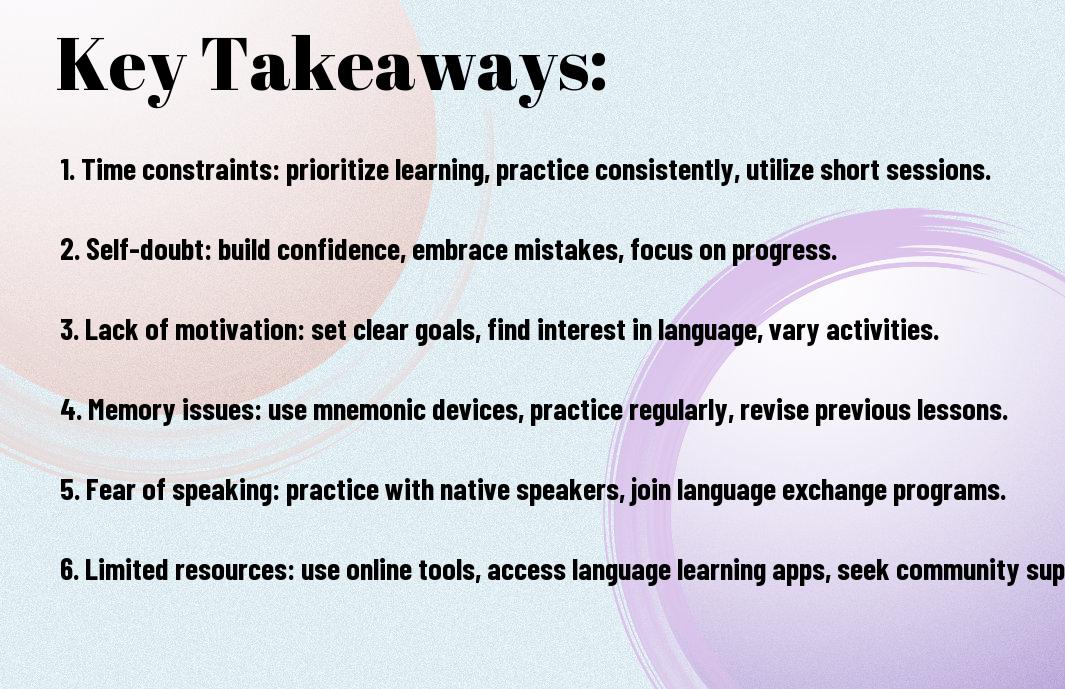
With the world becoming increasingly interconnected, the ability to learn a new language as an adult is crucial. However, as an adult language learner, you may face challenges such as time constraints, fear of making mistakes, lack of immersion, and difficulty in retaining new vocabulary. In this blog post, we will explore these common hurdles and provide practical tips on how you can overcome them to enhance your language learning journey. So, let’s dive in and discover how you can conquer these obstacles and become a more confident and proficient language learner!

Key Takeaways:

  • Motivation is crucial: Adult language learners often face challenges such as lack of motivation, busy schedules, and competing priorities. It is important to set clear goals, find meaningful reasons to learn the language, and stay committed to the learning process.
  • Practice and consistency are key: Consistent practice is necessary for language learning. Adults should create a study routine, practice regularly, immerse themselves in the language through various activities, and seek opportunities to use the language in real-life situations.
  • Overcoming fear of making mistakes: Fear of making mistakes can hinder adult language learners’ progress. It is important to remember that making mistakes is a natural part of the learning process. Learners should embrace their mistakes, learn from them, and use them as opportunities to improve their language skills.

The Struggle is Real

While commenceing on your journey to learn a new language, you are likely to encounter a multitude of challenges that can make the process seem daunting. From linguistic barriers to cultural differences, these obstacles can sometimes hinder your progress and leave you feeling frustrated. However, with the right approach and strategies, you can overcome these challenges and make significant strides in your language learning journey.

Linguistic Barriers

Barriers such as grammar rules, pronunciation differences, and complex sentence structures can make it difficult for adult language learners to grasp a new language. These challenges can be particularly daunting if the new language belongs to a different language family or has a writing system that is vastly different from your native language. To overcome linguistic barriers, it is imperative to practice regularly, engage with native speakers, and seek the help of a tutor or language exchange partner who can provide guidance and feedback.

Cultural Differences

Linguistic challenges are often intertwined with cultural differences, as language is deeply connected to a society’s beliefs, customs, and values. Understanding the cultural context of a language is crucial for effective communication and language proficiency. By immersing yourself in the culture of the language you are learning—through music, films, literature, and social interactions—you can gain a deeper appreciation for the language and overcome cultural barriers that may impede your progress.

Cultural differences can also manifest in language etiquette, body language, and expressions that may not have direct translations in your native language. By being open-minded and curious about different cultural norms and practices, you can navigate these differences with respect and sensitivity, ultimately enhancing your language learning experience.

Fear and Self-Doubt

Any adult language learner can relate to the feelings of fear and self-doubt that often accompany the language learning journey. These emotions can stem from various sources such as the fear of making mistakes, feeling embarrassed about speaking incorrectly, or doubting your ability to master a new language. In this chapter, we will explore how you can overcome these challenges and build your confidence as a language learner.

Overcoming Embarrassment

For many adult language learners, one of the biggest hurdles to overcome is the fear of embarrassment. You may worry about mispronouncing words, using incorrect grammar, or not being understood by native speakers. However, it’s necessary to remember that making mistakes is a natural part of the learning process. In fact, embracing your mistakes and learning from them is one of the most effective ways to improve your language skills. In the article How To Overcome Struggles Faced by Adult Learners …, you can find valuable tips on how to navigate through these feelings of embarrassment and turn them into opportunities for growth.

Building Confidence

Any adult language learner can attest to the fact that confidence plays a crucial role in language acquisition. When you believe in your abilities and approach language learning with a positive mindset, you are more likely to succeed. Building confidence in your language skills involves practicing regularly, setting achievable goals, and celebrating your progress along the way. Additionally, surrounding yourself with a supportive language learning community and seeking feedback from native speakers can boost your confidence and motivation.

Understanding that everyone makes mistakes and that language learning is a journey with ups and downs can help you build the confidence needed to overcome challenges. By embracing your mistakes, setting realistic goals, and seeking support from fellow learners, you can cultivate a strong sense of confidence in your language learning abilities.

Time Management and Prioritization

Many adult language learners struggle with finding enough time in the day to dedicate to language learning amidst their various responsibilities. Scheduling language learning sessions can be a challenge, especially when juggling work, family, and other commitments. To overcome this challenge, it’s vital to block out specific times in your daily or weekly schedule dedicated solely to language learning. By treating these learning sessions as non-negotiable appointments, you prioritize language learning and ensure it receives the attention it deserves.

Scheduling Language Learning

On your calendar or planner, designate specific time slots for language learning, and try to stick to them as closely as possible. Whether it’s early in the morning before the day gets hectic or late at night when things wind down, find a time that works best for you and make it a consistent part of your routine. Do not forget, consistency is key in language learning, so establishing a regular study schedule will help you progress more effectively.

Staying Motivated

The journey of learning a new language can be long and challenging, leading many adult learners to feel demotivated at times. The key to staying motivated is to set clear and achievable goals for yourself. Break down your language learning journey into smaller milestones, such as learning a certain number of new words per week or holding a basic conversation within a specific timeframe. Celebrate your achievements along the way to keep yourself motivated and engaged with the learning process.

Additionally, surrounding yourself with the language you’re learning can also help keep you motivated. Listen to music, watch movies or TV shows, or follow social media accounts in the target language to immerse yourself in it outside of study sessions. This constant exposure will reinforce your learning and make it feel more relevant and enjoyable.

Learning Styles and Strategies

After reading about the common challenges faced by ESL students, it’s crucial to understand that each person has a unique way of learning. Finding the right method that suits your learning style is crucial. Some people learn better through visual aids, while others prefer auditory or kinesthetic methods. Experiment with different techniques to see what works best for you. Don’t be afraid to mix and match various strategies until you find the ones that resonate most with you.

Finding the Right Method

To make the most of your language learning journey, it’s vital to identify the methods that cater to your individual learning style. Visual learners may benefit from using flashcards, videos, or colorful mind maps. Auditory learners could find listening to podcasts, music, or language audio lessons helpful. Kinesthetic learners might prefer using gestures, acting out scenarios, or engaging in hands-on activities to reinforce their language skills. By understanding how you learn best, you can tailor your study approach to optimize your language acquisition.

Using Technology to Your Advantage

For modern language learners, technology offers a wealth of resources to enhance your learning experience. Online language courses, language exchange apps, and interactive learning platforms provide flexibility and convenience. You can access a vast array of digital tools to practice reading, writing, speaking, and listening skills. Integrating technology into your language learning routine can make studying more engaging and interactive. Take advantage of language learning apps, video tutorials, and social media language groups to immerse yourself in the language and connect with other learners worldwide.

Advantage

Incorporating technology into your language learning journey can expose you to authentic language use, cultural insights, and real-life scenarios. Language learning apps often incorporate gamification elements to make studying enjoyable and motivate you to progress. Additionally, digital platforms offer instant feedback on your exercises, pronunciation, and language comprehension, allowing you to track your improvement over time. By leveraging technology effectively, you can turn your device into a powerful language learning tool that complements traditional study methods.

Practice, Practice, Practice

On your language learning path, consistent practice is key to mastering a new language. Dedicate regular time to practice speaking, listening, reading, and writing in the target language. Practice not only improves your language skills but also boosts your confidence in using the language. Engage in conversations with native speakers, join language exchange programs, or participate in language meet-up groups to apply what you’ve learned in real-life situations. The more you practice, the more comfortable and proficient you’ll become in the language.

It

It’s crucial to create a study routine that includes daily practice sessions and opportunities to interact with the language. Set specific language learning goals and track your progress to stay motivated and focused. Embrace your mistakes as part of the learning process and learn from them. Regular practice, combined with a positive attitude and perseverance, will significantly enhance your language proficiency over time.

Overcoming Plateaus

Identifying Stagnation

Now, as you progress on your language learning journey, you may encounter times when you feel like your improvement has stalled. Any language learner experiences plateaus, where your skills seem to hit a ceiling, and no matter how much effort you put in, you don’t seem to be moving forward.

It’s vital to recognize when you’ve reached a plateau so that you can take steps to overcome it. Reflect on your recent progress and be honest with yourself about whether you’ve stopped advancing. Identifying stagnation is the first step towards reigniting your language learning momentum.

Shaking Things Up

An effective way to overcome plateaus is to shake things up in your learning routine. Try experimenting with different study methods, resources, or even change the setting where you typically practice. An abrupt change in your routine can reignite your motivation and stimulate your brain in new ways.

By introducing variety into your learning process, you can keep things fresh and challenging. For example, if you’ve solely focused on vocabulary drills, switch gears and engage in conversational practice with a language exchange partner. This change can help break the monotony and push you past the plateau.

With a bit of creativity and willingness to step out of your comfort zone, you can find innovative ways to keep your language learning journey engaging and rewarding.

Seeking Feedback

Plateaus are a common occurrence in language learning, but they don’t have to hinder your progress indefinitely. Seeking feedback from teachers, tutors, or even fellow language learners can provide you with valuable insights into areas where you may be stuck.

Feedback can help you pinpoint weaknesses in your language skills and guide you on how to address them effectively. Additionally, receiving encouragement and constructive criticism from others can reignite your motivation and drive to push through the plateau.

Stagnation is a natural part of the language learning process, but with the right strategies and support, you can overcome these challenges and continue advancing towards your fluency goals.

The Power of Community

Unlike learning in isolation, being part of a community can greatly enhance your language learning journey. Engaging with others who are also on the same path can provide motivation, support, and valuable opportunities to practice and improve your skills.

Joining Language Exchange Groups

To maximize your language learning experience, consider joining language exchange groups in your local community or online. These groups typically consist of language learners who are looking to practice with native speakers in a conversational setting. By participating in these exchanges, you can not only improve your language skills but also gain cultural insights and make new friends.

Finding a Language Buddy

Buddy

It’s important to find a language buddy who shares your goals and interests in language learning. This person can be a native speaker of the language you are learning or someone at a similar proficiency level. Having a language buddy gives you a dedicated partner to practice with, ask questions, and keep each other accountable in your learning journey.

Online Resources and Forums

The

Online resources and forums are valuable tools for adult language learners. Platforms like language learning apps, online forums, and social media groups provide access to a wealth of information, language exchange opportunities, and support from a global community of language enthusiasts. You can find study materials, language exchange partners, and even virtual language meetups to practice speaking and listening skills.

Online resources and forums offer flexibility and convenience, allowing you to engage with language learning whenever and wherever you are. Whether you have a quick question, need help with a particular grammar rule, or want to practice speaking with a native speaker, these online platforms are accessible 24/7 to support your language learning journey.

Final Words

Upon reflecting on the common challenges faced by adult language learners, it is clear that there are various obstacles that can hinder your progress. However, by recognizing these challenges and implementing effective strategies, you can overcome them and achieve your language learning goals. Remember to stay patient and consistent in your efforts, as language acquisition is a gradual process that requires time and dedication.

It is important to stay motivated and find ways to make your language learning experience enjoyable. Surround yourself with the language as much as possible, practice regularly, and seek support from peers or language instructors when needed. By staying positive, setting realistic goals, and utilizing available resources, you can navigate through the challenges of adult language learning and make significant progress in mastering a new language.

Q: What are the common challenges faced by adult language learners?

A: Adult language learners often face challenges such as limited time due to work or family commitments, difficulty in retaining new vocabulary, and fear of making mistakes when speaking.

Q: How can adult language learners overcome the challenge of limited time?

A: Adult language learners can overcome the challenge of limited time by setting aside small, consistent blocks of time each day for language practice, utilizing apps or online resources for on-the-go learning, and incorporating language learning into daily activities like commuting or chores.

Q: How can adult language learners overcome the fear of making mistakes when speaking?

A: Adult language learners can overcome the fear of making mistakes when speaking by practicing speaking with a language partner or tutor who provides supportive feedback, focusing on progress rather than perfection, and embracing mistakes as a natural part of the learning process.

What is the role of language exchange programs in language learning

Communication is the key to mastering a new language, and language exchange programs offer a unique opportunity for you to immerse yourself in a different culture while practicing your language skills. By connecting with native speakers, you can improve your fluency, cultural competency, and gain valuable insights that textbooks alone can’t provide. In this blog post, we will explore the significance of language exchange programs in your language learning journey.

Key Takeaways:

  • Opportunity for practice: Language exchange programs provide learners with a structured platform to practice speaking and listening skills with native speakers.
  • Cultural immersion: Engaging in language exchange programs can offer insights into the culture and customs of the target language, enhancing overall language learning experience.
  • Mutual benefit: Both participants in a language exchange program can benefit from learning each other’s language, creating a symbiotic relationship that fosters learning and understanding.

The Concept of Language Exchange Programs

Definition and History

History: Language exchange programs have a rich history dating back decades. These programs were initially created to provide individuals with the opportunity to practice and improve their language skills through real-life conversations with native speakers. The concept of language exchange is based on the principle of reciprocal learning, where two individuals teach each other their native languages in a mutually beneficial exchange.

Types of Language Exchange Programs

This table breaks down the different types of language exchange programs:

Language Exchange Program Type Description
Tandem Language Learning Participants pair up based on their native languages and take turns practicing each other’s language.
Language Exchange Meetups Organized gatherings where individuals meet in person to practice speaking different languages.
Online Language Exchange Platforms Websites and apps that connect language learners worldwide for virtual language exchange sessions.
Language Exchange Pen Pals Participants communicate through written letters or emails to improve their language skills.
Language Exchange Programs Abroad Immersive programs where individuals travel to a foreign country to learn the language and culture firsthand.

Through these diverse types of language exchange programs, you can choose the one that best suits your learning style and preferences. Though each program may have a slightly different approach, the common goal is to provide you with the opportunity to practice and improve your language skills in a practical and engaging way.

Benefits of Language Exchange Programs

Improved Pronunciation and Fluency

Even for advanced language learners, perfecting pronunciation and fluency can be a challenging task. Language exchange programs offer a unique opportunity to practice with native speakers in a natural, conversational setting. By engaging in regular conversations, you can pick up on the nuances of the language, improve your accent, and enhance your fluency.

Enhanced Vocabulary and Grammar

Language exchange programs provide an excellent platform to expand your vocabulary and refine your grammar skills. Through interactions with native speakers, you can learn colloquial expressions, idiomatic phrases, and grammatical structures that may not be found in textbooks. This hands-on approach to learning allows you to contextualize new words and grammar rules, making them easier to remember and apply in real-life situations.

Language exchange programs encourage you to step out of your comfort zone and practice using the language in authentic scenarios. As you engage in conversations on various topics, you will naturally encounter new words and phrases, expanding your vocabulary organically.

Cultural Immersion and Awareness

Another key benefit of language exchange programs is the opportunity for cultural immersion and awareness. Language is deeply intertwined with culture, and by interacting with native speakers, you not only learn the language but also gain insights into their traditions, customs, and way of life. This holistic approach to language learning helps you develop a deeper understanding and appreciation for different cultures.

To truly immerse yourself in a language and its culture, you can participate in cultural activities, attend events, or even travel to countries where the language is spoken. This firsthand experience enriches your language learning journey and broadens your perspective on the world.

How Language Exchange Programs Facilitate Language Learning

Interactive and Engaging Learning Experience

Unlike traditional classroom settings, language exchange programs provide you with a unique opportunity to engage in real-life conversations with native speakers or proficient learners of the language you are trying to acquire. This interactive experience allows you to practice your speaking and listening skills in a more natural and dynamic way, making the learning process more enjoyable and effective.

Personalized Feedback and Correction

Correction:

Language exchange partners can give you instant feedback on your pronunciation, grammar, and vocabulary usage during your conversations. This immediate correction helps you to identify and correct mistakes as you make them, reinforcing proper language patterns and structures in your mind.

Additionally, your language exchange partner can tailor their feedback to address your specific areas of weakness, providing you with personalized guidance for improvement.

Building Confidence and Reducing Anxiety

Engaging:

Feedback from your language exchange partner can boost your confidence by acknowledging your progress and pointing out areas where you excel. This positive reinforcement can help to alleviate the anxiety often associated with making mistakes in a new language, creating a supportive environment for your language learning journey.

This combination of constructive feedback and encouragement can empower you to take risks in your language practice and become more comfortable expressing yourself in real-world situations.

The Role of Technology in Language Exchange Programs

For language learners, technology has revolutionized the way we engage in language exchange programs. Online platforms and apps have made connecting with native speakers around the world easier than ever before.

Online Platforms and Apps

Programs like Tandem, HelloTalk, and iTalki have provided language learners with a virtual space to practice speaking, writing, and even video chatting with native speakers. These platforms offer a more informal and relaxed environment for language practice, allowing you to exchange language tips, cultural insights, and build friendships with speakers of your target language.

Virtual Reality and Gamification

Reality can take your language learning experience to the next level by immersing you in a virtual environment where you can practice real-life scenarios. Gamification elements make learning fun and engaging, whether through interactive quizzes, role-playing games, or language challenges.

With the integration of AI technology, virtual reality platforms can provide personalized feedback, track your progress, and tailor lessons to your specific learning needs. This interactive and immersive approach can make language learning feel more like an adventure rather than a task.

Accessibility and Convenience

One of the key advantages of technology in language exchange programs is the accessibility and convenience it offers. With just a few clicks, you can connect with language partners from around the globe, schedule video calls at your convenience, and practice languages anytime, anywhere.

One additional benefit is the flexibility to choose partners based on your interests, proficiency level, and preferred language exchange format. Whether you prefer texting, voice messages, or video calls, online platforms provide a range of options to suit your learning style.

Overall, technology has transformed language exchange programs, making them more engaging, interactive, and accessible than ever before. Online platforms, virtual reality, and gamification elements have enhanced the language learning experience, allowing you to connect with native speakers, practice real-life scenarios, and improve your proficiency in a fun and convenient way.

Challenges and Limitations of Language Exchange Programs

Finding a Suitable Language Partner

To find a suitable Language Partner for your language exchange program, visit this link to get started. It can be a challenge to find someone who is willing to commit the same amount of time and effort to the language exchange as you are. Additionally, you may encounter difficulties in finding a partner whose language goals align with your own. Keep in mind that patience and flexibility are key when searching for the right Language Partner.

Time Zone and Scheduling Conflicts

Any language exchange program can face challenges due to time zone differences and scheduling conflicts. Coordinating a time that works for both you and your Language Partner can be tricky, especially if you are in different parts of the world. It’s necessary to set clear expectations from the beginning and communicate effectively to find a schedule that suits both of your availabilities.

Language exchange programs can be immensely rewarding but may also come with challenges. Time zone differences and scheduling conflicts are common hurdles that participants encounter. Finding a suitable time to connect with your Language Partner can be a significant barrier. However, with open communication and mutual understanding, you can navigate through these challenges and make the most out of your language exchange experience. Recall, the journey to language proficiency is a process that requires effort and dedication.

Language Barriers and Miscommunication

On your language exchange journey, you may come across language barriers and miscommunication with your Language Partner. Differences in fluency levels can lead to misunderstandings, and cultural nuances may not always be easily understood. It’s important to approach these challenges with patience and a willingness to learn from your mistakes. Remember that communication is a two-way street, and both you and your partner can benefit from clarifying doubts and improving language skills together.

Best Practices for Effective Language Exchange

Setting Realistic Goals and Expectations

Now, when engaging in a language exchange program, it is crucial to set realistic goals and expectations for yourself. Language learning is a gradual process that requires time and dedication, so be honest with yourself about what you hope to achieve. Setting achievable goals can help keep you motivated and on track during your language exchange sessions.

Creating a Language Learning Plan

An effective way to make the most out of your language exchange experience is by creating a structured language learning plan. This plan can include specific areas you want to focus on, such as vocabulary, grammar, or conversational skills. Allocate time for each aspect and set milestones to track your progress.

With a well-thought-out language learning plan, you can ensure that you cover all necessary areas for improvement and make the most of your language exchange sessions. Tailoring the plan to your learning style and goals can significantly enhance the effectiveness of the language exchange program.

Being Open-Minded and Flexible

Best practices for a successful language exchange include being open-minded and flexible during the sessions. Language learning is a two-way street, and being receptive to feedback and corrections from your language partner is crucial for growth. Embrace the opportunity to learn from each other’s language and cultural differences.

Being open-minded and flexible allows you to adapt to different learning styles and teaching methods, making the language exchange experience more dynamic and enriching. It also fosters a collaborative and supportive environment where both participants can benefit mutually from the language exchange.

Conclusion

So, language exchange programs play a significant role in language learning by providing a practical and interactive way to practice a new language. Through these programs, you can immerse yourself in the language, culture, and customs of native speakers, allowing you to improve your language skills rapidly and effectively. By engaging in conversations, sharing experiences, and receiving constructive feedback from native speakers, you can gain confidence and fluency in the language you are learning.

Furthermore, language exchange programs offer a unique opportunity for cultural exchange and building international connections. By connecting with people from different backgrounds and learning about their perspectives, you not only improve your language skills but also gain a deeper understanding of different cultures and ways of thinking. So, whether you are a beginner or an advanced learner, participating in language exchange programs can greatly enhance your language learning experience and broaden your horizons.

Q: What are language exchange programs?

A: Language exchange programs are platforms where individuals can connect with native speakers of a foreign language to practice speaking, listening, and learning the language informally.

Q: How do language exchange programs help in language learning?

A: Language exchange programs provide an opportunity for language learners to practice their speaking skills with native speakers, improve their pronunciation, learn colloquial expressions, and gain cultural insights that are not typically taught in traditional classroom settings.

Q: What are the benefits of participating in language exchange programs?

A: Participating in language exchange programs can help language learners improve their fluency, confidence in speaking, cultural understanding, and build connections with people from different parts of the world. It also offers a more personalized and interactive approach to language learning compared to traditional methods.

Jhere Skip to content