Language

How to Learn a Language Through Interactive Apps

As you consider learning a new language, you’ll find that your options are vast. You can choose from various methods, but one effective approach is to use interactive apps. You’ll discover that these apps offer a range of tools and features to help you learn at your own pace. With your device always within reach, you’ll have the opportunity to practice your language skills whenever you want, making progress towards your goal of becoming proficient in a new language.

Key Takeaways:

To learn a language effectively through interactive apps, consider the following points:

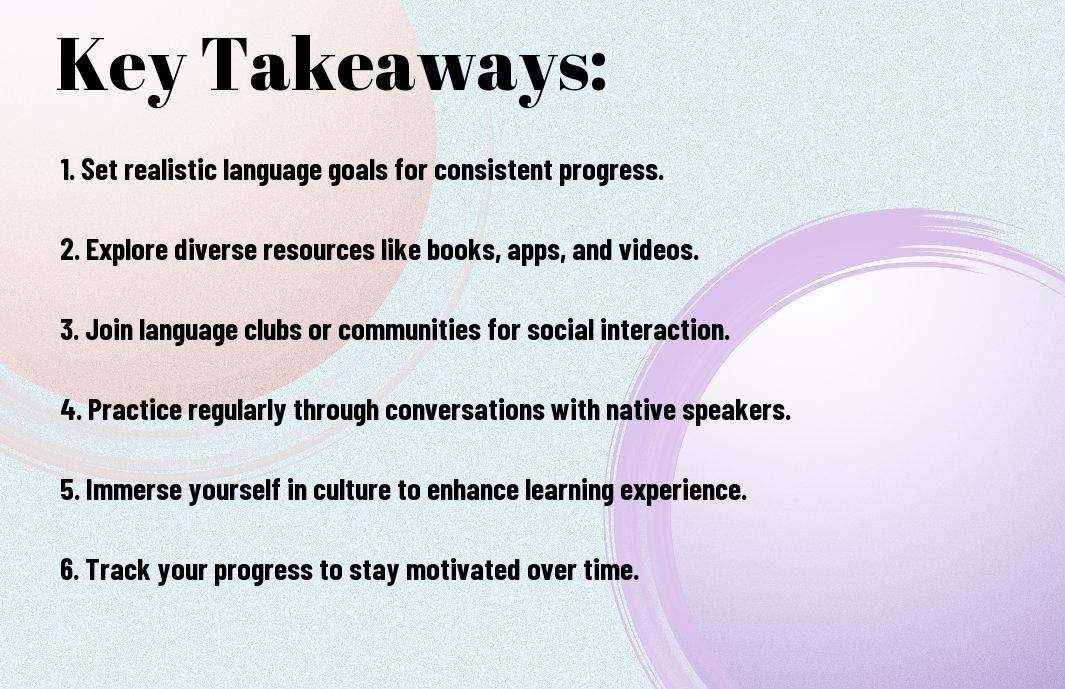
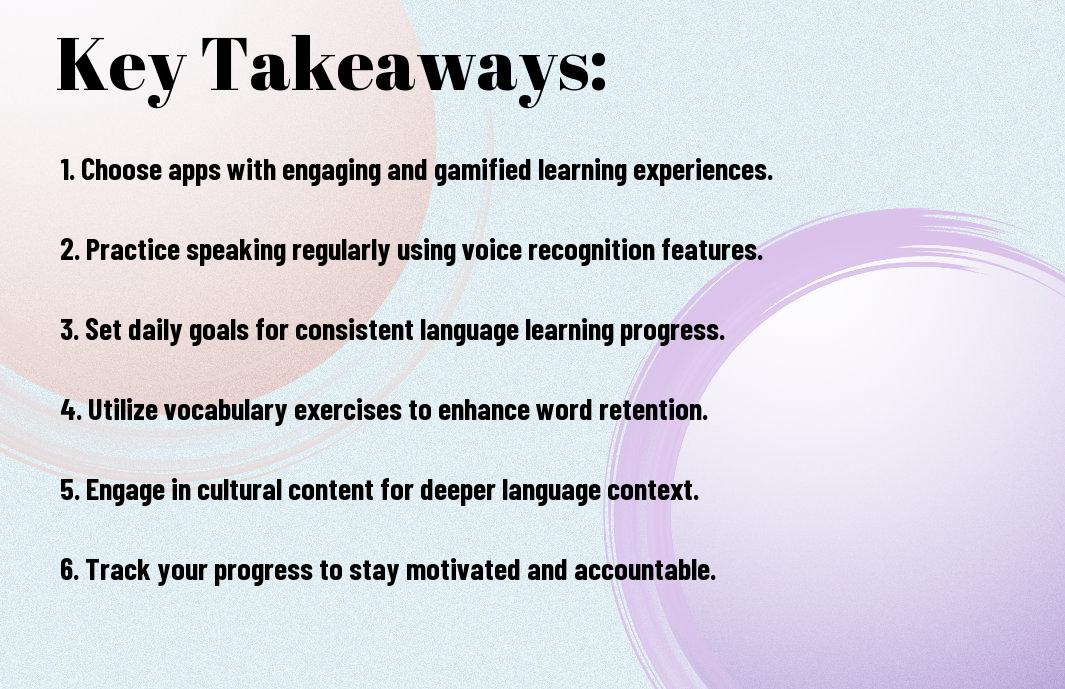
  • Focus on Immersion by using apps that offer interactive lessons, quizzes, and games to simulate real-life conversations and scenarios, helping you to become familiar with the language in a more engaging way.
  • Look for apps that provide Personalized learning experiences, tailoring the content to your learning style, level, and goals, ensuring that you stay motivated and progress at your own pace.
  • Utilize apps that offer Spaced Repetition techniques, which help you review and practice vocabulary and grammar at optimal intervals, reinforcing your learning and improving long-term retention of the language.

Choosing the Right App

To begin your language learning journey, you need to select an app that suits your needs. With numerous options available, it’s vital to consider your goals and preferences when making a decision.

Evaluating Language Learning Goals

Around your objectives, you should consider what you want to achieve through language learning. Are you looking to improve your speaking skills or focus on reading and writing? Your goals will help you narrow down the options and choose an app that aligns with your needs.

Exploring App Features and Reviews

On the app stores, you can find a wide range of language learning apps, each with its unique features and strengths. You should browse through the descriptions, look at the screenshots, and read the reviews from other users to get an idea of what each app offers.

Further exploration of app features and reviews will help you make an informed decision. You can check if the app offers interactive lessons, speech recognition technology, and opportunities to practice with native speakers. By doing so, you can find the app that best fits your learning style and helps you achieve your language learning goals.
Setting Up Your Learning Environment

Some preliminary steps are necessary to create an effective language learning environment. You can start by browsing online forums such as Best app to learn languages? (from your personal experience) to find the most suitable app for your needs.

Creating a Dedicated Learning Space

Establishing a quiet and comfortable area for learning will help you stay focused. You should consider designating a specific spot for your language learning activities, free from distractions and interruptions.

Setting Achievable Daily Goals

Aiming to dedicate a certain amount of time each day to language learning will help you make steady progress. You can start by setting realistic targets, such as 15-30 minutes of practice per day, and adjust as needed.

With achievable daily goals in place, you will be able to track your progress and stay motivated. You can break down your goals into smaller tasks, such as completing a certain number of lessons or practicing a specific skill, and adjust your schedule accordingly to ensure consistent progress in your language learning journey.

Interactive Lessons and Exercises

For effective language learning, interactive apps offer a range of lessons and exercises tailored to your needs. You can access various topics, from grammar and vocabulary to pronunciation and comprehension, all in one place.

Engaging with Audio and Visual Content

Encountering multimedia content, such as videos, images, and audio recordings, helps you immerse yourself in the language and get a feel for how it’s used in context, making your learning experience more enjoyable and interactive.

Practicing Speaking and Writing Skills

Audibly, you will be able to improve your speaking skills by interacting with the app’s speech recognition technology, which provides instant feedback on your pronunciation and intonation, allowing you to refine your speaking skills.

With regular practice, you will see significant improvement in your ability to express yourself in writing and speaking, as the app provides you with a safe space to make mistakes and learn from them, helping you to build confidence in your language skills and gradually increase your proficiency level.

Tracking Progress and Staying Motivated

Now that you’ve started using interactive apps to learn a language, it’s vital to monitor your progress and stay motivated to achieve your goals.

Using App-Based Quizzes and Tests

About the time you begin to feel confident in your language skills, app-based quizzes and tests can help you assess your knowledge and identify areas for improvement.

Joining Language Learning Communities

Beneath the surface of language learning apps, you’ll find opportunities to connect with fellow learners, which can be a great motivator to keep you engaged.

Understanding the value of community support, you can leverage these platforms to practice your language skills with native speakers, get feedback on your progress, and learn from others who share your interests, helping you to stay motivated and inspired throughout your language learning journey, and you will be able to track your progress more effectively.

Overcoming Common Challenges

All language learners face obstacles, but with the right approach, you can overcome them. You will encounter difficulties, and it’s important to stay motivated and patient.

Dealing with Grammar and Vocabulary Struggles

With persistence, you can tackle grammar and vocabulary challenges. You will find that consistent practice helps to build your skills, and your understanding of the language will improve over time.

Finding Language Exchange Partners

Partners in language learning can be invaluable, providing you with opportunities to practice your speaking and listening skills. You can search for language exchange partners online or through social media groups.

Dealing with the challenge of finding language exchange partners can be straightforward. You can join online communities, such as language learning forums or social media groups, where you can connect with native speakers or other learners. This will help you to find someone to practice with, and you can support each other in your language learning journey.

Maximizing App Effectiveness

Unlike traditional learning methods, interactive language apps offer a unique opportunity to track your progress and identify areas for improvement, allowing you to adjust your learning strategy and maximize your time.

Supplementing with Other Language Learning Resources

On top of using language learning apps, you can supplement your learning with other resources such as language exchange websites, podcasts, and books to create a well-rounded learning experience and improve your skills faster.

Staying Consistent and Patient

Before you start using language learning apps, you should set realistic goals and expectations, as learning a language takes time and effort, and it’s necessary to stay motivated and consistent in your practice to achieve your goals.

Due to the nature of language learning, you will encounter setbacks and challenges, but by staying patient and persistent, you can overcome them and continue to make progress, and your hard work will pay off in the long run, as you become more proficient in your target language and start to see improvement in your speaking, writing, and listening skills.

Conclusion

The key to learning a language through interactive apps lies in your ability to consistently practice and engage with the material. You can effectively supplement your learning by using these apps to practice speaking, writing, and listening skills. As you progress, you will find that your proficiency in the language improves, and you become more confident in your ability to communicate effectively.

FAQ

Q: What are the benefits of learning a language through interactive apps?

A: Learning a language through interactive apps offers several benefits, including flexibility, accessibility, and personalized learning. Interactive apps allow users to learn at their own pace, anytime and anywhere, making it an ideal option for those with busy schedules. Additionally, many apps offer interactive features such as quizzes, games, and conversations with native speakers, which can make the learning process more engaging and effective. Overall, interactive language learning apps can help users stay motivated, track progress, and achieve their language learning goals.

Q: How do I choose the right interactive language learning app for my needs?

A: Choosing the right interactive language learning app depends on several factors, including your language level, learning style, and goals. It’s important to consider the type of content offered, such as grammar lessons, vocabulary building, and pronunciation practice. You should also look for apps that offer interactive features, such as speech recognition, chatbots, and social sharing, which can enhance the learning experience. Furthermore, reading reviews, trying out free trials, and comparing features can help you make an informed decision and find the app that best suits your needs and learning preferences.

Q: Can I become fluent in a language by using interactive language learning apps alone?

A: While interactive language learning apps can be an effective tool for learning a language, they should be used in conjunction with other language learning methods to achieve fluency. Apps can provide a solid foundation in grammar, vocabulary, and pronunciation, but they may not offer the same level of immersion and practice as speaking with native speakers, watching TV shows or movies, or reading books in the target language. To become fluent, it’s important to supplement app-based learning with consistent practice, such as language exchange programs, tutoring, or language meetups, which can help improve speaking, listening, and writing skills in a more comprehensive way.

The Role of AI in Revolutionizing Language Learning

As you commence on learning a new language, you’re likely to encounter a myriad of innovative tools and techniques. You’ll discover that artificial intelligence (AI) is transforming the way you acquire and practice languages. Your language learning journey is about to become more engaging and effective, thanks to AI-powered platforms that offer personalized lessons, real-time feedback, and immersive experiences. You’re on the cusp of a revolution that will change the face of language learning forever, and this article will guide you through the exciting possibilities that AI has in store for you.

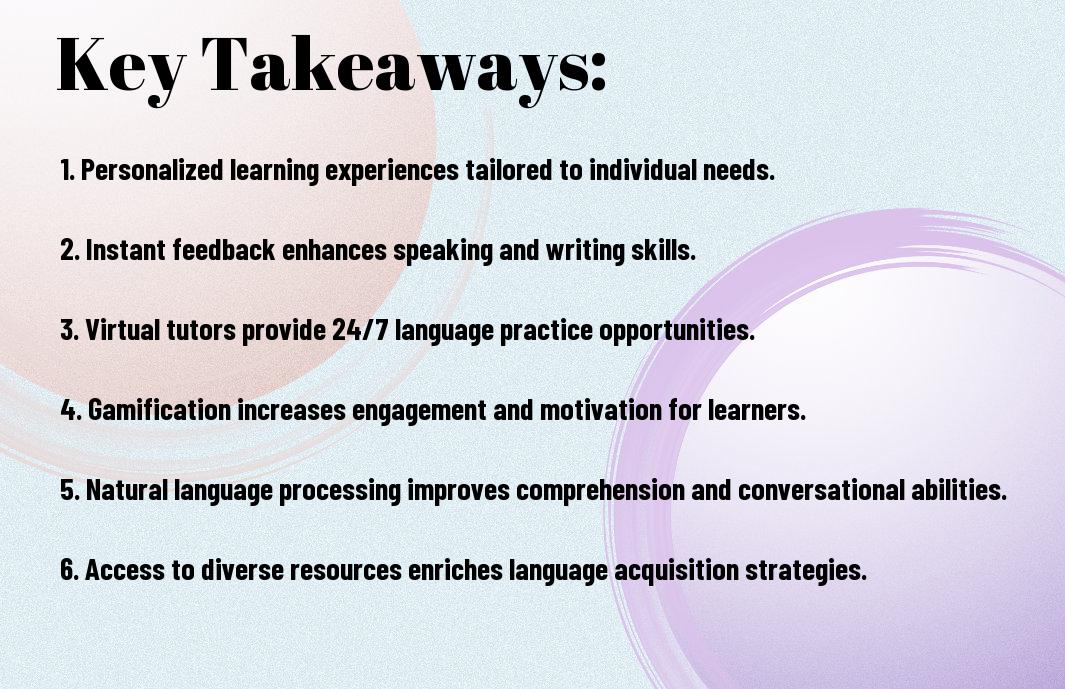
Key Takeaways:

To understand the impact of artificial intelligence on language learning, consider the following points:

  • The integration of Artificial Intelligence (AI) in language learning platforms is enhancing the personalization of lessons, allowing learners to engage in more tailored and interactive experiences.
  • AI-powered chatbots are being used to simulate conversations, helping learners to improve their pronunciation and fluency in a more immersive environment.
  • The use of Machine Learning algorithms enables language learning systems to analyze learner behavior, providing real-time feedback and adaptive assessments that adjust the difficulty level of lessons according to individual learner’s progress and needs.

The Current State of Language Learning

Before plunging into the role of AI in language learning, it’s important to understand where you stand today. You likely have experience with traditional language learning methods, which have been the norm for decades.

Traditional Methods

Methods such as classroom instruction and language learning software have been your primary options. You’ve probably used textbooks, language exchange programs, and online resources to learn a new language.

Limitations of Human Instruction

Behind the scenes of traditional language learning lies a significant challenge: the limitations of human instruction. You may have experienced these limitations firsthand, from inconsistent teaching quality to lack of personalized feedback.

It is worth noting that human instruction has several drawbacks, including high costs, limited scalability, and the potential for biased teaching methods. As you consider your own language learning journey, you may have encountered these limitations, which can hinder your progress and hinder your ability to achieve fluency in a new language. You may have found that your learning style and pace are not adequately accommodated, leading to frustration and disappointment.

The Emergence of AI in Language Learning

Clearly, the integration of Artificial Intelligence (AI) in language learning has been a significant development in recent years, transforming the way you approach language acquisition. You can now leverage AI-powered tools to enhance your learning experience, making it more engaging and effective.

Basic Concepts and Principles

Linguistically, you’ll find that AI-based language learning systems rely on complex algorithms and natural language processing techniques to facilitate interaction and comprehension. You can explore these concepts to better understand how AI enhances your language learning journey.

Early Applications and Successes

Around the turn of the century, you may have noticed the emergence of AI-driven language learning platforms, which paved the way for more sophisticated tools and applications. You can see how these early successes laid the groundwork for the advanced language learning systems you use today.

Even as you consider the current state of AI in language learning, you’ll notice that those early applications and successes have had a lasting impact on the field. You can appreciate how they enabled the development of more advanced tools, such as chatbots and virtual assistants, which now play a significant role in enhancing your language learning experience. You’ll find that these tools provide personalized feedback, real-time corrections, and interactive exercises, making your language learning journey more enjoyable and effective.

AI-Powered Language Learning Tools

Keep in mind that AI-powered language learning tools are revolutionizing the way you learn languages. These tools use algorithms to analyze your progress, identify areas of improvement, and provide personalized feedback.

Chatbots and Virtual Assistants

Alongside traditional teaching methods, AI-powered chatbots and virtual assistants are being used to simulate conversations, helping you practice your speaking skills and build confidence in your language abilities.

Adaptive Learning Software

Besides chatbots, adaptive learning software is another AI-powered tool that adjusts to your learning pace and style, providing you with tailored lessons and exercises to help you achieve your language goals.

The adaptive learning software utilizes machine learning algorithms to assess your strengths and weaknesses, and then creates a customized learning plan that focuses on areas where you need improvement, allowing you to learn more efficiently and effectively, and helping you to track your progress over time, as you make your way towards becoming proficient in your target language.

Benefits of AI-Driven Language Learning

For language learners, AI-driven language learning offers numerous advantages, making the process more efficient and effective, allowing you to achieve your goals faster.

Personalized Instruction

Instruction tailored to your needs and abilities enables you to focus on areas where you need improvement, ensuring that your learning experience is optimized for maximum progress and retention.

Enhanced Engagement and Motivation

Before exploring into the world of language learning, you may have wondered how to stay motivated, but with AI-driven tools, you can engage in interactive and immersive experiences that make learning fun and exciting.

Motivation is what drives you to continue learning, and AI-powered language learning platforms provide you with a sense of accomplishment and feedback, encouraging you to push beyond your limits and explore the possibilities of language learning, as you discover new words, phrases, and expressions that broaden your understanding of the language and culture.

Overcoming Language Barriers with AI

Despite the complexities of language, AI has made significant strides in breaking down barriers. You can now communicate with people from diverse linguistic backgrounds, facilitating global interactions and collaborations.

Real-Time Translation

Fortunately, AI-powered translation tools enable you to converse in real-time, bridging the gap between languages and fostering meaningful exchanges. You can engage with others effortlessly, regardless of your native tongue.

Cultural and Contextual Insights

Above all, AI provides you with a deeper understanding of cultural nuances and contextual references, allowing you to navigate complex social situations with ease. You gain valuable insights into the subtleties of language, enabling more effective communication.

Consequently, as you examine deeper into the world of language learning with AI, you will discover that cultural and contextual insights are crucial to truly mastering a language. You will be able to grasp the intricacies of idioms, colloquialisms, and figurative language, enabling you to express yourself more accurately and connect with others on a deeper level, ultimately enhancing your overall language learning experience.

Future Directions and Challenges

After exploring the current state of AI in language learning, you may wonder what the future holds. You will see significant advancements in AI-powered language learning tools, enabling more personalized and effective learning experiences.

Integrating AI with Human Teachers

About to revolutionize the education sector, AI will augment the role of human teachers, allowing them to focus on providing guidance and support while AI handles more administrative tasks, freeing up your time to concentrate on what matters most.

Addressing Ethical and Access Concerns

Humane considerations will play a significant role in the development of AI-powered language learning tools, as you will need to ensure that these tools are accessible and beneficial to all users, regardless of their background or socio-economic status.

Ethical concerns, such as bias in AI algorithms and data privacy, will be at the forefront of your mind as you navigate the development and implementation of AI-powered language learning tools, and you will need to consider the potential consequences of your actions on your users, taking a thoughtful and informed approach to mitigate any negative effects and ensure that your tools are used for the betterment of society.

To wrap up

With these considerations, you now have a deeper understanding of the significant impact of AI on language learning. As you continue to explore this topic, you can learn more about How artificial intelligence is revolutionizing language learning and its potential to enhance your learning experience. You will likely find that AI-driven tools can tailor language instruction to your needs, making your learning journey more efficient and effective.

FAQ

Q: How is AI transforming the language learning process?

A: AI is revolutionizing language learning by providing personalized learning experiences, automating grading and feedback, and offering real-time language practice opportunities. With AI-powered language learning tools, learners can engage in interactive conversations, receive instant corrections, and access a vast library of learning materials tailored to their individual needs and proficiency levels. This enables more efficient and effective language acquisition, making it possible for learners to achieve fluency faster.

Q: What are the benefits of using AI-powered chatbots in language learning?

A: AI-powered chatbots are increasingly being used in language learning to provide learners with a unique opportunity to practice their speaking and writing skills in a simulated conversation environment. The benefits of using AI-powered chatbots include improved pronunciation, enhanced vocabulary, and increased confidence in using the language. Additionally, chatbots can offer around-the-clock support, allowing learners to practice at their own pace and convenience, and receive immediate feedback on their performance.

Q: How can AI help language learners overcome common challenges such as pronunciation and grammar?

A: AI can help language learners overcome common challenges such as pronunciation and grammar by providing advanced speech recognition technology and intelligent tutoring systems. These tools can detect and correct pronunciation errors, offering personalized feedback and suggestions for improvement. Furthermore, AI-powered grammar correction tools can analyze learners’ writing and provide instant feedback on grammatical accuracy, syntax, and sentence structure, enabling learners to develop a stronger foundation in the language and improve their overall communication skills.

How to Turn Language Learning Into a Lifelong Hobby

As you launch on your language learning journey, you’ll discover a world of possibilities. Your newfound skills will open doors to diverse cultures, exciting travel experiences, and personal growth. You’ll find that learning a language is not just about memorizing rules and vocabulary, but about cultivating a hobby that will enrich your life. By making language learning a lifelong pursuit, you’ll challenge yourself, stimulate your mind, and unlock your full potential, leading to a more fulfilling and engaging life.

Key Takeaways:

To make language learning a lifelong hobby, consider the following points:

  • Set achievable goals and track your progress to stay motivated and engaged in the learning process.
  • Immerse yourself in the language culture by reading books, watching movies, and listening to music in the target language to gain a deeper understanding and appreciation.
  • Find a language community or practice partner to share your experiences, get feedback, and learn from others, making the learning process more enjoyable and sustainable.

Setting Goals

Before you begin on your language learning journey, it’s imperative to set achievable goals. You can find inspiration for your goals by reading about Living Foreign Languages Through Hobbies, which can help you stay motivated and focused on your objectives.

Defining Motivation

Around the time you start learning a new language, you’ll need to define what motivates you to continue, whether it’s personal or professional reasons, and use this motivation to drive your learning process, helping you to stay engaged and interested in the language.

Creating a Learning Plan

The key to successful language learning is creating a well-structured plan, you’ll need to set realistic objectives, choose the right learning materials, and allocate sufficient time to practice and review, this will help you to track your progress and make adjustments as needed.

Another important aspect of creating a learning plan is to identify your learning style and preferences, you can use language learning apps, textbooks, or take classes, whatever method you choose, make sure it’s something you enjoy and that keeps you motivated to continue learning and improving your language skills.

Choosing Resources

Even as you launch on your language learning journey, you’ll find that selecting the right resources is vital to your progress. You’ll want to explore various options to find what works best for you, from language learning apps to traditional textbooks.

Language Learning Apps

Selecting the right language learning app can be a great way to get started, as you can choose from a wide range of options that cater to your learning style and goals. You can try out different apps to see which one you enjoy using the most.

Textbooks and Workbooks

Learning from textbooks and workbooks can provide a more structured approach to language learning, allowing you to follow a clear progression and track your progress. You can use them to supplement your app-based learning or as a standalone resource.

Textbooks are an excellent way to explore deeper into the language, covering grammar, vocabulary, and reading comprehension. As you work through your textbooks, you’ll be able to practice your writing and speaking skills, and you can even use them to prepare for language proficiency tests or certifications, helping you to stay motivated and focused on your goals.

Building Routine

Not having a routine can hinder your progress in language learning, but by establishing a schedule, you can make steady progress and turn it into a lifelong hobby.

Scheduling Study Time

Any spare moment can be utilized to practice your language skills, and by allocating a specific time slot each day, you can make language learning a part of your daily routine, allowing you to stay on track and achieve your goals.

Staying Consistent

Regularly sticking to your routine helps you develop a habit, and as you continue to practice, you will find that language learning becomes an integral part of your daily life, allowing you to make progress and stay motivated.

This approach enables you to track your progress, identify areas that need improvement, and make adjustments to your routine as needed, ensuring that you stay engaged and committed to your language learning journey, and your skills continue to improve over time, making it a lifelong hobby that brings you joy and fulfillment, as you explore new languages and cultures, and expand your understanding of the world, shaping your perspective and broadening your horizons, with you being in control of your learning path.

Practicing Language Skills

Many language learners find that consistent practice is key to improving their skills. You will need to set aside time each day to engage with the language, whether it’s through speaking, listening, reading, or writing.

Speaking and Listening

Almost any opportunity to speak and listen to the language will help you improve your skills. You can try watching TV shows or movies, listening to music, or speaking with native speakers to get started.

Reading and Writing

Similarly, practicing your reading and writing skills is crucial to becoming proficient in a language. You can start by reading simple texts and writing short paragraphs to build your confidence.

To take your reading and writing skills to the next level, you can try more complex texts and writing exercises. You will find that your vocabulary and grammar improve as you continue to practice, and you will be able to express yourself more effectively in the language.

Overcoming Challenges

To turn language learning into a lifelong hobby, you will inevitably face obstacles that test your motivation and dedication. You must be prepared to push through the tough times and stay committed to your goals.

Dealing with Frustration

Beside the moments of excitement, you will experience frustration when you encounter difficulties in learning a new language. Between the grammar rules and vocabulary, it’s normal to feel overwhelmed, but you can’t let that stop you from reaching your goals.

Finding Language Exchange Partners

By seeking out language exchange partners, you can practice your speaking skills and get feedback on your progress. You can find language exchange partners online or in person, and this will help you stay motivated and engaged in the learning process.

Consequently, having a language exchange partner will not only improve your language skills, but also give you a deeper understanding of the culture and way of life associated with the language you are learning. You will be able to ask your partner questions about their customs and traditions, and share your own with them, creating a rich and rewarding learning experience.

Maintaining Progress

Keep your language learning on track by making it a regular part of your routine. You’ll find that consistent practice helps solidify your skills and prevents burnout. As you progress, you’ll be able to identify areas where you need improvement and adjust your approach accordingly.

Tracking Progress

Against the backdrop of your busy schedule, finding ways to monitor your progress can be challenging. You’ll want to use tools like language learning apps or journals to track your achievements and stay motivated. This will help you see how far you’ve come and make informed decisions about your learning path.

Setting Realistic Expectations

Above all, it’s imperative to set achievable goals for your language learning journey. You should define what success means to you and create a plan to get there. This will help you stay focused and avoid frustration when faced with obstacles.

Another key aspect of setting realistic expectations is understanding that language learning is a marathon, not a sprint. You’ll have ups and downs, but by being patient and compassionate with yourself, you’ll be able to overcome challenges and celebrate your successes along the way. As you continue on your journey, you’ll find that your expectations evolve, and your goals become more refined, helping you to stay engaged and motivated in your pursuit of language mastery.

Summing up

Summing up, you’ve learned how to turn language learning into a lifelong hobby. As you continue on your journey, you’ll find that your skills improve and your appreciation for languages grows. For more tips, visit How to learn a language, be proficient in school and master a hobby with a routine to enhance your skills and make your hobby even more enjoyable, tailoring your approach to fit your unique needs and interests, helping you stay motivated and engaged.

FAQ

Q: What motivates individuals to turn language learning into a lifelong hobby?

A: Turning language learning into a lifelong hobby often begins with a spark of interest, which could be fueled by travel, work requirements, or a desire to connect with different cultures. As individuals progress in their language learning journey, they find that it not only enhances their understanding of the world but also provides a continuous challenge and a sense of achievement. This intrinsic motivation, coupled with the ability to explore new literature, communicate with native speakers, and broaden one’s perspective, transforms language learning into an engaging and enduring hobby.

Q: How can one maintain consistency and progression in language learning as a hobby?

A: Maintaining consistency and seeing progression in language learning as a hobby involves setting realistic goals, using a variety of learning materials, and incorporating language practice into daily routines. This can include dedicating a specific time each day to language learning, whether through apps, language exchange programs, reading books or news in the target language, or watching TV shows and movies without subtitles. Additionally, finding a language learning community or partner can provide support, encouragement, and opportunities for conversation, helping to keep the learning process enjoyable and prevent stagnation.

Q: What role does technology play in turning language learning into a lifelong hobby?

A: Technology has revolutionized the way individuals can approach language learning, making it more accessible, engaging, and efficient. With numerous language learning apps, online courses, and platforms available, learners can tailor their learning experience to suit their learning style, schedule, and goals. Technology also facilitates connection with native speakers through social media, language exchange websites, and online forums, providing invaluable opportunities for language practice and cultural immersion. Moreover, the internet offers a vast array of learning resources, including podcasts, YouTube channels, and blogs dedicated to language learning, which can keep the learning process fresh and exciting, supporting the transformation of language learning into a lifelong hobby.

How to Learn a Language Through Pen Pal Programs

As you commence on your language learning journey, you’ll discover that practicing with a native speaker is imperative to improving your skills. Your ability to converse fluently will depend on your exposure to real-life conversations. You can achieve this by participating in pen pal programs, which connect you with language exchange partners from around the world. By doing so, you’ll be able to practice your writing and speaking skills, while also learning about different cultures and gaining valuable insights into your target language.

Key Takeaways:

To effectively learn a language through pen pal programs, consider the following points:

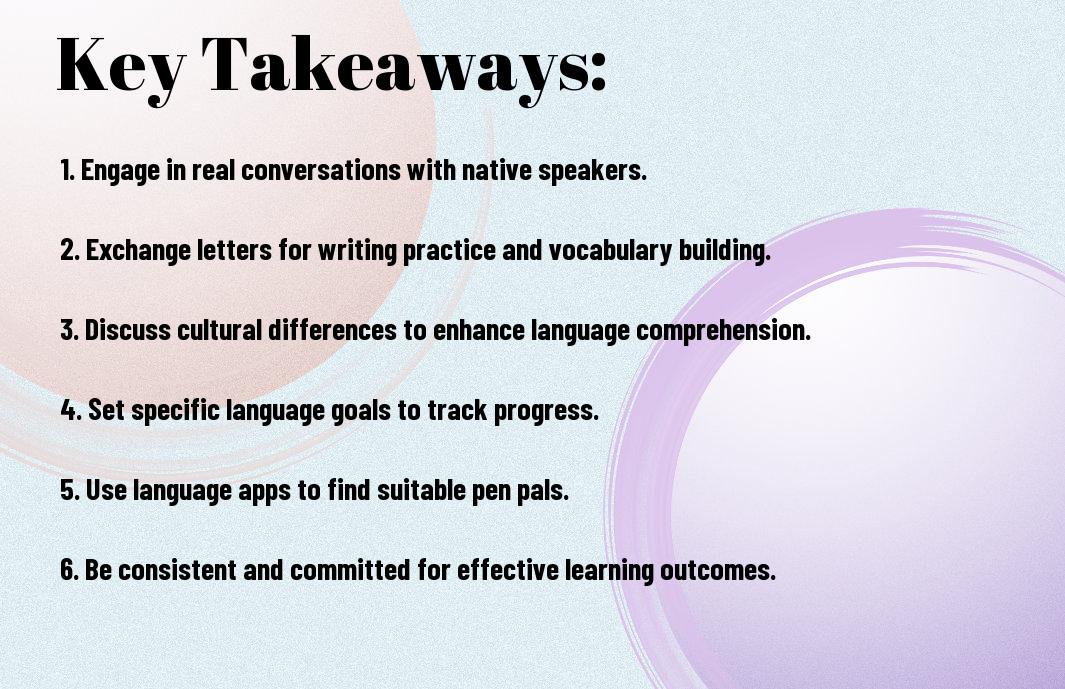
  • Establishing a consistent exchange of letters or emails with your pen pal is important to improve your writing and reading skills in the target language.
  • Practicing conversational language through pen pal programs can help you develop your listening and speaking skills, even if you’re not interacting in person, by discussing cultural differences and sharing personal experiences.
  • Using authentic materials and relevant topics in your pen pal exchanges can enhance your vocabulary and grammar skills, making the learning process more engaging and effective.

Benefits of Pen Pal Programs

While participating in a pen pal program, you will discover numerous advantages that can enhance your language learning experience. You will have the opportunity to practice your writing and speaking skills, gain insight into different cultures, and develop meaningful relationships with people from diverse backgrounds.

Improved Writing Skills

Any language learner can benefit from writing to a pen pal, as it allows you to practice your writing skills in a real-life setting, helping you to improve your grammar, vocabulary, and communication skills, which will make you a more confident writer.

Cultural Exchange and Awareness

Among the most significant benefits of pen pal programs is the cultural exchange and awareness you will gain, as you will be able to learn about your pen pal’s daily life, customs, and traditions, and share your own with them, broadening your understanding of the world.

Consequently, as you engage in cultural exchange with your pen pal, you will develop a deeper appreciation for the nuances of language and culture, and your interactions will become more meaningful and authentic, allowing you to build a stronger connection with your pen pal and gain a more comprehensive understanding of their way of life, which will enrich your language learning experience.

Choosing a Pen Pal Program

If you’re interested in learning a language through a pen pal program, you’ll need to select a program that suits your needs and goals. You can choose from various options, including online platforms, language exchange websites, and forums.

Online Platforms and Forums

Among the numerous options available, you’ll find online platforms and forums that connect you with native speakers of your target language. You can search for language learners with similar interests and practice your writing skills through email exchanges or online discussions.

Language Exchange Websites

At the forefront of language learning are websites dedicated to language exchange, where you can find a language partner and engage in language exchange activities, such as writing, speaking, or even video calls.

The language exchange websites often provide a range of tools and features to facilitate your language learning journey, including language lessons, vocabulary exercises, and pronunciation practice. You can browse profiles, find a suitable language partner, and start exchanging messages, which will help you improve your reading and writing skills in your target language, and your language partner can benefit from practicing their language skills with you.

Effective Communication

Keep in mind that effective communication is key to a successful pen pal experience. You will be exchanging letters or messages with someone from a different culture, so it’s necessary to be clear and respectful in your interactions.

Setting Clear Goals and Expectations

Adeptly, you can establish a strong foundation by setting clear goals and expectations with your pen pal, ensuring you both understand what you hope to achieve from the exchange.

Active Listening and Responding

Anyway, you will find that actively listening to your pen pal and responding thoughtfully is vital to building a strong connection, as it shows you value their thoughts and opinions.

Effective communication is a two-way street, and as you engage in active listening and responding, you will find that your pen pal relationship deepens, and your language skills improve significantly, allowing you to better understand your partner’s perspective and express your own thoughts more clearly.

Language Learning Tips

Not only will you improve your language skills, but you’ll also gain a new friend. Consider the following:

  • Practice regularly
  • Use authentic materials

You can find more information on Engaging English Language Learners with Virtual Pen Pals. The key to success lies in your dedication.

Consistency and Frequency

Albeit challenging, maintaining a consistent schedule is important for your progress. You should aim to practice with your pen pal at least once a week, using a variety of topics to keep your conversations engaging.

Immersion and Authentic Materials

Along with regular practice, immersing yourself in the language is vital. You can achieve this by using authentic materials such as news articles, videos, and social media posts.

Authentic materials will help you get used to the language as it’s spoken in real-life situations, allowing you to pick up on nuances and expressions that you might not learn through traditional textbooks. You’ll be able to understand different accents, dialects, and contexts, making your language skills more versatile and effective.

Overcoming Challenges

To succeed in a pen pal program, you will encounter obstacles that test your dedication. You must be prepared to face challenges and find ways to overcome them, ensuring your progress is not hindered.

Dealing with Language Barriers

Behind every language barrier lies an opportunity to learn and improve. You will encounter unfamiliar words and phrases, but this is a natural part of the learning process, and you can use tools like dictionaries or translation apps to help you understand.

Maintaining Motivation

Any successful language learner knows that motivation is key to achieving your goals. You need to stay motivated and engaged, celebrating your small victories along the way, which will help you stay on track and continue making progress.

Further, maintaining motivation requires setting achievable goals and tracking your progress, allowing you to see how far you’ve come and making adjustments as needed to stay on course, and by doing so, you will find that your enthusiasm and interest in the language will continue to grow, driving you to reach your full potential as a language learner.

Evaluation and Progress

Unlike other language learning methods, pen pal programs allow you to assess your progress in a more personal way, as you receive feedback from your partner and see improvements in your writing and comprehension skills over time.

Tracking Progress and Growth

Around the time you start noticing significant improvements, you can reflect on your journey and identify areas where you’ve made the most progress, helping you to stay motivated and focused on your goals.

Adjusting Strategies as Needed

Behind every successful language learner is a willingness to adapt and change their approach, and as you navigate your pen pal program, you’ll need to be flexible and adjust your strategies to ensure you’re getting the most out of the experience.

With this in mind, you’ll be able to refine your approach and make adjustments as needed, whether it’s changing the frequency of your letters or exploring new topics to discuss with your partner, allowing you to continue growing and improving your language skills in a way that’s tailored to your needs and learning style.

Final Words

From above, you now know the benefits of learning a language through pen pal programs. You can practice your writing and speaking skills with a native speaker, enhancing your language proficiency. To get started, you can visit Language exchange – InterPals Penpals to find a language partner. By following these steps, you will improve your language skills and gain a new friend, making your language learning journey enjoyable and effective for you.

FAQ

Q: What are the benefits of learning a language through pen pal programs?

A: Learning a language through pen pal programs offers several benefits, including improved writing and communication skills, cultural immersion, and the opportunity to practice language skills in a real-life setting. By exchanging letters or emails with a native speaker, you can gain a deeper understanding of the language and its nuances, as well as insights into the daily life and customs of the country where the language is spoken. Additionally, pen pal programs can be a fun and motivating way to learn a language, as you have the opportunity to interact with someone who is also interested in language exchange.

Q: How can I find a pen pal to practice a language with?

A: There are several ways to find a pen pal to practice a language with, including online language exchange websites, social media platforms, and language schools or language exchange events. Many online platforms, such as language learning apps and forums, offer pen pal matching services that connect you with a native speaker of the language you want to learn. You can also join language exchange groups on social media or attend language meetups in your area to find someone to practice with. When looking for a pen pal, consider factors such as language level, interests, and communication style to ensure a compatible match.

Q: What are some tips for effectively learning a language through a pen pal program?

A: To effectively learn a language through a pen pal program, it’s helpful to set clear goals and expectations with your pen pal, such as the frequency and topic of exchanges, and to be consistent in your communication. You should also try to use the target language as much as possible in your exchanges, even if you make mistakes, and ask your pen pal to correct you and provide feedback. Additionally, consider using a variety of language learning materials, such as language learning apps or textbooks, to supplement your pen pal exchanges and provide additional practice opportunities. By being consistent, persistent, and open to feedback, you can make the most of a pen pal program and achieve your language learning goals.

The Role of Daily Practice in Language Fluency

As you commence on the journey to master a new language, your daily routine plays a significant role in determining your progress. You will find that consistent practice is imperative to develop the skills and confidence needed to communicate effectively. By incorporating language practice into your daily schedule, you can improve your fluency and enhance your understanding of the language, allowing you to express yourself more accurately and effectively in various contexts.

Key Takeaways:

To achieve language fluency, daily practice is vital. Here are the main points to consider:

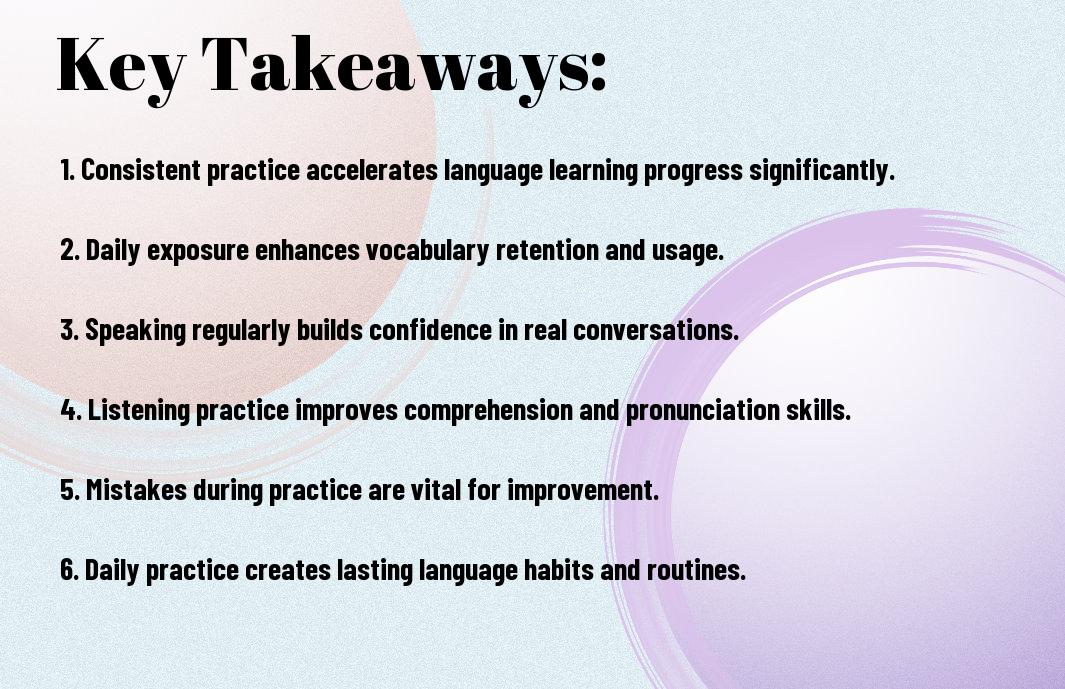
  • Consistent exposure to the language helps to develop a sense of familiarity and understanding, making it easier to learn and retain new vocabulary and grammar rules.
  • Regular practice of speaking, writing, and listening skills is necessary to improve pronunciation, vocabulary, and comprehension, allowing learners to become more confident in their language abilities.
  • Developing a daily routine that incorporates language learning activities, such as reading, journaling, or conversing with a native speaker, can help to accelerate the learning process and enhance overall fluency.

Setting Goals

For achieving language fluency, setting clear goals is imperative. You need to define what you want to accomplish and by when. This will help you stay focused and motivated on your journey to language mastery.

Defining Language Fluency

Before you begin, consider what language fluency means to you. You must understand that it involves not only speaking, but also listening, reading, and writing skills. Your definition will serve as a foundation for your practice.

Creating a Practice Schedule

Fluently navigating a new language requires consistent practice. You should set aside a specific time each day to practice, whether it’s speaking, writing, or listening. Your schedule will help you make steady progress.

Defining your daily practice schedule is vital to making progress in your language learning journey. You will need to assess your availability and commitment level to determine how much time you can dedicate to practice each day. By doing so, you will be able to create a routine that works for you and helps you stay on track with your language learning goals.

Building Vocabulary

You can improve your language skills by practicing vocabulary daily. Consistent practice helps you learn and retain new words, enabling you to express yourself more effectively.

Learning New Words

Contrary to what you might think, learning new words can be straightforward. You can start by reading books, articles, and other materials in the target language, making notes of unfamiliar words and their meanings.

Using Flashcards and Other Tools

Utilizing digital flashcards and language learning apps can facilitate your vocabulary building process. You can create your own flashcards or use pre-made ones, and access them anytime, making it easy to practice anywhere.

This approach allows you to quiz yourself and track your progress, identifying areas where you need more practice. By incorporating these tools into your daily routine, you can efficiently expand your vocabulary and enhance your overall language fluency.

Improving Grammar

All language learners strive for accuracy and fluency in their grammar skills. Daily practice helps you develop a strong foundation, enabling your language to sound more natural and coherent.

Practicing Sentence Structure

Besides regular exercises, you can improve your sentence structure by analyzing the grammar of native speakers, which will help you understand how to construct sentences in a more organic way, making your language sound authentic.

Overcoming Common Mistakes

Enhancing your awareness of typical errors will allow you to avoid them in your daily practice, thus refining your grammar skills and enabling you to express yourself more effectively in the target language.

Mistakes are an inevitable part of the learning process, and by acknowledging and learning from them, you can identify patterns and areas where you need to focus your practice, leading to noticeable improvements in your grammar and overall language proficiency.

Enhancing Listening and Speaking Skills

Now, as you strive to improve your language skills, daily practice plays a significant role in enhancing your listening and speaking abilities, allowing you to better comprehend and communicate with native speakers.

Listening to Native Speakers

Naturally, listening to native speakers helps you become familiar with the rhythm, intonation, and pronunciation of the language, enabling you to improve your own speaking skills and understand various accents and dialects that you may encounter.

Engaging in Conversations

Conversely, conversations with native speakers or language exchange partners provide you with opportunities to practice your speaking skills, receive feedback, and learn new expressions and vocabulary in context, which helps you to sound more natural and fluent.

Another aspect of engaging in conversations is that it allows you to develop your ability to think on your feet and respond spontaneously, which is important for effective communication in your daily life, and as you continue to practice, you will notice significant improvements in your language fluency and confidence.

Reading and Writing

Not only does daily practice improve your speaking and listening skills, but it also enhances your reading and writing abilities, allowing you to grasp complex texts and express your thoughts more effectively.

Reading Comprehension

Alongside consistent practice, your ability to understand various texts improves significantly, enabling you to decipher meanings and contexts with greater ease, as you become familiar with different writing styles and vocabulary.

Writing Regularly

Writing your thoughts and ideas down daily helps you to develop a clear and concise writing style, allowing you to articulate your opinions and perspectives with precision and clarity, which in turn, enhances your overall language fluency.

Reading through your own writing, you can identify areas that need improvement, making adjustments to syntax, grammar, and vocabulary, thereby refining your writing skills and solidifying your grasp of the language, as you progress in your daily writing practice, you will notice significant improvements in your ability to express yourself effectively.

Staying Motivated

Many language learners face the challenge of maintaining their motivation over time. You will encounter obstacles and setbacks, but your daily practice will help you stay focused on your goals. By prioritizing your language learning, you will be able to overcome these challenges and continue making progress.

Tracking Progress

Around the time you start to feel like you’re not improving, take a step back and assess your progress. You will see that your daily practice has led to significant improvements in your language skills, and this will help motivate you to continue.

Overcoming Plateaus

Around the midpoint of your language learning journey, you may encounter a plateau where you feel like you’re not improving. You will need to adjust your strategy and try new approaches to overcome this hurdle.

The key to overcoming plateaus is to identify the areas where you’re struggling and develop a plan to address them. You can try changing your study materials, seeking out new language exchange partners, or focusing on a specific skill, such as speaking or writing. By taking a proactive approach, you will be able to break through the plateau and continue making progress towards your goal of achieving language fluency.

Summing up

Following this discussion, you can see that daily practice plays a significant role in achieving language fluency. As you continue to practice, your language skills will improve, and you will become more confident in your ability to communicate effectively. By incorporating daily practice into your routine, you will be able to develop a deeper understanding of the language and enhance your overall proficiency, allowing you to express yourself more accurately and effortlessly. This, in turn, will help you to reach your full potential as a language learner.

FAQ

Q: What is the significance of daily practice in achieving language fluency?

A: Daily practice plays a vital role in language fluency as it helps to reinforce previously learned material, build new skills, and develop a consistent learning habit. By setting aside time each day to practice speaking, listening, reading, and writing in the target language, individuals can accelerate their progress, improve their comprehension, and enhance their ability to communicate effectively. Regular practice also allows learners to track their progress, identify areas for improvement, and make adjustments to their study routine as needed.

Q: How can daily practice help to improve pronunciation and intonation in a foreign language?

A: Daily practice is vital for improving pronunciation and intonation in a foreign language. Consistent practice helps to develop muscle memory, allowing learners to produce sounds, intonation patterns, and rhythms more accurately and naturally. By listening to and mimicking native speakers, either through audio or video recordings, language learners can train their ears to recognize and replicate the correct pronunciation and intonation. Additionally, practicing speaking and recording oneself can help identify areas for improvement and track progress over time, leading to more confident and fluent communication.

Q: Can daily practice be tailored to fit individual learning styles and schedules, and what are some effective ways to incorporate practice into a busy daily routine?

A: Daily practice can be adapted to suit various learning styles and schedules, making it accessible to learners with different preferences and time constraints. For example, some individuals may prefer to practice speaking with a language exchange partner or tutor, while others may enjoy listening to podcasts or watching TV shows in the target language. To incorporate practice into a busy routine, learners can try breaking their practice into shorter sessions, using language learning apps or flashcards during commutes, or scheduling practice at the same time each day to make it a habit. By finding a practice routine that works for them, individuals can make steady progress towards achieving language fluency, even with a busy schedule.

Skip to content