Language

How to Make Language Practice a Daily Habit

You’re about to launch on a journey to make language practice a part of your daily routine. As you start, you’ll discover that consistent practice is key to improving your language skills. Your goal is within reach, and with the right approach, you can make steady progress. You’ll learn how to incorporate language practice into your daily life, using simple yet effective techniques to stay motivated and engaged, setting yourself up for long-term success and fluency in your target language.

Key Takeaways:

To make language practice a daily habit, consider the following points:

  • Set realistic goals and schedule language practice into your daily routine, even if it’s just for a few minutes each day, to make consistent progress.
  • Find interactive activities such as speaking with a language exchange partner, watching TV shows or movies in the target language, or listening to podcasts to keep practice engaging and fun.
  • Utilize language learning apps and other online resources to access a variety of practice materials and track your progress, helping you stay motivated and focused on your language learning journey.

Setting Goals

Before you start practicing a language, it’s imperative to set clear goals for yourself. This will help you stay motivated and focused on what you want to achieve. You need to define your language objectives and create a schedule that suits your lifestyle.

Defining Language Objectives

For instance, you should identify what you want to accomplish, whether it’s improving your speaking skills or increasing your vocabulary. You will be able to track your progress and make adjustments as needed.

Creating a Realistic Schedule

Against all odds, you should prioritize your time and allocate a specific slot for language practice. You will be able to make consistent progress and develop a daily habit.

Consequently, creating a realistic schedule is vital to your success. You will be able to balance your language practice with other activities and make sure you have enough time for consistent practice, which is key to developing a daily habit and achieving your language goals.
Building a Routine

One of the most effective ways to make language practice a daily habit is to incorporate it into your existing routine. You can start by setting aside a specific time each day to practice, whether it’s first thing in the morning or right before bed. Consistency is key, so try to practice at the same time every day.

Identifying Optimal Practice Times

Around the same time each day, you’ll find a slot that works best for your language practice. You’ll discover that your brain is more receptive to new information at certain times, and you’ll be able to focus better. Experiment with different times to find what works best for you.

Prioritizing Consistency

Behind every successful language learner is a commitment to consistency. You’ll need to make language practice a non-negotiable part of your daily routine, just like brushing your teeth or taking a shower. By doing so, you’ll be able to make steady progress and see improvement over time.

Understanding that consistency is what drives progress, you’ll want to prioritize it above all else. You’ll need to make a conscious effort to show up every day, even when you don’t feel like it, and put in the work. As you do, you’ll find that language practice becomes second nature, and you’ll be amazed at how far you’ve come. You’ll be able to hold conversations, read books, and understand your favorite TV shows in no time, and it’s all thanks to your commitment to consistent practice.

Effective Language Practice Techniques

Not all language practice techniques are created equal, and you will need to experiment to find what works best for you. You can try a combination of different methods to stay engaged and motivated, such as language learning apps, podcasts, and online courses.

Active Listening and Speaking

Beneath the surface of language learning lies the foundation of listening and speaking, and you can start by listening to native speakers and engaging in conversations with language exchange partners. You will improve your pronunciation and build confidence in your ability to communicate effectively.

Reading and Writing Exercises

Effortlessly, you can improve your language skills by incorporating reading and writing exercises into your daily routine, such as writing journal entries or reading news articles in the target language. You will be able to expand your vocabulary and develop a deeper understanding of grammar and syntax.

The key to making reading and writing exercises a habit is to start small and set achievable goals for yourself. You can begin by dedicating a few minutes each day to writing or reading, and gradually increase the amount of time as you become more comfortable with the language. You will be amazed at how quickly you can progress and see improvement in your language skills.

Overcoming Obstacles

To develop a daily language practice habit, you need to anticipate and overcome obstacles that may hinder your progress. You will encounter challenges, but with the right mindset and strategies, you can stay on track and make consistent progress.

Managing Motivation and Procrastination

By finding your motivation and setting achievable goals, you can overcome procrastination and stay focused on your language practice. You will be able to track your progress and celebrate your successes, which will help you stay motivated and engaged.

Using Technology to Enhance Practice

One of the most effective ways to enhance your language practice is to leverage technology, such as language learning apps and online resources. You can access a wealth of materials, practice with native speakers, and track your progress, making it easier to stay consistent and motivated.

Procrastination can be a significant obstacle to developing a daily language practice habit, but technology can help you overcome it. You can use apps that help you stay focused, set reminders, and track your progress, making it easier to develop a consistent practice routine. As you make progress, you will become more confident in your abilities, and your motivation will grow, helping you to stay on track and achieve your language learning goals.

Staying Motivated

Keep your language practice engaging by setting achievable goals and rewarding yourself for milestones reached. Celebrate your progress, no matter how small, to maintain a positive attitude towards language learning.

Tracking Progress and Celebrating Milestones

Along with monitoring your progress, acknowledge and celebrate your accomplishments to stay motivated and encouraged throughout your language learning journey. This helps you see how far you’ve come and pushes you to continue improving.

Finding Language Learning Communities

Likewise, language learners often find support and motivation in communities of like-minded individuals. You can join online forums, social media groups, or local language exchange events to connect with others who share your interests and goals.

Also, being part of a language learning community can provide you with valuable resources, such as language exchange partners, study materials, and feedback on your progress. You can learn from others, share your own experiences, and stay motivated by seeing the progress of your peers, which will help you to stay committed to your daily language practice habit.

Adapting to Changing Circumstances

After establishing your daily language practice routine, you’ll encounter various challenges that may disrupt your schedule, but with flexibility and persistence, you can overcome them and stay on track.

Adjusting Schedules and Goals as Needed

Circumstantially, your daily routine may change, and you need to adjust your practice schedule accordingly, ensuring that you still allocate time for language learning, even if it’s just a few minutes a day.

Maintaining Consistency in Different Environments

Beside your usual practice space, you can maintain consistency by utilizing language learning apps, podcasts, or audiobooks that allow you to practice anywhere, making it easier to stick to your routine.

Goals are what drive your language learning journey, and when you’re in different environments, you can refocus on your objectives, such as improving pronunciation or vocabulary, and find ways to practice them in your new setting, whether it’s by speaking with locals or using online resources, you can stay committed to your daily habit and make progress towards your goals, and you’ll find that your language skills will improve significantly over time as you continue to practice consistently.

Final Words

From above, you’ve learned how to make language practice a part of your daily routine. You’ve discovered ways to incorporate practice into your schedule, and now it’s up to you to take action. You have the tools to improve your language skills, so start practicing every day and watch your progress grow. With consistent practice, you’ll become more confident in your language abilities, and your hard work will pay off, helping you achieve your goals and unlock new opportunities.

FAQ

Q: What are the benefits of making language practice a daily habit?

A: Making language practice a daily habit can significantly improve your language skills, including speaking, writing, reading, and listening. Daily practice helps to reinforce new vocabulary, grammar rules, and pronunciation, leading to increased confidence and fluency in the target language. Consistency is key to developing a strong foundation and achieving long-term language proficiency.

Q: How can I incorporate language practice into my busy daily schedule?

A: To make language practice a daily habit, start by setting aside a specific time slot each day, even if it’s just 15-20 minutes. You can utilize your commute, lunch break, or right before bed to practice. Utilize language learning apps, podcasts, or YouTube channels that offer bite-sized lessons and exercises. Additionally, try to find a language exchange partner or join a language learning community to stay motivated and engaged. Be flexible and find a routine that works for you and your lifestyle.

Q: What are some effective ways to stay motivated and track progress in daily language practice?

A: To stay motivated, set achievable goals and celebrate small milestones along the way. Keep a language learning journal to track your progress, note new vocabulary, and reflect on challenges. Use language learning apps that offer rewards, badges, or leaderboard rankings to make practice more engaging and fun. You can also find a language learning buddy or accountability partner to share tips, discuss progress, and provide support. Regularly assessing your progress and adjusting your practice routine as needed will help you stay on track and maintain motivation to continue making language practice a daily habit.
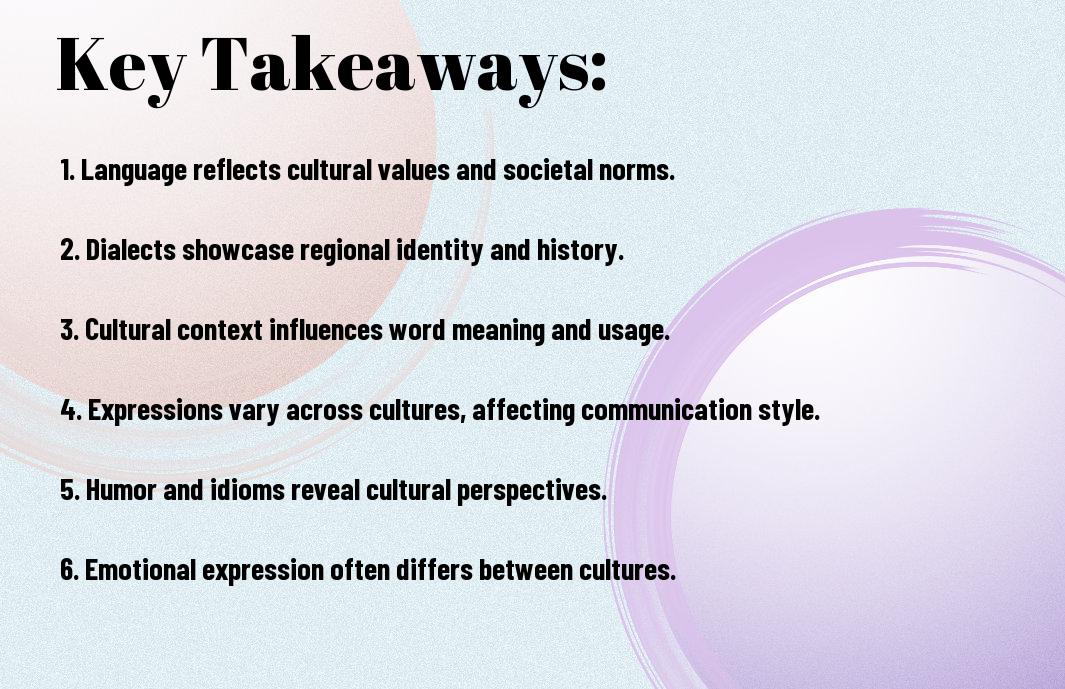

The Impact of Culture on Language Expression

As you navigate the complexities of human communication, you begin to notice that your words and expressions are shaped by the cultural context in which you live. Your language is not just a means of conveying thoughts, but also a reflection of your cultural identity. You will find that the way you express yourself is influenced by the values, norms, and beliefs of your community, shaping your perceptions and interactions with the world around you. This intersection of culture and language is a fascinating topic that warrants exploration.

Key Takeaways:

  • The cultural background of a speaker can significantly influence their language expression, shaping the way they convey meaning and negotiate social relationships through communication.
  • Idiomatic expressions and colloquialisms often have cultural references that may not be immediately understood by non-native speakers, highlighting the importance of cultural competence in effective communication.
  • Linguistic nuances such as tone, pitch, and body language can vary greatly across cultures, and being aware of these differences is imperative for successful communication in multicultural settings.

    Language and Cultural Identity

    A person’s language is often a fundamental aspect of their cultural identity, influencing how you perceive yourself and your place within a community, and shaping your interactions with others in profound ways, as you navigate the complexities of cultural expression.

    The Role of Culture in Shaping Language

    Prior to examining the intricacies of language and culture, you must consider how culture shapes the very language you speak, affecting the words you choose, the tone you convey, and the nuances you express, all of which are influenced by your cultural background and the values you hold dear.

    Language as a Reflection of Cultural Values

    Inherent in your language is a reflection of your cultural values, as the phrases you use, the idioms you express, and the stories you tell all convey the beliefs and traditions that are unique to your cultural heritage, and as you communicate, you are, in essence, sharing a part of yourself and your cultural identity with others.

    Values such as respect, hierarchy, and community are often embedded in the language you speak, and as you use language to communicate, you are reinforcing these values, perpetuating the cultural norms that have been passed down to you, and shaping your sense of self and your connection to your cultural community, and you begin to see that language is not just a means of communication, but a vital part of your cultural identity, influencing how you think, feel, and interact with the world around you.

    Expressions and Nuances

    It is imperative to consider the role of culture in shaping your language expression, as it influences the way you convey meaning and negotiate social relationships. Your cultural background determines your linguistic habits, from the words you choose to the tone you use, and this, in turn, affects how others perceive you.

    Idioms and Colloquialisms in Different Cultures

    Prior to delving into the complexities of language, you should note that idioms and colloquialisms vary significantly across cultures, and their meanings are often specific to a particular region or community. Your understanding of these expressions depends on your familiarity with the cultural context in which they are used.

    Nonverbal Communication Across Cultures

    Conversely, communication is not limited to verbal expressions, and your nonverbal cues, such as body language and facial expressions, can convey just as much information as spoken words. You should be aware that these cues can have different meanings in different cultures, and your ability to interpret them correctly is vital to effective communication.

    It is worth noting that nonverbal communication can be particularly problematic when interacting with people from other cultures, as your unconscious behaviors and gestures may be misinterpreted. You may unintentionally offend someone or convey a message that is different from your intended meaning, highlighting the need for you to be mindful of your nonverbal cues and to educate yourself about the cultural norms of the communities you interact with.

    Cultural Influences on Language Development

    To understand the impact of culture on language, you should consider the role of cultural background in shaping your language expression. As you explore the relationship between culture and language, you may find it helpful to consult resources such as exploring the impact of culture on language learning to deepen your understanding.

    Language Acquisition and Cultural Background

    On the path to language acquisition, your cultural background plays a significant role in determining your language expression, as it influences the way you perceive and interpret the world around you, shaping your linguistic preferences and abilities.

    Language Contact and Cultural Exchange

    Exchange of cultural practices and values occurs when languages come into contact, and as you engage with speakers of other languages, you will notice the exchange of linguistic features, leading to the creation of new language varieties and expressions.

    For instance, when you observe the language contact phenomenon, you will see that it results in code-switching, borrowing, and convergence, which are all indicative of the dynamic interplay between languages and cultures, and as you probe deeper into this phenomenon, you will gain a deeper understanding of the complex relationship between language and culture, and how it affects your expression and communication.

    Language and Cultural Diversity

    Unlike other aspects of human society, language is deeply intertwined with cultural diversity, influencing your perception of the world and shaping your identity. As you explore the complexities of language, you will discover that cultural diversity is reflected in the vast array of languages spoken globally.

    Multilingualism and Cultural Identity

    Around the time you begin to appreciate the significance of language, you will notice that multilingualism plays a significant role in shaping cultural identity, allowing you to connect with diverse communities and broaden your cultural understanding.

    Language Endangerment and Cultural Preservation

    Alongside the issue of language diversity, you will find that language endangerment poses a significant threat to cultural preservation, as you witness languages disappearing at an alarming rate, taking with them unique cultural practices and traditions.

    Aiding your understanding of language endangerment and cultural preservation, you will see that as languages disappear, the cultural heritage and history of communities are also lost, highlighting the need for concerted efforts to document and preserve endangered languages, thereby safeguarding the cultural diversity that makes your world a richer and more fascinating place to live in.

    Communication Across Cultures

    Many languages are spoken across cultures, and you will encounter various forms of expression as you navigate these diverse cultural landscapes. Your interactions will be shaped by the nuances of each culture, influencing how you perceive and convey meaning. As you communicate, you will need to consider the subtleties of language that vary greatly between cultures.

    Barriers to Effective Cross-Cultural Communication

    Besides the obvious linguistic differences, you will also face nonverbal barriers, such as distinct customs and norms, which can hinder effective communication. Your ability to understand and adapt to these differences will significantly impact the success of your interactions across cultures, and you must be aware of potential miscommunications that can arise from these barriers.

    Strategies for Successful Intercultural Interaction

    Culturally sensitive approaches will enable you to navigate complex cultural contexts with greater ease, and you will find that being open to learning about different cultures is imperative in developing effective communication strategies. Your willingness to engage with diverse perspectives will facilitate more meaningful interactions, allowing you to build stronger relationships across cultural boundaries.

    This approach to intercultural interaction requires you to be aware of your own cultural biases and to be willing to question your assumptions. As you engage with people from diverse cultural backgrounds, you will need to be patient and observant, taking the time to understand the nuances of each culture and to adapt your communication style accordingly. By doing so, you will be able to foster greater understanding and cooperation, leading to more successful interactions across cultures.

    Implications and Applications

    Keep in mind that understanding the impact of culture on language expression has significant implications for your interactions with people from diverse backgrounds. You will be able to navigate complex social situations more effectively and communicate your ideas with greater precision.

    Language Teaching and Cultural Sensitivity

    Across various disciplines, you will find that cultural awareness is vital in language teaching, as it enables you to tailor your instruction to the needs of your students and foster a more inclusive learning environment. You will be able to create lessons that are sensitive to the cultural backgrounds of your students.

    Translation and Interpretation in Multicultural Contexts

    On the surface, translation and interpretation may seem like straightforward processes, but you will soon discover that they involve a deep understanding of the cultural nuances of the languages involved. You will need to consider the subtleties of language and culture to convey the intended meaning accurately.

    At the heart of effective translation and interpretation lies a profound appreciation for the cultural context in which communication takes place. You will need to consider the values, beliefs, and practices that underlie the language and adjust your approach accordingly, taking into account the potential for miscommunication and striving to facilitate understanding between people from different cultural backgrounds. As you research deeper into the complexities of translation and interpretation, you will develop a greater appreciation for the intricate dance between language and culture.

    Final Words

    On the whole, you have witnessed how culture intricately weaves into the fabric of language expression, influencing your perceptions and understanding of the world. As you reflect on this phenomenon, you begin to appreciate the profound impact culture has on shaping your thoughts and opinions, ultimately affecting the way you communicate with others and navigate your surroundings, forcing you to consider the complex dynamics at play in your daily interactions.

    FAQ

    Q: How does culture influence language expression and what are the implications for communication across different cultural backgrounds?

    A: Culture significantly influences language expression by shaping the way individuals perceive and convey meaning. Different cultures have unique norms, values, and customs that are embedded in their language, affecting not only the words and phrases used but also the tone, context, and non-verbal cues. For instance, in some cultures, directness is valued, while in others, indirectness is preferred. Understanding these cultural nuances is imperative for effective communication across different cultural backgrounds, as it helps avoid misunderstandings and fosters more respectful and empathetic interactions. By acknowledging and adapting to these differences, individuals can enhance their ability to communicate effectively in multicultural settings.

    Q: In what ways do cultural differences in language expression impact business and international relations, and how can these challenges be addressed?

    A: Cultural differences in language expression can substantially impact business and international relations by creating barriers to effective communication. For example, idioms, humor, and figurative language that are common in one culture may be confusing or offensive in another. In a business context, this can lead to misunderstandings, missed opportunities, or damaged relationships. To address these challenges, it’s beneficial for individuals involved in international business or relations to undergo cross-cultural training. This training can help them understand the cultural context of the languages they interact with, learn to navigate differences in communication styles, and develop strategies for clear and respectful communication. Furthermore, using simple and straightforward language, avoiding cultural references that may not translate well, and seeking clarification when necessary can also mitigate potential issues.

    Q: How does the impact of culture on language expression affect the process of language learning, and what strategies can language learners use to better understand and adapt to these cultural nuances?

    A: The impact of culture on language expression significantly affects the process of language learning, as learners must not only acquire linguistic knowledge but also understand the cultural context in which the language is used. Cultural nuances can influence everything from the appropriateness of certain vocabulary in different situations to the importance of non-verbal communication. To better understand and adapt to these cultural nuances, language learners can immerse themselves in the culture by engaging with native speakers, watching local media, and participating in cultural events. Additionally, seeking out language learning materials that incorporate cultural insights and practicing active listening and observation can help learners become more aware of cultural differences in language use. It’s also important for learners to be patient and open-minded, acknowledging that cultural and linguistic mistakes are a natural part of the learning process.

The Role of Cultural Festivals in Language Learning

As you explore into a new language, you’ll discover that cultural festivals play a significant role in your learning journey. You’ll find that these festivals offer a unique opportunity to immerse yourself in the language and culture, allowing you to gain a deeper understanding of the customs and traditions associated with your target language. By participating in these festivals, you can enhance your language skills and develop a more nuanced appreciation for the culture, making your language learning experience more engaging and effective.

Key Takeaways:

  • The participation in cultural festivals can greatly enhance language learning by providing an immersive experience, allowing learners to engage with native speakers and practice their language skills in a real-life setting.
  • Cultural festivals offer a unique opportunity for language learners to gain insight into the target culture, fostering a deeper understanding of the language and its nuances, which can help learners to better comprehend and communicate effectively.
  • The authentic environment of cultural festivals enables language learners to develop their pragmatic competence, including social skills and cultural awareness, which are necessary for effective communication in the target language.

    The Significance of Cultural Festivals

    The cultural festivals play a vital role in your language learning journey, as they provide a unique opportunity to experience the customs and traditions of a particular culture.

    Language Immersion

    Linguistically, you will be exposed to various dialects and accents, helping you develop your listening and speaking skills in a more immersive environment.

    Cultural Exchange

    With cultural festivals, you can engage in interactions with native speakers, which enables you to learn about their way of life and share your own cultural experiences.

    And as you participate in these cultural exchange events, you will gain a deeper understanding of the cultural nuances and context that are important to effective communication in your target language, allowing you to become a more proficient and confident language user.

    Language Acquisition through Festivals

    You can gain valuable language skills by participating in cultural festivals, which provide an immersive environment for language learning. Festivals offer opportunities to engage with native speakers, try traditional foods, and experience cultural customs.

    Authentic Language Use

    Like linguistic immersion, festivals allow you to practice your language skills in real-life situations, helping you to develop your pronunciation, vocabulary, and grammar.

    Interactive Learning

    One of the key benefits of festivals is the interactive nature of language learning, where you can engage in conversations, sing songs, and participate in traditional dances, making the learning process enjoyable and engaging.

    Acquisition of language skills is facilitated through interactive learning, as you are able to practice your language skills in a supportive and stimulating environment, receiving immediate feedback and correction from native speakers, which helps to build your confidence and fluency in the language.

    Festival Themes and Language Learning

    All cultural festivals offer a unique opportunity for language learning, and you can explore various themes, such as The Role of British Festivals in Expanding Cultural Vocabulary, to enhance your skills.

    Traditional Music and Dance

    Across different festivals, you’ll find a variety of traditional music and dance that can help you connect with the culture and learn new language aspects, such as rhythm and expression.

    Food and Cuisine

    Cuisine plays a significant role in cultural festivals, and you’ll discover various traditional dishes that can help you learn new vocabulary related to food and culinary practices.

    With the diversity of food and cuisine at festivals, you can explore the language associated with different ingredients, cooking methods, and dining customs, which can enrich your language learning experience and help you engage more deeply with the culture, allowing you to better understand and participate in conversations about food and cuisine.

    The Role of Technology in Festival-Based Learning

    Now, with the rise of digital platforms, you can explore and participate in cultural festivals from around the world, enhancing your language learning experience. Technology has made it possible to engage with diverse cultures and languages, making festival-based learning more accessible and enjoyable for you.

    Virtual Festivals

    On the digital stage, you can attend virtual festivals, which offer a unique opportunity to experience different cultures and languages. You can watch live streams, interact with attendees, and even participate in workshops, all from the comfort of your own space.

    Language Learning Apps

    Above all, language learning apps have revolutionized the way you learn languages, and festival-based learning is no exception. You can use apps to learn about festivals, practice relevant vocabulary, and even connect with native speakers, making your learning experience more engaging and effective.

    In addition, as you explore language learning apps, you will find a wide range of tools and resources that cater to your learning style and goals. You can access interactive lessons, quizzes, and games that focus on festival-related topics, helping you to develop your language skills in a fun and immersive way, and enabling you to make the most of your festival-based learning experience.

    Challenges and Limitations

    Keep in mind that incorporating cultural festivals into your language learning process can be complex. You can explore Strategies for Teaching EFL/ESL Through Cultural Festivals to address potential issues.

    Accessibility and Inclusivity

    Toward creating an inclusive environment, you should consider the diversity of your students and ensure that all can participate in cultural festivals, fostering a sense of belonging.

    Cultural Sensitivity

    At the heart of using cultural festivals in language learning is the need to approach each culture with respect and understanding, allowing you to navigate potential sensitivities effectively.

    Indeed, as you examine into the cultural sensitivity aspect, you will find that being mindful of the nuances of each culture is vital. You must be aware of the customs, traditions, and values associated with each festival to avoid misinterpretation or offense, ensuring that your approach to cultural festivals in language learning is both enriching and respectful for all your students.

    Best Practices for Festival-Based Language Learning

    Despite the many benefits of festival-based language learning, it requires careful planning and execution to maximize its effectiveness. You can enhance your language skills by participating in cultural festivals, but it’s crucial to approach them with a clear understanding of your goals and objectives.

    Pre-Festival Preparation

    To get the most out of festival-based language learning, you should prepare thoroughly before attending the event. You will need to research the festival, its customs, and the language used during the celebrations to feel confident and comfortable interacting with native speakers.

    Post-Festival Reflection

    Around the time after the festival, you will have the opportunity to reflect on your experiences and assess your progress. You can think about what you learned, what you enjoyed, and what you would do differently next time to improve your language skills.

    In fact, post-festival reflection is an crucial step in the learning process, as it allows you to solidify new language skills and identify areas for further improvement. You can use this time to review the vocabulary and phrases you learned, practice speaking and writing in the target language, and set new goals for your continued language development, helping you to stay motivated and engaged in your language learning journey.

    Final Words

    Conclusively, you will find that cultural festivals play a significant role in your language learning journey. As you participate in these events, you gain exposure to authentic language usage, enabling you to improve your communication skills. Your understanding of the culture and language deepens, allowing you to connect with native speakers on a more personal level, and enhancing your overall learning experience.

    FAQ

    Q: What is the significance of cultural festivals in language learning, and how can they enhance the learning experience?

    A: Cultural festivals play a significant role in language learning as they provide an immersive and engaging environment for learners to practice their language skills. By participating in festivals, learners can experience the authentic use of language in context, interact with native speakers, and gain insights into the cultural nuances associated with the language. This can help learners develop a deeper understanding of the language and its cultural relevance, making the learning process more enjoyable and effective.

    Q: How can cultural festivals help language learners develop their listening and speaking skills?

    A: Cultural festivals offer numerous opportunities for language learners to develop their listening and speaking skills. For instance, learners can engage in conversations with native speakers, listen to traditional music and stories, and participate in language-based activities such as dialect workshops or poetry recitals. Additionally, festivals often feature a variety of linguistic styles, dialects, and accents, which can help learners become more accustomed to different spoken forms of the language and improve their overall comprehension and communication skills.

    Q: What role can cultural festivals play in promoting language preservation and cultural exchange among communities?

    A: Cultural festivals can serve as a vital platform for language preservation and cultural exchange by showcasing the unique linguistic and cultural heritage of different communities. By sharing their traditions, customs, and language, communities can promote cross-cultural understanding, foster greater appreciation for linguistic diversity, and encourage language learners to explore and learn about different cultures. Furthermore, festivals can provide a space for language communities to come together, share their experiences, and collaborate on language preservation efforts, ultimately contributing to the promotion of linguistic and cultural diversity.

How to Learn a Language While Balancing a Busy Schedule

You want to learn a new language, but your busy schedule is holding you back. You think you don’t have the time, but what if you could make language learning a part of your daily routine? With the right approach, you can fit language learning into your tight schedule and make progress towards your goal. Your lifestyle and language learning goals are unique, and with a few strategies, you can overcome the challenges and achieve your objectives.

Key Takeaways:

To effectively learn a language while managing a busy schedule, consider the following points:

  • Set realistic goals and prioritize your language learning by allocating a specific time slot each day, even if it’s just 10-15 minutes, to dedicate to language learning activities such as reading, writing, or speaking.
  • Utilize mobile apps and online resources that offer flexible and accessible language learning tools, allowing you to learn at your own pace and fit language learning into your busy schedule.
  • Immerse yourself in the language by listening to podcasts, watching videos, or engaging in conversations with native speakers, which can help you stay motivated and make language learning a more enjoyable experience.

Setting Goals

While learning a language with a busy schedule can be challenging, setting clear goals is vital to your success. You need to determine what you want to achieve and by when, allowing you to focus your efforts and track progress.

Defining Language Learning Objectives

On the path to language learning, outlining specific objectives is vital. You should identify what aspects of the language you want to improve, such as reading, writing, or speaking, and set measurable targets to help you stay motivated.

Creating a Realistic Study Schedule

Setting a study schedule that fits your lifestyle is key. You should allocate specific times for learning, ensuring it aligns with your daily routine and other commitments, allowing for consistent progress without feeling overwhelmed.

It is also important to consider your learning style and pace when creating your schedule. You should be realistic about how much time you can dedicate to learning each day and week, and make sure to include time for review and practice, enabling you to reinforce new language skills and build confidence in your abilities.

Language Learning Strategies

One of the most significant factors in learning a language is developing strategies that work for you. You can try various methods to find what suits your schedule and learning style, ensuring you make progress in your language learning journey.

Immersive Learning Techniques

Similarly, one effective way to learn a language is through immersive learning techniques, where you surround yourself with the language as much as possible, such as watching TV shows or listening to music in the target language, helping you get used to its sounds and rhythms.

Effective Time Management

For instance, you can allocate specific times of the day to language learning, making it a non-negotiable part of your daily routine, allowing you to stay consistent and make steady progress despite your busy schedule.

Learning to manage your time effectively is important to balancing language learning with your other responsibilities. You can start by setting realistic goals and breaking them down into smaller, achievable tasks that fit into your daily or weekly schedule, ensuring you can stay on track and celebrate your progress along the way, which will help you stay motivated to continue learning.

Overcoming Obstacles

Your ability to learn a language while balancing a busy schedule depends on your capacity to overcome obstacles. You will face challenges, but with the right strategies, you can succeed.

Managing Procrastination and Burnout

Although it’s easy to put off language learning, you must prioritize it. Set realistic goals and take regular breaks to avoid exhaustion.

Building a Support Network

Around you, there are people who can help you stay motivated. You can join a language learning community or find a language exchange partner.

A supportive network will help you stay accountable and motivated. You can share your progress, ask for advice, and learn from others who are facing similar challenges. By surrounding yourself with people who understand your goals, you will be more likely to stay on track and achieve your language learning objectives.

Utilizing Resources

Unlike traditional language learning methods, modern resources offer flexibility and convenience, allowing you to learn at your own pace and on your own schedule, making it easier to balance with your busy life.

Language Learning Apps and Software

Alongside many tools, you can find apps and software that cater to your learning style, helping you to stay organized and motivated, and making the most of your limited time.

Online Communities and Forums

Linguistically, you can connect with native speakers and fellow learners through online communities and forums, where you can practice your language skills and get feedback on your progress, which will help you to improve faster.

Learning a language with the help of online communities and forums can be very beneficial, as you will get exposure to different accents, expressions, and ways of communication, which will help you to develop your listening, speaking, reading, and writing skills, and you will be able to get help and support from others when you need it, keeping you motivated and engaged in your learning journey.

Staying Motivated

Not giving up is key to learning a language while balancing a busy schedule. You can find inspiration in articles like There’s no such thing as being “too busy” to learn a language, which offer valuable tips and advice on how to stay motivated.

Tracking Progress and Celebrating Milestones

Besides consistent practice, tracking your progress helps you stay motivated and engaged in the learning process, allowing you to celebrate your achievements along the way, which in turn boosts your confidence and encourages you to continue.

Finding Authentic Materials and Interests

To make language learning more enjoyable, you should explore authentic materials like TV shows, movies, and podcasts that align with your interests, making it easier for you to stay engaged and motivated in your language learning journey.

Celebrating your progress and finding authentic materials that resonate with your interests can significantly enhance your language learning experience. You can discover new TV shows or podcasts that you enjoy, and as you improve your language skills, you’ll be able to understand and appreciate them more, which will motivate you to continue learning and exploring your new language.

Balancing Act

Now that you’re determined to learn a language, you need to balance your schedule. You’ll have to juggle your daily routine, work, and language learning. With careful planning, you can allocate time for language learning and achieve your goals.

Integrating Language Learning into Daily Routine

The key to successful language learning is incorporating it into your daily routine. You can start by dedicating a specific time slot each day to language learning, such as during your daily commute or right before bed.

Prioritizing Self-Care and Balance

Balance is important to maintaining your physical and mental well-being while learning a language. You should prioritize self-care activities, such as exercise and meditation, to ensure you stay focused and motivated.

It is important to note that taking breaks and practicing self-care will help you avoid burnout and maintain your enthusiasm for language learning. You can schedule self-care activities alongside your language learning sessions, allowing you to recharge and come back to your lessons with renewed energy and focus. This will enable you to make consistent progress and achieve your language learning goals.

Conclusion

On the whole, you can effectively learn a language while balancing a busy schedule by prioritizing your goals and utilizing spare moments to practice. You will find that incorporating language learning into your daily routine, even in small doses, can lead to significant progress over time. By staying committed to your goals, you can achieve proficiency in your target language and enhance your personal and professional opportunities, making the most of your time and effort.

FAQ

Q: What is the most effective way to learn a language when I have a busy schedule and limited time?

A: To learn a language effectively with a busy schedule, focus on setting achievable goals and breaking your study sessions into shorter, manageable chunks. Utilize language learning apps, podcasts, and audiobooks that can be accessed during commuting or breaks. Consistency is key, so dedicate a specific time each day, even if it’s just 10-15 minutes, to language learning. This could be during your lunch break, before bed, or first thing in the morning. Additionally, try to immerse yourself in the language by listening to music, watching TV shows or movies in the target language, and speaking with native speakers whenever possible.

Q: How can I maintain motivation and avoid burnout while trying to balance language learning with a busy schedule?

A: Maintaining motivation is fundamental when learning a language with a busy schedule. Start by tracking your progress, no matter how small, and celebrate your achievements. Find a language learning buddy or join a language exchange group for support and to practice speaking skills. Vary your study materials and activities to keep things interesting and prevent boredom. It’s also important to set realistic goals and not overexert yourself. Allow for rest days and don’t be too hard on yourself if you miss a day or two. Keep in mind that the goal is long-term progress, not short-term perfection.

Q: Are there any specific language learning tools or resources that are particularly well-suited for busy individuals looking to learn a language?

A: Yes, there are numerous language learning tools and resources designed with busy schedules in mind. Language learning apps such as Duolingo, Babbel, and Rosetta Stone offer bite-sized lessons and exercises that can be completed on-the-go. Podcasts like “Coffee Break” and “News in Slow” provide engaging content in the target language, suitable for listening during commutes or workouts. Online platforms and forums can connect you with native speakers for language exchange and practice. Furthermore, many libraries offer free access to language learning resources, including DVDs, CDs, and digital platforms like Mango Languages. Utilizing these resources can make language learning efficient and enjoyable, even with a busy schedule.

How to Build an Effective Language Learning Routine

You’re taking the first step towards becoming proficient in a new language, and creating a routine is important to your success. Your language learning journey will be more efficient with a well-planned schedule. By establishing a consistent routine, you’ll make steady progress and stay motivated. Your dedication will pay off as you develop the skills and confidence to communicate effectively in your target language, and this post will guide you through the process of building a routine that suits your needs and goals.

Key Takeaways:

  • To establish an effective language learning routine, it’s imperative to set realistic goals and track progress, allowing for adjustments as needed to stay motivated and focused on the learning journey.
  • Implementing a consistent schedule is vital, dedicating a specific time each day to language learning, whether it’s reading, listening, speaking, or writing in the target language.
  • Incorporating variety in the learning routine, such as using different resources and activities, can help keep the learning process engaging and prevent boredom, ultimately leading to a more productive language learning experience.

    Setting Goals

    A well-structured language learning routine starts with setting achievable goals, which you can learn more about in My Successful Language Learning Routine: Tips & Resources, to help you stay motivated and focused.

    Defining Language Learning Objectives

    Along with identifying your motivation, you need to define your language learning objectives, which will serve as a guiding force behind your efforts, helping you to stay on track and make consistent progress.

    Creating a Realistic Study Schedule

    Studying consistently is key to language learning, so you should allocate a specific time slot each day or week to practice, ensuring that it fits seamlessly into your lifestyle and other commitments.

    Understanding your availability and schedule is vital when creating a realistic study schedule, as you need to be honest about how much time you can dedicate to language learning each day or week, taking into account factors such as work, family, and other responsibilities, to avoid setting yourself up for failure and maintain a consistent learning routine.

    Choosing Learning Materials

    Clearly, selecting the right learning materials is necessary for your language learning journey. You need to find resources that fit your learning style, goals, and schedule.

    Textbooks and Language Learning Software

    Similarly, software programs and textbooks can provide structured learning experiences, offering comprehensive lessons and exercises to help you build a strong foundation in the language.

    Online Resources and Mobile Apps

    Any language learner can access a vast array of online resources and mobile apps, which offer flexible and convenient learning opportunities, allowing you to learn at your own pace.

    Choosing the right online resources and mobile apps can be overwhelming, but you can start by exploring popular options, reading reviews, and trying out demos to find the ones that best suit your needs and preferences, enabling you to stay motivated and engaged in your language learning routine.

    Building a Study Routine

    Once again, the key to language learning success lies in establishing a regular study routine. You need to prioritize your goals and allocate sufficient time for learning, ensuring consistency and progress. Your routine should be tailored to your needs, interests, and schedule, allowing you to make steady progress and stay motivated.

    Setting Aside Dedicated Study Time

    Along with setting goals, you should allocate a specific time slot for studying, free from distractions and interruptions. You will be able to focus on your language learning, making the most of your time and energy, and tracking your progress more effectively.

    Creating a Consistent Study Environment

    Behind every successful language learner is a well-organized study space, conducive to focus and productivity. You should optimize your environment to facilitate learning, eliminating distractions and minimizing stress, which will help you stay on track and achieve your goals.

    Considering your individual preferences and needs, you can create a study environment that fosters comfort, motivation, and engagement. You can choose a quiet corner, invest in a comfortable chair, or use a specific app to block social media, allowing you to concentrate on your language learning materials and make steady progress towards your goals. By doing so, you will be able to establish a consistent routine and stay committed to your language learning journey.

    Practicing Language Skills

    Despite the challenges you may face, consistent practice is key to improving your language skills. You will need to allocate time for various activities to enhance your language proficiency.

    Reading and Writing Exercises

    Beneath the surface of language learning lies the foundation of reading and writing exercises, which you can use to improve your grammar, vocabulary, and comprehension by completing exercises, writing journal entries, or reading books and articles in the target language.

    Speaking and Listening Drills

    Across the spectrum of language learning, speaking and listening drills are necessary for your progress, as they help you develop pronunciation, intonation, and conversation skills through speaking with native speakers, listening to podcasts, or watching TV shows and movies in the target language.

    Skills such as conversation, pronunciation, and comprehension are honed through speaking and listening drills, allowing you to engage in real-life conversations with more confidence, and you will find that your language skills improve significantly as you consistently practice speaking and listening in the target language.

    Overcoming Obstacles

    Now that you’ve established your language learning routine, you’ll inevitably encounter obstacles that can hinder your progress, but with the right strategies, you can overcome them and stay on track to achieving your goals.

    Managing Motivation and Burnout

    Among the most significant challenges you’ll face is maintaining motivation, as it’s easy to get discouraged when you’re not seeing progress, but by setting achievable milestones and rewarding yourself, you can stay motivated and engaged in your learning journey.

    Dealing with Grammar and Vocabulary Challenges

    Beside the frustration of not understanding certain grammar rules or struggling to learn new vocabulary, you can break down complex concepts into manageable parts and practice consistently to build your confidence and proficiency.

    Indeed, dealing with grammar and vocabulary challenges requires patience and persistence, and as you continue to practice and expose yourself to the language, you’ll develop a deeper understanding of the nuances and complexities of the language, and your skills will improve significantly, allowing you to communicate more effectively and achieve your language learning goals.

    Tracking Progress

    For effective language learning, monitoring your progress is necessary. You need to evaluate your performance to identify areas of improvement and adjust your routine accordingly.

    Keeping a Language Learning Journal

    The key to successful tracking is documenting your journey. You can write down your daily achievements, note new vocabulary, and reflect on your challenges, helping you to stay motivated and focused on your goals.

    Using Progress Tracking Tools

    Beside traditional journaling, you can utilize various digital tools to track your progress. You can find numerous apps and software designed to help you monitor your language learning, providing you with detailed statistics and insights.

    Considering the plethora of options available, you can choose the tool that best suits your needs, whether it’s a simple habit tracker or a comprehensive language learning platform. You can use these tools to set milestones, track your vocabulary growth, and analyze your pronunciation, giving you a clear picture of your progress and helping you refine your strategy to achieve your language learning goals.

    Summing up

    The key to language learning is consistency and you can achieve this by creating a routine that works for you. By setting realistic goals and prioritizing your time, you will be able to make steady progress in your language learning journey. Your routine should include a mix of different activities, such as reading, writing, and speaking, to keep you engaged and motivated, and with persistence and dedication, you will see significant improvement in your language skills over time.

    FAQ

    Q: What are the key elements to include in a language learning routine?

    A: To build an effective language learning routine, it’s important to incorporate a combination of activities that focus on different aspects of language acquisition, such as reading, writing, listening, and speaking. Start by setting specific goals, like dedicating a certain amount of time each day or week to language learning. Allocate time for vocabulary building, grammar practice, and conversational exercises. Additionally, utilize a variety of resources like textbooks, language learning apps, podcasts, and language exchange programs to maintain diversity and engagement in your routine.

    Q: How can I stay motivated and track progress in my language learning routine?

    A: Staying motivated and tracking progress are vital components of a successful language learning routine. Begin by establishing achievable milestones and celebrating each accomplishment, no matter how small. Use a planner, calendar, or mobile app to schedule and track your daily or weekly language learning activities. Regularly assess your progress through self-evaluation, quizzes, or conversations with a language partner. Sharing your goals and progress with a friend or joining a language learning community can also provide an added motivation boost and support system.

    Q: Can I adapt my language learning routine to fit my busy schedule and learning style?

    A: Adapting your language learning routine to fit your lifestyle and learning preferences is not only possible but also highly advisable for long-term success. Identify your most productive times of the day and dedicate those to language learning. If you’re a visual learner, incorporate more videos and images into your routine. For auditory learners, podcasts and audio books might be more effective. Even short, consistent sessions each day can be more beneficial than lengthy, sporadic study sessions. Be flexible and willing to adjust your routine as your schedule changes or as you discover new learning materials and techniques that suit you better.

Skip to content