Language

How to Learn a Language While Studying Abroad

You’re about to commence on a journey to study abroad, and your goal is to become proficient in a new language. As you immerse yourself in a foreign culture, you’ll have the perfect opportunity to learn. Your language skills will improve dramatically when you’re surrounded by native speakers. To get started, check out this guide on How to Learn a Language Fast and Fluently While Abroad and discover tips to enhance your experience.

Key Takeaways:

To make the most out of your study abroad experience and effectively learn a language, consider the following points:

  • Immerse yourself in the local culture by engaging with native speakers, trying traditional food, and participating in community events to get a deeper understanding of the language and its nuances.
  • Take advantage of language classes or tutoring services offered by your university or local language schools to receive formal instruction and guidance on language learning.
  • Use language learning apps and online resources to supplement your learning, practice consistently, and track your progress, making the most out of your study abroad experience.

Setting Language Goals

Before you start learning a language while studying abroad, define what you want to achieve. Your goals will guide your learning process and help you stay motivated.

Defining Your Motivation

To determine your motivation, ask yourself why you want to learn the language. Your reasons will help you set specific and achievable goals, making the learning process more efficient.

Assessing Your Current Level

Any language learner should evaluate their current language proficiency. You can take a language test or assess your skills by speaking with native speakers to identify areas for improvement.

Understanding your current level is key to setting realistic goals. You will be able to identify the gaps in your language skills and create a plan to fill them, allowing you to make steady progress and stay on track with your language learning journey while studying abroad.
Immersing in the Language

Any opportunity to immerse yourself in the language will be beneficial. You’ll pick up phrases, nuances, and expressions that’ll help you communicate more effectively.

Surrounding Yourself with the Language

Across the city, you’ll find signs, menus, and advertisements in the local language. You can use these to practice your reading skills and get used to the language in context.

Finding Language Exchange Partners

Linguistically, you’ll find that speaking with native speakers is one of the best ways to improve your language skills. You can join language exchange groups or attend events where you can meet locals.

Plus, when you find a language exchange partner, you can practice speaking and listening in a more informal setting, which will help you build confidence in your language abilities. You’ll be able to ask questions, clarify doubts, and learn more about the culture and customs of the country you’re studying in, making your experience even more rewarding.

Effective Learning Strategies

After settling into your new surroundings, focus on developing a study routine. You’ll find that consistent practice helps your language skills improve quickly.

Language Learning Tips and Tricks

Learning a new language while abroad can be challenging, but with the right approach, you’ll succeed. Here are some tips:

  • Immerse yourself in the language
  • Practice regularly

. After applying these tips, your language skills will improve significantly.

Using Language Learning Apps

Below are some effective tools to aid your language learning. You can use apps like Duolingo to practice your vocabulary and grammar.
Effective language learning apps can help you stay on track and motivated. You’ll find that using these apps in conjunction with your daily practice will help you reach your language goals. Effective use of these tools will make your language learning journey more efficient and enjoyable. You’ll be able to track your progress and identify areas that need improvement, allowing you to adjust your study routine accordingly.

Balancing Language Learning with Studies

Your studies abroad can be a great opportunity to learn a language, but it requires balance between language learning and academic responsibilities.

Managing Your Time Effectively

AFTER settling into your routine, you’ll need to allocate time for language learning, studying, and other activities to make the most of your experience.

Prioritizing Your Tasks

Among your many tasks, you must identify what needs to be done and focus on the most important ones, such as completing assignments and attending classes.

But as you prioritize your tasks, you’ll find that dedicating specific times for language learning, such as speaking with native speakers or practicing grammar, will help you make steady progress and achieve your goals.

Overcoming Challenges

All students studying abroad face obstacles, and you’re no exception. You’ll encounter difficulties, but with the right mindset, you can overcome them.

Dealing with Language Barriers

By being proactive, you can bridge the gap between languages. You’ll find that carrying a dictionary or using a translation app helps you communicate effectively.

Staying Motivated

At times, you’ll feel like giving up, but your goal is within reach. You must stay focused and keep practicing your language skills.

Challenges will arise, but as you persist, you’ll see improvement. You’ll start to think in your target language, and your confidence will grow. Your hard work will pay off, and you’ll become proficient in no time, making your study abroad experience even more enjoyable.

Cultural Integration

Not only will you be learning a language, but you’ll also be immersed in a new culture. You can find valuable insights from people who have gone through a similar experience, such as the Experience of moving abroad to learn a language discussion.

Exploring the Local Culture

Behind the language, there’s a rich culture waiting to be discovered. You’ll find that exploring local customs, traditions, and way of life will enhance your language learning experience.

Engaging with Native Speakers

Along with language classes, engaging with native speakers is key to improving your language skills. You’ll pick up nuances and slang that you won’t find in textbooks.

Indeed, as you engage with native speakers, you’ll start to feel more confident in your ability to communicate. You’ll begin to understand the rhythm and flow of the language, and your pronunciation will improve dramatically. You’ll also gain valuable insights into the local culture and way of life, which will help you to better understand the language and its many expressions.

Conclusion

Considering all points, you now have a solid foundation to learn a language while studying abroad. You’ll immerse yourself in the local culture, practice with native speakers, and explore your new surroundings. Your language skills will improve dramatically as you navigate everyday situations, making your experience abroad even more rewarding. You’ll take away a valuable skill and a newfound appreciation for the language and culture, enriching your life in the process.

FAQ

Q: What are the benefits of learning a language while studying abroad?

A: Learning a language while studying abroad provides numerous benefits, including improved academic performance, enhanced cultural immersion, and increased job opportunities. By studying in a foreign country, you will be surrounded by the language and have ample opportunities to practice speaking, listening, reading, and writing. This immersion will help you develop a deeper understanding of the language and its nuances, allowing you to communicate more effectively with locals and navigate everyday situations with ease. Additionally, being able to speak the local language will open up more job opportunities and give you a competitive edge in the global job market.

Q: How can I balance language learning with my academic coursework while studying abroad?

A: Balancing language learning with academic coursework requires effective time management and prioritization. Set aside dedicated time each day or week to focus on language learning, whether it’s attending language classes, practicing with a language exchange partner, or using online resources. It’s also crucial to integrate language learning into your daily routine, such as watching TV shows or movies in the target language, listening to podcasts or music, or reading books and articles. By making language learning a part of your daily routine, you can make steady progress without compromising your academic performance. Furthermore, many universities offer language support services, such as language classes or tutoring, to help international students improve their language skills.

Q: What are some effective ways to practice a language while studying abroad, outside of the classroom?

A: There are numerous ways to practice a language while studying abroad, outside of the classroom. One effective way is to find a language exchange partner, either through a language exchange program or by joining a language meetup group. This will give you the opportunity to practice speaking and listening with a native speaker, while also helping them practice your native language. You can also join clubs or organizations that align with your interests, where you can interact with locals and practice your language skills in a natural setting. Additionally, you can try to avoid speaking your native language as much as possible, and instead, surround yourself with the target language by watching local TV, listening to local music, and using social media in the target language. By taking advantage of these opportunities, you can accelerate your language learning and become more confident in your ability to communicate in the target language.

The Importance of Context in Language Understanding

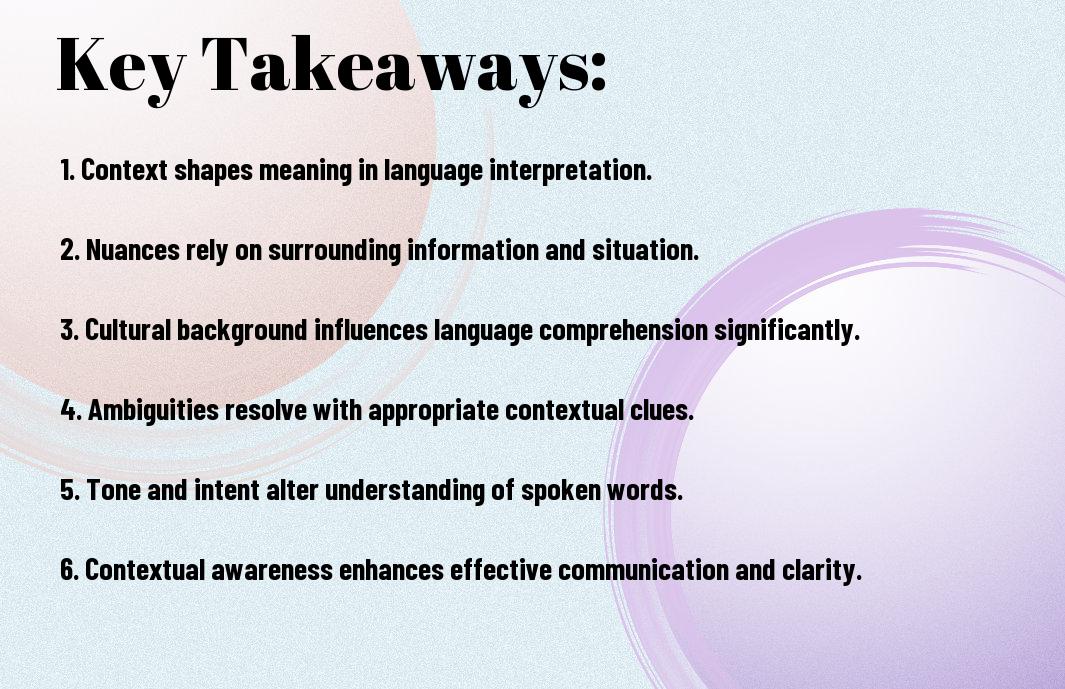
As you navigate the complexities of human communication, you begin to appreciate the significance of context in deciphering meaning. Your ability to understand language is deeply rooted in your capacity to consider the circumstances surrounding a message. When you encounter ambiguous phrases or words with multiple meanings, you rely on context to clarify their intention. For instance, Context in language comprehension plays a vital role in resolving ambiguities, enabling you to grasp the intended meaning behind the words.

Key Takeaways:

  • The accuracy of language understanding heavily relies on the consideration of context, as it provides the necessary background information to grasp the meaning and intent behind the words or phrases used.
  • Ambiguity can be resolved by taking into account the situation, culture, and environment in which the language is being used, allowing for a more precise interpretation of the message.
  • Effective communication depends on the ability to understand the nuances of language, which can only be achieved by considering the context in which the language is used, enabling a more informative and engaging exchange of ideas.

    The Significance of Context

    A deeper understanding of context is crucial for effective language comprehension, as it enables you to grasp the nuances and complexities of human communication, allowing your message to be conveyed accurately.

    Defining Context

    Around the concept of context, scholars have developed various theories, emphasizing its role in shaping the meaning of words and phrases, helping you to better understand the relationships between language and its environment.

    Importance in Communication

    Around every conversation, context plays a subtle yet significant role, influencing how you interpret and respond to messages, and enabling you to navigate social interactions with greater ease and precision.

    Due to the complexities of human communication, understanding the importance of context in conveying your intended message is vital, as it allows you to tailor your language to your audience and avoid misunderstandings, ensuring that your words are interpreted as you intended, and facilitating more effective and engaging interactions with others.

    Linguistic Nuances

    Even in everyday conversations, you encounter complex language structures that require careful consideration of context to decipher their meaning. Your ability to understand these nuances is vital to effective communication.

    Idioms and Colloquialisms

    Typically, you will find that idiomatic expressions and colloquialisms are used in informal settings, and their meanings can be unclear to non-native speakers or those unfamiliar with the local culture. Your understanding of these expressions is important to grasping the nuances of language.

    Cultural References

    Culturally, you are likely to encounter references that are specific to a particular region or community, and understanding these references is vital to appreciating the context of a conversation. Your knowledge of cultural references will help you navigate complex social situations.

    Colloquialisms and cultural references often intersect, and as you probe deeper into a culture, you will find that your understanding of these references becomes more nuanced, allowing you to better appreciate the subtleties of language and communicate more effectively with others. Your ability to recognize and interpret these references will enhance your language skills and foster deeper connections with others.

    Ambiguity and Misinterpretation

    Many language expressions can be interpreted in multiple ways, leading to confusion and miscommunication. You must consider the context in which you are using or interpreting language to avoid misunderstandings.

    Language Barriers

    Any attempt to communicate across linguistic or cultural boundaries can lead to errors, as you may not fully understand the nuances of the other language or culture.

    Semantic Ambiguity

    By analyzing language closely, you will find that words and phrases can have multiple meanings, making it vital to consider the context in which they are used to avoid misinterpretation.

    But as you explore deeper into semantic ambiguity, you will realize that even with careful consideration, language can still be open to multiple interpretations, and you must be aware of these possibilities to effectively communicate your intended meaning.

    Contextual Influence on Meaning

    Not until you consider the context of a sentence can you truly understand its meaning. The words and phrases you use take on different connotations and implications depending on the situation.

    Syntactic Context

    Contrary to what you might think, the order of words in a sentence significantly affects its meaning. You will find that a simple change in word order can alter the entire interpretation of a phrase.

    Pragmatic Context

    Above all, the context in which you use language influences how your message is received. You should be aware of your audience and the social norms surrounding your communication.

    It is important to consider the pragmatic context when conveying your ideas, as it can greatly impact how your message is perceived by others. You must take into account the social and cultural background of your audience to effectively convey your intended meaning and avoid misunderstandings.

    Real-World Applications

    Once again, you find yourself navigating the complexities of language, where context plays a vital role in deciphering meaning. Your ability to understand the nuances of language is vital in various fields, including business, education, and everyday communication.

    Effective Communication

    Approximately, at this point, you begin to appreciate the significance of context in conveying your message accurately. Your words, tone, and body language all contribute to effective communication, and considering the context ensures your intended meaning is conveyed.

    Language Teaching

    Around this stage, after gaining a deeper understanding of context, you can apply this knowledge to language teaching. Your approach to teaching languages becomes more nuanced, as you consider the context in which your students will use the language.

    But as you explore deeper into language teaching, you realize that context is not just limited to the immediate surroundings. Your students’ cultural backgrounds, prior knowledge, and learning objectives all influence how they interpret and use language, making it vital to consider these factors when designing your teaching approach.

    Challenges and Limitations

    Unlike other aspects of language, context poses significant challenges to your understanding. You can learn more about Understanding the Importance of Context in Grammar Usage to improve your language skills.

    Language Evolution

    Linguistically, your perception of context is shaped by the ever-changing nature of language, influencing how you interpret and understand the world around you.

    Technological Implications

    With the rise of technology, your interactions with language have become more complex, and context plays a significant role in deciphering meaning from digital communication.

    For instance, when you engage with online content, you must consider the context in which it was created to fully comprehend the intended message, taking into account factors such as the author’s intent, audience, and cultural background to avoid misinterpretation.

    Final Words

    Summing up, you now understand that context plays a significant role in shaping your interpretation of language. As you navigate through various texts, you will find that your comprehension is influenced by the surrounding words, tone, and situation. Your ability to consider context will enhance your grasp of nuanced expressions, allowing you to discern intended meanings and avoid misunderstandings, ultimately enriching your engagement with language.

    FAQ

    Q: What role does context play in language understanding?

    A: Context is vital in language understanding as it helps to disambiguate words and phrases that have multiple meanings. It provides the necessary background information to accurately interpret the intended meaning of a sentence or phrase. Without context, the same sentence can be interpreted in different ways, leading to confusion and miscommunication. For instance, the phrase “break a leg” can be interpreted literally or as a way of wishing someone good luck, depending on the context in which it is used.

    Q: How does context influence the interpretation of idioms and figurative language?

    A: Context plays a significant role in the interpretation of idioms and figurative language, as the meaning of these expressions often depends on the situation in which they are used. Idioms, such as “kick the bucket” or “bend over backwards,” have literal meanings that are different from their intended meanings. The context in which these expressions are used helps the listener or reader to understand the intended meaning, rather than the literal meaning. For example, if someone says “I’m feeling under the weather,” the context will help you understand that they are feeling unwell, rather than being physically under the weather.

    Q: Can artificial intelligence and machine learning models fully understand context in language, or are there limitations?

    A: While artificial intelligence and machine learning models have made significant progress in understanding natural language, there are still limitations to their ability to fully understand context. These models can be trained on large datasets and learn to recognize patterns and relationships between words, but they may struggle with nuanced or subtle aspects of context, such as sarcasm, irony, or implied meaning. Additionally, cultural and personal references can be difficult for AI models to understand, as they may not have the same level of cultural knowledge or personal experience as humans. Therefore, while AI models can be highly effective in many areas of language understanding, there are still limitations to their ability to fully grasp context.

How to Find the Best Language Tutors Online

As you begin on learning a new language, you’ll likely need guidance from a qualified tutor. Your search for the perfect online tutor can be overwhelming, but with the right approach, you can find a tutor who meets your needs. You’ll want to consider factors such as their teaching style, experience, and expertise in your desired language. By doing your research and evaluating your options, you can make an informed decision and take your language skills to the next level.

Key Takeaways:

  • When searching for online language tutors, consider their qualifications and experience in teaching languages to ensure you find the best fit for your learning needs.
  • Look for reviews and testimonials from previous students to gauge the tutor’s effectiveness and teaching style, and to get a sense of their strong and weak points.
  • Utilize online platforms and marketplaces that connect students with certified language tutors, and take advantage of free trials or consultations to assess the tutor’s compatibility with your learning goals and schedule.

    Benefits of Online Language Tutors

    A great way to learn a new language is with online tutors, you can find them on platforms like Preply: Learn with the best online language tutors, which offers a wide range of qualified instructors.

    Flexibility and Accessibility

    The flexibility to learn at your own pace and from any location is a major advantage of online language tutors, allowing you to fit lessons into your busy schedule.

    Personalized Learning Experience

    Experience the benefits of a tailored learning approach with online language tutors, who can adapt to your learning style and goals, helping you to achieve fluency faster.

    Language learning is most effective when it’s personalized to your needs, and with online tutors, you can expect to receive feedback and guidance that addresses your strengths and weaknesses, enabling you to make rapid progress and stay motivated throughout your learning journey.

    Qualities of an Effective Language Tutor

    Any language learner seeks a tutor who can provide personalized guidance and support. When searching for a tutor, consider their ability to communicate complex concepts and tailor lessons to your needs and goals.

    Native Speaker or Fluency

    Speakers of a language often possess an innate understanding of its nuances, which can be beneficial for your learning experience. You will likely prefer a tutor who is a native speaker or has achieved fluency in the language you want to learn.

    Teaching Experience and Qualifications

    .Qualified instructors typically possess a strong educational background and extensive teaching experience. You should look for a tutor with a proven track record of successfully teaching languages to students with goals and proficiency levels similar to yours.

    Also, as you evaluate a tutor’s experience and qualifications, consider their ability to adapt to your learning style and pace. You can assess this by reviewing their teaching philosophy, asking about their approach, and observing a trial lesson to ensure it aligns with your expectations and needs.

    How to Find the Best Online Tutors

    For your language learning journey, finding the right online tutor is important. You want someone who is experienced, knowledgeable, and fits your learning style. With so many options available, it can be overwhelming to choose the best one. You’ll need to consider factors like their qualifications, teaching methods, and availability.

    Online Platforms and Reviews

    To locate the best online tutors, you can start by searching on dedicated platforms and reading reviews from other students. This will give you an idea of their teaching style, strengths, and weaknesses, helping you make an informed decision about who to hire.

    Referrals and Word of Mouth

    Above all, personal recommendations can be a great way to find a reliable online tutor. You can ask friends, family, or colleagues who have learned a language online for suggestions. They can provide valuable insights into their experience and help you find a tutor who suits your needs.

    Referrals from people you trust can be particularly helpful in finding a tutor who is a good fit for you. You can ask them about their experience with the tutor, including the tutor’s teaching style, communication skills, and ability to adapt to your learning pace. This will help you get a better understanding of what to expect and make a more informed decision when choosing your online tutor.

    Evaluating a Tutor’s Profile

    Not all profiles are created equal, so you’ll want to do your research before selecting a tutor. You can find helpful tips on How to find a language tutor? : r/languagelearning to aid in your search.

    Profile Completeness and Accuracy

    Along with a thorough profile, you should look for complete and accurate information about the tutor’s qualifications and experience, which will help you make an informed decision about your language learning journey.

    Tutor’s Specializations and Expertise

    Before choosing a tutor, consider their specializations and expertise to ensure they align with your learning goals and needs, allowing you to achieve your desired level of language proficiency.

    Tutors with specialized knowledge in specific areas, such as business or conversational language, can provide you with tailored lessons and personalized feedback, enhancing your learning experience and helping you to reach your full potential, and you should prioritize finding a tutor whose expertise matches your objectives.

    Conducting a Successful First Session

    After selecting a language tutor, it’s time to conduct your first session. This initial meeting sets the tone for your learning journey, allowing you to gauge the tutor’s teaching style and your compatibility.

    Setting Clear Goals and Expectations

    Successfully establishing a strong foundation is key, so you’ll want to clearly outline your objectives and what you hope to achieve with your tutor’s guidance, ensuring you’re both on the same page.

    Assessing Tutor-Student Compatibility

    With this first session, you’ll be able to assess whether your personalities and learning styles mesh, which is necessary for a productive tutoring experience, allowing you to adjust your approach as needed.

    Further, as you engage with your tutor, pay attention to how they adapt their teaching methods to your needs, and whether you feel comfortable asking questions and seeking clarification, helping you determine if this is the right fit for your language learning goals.

    Tips for Effective Online Learning

    Once again, you’ll want to ensure you’re getting the most out of your online lessons. Consider the following:

    • Set clear goals
    • Establish a routine

    The key to success lies in your ability to stay focused and motivated.

    Creating a Conducive Learning Environment

    Beneath the surface of a successful online learning experience lies a well-organized workspace. You should select a quiet, dedicated area for your lessons, free from distractions and interruptions, to help you stay on track.

    Active Participation and Engagement

    Approximately, your participation will directly impact your progress, so it’s necessary to engage fully with your tutor and the material.

    Online learning requires you to be proactive and engaged, asking questions and seeking clarification when needed. You’ll need to take an active role in your lessons, sharing your thoughts and ideas, and providing feedback to your tutor. This will help you get the most out of your lessons and achieve your language goals more efficiently, as you’ll be able to address any challenges or difficulties you encounter in a timely manner, with your tutor’s guidance and support.

    Conclusion

    Drawing together all the factors to consider, you can now find the best language tutors online to suit your needs. You will be able to assess your requirements, search for qualified tutors, and evaluate their expertise to make an informed decision. By following these steps, you can find your ideal language tutor and achieve your learning goals, improving your language skills with your chosen online tutor.

    FAQ

    Q: What are the key factors to consider when searching for the best language tutors online?

    A: When searching for the best language tutors online, there are several key factors to consider. First, look for tutors who are native speakers of the language you want to learn, as they will be able to provide the most authentic and accurate instruction. Additionally, consider the tutor’s qualifications and experience, including their teaching certifications and the number of years they have been teaching. You should also look for tutors who specialize in the specific language and level you are interested in, whether it’s beginner, intermediate, or advanced. Furthermore, check the tutor’s reviews and ratings from previous students to get an idea of their teaching style and effectiveness. Finally, consider the tutor’s availability and scheduling flexibility to ensure that they can accommodate your schedule and learning needs.

    Q: How can I evaluate the effectiveness of an online language tutor before committing to lessons?

    A: Evaluating the effectiveness of an online language tutor before committing to lessons can be done in several ways. First, many online tutoring platforms offer free trial lessons or consultations, which can give you a chance to assess the tutor’s teaching style and see if you are a good fit. You can also ask the tutor questions about their teaching approach, such as what methods they use, what materials they provide, and how they assess student progress. Additionally, you can ask to see examples of their lesson plans or watch a video of one of their lessons to get a sense of how they teach. You can also check the tutor’s social media profiles or website to see if they have any testimonials or reviews from previous students. By doing your research and asking the right questions, you can get a sense of whether an online language tutor is a good fit for you.

    Q: What are some red flags to watch out for when selecting an online language tutor, and how can I ensure a safe and productive learning experience?

    A: When selecting an online language tutor, there are several red flags to watch out for. One major red flag is if the tutor is not transparent about their qualifications, experience, or teaching approach. Another red flag is if the tutor is pushing for a large upfront payment or commitment, as this can be a sign of a scam. You should also be wary of tutors who are not responsive to your questions or concerns, or who seem unprofessional or unprepared. To ensure a safe and productive learning experience, make sure to use a reputable online tutoring platform that screens and verifies its tutors. You should also establish clear boundaries and expectations with your tutor, including your learning goals, schedule, and communication preferences. Finally, trust your instincts and don’t be afraid to end the lessons if you feel uncomfortable or unsure about the tutor’s qualifications or approach.

The Role of Podcasts in Language Mastery

As you launch on your language learning journey, you’ll discover various tools to aid your progress. Your ability to grasp nuances and expressions can be significantly enhanced through an innovative medium: podcasts. You can leverage podcasts to immerse yourself in your target language, exposing your ears to native speakers and authentic conversations. By incorporating podcasts into your daily routine, you’ll find that your listening skills and vocabulary expand, bringing you closer to achieving language mastery.

Key Takeaways:

  • Language Immersion is a key benefit of podcasts, as they provide listeners with the opportunity to hear native speakers and authentic conversations, helping to improve listening and speaking skills.
  • Podcasts offer a convenient and flexible way to learn a language, allowing listeners to learn at their own pace and on their own schedule, making them an ideal tool for language mastery.
  • Personalized learning is another advantage of podcasts, as listeners can choose from a wide range of topics and levels, selecting content that is relevant to their interests and language level, helping to keep them engaged and motivated in the learning process.

Section

The role of podcasts in language mastery is significant, as they provide you with a unique opportunity to improve your language skills in a convenient and enjoyable way. You can access a wide range of podcasts on various topics, allowing you to focus on areas that interest you the most.

subsection: Benefits of Podcasts for Language Learners

On the path to language mastery, you will find that podcasts offer numerous benefits, including exposure to native speakers, diverse accents, and real-life conversations. You can enhance your vocabulary, grammar, and pronunciation by listening to podcasts regularly.

subsection: How Podcasts Improve Listening Skills

Around the globe, language learners are using podcasts to improve their listening skills, and you can do the same. You will be able to tune in to podcasts that match your level and interests, helping you to stay motivated and engaged.

Learners like you can benefit greatly from podcasts, as they provide a relaxed and entertaining way to improve listening skills. You can listen to podcasts at your own pace, pause, and rewind to ensure you understand the content, making it an effective tool for language mastery. As you progress, you will find that your ability to comprehend various accents and speaking styles improves significantly, bringing you closer to achieving your language goals.

Section

If you’re looking to improve your language skills, podcasts can be a valuable resource. You can access a wide range of podcasts tailored to your level and interests, helping you to enhance your comprehension and vocabulary.

subsection: Vocabulary Building through Podcasts

Adept learners can use podcasts to expand their vocabulary, as they are exposed to various words and expressions in context, allowing you to understand their meanings and usage, and thus improve your language mastery.

subsection: Pronunciation Practice with Native Speakers

Alongside the benefits of listening to podcasts, you can also practice your pronunciation by mimicking native speakers, which helps you to develop an authentic accent and intonation, making your language sound more natural.

Plus, as you listen to native speakers in podcasts, you’ll become accustomed to their rhythm, stress, and intonation patterns, enabling you to pronounce words and sentences more accurately, and enhancing your overall language skills, so you can communicate more effectively in your target language.

Section

For language learners, podcasts offer a unique opportunity to improve your listening skills and expand your vocabulary. You can access a wide range of topics and genres, making it easier to find content that interests you and helps you stay motivated.

subsection: Language Immersion through Storytelling

Around the world, podcasts have become a popular way to experience immersive storytelling in your target language. You can listen to engaging narratives, interviews, and conversations that help you get used to the natural flow and rhythm of the language.

subsection: Cultural Insights and Contextual Learning

On a deeper level, podcasts provide you with cultural insights and contextual learning opportunities. You can learn about the customs, traditions, and values of the communities that speak your target language, giving you a more nuanced understanding of the language and its usage.

The cultural insights you gain from podcasts can be particularly valuable as you navigate real-life situations in your target language. You’ll be better equipped to understand the context and nuances of conversations, allowing you to communicate more effectively and build stronger relationships with native speakers. As you listen to podcasts, you’ll start to pick up on cultural references, idioms, and expressions that are often difficult to learn from textbooks or language classes alone, helping you to sound more natural and confident in your language skills.

Section

Once again, podcasts prove to be a valuable resource for language learners, as you can discover How Podcasts Can Enhance Language Learning: Insights for Language Learners and improve your skills. You can explore various topics and find the ones that suit your interests and level of proficiency.

subsection: Overcoming Language Barriers with Podcasts

Before entering into the world of podcasts, you may have felt overwhelmed by language barriers, but with the right resources, you can break through these obstacles and enhance your listening and speaking skills, allowing you to communicate more effectively in your target language.

subsection: Building Confidence in Language Skills

Above all, podcasts can help you build confidence in your language skills, as you become more comfortable with the sounds, rhythms, and nuances of the language, enabling you to express yourself more accurately and fluently.

With consistent practice and exposure to podcasts, you can develop a more natural flow in your speech and improve your comprehension, which will, in turn, boost your confidence and motivation to continue learning and improving your language skills, allowing you to achieve your goals and become a proficient language user.

Section

To effectively utilize podcasts for language mastery, you’ll want to explore various options and find the ones that suit your needs. You can discover new podcasts through online recommendations, ratings, and reviews from fellow language learners.

subsection: Popular Podcasts for Language Learners

Against the backdrop of numerous podcasts available, you’ll find some that stand out for their engaging content and effective teaching methods, offering you a valuable resource for improving your language skills.

subsection: How to Choose the Right Podcast for Your Level

After determining your language proficiency level, you can select podcasts that cater to your needs, ensuring you’re challenged enough to improve without feeling overwhelmed, and you can adjust your choices as your skills progress.

Another consideration when choosing a podcast is your learning style and goals; if you prefer conversational lessons, you might opt for a podcast focused on discussions, while those seeking structured lessons might prefer a more formal, instructional approach, allowing you to tailor your learning experience to your preferences and objectives.

Section

All language learners can benefit from podcasts, which provide an accessible and engaging way to improve your listening skills and learn new vocabulary. You can use podcasts to practice your language skills anywhere, at any time, making them an ideal tool for busy learners.

subsection: Creating a Study Routine with Podcasts

Alongside your regular study routine, podcasts can be a valuable addition, helping you to stay motivated and focused. You can incorporate podcasts into your daily commute, exercise routine, or downtime, making language learning a seamless part of your daily life.

subsection: Supplementing Language Courses with Podcasts

Without a doubt, podcasts can enhance your language learning experience, offering a unique perspective on the language and providing you with authentic listening materials. You can use podcasts to supplement your language courses, filling in gaps in your knowledge and gaining a deeper understanding of the language.

With podcasts, you can reinforce the concepts you learn in your language courses, and explore different accents, dialects, and speaking styles. You can also use podcasts to practice active listening, summarizing, and note-taking, which will help you to improve your comprehension and retention of the language, and ultimately, achieve your language mastery goals.

Final Words

Upon reflecting on your journey to language mastery, you will find that podcasts have played a significant role in your progress. You have utilized them to improve your listening skills, expand your vocabulary, and gain cultural insights. As you continue to learn, your reliance on podcasts will likely grow, providing you with a valuable tool to enhance your language abilities and stay motivated, ultimately helping you to achieve your goals in becoming proficient in your target language.

FAQ

Q: What is the significance of podcasts in language learning, and how can they contribute to language mastery?

A: Podcasts play a significant role in language learning as they provide learners with an opportunity to listen to and engage with native speakers, improve their listening skills, and enhance their vocabulary and pronunciation. By incorporating podcasts into their learning routine, language learners can expose themselves to various accents, expressions, and conversational styles, which can help them develop a more nuanced understanding of the language and improve their overall language proficiency.

Q: How can podcasts be used to improve specific language skills, such as listening, speaking, reading, and writing?

A: Podcasts can be utilized in a variety of ways to enhance specific language skills. For example, learners can use podcasts to improve their listening skills by listening to episodes with transcripts, practicing active listening, and repeating what they hear. To improve speaking skills, learners can engage in discussions about podcast topics, practice speaking by summarizing episodes, or participate in language exchange programs. Additionally, podcasts can be used to improve reading and writing skills by providing learners with resources and materials to practice reading and writing about topics discussed in the podcasts.

Q: What are some tips for effectively using podcasts to achieve language mastery, and how can learners maximize their benefits?

A: To effectively use podcasts for language mastery, learners should start by selecting podcasts that align with their interests and language level. They should also create a consistent listening schedule, take notes, and practice active listening. Moreover, learners can maximize the benefits of podcasts by exploring additional resources, such as podcast transcripts, vocabulary lists, and language learning apps. By combining podcasts with other language learning tools and techniques, learners can create a well-rounded learning routine that helps them achieve language mastery and improve their overall language proficiency.

How to Learn a Language Through Cooking and Recipes

You can combine your passion for food and language learning in a unique way. As you explore new cuisines, you’ll discover that cooking and recipes can be a delicious path to language mastery. You can learn more about this approach by checking out The Gourmet Polyglot: Learning Languages Through Food, which highlights the benefits of this method. Your language skills will improve as you cook and learn.

Key Takeaways:

To learn a language through cooking and recipes, consider the following points:

  • Learning a language can be a delicious experience when combined with cooking and recipes from the target culture, allowing for a more immersive learning experience.
  • Cultural and linguistic insights can be gained by exploring traditional dishes and ingredients from the target language, helping to build vocabulary and phraseology skills.
  • Using recipes as a teaching tool can help learners develop their reading, writing, and listening skills, while also providing a sense of accomplishment and motivation to continue learning the language.

Setting the Table

To begin your language learning journey through cooking, you’ll want to explore how recipes can help you learn a new language. You can find more information on this topic at The Language Of Cooking: How Recipes Can Teach You English, which highlights the benefits of using recipes as a language learning tool.

Choosing a Language to Learn

About the language you want to learn, you’ll need to consider your interests and motivation for learning. What culture and cuisine fascinate you, and how can you use recipes to learn the corresponding language?

Selecting Recipes for Language Practice

For your language practice, you’ll want to select recipes that interest you and provide opportunities to learn new vocabulary and grammar. Look for recipes with clear instructions and ingredients you can easily find.

Language learners like you can benefit from choosing recipes with simple, step-by-step instructions, allowing you to focus on the language used in the recipe rather than complicated cooking techniques. As you practice, you’ll become more comfortable with the language and more confident in your ability to understand and use new vocabulary and grammar in context.

Kitchen Essentials

There’s no better way to learn a language than by immersing yourself in the culture, and for you, that starts in the kitchen. You’ll need some basic equipment and ingredients to get started, such as pots, pans, and utensils, as well as a few staple ingredients like olive oil and spices.

Language Learning Tools for the Kitchen

Knownly, kitchen tools can aid in your language learning journey, you can find many recipes and cooking shows with subtitles or translations in your target language, allowing you to learn new vocabulary and phrases while cooking.

Basic Cooking Vocabulary

Cookingly, kitchen basics are important to learn, you should start by learning the names of common ingredients, cooking techniques, and kitchen tools in your target language, this will help you to understand and follow recipes with ease.

Also, as you investigate deeper into the world of cooking and language learning, you’ll find that understanding basic cooking vocabulary is key to unlocking more complex recipes and techniques, and you’ll be able to express yourself with confidence in the kitchen, asking for ingredients, explaining recipes, and sharing your creations with others in your target language.

Recipe for Success

All your efforts to learn a language through cooking will pay off with the right approach, and by following a few simple steps, you can achieve your goals and become proficient in your target language.

Finding Authentic Recipes in the Target Language

Recipes from native speakers will help you discover new vocabulary and phrases, and by searching for them in your target language, you will be able to immerse yourself in the language and get a feel for how it is used in context, which will help you to improve your language skills.

Practicing Language Skills through Meal Preparation

Against the backdrop of a bustling kitchen, you will find opportunities to practice your language skills, from reading recipes to communicating with fellow cooks, and as you work through the preparation of a meal, you will be able to hone your skills in a practical and engaging way.

Even as you follow a recipe, you will be able to practice your listening, speaking, reading, and writing skills, and by using language learning apps, watching cooking videos, or listening to podcasts, you will be able to take your language skills to the next level, and you will find that your ability to communicate in your target language improves with each passing day, as you become more confident and comfortable using the language in a variety of contexts.

Cooking Up Conversations

Unlike other language learning methods, cooking provides a unique opportunity to engage with native speakers and practice your language skills in a practical way. You can find language exchange partners who share your passion for cooking and practice your conversation skills while preparing a meal together.

Using Recipes to Spark Language Practice

Around the kitchen, you’ll discover a wealth of language learning opportunities. You can start by following recipes in the target language, which will help you learn new vocabulary and grammar structures. As you cook, you’ll be able to practice your listening and reading comprehension skills.

Engaging in Culinary Conversations

The moment you step into a kitchen, you’re immersed in a world of culinary conversations. You’ll be discussing ingredients, cooking techniques, and cultural traditions, all of which will help you improve your language skills.

Cooking with others provides a relaxed atmosphere where you can engage in conversations about food, culture, and traditions. As you share recipes and cooking techniques, you’ll be able to practice your speaking and listening skills, and learn about the cultural context of the language you’re learning. You’ll be able to ask questions, share your own experiences, and learn from others, all while enjoying the process of cooking and sharing a meal together.

Taste and Feedback

Now that you’re cooking and exploring new recipes, you’ll start to develop your sense of taste and receive feedback on your language learning progress. This feedback loop is important to improving your language skills, as you’ll be able to identify areas that need improvement and adjust your approach accordingly.

Evaluating Progress in Language Learning

Feedback is key to evaluating your progress in language learning. You’ll be able to gauge your understanding of vocabulary, grammar, and pronunciation, and make necessary adjustments to your learning strategy. As you taste and explore new dishes, you’ll be able to assess your comprehension of recipe instructions and culinary terms.

Adjusting Recipes for Better Learning Outcomes

Adjusting your approach to learning through cooking involves modifying recipes to suit your language level and learning style. You’ll be able to simplify or complicate recipes to challenge yourself and stay engaged, ensuring that you’re consistently learning and improving your language skills.

Outcomes will vary depending on how you adjust your recipes and learning approach. As you modify recipes to suit your needs, you’ll be able to track your progress and identify areas where you need more practice. By doing so, you’ll be able to refine your language skills and develop a more nuanced understanding of the language, allowing you to tackle more complex recipes and culinary concepts with confidence.

Cultural Connections

For language learners, cooking and recipes offer a unique opportunity to connect with the culture behind the language, allowing you to research into the traditions and customs that shape the way people communicate.

Exploring Cultural Contexts through Cuisine

Similarly, one of the most effective ways to learn about a culture is through its cuisine, as you explore the various dishes, ingredients, and cooking techniques that are unique to that culture, giving you a deeper understanding of the language and its context.

Enhancing Language Skills with Cultural Insights

Skilled language learners know that understanding the cultural nuances of a language is important to effective communication, and you can gain valuable insights into these nuances by exploring the cultural context of the recipes and cooking techniques you encounter.

In fact, as you learn more about the cultural insights behind the language, you will find that your language skills improve significantly, allowing you to better understand and communicate with native speakers, and to navigate everyday situations with confidence and precision, making your language learning journey more enjoyable and rewarding.

Conclusion

With these considerations, you can effectively learn a language through cooking and recipes. You will find that your vocabulary and pronunciation improve as you follow recipes and watch cooking videos in your target language. As you progress, your confidence in using the language will grow, and you will develop a new appreciation for the culture behind the cuisine. By combining language learning with your love of cooking, you will stay motivated and engaged in the learning process.

FAQ

Q: What are the benefits of learning a language through cooking and recipes?

A: Learning a language through cooking and recipes offers a unique and engaging approach to language acquisition. By exploring the cuisine of a target language, individuals can develop their vocabulary, grammar, and pronunciation skills in a practical and enjoyable way. This method also allows learners to connect with the culture associated with the language, making the learning process more meaningful and memorable. Furthermore, cooking and recipe-based language learning can be a fun and interactive way to improve language skills, as it involves hands-on activities and real-life applications.

Q: How can I get started with learning a language through cooking and recipes?

A: To get started with learning a language through cooking and recipes, begin by selecting a target language and cuisine that interests you. Look for cookbooks, blogs, or online resources that feature recipes in the target language. Start by reading and translating recipes, and then try cooking the dishes to practice your pronunciation and vocabulary. You can also watch cooking videos or TV shows in the target language to improve your listening skills. Additionally, consider joining online communities or forums where people share recipes and cooking experiences in the target language, allowing you to practice your writing and conversation skills.

Q: What language learning resources are available for learning a language through cooking and recipes?

A: There are numerous language learning resources available for learning a language through cooking and recipes. These include language learning apps, such as Duolingo, that offer cooking-themed lessons and exercises. You can also find YouTube channels and podcasts dedicated to cooking and language learning, featuring recipes, cooking challenges, and cultural insights. Moreover, many online platforms, such as language exchange websites and social media groups, provide opportunities to connect with native speakers and practice language skills through cooking and recipe-sharing. Additionally, local cooking classes, language schools, and cultural centers often offer language courses that incorporate cooking and cuisine, providing a more immersive and interactive learning experience.

Skip to content